The Youth's Instructor, Vol. LI, No. 41

My Lost Youth

The Youth's Instructor

October 13, 1903

Review and Herald Publishing Assn. · Washington, D. C. · October 13, 1903

My Lost Youth
Often I think of the beautiful town That is seated by the sea; Often in thought go up and down The pleasant streets of that dear old town, And my youth comes back to me. And a verse of a Lapland song Is haunting my memory still: “A boy’s will is the wind’s will, And the thoughts of youth are long, long thoughts.”
I can see the shadowy lines of its trees, And catch, in sudden gleams, The sheen of the far-surrounding seas, And islands that were the Hesperides Of all my boyish dreams. And the burden of that old song, It murmurs and whispers still: “A boy’s will is the wind’s will, And the thoughts of youth are long, long thoughts.”
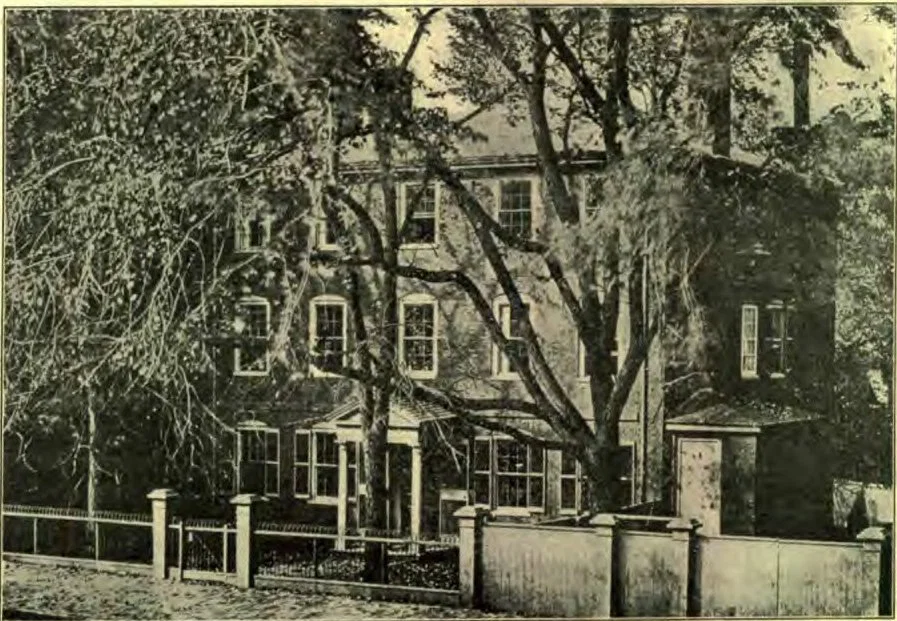
THE LONGFELLOW MANSION — CONGRESS STREET
I remember the black wharves and the slips, And the sea tides tossing free, And the Spanish sailors with bearded lips, And the beauty and mystery of the ships, And the magic of the sea. And the voice of that wayward song Is singing and saying still: “A boy’s will is the wind’s will, And the thoughts of youth are long, long thoughts.”
I remember the bulwarks by the shore, And the fort upon the hill; The sunrise gun, with its hollow roar The drum-beat repeated o’er and o’er, And the bugle wild and shrill. And the music of that old song Throbs in my memory still: “A boy’s will is the wind’s will, And the thoughts of youth are long, long thoughts.”
I remember the sea fight far away, How it thundered o’er the tide! And the dead captains, as they lay In their graves, o’erlooking the tranquil bay, Where they in battle died. And the sound of that mournful song Goes through me with a thrill: “A boy’s will is the wind’s will, And the thoughts of youth are long, long thoughts.”
I can see the breezy dome of groves, The shadows of Deering’s Woods; And the friendships old and the early loves Come back with a sabbath sound, as of doves In quiet neighborhoods. And the verse of that sweet old song, It flutters and murmurs still: “A boy’s will is the wind’s will, And the thoughts of youth are long, long thoughts.”
I remember the gleams and glooms that dart Across the schoolboy’s brain; The song and the silence in the heart, That in part are prophecies, and in part Are longings wild and vain. And the voice of that fitful song Sings on and is never still: “A boy’s will is the wind’s will, And the thoughts of youth are long, long thoughts.”
There are things of which I may not speak; There are dreams that can not die; There are thoughts that make the strong heart weak, And bring a pallor into the cheek, And a mist before the eye. And the words of that fatal song Come over me like a chill: “A boy’s will is the wind’s will, And the thoughts of youth are long, long thoughts.”
Strange to me now are the forms I meet When I visit the dear old town; But the native air is pure and sweet, And the trees that o’ershadow each well-known street, As they balance up and down, Are singing the beautiful song, Are sighing and whispering still: “A boy’s will is the wind’s will, And the thoughts of youth are long, long thoughts.”
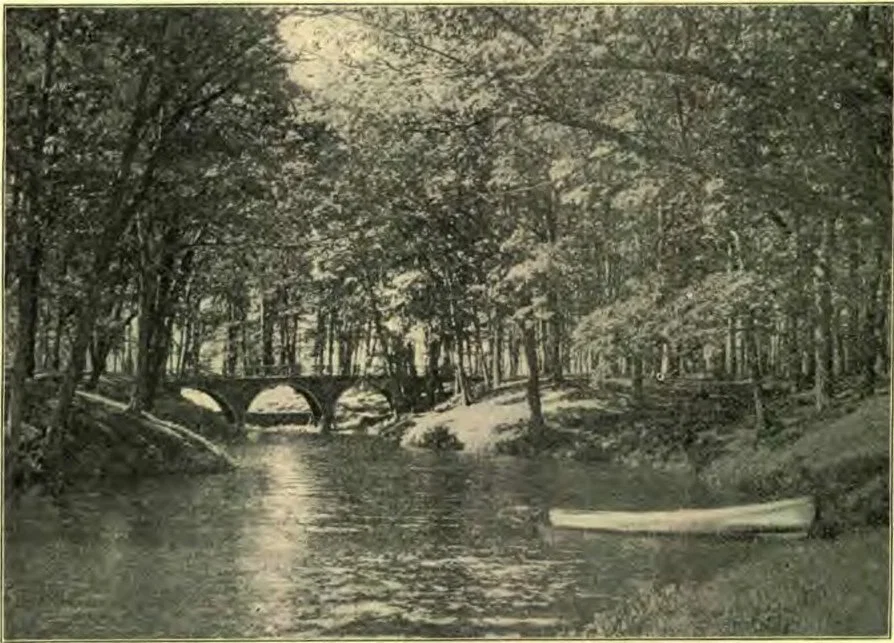
And Deering’s Woods are fresh and fair, And with joy that is almost pain My heart goes back to wander there, And among the dreams of the days that were, I find my lost youth again. And the strange and beautiful song, The groves are repeating it still: “A boy’s will is the wind’s will, And the thoughts of youth are long, long thoughts.”
— Henry Wadsworth Longfellow.

Rambles About Portland

A SHORT time ago I enjoyed the privilege of attending the annual camp-meeting of the Maine Conference, held at Portland; and after the meeting, I improved the opportunity of visiting some of the interesting surroundings and historic places—
“of the beautiful town That is seated by the sea.”
Situated upon a bold peninsula, commanding an uninterrupted view of the ocean, the island-studded bay, and the surrounding mountains, Portland may fittingly be called “the beautiful town.” Lacking neither in “good old age” on the one hand nor in “up-to-dateness” on the other, and being lavishly surrounded with the beauties of nature, Portland has easily become the center of Maine’s well-known summer resorts. It is commonly known as the “Forest City;” because of its numerous fine old trees—oak, elm, and chestnut—in the streets and parks. With a population of fifty thousand, it is a strong, conservative, prosperous, intelligent community; and as the beautiful open gateway, by which a multitude of travelers are ushered each summer into the delightful playgrounds of “the Pine Tree State,” this city is able to give to the thousands of tourists who flock there from all countries of the world a strong and fitting interpretation of New England ideas, customs, and hospitality.
The name of Portland, as applied to this city, dates only from 1786. It was known by the Indians as Machigonne. The first European settlers (1632) called it Casco Neck; and later it was named Falmouth.
Many of the fierce battles of the French and Indian War raged about this place. Early in its history it was destroyed by Indians, and in 1775, at the beginning of the Revolutionary War, it was bombarded by four English vessels under Captain Mowatt, and burned. At the close of the war, in 1783, it was rebuilt, and was incorporated in 1786. Again, in 1812, the storm of war beat against the quiet coast of Casco Bay in the memorable sea fight between the “Enterprise” and the “Boxer.”
Portland is the birthplace of Henry W. Longfellow, Nathaniel P. Willis, Sara P. Parton (“Fannie Fern”), Erastus and James Brooks, Commodore Preble, John Neal, and Neal Dow. During his childhood for several years it was also the home of Nathaniel Hawthorne; and many of the favorite haunts of his boyhood are in the vicinity of the town.
In all directions, and within easy reach of the city, there are beautiful resorts, among which some of the most celebrated are Old Orchard, Riverton Park, Cape Cottage Park, and Deering’s Woods.

Casco Bay

The well-nigh unrivaled Casco Bay, whose picturesque islands of granite and green woods are described by Longfellow as—
“the Hesperides Of all my boyish dreams,”
enjoys, and justly, too, a world-wide fame. Rudyard Kipling recently expressed the opinion that the islands of Casco Bay have no parallel for natural beauty among the islands of the world. There are said to be exactly three hundred and sixty-five islands in the Bay,—one for each day of the year.
In company with a number of the brethren and sisters who were returning to their island homes from the camp-ground, I had the pleasure of an all-day’s cruise on the little steamer which plies daily among the islands of the bay. This trip will ever stand out as one of the distinctly bright spots in my travels. The day was perfect, the sea smooth, and the keen salt air was like a tonic. We called at Cliff Island, which has a population of about one hundred and twenty-five, nearly all fishermen. The third angel’s message has secured a strong foothold among these honest, true-hearted people, about one half the inhabitants of the island having accepted the truth. This is one of the largest and strongest churches in the Maine Conference. They have a comfortable little church building, and a church school which has just begun its fourth year, and has an attendance of twenty-six. Upon this quiet, beautiful island, entirely separated from the roar and struggle of commercial life, these simple-hearted fishermen have abundant reason for being a happy little community.
We sailed nearly to the extreme eastern end of Casco Bay, the last call being made at Orr’s Island, which was at one time the home of Harriet Beecher Stowe, and where she wrote her first book, entitled “The Pearl of Orr’s Island.”
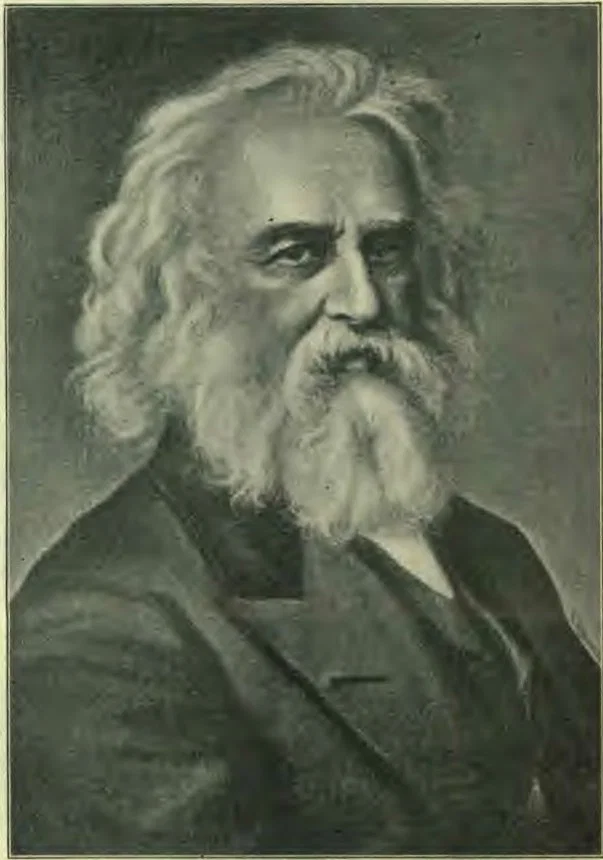
HENRY WADSWORTH LONGFELLOW
Nearly all the islands are inhabited. The people are mostly fishermen and entertainers of the pleasure-seeking public. Farming is carried on to some extent, and in several instances a farmer owns an entire island. It sounds strange to hear men talk of buying and selling and leasing islands; but among the islands of Casco Bay there are several which can be bought for from one to two thousand dollars.

The Birthplace of Longfellow

But among the many attractions in and around the city of Portland none are more interesting than those places connected most intimately with the boyhood days of Henry Wadsworth Longfellow, “the best-loved singer of the English race.” He was born in this city on February 27, 1807. The first of his American ancestors, William Longfellow, born in Hampshire, England, came to this country in 1676, and settled in what was at that time the wilderness of Maine. His father, Stephen Longfellow, was a man of much influence throughout the State, a lawyer of ability, and an honored member of the American Congress. His mother, Zilpah Wadsworth, was a person of “distinguished excellence,” and a lineal descendant of the Pilgrim colonists, John Alden and Priscilla Mullins, whose unique courtship was so gracefully sung by their tuneful descendant, Henry Longfellow, two centuries later in his beautiful poem, “The Courtship of Miles Standish.”
He was only five years of age when the war of 1812 began; yet its stirring events and the solemn sound of battle, rolling up Casco Bay, awakened undying echoes in the soul of the listening child. More than forty years later he wrote:—
“I remember the bulwarks by the shore, And the fort upon the hill; The sunrise gun, with its hollow roar, The drum-beat repeated o’er and o’er, And the bugle wild and shrill.”
“I remember the sea fight far away, How it thundered o’er the tide! And the dead captains, as they lay In their graves o’erlooking the tranquil bay, Where they in battle died.”
Such stirring events, historic places, and natural beauties as formed the environment of Longfellow during the days of his childhood were well suited to feed the awakening fancy of the imaginative youth.
One of his favorite playgrounds was Deering’s Woods, a fifty-acre forest, now beautified and protected as a park, and more commonly known as The Oaks, as all the trees are either white or red oak. Among the grand old trees are beautiful walks and drives, with hundreds of seats beneath the wide-spreading branches. Upon the pond are row- and swan-boats for the amusement of the children, while in cages and in fenced enclosures about the park are deer, bears, monkeys, and other animals. This park is also mentioned by Longfellow in his poem, “My Lost Youth:”—
“I can see the breezy dome of groves, The shadows of Deering’s Woods.”
Here was fought one of the fiercest battles during the early French and Indian Wars from 1676-1689. On the western edge of the park can still be seen the cellar of the house once occupied by Anthony Bracket, who was killed in this battle.

The Wadsworth-Longfellow House

One of the most interesting attractions of Portland is the Wadsworth-Longfellow House, the childhood home of the poet. The house was given by Annie Longfellow Pierce to the Maine Historical Society, and is open daily to the public. The following is a brief history of the house, as told on the little card furnished to visitors by an attendant:—
“The most historic house in Maine, and the first of brick in Portland. Built by General Peleg Wadsworth, the poet’s grandfather, in 1785-1786. The home of Lieutenant Henry Wadsworth, and the birthplace of Commodore Alexander S. Wadsworth in 1790. The home of Honorable Stephen Longfellow and his wife, Zilpah Wadsworth, the poet’s parents. The birthplace of Annie Longfellow Pierce, the donor of the house, and where she died in 1901, aged ninety years. In this house four of the Wadsworth children were born, and three died. Here the poet’s parents were married, six of their children were born, and from the parlor five were buried, as also the father and mother. Longfellow was brought here when less than a year old, here he grew to manhood, and here he was a constant visitor through life. It was here he received his first inspirations, and wrote several of his poems.”
The house is a plain three-story brick building, having twelve commodious rooms. The Maine Historical Society has, with much care, brought together within its walls an interesting collection of furniture, pictures, curios, mementos, etc., which have, in one way or another, been associated with the beloved people who have occupied the old “mansion.” Among them is the little old desk first used by Longfellow when a boy, and on which he wrote “The Rainy Day” and other early products of his imaginative genius. Here are also his school-books, and the little round study-table on which, in truly boyish fashion, he drew pictures of his youthful heroes. One of these is a rather crude representation of Daniel Webster.
Like every person of genuine feeling, Longfellow carried the memories of his childhood in his heart to the end. The reminiscence throbs into the music of “My Lost Youth:”—
“And with a joy that is almost pain My heart goes back to wander there, And among the dreams of the days that were, I find my lost youth again.”
His love of this parental roof is beautifully told in his own words:—
“Truly the love of home is interwoven with all that is pure and deep and lasting in earthly affections. Let us wander where we may, the heart looks back with secret longings to the paternal roof. There the scattered rays of affection concentrate. Time may enfeeble them, distance overshadow them, and the storms of life obstruct them for a season; but they will at length break through the cloud and storm, and glow and burn and brighten around the peaceful threshold of home.”

The Cradle of the Message

Readers of the INSTRUCTOR have special reason for regarding Portland with interest; for this city more than fifty years ago cradled the third angel’s message in its infancy. Here and there about the city are still to be found interesting landmarks connected with the rise of our work. The little church in which Elder James White and Sister White, Elder J. N. Andrews and Elder M. E. Cornell, held meetings in the very beginning of our history as a people is still standing. It is a small building only sixteen by twenty feet situated in Clark Street. At that time it was known as “The Shop,” and it is now a shop in fact, being occupied by a painter. This was probably the first building occupied as a church by Seventh-day Adventists in Maine. No changes have been made in it, except by a small addition in the rear.
Portland was the childhood home of Mrs. E. G. White, who was born in Gorham, Maine, November 26, 1827; but soon after her birth the family moved to Portland, where most of her early life was spent. The schoolhouse where she attended school for several years is still standing, and is unchanged; but her childhood home has been removed, and a larger structure built in its place.
Brother W. S. Dunscombe, who was born next door to the house occupied by Sister White’s parents, and who has lived ever since in that street, was our guide to these places, and gave us these interesting facts.
E. R. PALMER.

The Migration of Birds

FANCY that you are in some quiet, country place in Michigan, New York, or in one of the New England States on a fine autumn day toward the middle of October. If you happen to have selected the right day, and are observing, you may notice an unusual stir among the robins. They are flying about, apparently in every direction; but a more careful look reveals the fact that none are going northward. Every tree, shrub, and fence is occupied as a momentary resting-place, and the air is filled with their calls as they seem to talk with one another. All is excitement among the various robin families of the neighborhood.
And a good reason they have for the stir. The older birds are telling their children, now come to maturity, that they must prepare for a long journey to a place where they will not freeze, and where they can get food during the rapidly approaching winter. As the younger birds seem to grasp the idea, the parent birds fly a few rods southward, apparently to show the direction, then alight again till the others all thoroughly understand. After an hour or two of this maneuvering they all rise and fly off together toward the sunny Southland.
Not only the robins, but yellowbirds, bluebirds, blackbirds, wrens, larks, and many others, leave the Northern States as the autumn days shorten. Some go at one time, and some at another; but very few, comparatively speaking, of the summer birds are to be found in the North during the dead of winter.
The mystery is how they know when to go, and how they know where to go. In the case of the robins the older birds seem to tell the younger ones by some bird language understood by them, but with some species it is not so. No doubt nearly all are familiar with the habits of the cuckoo, which does not educate her children. It is stated by those who have made the habits of these birds a study, that the parent cuckoos leave for the South several weeks before the young birds go.
Some men who claim much wisdom say that instinct teaches the birds when to migrate. But what is instinct? From the words of Jesus, who said, speaking of the sparrows, that not one of them falls on the ground without our Father’s notice, we know that God not only tells the sparrows but all the other birds when to go, and what direction to take.
The distances traveled by birds as they move from summer to winter quarters seem almost incredible. Even when the journey is all by land, as is the case with the birds in the United States, it seems strange that the blackbirds reared in the swamps of Michigan during the summer should spend the winter in the lowlands of Georgia and Florida. But when we notice that these journeys are sometimes made over wide bodies of water, with no opportunity for rest or food, they are the more wonderful.
“DEERING'S WOODS ARE FRESH AND FAIR”
The ground lark, or pipit, of the British Isles and Central Europe spend the winter in the north of Africa. Some cross the Mediterranean at the comparatively narrow portion south of Spain, others at the Grecian Archipelago, where it is considerably wider; but many cross from the south of France, a long journey over the sea. Sometimes after a storm on the Mediterranean, hundreds of birds are washed ashore, evidently having become too weary to continue the journey.
But a far more wonderful trip than any we have mentioned is that of the North Russia pipit. This little bird crosses the Ural Mountains, and in its six-thousand-mile flight passes the peaks of the lofty Himalayas, finally resting in the Malay Peninsula after fourteen days of almost continuous travel. Here it finds an abundance of food, and soon gets plump after its exhausting journey.
The bronze cuckoos of Tasmania, South Australia, and Victoria spend the southern summer, November to March, in the countries named, but gather together then, and, passing through New South Wales and Queensland, cross the straits to their winter home in New Guinea, which, being a tropical country, gives them really no winter at all.
The swift, a bird resembling the swallow but not of the same family, is another summer tourist that leaves Australia as the autumn of the southern hemisphere comes on in March; and goes north to China and other adjacent countries, where it breeds. It is said that all these migratory birds breed in the coldest country they visit. In the United States we know this is true of the wild ducks and geese, which go to the wilder sections of Canada to hatch their young during the summer.
Perhaps the longest voyages made by birds are those of the sandpipers, the godwits, and the knots of Australia and New Zealand. These birds breed in northern Siberia, which means a journey of ten thousand miles twice a year!
Near the North Cape of New Zealand is a lonely, rugged point called by some the “jumping-off place.” The appearance of the region naturally suggests the thought, and it is given color by the superstitions of the Maoris, who regard the place as the departing point from this world for the spirits of the dead as they leave for their future realms. Being in the extreme northern part of the island, it is naturally the place from which these birds start on their long journey. Here at Spirits’ Bay the best view of the flight of the godwits can be obtained, and they are the most remarkable of the three species named. One writer who is a careful observer visited this place especially to see the countless numbers of these birds as they were preparing to leave in April. His description of the sight is so interesting that we will give it in full:—
“I made the latter part of the journey in tempestuous weather, a heavy rain being drifted into my face by a strong northerly wind. As I stumbled across the belt of sandhills which fringed the shore, a strange sound, that half-oppressed and half-soothed the ear, became fitfully audible,—a sound which, when a little later a gust of wind caught it and brought it to me in greater volume, drowned for a moment the moaning of the sea. I knew it to be a chorus of querulous cries proceeding from innumerable little throats, and, racing up the last ridge of sand which lay between me and the bay, I stood looking at the sight I had come far to see.
“What with the lowering clouds, the wild and stormy ocean, the low, mournful sound which the wind drew from the thin, wiry grass of the sandhills, with the swarm of birds which looked like gray billows in convulsion, it was altogether a peculiar and an interesting sight; and, natural though it was, it seemed unnatural. During the afternoon, flocks of kuaka (the Maori name for the godwit) kept pouring into the bay, each new lot adding to the mad unrest which made all the atmosphere. As the day wore on, the wind veered round to the west, the clouds fell asunder, the rain ceased, and a watery sun pressed softly out and tinged the sky, and sea, and land with a faint silvery luster.
“I was recalled to practical matters by a sudden and violent ferment among the kuaka. Frequently they rose with a mighty rustle of beating pinions. After circling about in the air in an agitated and undecided manner, they settled again. At last, just as the sun was dipping into the sea, an old cock uttered a strident call, clarion clear, and shot straight into the air, followed by a feathered multitude. Higher and higher rose the host, until it was a stain in the sky. At this stupendous altitude, in a moment of time, as it seemed, the leader shaped his course due north, and the stain melted into the night. It was very impressive. There was something of the solemnity of a parting about it.
“In this manner, and for ten days, flocks of kuaka continually arrive at and depart from Spirits’ Bay. At the expiration of that time the fleeting scene is closed, nothing remaining but a few scattered feathers to show that it once existed.” H. E. SIMKIN.
Melbourne, Australia.

Those High-Backed Seats

THE South Station, in Boston, is, according to Bostonians, the largest and finest in the country. However that may be, it has many excellent points, and one of the best of these is the superb waiting-room.
This waiting-room is so large and so well proportioned that merely to look into it gives the hurrying traveler a dim sense of peace. I do not remember to have seen a single person running through it, or even walking fast. It is one of the most dignified spots in our dignified city.
One feature that contributes much to this feeling of dignity and quiet is the arrangement of the seats. They are placed in a long row away off to one side of the room. There are forty-two of them, back to back, and they will easily accommodate four hundred and twenty persons,—half a regiment. Each alcove thus formed is lettered with the name of some Massachusetts County, so that you can agree to meet your friends in the Middlesex section, if you please, or perhaps in the Berkshire section, and you will find them there.
This plan is necessary; for you could not find them otherwise except with considerable difficulty, because the seats have high, solid, wooden backs more than a foot higher than a man's head as he sits down; so that, though four hundred and twenty might be sitting in those seats, the room would seem quite empty; scarcely one of them could be seen. I have been in the room when it must have contained more than five hundred people, and perhaps a score of these were visible, at the ticket windows and going to their trains. That was all.
Of course, it is needless to say that no trains are called in this dignified place. There are two monster clocks at either end to be read from any seat, and the meaningless clamor of the train announcer is dispensed with.
Well, do you know, there are some happy men and women that know how to arrange their lives after precisely this model. They put their various tasks away in high-backed compartments. Each is labeled, and they know just where they all are, but each is out of the way and out of sight. There is no work, no bustle or hurry. Each task goes quietly to its compartment, watches the clock, and, when it is train time, gets up and goes to business. The man or woman seems always at leisure; the life seems spacious, almost empty. It is a lovely way to get along. I wonder if I can ever do that way myself.—Caleb Cobweb, in Christian Endeavor World.

Nineteen Young People Baptized at Avondale

From the Young People in a Distant Land

On Sabbath afternoon, August 1, a beautiful service was held near the Avondale School. At this time nineteen young people were buried with their Lord in baptism in Dora Creek, the stream which flows through the Avondale estate. All but four of these were students at the school, and have shown by their consecrated lives during the previous months of the school year their readiness and fitness for this ordinance. Among the number was Malakai, one of the two Fijian boys who are in attendance at the school. He signified a desire for baptism, even before he left his island home; but for several reasons the matter was delayed until after he came here. His voice is frequently heard in the students' meeting on Sabbath afternoons, testifying of the Saviour's love, in the Fijian tongue. Elder Fulton translates into English for the benefit of the others.
Most of the young people will unite with the Avondale church; and when they return to their homes will carry letters with them to their home churches. A few of the number were candidates for rebaptism, and were members previously of churches in different parts of the Colonies.
Among the students were some of the most earnest and sincere young men and women that there are in the school, and we feel sure that their lives are indeed given into the keeping of their Master, and that they will go forth to labor successfully in his name when they leave the school. They manifest a practical interest now in the several lines of missionary work carried on by the students under the supervision of the teachers.
Brother Fulton conducted the services.

THE WEEKLY STUDY

The Elements of a Great Reformation

The Spirit of Sacrifice

The plan of salvation was founded in sacrifice.
(a) God's great gift. John 3:16.
(b) Jesus gave all for us. Titus 2:13, 14; Phil. 2:5-8.
Abraham—
(a) Left all. Heb. 11:8; Acts 7:3-5.
(b) Gave his son. Heb. 11:17.
(c) Had nothing, yet possessed all things. Heb. 11:8-16.
Moses' wise sacrifice. Heb. 11:24-26.
Paul's exchange. Phil. 3:4-8.
The poor widow's gift perfect because it was complete—her all. Mark 12:41-44.
Result of keeping back part of the price.
(a) The rich young man. Matt. 19:16-22.
(b) Ananias and Saphira. Acts 5:1-10.
The divine law of sacrifice. Matt. 16:24, 25.
As the lesson for this week is wholly a Bible study, we will substitute for the usual parallel reading from “Great Controversy” a Scripture reading for each day of the week. Let us read thoughtfully and studiously one chapter each day from the beautiful story of the cross—the divine sacrifice of our Lord—as recorded by John, chapters 14-20.

To the Leader

If you can appoint some one having good ability to do so, it may be well to arrange for only one person to give this lesson, as this will be a change from the plan followed during the last few weeks; but if you prefer to have the lesson presented by several, this Bible lesson can easily be divided into several parts, and given out to the members.
A week before the lesson is to be given, it will be well to call the attention of the young people to the Bible reading for each day of the week. As the subject of the lesson will be The Spirit of Sacrifice, it will do the young people good to read again the touching story of the cross. May the Lord help you to impress upon the hearts of the members of your Society the great importance of this subject. When the talent and strength of the world are being rapidly captured for the service of sin and mammon, it is time that a pure, noble band of self-sacrificing young people should arise and follow in their Master's steps. To do this, they must esteem the reproach of Christ greater riches than all these earthly treasures.

Lesson Notes

Sin came into the world as the direct result of selfishness. Satan was favored of God as a light-bearer. He was to minister to all of God's creatures, and was given one of the highest positions in the courts of glory; but his decision to work for himself, to exalt himself, brought sin into God's universe.
In Jesus Christ our Lord, righteousness has triumphed over sin; and the destruction of sin has been made sure by the power of loving self-sacrifice. To save us from the ruin that sin had wrought, to save us from selfishness, the great tap-root of sin, Jesus laid aside his glory, counting it not a thing to be sought after, and laid down his all, even his own precious life, that he might teach us the law of self-sacrifice and love.
When among men in the flesh, Jesus said: “Foxes have holes, and the birds of the air have nests; but the Son of man hath not where to lay his head.” When he died, he had only the garments which he wore, and he was dependent upon friends for a burial-place. In the light of such a sacrifice what a tragedy is presented in the narrative of the young man who went away sorrowful, and did not follow his Lord, because to follow him meant to give up his possessions!
And how beautiful is the story of Abraham, who left his father's house and went out, not knowing whither he went, dwelling in tents, and even offering up his only begotten son, that he might honor and obey God! And in the story of the great, wise choice which Moses made, what courage and wisdom are shown in the statement that he “refused to be called the son of Pharaoh's daughter; choosing rather to suffer affliction with the people of God, than to enjoy the pleasures of sin for a season”!
The Lord uses the gift of two mites by the poor widow as a perfect example of sacrifice; for it was a complete gift—all her living. We often mention lightly the “widow's mite;” but remember that you have not given the widow's mite until you have given ALL. The great Reformation of the thirteenth to the sixteenth centuries was, under the blessing and power of God, carried on by men who threw themselves and their all into the great struggle. With a supreme confidence in God, with no hold except upon him, with no fear of man or death before their eyes, they held back no part of the price, but went into the struggle against principalities and powers; and they triumphed gloriously.
The time has now come, yes, it has been long delayed, when the work of grace in the earth must be finished; and God will use young men and women, the very ones we trust who are now studying these lessons in our Young People's Societies, to accomplish the last great work and finish it.
Young friends, sit down quietly and thoughtfully, alone with God, and study the situation as it is. The time has come for this work. The closing work of the gospel message is just now waiting for men who will sacrifice their all, and DO the work. Stand squarely face to face with the present situation, and decide whether you will be one of the soldiers in this last great charge. Will you enter the race, and run in the home stretch? If so, now is the time; here is the work; the world is before you; and God will be with you.
HUMAN help in our need, human forgiveness of our wrong-doing, human love in our loneliness—these are the sacraments through which, at their sweetest and purest, we feel a divine help and forgiveness and love flowing into our souls.—G. S. Merriam.

Simply Used

I would be simply used. Spending myself in humble task or great, Priest at the altar, keeper of the gate, So be my Lord requireth just that thing Which at the needful moment I may bring.
Oh, joy of serviceableness divine! Of merging will and work, dear Lord, in thine, Of knowing that results, however small, Fitly into thy stream of purpose fall. I would be simply used!
— Selected.

How to Hold Out

DEAR YOUNG PEOPLE: Many of you have given yourselves to the Lord at the camp-meetings this summer, and these questions have no doubt often come to you: “How can I hold out faithful? What bonds of union can be formed between me and God, that will ever hold me close to his side?” These questions mean much to us. The Lord does not want any one to go stumbling along, but he desires that our Christian life shall grow brighter and brighter even to the perfect day.
Here is a remedy for backsliding which I have been pleased to pass on to other young people:—
  1. Study some portion of God’s word every day.
  2. Pray in secret every day.
  3. Do something for others every day.
Commune with God by listening to his voice in his word, and by talking to him in prayer. Keep alive the Spirit of God in your hearts,—the spirit of self-sacrifice,—by doing something for his children.
We are told in a late Testimony just what ought to be the strongest bond of union between us and God. It is this: “Compassion for depraved, guilty, suffering humanity, dead in trespasses and sins.” The same thought is set forth in “Christ’s Object Lessons,” page 326, where it says, “The law of service becomes the connecting link which binds us to God and our fellow men.”
So if we want to hold out faithful, let us learn this law of service by going to work. In “Desire of Ages,” we are told that “it is because this work is neglected that so many young disciples never advance beyond the mere alphabet of Christian experience. The light which was glowing in their own hearts when Jesus spoke to them, ‘Thy sins be forgiven thee,’ they might have kept alive by helping those in need. The restless energy that is so often a source of danger to the young, might be directed into channels through which it would flow out in streams of blessing.”
M. E. KERN.
Continue reading: His Way of Saying It