Your ShelfYour Projects

Review and Herald, Vol. 82, No. 19.

25 cents Each
Earlier text: General Conference Financial Statement

A Glimpse of Takoma Park

A Brief Description of the Town in Which the General Conference Is Held
DURING the next three weeks the attention of the readers of the REVIEW will be turned largely to the General Conference at Takoma Park, and it seems appropriate to give in this issue some idea of the town itself. The article which follows is taken from an illustrated booklet issued by the Takoma Park Citizens’ Association, and we are indebted to Mr. Ben G. Davis, the treasurer of the town, for the use of the accompanying illustrations. The writer of the booklet says:—
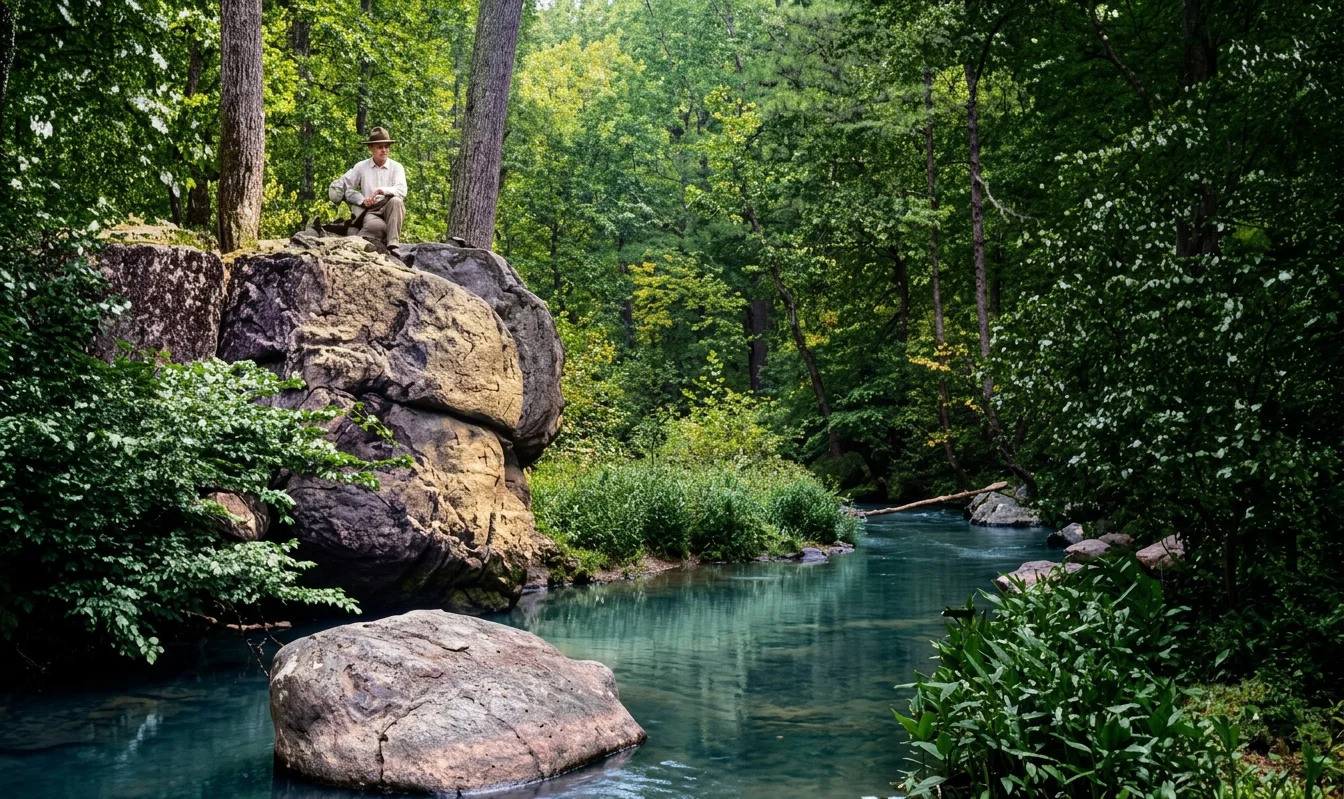
ON THE SLIGO
ON THE SLIGO
TAKOMA PARK! There is a touch of nature in the very name itself—a suggestion of woodland and wild flower, of winding roads, of hill and dale! Each musical syllable brings forth a vision charmed with the song of the wild bird, perfumed with the breath of the blossom, invigorated with the life-giving tonic of pure air! There is a dream of nature primitive, the forest trees, the giant oak, the sturdy pine, that, to the fragrance-laden atmosphere of spring adds its health-giving, balsamic breath! There is the rippling cadence of a crystal stream that leaps and dances over rock and boulder, laughing its merry way through sylvan depths, through gorge and field! And in the vista rises up the noble dome of the nation’s Capitol!
The word “Takoma” is of Indian origin, and signifies “exalted,” “a high place.” And in this instance never was name more worthily bestowed. Nature, the greatest of landscape gardeners, the greatest of painters, seems to have concentrated her efforts upon the superb beauty she has bestowed upon this lovely region. The undulating character of the ground gives a diversity of scene that is enchanting and restful, especially to one whose vision has become warped and narrowed by the geometrical lines of city streets and squares. A summer walk or drive through Takoma Park is a positive pleasure. The scene is kaleidoscopic, ever changing, now amidst the brilliant greens of an almost virgin forest, an instant later enchanted by panoramas of field and glade, hill and sky, chasing away into the dreamy, hazy purples of glorious distance, while ever and anon beautiful villas and cottages, with well-kept lawns, peek out invitingly from bowers of shade and flower; evidencing the existence here at least of the true, restful, typical American home. In autumn, when the brush of Nature has scattered color with a lavishness that knows no bound, Takoma Park is indescribable. It presents a picture gorgeously hued in every conceivable tint and color,—a picture that awes the artist who would copy it, but that glorifies and inspires the lover of nature whose privilege it is to dwell in its midst.
In the region of the Sligo, a stream of never-ceasing beauty that adds inimitable charms to Takoma Park, nature again shows her wonderful handiwork in a series of pictures that vary in tone and color and atmosphere with every glance. Wandering along the beautiful, shaded roads and paths that skirt the stream, charmed now by rocky heights, now by immense boulders against which the waters rush and foam or leap away in miniature cascades, one can easily imagine one’s self in the heart of the mountains, away from civilization and care, in glorious contemplation of nature and her handiwork. The beauties of the Sligo are never-ending.
Takoma Park lies less than five miles directly north of the city of Washington, and so near the division line between the District of Columbia and Maryland that one portion of the town owes allegiance to the federal city and the other to the State of Maryland. It lies at an altitude above Washington that varies according to the locality, from three hundred to four hundred feet. The advantages of the greater altitude need no comment. It is a striking fact that during the most sultry and torrid days of a Washington summer, the thermometer at Takoma Park registers from ten to twenty degrees cooler, and the tempering influence of the luxuriant shade and pure air renders the difference even more apparent. Takoma Park is located within the very depths of a densely wooded country, and its dwellers have at the start that for which in less fortunate suburbs a generation of time is required—ample and abundant shade.
Along with its other bountiful gifts, nature has bestowed upon Takoma Park one of priceless value—water of the finest quality. It makes its appearance in springs that are crystal-like in their clearness, and from which sparkling rivulets flow down the valleys. Takoma water is noted far and wide. It is a fact that can be well attested that many invalids have been greatly benefited by its use. The virtue of the water simply consists in its purity. Those who live in health must have good air and good water. These two elements are pure and priceless at Takoma Park.
Another feature in which Takoma Park excels as a suburban town is that of easy access to and from the city of Washington. The resident who prefers has at his service the daily suburban trains of the Metropolitan branch of the Baltimore and Ohio Railroad, whose picturesque waiting station is one of the features of the Park. Or it is his privilege to avail himself of the more frequent service by electric car over the Brightwood electric road, a part of the extensive system of the Washington Traction and Electric Company. Over this road passengers are carried from Takoma Park to any part of the city of Washington or of the District of Columbia for the same rates of fare as prevail in the city—five cents per trip, or six tickets, allowing six trips, for twenty-five cents. Thus in the matter of cost of transportation the citizen of Takoma Park enjoys equality with the resident of Washington itself.
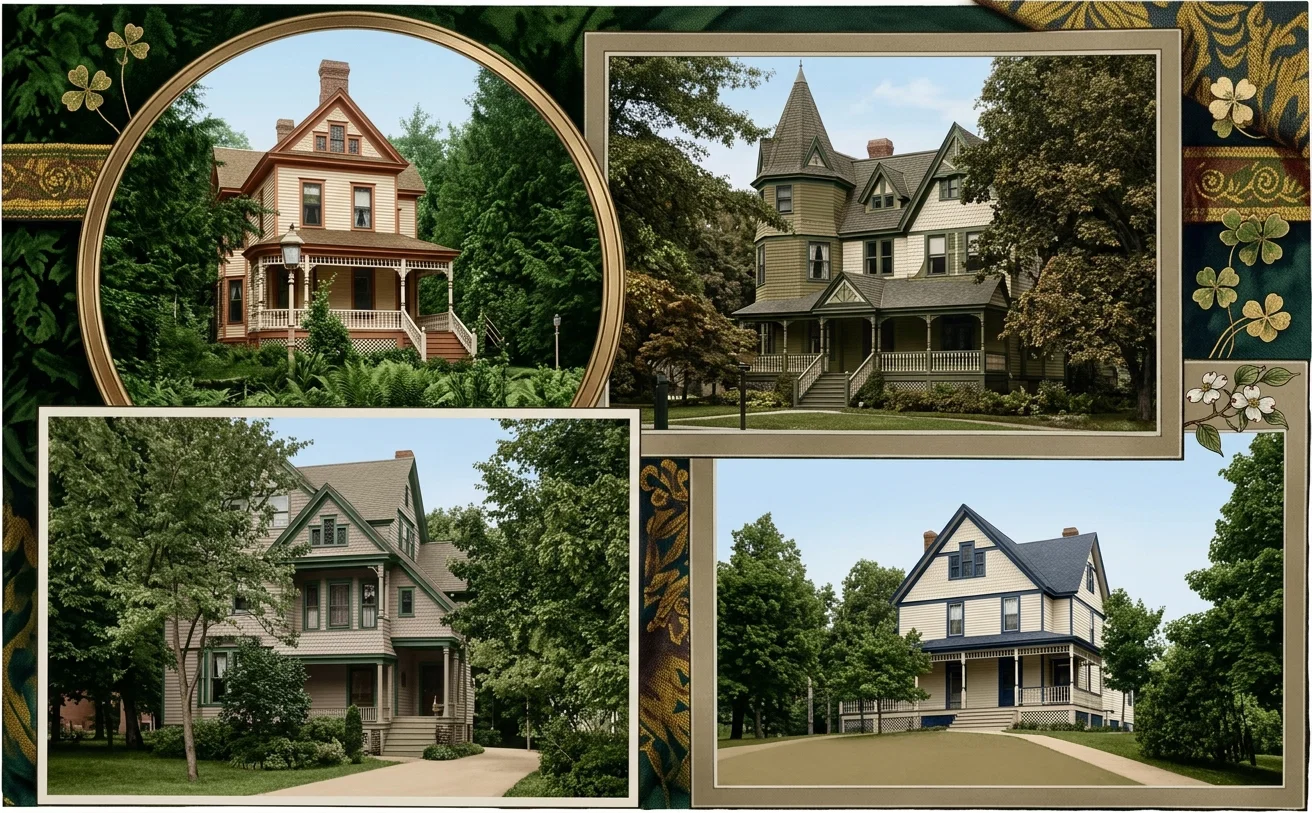
ATTRACTIVE HOMES AT TAKOMA PARK
Takoma Park is the ideal place for children. Here they are exempt from the narrow limits of streets or the circumscribed areas of sunless back yards; here their physical being is safe from accident, and their moral being from the uncertain and unpreventable association of undesirable companionship. Plenty of outdoor room, plenty of pure air, plenty of God’s sunshine, broadens their chests, expands their lungs, and reddens their cheeks, while contact with nature, the birds, the flowers, the rocks and rills, cultivates the brain, awakens the intellect, and forms the only true basis for a genuine and lasting intelligence.
BALTIMORE & OHIO RAILWAY STATION
A description of the homes of Takoma Park would fill a volume. In point of architecture they present a most pleasing variety, and evidence the exercise of much taste and pains in their construction. Whether cozy cottage or pretentious villa, there is the same inviting picturesqueness, enhanced not only by natural surroundings, but embellished by lawns and walks and flowers that give completeness to an ideal landscape. Add to these attractions the advantages and conveniences of modern improvements—gas, water, sewers—and nothing else need be said as to the desirability of Takoma Park as a place of residence.
A recapitulation of the well-authenticated facts herein presented sets forth the advantages of Takoma Park as a place of residence, briefly, as follows: Its especially advantageous location, being in the direct line of the wonderful growth of the national capital; its high altitude, lying, as it does, from three to four hundred feet above the city of Washington, thus insuring pure air and a much more comfortable temperature during the heat of the summer; its profuse shade and remarkable variety of trees; a wonderful beauty in natural scenery; absolutely perfect drainage, due to the contour of hill and dale; a well-established form of municipal government; a perfect system of water-works and sewers; and the cleanest, most healthful water in the world; gas, thus affording, with the water and sewers before mentioned, opportunity for all modern conveniences; churches, schools, and business houses; two means of frequent and rapid transportation to the heart of the city; three hundred homes, forming a sturdy nucleus for the greater growth that is coming—and finally, a population of intelligent, progressive, up-to-date people.

Love Must Serve and Give

The heart that loves, sets no time limit to its service, nor stays to measure its gifts; for LOVE must serve, and LOVE must give.—Foreign Field.

Christ the Great Ideal

A MISSIONARY in Japan (A. B. C. F. M.) says of the Japanese to-day: “I am glad it is my privilege to work among a people who have the ability to understand and apply great ideas, and who can be mastered by great ideals.” The heart yearns to show such people Jesus Christ as the one great ideal, and to explain to them his ideas of what manhood is. Does not our duty to do this correspond, as Bishop Westcott once said, “with the grandeur of the truth which is placed within our reach”?

Good News From the Holy Land

L. R. CONRADI
While we listen to the good news from the wide world, we are certainly cheered to find that the holy land of old is not missing. Our workers there had suffered considerable from fever, so that we were compelled to make an entire change. Brother and Sister Hoerner left Jaffa, and are now laboring in southern Germany. Brother Gregorios and his wife (both nurses) have taken their place. The three believers whom I baptized while I was there, attended our Friedensau meeting last summer. One of these is now a teacher in the Friedensau school, while the other two have spent some time in the school, and have returned to their farm near Jaffa; they have now paid into the work four hundred dollars tithe upon their property. As they carried back such a good report of their experiences with our work and workers in Germany, another family, with whom we had been laboring for some time, began to keep the Sabbath, and are now ready for baptism. The little company in Jaffa was pleased to have Elder Quinn, who stopped on his way from Australia, celebrate the ordinances with them.
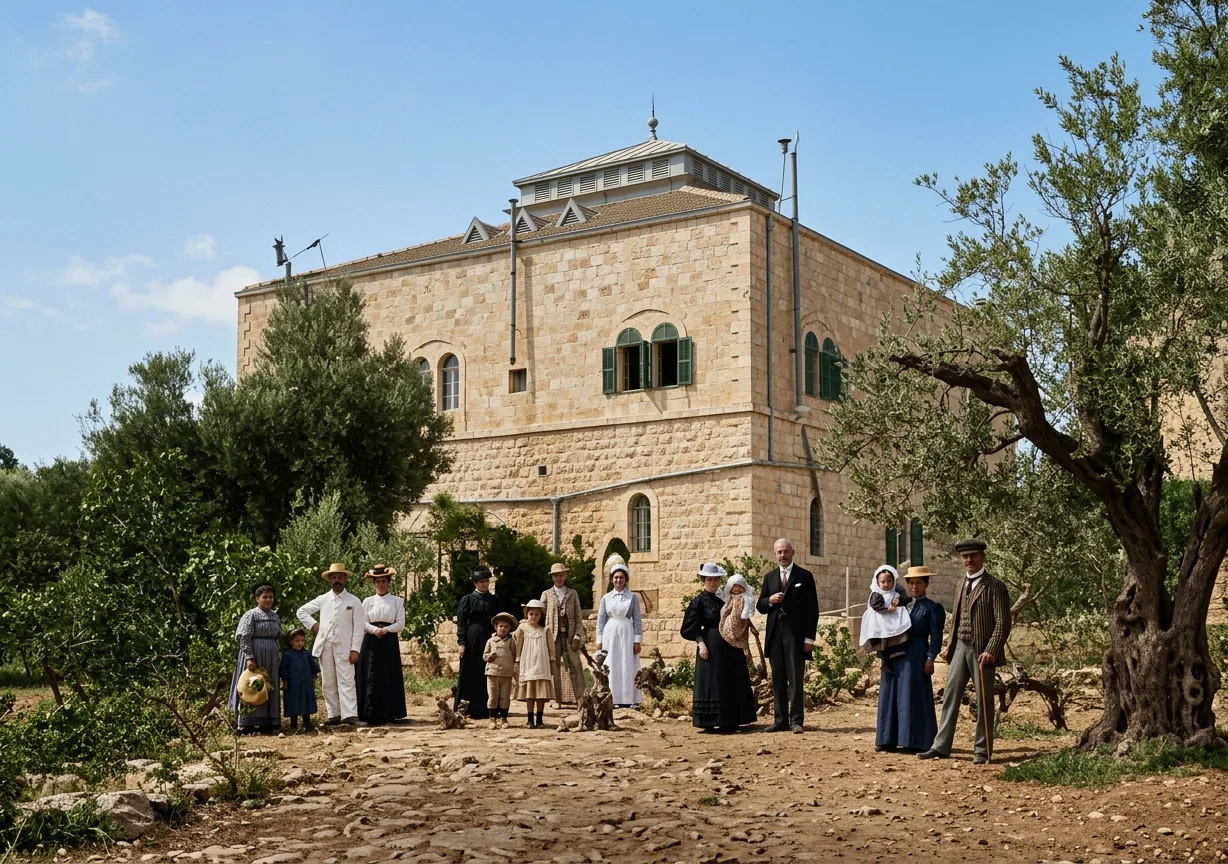
THE JERUSALEM SANITARIUM
Brother and Sister Jespersson, nurses, were obliged to leave Jerusalem on account of fever. They are now assisting in the school at Gland, and expect to connect with the sanitarium when it is opened at that place. Brother Teschner, who took Brother Jespersson's place, died, so that we had only Sister Mueller there for a time; however, a short time ago Brother Freund, who had just served his time in the German army, as a nurse, has gone there. He reports very encouragingly about the work. The health of the workers is good. They seem to find some interested souls in that city. One German lady, who has a home for girls in Athens, spent a week at the health institution in Jerusalem, and became much interested in our work. Her husband is working among the Greeks in America, and she expects to join him there. She is very anxious to see health work, similar to that carried on in Jerusalem, started in Greece, and offers her home for that purpose. Thus once more the light is breaking forth from the holy land and other portions of the Orient.
Brother Zarub, with another family, is located at Beyrout. Since Brother Krum left, we have found no one to take his place in this Syrian field. Farther up in Asia Minor our brethren are still in prison, awaiting their sentence. We questioned whether it would be best for us to attempt to do anything in their behalf; but they wrote us that it would not be wise, as any interference on the part of foreigners might create suspicion, and make the matter still worse. All we can do is to leave their cases with the Lord, asking him to turn the tide in their favor.
We should be only too glad if we were able to secure a good, promising young man, a minister of some experience, to go into Asia Minor and begin gospel work there. As soon as Dr. George opens up the treatment rooms in Constantinople, his hands will be full, and he will not be able to look after the evangelical portion of the work. Thus far, we have had no more promising field in Asia Minor than right among the Armenians. It seems a pity to have hundreds of believers there, with no one even to visit them.
We have just secured Sister Adomeit, a German nurse of experience, who knows French and some English, to go to Constantinople, to assist Dr. George. God is blessing the German workers we have sent to the Orient. We are sure that if we could secure a good minister to go there, one who would not be afraid of hardships, persecutions, and difficulties, we should see a growth in Asia Minor and Turkey. Let us remember the holy land and the Orient in our prayers and gifts, that these fields may be again lighted with the rays of the everlasting gospel.

Light Obeyed Increaseth Light

“LIGHT obeyed increaseth light; Light rejected bringeth night.”

A Visit to Fiji

ANNA L. HINDSON
On Monday, November 7, just one week from the day we left Sydney, the “Moana” pulled into the beautiful harbor of Suva, Fiji. The charming tropical vegetation and the nicely laid-out little town of Suva presented a very pleasing scene. It was about two in the afternoon of a beautiful day when we arrived.
Brother Arthur Currow and his wife were the first of our friends to reach the boat, and we were glad to return with them to Suva. On our way they pointed out Suva Vou, lying a few miles across the bay, and as we looked, we could see the mission launch just starting across to meet us.
From "The Scientific American" A FIJIAN RAFT
While making a hurried tour of the little town, in which there was much to interest us, we were happily surprised to meet Sybil Read, who had come in search of us, and a little later, Brother Lou Currow and his family. Presently the mission launch arrived, bringing Brother and Sister Fulton, Sister Parker, and Brother Carr. We can not express our pleasure at meeting all these dear friends.
Our boat was soon to start, but we learned that she was going a few miles up the coast to take on sugar, and that passengers would be taken on a launch to join the boat at 10 P. M. This was welcome news to us, and soon we were on our way in the fine little mission launch, to Suva Vou. On the way Brother Fulton pointed out the little cemetery, and the spot, as nearly as possible, where our dear Brother Tay lies sleeping. Brother Tay, of California, was the first of our brethren to visit the South Sea islands with the present truth. It was through his efforts that the inhabitants of Pitcairn Island received the message. While laboring in Fiji, he fell asleep. What will be his joy in the awakening to greet the many precious souls in these islands who have been won to the third angel’s message!
Suva Vou is a pretty little native village, surrounded with an abundance of rich tropical vegetation, and is close to the bay. It was our privilege, for the first time, to see the native huts of which we have heard so much. We called upon a number of our native Fijian brethren and sisters in Suva Vou, and this indeed was a great pleasure to us.
In Brother Fulton’s comfortable home we were very pleasantly entertained during the evening. A variety of choice native fruits was spread before us, which were very refreshing after a week at sea. One room in Brother Fulton’s house is occupied by the printing-office. Here we saw the little printing-press, donated by the Avondale Press, where the Rarama, our monthly Fijian paper, is printed. The Rarama is doing a grand work in spreading the light (Rarama means light) of the third angel’s message in the Fijian group. The type in the last number of this paper was set entirely by Sister Guilliard.
The new church building in Suva Vou is a very neat little wooden structure, which now does service also as a school-room. At the present time, including the youth and children who are keeping the Sabbath understandingly, there are about one hundred and fifty Sabbath-keepers in the Fijian group, with four organized churches.
Brother and Sister Fulton, with their two daughters, were just ready to start out in the little launch to visit an island eighty miles away. When the time came for us to leave, we joined in a season of prayer, and Brother Fulton, with three young Fijian brethren, took us (this time in their little rowboat) across to Suva, where we boarded the launch for the “Moana.”
Let us remember the work in Fiji in our prayers. Our laborers there are carrying a heavy burden for the work, and are few in number.
Washington, D. C.

A Sabbath Meeting With Chinese Women

MAUDE THOMPSON MILLER, M. D.
[This report was written only a short time before Mrs. Miller’s death.—Ed.]
To conduct a service for Chinese women is much more difficult than one who has never been in China would think. In the first place, a Chinese woman is not supposed to leave her home. Year in and year out, she remains at home, for some one must look after the servants and the home. She controls her daughter-in-law in the same stern way in which she was controlled by her mother-in-law, and as she can neither read nor write, her time is spent in gossiping with the other women of the home, or the compound, over the latest news the servants bring in from the street, or rehearsing a family quarrel which may or may not have resulted in a tragedy.
In a Chinese home husbands and wives are not expected to love each other, and having never seen each other before marriage, it is but to be expected that in many cases true love can not be found.
As the mother always takes the son’s part, there is much contention and strife between her and her daughter-in-law.
In passing through the streets of a city, one rarely sees a Chinese woman, except of the poorer classes, and beggars in their rags, begging food; occasionally a woman will be seen in the door of her dwelling, or, passing on a back street, she may be seen in the narrow alley at her work or at a murky pool washing clothes.
While it is customary for a woman to remain at home, her tiny feet will not permit her to walk either long or short distances, because of the pain which these crippled members constantly give their owner; so a Chinese woman in going anywhere must be carried in a chair, wheelbarrow, or cart.
With all these disadvantages, it is not to be wondered at that the Chinese women are rather timid in leaving their homes to attend church, and as our “worship halls,” as they are called in Chinese, are not yet completed, when they come and find men assembled in the hall, they will not come in, or if they do, they stay only a few minutes, so the only way to hold services with them is to do it after the meeting for the men is over, and they have left the yard. When the repairs are finished, we shall have separate halls for the men and women to meet in, thus doing away with this difficulty.
Many times the women come, not to hear about Jesus, but to get a look at that curious-looking foreigner, who has large feet just like the men, and to see how she talks and does; frequently they will climb on the benches in the rear of the hall, just for one glance.
As they have never attended a meeting, they feel free to talk whenever they please. Perhaps while we are singing, a newcomer arrives. They all greet her, and she says out loud to some friend, “Why, when did you come? How long have you been here?” The friend replies in the same loud tone, unless stopped by the Bible woman, who must constantly tell them not to talk, but to listen. During prayer, they usually remain quiet except for a mumble from one or two, and then, as we try to tell them of a loving Saviour who died to save them, and the hope of everlasting life to those who believe and obey him, they listen attentively for a time, but soon are more interested in my Chinese skirt, and ask, “How much did you pay for this cloth? How much did it cost to have this skirt made? Where did you have it made?” etc. But a reminder that this is a meeting brings us back to the subject again. Not being able to read or write, they are slow to understand, and when the meaning dawns on one, she must tell it to the rest so they will understand. Then all want to talk at once, so it is some time again before the speaker has the floor.
In this way much time is consumed, and little advancement made, and as the women are so restless, one-half hour is as long a meeting as can be held at one time. One day, when holding the meeting a little longer than usual, the entire audience except two women left, thinking they had stayed long enough, and were presuming upon my time. One who remained, having attended some meetings previously, said, “They have no manners, and do not know how to act at church.” After attending a few meetings they learn how to conduct themselves, and are then as orderly as it is possible for Chinese to be.
Probably not more than one woman in a thousand can read in China; however, this varies in different parts of the country. If a young lady is fortunate enough to have a kind father or brothers, and a desire to read, she may learn to read quite well, but these cases are very rare.
In this way, day after day, the seeds of truth must be sown in their hearts, which we trust will bear fruit for eternal life. A nation weighed down in heathen darkness for centuries can not be turned into a devout Christian people in a day nor an hour. We must be satisfied to do our part, and let God do the rest; it is only God who can change the heart.
We were made greatly to rejoice when the news reached us of the grand step Ohio has taken in donating one half of her workers and tithe to the General Conference.
May this mark an era in the advancement of the third angel’s message, not only in Ohio, but in many lands, is our prayer. And do not forget China’s millions.
Shang-tsai Hsien, Honan, China.

The Isles Shall Wait for Thy Law

“THE isles shall wait for thy law.”

Meetings in Arecibo

ARECIBO.—I am helping to open up meetings in this place. Mr. Connerly was here, too, last week, and we found a good interest in the work. But there was an interest in San Juan which needed attention, and Mr. Connerly will be there a part of this week, while we continue the meetings here. The attendance is small, but the interest is good.
The conditions here are pitiable at present. It would seem that the curse of God is resting upon the island; for nothing seems to prosper, and the people in general are living in poverty. Everywhere are seen ruins of beautiful homes, and wrecked fortunes. Our courage is good.         LILLIAN S. CONNERLY.

Nova Scotia

TIVERTON.—The latter part of January, Elder W. R. Andrews visited this place, and began a series of meetings in Temperance Hall, which continued for about ten weeks, the last three of which he was assisted by Elder Wm. Guthrie, president of the Maritime Conference. The hall was filled to its utmost capacity with attentive listeners for about three weeks; then the Disciples sent for an evangelist and started special meetings in their church, which took many from our services. However, quite a goodly number still continued to come to the hall, and listened very attentively to the word of truth, which was faithfully and fearlessly, though lovingly, presented. Many of these listeners were convinced that we have the truth, and acknowledged it as such, but did not have the moral courage and faith to obey it.
Our faith and courage are strong in the message, which we believe will triumph in the near future. Paul may plant, and Apollos water, but God must give the increase.
AMOS E. OUTHOUSE.

Germany

HAMBURG.— One conference after another passes, and each seems almost better than the other. They are all well attended. Our evening services are crowded. The utmost harmony prevails in all our councils, and prosperity seems to be with each field. So far as I can learn, our annual offerings must have doubled' in a number of fields: I hope this is so throughout. In all our conferences a vote was passed to have a collection in every company in February, for the Washington enterprise. L. R. CONRADI.

Central America

BELIZE, BRITISH HONDURAS.— One week ago last Sabbath we had baptism, when eight joined the church by baptism, and three by letter, which gives us a membership of twenty-six. Since then, two others have signified their intention of keeping the Sabbath—one a Spanish woman, the other the leading member, a deacon, in the Baptist church. Others are asking for Bible readings. Some of the members of this church are becoming interested in missionary work, and are visiting the people, reading and praying with them, and giving them reading-matter.
We have been saving, little by little, toward building a church. Last week we found a place for sale. We paid nearly half the price, and can have five years in which to pay the remainder. We hope to collect sufficient money to build a meeting-house on this place.
H. C. GOODRICH.

Porto Rico

MAYAGUEZ.—Our work is onward. We are taxed to our utmost to know how to fill the openings. I am enjoying my work. My heart is burdened for the educated and wealthy. We all realize that they must be reached by some other way than through preaching, because we can not get them out where they must come in contact with the common people. Caste seems as great a hindrance here as the colored question is in the South.
There is much to be done, and, being a woman, I am handicapped by some of their customs. But there is a place for every one; and if I do faithfully that which God has given me to do, he will bless it, and let it bring forth fruit.
MRS. IDA M. FISCHER.

South Africa

PLUMSTEAD, NEAR CAPE TOWN.—I have been here at the sanitarium for about three months. I do praise the Lord for sparing my life, and for the degree of health which he has given me; but I hope to gain much more before I return to Basutoland. Plumstead has a delightful climate, and is a beautiful place in which to recuperate in summer. I am glad, too, that we have a sanitarium here. Dr. Thomason’s coming to Africa has made our hearts glad, for we were in such need of a physician.
There has been a drought in Basutoland. But we have had some rain recently, for which we are thankful; but we hope for more. It is quite hot there in summer, and there are severe thunder-storms in that season. Soon after Mr. Chaney returned from Plumstead, there was a thunder-storm, in which the lightning struck our house twice, striking it in three different places. Remember us in your prayers.
MINNIE CORNWELL-CHANEY.

Chile

NUEVA IMPERIAL.—I am now down on the frontier of Chile, in the south, holding quarterly meetings with the brethren, and visiting the isolated ones. It is about fifteen months since I was in this part, and they felt as if they had been left nearly alone; nevertheless they are firm, and are helping what they can in tithes and offerings. I baptized five, all converted from Catholicism. In fact, out of the fifty-seven that I have baptized in Chile and Peru, about eighty-five per cent have been Catholics converted by the third angel's message, and a very small portion, as you see, were converted from the Protestant churches. There are fifteen or twenty more who have asked for baptism, but we have to go a little slow with the natives.
Notwithstanding the fact that we have had so few workers the past year, the Lord has blessed our work, and I had the privilege of baptizing eighteen. About twenty-five, in all, have been baptized. To the Lord be all the praise. H. F. KETRING.

Washington Training College

Close of First Session
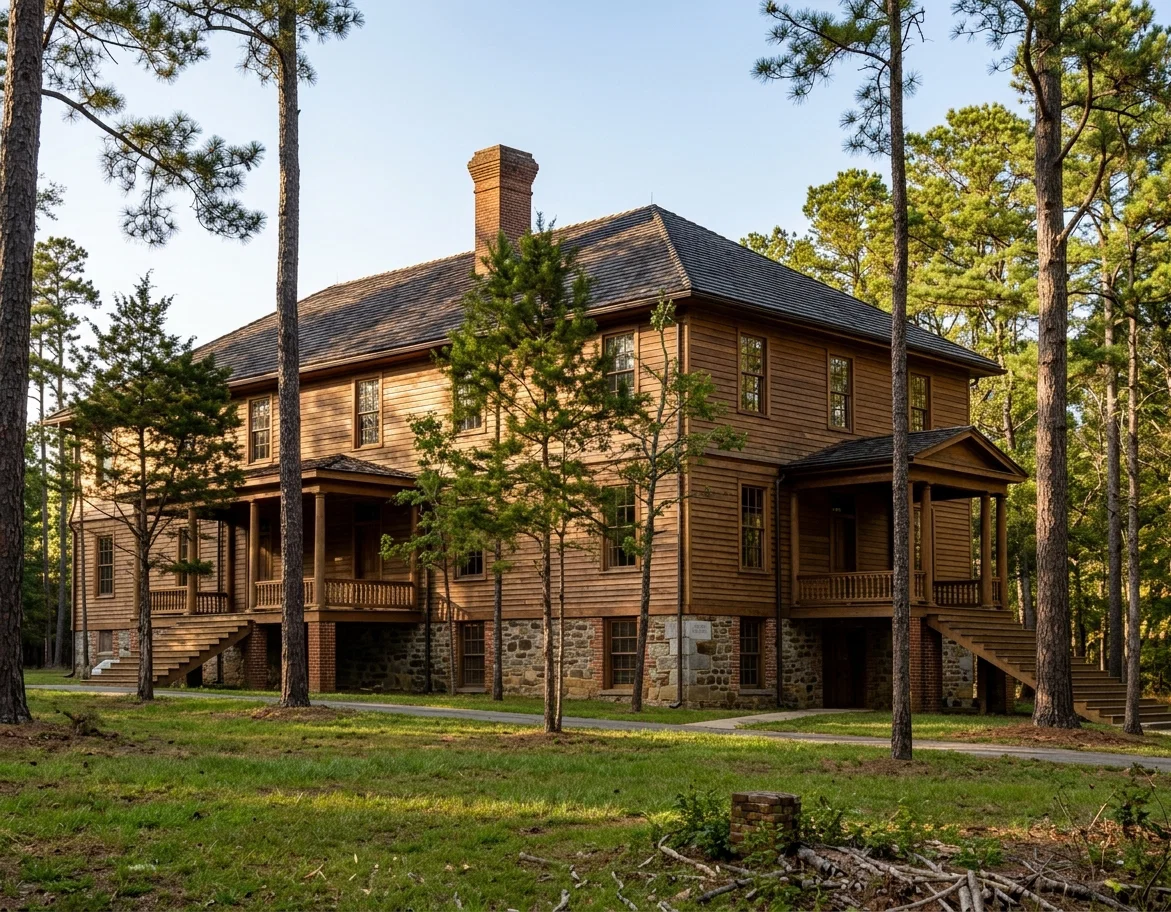
It may be pleasing to the REVIEW readers to have a brief report of the first year's work of the Washington Training College, as this school is a kind of first-fruit of the generosity of the denomination, expressed in the gifts to the One Hundred Thousand Dollar Fund. Owing to delay in the work of construction, school did not open till November 30, and, indeed, the buildings were far from complete at that time, so that it has been impossible to receive many who would have been glad to attend, some of whom we hope to accommodate next year. The number actually received has been forty-nine, of whom four have been baptized during the year.
DORMITORY FOR YOUNG MEN
This made every member of the school a follower of Christ; and, moreover, each one is desirous of having some part in the gospel work for these days. This spirit on the part of the students has made the work of the teachers a delight in almost every particular, and the blessing of the Lord has attended the work in a marked manner. For some weeks Elder Spicer met the school Mondays and Thursdays at the chapel hour, and gave most valuable talks on missions and mission work. The young people were not simply entertained, but they became deeply interested, and some have expressed a desire to have a part in the work beyond the seas. In fact, the privilege as well as duty of labor has been continually held in the foreground, and God has impressed hearts with a sense of the shortness of time, and with the need for an army of workers whose hearts the Lord has touched. The knowledge of movements both here and elsewhere, and the inspiration gained from contact with the leaders and officers of the denomination, have also contributed to a more thorough consecration and to a greater zeal for the work of our people.
The students will remain to attend the conference, after which a few will return to their homes, others will enter the field, and some will remain to help in the further building operations. The leading of the Lord has been marvelous, and has shown us what may be expected when the college is fully equipped and prepared to receive the number of students which it is designed to accommodate.
We would express gratitude to God for what he has already wrought, and by his grace we shall strive to make this school one in which the divine impress may be given to every one connected with it.
J. W. LAWHEAD.
Continue reading: Argentina