WHILE in many respects there is a striking similarity of the Episcopal Church to that of the Roman Catholic, still there are found loyal Episcopalians who recognize the evil and unchristian aggressions of the mother church, and are bold enough to enter most earnest protest. A case in point is that of the action of the Protestant Episcopal diocese of Washington in its meeting held May 10. Rev. R. H. McKim, pastor of the Church of the Epiphany in Washington, D. C., introduced resolutions12which, according to the Washington Post of May 10, at first startled the delegates and resulted in a spirited discussion, but were finally adopted. The resolutions read:—
Whereas, It has transpired that government schools for Indian children have been placed under teachings of priests and nuns wearing their distinctive religious garb, and that besides the insignia of the Roman Catholic Church in the schoolhouses, pictures have been placed on the walls, depicting the damnation of all save the adherents of the Roman Catholic faith,—
Be it resolved, That we, the representatives of the Protestant Episcopal diocese of Washington, hereby put on record our protest against the use of government funds to support schools which are in reality no longer secular schools, but sectarian schools.
Whereas, A demand is now being made by the Church of Rome to enforce in the United States the Ne temere decree of the Pope whereby mixed marriages solemnized by Protestant ministers, are declared to be null and void,—a decree which the emperor of Germany has refused to allow to be published in his dominion,—therefore be it—
Resolved, That we enter our indignant protests against this attack of a foreign potentate upon the validity of the laws of the United States.
Social and Religious Conditions in Leading American Cities
THE Men and Religion Forward Movement has just completed a “survey” of seventy-five North American cities with a combined population of twenty million people. The facts brought to light as a result of this investigation are worthy of study. In the United Presbyterian of April 25, 1912, Dr. Charles Stelzle contributes an article giving valuable data. Of the attendance of men and women at Sunday services, he says:—
Of those who attend the Sabbath morning services in the Protestant churches, 65 per cent are women, and the morning attendance at all the churches is 65 per cent of the total attendance of the day. More people unite with the church at the age of fourteen than at any other time, and there is a sharp decline in church accession after twenty-one. Forty-one per cent of the churches have organized movements to greet strangers.
It is claimed that every member in fully one third of the churches contributes regularly to missions. However, 73 per cent of all the contributions of the Protestant churches in these seventy-five cities for the last fiscal year was used for congregational purposes, and only 7.7 per cent for foreign missions. During the last decade .5 of 1 per cent of men in the churches actually went out from the churches as missionaries to mission fields in the United States or foreign countries, and .2 of 1 per cent, it is claimed, of the men in these churches purpose to become missionaries. The following figures give the relative attendance at Sunday-schools:—
Of the enrolment in the Sabbath-schools, 57.2 per cent are women and girls, and 42.8 per cent men and boys; and of the enrolment in the Bible classes, 62 per cent are boys between the ages of twelve and eighteen, while 38 per cent are men. Of the teachers of men’s Bible classes in the Sabbath-schools, 23.7 per cent are clergymen, 36.5 per cent are business men, 11.4 per cent are women, 17.3 per cent are professional men; whereas the teachers of the boys’ classes in the Sabbath-schools are 5.3 per cent clergymen, 7.9 per cent professional men, 8.8 per cent male school-teachers, 19.4 per cent business men, 19.5 per cent men of other classes, 7.5 per cent women under twenty, and 31.6 per cent women over twenty years of age.
The following figures and facts are presented relative to crimes and arrests in the seventy-five cities surveyed:—
The crimes and arrests indicate that of those arrested 83.9 per cent were men, 9.1 per cent women, 6 per cent boys, and 1 per cent girls. Forty and eight-tenths per cent of the arrests were due to drunkenness, 15.9 per cent to disorderly conduct, 8.2 per cent to disturbance of the peace, 7.8 per cent to vagrancy, 6.1 per cent to assault, 4.8 per cent to larceny, 3.5 per cent to gambling, 5.1 per cent to social evils. The juvenile court records show that 25.4 per cent of the boys committed were guilty of larceny, 26.3 per cent of incorrigibility, 8.2 per cent of truancy, 6.1 per cent of disorderly conduct, 2.2 per cent of assault, and 31.8 per cent of other crimes. The parents of these boys were 52.3 per cent American born, 7.6 per cent German, 5.8 per cent Irish, 5.1 per cent Italian, 2.2 per cent Russian, and 27 per cent were of other nationalities.
Sensational Advertising
By Editor
THE question of how to reach the people is one which deeply concerns every minister of Christ. Proper advertising is a blessing in Christian work. There is no reason why the minister of the gospel should not acquaint the public with his services, and by every consistent means seek to secure the attendance of the people. However, in the growing competition which exists at the present time between churches and worldly attractions, methods are sometimes employed by the Christian minister which savor strongly of the sensational, and it is a question if the minister who does this does not lower the character of his work in the minds of sober-thinking people. Speaking of this, the Lutheran of Jan. 4, 1912, says:—
In front of certain church doors are hung up large advertisements of special attractions,—such as noted singers, magnetic speakers, sensational themes, unusual programs, magic-lantern talks on Scriptural subjects, moving-picture descriptions of religious scenes and facts,—anything and everything that is outside of the ordinary routine of a legitimate and edifying service. Even where these unusual attractions are not advertised with such characteristic bad taste as to put the church of Christ on a level with the theater and other worldly institutions, much effort is expended in providing what will appeal to the novelty-seeker.
Observing “Holy Week”
By Editor
The Walla Walla (Wash.) Evening Bulletin of April 1 contained the information that five of the Protestant churches of that city had united in union services for the observance of holy week. The Catholic and Episcopal, as was to be expected, had made preparations for the observance; but this union of the Protestant churches to observe an admittedly Catholic institution is, to say the least, a matter of some astonishment. It is a striking coincidence that one of the sermons scheduled for this union service was entitled “Jesus Cleansing the Temple.” When Protestant denominations unite to perpetuate and glorify an institution of the Roman Church, it is prima facie evidence that the temple is in need of cleansing.
Honesty in Silence
THE honest man will prove true to his character in silence as well as in speech. Neither by word nor look, nor even by silence, will he give his support to falsehood or cast his influence on the side of error. Speaking of this high grade of honesty, the United Presbyterian of Jan. 4, 1912, says:—
If Jesus was “one of the best men who ever lived,” he must have been truthful, and a really truthful man must be as candid in silence as in speech. Silence that is not truthful can not be golden, and we all believe that the very silence of Jesus was golden. That is, we can not think of him as deliberately permitting his disciples to be deceived when by a statement or a word he might have set them right. We do not believe that the Great Teacher by his silence ever permitted his disciples to indulge a false hope. On this principle the very silence of Jesus becomes eloquent.
How many there are in the world who consider it entirely proper to falsify or create wrong impressions provided they can do so without a positive declaration, or in a manner to shield themselves. The truly honest heart will not adopt these tactics of the deceiver.
The Growth of Roman Catholicism in America
Rev. R. J. Campbell, pastor of the City Temple, London, has recently visited the United States. He speaks of his impression of the growth of Roman Catholicism in this country:—
"When I was in America nine years ago, I noticed that Roman Catholicism enjoyed a much greater amount of consideration than it was accustomed to in Great Britain; but in the intervening period it seems to have gained enormously in America, so much so that evidences of its power confront one on every hand. This is a thing that seems to need accounting for."
"He Leadeth Me"
"In pastures green?"—Not always.
Sometimes He who knoweth best,
In kindness leadeth me in weary ways,
Where heavy shadows lie;
Out of the sunshine warm and soft and
bright,
Out of the sunshine into darkest night.
I oft would faint with terror and affright
Only for this, I know he holds my hand;
So whether led in green or desert land,
I trust, although I can not understand.
"And by still waters?"—No, not always so.
Ofttimes the heavy tempests round me
blow,
And o'er my soul the waves and billows
go.
But when the storm beats loudest,
And I cry aloud for help, the Master
Standeth by and whispers to my soul,
"Lo, it is I."
Above the tempest wild I hear him say:
"Beyond the darkness lies the perfect
day.
In every path of thine I lead the way."
So whether in the hilltops high and fair
I dwell
Or in the sunless valleys where the
Shadows lie, what matter?
He is there; and more than this,
Where'er the pathway lead,
He gives to me no helpless, broken reed,
But his own hand, sufficient for my need.
So where he leads me, I can safely go;
And in the blest hereafter I shall know
Why in his wisdom he has led me so.
—Selected.
German East Africa
By B. Ohme
B. OHME
Our first baptism in Majita, the Victoria Nyanza Mission, took place Dec. 2, 1911. Our newly finished chapel was decorated with banana leaves, for on that day it was to be dedicated to the proclamation of the Word of God.
By ten o'clock in the morning, a large number of natives had come together. We were favored also by the presence of Elder A. A. Carscallen, superintendent of the British East African Mission, and the superintendent of the Quaker Mission, who had come from Kisumu to be present at the dedication. Brethren Stein and Wallath had also come, with their pupils.
After I had made a few remarks upon 1 Kings 8:29, 30, and the dedicatory prayer had been offered, we entered the chapel. The meeting was opened by singing and prayer. Matt. 28:19, 20, formed the basis of our remarks, and we also referred to John 3:3, inasmuch as we were to have the privilege of baptizing the first-fruits of our work among the natives of Shirati and Muansa. The sacred rite, performed in our new baptistry of the chapel, made a deep impression upon all who were present.
Two young men were baptized — Filipo Kayanda and Johana Mtarimbo. Filipo Kayanda is the first-fruit of about 150,000 natives who are waiting for the last warning message. He came from Usukuma. As yet we have opened no work among this people, but we expect to establish two stations among them this year, if the Lord wills it. As a lad, Filipo went to Ukerewe, then to Majita, where he entered the employ of an Indian. When he learned that we were going to open a school there, he gave up his position that he might attend. As he was industrious and persevering, he soon learned to read and write. We employed him for our house and kitchen work. He quietly did his work, and was seldom heard laughing and joking. When the hour came for the Bible study, his eyes fairly shone for joy as he devoured the history of God's wonderful providences in dealing with the children of Israel, while the life of our Saviour, and especially his death and resurrection, made a very deep impression upon his heart. When he was asked whether he would like to make a covenant with God by baptism, he joyfully declared his willingness to do so.
Johana Mtarimbo is the first-fruit from the 200,000 natives of the Shirati district. There are five stations among this people where the light of the gospel has been kindled, and we hope that we shall soon be able to see fruit at the other stations. We became acquainted with Mtarimbo about a year ago. He had been upon the coast, had come in contact with Mohammedanism, although it had not influenced him, and he had seen and learned much. In Dar-es-Salaam he learned to sew. He saw the cities of the coast, with their evil ways and tendencies, but he longed for his own home at Majita, so he returned. He here learned from us of the true God, and became better acquainted with the art of reading and of writing; for he had formerly received some education from a Catholic Christian. As he desired to earn his way, Brother Winter employed him as a servant. By taking these young men into our homes, we were able to give them much good instruction, and to shield them from many evil influences. The history of the men of God as revealed to us in the Old and New Testaments, riveted the attention of this young man also, and he was especially glad to hear of the life of Christ. From the first, he was a constant attendant at our instruction for candidates for baptism. We often heard him reading aloud in his Swahili Testament during his spare moments, and we could see that the word thus read was made a part of his daily life and experience. He was fully prepared to make a covenant with God at the time of his baptism. Thus the Lord is fulfilling his word which he spoke through the prophet Isaiah: "For as the rain cometh down, and the snow from heaven, and returneth not thither, but watereth the earth, and maketh it bring forth and bud, that it may give seed to the sower, and bread to the eater; so shall my word be that goeth out of my mouth: it shall not return unto me void, but it shall accomplish that which I please, and it shall prosper in the thing whereto I sent it." Isa. 55:10, 11.
In the afternoon, we celebrated the ordinances of the Lord's house with the newly baptized converts, and we could see by the expression on their countenances, that they felt the exceeding great joy of salvation through faith in our Lord's shed blood. They courageously began the new life, paying no attention to the prejudices of their tribesmen, but having their faith alone in Jesus. We hope that their example may be used of God for the blessing of many.
The South American Union Conference
By J. W. Westphal
J. W. WESTPHAL
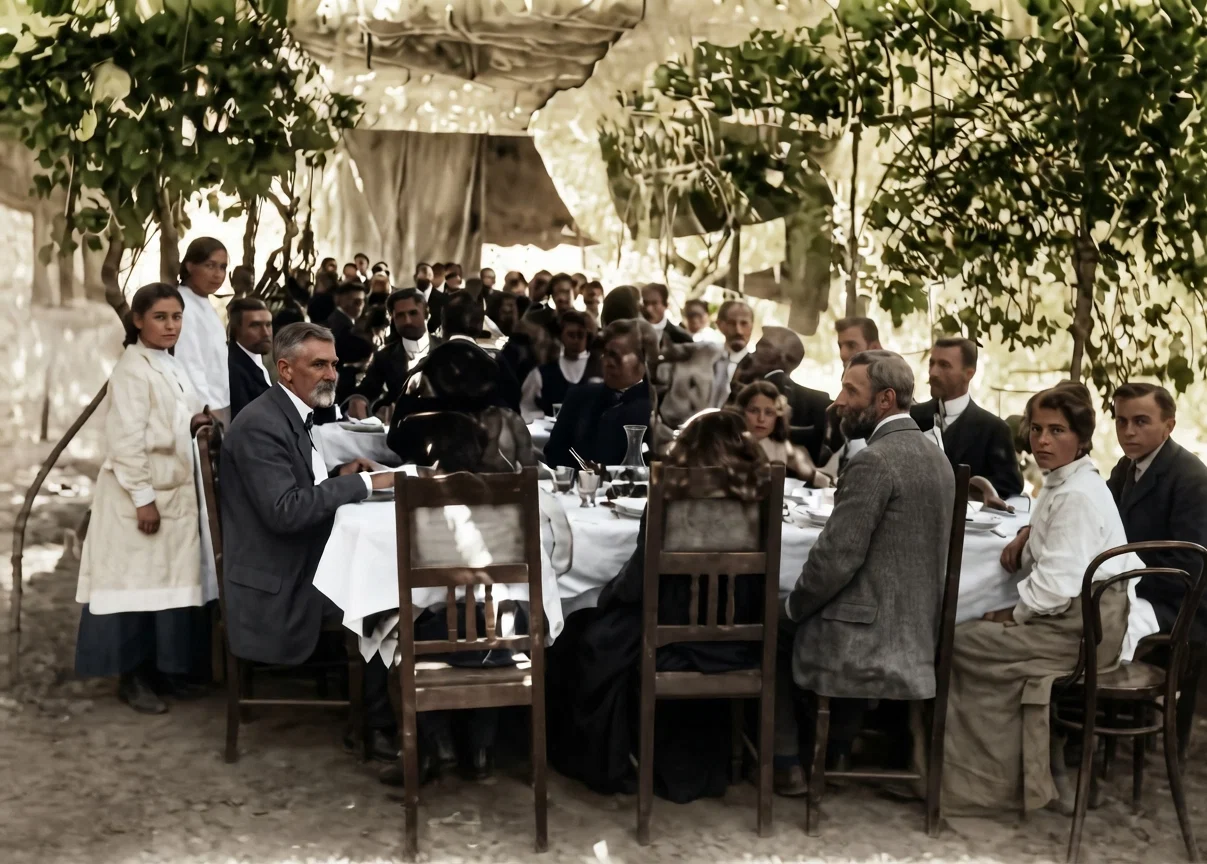
THE fourth biennial session of this conference was held according to appointment at Santiago, Chile, February 22 to March 2. The Chile brethren had rented a large private dwelling for the purpose, which provided commodious quarters for both the meetings and the visitors. The sessions of the Chile Conference being held at the same time, a goodly number of brethren from various parts of Chile were also present. Including the union conference committee members, twenty-two delegates were seated. All the fields and special interests were represented, except the sanitarium work, it being possible for Dr. R. H. Habenicht to leave. On account of the revolution in Ecuador, Elder W. W. Wheeler reached the meeting late. Brother F. A. Stahl was called home to Bolivia early in the meeting, his wife being seriously ill with typhoid fever. Besides the delegates from Peru, four other laborers were present. From the General Conference, Elder W. A. Spicer attended.
The meeting partook of the nature of an institute as well as of a conference, the former beginning several days before the latter. Elder Spicer's instruction was timely and highly appreciated by all. The Sabbath morning meetings will long be remembered because of the presence of God in power. Many said they had never experienced such blessings before. The result was that all consecrated themselves anew to God14and to the finishing of the work in this generation. For some time before and during the conference, evening meetings were held for the public, with a fair attendance. Several decided to obey the Lord. Reports of our meetings were also published in the daily papers of the cities.
Reports showed that the membership of the conference was 1,620, a net increase of 380 during the biennial term. The number of churches is forty-three. The tithe for the two years was $33,370.90 for the present territory of the union, while for the preceding two years it was a little more than $40,000 for the union including Brazil. The average tithe per member was $21.69. In other offerings there was also a steady increase.
DINING UNDER THE TREES AT THE SOUTH AMERICAN UNION CONFERENCE
The book work multiplied previous records many times. As more efforts had been put forth in the circulation of our large books, which has proved more remunerative to the canvasser, the circulation of our periodicals had suffered a slight decrease.
Several changes were made in our laborers. Elder W. W. Wheeler, superintendent of the Ecuador Mission, was called to serve as Bible teacher in the River Plate Academy. Elder S. Mangold, of Chile, will go to Ecuador to take Elder Wheeler's place. Elder Victor Thomann, of Argentina, will labor in Chile. Brother Cæsar Lopez, of Peru, will go to Ecuador to labor as a canvasser. Brother R. B. Stauffer will take charge of the canvassing work in Peru, and Brother John Lorenz will take the same work in Chile. It was decided to find at once a teacher for the Indian school near Puno, Peru, as the need is urgent, the school to be known as the Plataria School. A rowboat with sail is to be purchased for the use of the workers in the Lake Titicaca Indian Mission. A canvassing agent for the Argentine Conference was asked for from the General Conference; and also a missionary canvasser who can speak English to labor in the Magellan Strait region and the Falkland Islands, and to open up the work in those parts. For the year 1912 the Sabbath-school offerings are dedicated to the Peru Indian work and to the raising of a fund to support the Magellan Strait work. Nurses for the several fields are also asked for.
Both because it is more easily reached from the Alta Parana field and because it will give its workers ample room to work outside of Paraguay in times of revolution in the latter country,—a condition that has seriously tied their hands during the last two years,—the northern part of the province of Corrientes and the Grand Chaco of Argentina have been added to the Alta Parana Mission field.
The meeting was a most profitable one, and from the increased courage and consecration of the workers we certainly hope to see greater results.
Diamante, Argentina.
The South Pacific Islands
By J. E. Fulton
J. E. FULTON
THE readers of the REVIEW are always glad, we feel sure, to hear of the progress of the cause in this far-off land. The blessed message for these last days is to go to every island tribe, as well as to the more intelligent peoples in the home land. The torchlight of truth has already been set up in many islands of the South Pacific, but we can never rest satisfied until every unentered field has been annexed to our mission territory, and souls won therefrom as trophies for the Lord of missions. It is his command.
The work of translating and printing literature in the different languages of these island tribes is going steadily forward. Our press at Avondale has been very busy of late in this good work. A book of Bible readings in Fijian has just been completed and sent on its mission. The same work in the Rarotongan language is at present on the press, and will be ready in a few weeks. A translation of "Thoughts on Daniel" is being pushed forward at the present time. Monthly papers for five different island fields are being printed at Avondale. Besides these, a large number of tracts, also lesson pamphlets and other island literature, are being produced at this office.
Penisemani Tavodi, our Fijian brother who has been three years in New Guinea, working with Pastor S. W. Carr, has been on furlough to his native land for a few months. He has recently been married, and the last mail brought us word that he and his wife are to arrive in Sydney next week, en route to New Guinea. May the Lord bless this devoted young couple, and use them as they give their lives to gospel work for the savages of Papua.
Letters from Pastor C. H. Parker tell of a successful effort on Norfolk Island. Brother Parker and mission party, who are on their way to the New Hebrides, were advised to remain two months on Norfolk, laboring to help the church in that place, until the very hot season is over in the New Hebrides. As the two months' term drew near to a close, we learned that the interest was growing, and that the workers were loath to leave. We accordingly cabled them to remain another month, and also delayed the shipping of the portable mission house we were to have sent to the New Hebrides. We are glad, now that the third month is almost up, to hear that several have come to the light, and have decided to throw in their lot with God's remnant people, and there are some others who are apparently on the dividing line. Since the letters giving us this information arrived, we have received a cable from the members of the Norfolk company, asking for our workers to remain another month. Evidently the interest is good, and we thought wise that the workers should not hurry away to their work in the New Hebrides, especially since the hot, malarial season is not well over yet; so we cabled them to remain for one more month. While we are anxious to hear of the opening of the work in the New Hebrides, yet we all rejoice to know that God is using our workers on Norfolk.
While our New Hebrides workers have been carrying on this good work on Norfolk, Brother A. H. Ferris has been relieved to look after an interest that he much desired to follow up on Lord Howe Island. This small dot in the Pacific of five square miles of land, supporting a population of about one hundred, lies almost equidistant between Norfolk and Sydney, or about five hundred fifty miles from Australia. We understand that all the people on the island are Europeans, Brother Ferris had a good reception, and writes that he is having excellent meetings, with an attendance as high as sixty-five at times. We are all glad for the good report. We regret that it will be necessary for15Brother Ferris to return so soon to Norfolk, but no doubt he will be needed to look after the new converts there, as the burden of the work there rests upon him and his wife. It therefore seemed advisable for us to secure, if possible, the services of a laborer for a few months from one of the local conferences, to go to Lord Howe Island to carry on the work. We were pleased that the New South Wales Conference could spare Brother and Sister Meyers for this important work, and they will probably be on Lord Howe Island before this reaches our readers.
Brother and Sister Ephraim Giblett, both former students of the Australasian Missionary College, are soon to enter the training-class for nurses at the sanitarium, to obtain a short course in nursing before going to Niue Island, a lone island in the Pacific. How good it will be to have a beacon light shining from this place!
Some years ago, a young half-caste woman, whose father is a Niue Islander and whose mother is a Samoan, accepted the truth in Samoa. She is now in attendance at the Australasian Missionary College, and is assisting in the work of translating for both the Samoan and Niue fields, as she understands both these languages. God has certainly gone before us in this matter. He is raising up laborers.
We hope that the time is not far distant when more of these islands will hear the truth for this time. The Bible tells us that the isles shall "wait for his law." The message is to go to every tribe, and kindred, and people. The Gentiles will come to the light. The time has now come to push the preaching of the message to every island of the heathen world. It has long been given in the home fields, and while there is much still to do, we know that "now, just now, is the time to work in foreign countries." "The light is to shine to all lands and to all people." "The Day-star is risen upon us, and we are to flash its light upon those in darkness." "God's people are not to cease their labors until they encircle the world." "The work in foreign fields has not been advanced as it should be advanced." "Our General, who never makes a mistake, says to us, 'Advance.' Enter new territory. Lift up the standard in every land." "Our burden to the 'regions beyond' can never be laid down until the whole earth shall be lighted with the glory of the Lord." "Scarcely a thousandth part of the work is being done that ought to be done in missionary fields. God calls upon his workers to annex new territory for him. There are rich fields of toil waiting for the faithful workers." "The vineyard includes the whole world, and every part of it is to be worked. There are places which are now a moral wilderness, and these are to become as the garden of the Lord."
The Open Grave
By John Francis Olmsted
WE are reminded, Lord, to-day
Of gloom and sorrow sore;
So cheer our hearts, and ever stay
With us till trouble's o'er.
When we must lay our loved ones low
And take our last farewell,
The bitter tears would ever flow
Unchecked, and sorrow tell.
But hope there is beyond the tomb
Which holds our cherished dead;
For Christ will come and scatter gloom,
And crown each faithful head.
Then lift your eyes to heaven high
In times of sorrow sore,
And ever trust the Saviour nigh
To guide till trouble's o'er.
Columbus, Ohio.
Work for Women
By Mrs. Julia L. Zener
A Study From the Testimonies
1. Do the "Testimonies for the Church" speak of any work as having been begun among our sisters?
Yes; in Volume VI, pages 114-118, is a chapter entitled "Women to Be Gospel Workers," the opening words of which are, "The work that has been begun in helping our sisters."
2. To what work is reference here made?
It is supposed that reference is here made to a work begun by Sister S. M. I. Henry, about the time that this Testimony was published.
3. What is the object of this work?
To help "our sisters feel their individual accountability to God."
4. What is said of this work?
It "is a good and necessary work. Long has it been neglected."
5. What would the Lord have us know and teach?
"The Lord would have us ever urge the worth of the human soul upon those who do not understand its value."
6. How will this work affect the home?
"And when this work is laid out in clear, simple, definite lines, we may expect that the home duties, instead of being neglected, will be done much more intelligently."
7. Will organized effort help in advancing this work?
"If we can arrange to have regularly organized companies instructed intelligently in regard to the part they should act as servants of the Master, our churches will have a vitality that they have long needed. The excellence of the soul that Christ died to save, will be appreciated."
8. What is said of the burdens of our sisters?
"Our sisters generally have a hard time with their increasing families and their unappreciated trials."
9. What relief is suggested?
"I have so longed for women who could be educated to help our sisters rise from their discouragement and feel that they could do a work for the Lord."
10. What will be the effect of this relief?
"This will bring rays of sunshine into their own lives, which will be reflected into the lives of others."
11. What will God do for those who engage in this work?
"God will bless all who unite in this grand work."
12. What promise is given to the shy ones?
"Many . . . sisters appear shy of religious conversation. They do not appreciate their opportunities. They close the windows of the soul that should be opened heavenward, and open their windows earthward. But when they see the excellence of the human soul, they will close the windows earthward, . . . and will open the windows heavenward to behold spiritual things. Then they can say, 'I will receive the light of the Sun of Righteousness that it may shine forth to others.'"
13. What blessing have we that enables us to brighten the lives of others?
"We know that we have the presence of Jesus. The sweet influence of his Holy Spirit is teaching and guiding our thoughts, leading us to speak words that will cheer and brighten the pathway of others."
14. What are we urged to do for our sisters?
"If we can speak to our sisters often, and instead of saying 'Go,' lead them ourselves to do as we would do, to feel as we would feel, there will be a growing appreciation of the value of the human soul."
15. What should be the question of each?
"Teach our sisters that their question should be each day, 'Lord, what wilt thou have me to do this day?'"
16. When women come to know how much they may do through Christ, what will follow?
"If we can impress upon our sisters the good which it is in their power to do through Christ, we shall see a large work accomplished."
17. How may great victories be gained?
"If we can arouse the mind and heart to cooperate with the divine Worker, we shall, through the work they [our sisters] may accomplish, gain great victories."16
18. Can women take any credit to themselves because of these victories?
"Christ must appear as the worker." "Self must be hidden."
19. What school must they enter, and what lesson learn?
"They may accomplish a good work for God if they will first learn in the school of Christ the precious, all-important lesson of meekness. They must not only bear the name of Christ, but possess his Spirit. They must walk even as he walked, purifying their souls from everything that defiles. Then they will be able to benefit others by presenting the all-sufficiency of Jesus."
20. What power is promised them?
"The Saviour will reflect upon these self-sacrificing women the light of his countenance, and this will give them a power which will exceed that of men. They can do in families a work that men can not do, a work that reaches the inner life. They can come close to the hearts of those whom men can not reach. Their labor is needed."
21. What assurance is given women who lack confidence, and hesitate to take up this work?
"The Lord has a work for women as well as men to do." "Women may take their places in the work at this crisis, and the Lord will work through them. If they are imbued with a sense of their duty, and labor under the influence of the Spirit of God, they will have just the self-possession required for this time."
22. What appeal is made?
"Will our sisters arise to the emergency? Will they work for the Master?"
Summing up what we have learned by this study, we find that a work has been begun among women, a good and necessary work, which will help them to feel their accountability to God. In order to feel this, they must know the value of the human soul. The Lord pities the overburdened mothers in their discouragement, and suggests a remedy. Organizing into companies to plan for definite work is recommended. By this means women, including the mothers, may educate themselves to help others. Even those who feel too timid to speak to a neighbor about Jesus, and who have nothing to say in social meeting, find that they can become workers for God. A blessing is promised to all who engage in this work.
The Lord has a "special work" for women to do, and when they become thoroughly aroused and active, "a large work will be accomplished, great victories will be gained." But amid all these victories they must be hidden; Christ must appear as the worker.
Let them reckon themselves as mere ciphers. Standing alone, they are of no value, but joined by faith to the great Head of the church, standing upon the right side of the great Unit of the universe, they become a power. In this way can "one chase a thousand, and two put ten thousand to flight."
The Lord is waiting for women to line up by his side that he may impart to them his strength.
Boulder, Colo.
The Grace of God Cleanses
By C. W. Webb
NOTHING but the grace of God is able to cleanse our hearts from inward corruption.—C. W. Webb.
How Animals Dress Themselves
Every child who sees a cat licking her fur knows she is making her toilet, yet but few persons realize how universal this custom of attending to personal cleanliness seems to be among dumb creatures. Some spend more time upon it than others, and different creatures emphasize different parts of their duty in this regard,—just as some men are particular about their shoes, and others about their hats,—but nearly all seem to have an idea of what is tidy and proper. In an article contributed to the Volta Review (Washington, March), under the title that we use at the head of this article, Enfield Joiner writes as follows of some animal toilets:—
“Most people suppose that when an animal wakes up, it is all ready for the day’s fun or the day’s work, but in the case of most animals this is a mistake. They, too, have to dress themselves, and though dressing for them consists only of some kind of bath and of smoothing down and arranging their feathers and furs, a great many animals are not satisfied with themselves until they have done that. Some of them are very shy, and seek the loneliest spots early in the morning; others, like the pet dog and cat, will spend hours dressing themselves on the hearth-rug.
“Birds are perhaps the neatest members of the animal world. A great many birds must have a bath every day. Some birds use water and some use dirt, and some use both water and dirt. The bathers in water are very particular about the kind of water they use. Everybody who has ever watched a pet canary will remember how it would refuse to plunge in unless the water and the bath-tub were perfectly clean, and also how, when nobody seemed to be watching, it would first take its bath, arrange its feathers, and then eat the fresh seeds that had been given it for breakfast. Swallows and martins do not bathe every day, because the only water which they will use is fresh rain-water. Tame ducks, too, seem very fond of the rain-water. When a shower falls, they ruffle up their feathers and let the rain soak in. Afterward they smooth themselves down carefully, using an oil which their bodies contain, in order to get the perfectly smooth and even effect in dress which they desire. Wild ducks that live by the salt sea, will fly long distances over the land to get fresh water for their bath.
“The birds that use earth baths are very careful about the kind of soil they use. Larks and sparrows choose fine, dry, gritty dust. They splash and flutter in it as other birds do in the water, and after they have finished, they carefully dress their rumpled plumage with their bills. Partridges clean themselves in loam. They scratch out the dirt and shuffle backward in it until their feathers are full of it. Then they shake themselves, and when fully dressed are as clean and fresh as any lady stepping from a white-tiled bath-room. The barnyard hen bathes herself in much the same way, by wallowing and shaking herself in the dust.”
Animals of the cat tribe, Mr. Joiner tells us, spend more time than any others at their toilets. In the jungle, lions and tigers use their forefeet, which they wet, for bath-sponges, and their tongues for combs, just as small kittens do. Rabbits and opossums also wash their faces with their feet. Dogs, too, dislike dirt. An experienced hunter has said that whenever his dogs fail to clean themselves on bushes or grass after a day’s hunt, he knows that they are very tired. Dogs are especially particular in keeping their feet clean. The writer goes on to say:—
“Almost everybody has seen a horse and a cow in a field together taking turns licking each other. The general belief is that the two are great friends, and that that is their way of showing their love for each other. That is not altogether true. They may be friends, but they are merely helping each other dress. I know one horse and cow which have lived in the same lot for several years. The horse is a spoiled and petted creature. In some way she persuades the cow to clean her glossy coat for her, but she has never been seen doing anything for the cow.
“The daintier animals of the forest—the giraffe, the deer, the antelope—always assist one another. Mr. Cornish, an Englishman, tells about one giraffe in a zoo in London which, when put into the zoo, at once washed itself all over and made its coat glossy and bright everywhere except on its neck. As the weeks went by, the neck became several shades darker than the body, because the poor thing could not reach it with its tongue.
“The larger insects, ants, and bees not only bathe themselves, but help one another. A wasp, though, must depend on herself. A naturalist once smeared the wings and body of a wasp and of a bee with honey and set them free. Other bees at once came to the aid of their sister; but, although others of her kind were flying all about, the poor wasp was left all alone in her misery. The naturalist had finally to put her into a bottle of water and cleanse her.
“Rats are considered very dirty, but so far as they themselves are concerned they are not. They wash and brush themselves like cats. Water-rats especially are very clean.
“The more we study about animals, the more we come to see that they have human traits and habits. In this matter of neatness and cleanliness they could teach some persons a lesson.”—Literary Digest, April 13, 1912.