ALMOST every boy in the land is looking forward to the coming fourth of July with the greatest enthusiasm. Most of them have for weeks been saving up their pennies to use in celebrating upon this day. If you have succeeded in interesting your boys in something that is more glorious than the “glorious Fourth,” then you certainly have reason to be thankful. The following letter is from a man confined in the Maine State prison, and I have scores of similar letters. If your children hesitate to use their fourth-of-July celebration money for missionary purposes, then read this poor, friendless prisoner’s letter to them:—
DEAR SIR: I was glad to hear from you. I would be very glad to receive the Life Boat while I am here, and some day I hope I may repay your kindness. I have found more in the Life Boat that hits my past life than in any other paper I have ever seen, and I think it is the very paper that men and women in prison or out of prison should read. I know you good people must be doing a great deal of good, and I pray God to reward you all. When my time here expires, I expect to settle in the West; then I shall have the privilege of coming to Chicago, and thanking you all for your kindness in taking an interest in me, and I will let you know how I am getting along. Pray for me.
The majority of even our backslidden or unconverted young people are tender-hearted and generous, and I believe that many of them will sacrifice the pleasure that they expected to secure from their celebration, that some one else who has no opportunities may have a little happiness. If this class of young people will send me their names and addresses and two stamps, I will mail them copies of similar letters and other interesting experiences which will encourage many of them to undertake work for God and humanity. Address 28 Thirty-third Place, Chicago.
A Beautiful Bouquet for Tired Mothers
By Mrs. O. G. Place
MRS. O. G. PLACE
BRIGHT bluebells, yellow Saint John's-worth, pink crane's-bill, blue and purple larkspurs, delicate dicentra, crimson vetch, snowy daisies with their centers of gold, and many others of name unknown, all intermingled with their appropriate green, make up my beautiful bouquet, which I do most sincerely wish the eyes of every one who reads these words could see. Doubtless you have all heard of Colorado's wild flowers; I had many times, but never have I so realized their beauty and variety as I do with this bouquet before me, gathered on yesterday's mountain trip. I want to tell you about it, because the circumstances attending its gathering make it doubly precious to me.
We were wending our way down Sunshine Canyon rather wearily; for all day long we had been “on the road,” winding about, up and down, in all directions, in some of the many picturesque canyons of the Rockies. A lovely day in June it had been, which we had greatly enjoyed since early morning. In the afternoon, on our upward journey, warned by previous experiences that “flowers will fade,” we had checked the natural inclination to pluck a sample of all the pretty things along the way, by promising ourselves that on the homeward trip we would gather a bouquet. But now senses were satiated, and bone and muscle and nerves were weary. Of all save one was this the case: that one was our Indian Abdul, who seemed just as full of animation and admiration as when we first started; and stationing himself on the broad, low carriage step, at the sight of every new flower he would jump off, pluck it, and bring it back to me in pride, to form our promised bouquet. Tired, fidgety nerves said, “O, if he'd only sit still, and let the flowers be! they'll all wilt before we get home.” But the abiding Presence quickly and sweetly whispered, “O, but he thinks you want them, and he so much enjoys getting them for you!” So strength sufficient was given to accept, with a smile and a “Thank you,” each little blossom.
And now this morning, as we are all rested, and the flowers are all freshened, my bouquet is indeed very beautiful, and very precious to me, not only as “a thing of beauty,” but also as a reminder that it is always blessed to heed the admonition, “Let every one of us please his neighbor for his good to edification.”
Lazy Lungs
So much stress is laid in these days upon the value of fresh air that it is impossible for any one to miss the lesson. Good ventilation is taught in all our schools, if it is not always practiced; and treatment by the open-air method is becoming more and more advocated for certain diseases, especially tuberculosis.
In all this spread of knowledge and good sense it is unfortunately very possible to lose sight of the real issue. It is no exaggeration to say that many a one who can glibly patter off the number of cubic feet of air necessary for each one to breathe, rarely draws a full breath. Fresh air is a free gift, but it is like most of the gifts of Heaven, in that we must do our share of work to benefit12by it. No one would expect to have a good fire just because a pair of bellows hangs on a nail by the chimney, but this is exactly what many people expect of their lungs, which are really only the bellows given us by which to keep the fire of life burning bright and clear within us.
It is not too much to assert that lungs properly used in a comparatively close room will do more good than lazy lungs in an open field. This trick of lazy lungs is a habit, like any other, and may be overcome by persistent effort. Many persons, for example, are afflicted with a nervous habit of holding the breath unconsciously. These are the people who, in spite of plenty of time spent out of doors, yet catch cold easily, digest poorly, and are always more or less “under the weather” physically. They are often much benefited by a course of active exercise, because it is impossible to exercise vigorously without drawing some good, deep breaths.
Many other persons—and they constitute the great majority of mankind—breathe only with the upper part of the lungs, and although they may breathe regularly, do not draw in sufficient air at a breath to fill all the lung cells.
When once the pernicious habit of poor, shallow breathing has been broken up, the health undergoes such marked improvement, there is such brightening of the spirits and improvement of the looks, that the luxury of deep breathing is not likely to be readily foregone.
A good way to start the new habit is to devote a few minutes at stated intervals to proper breathing. If this is done systematically, the reformer will find himself unconsciously breathing more and more, until very soon he is obeying nature, and really breathing to live. In this way we must all work for a living if we want a good one.
Besides the gain to the general health which comes from the habit of deep breathing, there is created a reserve strength and preparedness which is often of great service in warding off acute pulmonary diseases.—Youth’s Companion.
— Geo. D. Gelwicks
By Geo. D. Gelwicks
THE world is dark, but you are called to brighten
Some little corner, some secluded glen;
Somewhere a burden rests that you may lighten,
And thus reflect the Master's love for men.
Is there a brother drifting on life's ocean
Who might be saved if you but speak a word?
Speak it to-day. The testing of devotion
Is our response when duty's call is heard.
— Geo. D. Gelwicks
Save Your Money for the Christiania Collection
Do not waste any money on the fourth of July. Save the dimes and dollars for the collection for Christiania on Sabbath, July 5. The amount to be raised is $30,000.
The Fence or the Ambulance
By Joseph Malins
’Twas a dangerous cliff, as they freely confessed,
Though to walk near its crest was so pleasant;
But over its terrible edge there had slipped
A duke, and full many a peasant;
So the people said something would have to be done,
But their projects did not at all tally.
Some said, “Put a fence round the edge of the cliff;”
Some, “An ambulance down in the valley.”
But the cry for the ambulance carried the day,
For it spread through the neighboring city;
A fence may be useful or not, it is true;
But each heart became brimful of pity
For those who slipped over that dangerous cliff;
And the dwellers in highway and valley
Gave pounds or gave pence — not to put up a fence,
But an ambulance down in the valley.
“For the cliff is all right if you’re careful,” they said,
“And if folks even slip and are dropping,
It isn’t the slipping that hurts them so much
As the shock down below — when they’re stopping!”
So, day after day, as these mishaps occurred,
Quick forth would these rescuers sally,
To pick up the victims who fell off the cliff,
With their ambulance down in the valley.
Then an old sage remarked: “’Tis a marvel to me
That people give far more attention
To repairing results than to stopping the cause,
When they’d much better aim at prevention.
Let us stop at its source all this mischief,” cried he;
“Come, neighbors and friends, let us rally!
If the cliff we well fence, we might almost dispense
With the ambulance down in the valley.”
“O, he’s a fanatic!” the others rejoined;
“Dispense with the ambulance? — Never!
He’d dispense with all charities, too, if he could;
But no! we’ll support them forever!
Aren’t we picking folk up just as fast as they fall?
And shall this man dictate to us? Shall he?
Why should people of sense stop to put up a fence
While their ambulance works in the valley?”
Better guide well the young than reclaim them when old;
For the voice of true wisdom is calling—
“To rescue the fallen is good, but ’tis best
To prevent other people from falling.”
Better close up the source of temptation and crime,
Than deliver from dungeon or galley;
Better put a strong fence round the top of the cliff,
Than an ambulance down in the valley!
—Joseph Malins, in the Bible Temperance Educator.
Collection Planned to Clear Christiania Publishing Debt
The amount needed to pay the balance of the debt on the Christiania Publishing House is $30,000, and a collection will be taken in all the churches next Sabbath, July 5, to raise this sum.
Christian Contentment
By Theodore L. Cuyler
Contentment
CHRISTIAN contentment is the cheerful acquiescence of the soul to the will of God in all conditions and under all weathers. It is the habit of the mind, just as faith is the habit of a healthy Christian, and benevolence is the habit of a philanthropist. Like faith, it grows by practice; and like faith, it is learned from God’s Word, and is matured by experience. The great, brave apostle learned it where he learned Christ, and he learned it from Christ, and in a pretty severe and costly school.
Like every precious thing, we must pay the price for it; and, like most precious things, it is quite too rare, and the thoroughly contented people are in the minority. It is not every young minister who is satisfied to preach Jesus to a hundred new settlers in a frontier log church, or to a few hundred poor children in the mission school of the slums; yet, unless he is willing to be right there and to do just that thing, his Master will sooner put him down lower than say, “Come up higher.”
We may overrate this grace, but it seems to us that genuine contentment, that is ready to let God have his own way, to let God put us where he chooses, even though the furnace be hot, is more scarce than it ought to be. He has attained to it who has learned to say, under disappointments the most bitter, and under trials which give the last turn to the screw and make the blood start, “Thy will, O God, be done!”
This style of contentment is not reserved for sublime occasions; it is visible in all the little unnumbered events of everyday life. It is patient not only under death strokes, but under petty vexations and wounding words and neglects; it does not worry over hard seats or boring visitors or stupid servants or a crying child. It manages to be happy in a small house when it cannot afford a three-story mansion. So rich is it in God’s promises and the sweet smiles of the Master and a good title to heaven, that it does not mind wearing a coarse coat and trudging on foot toward the better country. It wears the herb called “heart’s-ease” in its bosom; it finds a cool spring to drink of in the lowliest vales of life, and catches grand outlooks from the summit of every steep hill it climbs. As it treads along its patient path, it chants John Bunyan’s quaint, simple song:—
“I am content with what I have,
Little be it or much;
And, Lord, contentment still I crave,
Because thou blessest such;
Fullness to me a burthen is
As I go on a pilgrimage.
Here little and hereafter bliss
Is best from age to age.”
— Theodore L. Cuyler, D. D.
Pledges for the Christiania Fund Appeal
If you think your share of the amount to be raised next Sabbath for Christiania, $30,000, is more than the ready cash you have just now, you can make a pledge for the balance.
J. W. WESTPHAL
By J. W. Westphal
Chile
J. W. WESTPHAL
The extreme length of Chile, following its southern curve to the east, is not far from three thousand miles, and in a direct line from north to south, about twenty-eight hundred miles, extending into the torrid zone to within eighteen degrees of the equator, and reaching south to the fifty-sixth degree. Its average width is little, if any, more than one hundred miles. The Andes Mountains run nearly the entire length of the eastern border, and the Pacific Ocean washes its entire western shore. Between the Andes and the sea are the Coast Cordilleras Mountains, in many cases being only an extension of the Andes.
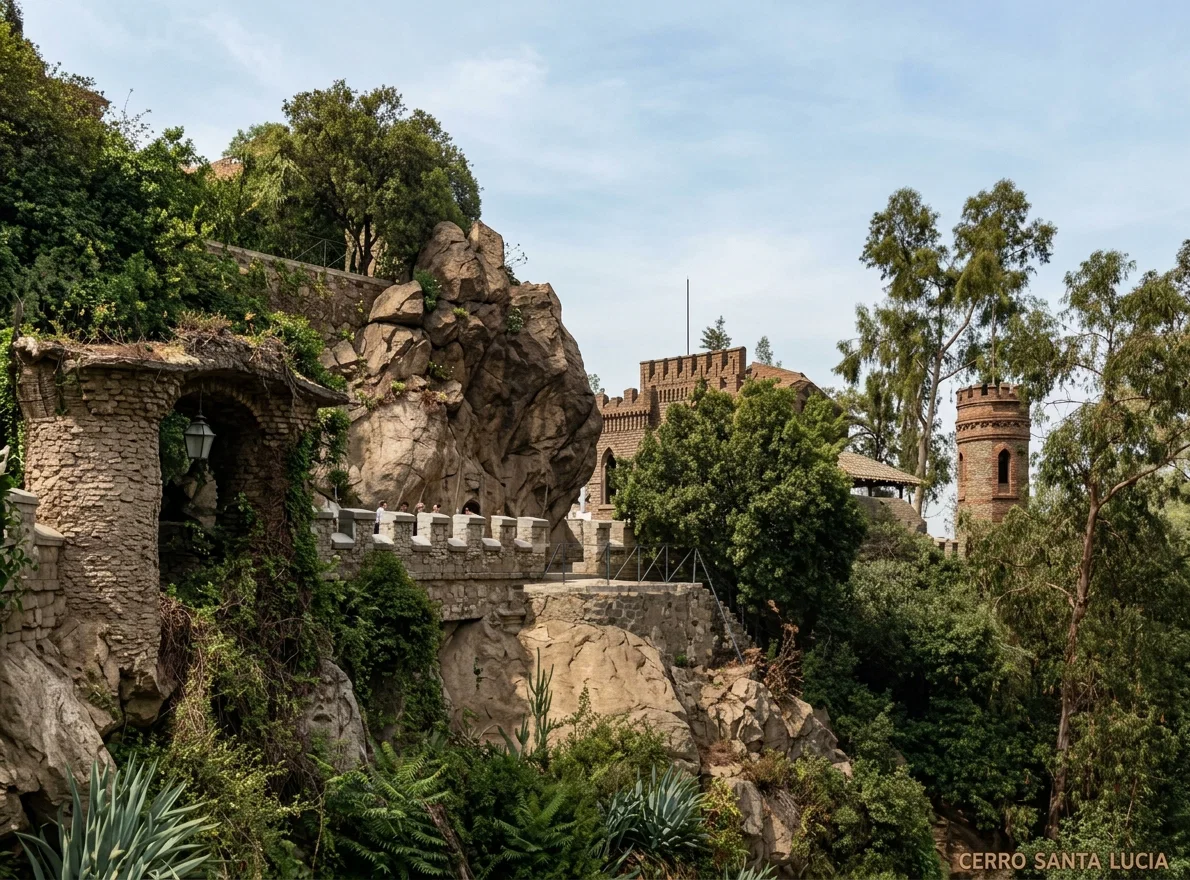
A VIEW IN A SOUTH AMERICAN CITY
Stretching over such a distance from north to south, her climate is varied. The extreme south is uninhabited. Punta Arenas (Sandy Point), her most southern city, and the southernmost city of the world, is more than one hundred and eighty miles from the southern border. Farther north, extending beyond Valparaiso, are fertile valleys. Over this region there are two seasons,—a rainy and a dry season,—varying in length according to the location north or south. About five hundred miles south of Valparaiso it is said to rain “thirteen months in the year.” In point of fact, it rains about eleven months. In the north it is never known to rain. It is a great, mountainous, sandy desert region, there being an entire absence of vegetation. In this quarter the borders of Chile have been considerably extended since the writer studied geography in school. Bolivia has been driven back from the sea, and Peru has lost quite a good slice of her territory.
Next to Argentina, Chile is probably the most enterprising of the South American republics. She has been most aggressive in extending her power. Her mines have for many years been open for development by foreigners, a thing by no means true of some of the other countries. The first railroad of South America, and, it is said, of the southern hemisphere also, was built in Chile. It was projected in 1846, built with Chilean capital, under the direction of Wm. Wheelwright, an engineer from the United States, and was opened up for traffic in 1851. It is about four hundred miles north of Valparaiso, and runs from Caldero on the Pacific to Copiapo, and on into the mountains to some silver and copper mines. It is now controlled largely by English capital. Most of the railroads are owned and controlled by the government, and over all such roads travel is cheap.
Mining is the leading industry in the north. Copper, silver, and saltpeter are the principal minerals. There are large beds of saltpeter which are extensively worked, this substance constituting the chief export of the country. The duties on saltpeter exports from Iquique are said to be more than all other duties throughout Chile.
In the more fertile parts the climate is probably not materially different from that of the most fertile parts of California, and the products are much the same. Plums, apricots, peaches, pears, figs, grapes, lemons, oranges, strawberries, cherries, quinces, and other fruits, also walnuts, grow abundantly, and without much care. Wheat and vegetables do well. The fruits are of a good quality, and very cheap. Had it not been that the United States consul to Paraguay had told me that that country was the cheapest place in the world in which to live, I would have concluded that this was true of this part of Chile. A vegetarian can live well. In some parts irrigation is resorted to.
As far as my observation goes, much more strong drink is used in South America than in the States. Chile is no exception to this. One sees it everywhere. Probably three fourths of the stores have liquors. When the people sit down to their meals, they must have liquor to make the bill of fare complete.
Their last course is coffee and a smoke. This is the almost invariable custom before rising from the table.
As the natives cook all their food on open fires, they are seldom supplied with as great variety as we are accustomed to in the States. Meats, onions, and pepper are staple articles in their bill of fare. Chilean peppers are eaten like pickles or onions in the States. To try them I touched one to my tongue, and it took about fifteen minutes to recover from its effects. How they can eat them is a mystery to me.
The houses are mostly built of adobe. The better buildings are plastered both inside and out. The houses of the poorer people have only dirt floors, or at best, floors made of brick. Many of the houses of the wealthy are grand. The sewerage of some of the cities, being14open, is bad, and likely to breed pestilence.
The population of Chile is about 3,500,000. The Chilean is of Spanish descent, frequently mixed with more or less Indian blood. There are several hundred thousand foreigners in the country, mostly from Germany, England, France, Italy, and Spain. The Germans predominate. Nearly all large business enterprises are owned by foreigners. It is said that the native generally has not the faculty to keep his money or to carry on a large business. However, they like to do business, and many of them are engaged in traffic of some kind, even though it may be only selling fruit on the street corner. To one from the States it seems strange that so many should be able to make a livelihood from such traffic, when so few are engaged in agriculture and other enterprises that go to build up the material wealth of the country.
Roman Catholicism is the state religion, and is supported by the government; but other religions are tolerated, and of late little difficulty is experienced in propagating them. While the laws permit the erection of church buildings by such religionists, they prohibit the addition of church spires and bells to all but the Catholic. This is practically a dead letter now, both being seen on many Protestant churches. A good work has been done by Bible colporteurs in circulating the Bible. The Presbyterians, Methodists, and others have secured several thousand members, and organized some churches; but for the majority of the people nothing has been done. Communities of Protestant foreigners have been formed, and churches organized, but such have seldom felt a burden to bring the gospel to the natives.
This is indeed a sad phase of the situation. Thousands of Europeans have come to the different South American republics for business purposes, and many of them are engaged in lucrative employment. Such may be found in many places, sometimes forming a suburb of a city, and sometimes scattered among the natives; but many of them have forgotten the faith of their fathers. They take no interest in religious things, and their children are growing up without the advantages their parents enjoyed in the home land. Nowhere, perhaps, is 1 Tim. 6:9, 10, more literally fulfilled: “They that will be rich fall into temptation and a snare, and into many foolish and hurtful lusts, which drown men in destruction and perdition. For the love of money is the root of all evil; which while some coveted after, they have erred from the faith, and pierced themselves through with many sorrows.” They have secured the South American gold, but at the sacrifice of the “pearl of great price,” while the native has neither.
Chile needs the gospel. She needs the whole gospel. She needs it applied to the whole man. The gospel of spiritual and physical health will help her children creditably to fill the exalted position of sons and daughters of God. Chile must have the gospel.
F. W. FIELD
By F. W. Field
Japan
F. W. FIELD
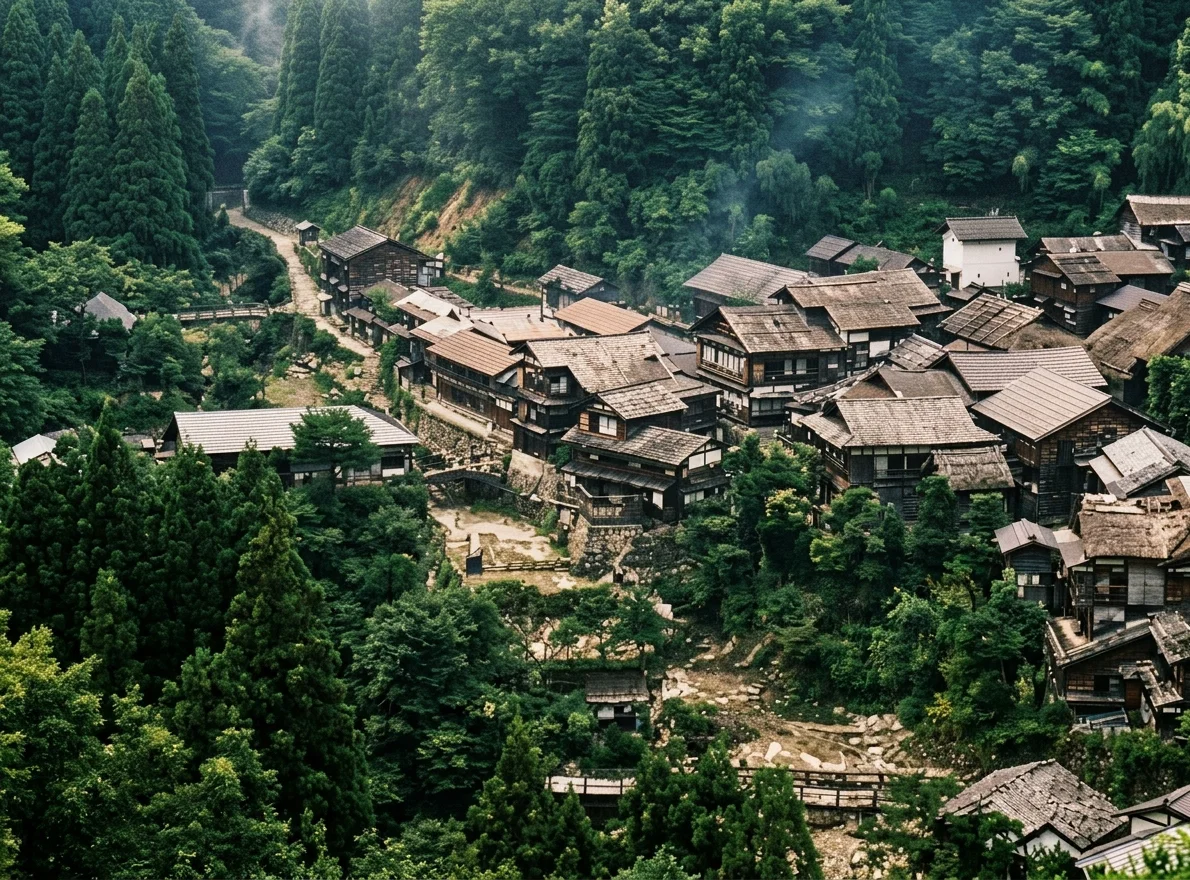
It is just six months, since I landed in Japan with my family, and we are becoming quite accustomed to our new surroundings. We are glad that all the readers of the REVIEW are to enjoy the reports from regions beyond. The Lord is blessing the work in this field. The little company of four believers at Wakamatsu have been awaiting baptism for some time. Recently Brother Kuniya spent several weeks in labor there; and the latter part of April Brother Burden and I visited them. We remained over Sabbath, and on Sunday we had baptism. The accompanying view shows the place of baptism, about two miles from Wakamatsu, on a beautiful mountain stream. These dear souls are firm in the truth, and were much rejoiced and encouraged by our visit. They have the spirit of labor, and will follow up the interest awakened among their friends and neighbors.
MOUNTAIN RESORT NEAR WAKAMATSU, JAPAN.
We are planning and working to give the truth a wider circulation through our publications. Our monthly paper is still doing good service. It is our pioneer missionary, and is opening up the work in new places continually. We are glad to report a new publication in Japanese. “His Glorious Appearing” has been translated, and the first copies have just been received from the printer. It makes a neat pamphlet of about one hundred and fifty pages, besides thirteen full-page illustrations, and a tasty cover design. The brethren in America can hardly appreciate how rejoiced we are over every addition to our literature in the language of the people. Besides our paper and the pamphlet just mentioned, we have “Steps to Christ” and a few Bible readings on various subjects.
We are looking forward to the time when we can do our own printing. A sixth brother in America has sent us four hundred dollars for the purchase of a printing press; but we need a supply of type and other office requisites, also stock, before we can begin this work. May the Lord open the heart of some one who reads this to help in this good work! An increased supply of literature is an urgent need just now. There are over forty million people in Japan, and we are just making a beginning in the work of giving them the closing message.
Brethren Kuniya and Matsukura are planning a campaign for the summer. They will make an extended trip to the south from Tokyo, distributing literature, holding meetings, and visiting interested readers of our paper. Their colporteur wagon is not a large vehicle drawn by horses, but a neat, two-wheeled handcart, large enough to carry quite a supply of books and papers. Remember these brethren in your prayers, and we will report their progress.
I might speak further of our needs in this field; but it is a large subject. If I tell you what we have, you can easily estimate our needs. We have four native and two foreign laborers for all Japan. But the work is the Lord’s, and we are of good courage. Brethren, pray for us, and pray for more laborers.
Tokyo.
Church Schools in South Africa
By C. H. Hayton
C. H. HAYTON
At the South African conference held in Cape Town last October the educational work received its due share of consideration. It was clear that some action should be taken to establish church schools among us in harmony with the recent Testimonies. All realized the importance of such schools, and the need of gathering our children together where they could receive instruction befitting these last days. Resolutions were unanimously passed to organize such schools wherever practicable, and an educational committee was appointed to take the matter in hand.
Since then three church schools and one native school have been started, and another church school is contemplated. The work does not exceed the sixth standard, and the schools are open to all children. The school at Beaconsfield has been established for several years, but has now become a church school. The teacher is a colonial young lady, Miss Amy R. Jubber, who has been connected with our work for the past three years. There are twenty-four children in this school, and the work is progressing encouragingly.15
A quotation from one of Sister Jubber’s letters states the case more fully: “I expect five more children on Monday. This will make twenty-four. Others have promised to come in the cooler weather. The ages of the children range from three to twelve years. I know that the enemy is hard at work. He is determined to discourage and defeat my work at every step, but I am far from being discouraged. I realize that this experience is the working out of my own salvation. We have made this school a subject of prayer, and God is blessing us daily.”
The second school is located at Uitenhage, a city in the Eastern Province in connection with the church lately raised up through the labors of Elder H. J. Edmed. Miss Ina Austen is the teacher, and from her last letter we learn that the school is making headway as fast as can be expected considering the many difficulties of the war times.
The third school is in Cape Town, and is under the charge of Miss Helen Hyatt, a daughter of Elder W. S. Hyatt. She is a graduate of the teachers’ course of the Claremont Union College. All her children are members of Seventh-day Adventist families, and belong to the Cape Town church. Not every church school has had such a promising beginning. There is a good school board, which takes a fatherly interest in both teacher and students, and supplies their every need. A large, newly painted, and well-lighted room, new desks, maps, blackboards, etc., have been furnished, and a visit to the schoolroom makes one appreciate our educational methods.
The native school is one lately opened by Elder J. M. Freeman in connection with the mission station at Kolo Mafeteng, Basutoland, where he is laboring. The teacher, Brother Kalaka, is a native, and was a student in Claremont College for two years. He left at the close of last year for the work among his own people. The following is an extract from Elder Freeman’s report:—
“I am glad that our school is started. We have now ended our second week. Brother S. D. Kalaka is the teacher. About forty students—boys and girls, young men and young women—are in attendance. The pupils work two hours each day for tuition. We endeavor to instill into their minds the principles of the Bible, and to teach them the present truth. I have conducted the opening Bible talk with them, and have enjoyed doing so. I believe this is a good work, and if it is carried on in the way that meets the mind of the Lord, others, as well as those attending the school, will be influenced. These pupils represent many homes, and naturally, the truths learned will be taken into the homes.”
There are many problems in connection with the educational work in South Africa to settle, which are peculiar to the colony, but we thank the Lord for the success thus far attained, and for the privilege of being laborers together with him.
Claremont, Cape Town, South Africa.
Collection for the Christiania Publishing House
Remember the collection next Sabbath, July 5, in behalf of the Christiania Publishing House. The amount to be raised is $30,000.
Onward in Fiji
By J. Edwin Fulton
Our work has been recently started in the eastern part of the group some distance from where our present mission station is established. We had been sending copies of Rarama, our little native paper, to this district, and an interest had been awakened there some time ago, but no public effort had been put forth until the latter part of 1901, when our native preacher, Pauliasi Bunoa, went there to labor and to distribute literature as he might have opportunity. He has been there ever since, and it is likely that we shall have him remain there for a time. Success is attending the efforts put forth, and the interest is extending to other places. Since the beginning of this year about fifty, counting old and young, have begun to observe the Sabbath. The first village entered is now about equally divided between Sabbath keepers and Wesleyans. On a very small island near by, the word was next preached. There are only about thirty persons on this little spot, but all, with the exception of three or four, have accepted the Sabbath. Other villages on other islands are calling for our workers. Brother Currow is there just now, and writes encouragingly of the outlook. He is anxious to see a mission station established in that district. The people are intelligent, and are calling for a school. Some have offered land for this purpose. Brother Currow writes, “It seems a favorable opportunity to have a mission house and school started here. Land, rich in cocoanuts, bananas, bread-fruit, and other native fruits, has been offered us by a chief who has just taken his stand for the truth. He has a fine lad whom he wishes to send to Suva. He seems anxious to help. Already he is paying tithes in the form of produce. What shall we do with his offer?”
The white people in this district look upon our work with favor. Some are specially interested in the medical missionary work. Brother Currow is doing good work in this line. Of that district Brother Currow says, “The islands are all close to one another. The bay is splendid for anchorage. The beach is of white sand, and is not rocky. About two thousand natives are in close proximity. Any one of the islands could be reached in three or four hours. Everything seems to favor the establishment of a mission here. Now is the opportunity.”
What shall we do? The way will not always be open. It costs so much to do anything in Fiji that we feel helpless. We need laborers, we ought to have two good school-teachers now. We need a home for a missionary in that district. We have long thought that we ought to have one there. The present success of our work is a confirmation of this.
What shall we do? We feel like making an appeal to our brethren who read these lines. The Lord is working for us. The door of opportunity is wide open. But we need means to go ahead. Will not some conference or church or individual agree to support a teacher for Fiji? What will others do for us in the way of money? The field is white, but there are few laborers, and money is not at hand. We ask your help. Shall we be disappointed?
J. EDWIN FULTON.
Suva Vau, Fiji.
The Upper Columbia Conference
By W. T. Knox
The Upper Columbia Conference and general camp meeting was held at Pendleton, Ore., May 15–25, a good representation being present from all the churches. Although the citizens of the place had shown considerable interest in having the meeting held in Pendleton, contributing quite liberally toward the expenses, yet but few attended the services. This was probably due to the inclement weather.
The reports showed that during the year four churches had been organized, and two church buildings erected. There had been an increase of twenty-two hundred dollars in tithe, also some increase in the sales of books, although but little had been accomplished with “Christ’s Object Lessons.” The financial results in the Spokane Sanitarium were encouraging, a net gain of twenty-four hundred dollars being reported. Walla Walla College had enjoyed a prosperous year; but the church-school work had still much to be desired. In the business meetings considerable attention was given to these branches of the work, and much interest was manifested by all. This was especially so in the consideration of the canvassing work, “Christ’s Object Lessons,” and the church schools. Our responsibility in the work with “Christ’s Object Lessons” was considered quite fully, and resulted in the ministers and conference workers becoming personally responsible for the full quota of books pertaining to the Upper Columbia Conference—ten thousand copies. This number has been ordered by the committee, and the field has been districted, the churches voting to co-operate with the ministers in disposing of the books. About five hundred dollars was raised for the Material Fund. It was the intention of all concerned to continue in this work until it is finished.16
That portion of British Columbia that has heretofore been occupied by this conference, namely, all east of the Cascade Mountains, was relinquished to the Pacific Union Conference, and it was voted to support Brother W. C. Young in that conference for one year.
The following-named persons were elected for the ensuing year: President, A. J. Breed, with J. A. Holbrook, J. M. Willoughby, W. H. Saxby, and J. W. Povey, his associates on the executive committee; Secretary and Treasurer, J. L. Kay. The missionary secretary is to be appointed by the executive committee.
Much of the blessing of God was with his people throughout the meeting, and the deep movings of his Spirit were often manifested in a marked manner. A number came under the converting power of the Lord, and almost all present appeared anxious to have their lives marked with a more devoted and efficient service. Besides the conference laborers, J. O. Corliss, F. H. Westphal, Prof. M. E. Cady, H. H. Hall, and the writer were present. W. T. Knox.
Verses on Seeking, Strength, and Giving
“He finds not gold who does not stoop
to seek,
He is not strong who was not first
made weak,
He is not good who would not better
be,
He never sees, who never longs to see.
“He shall find water who is sore athirst,
He shall find love who loves not self
the first,
He shall have life who would for
others live,
He shall have all who freely all would
give.”
Collection Next Sabbath for Christiania Publishing House
PLEDGES will be received in the collection next Sabbath to raise $30,000 for the Christiania Publishing House.