Your ShelfYour Projects

Signs of the Times, Vol. 38, No. 36.

The World's Harvest
Earlier text: An Erroneous Idea

Our Bible Reading

Spiritual Gifts

1. What did our Lord promise His disciples before He went away?
And I will pray the Father, and He shall give you ANOTHER COMFORTER, that He may abide with you forever; even the SPIRIT OF TRUTH; whom the world can not receive, because it seeth Him not, neither knoweth Him: but ye know Him; for He dwelleth with you, and shall be in you. John 14: 16, 17.
2. In what way would that Spirit be beneficial to His people?
Now concerning SPIRITUAL GIFTS, brethren, I would not have you ignorant. 1 Cor. 12: 1.
3. Through what do these gifts come?
Now there are diversities of gifts, but the SAME SPIRIT. 1 Cor. 12: 4.
4. Who works through these administrations and operations?
And there are differences of administrations, but the SAME LORD. And there are diversities of operations, but it is the SAME GOD which worketh all in all. 1 Cor. 12: 5, 6.
5. What gifts are in this chapter enumerated?
For to one is given by the Spirit the word of WISDOM; to another the word of KNOWLEDGE by the same Spirit; to another FAITH by the same Spirit; to another the gifts of HEALING by the same Spirit; to another the working of MIRACLES; to another PROPHECY; to another DISCERNING OF SPIRITS; to another divers kinds of TONGUES; to another the INTERPRETATION OF TONGUES.
And God hath set some in the church, first APOSTLES, secondarily PROPHETS, thirdly TEACHERS, after that MIRACLES, then gifts of HEALINGS, HELPS, GOVERNMENTS, diversities of TONGUES. 1 Cor. 12: 8-10, 28.
6. What gifts are named in another scripture?
Having then gifts differing according to the grace that is given to us, whether PROPHECY, let us prophesy according to the proportion of faith; or MINISTRY, let us wait on our ministering; or he that teacheth, on TEACHING; or he that exhorteth, on EXHORTATION: he that GIVETH, let him do it with simplicity; he that RULETH, with diligence; he that showeth mercy, with cheerfulness. Rom. 12: 6-8.
7. Is it proper for the child of God to seek or desire these gifts?
Covet [desire] earnestly the BEST GIFTS. 1 Cor. 12: 31.
8. But what is a better way than the coveting of any particular gift?
Yet show I unto you a more excellent way. 1 Cor. 12: 31.
NOTE.—God's more excellent way is the way of love, set forth in the wonderful chapter which follows. He who absolutely and utterly and wholly yields himself to God, is in that place where God can bestow upon him all that is best. There is great danger in seeking any one special manifestation of the Spirit. He who makes any one gift of the Spirit an all-absorbing search, or desire, gets to seeking selfishly, and Satan comes in with his spurious manifestations, his counterfeits of the good, and possesses the soul. If we love God, He will bestow upon us always the best gift for us.
9. Under whose control, absolutely, must these gifts be?
But all these worketh that ONE AND THE SELFSAME SPIRIT. 1 Cor. 12: 11.
10. To whom are they given?
Dividing to EVERY MAN severally as He [the Spirit] will. 1 Cor. 12: 11. As EACH hath received a GIFT. 1 Peter 4: 10, A.R.V.
11. By whom are these gifts of the Spirit bestowed?
Wherefore He saith, When He [Christ] ascended up on high, He led captivity captive, and GAVE GIFTS unto men. Eph. 4: 8.
12. What is meant by these gifts?
And He gave some, APOSTLES; and some, PROPHETS; and some, EVANGELISTS; and some, PASTORS and TEACHERS. Eph. 4: 11.
13. For what purpose were these gifts bestowed?
For the perfecting of the saints, for the work of the ministry, for the edifying of the body of Christ. Eph. 4: 12. But the manifestation of the Spirit is given to EVERY MAN to PROFIT withal. 1 Cor. 12: 7.
14. For how long were these gifts bestowed?
Till we all come in the unity of the faith, and of the knowledge of the Son of God, UNTO A PERFECT MAN, unto the measure of the stature of the fulness of Christ. Eph. 4: 13.
15. When only will these gifts be of no use to the church?
Whether there be prophecies, they shall fail; whether there be tongues, they shall cease; whether there be knowledge, it shall vanish away. For we know in part, and we prophesy in part. But WHEN THAT WHICH IS PERFECT IS COME, then that which is in part shall be done away. 1 Cor. 13: 8-10.
NOTE.—These scriptures clearly show that God designed in His wise plan that these gifts bestowed at the very beginning of the Christian dispensation should continue until its close. They were given till the perfect man should be manifested. That will not be until Christ, the Head, is joined by His body, the church, full, perfect, and complete, nothing wanting. The church needs these gifts to-day just as much as she ever needed them in the past. She admits the necessity of a few of them, cherishes some of them. All Christians believe in evangelists, in teachers, in pastors, in governments; but the same Spirit that gave these, also gave apostles and prophets and healings and working of miracles. Does not the real secret of the failure of these gifts at the present time lie in the words of our Saviour found in John, chapter 14, verse 15? When God's church is obedient to His law, there is a test for the gifts. There are antichrists in the world. Satan will work with all power and signs and lying wonders. How shall we distinguish between the manifestations? Only by the great, eternal law of God, the principles enunciated by the Decalogue. "To the law and to the testimony: if they speak not according to this word, it is because there is no light in them." Isa. 8: 20. "If ye love Me, keep My commandments. And I will pray the Father, and He shall give you another Comforter, that He may abide with you forever." John 14: 15, 16. God can bestow His Spirit upon the heart of obedience. God can pour out His gifts upon an obedient church, and He will receive the glory. It is never safe to pray for an outpouring of His Spirit, and the manifestation of spiritual gifts, upon a church which is disobedient, not submitted to the Lord's will.
16. What promise is assured the remnant church that is looking for her Lord's coming?
That in everything ye are enriched by Him, in all utterance, and in all knowledge; even as the testimony of Christ was confirmed in you: SO THAT YE COME BEHIND IN NO GIFT; waiting for the coming of our Lord Jesus Christ: who shall also confirm you unto the end, that ye may be blameless in the day of our Lord Jesus Christ. 1 Cor. 1: 5-8.
NOTE.—When the church of the Lord Jesus Christ can come to that place that she is willing to abide by the testimony of Christ, the Word which He has given through prophet and apostle; when she is willing to set aside her own deductions and the deductions of her men of science which lead away from that Word, and abide wholly by that Word; when she is willing that that Word shall be not merely an outward ensign, but an inward power in her life, confirmed in her,—then shall be bestowed upon her all the gifts of the Spirit in just such measure as shall make her an effective worker for God and in perfect harmony with His own will.
17. To whom, then, would due honor be given?
That ye might learn in us not to think of men above that which is written, that no one of you be puffed up for one against another. For who maketh thee to differ from another? and WHAT HAST THOU that thou didst not receive? 1 Cor. 4: 6, 7.
But now hath GOD SET THE MEMBERS every one of them in the body, as it hath PLEASED HIM. 1 Cor. 12: 18.
But of Him are ye in Christ Jesus, who of God is made unto us wisdom, and righteousness, and sanctification, and redemption: that, according as it is written, He that glorieth, let him GLORY IN THE LORD. 1 Cor. 1: 30, 31.

Our London Letter

[Our correspondent, Mr. W. H. Bartlett, is the editor of "Present Truth," London, native-born, well informed, and thoroly reliable.]
PROMINENT among the events of the past few weeks are the coronation and the constitutional struggle over the powers of the House of Lords.
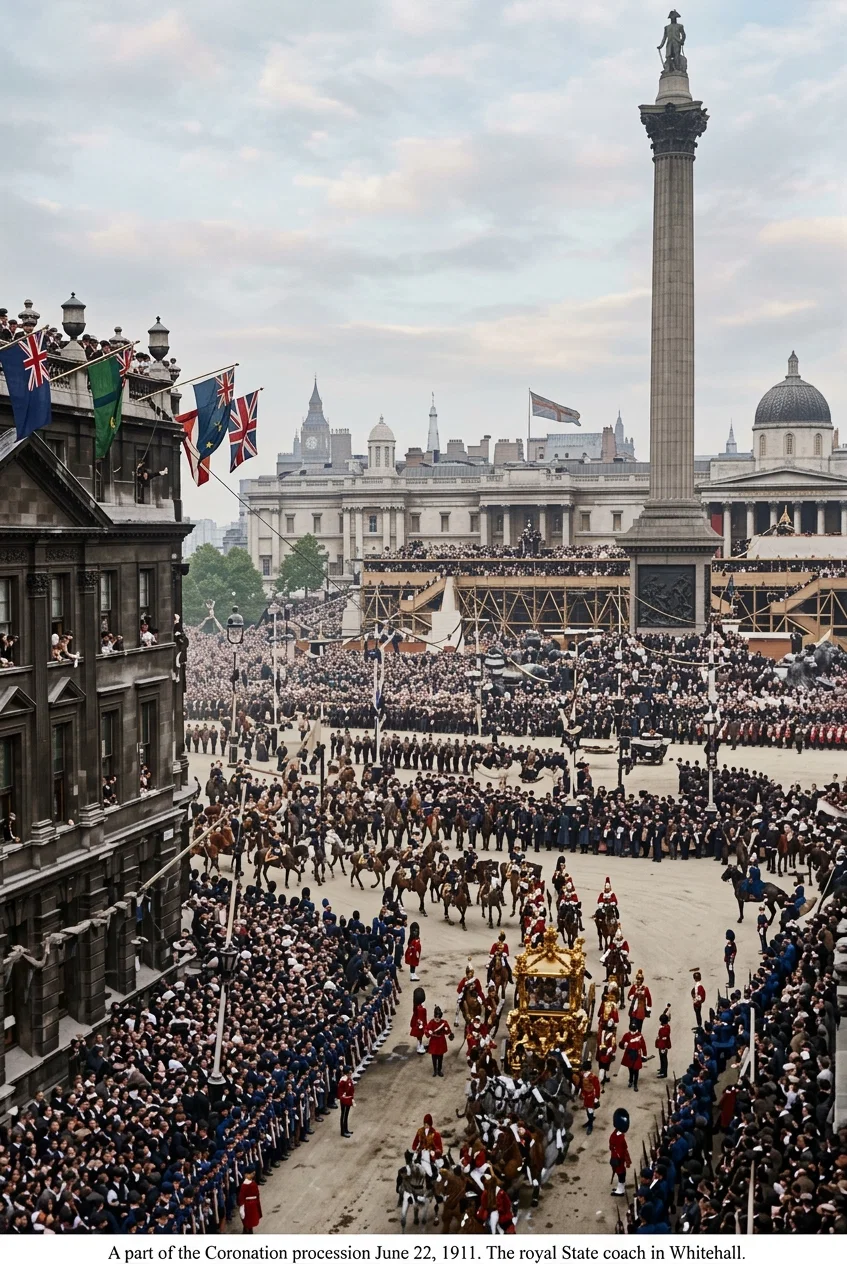
The coronation itself was a brilliant success, and the country entered with enthusiasm into the celebrations. Newspapers contained little else for weeks but elaborate descriptions of everybody and everything connected with the ceremony. All along the route of the royal processions huge banks of seats were erected, and exorbitant prices were asked for these and for windows and shop fronts. The police were evidently uneasy about their ability to control the enormous crowds that were expected to throng the thorofares, and massive barricades were erected on every street opening into the line of march. The nervousness communicated itself to the people; and many who had been planning to see the processions, decided to stay away, with the result that the crowd after all was only a moderate one. Very few of the barricades needed to be closed.
The speculators in seats were disappointed, and some of them lost heavily. At the last moment seats could be bought for one twentieth of the price previously asked.
Some adverse criticism found expression over the coronation ceremony itself, as being too medieval, not so much in its language and sentiment as in the fact that it gave undue prominence to the nobility and the clergy of the established church. In these days when the peerage is being forced to submit to the will of the people, it seemed somewhat incongruous that the monarch should apparently owe his enthronement to the consent and homage of the earls, marquises, and dukes of the kingdom. Other far more important elements of the national life were conspicuous by their absence from Westminster Abbey, or, if they were present by invitation, were relegated to an obscure position.

The Home Sentiment

On one point, however, there has been entire agreement. All beholders were impressed with the womanly dignity and charm of Queen Mary, and the wholesome simplicity and naturalness that marked the royal children. The king and queen are associated in the minds of their subjects with thoughts of a happy and affectionate home life, and this, as much as anything else, has warmed the hearts of the people toward them. It is recognized that the tastes of the present occupants of the throne do not lean toward sport or fashion or pleasure, and the more sober-minded section of the population is looking for quieter and more godly times as a result of the royal example. In many of their public utterances the king and queen have given reason for thinking that religion occupies a large place in their own thoughts and in their home life.

The Political Conflict

The coronation brought a brief truce in the political strife, but hardly were the decorations taken down before it broke out again with undiminished ardor. The bill restricting the veto of the Lords had been already passed through the House of Commons, and it remained for the Lords either to accept the situation and pass the bill, or take a firm stand for their privileges and throw out the measure.
The Historic House of Lords, where meet the Peers of the English Parliament, who have been passing through a struggle for their very existence. The children of King George and Queen Mary. The back row, beginning at the left, Prince Albert, Prince Henry, the Prince of Wales. In front, Prince John, Princess Mary, Prince George.
They chose a middle course; the bill was accepted in form, and passed through its first, second, and third readings, but was radically changed in committee by certain amendments, and, so modified, it was returned to the House of Commons. Thus the battle was set in array. At this point Mr. Asquith, the Liberal premier, announced that if it became necessary to do so in order to enact the Parliament bill into law, he was prepared to advise the king to create sufficient peers to drown the hostile vote in the House of Lords, and that the king had already intimated his willingness to accept and act on such advice.
This announcement of course put an end to the struggle. Henceforth the game was in the hands of Mr. Asquith, whether the Peers capitulated or decided to struggle to the last. The only question was which course the Lords would elect to take. Their counsels were divided; some of them urged one policy, and some the other. The majority of the Conservative lords were exceedingly loath to witness the creation of a large number of new peers. To drive matters to this extremity would not help them in the least, and would only place them in a position of helpless and permanent inferiority in the second chamber. The leaders of the Conservative party, Mr. A. J. Balfour and Lord Lansdowne, announced that they would bow to the inevitable and would not further resist the passage into law of the Parliament bill; but an obstinate minority refused thus to surrender the fight, and proclaimed that they would maintain their position to the bitter end.
Under these circumstances, what was the Conservative party to do if they were to prevent the creation of new peers and the swamping of the Upper House with a Liberal majority? It seemed for a time as tho the bulk of the Conservative party would, after all, vote with the Liberals for the Parliament bill in order to carry it against the insurgents in their own ranks. At the time of writing, it is not yet clear what will be the precise course taken; but in any event, whether new peers have to be created or not, the triumph of the bill is certain, and the constitutional struggle terminates for a time at least in the undisputed supremacy of the House of Commons. Henceforth no legislation which that house passes and maintains for two successive years against the Lords, can be hindered from going into effect.

A Radical, Revolutionary Change

The change is a radical one. So far England has been safeguarded against rapid and revolutionary reforms by a system of constitutional checks and counterchecks. Henceforward it will be in the power of the majority of the House of Commons to enact legislation almost regardless of the vested rights and traditions hitherto entrenched in the House of Lords. We have doubtless entered upon an era of more violent and fundamental change than our recent past has witnessed.
Another important change which comes into effect about the same time is the payment of members of Parliament. In the past the House has been largely comprised of men of independent means, altho a gradually increasing number of members have been paid by trade-unions and other organizations. In future every member of Parliament will receive a salary of two thousand dollars per annum. One of the first results of this new departure will probably be to introduce into Parliament a larger number of Labor representatives, since the funds of the trade-unions will not now be burdened with the support of their representatives, no matter how many of them may be elected.

The Home Rule Question

The chief argument brought forward by the Conservative party in support of their hostile amendments to the Parliament bill has been that, without such safeguards as they advocated, the Liberals would be able to pass a measure of "home rule" for Ireland before another general election could take place. They have so persistently forced this question to the front in the debates, that the way is now fully prepared for a home rule bill. Then, too, the pledges given by Mr. Asquith and his associates, and the debt they owe to the Irish party for support rendered, will certainly compel the early introduction of a measure of home rule for Ireland.
The old cry that home rule will mean "Rome rule" is raised in Protestant quarters in the north of Ireland and elsewhere. Mr. John Redmond, however, the leader of the Irish Nationalists, has pledged himself most distinctly that this shall not be the case. As a matter of fact, it is within the bounds of possibility that the granting of home rule will mean the downfall of priestly authority in Ireland. As long as the Irish have felt themselves a downtrodden race, they have naturally sympathized with the priests of what proclaimed itself to be a downtrodden church. Priests and people have stood together in one common struggle; but when the aspirations of the people are gratified and they have a parliament of their own, they are very likely to be absorbed in political affairs and to resent any attempt to prolong the old domination of the priests. It is not at all improbable that home rule will bring in its train a considerable degree of emancipation from the power of the priests. In these days when the Gospel of the kingdom is preached in all nations, even Catholic peoples are getting their opportunity to hear the message. In Italy and France, in Spain and Portugal, the Romish church is losing its old-time influence, and the doors are opening to the preachers of a purer Gospel. Ireland will also certainly get its opportunity before the end comes; and it may be that home rule will mean the breaking down of the barriers that have hitherto to a considerable degree excluded the Gospel from that country.

Labor Discontent

Back of all the coronation rejoicings and the strife of parties during recent months, has towered the grim, menacing shadow of labor discontent. The coal-fields of South Wales have been a scene of rioting and bloodshed; over-sea commerce has been held up for weeks by a strike for higher wages on the part of the stokers and other ill-paid workers; several of the great railways go in constant dread of an outbreak among their employees; and at the present time cargoes of food are spoiling outside the London docks because a hundred thousand dockers, carmen, porters, and lightermen are out on strike. There has hardly been a week for several months when some such struggle has not been in progress. The unusual heat we are now experiencing in England makes the stoppage of food supplies a serious matter, as the merchants have been keeping their stocks at a low point, and in consequence the prices of meat and dairy products have already advanced considerably.

Weather, Peace, Etc.

The present summer has been one of almost unbroken drought, and in some parts of England only two or three showers have fallen in the course of as many months. The result is a great scarcity of vegetables and an almost total failure of the fruit supplies.
Perhaps on account of the torpidity induced by the excessive and unaccustomed heat (ninety-five degrees in the shade to-day), England is taking but a languid interest in some current events that would at another time provoke considerable discussion. Some of our newspapers endeavored to work up excitement over the Moroccan crisis, but the country seems well content that France and Germany should settle this dispute in their own way, so long as England's interests are respected. The reciprocity treaty between the United States and Canada has also aroused but little discussion. Even the signing of the peace treaty between the United States and England has been accepted quietly. At first numerous public meetings were held to further the movement; but as the country heard of other nations entering into the same relations with the States, and learned that even Germany might possibly come in, the conviction rapidly grew that the new development was too diffusive to amount to much. The people cordially welcomed the idea of a permanent and assured peace between this country and the United States; but if every other power was to be placed on the same basis, they could not maintain the same degree of enthusiasm for the project.
A part of the Coronation procession June 22, 1911. The royal State coach in Whitehall.
The great aeroplane race over the British Islands for a prize of 50,000 dollars has been a wonderful demonstration of the possibilities of flying-machines. Altho only two competitors succeeded in covering the thousand miles in a reasonable time, the fact that such a distance could be covered in less than twenty-four hours of actual flying, without inflicting any damage upon the machinery of the aeroplanes, proved unquestionably that the new mode of motion is now one to be definitely reckoned with. Henceforth the power that is best able to command the air will hold a tremendous advantage in its conflicts with other powers. With two such men as Messrs. Beaumont and Védrines, France might hope to cope successfully with an army otherwise superior to her own in numbers and organization. W. T. BARTLETT.
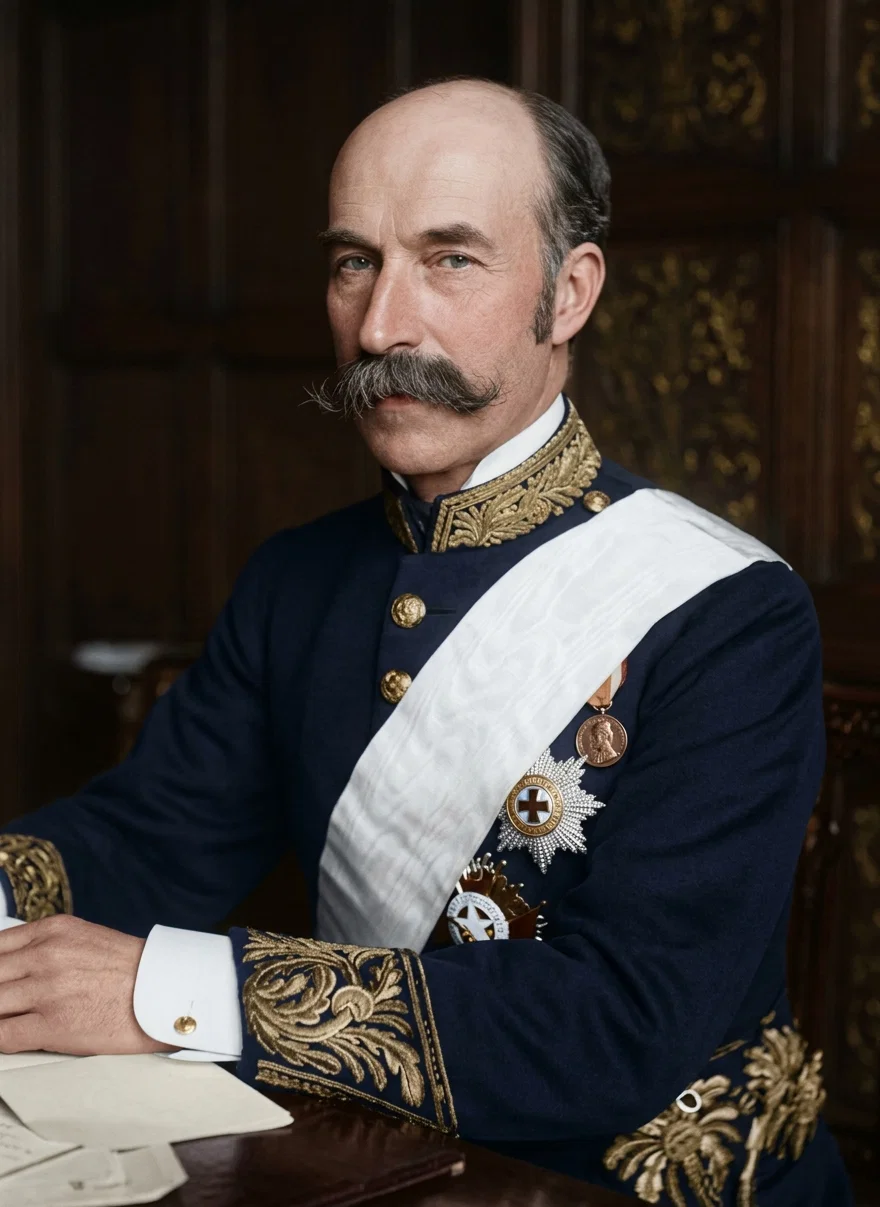
Lord Lansdowne, the leader of the opposition among the Conservative peers

California’s Textbook System Criticized

The educational problem is not a settled one by any means. This is indicated strongly by the Sierra Educational News, the magazine owned and published by the teachers of California, the August number of which is before us. Boards, text-book committees, obstructionists, and live, progressive teachers are floating neither the flag of peace nor of truce. We do not blame the teachers.
Prof. Will C. Wood, superintendent of Alameda city schools, in a review of the text-book system says: "Out of forty-three books which have been adopted under the California system, we have had eleven poor books, nineteen fair books, five good books, and eight books whose merits have not been determined as yet. In other words, seventy per cent of the books have fallen short of the standard of good books, and only twelve per cent have met that standard. With these facts in mind, I do not hesitate to say that the present system has not resulted in the placing of satisfactory text-books in the hands of the pupils."

Publicity for Congressional Campaign Funds

It is supposed that men who are nominated to the high office of a legislator for the United States—either to the Senate or to the House of Representatives—should be honest men—so honest that people are willing to trust them; but the course of legislation in the last number of years, and the evidences brought out in connection with national elections, show to the contrary. There has been a demand from some of the best quarters for a number of years that election expenses should be made public. The sixty-first Congress passed an act providing for public congressional and campaign funds after election; but what is called the Rucker bill, passed at the late session of Congress, provides for publicity before election, as well as after, and limits to $5,000 the expenditures of a candidate for representative in Congress, and to $10,000 the expenditure of a candidate for the Senate. As the New York World remarks, "No more federal elections can be purchased, except in defiance of the law."

The Canonsburg Theater Disaster

It was a fearful calamity that occurred at Canonsburg, Pennsylvania, August 26. A moving picture film exploded, a little fire flashed up, one terror-stricken man shrieked "Fire!" and the whole mass in the theater rushed pell-mell for the doors. The fire was put out; but the people, in endeavoring to reach the open air, became congested on the stairs, and the strong trampled down the weak. Twenty-six lives were lost, and sixty injured. Fully one half of the dead are children. The story is told of one young man who secured his marriage license on the way to the show, who sought to defend his soon-to-be bride and two little children, but was deliberately killed, and the rest trampled to death. The bravery of strong men seems to have been conspicuous by its absence.

War Preparations in Great Britain

A despatch from London dated August 24 declares that there is great activity in Great Britain in preparing for war, and the fear is that the war will come from Germany. We are also told that there are an unusually large number of German male visitors going about alone at places where government stores are located, and these are carefully watched, lest they be spies. It is talked in the leading clubs where the diplomats gather, that certain powerful German leaders are determined to force war to check the advance of Socialism in that empire. More than forty per cent, it is said, of the votes most recently cast in Germany were for Social Democrats.

Letters to a Daughter

By Harriet S. Maxson, M. D.

Saved to Serve

[This letter, the last in the series, was published by mistake out of order. We therefore give it again. It will bear repeating.—Editor.]
MY DEAR CHILD,—
Your last letter was the dearest of all the budget, all of which have been most sweet to me. This one has brought me greater comfort because I read between the lines a betrayal of your inmost heart's desire, the aim and purpose, unformulated, probably all unknown to yourself. I recognize that these years of training, together with your mother's unceasing prayer, have wrought out in your heart one all-absorbing motive, and that is, service. I have been looking for this. You are just beginning to outline the vision which has so far been concealed in mist. Make now, my dear one, a solemn vow; with Paul say to your Master you will not be "disobedient to the heavenly vision."
You seem to be troubled as to the particular way you will give this service. Leave that to Him. He has promised to lead those who will ever follow the Lord of heaven, who pleased not Himself, but whose life was one of ministry. You remember that on the last meeting with His disciples He said, So ought ye to serve one another. All you need to concern yourself about is that your heart's purpose be kept single. You know the promise to those who hunger and thirst after righteousness that "they shall be filled." In this case the right thing at all times will be the only thing in evidence. We will never waver, or fail to discern between right and wrong, when our vision is unclouded and our thirst is for unadulterated righteousness. And so, dear one, it will be with your service,—it will come to you as you walk along the path of duty that lies nearest to you. "In the morning sow thy seed, and in the evening withhold not thy hand; for thou knowest not which shall prosper, whether this or that." Despise not the little things of life. It is only the few that stand out in bold relief before the eyes of men as having served in larger ways. The moment one begins to be ambitious to that end, he cuts off the source of his power. In our service, self must be left out of sight, else the service will fall flat. Such is the immutable law of the Master. The real work of the world is done by the rank and file of the unknown. Only follow where He leads, and He will give you all that your developing powers can perform.
Is it not sweet to contemplate that there is no limit to the development of the human mind and heart under the leadership of the Master? So again I say, Do not despise the day of small things. Many a life ship has been turned in its course by the obstruction of a smile or a kindly word, and so saved from destruction. Learn to be thoughtful. Do the little things that present themselves. You may not be naturally quick to see the opportunity; but with the heart filled with the service idea, you will find yourself growing more sensitive to the needs, large and small, of those about you. Only never quench an impulse, whatever the personal sacrifice. Do you remember how the Saviour said they that follow after should know the truth?—that they that will to do the will of the Master should know the way? He spoke a universal law—His law. When we listen to the still small voice, the voice grows louder. When we do its bidding it speaks oftener. And thus, my child, you will find your own life unfolding as day after day you are true to your calling. Isn't it a beautiful thought to know that this all reacts on our own character, to make it more beautiful and strong and ourselves more happy? How munificent are our Father's plans for all His children!
The world is made up of two classes of people; the care takers and the care makers. The world's burdens are really carried on the shoulders of the few. It is true that if you have a piece of work to be done, and you ask the very busy man or woman to help you, you will get ready response. The selfish person is engrossed in his own little world, doing what you do on the side before you take up your business. He has no time. The large class who are so busy doing nothing either for themselves or for others, will have neither time nor inclination to help you; or if by chance they should catch the inspiration of helpfulness for a moment, the power will be lacking.
Do you remember how the Master took from the unprofitable servant the one talent he had hid, and gave to him who at first had five, but by their use had gained another five? Thus did the Great Teacher strive to show us the importance of using our gifts of time, means, and talents, lest they be taken from us.
It is a universal law that nature abhors a useless thing, and sets at work to remove it. Therefore, my dear, if you will be numbered among the helpers and not the helpless, if you would carry and not be carried, if you would be a leader and not a trailer, you must learn to make use of your powers. You must learn to plan for yourself. Do not wait for some one else to plan for you. Plan for yourself, and then execute your plans with perseverance and exactness. Press right on until you bring things to pass.
Get something for yourself out of every circumstance of life, no matter how trivial. Even tho it be a hindrance or an obstacle, use it as a stepping-stone. Keep a steady eye, a single purpose. Don't forget, and don't be side-tracked. If you find you are losing hold and weakening, read the lives of those who have had an aim and have achieved results.
This year's work as district nurse has given you an insight into "the other side of life." It is good for you in many ways to have had the experience. This plan of giving to the poor the skill and service of trained nurses is one of the great philanthropies of recent times. In your ministering, my dear, your hands and your time will be filled with things to be done and given; but do not forget that which is most important of all to cultivate,—that power of the heart which feels another's experience.
Ask God to give you skill in comfort's art, That you may consecrated be, and set apart Unto a life of sympathy. For heavy is the weight of ill in every heart, And comforters are needed much Of Christlike touch.
Sympathy of the right sort does not foster weakness or selfishness, but is as bracing as the west wind. Strive for that larger sympathy which is the gift of larger souls, who can embrace the masses, loving those who are not lovable in themselves. Seek that true culture which is as bread and meat to a hungry world.
Lowell makes the Christ in his poem say: Who gives himself with his alms feeds three, Himself, his hungering neighbor, and Me.
Thus will you better be able to bring the famishing soul to the "fountain of life." For unless you do this, your work will after all be in vain. Some one has said: Be noble, and the nobleness that lies In other men, sleeping, but never dead, Will rise in majesty to meet thine own.
Indeed, it will be a most beautiful revelation to you to witness the transformation that will come to a soul benumbed by discouragement, poverty, and evil association, when you bring to it the contact of your own life full of high and noble thoughts.
May every soul that touches mine, Be it the slightest contact, get therefrom some good, Some little grace, one kindly thought, One aspiration yet unfelt, one bit of courage For the darkening night, one gleam of faith To brave the thickening ills of life, One glimpse of brighter sky beyond the gathering mist, To make life worth while, And heaven a heritage.
Above all things do not permit the contact with suffering to make you careless or indifferent. There is a beautiful prayer which has fallen into my hands, written for the nurses of one of the great hospitals of New York. The framer of it I am sure had learned some of the blessedness of true service. I will send you a copy.
O Great Physician and pitying Father, guard, cherish, and consecrate, we beseech Thee, the gracious seed of a divine compassion, implanted within the hearts of these Thy handmaidens, by Thy tenderness and care. Let no use, no custom, no commonness of suffering, dim the luster of its gracious healing power.
Let no haste, no weariness, no thought of gain, no care of self, mar its perfect manifestation.
Train Thou, O Lord, Thy children in the sacred gift of sympathy. May its soft footfalls echo ever in the wake of skill of hand and brain.
Teach us its myriad and subtile ways of easing pain, its tireless patience, its brooding love and care.
Teach us to do Thy work in fear and gladness, and give us daily peace. Amen.
And so, dear child, you will find each day your portion of the world's work awaiting you. Just now that portion lies in the heart of your home, and we anxiously await your coming.
Your loving Mother.

Are You a Leaner or a Lifter?

No! the two kinds of people on earth that I mean Are the people who lift and the people who lean. Where'er you go you will find the world's masses Are always divided in just these two classes; And, oddly enough, you find, I ween, There is only one lifter to twenty who lean. In what class are you? Are you easing the load Of overtaxed lifters who toil down the road? Or are you a leaner, who lets others bear Your portion of labor and worry and care? —Ella Wheeler Wilcox.
Continue reading: Little Studies on the Prophecies