Your ShelfYour Projects

Review and Herald, Vol. 79, No. 49.

A Call to Praise
Earlier text: Defense of Sunday Nonobservance

The Home and the Family

MRS. E. M. PEEBLES
The family is God’s own arrangement, the crowning work of creation. The loveliest of all that he created was that noble pair, made in the image of God and in his likeness, and placed in such relationship that each to the other was better than himself—thus at once making it impossible that there should be self-seeking in the mind of either, but each, while seeking the happiness of the other, would at the same time be insuring and increasing his own. Selfishness is the most deadly thing that exists, and self-seeking is satanic. God knew that it was not good for man to be alone, because any one much alone becomes self-centered, and that is why it is not good.
So this beautiful pair was placed in the garden, with the command, “Be fruitful, multiply, and replenish the earth,” etc. But even then there was danger that this pair, while by themselves, should be centered upon themselves, so the circle should be ever widening in such a way that a tie should exist between all, which should bind all together in love, and each would naturally seek the welfare of every other being; and the golden chain, the binding principle, should be love, not passion and self-gratification. And God’s thought in it all was to draw the mind away from self, to some other object; and so when the first babe came, and the great fountain of parental love was opened in the hearts of the first father and mother, what new revelations of God, their divine Maker and Father, must have come to them!
Satan hated all this beauty and loveliness. It was too much like what he had lost in heaven, and he went at once about the work of destroying it. The first thing he did was to separate the holy pair, then he stirred up anger and hatred and strife between their offspring, introduced a plurality of wives, then all the various forms of licentiousness and impurity, until the earth had to be sunk in water, and the race wiped out except one sample of what God had planned at the first.
Noah and his family were saved. The sons were there with their wives, each pair a sample of what was in the mind of God at the beginning, but so degenerated that Satan had a strong hold upon them to start with. But it was the best that was left from the ruins. The family arrangement has not been entirely obliterated. There are still to be found in this sin-cursed earth, amid all the debauchery and corruption, monuments of God’s beautiful plan, families that are according to his mind, so that one is reminded of that beautiful text of Scripture, “Thy wife shall be as a fruitful vine by the side of thine house: thy children like olive plants round about thy table.”
While it is true that the coming of God and the Saviour is near, and all things earthly are soon to close, and conditions are changed, there is no reason why we as a people, standing as we do for God and his principles of truth and purity, should join in the least with this corrupt and sinful people who are fast filling the cup of their iniquity, and use knowledge that science has given to further Satan’s plans to destroy the plans of God. Let the sisters who have been “set in families” make the best of it, but not resort to infanticide, abortion, or any of those unnamable inventions which proceed from Satan’s own brain, to enable men and women to give full sway to unbridled lust. Let us leave those things to go back to the source whence they originated, to be used only by those who are being led by him to destruction.
God’s plan was right, and a woman who has never known the mother love has missed the sweetest thing in this wicked world, unless she has been a mother to some of those poor little waifs who are all around us, going down to destruction. They are God’s creatures, every one of them, and are just as precious in his sight as our own children. The happy laugh and innocent prattle of little children will put new life and inspiration into the hearts of older people, and it is good to be much with little children. Mothers who think they cannot live a Christian life with little children to try them would find just as great hindrance in any other condition.
In the heart of every true woman there is a craving to know the sweetness of a mother’s love, and the unsealing of the fount of parental love cannot fail to give broader and more beautiful views of the plan of redemption. One can understand God better, and gain Christian experience more naturally. The beautiful text, “For God so loved the world, that he gave his only begotten Son, that whosoever believeth in him should not perish, but have everlasting life,” has a new and sweeter meaning. It is sweeter to think of God as a parent than as a stern judge. A happy, well-governed family is the nearest thing on earth to that home above, where our Father dwells, and waits with yearning love to gather his earth-worn children home; and there will be great rejoicing in that day, when, with Abraham, Isaac, and Jacob, they shall come, forever safe from the danger of being torn and separated.
Jesus is soon coming, and if we cannot any longer perpetuate God’s beautiful institution, let us not join with Satan to lower and degrade its pure principles, and allow them to trail in the mire of sin and iniquity. All the holy impulses which God implanted in the human breast must be given back to him, pure and untarnished by the corruptions which caused the downfall of Sodom, and which are eating like a canker through every strata of society, the whole mass of which is boiling and seething with iniquity, and is almost ready to go under in the last great purifying fires of the burning day, as the old world went under the waters of the flood.
“Blessed are the pure in heart: for they shall see God.” “Wherefore come out from among them, and be ye separate, saith the Lord, and touch not the unclean thing; and I will receive you, and will be a Father unto you, and ye shall be my sons and daughters.”

Wine Against Wisdom

The Two Spirits

SPEAKING of the judgment to come upon “the drunkards of Ephraim,” and of “them that are overcome with wine,” the prophet says: “In that day shall the Lord of hosts be for a crown of glory, and for a diadem of beauty, unto the residue of his people, and for a spirit of judgment to him that sitteth in judgment, and for strength to them that turn the battle to the gate. But they also have erred through wine, and through strong drink are out of the way; the priest and the prophet have erred through strong drink, they are swallowed up of wine, they are out of the way through strong drink; they err in vision, they stumble in judgment.”
What a contrast between the Spirit of the Lord and the spirit of wine! The Spirit of the Lord is the Spirit of judgment, “the Spirit of wisdom and understanding;” but wine causes even the wisest men to “stumble in judgment.” The statement that “when the wine is in, the wit is out,” is perfectly in harmony with the Scriptures; and the experience of mankind fully corroborates it.
This agrees with the exhortation given by the apostle Paul: “Be ye not unwise, but understanding what the will of the Lord is. And be not drunk with wine, wherein is excess; but be filled with the Spirit.” Eph. 5: 17, 18. Men fancy that wine contributes to the flow of wit and wisdom; but that is where they are deceived. “Wine is a mocker, strong drink is raging: and whosoever is deceived thereby is not wise.” Wine loosens the tongue; and if but little be taken, a wise man, being stimulated to talk, will naturally speak some wisdom; but a very little more will make him talk foolishness; and in any case the wine adds nothing to what one has.
The Spirit of the Lord, on the other hand, imparts true wisdom, and with this we are to be filled; but to be really filled with anything means that all else is excluded. So, just to the extent that one has wine or the spirit of wine, alcohol, in one’s system, to that extent, at least, the Spirit of God must be absent.
In wine there is “excess.” Mark the words well. It is not said that wine leads to excess, or that there is danger that, if wine be taken, it will be taken to excess, but the excess is in the wine itself. It is as true of a teaspoonful as of a gallon, the difference being only one of degree. Wherever there is wine at all, there is excess. Of course it is understood that this refers to the wine that is fermented and intoxicating,—the wine which by fermentation, decay, has become the bearer of death.
It is a striking illustration of how Satan seeks to substitute death for life, and how to make people believe that there is no death, but that death is life, that he has caused brandy to be known as eau de vie—water of life—when it is in reality the water of death. “Fire water” it is appropriately named by the Red Indians.
Temperance is one of the fruits of the Spirit. Gal. 5: 22, 23. By this we see that temperance does not consist, as some suppose, in a “moderate” use of everything, whether it is good or bad; for “the Spirit is life,” and death and life cannot exist together. Whoever is led by the Spirit, and filled with the Spirit, is necessarily separated from every form of death, or everything tending to death. It is absolutely impossible for one to be completely filled with the Spirit, and at the same time to have death working in him. Therefore the Spirit-filled man has no alcoholic poison in his body.
This opens up a still wider range of temperance. Many who will allow that temperance pertains to the gospel, and that alcohol is opposed to the Spirit of God, will not admit that what one eats has anything to do with religion. Let us see whether or not this is so. In what does the evil of alcoholic liquor drinking consist? Is it in the mere act of drinking? or in the taking of a liquid?—Evidently not; since water, the purest and strongest drink, is liquid, and the act of drinking water is just the same as that of drinking intoxicating liquor. Wherein, then, lies the evil?—Just in this, that it is intoxicating, poisonous, destructive of life.
Now then, suppose one takes food which produces alcohol in the body, a very common occurrence; where is the difference, except in degree, between that and alcohol which one drinks?—There is none. Alcohol formed from food within the body is just as poisonous, just as intoxicating, as that formed in a still, outside the body.
The next question is, What are the signs of intoxication from alcohol found within the body?—They are just the same as those for intoxication from alcohol which one drinks. They cannot all be enumerated. But few people do not know the sensation of almost irresistible drowsiness after meals. All are familiar with the dull, glassy expression of the eye, which is so often seen in one who is making vain attempts to keep awake after a too hearty meal, or even a smaller meal which is not digesting properly. This is identical with the drunkard’s eye.
Again; everybody is familiar with the expression “a bilious attack.” Too many know by experience what it is; and whether by experience or observation, all know that the result is often the same as with a man who has taken more liquor than the stomach can endure. Now, how much better is the man who eats in such a way that alcohol and other poisons are produced in the stomach until the organ is compelled to eject its contents, than the man who produces the same result by drinking? Can you not see that the Christian grace of temperance has to do with eating as surely as with drinking?—Present Truth.

The Habit of Kindness

I KNOW of a home in which the very atmosphere is so charged with human loving-kindness that it is a delight to be a guest therein. I have been a guest in that home for weeks at a time, and I never heard a single harsh, unkind word spoken to or about any one. One day I said to the sweet and gentle mistress of the home: “Do tell me, if you can, the secret of the beautiful and unfailing kindness that forms a part of the very atmosphere of this home. What is the real secret of it?”
“Why, I do not know that there is any secret about it. It is a kind of habit with us. You know that some people fall into the habit of always complaining. Others form the habit of always speaking sharply, while still others are habitually morose, and sulk continually. Now, it is just as easy to form a good habit as a bad habit, and, if one would only think so, it is just as easy to form the habit of kindness as it is to form the habit of unkindness. When I was a little girl at home, my father had his children sing nearly every day:— “O, say a kind word if you can! And you can, and you can; O, say a kind word if you can! And you can, and you can.” “If any one spoke an unkind word in the house, some one would be sure to sing these lines, and so we came to speak kindly nearly all the time. So much happiness came from it, that I resolved, when I came into possession of a home of my own, that habitual kindness should be the rule there.”
“It is a beautiful rule,” I said.
“It is a rule that will bring peace and joy to any home, and, as I said before, any one can cultivate the habit of kindness.”
I believe this to be true, and I am sure that Sir Humphrey Davy told the truth when he said: “Life is made up, not of great sacrifices or duties, but of little things in which smiles and small obligations, given habitually, are what win and preserve the heart and secure comfort.”— J. T. Harbour.

MRS. L. D. AVERY-STUTTLE

Submission

MRS. L. D. AVERY-STUTTLE

Have thine own will with me! This from my heart I cry; Whatever pleaseth thee, Whether I live or die. Thou hast my hand, and so, Be the path high or low, Master, I yield to thee,— Have thine own way with me.
Darkness surrounds my feet, But I can feel thy hand, And in submission sweet I follow thy command. But show thy child the way, Then, be it night or day, If thou but walk, with me, Why should I care to see?
O Christ, thou blessed One! When my heart faints with fear, And shadows one by one, Like foes are lurking near, Still give me strength to say: Master, have thine own way; ’Tis better far than mine: Not my will, Lord, but thine. Master, I yield to thee,— Have thine own way with me.

Physical Morality

The preservation of health is a duty. Few men seem conscious that there is such a thing as physical morality. Men's habitual words and acts imply the idea that they are at liberty to treat their bodies as they please. Disorders entailed by disobedience to nature's dictates they regard simply as grievances, not as the effects of a conduct more or less flagitious. Though the evil consequences inflicted on their dependents, and on future generations, are often as great as those caused by crime, yet they do not think themselves in any way criminal. It is true that in the case of drunkenness the viciousness of this bodily transgression is recognized, but none appear to infer that, if this bodily transgression is vicious, so, too, is every bodily transgression. The fact is that all breaches of the laws of health are physical sins.—Herbert Spencer.

Character-Building Books in the Home

“If our homes were furnished with more character-building books, and less bric-a-brac and costly furniture, our children would get a much better start in life.”

Conditions in Barbados

W. A. SWEANEY
Conditions here are simply appalling, and are becoming worse every day. With a population of more than twelve hundred to the square mile, you can imagine that an epidemic of smallpox is not a desirable thing to contemplate. The poverty, hardship, and suffering of the masses, even in ordinary times, are pitiable, but now they are simply beyond description. How the people live at all is beyond my comprehension.
A LAUNDRY IN BARBADOS
For years the price of sugar, the chief and almost the only product, has been declining, until it is now below the cost of production, and ruin stares the planters in the face, and has already overtaken many of them. Imperial grants and loans have served for a time to postpone the crisis that now seems inevitable. Should the sugar industry collapse, which will no doubt be the case, many thousands of plantation laborers who now eke out a miserable existence on two or three days' work at ten or twelve cents a day will be thrown entirely out of employment, to join the already immense number of idlers, and then there will be trouble such as we have not seen yet, bad as it has been and as it now is.
The smallpox epidemic, with the accompanying quarantine regulations, has greatly intensified all these unfavorable and disagreeable conditions. Nearly all provisions and supplies of every kind come from abroad, and of course the stoppage of commerce is followed by an immediate rise in prices, which greatly increases the suffering and hardship of the middle and lower classes, who are barely able to exist under the most favorable circumstances. Then the interruption of commerce throws thousands of men out of employment, such as stevedores, lightmen, boatmen, cartmen, porters, and common laborers in general; it also works havoc among the merchants and other business men.
The present epidemic, although preceded by a warning one last winter, found the authorities totally unprepared to grapple with such a visitation. Hospital accommodations are totally inadequate, and the disease is increasing and spreading by leaps and bounds. As many as fifty cases in a day have been reported, more than half are still in their homes, with no possibility of proper isolation, care, or treatment. In the slums, where, of course, the disease reaps its greatest harvest, from six to twelve persons live in huts about eight by twelve feet in size. These huts almost touch one another; they stand on either side of narrow lanes, or halls, which fairly swarm with goats, pigs, poultry, and people. However, in view of the conditions, it would seem that the sanitary authorities do their work in a very thorough manner. The streets are kept cleaner than one would expect under the circumstances.
When the epidemic broke out, the people refused to be taken to the isolation stations, concealing their sick, and mobbing the sanitary officers and doctors in the performance of their duties. This feeling was intensified by the practice which prevailed at first of throwing the smallpox corpses into the sea. The masses of the people rebelled at this, as they set great store by the privilege of following their friends to the grave; in fact, funerals and weddings are gala events here. Among the masses long lines of people on foot follow the hearse to the grave. The higher classes, of course, ride in their carriages, as elsewhere. The business of fishermen, a large class, was also ruined by these burials at sea, so the authorities were forced to abandon that practice.
At first the people entirely refused vaccination; but the government, the ministers, the school-teachers, the newspaper people, and sensible and influential people generally engaged in a crusade of education, and now thousands are daily baring their arms for vaccination, which has been made free at government expense.
Many of the people are fatalists, and believe that if they are to have the disease, there is no use of trying to avoid it; and so when a case develops, a curious crowd, sometimes numbering hundreds, will surround the house. Frequently persons go to the public buildings to report themselves while covered with smallpox. Sometimes they are sent to a hospital, and sometimes turned away for lack of room. They are always surrounded by a curious throng.
None of our people have taken the disease, and we are trusting in God for protection. Our work is making advancement, despite the unfavorable circumstances. The church is alive and active, and all our meetings are well attended, interesting, and helpful. On Sunday night the church is filled, and even surrounded. Many are interested, and some are preparing for baptism at the soon-coming quarterly meeting.
We are planning a temperance program for the near future. There is great need that something be done in this direction, and we expect success.
The work of the school is encouraging, despite the meager facilities. We are having a three weeks' vacation now, owing to the intense heat and smallpox and vaccination. We are of good courage, and glad we are here; for the need of humanity surely cannot be greater anywhere than in this place, and we want to be where we are most needed. Our health is good, for which we daily thank God.
If we had a strong, earnest, energetic, and consecrated couple, possessing some knowledge of nursing, business methods, cooking, etc., we would start the health food business at once. There is a great demand for it, and I think that it would be self-supporting from the beginning, and would develop into treatment rooms later. Are there not persons among our people who are willing to place all on the altar for service? I know there are, and we pray that God will send the proper persons. They would need to be patient, humble, true as steel, and willing to forego ease and comfort for the sake of the Master, who sacrificed all for us. They would need to come depending on God and their own energies, and not on the Mission Board, for support. We often wish that our brethren who have means could see and hear the sights and appeals that greet our eyes and ears continually. We have helped many of our dear people who are destitute, having no means of support. We are glad to share our means with them, but it is only a drop in the bucket compared with the need. Some of our own dear people go several days with nothing to eat, at times, and never complain or tell of their sufferings, and then there are thousands of others, not of our faith. How much we long for a little of the plenty that many of our brethren enjoy in the States! A little goes a great ways here. A penny a day will keep a person from starving, but many do not have that much. Pray for us.
Bridgetown.

Rising Above Disappointment

THE way to rise above the disappointment is to fix our eyes not on others' or our own failures, but on the mark, and press toward that.—Rev. H. W. Foote.

A Trip Through Dark Russia

H. F. SCHUBERTH
It having been decided at the late German Union Conference that I should assist Elder L. R. Conradi in the general work of the union, it was thought best for me to visit Russia, which I did, for the first time, in the early part of October. Stopping a short time in the capital of Poland, Warsaw, which has 638,000 inhabitants, I had opportunity to talk with our only brother in this large place, as he met me at the depot. Besides this brother we have eleven isolated Sabbath keepers in Russian Poland, with its ten millions of people. Just think of it! One representative for a little less than each million of inhabitants! Thinking of these millions of unsaved men and women, who wander about as sheep without a shepherd, I could not help but say to myself: “And what have we as a people done to bring the light to these poor souls, the purchase of the precious blood of Christ?”
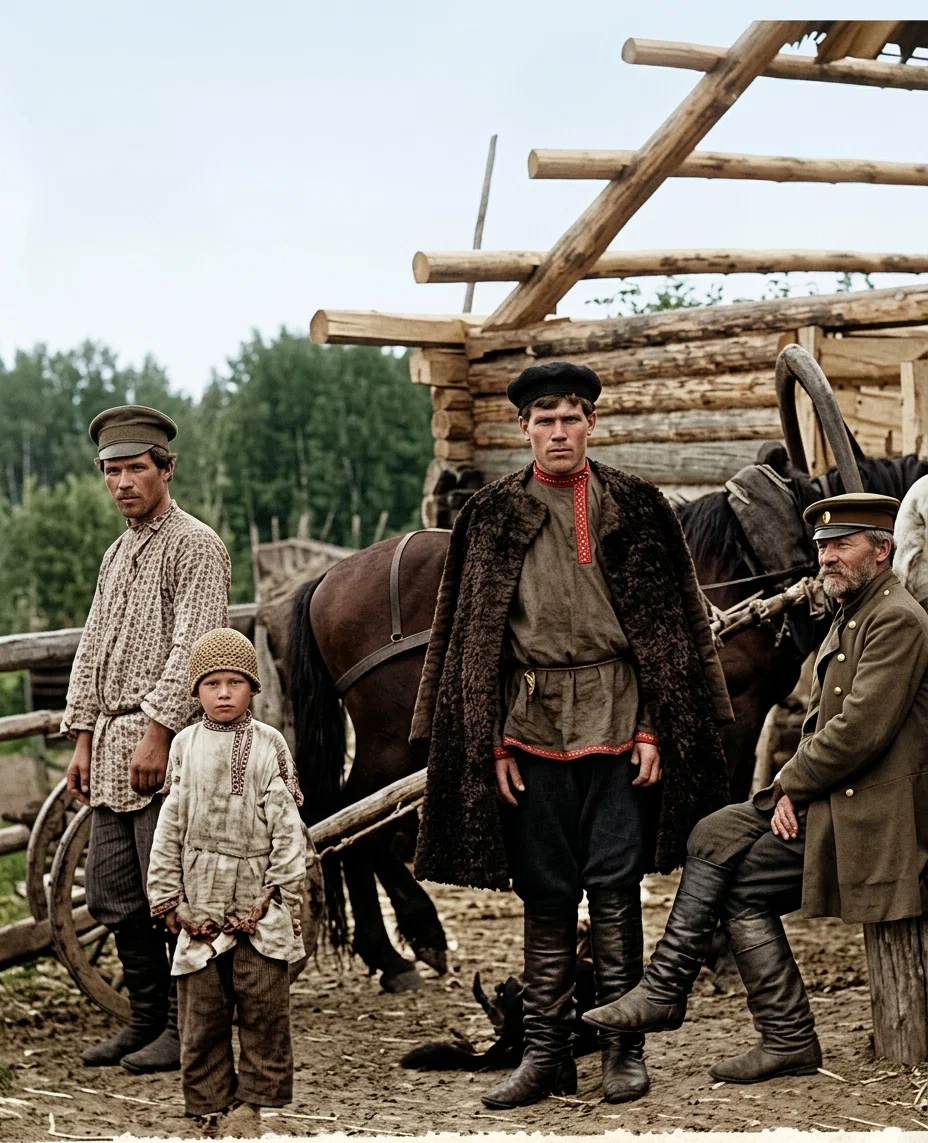
RUSSIAN LABORERS
RUSSIAN LABORERS
Twenty-four hours more by train brought me to Zhitomir, Volhynia, where I met Elder Gaede, and together we rode five hours in a Russian lumber wagon, with the wind blowing as it knows how to blow only in the land of the czar. Next evening we proceeded to our meeting place, the home of a brother in the country, where we arrived after dark, to avoid detection; for our brethren here had had some difficulty with the authorities in reference to the holding of religious meetings. Remembering this, our people in the North Russian Mission had been seeking the Lord earnestly, pleading for his special care and protection at the time of their general meeting. Their prayers were heard. The Lord came very near. We had the best meeting I ever attended. Although the sheriff was in the village, we were unmolested. As the brethren in that section are very poor, some of them had come forty or fifty miles on foot to be present with us, but they felt fully repaid for the hardship and inconvenience they had experienced during the journey. The meetings were held in a barn. The question of providing lodging accommodations for those assembled was very simply but practically solved: in one part of the barn were rough benches and tables, which constituted the dining-room furniture. The weather was cold,—there was even some snow,—and we were obliged to eat without removing our hats and overcoats; but, as the warmth of the love of God glowed in our hearts, we enjoyed our meals very much. At night, after the last meeting had been dismissed, the assembly rooms were transformed into sleeping apartments. In the larger room the brethren lay down on some straw, which was brought in at night and removed in the morning, while the sisters slept in the same manner in the other room. As we were continually together in this way, we were enabled to make the best possible use of our time.
We next visited Kief, the holy city of the Russians. Here we held a meeting with a company of Sabbath keepers. Should you inquire why Kief is called a “holy” city, one would be compelled to answer: Because there are in this city so many holy relics of the saints. Thousands and thousands of pilgrims wend their way thither every year, that they may devoutly worship and offer candles before them. Many of these religious devotees come long distances on foot, with only a bag of dry zwieback strapped to their back, which, with water, forms their only food. The little money in their possession must be retained for an offering to the saints. One might suppose that these pilgrims would hear some good sermons in the holy city, around these shrines, but one would seek in vain for a pulpit. What then do they do?—They bow down and cross themselves before images of gold and silver, even kissing them. Among the images are also to be seen coffins, said to contain the corpses of foreign saints; these, too, are kissed and worshiped. As I saw these poor souls kneeling before their idols, and thought of the one hundred and twenty-eight millions of people in Russia, the majority of whom are in the same darkness, and then, on the other hand, when I thought of the self-satisfaction of our church members with regard to the light which they have received, I felt like crying out: “Spare thy people, O Lord, and give not thine heritage to reproach, that the heathen should rule over them.”
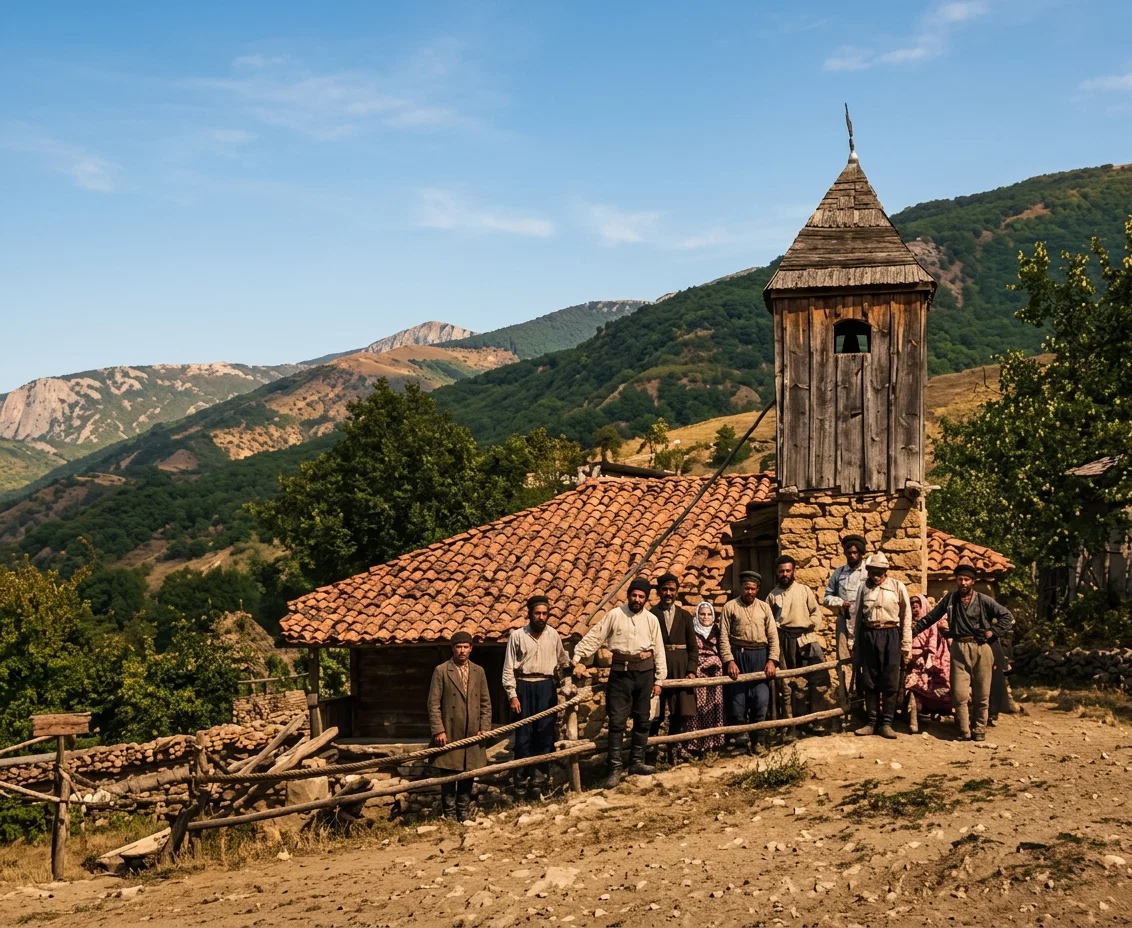
A TARTAR CHURCH IN THE CRIMEA
These idol worshipers know nothing of a Saviour. One of them, when questioned with reference to Christ, replied: “Is that true? Yes, I believe I once heard about a man like that.” I never saw people more anxious to hear the precious gospel for these days. We have been so slow that the Lord has gone out before us, and in several places companies are keeping the Sabbath, and waiting for us to come and baptize and organize them. But were we to do this, where would we obtain the literature necessary for their development and education? Where are the living messengers? O that we had one wide-awake minister for even every ten millions of the native Russians! While we have been doing something among the Russian-Germans for sixteen years, the work among the Russians themselves is but just begun. But those who work here must be men of courage and faith, men who are not afraid of imprisonment and Siberian exile; for if discovered, he who is instrumental in bringing men from the darkness of the established church into the light of present truth must suffer imprisonment and expulsion from the country if he is a foreigner, or lay himself liable to a cruel exile if he is a native.
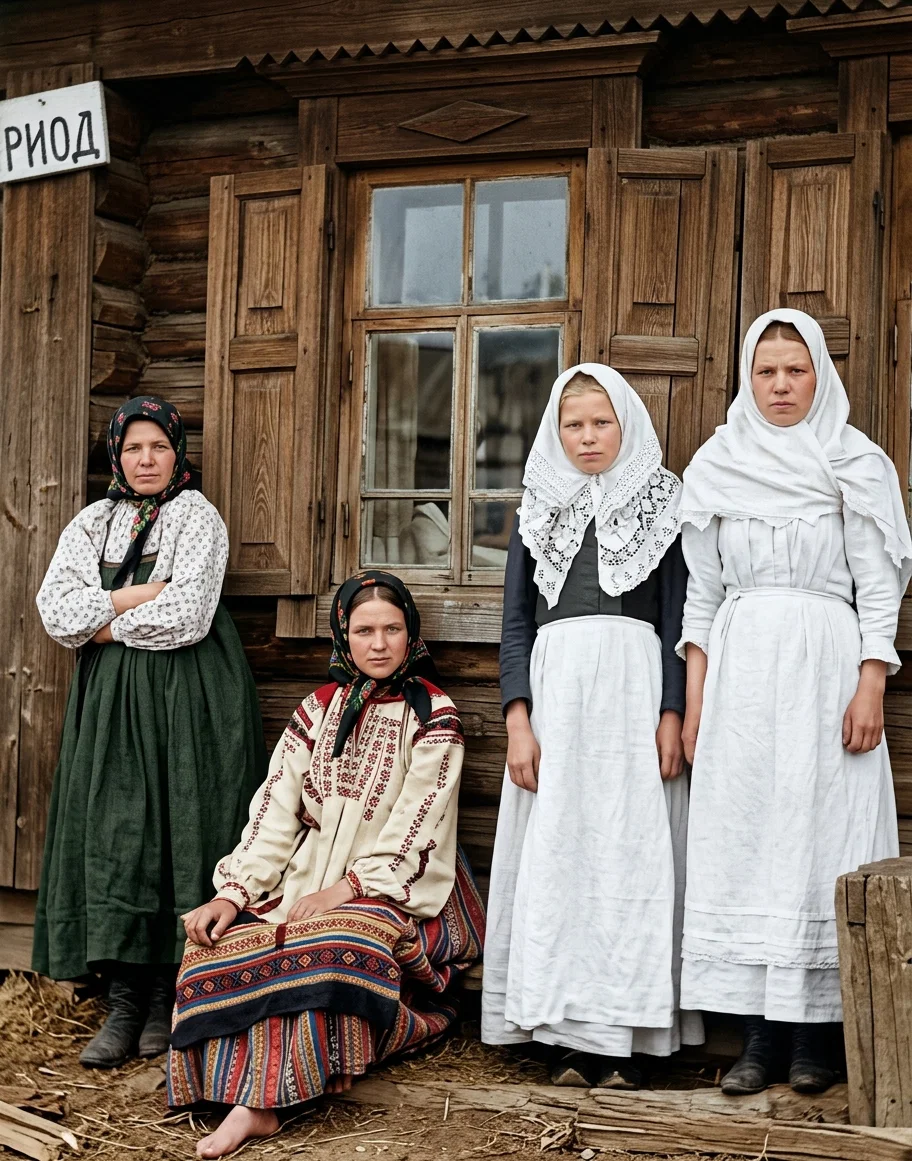
RUSSIAN PEASANT WOMEN
After another visit among some of the German churches in Bessarabia, we took the steamer from Odessa to Eupatoria, in the Crimea, where our general meeting for the South Russian Conference took place. Here we did not expect any trouble, and the churches, being more negligent than our brethren in the north had been, did not especially seek God for protection. After holding our meetings in the house of one of our members for several days, the Lord impressed us with the thought that we should change our gathering to another place that afternoon; and no sooner had the transfer been made, than the policeman came, inquiring about the meeting and the foreigners, meaning Elder Gaede and myself. We now began holding our meetings in still another place, and stationed watchmen, whose duty it was to warn us in case of approaching danger. The next afternoon, as we were going from one place of meeting to another, we passed our lodging place, intending to step in for a minute, when suddenly we saw the police there, looking for us. Although they looked toward us, yet their eyes seemed to be holden, and we escaped.
As it was necessary for me to meet Elder Conradi in Friedensau before his departure for Egypt, it seemed best for me to leave that night, which I did, by wagon. Although very thankful for this blessed experience and the special help and protection of the Lord, I shall not be satisfied until my anxious prayer for Russia is heard, and the Lord impresses our people everywhere to do something definite for these millions who are in darkness, and more means are provided for the publication of much-needed literature, and for the education of more workers. There may be those who cannot give of their earnings or income; but there is no one who cannot earnestly and continually remember our workers in Russia before the throne of God, in their private devotions and around the family altar. Dear reader, do not forget the cause of God in this large field.
Hamburg, Germany.
Continue reading: British Virgin Islands