Should Sunday Observance Be Enforced by Law?—Recent Pronouncement by the Papal Delegate to the United States
BY OUR WASHINGTON CORRESPONDENT
THE Washington Times, one of the leading daily newspapers of Washington, D. C., recently announced its intention to inaugurate a campaign “in the interests of Sunday churchgoing.” In the prosecution of this proposed campaign, it purposes to publish regularly in its Saturday issues, during the next twelve months, a series of half-page articles giving “reasons why people should attend some place of worship on Sunday.”
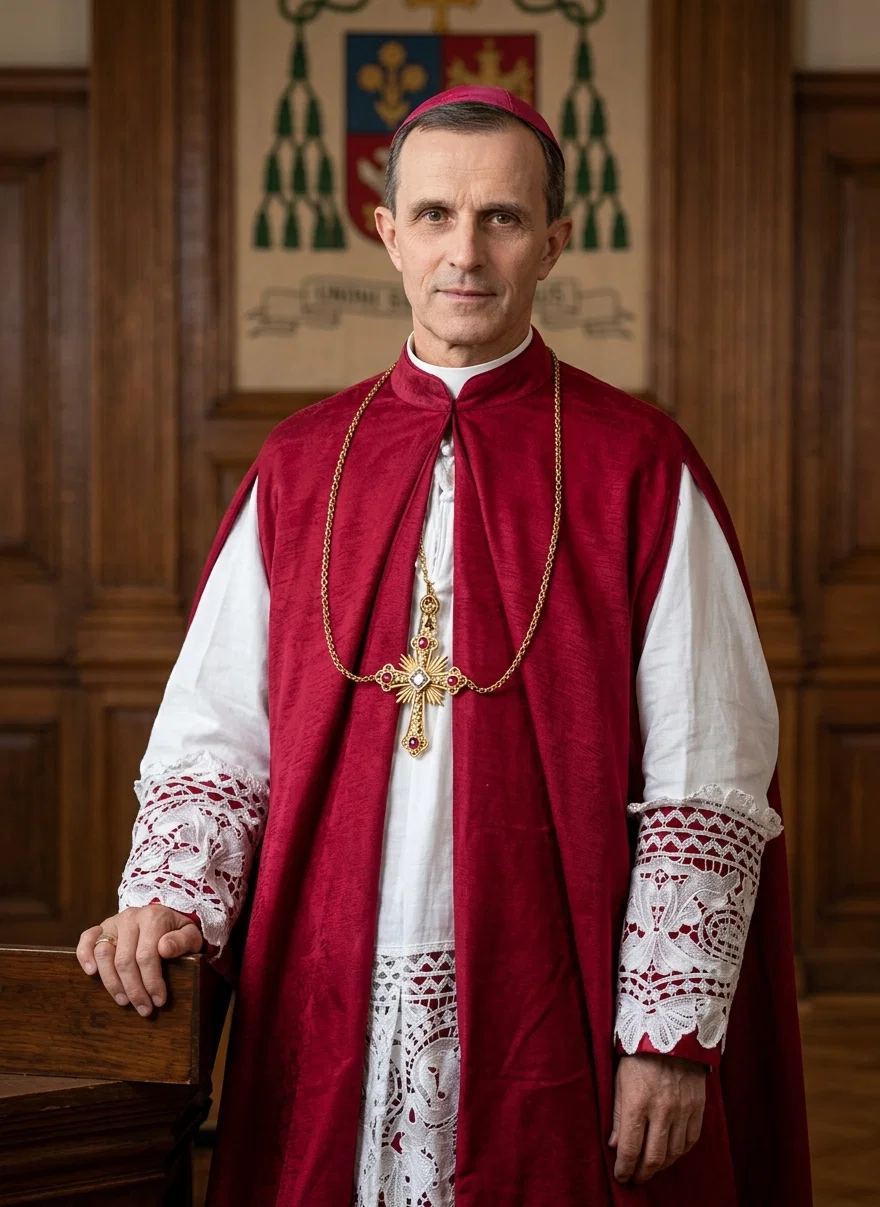
As introductory to this campaign, Archbishop Bonzano, the papal apostolic delegate to the United States, took occasion to address a special communication to the Times on the subject, in which he attempts to explain who changed the Sabbath from the seventh to the first day of the week, why the change was made, and why laws enforcing the observance of Sunday are proper and right. Coming from such a source,—the personal representative of the pope to the United States,—the statements are of special interest.
WHAT THE PAPAL DELEGATE SAYS
The communication referred to appeared in the Times of Saturday, October 11, 1913, under the caption, “Why Sunday Is the First Day of the Week,” and reads as follows:
“We know by the light of our reason that there is an obligation for man to adore his Creator, God Almighty. Natural law requires that every human being shall devote some part of his time to acts of divine worship, but it does not fix or determine any particular time for the fulfilment of this obligation. For the people of Israel, in the old law, there was a specified time for it, because God Himself condescended to appoint a day on which they were to discharge this duty toward their Maker. He set apart the seventh day of the week for this purpose in commemoration of the day on which He rested from the work of creation.
“In the new law the time for fulfilment of this obligation was changed by the apostles from the Sabbath, or the seventh day of the week, to Sunday, or the first day of the week, primarily to commemorate the resurrection of Jesus Christ, who early in the morning on the first day of the week arose, glorious and triumphant, from the dead. Hence it is that, in Scripture, the first day of the week is called the ‘Lord’s day.’” Apoc. 1: 10.
“Other reasons for this change were: Because it was on this day that the apostles received their commission, as apostles, from Jesus Christ, with the same power and authority which He, as man, has received from His Father. ‘As the Father has sent Me,’ He said to them, ‘so I send you’ (John 20: 21), and because it was on this same day that they received from Christ the power of forgiving sins. It was also on this same day of the week that the Holy Ghost came down upon the apostles, and that the faith and law of Christ was for the first time solemnly published to the world by them.
“The manner in which Christians are bound to keep holy the first day of the week consists in their abstaining from all unnecessary servile work and in occupying themselves with some positive act of divine worship.
“Since the law of God in this matter is, therefore, so clear, and since the determination of the time for the fulfilment of this duty has been reasonably changed from the day of Saturday to that of Sunday, it is very much to be desired that all who claim to be Christians should faithfully discharge their duty in this regard. So much, at least, is their duty of conscience.
“From the faithful observance of Sunday the commonwealth, as well as the individual, derives much good, both of the spiritual and of the temporal nature. And hence it is that, in view of this good, society should be greatly concerned in enacting laws for the observance of Sunday, and most careful in seeing that they are put into practise.”
We have reproduced this communication in full in order that the reader may see just what the special representative of the papacy to this country has to say upon the change of the Sabbath, and Sunday legislation,—two questions of prime importance to Rome. And inasmuch as the papacy just now is seeking to regain her lost supremacy in the Old World by capturing the New, and thus establishing a universal supremacy throughout the whole world, these questions are of special interest and of immense importance to all the people of this nation and of the whole world.
ARCHBISHOP BONZANO
Let us therefore examine some of the statements made by Mr. Bonzano in his communication to the Times. First let us note what he says respecting the question as to —
WHO CHANGED THE SABBATH
According to this latest semipapal pronouncement, the time for fulfilling the duty enjoined by the divine Sabbath commandment “was changed by the apostles from the Sabbath, or the seventh day of the week, to Sunday, or the first day of the week.”
No proof is given for this assertion, but the responsibility for the act of changing the Sabbath here referred to is boldly charged to the apostles. If the statement is correct, then the apostles changed the law of God, a thing which Christ Himself said He came not to do. See Matt. 5: 17-19.
In so important a matter, the record of the alleged change should be clear, explicit, and unmistakable. What proof, we therefore ask, is there in the Scriptures that the apostles changed the Sabbath? That there is none is admitted by both Catholic and Protestant writers. Thus Cardinal Gibbons, in his work “The Faith of Our Fathers,” page 111, says:
“You may read the Bible from Genesis to Revelation, and you will not find a single line authorizing the sanctification of Sunday.”
In like manner Dr. Lyman Abbott, in the Christian Union for June 26, 1890, said:
“The current notion that Christ and His apostles authoritatively substituted the first day of the week for the seventh day is absolutely without any authority in the New Testament.”
The statement made by Mr. Bonzano, therefore, that the apostles changed the Sabbath, is without Scripture warrant, and, in the absence of such proof, must be regarded as false. The apostles made no such change.
The following from “The Convert’s Catechism of Catholic Doctrine,” by the Rev. Peter Geiermann, C. SS. R., page 50, comes much nearer the truth:
“Q. Why do we observe Sunday instead of Saturday?
“A. We observe Sunday instead of Saturday because the Catholic Church, at the Council of Laodicea (A. D. 336), transferred the solemnity from Saturday to Sunday.”
The writer of this conveys the correct idea. The change of the Sabbath was the work of the Catholic Church rather than that of the apostles, and it was made in the centuries following apostolic times, and after all the early apostles were dead.
The Council of Laodicea, held in A. D. 364, wrongly given in the foregoing quotation as A. D. 336, in its twenty-ninth canon, enjoined the observance of Sunday as the Lord’s day, and anathematized those who should continue to observe the seventh day, the day specified in the Sabbath commandment.684
This, however, was but one of a series of acts on the part of the Roman Catholic Church, beginning with that of Victor, bishop of Rome, in A. D. 196, in which the Eastern churches were excommunicated by that haughty prelate because they refused to heed his injunction to celebrate the Passover on Sunday in conformity with the practise of the churches of the West, and extending to acts of councils and decrees of popes during centuries following, by which the Sabbath was changed. The change was not the work of a day, but, like the apostasy from which it came, and of which it was and still is a part, was brought about gradually, step by step, through a long process of years.
Upon such foundation as this rests the Sunday sabbath; and with no better warrant than this for its observance, we are told by this papal apostolic delegate to the United States that “Christians are bound to keep holy the first day of the week.”
Christ was crucified on Friday, and rose from the dead on Sunday; but neither the one event nor the other made a sabbath out of the day on which it occurred. Though all the events mentioned by Mr. Bonzano, and more, may have occurred on the first day of the week, that gave no foundation for changing the Sabbath, and making a day of rest out of Sunday. When God made the seventh-day Sabbath, He Himself first rested upon the day; and then, by definite and explicit appointment, He gave it to man as the Sabbath, or day of holy rest. Gen. 2:2, 3; Ex. 20:8-11. But the Sunday sabbath is wanting in both respects. Christ neither rested upon that day, nor commanded His followers to do so. What He did not do, Christians are not bound to do; and what He did not teach or command, no Christian church has a right to teach or command.
Concluding his communication to the Times, Mr. Bonzano, true to Catholic doctrine and tradition, sets up —
A DEFENSE FOR SUNDAY LEGISLATION
Because of the good to the individual and the commonwealth accruing “from the faithful observance of Sunday,” it is alleged that “society should be greatly concerned in enacting laws for the observance of Sunday, and most careful in seeing that they are put into practise.”
Here we have the papal principle and the papal program in a nutshell — religion by law. Because religion is good, the state should enforce it! This is the logic of Rome. But no greater error was ever promulgated among men. Upon this very principle the Inquisition itself, with all its persecutions and monstrous horrors, was carried on during the Dark Ages. Because religion was a good thing, the papal ecclesiastics of those times reasoned, just as Mr. Bonzano now reasons, that it was the duty of the state to enforce it upon the people, and to proscribe, persecute, and put to death all who refused to accept the religion thus laid down and doled out with an iron hand.
Good religion is a good thing. But no religion which craves the power of the state by which it may force itself upon men irrespective of faith, conviction, and conscience, is good. By this very act it brands itself with the mark of Cain, who was a murderer.
The bane of all ages has been the union of church and state, the result of which, in the end, has invariably been religious persecution. And during the past sixteen hundred years, as history abundantly testifies, both in Europe and America, Sunday legislation has played a very prominent part in effecting and perpetuating such unions. Through this means more than any other the early church, in its apostasy, rode into power. And, as the Bonzano article here quoted shows, by this means this same apostasy aims to retain its hold upon the civil power, and wield it to its own advantage and aggrandizement.
Georgetown College, in Georgetown, or West Washington, D. C. It is the oldest and largest Jesuit college in the United States. The first building was erected in 1789.
Were the people of these United States as wide-awake as they might be, and as true as they should be to the principles upon which the national government was founded, they would not only repeal every Sunday law now found upon the statute-books, but would look with suspicion upon any man or any religion which dared to advocate them in this land of far-famed freedom.
W. A. COLCORD.
The War Spirit in Europe
THE Germans were disposed at first to treat very lightly the new three-year service law of France, but the high military authorities of the German Empire are coming to regard that law with much more seriousness. They recognize that the position of Germany places her in grave danger. General von Bernhardi, speaking through a Berlin paper, says:
St. Patrick's church, rectory, and Carroll Hall, Washington, D. C. The oldest Catholic congregation in Washington. Each recent year, on Thanksgiving the representatives of all the South American republics, together with the president of the United States and his cabinet, attend mass there.
“We are not threatened only by economic misfortune, but by an economic catastrophe. This last point can not be too earnestly insisted upon. Germany, in order to supply the needs of its population, is forced to rely continually upon foreign countries. . . . We fall short every year fifteen or twenty per cent in our annual supply of breadstuffs. The situation of our industries, therefore, in case of war, would be most critical. Germany is forced to import a great part of the natural products of which she has need. Our steel industry imports annually 12,000,000 tons of ore.”
“To sum up, we are in a dangerous situation, and find ourselves compelled either to augment our military power to such a degree that we would be sure of success, or to give up all hope of a great future. There is no choice in the matter. We must either be a great world power or abandon ourselves to an irremediable decadence.”
Possibly it is the dissemination of such sentiments that is changing the attitude of the German Socialists toward militarism. The German working man is coming over to the side of the kaiser in favor of a big army and a big navy. Leaders of the social democracy voted in the Reichstag for military laws that were a great source of gratification to Emperor William, and in their Socialist Congress recently held at Jena, they expressed themselves as much more favorable than formerly to a strong military program.
The war spirit is one of the significant conditions of this age. It is rampant everywhere; and notwithstanding all of the efforts that are made to promulgate “the gospel of peace,” it is increasing most rapidly. Men have made light of the prophecies which tell us that the spirit of war would characterize this age, which is to see the second coming of Christ. But if we will take a clear outlook at the facts, and give proper study to the prophecies, we will see that God knew how to announce these conditions long before they became fact in human experience.
California Presbyterians and Local Sunday Laws
THE California Synod of the Presbyterian Church recently convened at Santa Rosa. It comprised representatives of all the congregations of that denomination in both California and Nevada. They voted to affiliate with the Weekly Rest Day League in a state-wide movement for a municipal Sunday closing ordinance, as expressed in the following resolution:
“Resolved, That we cooperate with other churches, under the leadership of the Weekly Rest Day League, to secure municipal Sunday closing ordinances and a general state-wide Sunday rest law, and that we approve of the appointment of Dr. G. G. Eldredge and Prof. Lorin Handley as members of the central committee of the league.”
If Sunday were the Sabbath of the Bible, it would be a very proper thing to seek to persuade men to observe the day religiously; but as the Bible has no law whatever in favor of Sunday observance, there is no divine reason for seeking to get men to observe it.
The name of the Weekly Rest Day League would seem to indicate that all it cares for is to secure one day out of the week as a day of rest for the laboring man. But our Presbyterian friends propose to make this rest day fall on Sunday; and we will find, before we are through with the proposition, that all those who are working to secure one day out of the week for rest, will unite in asking that that one day be Sunday.
In bygone days, men thought they had divine approval for Sunday observance; but a large part of the world has been educated to the point where they know that God has given no command whatever for the observance of that day, neither has either Christ or the apostles given any authority for changing the rest of the divine Sabbath from the seventh to the first day of the week. And when we come to the final analysis of this controversy, it is not a question of securing a weekly day of rest for the laboring685man, but rather it is a question of loyalty to the word of God. Will we accept what God says, or will we insist upon setting aside His word, and putting in place of it a man-made institution?
California has been a great battle-ground over this question of Sunday laws, and it would seem that the agitation is to continue with renewed activity. As this discussion goes on, as is planned, in every municipality throughout the state, there will be a great opportunity for men to become fully enlightened concerning what the Bible actually teaches upon this Sabbath question. In all the history of the past, the men who have stood squarely upon the clear teaching of God’s word, even though they have been vastly in the minority, have in the end come out on the safe side, because the right side is always the safe side, for the omnipotent God is with the right, and will fully vindicate every utterance of His word.
Legal Narcotics
ONE large city after another is taking up the question of dealing with vice. Kansas City is one among the latest, and all that have taken up this work are telling us “horrible stories of juvenile excesses.” These excesses are regarded as more deplorable among the wealthy and the so-called higher classes than among the underpaid lower classes that were recently so much discussed in their relations to vice.
Organizations by the dozen are formed to fight these conditions of immorality. Almost every mail brings us matter from some of these organizations that are being formed, requesting that we publish it and help the good cause along. Evidently there are a great many people who regard the situation as becoming very desperate. Concerning this class of “reform” work the San Francisco Argonaut recently expressed its convictions in some paragraphs that are well worthy of consideration and study. They are in part:
“There will be no disposition anywhere to treat a terrible evil with levity or even with indifference. And it is a terrible evil. San Francisco has had her own experiences, and it is quite easy to believe that other cities are similarly situated. But unfortunately there is a disposition to resort to snap remedies and to treat the results rather than the causes. Nothing is so fatally easy as to pass a law. There is no more popular narcotic for an uneasy public conscience. But narcotics are not cures, and Kansas City will be likely to find that police control is the worst possible substitute for parental influences, and that even a curfew law can not take the place of those elementary duties that can be performed in the home, and nowhere but the home.
“But the neglect of parental duties is by no means the only cause for the apparent extinction of the moral barriers that were once so effective. The barriers of morality and convention are by no means so distinct as we like to suppose. Usually they supplement each other. During the last few years, we have seen the almost complete destruction of those reticences upon sex matters that doubtless had their own attendant evils, but that did actually prevent far more evils than they caused. What we call plain speaking became a vogue and a fashion. Literature and the drama combined in what was said to be a moral crusade, but that was actually a financial crusade. And now the churches have followed suit. Nothing is too private for public discussion, no audience too young for admission and participation, no vital fact too explosive for reckless handling. Upon every side, we see gross familiarity at its deadly work. Here in San Francisco we are about to have what its promoters call a Purity Sunday. Countless sermons will be preached to audiences of young men and young women, and with their own sex relationships as a topic. Does any one with a sane knowledge of human nature suppose that even the most exquisite delicacy can neutralize the inevitable poison of those sermons? Is it not well known to even the tyro in such matters that here at least the most fatal and irresistible of all forces is that of suggestion, and that reason and prudence struggle in vain against it? The cure for this sort of evil is reticence and not publicity, mystery and not familiarity, the home and not the pulpit, the mother and not the school-teacher. To err in such a matter as this is to poison the rising generation.
“Therefore it is time that we called a halt to the sex fanatics. They have been at their work for some years past, and now the air is becoming unbreathable. Every field of publicity has been invaded. They have almost persuaded us that sex is the one thing worth thinking about and worth talking about. The results are sufficiently evil upon matured minds that have learned to govern themselves. Upon immature minds, to whom self-government has hardly occurred, it has been little short of disastrous. Every sacred mystery of life has been cheapened, coarsened, profaned.
S. A. Probst, Anti-Saloon League district president. He is making himself famous by his movement to close all the saloons in Cincinnati, Ohio, on Sundays.
“Let us hope that we are nearly at the end of this particular epoch, lest some worse thing befall us. It is bad enough that for years past our young people should have been forced to live in an atmosphere of public discussion comparable only with that of an open sewer.”
The Argonaut recognizes that these vice conditions are “a terrible evil,” and it well remarks that “nothing is so fatally easy as to pass a law. There is no more popular narcotic for an uneasy public conscience.” There are a great many people who are possessed with the mania that if we can only get certain laws passed, then the evil is cured. But these persons fail to recognize what the Argonaut points out so clearly, that “during the last few years, we have seen the almost complete destruction of those reticences upon sex matters that doubtless had their own attendant evils, but that did actually prevent far more evils than they caused.”
But now we have launched out upon an era of discussion that is spreading the evil. Not that all of this discussion is harmful, but it has become popular to discuss these matters in the open, and that has made it possible for injudicious speakers and writers to say things in public that never ought to be said except in the guarded intimacies of father and son or mother and daughter.
But deep down at the bottom of this whole difficulty is the fact that the moral backbone has been deliberately dissected away from society. We have much of the conventionalities left that present a kind of veneer of respectability. “The sex novel,” “the sex drama,” and things of that character, have been winked at by the churches. There is no more degenerate influence at the present time than the novels that are being printed, many of which are acted out upon the stage. Indecencies are paraded and applauded. The church as a whole doesn’t raise the warning voice against these things, but passes them by with indifference. A generation has been educated to laugh at the rugged piety of our grandfathers. A generation has been educated to believe that the Bible may possibly be studied as literature, but that it has no other place of importance. This generation has gone science- and pleasure-mad and money-mad, and we are reaping the results; and the divine Book has foretold, through its prophets, that just such conditions as these would prevail at the close of time. There is nothing clearer than that the social and moral status of society in this time is such that it is going to pieces under its own rapid decay. And while all of this is transpiring, men are vehement, not to say insulting, in decrying those who insist upon recognizing the facts.
IN THREE DAYS SAN FRANCISCO Overland Limited TAKES YOU To Chicago
ACROSS GREAT SALT LAKE AND HIGH SIERRA BY DAYLIGHT
Luxurious High-class Equipment
Electric Lighted Throughout
Pullman Drawing-room
Stateroom
Vestibuled Sleeping-cars
Careful and Attentive Dining Service
Parlor Observation-car with Library and Cafe
Ladies' Reading-room
Gentlemen's Smoking-room
Daily News Bulletins
Latest Papers and Magazines
Southern Pacific
Romans Eight
By Mrs. L. D. Avery-Stuttle
Tune, “Nellie Gray”
Are you sick, my weary sister,
With the roughness of the way?
Are you trembling 'neath the cruel hand of fate?
Then take the blessed lamp of God,
And dry your tears, I pray,
While you read the precious words of Romans eight.
Chorus
O, the blessed, blessed words, sweeter than the song of birds,
“Neither height nor depth shall separate my soul”!
He redeems me for His own. I shall sit upon His throne,
While the endless, bright, eternal years shall roll.
O, the height and depth and vastness
Of the promises of God!
They are brighter than the starry hosts above.
They will give us hope and courage
As we pass beneath the rod;
They will fill the soul with gratitude and love.
'Tis a wondrous panacea
For the many ills of life.
It will soothe when weary, faint, and desolate;
It will help you climb the mountain,
It will calm the winds of strife,
When you read the wondrous words of Romans eight.
Read it, heed it, brother, sister,
Make its promises your own.
Till you gain an entrance through the pearly gate,
Till you see our blest Redeemer,
And sit down upon His throne,
Read the sweet, inspiring words of Romans eight.
MRS. L. D. AVERY-STUTTLE
More than Conquerors
I AM going to have a little chat this morning with my nervous, tired, discouraged sisters — and with them alone. So if none of these adjectives apply to you, my happy, prosperous friend, please do not interrupt us. Perhaps you and I may talk together at another time.
I see I have quite an audience already. Ah, there are so many of you — or “of us” perhaps I might better say! What can I do to cheer and to comfort, to brighten and to bless your lives? — Nothing, absolutely nothing!
Why? — Because, in the first place, I am unable to reach you, on account of distance; and even were I near you, I have such a host of cares and discouragements of my own, that I could offer you but little comfort or consolation.
“Well, then, what are you talking about?” So question a host of weary, dim-eyed little women. “Why do you allow us to build false hopes, and encourage us to believe that help is at hand?”
Wait. Suppose we were all in mid-ocean together, struggling to keep afloat. Would you ask or expect me to help you? — Hardly.
But what if I see a ship in the near distance, and better still, suppose I discover a strong rope in the hands of the captain, and that he is throwing it toward us with all his might. I grasp the rope myself, and test its great strength. I find it sufficient to bear the entire weight of all my sinking companions.
What in reason would you expect me to do? Suppose I began to cry out, “Just see how strong I am, how skilfully I swim, how beautifully I keep afloat!”
Would that be of any help to you? — You would only look upon me with sad, despairing, envious eyes.
But suppose I cry: “Quick, sisters! Look! Do you see the rope? The ship is at hand. The captain is strong. He is sending us help. Hurry! Let go of everything else, and grasp the rope!”
Now, then, we are afloat on the sea of life — all of us together. Some of us are actually sinking. To such I can only cry, “Take hold of the rope!” The rope is God’s blessed word,— His never-failing promises. Shall we turn to it? Shall we take hold of it — you and I?
Let’s find the promise which says, “In all these things we are more than conquerors through Him that loved us.” “In all these things” — what things? — “Tribulation,” “distress,” “persecution,” “famine,” “nakedness,” “peril,” “sword.”
The eighth of Romans is one of the most glorious chapters in the Book. Its promises are dazzling. If there were none others in the entire catalogue, these are enough to put courage into the most faint-hearted among us.
Have any of us known tribulation? Have we felt the sharp pangs of distress? Have the cruel fingers of gaunt famine and nakedness clutched at our vitals? Well, then, “in all these things we are more than conquerors.” How? — “Through Him that loved us.” Blessed thought! If it depended upon our love for Him, we might well tremble; for how faint is that love! How often, amid the busy cares of life, we forget Him quite! How many times He is left entirely out of our reckoning! How few times is He the important factor in our busy plans!
But “through Him that loved us,” “we are more than conquerors” — not “shall be,” but “are” — actually are.
“Well,” some one protests, “this sounds fair enough and good enough. But I tell you, I felt like anything but a conqueror this morning when the bread soured, and the fire would not burn, and the children came home for dinner in a hurry, and grandpa had a bad attack of rheumatism. I forgot all about my good resolutions, and sat right down and cried.” Yes; but these things need not separate you from the love of Christ. Through it all, did you lose your faith in Him? If not, if you do not let go the rope, you are still conqueror, and more than conqueror.
“O,” cries another dear little woman, whose eyes are red and swollen with weeping, “O, I could endure those things — indeed, they seem very small to me! But if I only could have kept my babe, my sweet babe! How I long to press the little form close, close to my hungry heart as I used to do! And when I realize that she has gone, gone forever, my aching heart almost rebels against Providence.”
But, dear sister, the thirty-eighth verse of this same precious chapter assures us that even death is not able to separate us from the love of God. O, let this blessed thought comfort and cheer us: Even when we almost forget Him, the love of the Eternal for His children never changes nor weakens for a moment; and just as a mother cherishes the weakest of her children most tenderly, even so the loving Father regards His afflicted sons and daughters.
Conquerors? — Yes, more than conquerors.
Here is another promise — and do not forget that the promises of the Almighty are as sure as His eternal throne. They span the gulf between heaven and earth like mighty cables of love. You and I need not fear to rest our whole weight upon them. Here is the promise:
“For I reckon that the sufferings of this present time are not worthy to be compared with the glory which shall be revealed in us.”
Are we distressed with poverty? Never mind, my sister; there is glory coming. It is on the way. The threadbare garments are going to be exchanged, one of these days, for a robe of dazzling splendor, and gems which outvie those of Golconda.
Are we suffering with disease? “He knoweth our frame; He remembereth that we are dust.” “Who forgiveth all thine iniquities; who healeth all thy diseases.” Yes, thank God, there will not be one left when the immortal body shall be given us.
Are our best-beloved snatched from our side by the grim messenger? Even in this also we are more than conquerors. And even through tear-dimmed eyes we may look up into the face of the kind Father who assures us that “He doth not afflict willingly,” and cry victoriously: “Neither life nor death shall be able to separate me from the love of God.” “Nay, in all these things, we are more than conquerors.”
Courage, courage, my sister! Soon the glory land will burst before our enraptured vision. Then —
“Brighter than the tint
Of sunset’s gleam and glint,
Shall shine the glorious tapestry of heaven.”
Control Your Thoughts
By Anon.
STOP that thought. It was in your mind all day yesterday, and it made you perfectly miserable. Over and over again you passed through all the unpleasant scenes, heard all the cruel words that were spoken, suffered again all the painful feelings, and succeeded in spoiling the day, unfitting yourself for your work and destroying all happiness out of your heart. Are you going to continue it all day to-day, and by so doing waste more of your life in the foolish if not insane habit of tormenting yourself because68some one or something made you unhappy in the past?
That thought has no right in your mind. You may think you can not stop it, but you can, as it is only a bad habit you have fallen into, and you must break it or it will break you. You must get the mastery of your own mind, and the control of your own thoughts; and while it will be the hardest battle you will ever have to fight, it will be the most glorious victory you will ever win.
To be a slave to unpleasant thoughts is the worst kind of bondage, and sometimes leads to insanity; but to be able to think on any subject you please, places your happiness in your own hands, and gives you a sense of power and independence which is not only delightful to realize, but which enables you to develop your character and shape your life according to your own choice. When you begin this work, . . . do some work that demands close attention, and whenever the hateful, tormenting thought presents itself, turn your back on it, and your attention to something else, till you can say to it, “Not at home.”— Anon.
PAMPHLETS
That you may be familiar with what is obtainable in the way of Bible helps in pamphlet form, we give the following list and descriptions:
Change of the Sabbath — By Geo. I. Butler. Illustrated. 200 pages. 25 Cents
Christian Science and Divine Healing — Every missionary worker should have a quantity of this pamphlet to circulate. 15 Cents
Christ Our Advocate — Fully illustrated. This thoroly explains the sanctuary question, the 230-day period, and other vital points. 10 Cents
Helps to Bible Study — A series of Bible readings to aid in study, and in teaching on Bible subjects. 25 Cents
The Lord's Day the Test of the Ages — Traces the Sabbath through every dispensation. 10 Cents
Matthew 24 — Exposition of Christ's prophecy in the 24th of Matthew. 10 Cents
Prophetic Gift in the Gospel Church15 Cents
Saints' Inheritance — Description of the home of the saved. 10 Cents
The Sure Word of Prophecy — Comprehensive study of the book of Daniel. 10 Cents
The Spirit World and the Future Life — Wonderful manifestations of Spiritualism from a Bible standpoint. 10 Cents
Above prices are post-paid.
Order of your tract society or the Pacific Press Publishing Association, Mountain View, California.