It has of course been apparent to all who have been conversant with the experiences in our work during the past few months that Sister White has taken a deep personal interest in the question of the removal of our headquarters from Battle Creek, Mich., to this city. It was the counsel which the Lord was pleased to give through her which settled the matter of the definite location, and brought our work to Washington. The same counsel has instructed us that a sanitarium and a school should be established here, and this led to the purchase of a tract of land for such purposes. From time to time very definite light has been given concerning the principles which should be exemplified in all the institutions established in this new location in order that a new order of things might be seen in this work, and that a right testimony might be borne in behalf of this message. The burden of this whole move has rested with much weight upon Sister White's mind as these matters have been presented to her, and we are very glad to say that she has decided to make her home for a year at least at Takoma Park, the suburb of Washington where our institutions are to be located. A sufficient number of her helpers will accompany her so that her work can be continued without interruption. Brother W. C. White and his family will come with them.
While she is in the East, Sister White will visit different places as her strength will permit, and the interests of the work may suggest. For some time it has been clear to her that she should bear her testimony at least once more in Portland, Me., and she will doubtless visit other places in New England during her stay here.
We feel that the presence and counsel of Sister White will be of great value to the work while the effort is being made to put a new mold upon this whole movement. There are difficulties and perplexities to be met which are realized by but few, and there are influences to be counteracted which have tended for a long time to undermine confidence in the essential features and the speedy triumph of this message. Sister White's testimony had much influence when this work was started here in the East, and now that the headquarters have returned to the East in harmony with her testimony, it is very fitting that she should unite her efforts with those who are located at the new headquarters. Brother W. C. White's long experience in pioneer work will make his help of great value in devising and executing the plans for developing the work here.
This outlook brings fresh hope and courage into the hearts of those who have been bearing burdens in this part of the field. More definite information concerning these plans will be given later.
Medical and Sanitarium Work in Washington
By A. G. Daniells
THE instruction that guided in the selection of Washington for our denominational headquarters, speaks very plainly and emphatically regarding the establishment of a sanitarium in the vicinity of this city. It urges the carrying on of a broad, genuine medical missionary work in Washington. We shall endeavor to place this instruction before the readers of the REVIEW in a short time; hence we make only a brief quotation here. It is as follows:—
“There should be a sanitarium in Washington. The people in the nation's capital should know what we are doing. Let the work stand high upon its eternal foundation as gospel medical missionary work. . . . If there is one place above another where a sanitarium should be established, and where gospel work should be done, it is Washington. We can not estimate how great an influence would have gone forth from Washington in favor of the truth had a sanitarium been established there twenty years ago. Above all places, this place should now be worked.”
This counsel was heartily responded to by those who attended the Washington Council last October, and recommendations were passed providing for the development of the work in harmony therewith. Since the council, this phase of our work has received as much attention as the pressing duties of those having it in charge have permitted them to give it. The men who have been selected to come to Washington to take the chief burdens of this work in its various phases, have come to our assistance as soon as they could possibly close their personal affairs in satisfactory shape.
A corporation known as the “Washington (D. C.) Sanitarium Association” has been formed, the by-laws adopted, and the trustees elected. The articles and by-laws will no doubt be printed soon. The act under which the association is incorporated is very favorable. It permits the members of the corporation to meet at any time, and in any place in the United States, for the transaction of legal business. This will allow the association to hold its regular annual meetings in connection with the General and Atlantic Union Conferences without the necessity of a meeting in the District of Columbia to ratify the proceedings.
The trustees of this new corporation are A. G. Daniells, W. C. White, Dr. G. A. Hare, Dr. J. H. Neall, A. P. Needham, J. N. Nelson, and J. R. Scott. As the by-laws empower the board of trustees to fill vacancies, it is expected that the personnel of this Board will change somewhat as the work develops, and men of experience and efficiency unite with the enterprises here.
The first step the Board will take to begin definite work, will be to open city treatment rooms. The location will no doubt be decided upon by the time this statement reaches the readers. In future numbers of the REVIEW, we shall outline more fully the meaning of the objects, the plans, and the responsibilities of this new enterprise. We greatly need divine wisdom and help, and we earnestly desire to be remembered at the throne of grace by our people.
A. G. DANIELLS.
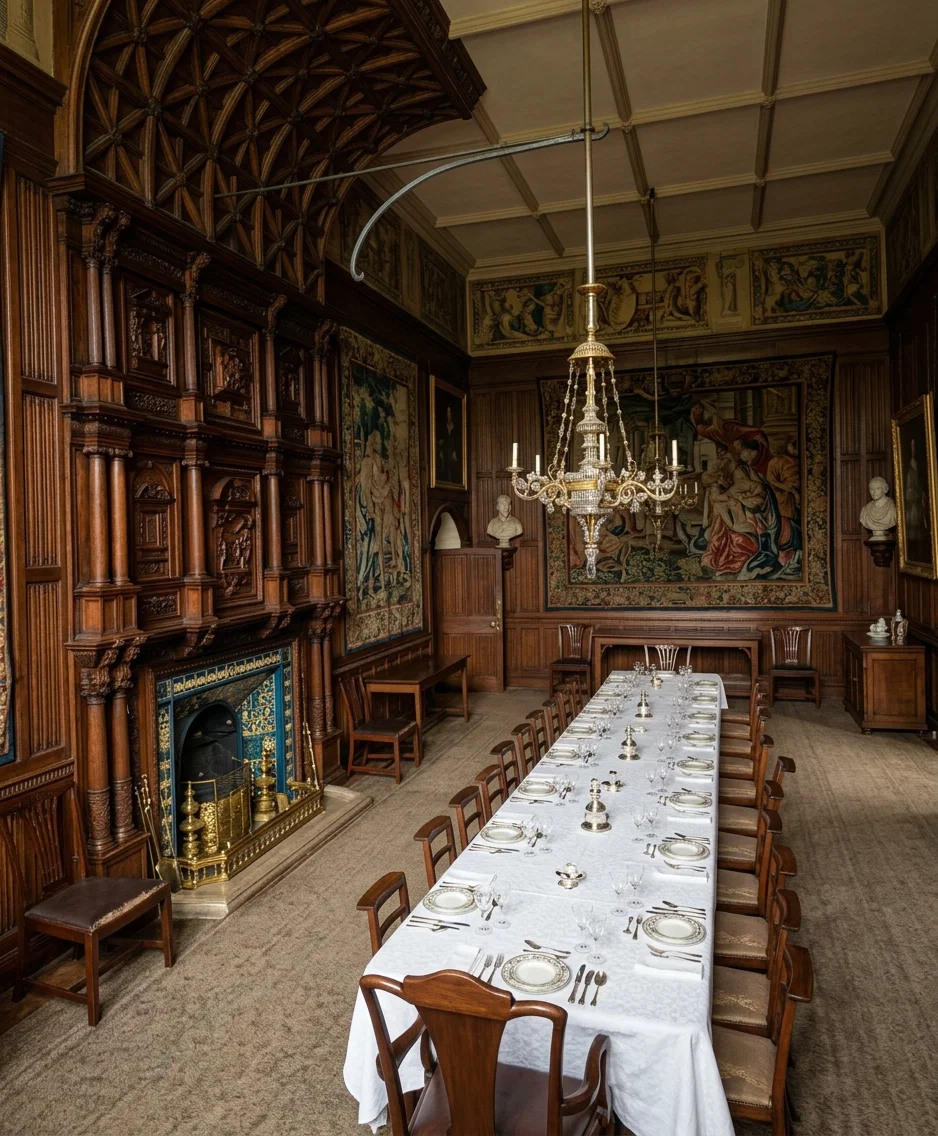
The Revisers of the King James Translation of the Bible Met in This Room