Signs of the Times, Vol. 39, No. 14.

He Is Risen
Earlier text: Jesus and the Passover

DR. JOHN SCUDDER

From a Chapter in

The Advance Guard of Missions
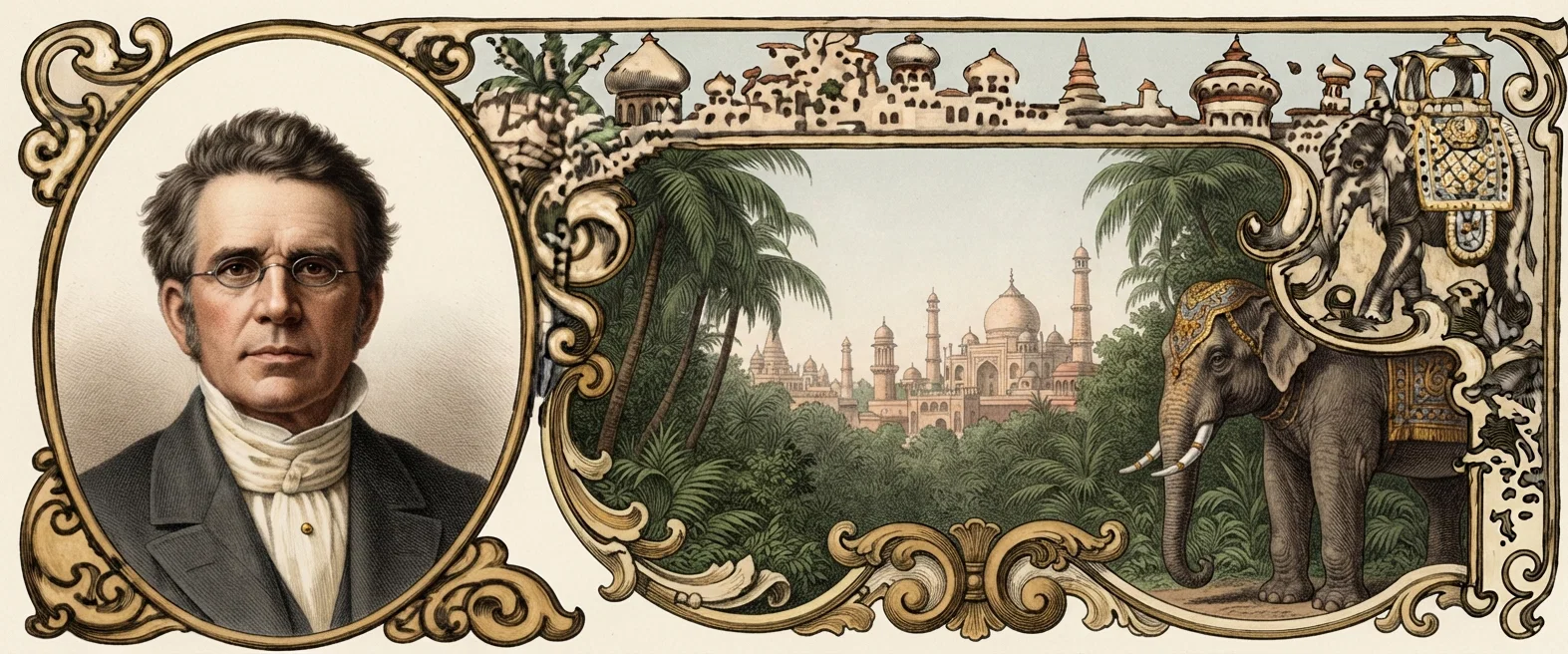
CHAPTER SIXTEEN DR. JOHN SCUDDER First American Medical Missionary to Ceylon and India.

DR. JOHN SCUDDER

First American Medical Missionary to Ceylon and India

Born in Freehold, New Jersey, September 3, 1793. Died in Africa, January 13, 1855.
WHEN the cries of the heathen once reached the ears of Dr. Scudder, upon the perusal of a single tract, he went forthwith to help them; and he did it so nobly and well that seven of his sons followed in the footsteps of their father.
On entering Princeton College he had found, among one hundred twenty students, but three who made any profession of Christianity. But he did not therefore hide his light under a bushel. "That fellow is so religious," said a student in the hearing of a newcomer, "one can hardly laugh in his presence."
The new student had just been introduced to Mr. Scudder, who cordially invited him to call at his room. He now questioned, "Shall I associate with one who is viewed as singular, and consent before long to be called a hypocrite, a fanatic, or a social heretic? or shall I consent to be drawn into the ranks of an overwhelming majority?" "At last this conclusion was reached: 'I will call on Scudder at once, and tell him why I came so soon.' . . . I found him at his studies, and told him of my wish to form a religious acquaintanceship, though myself without religion. Quickly he rose and grasped my hand with unlooked-for ardor, saying, 'That's right; stand by that, and you'll never regret it.'" "Those
(Reduced facsimile of one of the pages)
¶ The sketches range from three to thirty pages in length, and are written in a bright, forceful way that holds the interest and imparts strength and inspiration.
¶ Wherever reference is made to a work on missions, the publisher's name is given in foot-note. Thus "Advance Guard" not only gives you the information you would search through volumes to obtain, but directs you to sources where exhaustive study may be carried on if you desire.
¶ Published in two styles— Handsome red cloth, heavy paper..... $1.50 Plain cloth........... 1.00 Prices 10 per cent higher in Canada
¶ Every page is just as interesting, and you will feel eager to turn it, because in its 347 pages this new book gives the most important incidents in connection with the lives and work of—
Marcus Whitman, Missionary Physician to the Indians; John Eliot, Puritan Apostle to the American Indians; The Mayhews, Five Generations of Missionaries; David Brainerd, Presbyterian Missionary to the American Indians; Bartholomew Ziegenbalg, the First Protestant Missionary to India; Hans Egede, Pioneer Lutheran Missionary to Greenland; Count Nicolas Ludwig Zinzendorf, Lutheran Evangelist; The Wesleys, Vanguard of a Mighty Movement; Christian Frederick Schwartz, the Most Conspicuous Figure in India during the Eighteenth Century; William Carey, Pioneer Baptist Missionary to India; Henry Martyn, a Church of England Chaplain Missionary to India; Robert Morrison, Pioneer Protestant Apostle to China; The Judsons, Pioneer American Missionaries to Burma; Gordon Hall, Protestant Missionary to Western India; Dr. John Scudder, First American Medical Missionary to Ceylon and India; Alexander Duff, the Greatest Missionary Orator; William Butler, Methodist Missionary of Two Continents; Robert and Mary Moffat, Lights in Darkest Africa; David Livingstone, Missionary Explorer; William Taylor, Pioneer Methodist Self-Supporting Missionary; John Williams, Triumphs in the Cannibal Isles; John Gibson Paton, Presbyterian Missionary to the New Hebrides; Allen Gardiner, Beginning in the Neglected Continent; Guido F. Verbeck, Builders in New Japan; J. Hudson Taylor, Founder of the China Inland Mission; William Miller, Converted Infidel and Baptist Evangelist.

"Great Heart"

By Bertha S. Chaney
T is one of the inevitables of mission work in frontier places that it tests and reveals character in no uncertain manner. A man may be a tower of strength, but give little evidence of it until he faces the responsibilities and crises arising in the work which meets him in a mission station. Another may be a weakling; but who suspected it until, far from all props and stays, he falls under the temptations which swarm nowhere more prolifically than in a heathen land?
One of the most sterling characters that this century of missions has produced and developed is that of the dauntless Scotchman, James Chalmers. The last twenty-four years of a long, arduous, and eventful life were spent in one of the most difficult of mission fields—along the coral-reefed shores of British New Guinea, among its degraded cannibal tribes.
Mr. Chalmers's name frequently occurs in the government reports, and always accompanied by words of unstinted appreciation. These reports are sent annually by the administrator of New Guinea to the parent government in Australia, and tell of the year's progress. They give detailed accounts of the tours of inspection made to the different parts of the country; of explorations up the great rivers and over the mountains; of the troubles with natives; of the arresting of intertribal feuds and warfare; of the work done by naturalist, scientist, and missionary.
In one which tells of a tour of inspection made by Sir William M'Gregor, eighteen years ago, along the shores of the Gulf of Papua, he describes his travels through a country where there are numbers of large native villages. These tribes were constantly warring with each other, and were savage and fierce. I quote the closing words of this report:
This year the systematic inspection of the gulf from Port Bevan to Hall Sound has been accomplished. It is pleasant to record that this last inspection has been made without accident, loss, or collision. It is only right that I should say that the likelihood of attack by, or of misunderstanding with, the natives was at many places greatly reduced by the labors of the Rev. James Chalmers. It is nearly fourteen years since he first visited the coast tribes. In recent years he has entirely devoted his life to the western tribes, and he has done more, infinitely more, for the gulf septs than all other Europeans put together. Alone and unarmed he went to their villages before any other white man had been in the country. His fearless courage soon gained him an influence. On several occasions I learned from the natives themselves for the first time that Mr. Chalmers had paid them a visit. Many of his travels have not been put on record at all; others, through becoming, but unscientific, modesty, have been very imperfectly related. His labors among these tribes have reduced warfare, diminished the numbers of murders, and have greatly promoted peaceful intercourse among the people. He has had the whole field to himself, and is really the apostle of the Gulf of Papua.
At another time the administrator had to visit the Maipua tribe in the great Purari delta on a punitive expedition. This tribe had killed some men and women of a neighboring tribe a few months before, and seemed bent on trouble. Mr. M'Gregor, in writing of them, says:
They are numerous, and with the reputation of being warlike, fierce, and haughty. The Rev. James Chalmers, whom I saw at Apiope on his way west, said frankly that he could do nothing with Maipua. The tribe that Mr. Chalmers can do nothing with requires careful handling.
Another New Guinea official, a lieutenant-governor, writes thus:
I appreciate the manly courage with which Mr. Chalmers has often faced death, which must have been very near to him when he was carrying his message of Christianity and peace among the natives in the earlier days of the mission; absolutely fearless and regardless of himself, his wonderful control of others has enabled him to extricate himself or his party from many a dangerous predicament where a man of less powerful nature might have failed.
The massacre of Mr. Chalmers and his party on the mud-flats of Goaribari Island, in the mouth of the Fly River, in 1901, caused great excitement in British New Guinea. Owing to the distance of this place from the headquarters of the government, and to the fact that it was in the center of a thickly populated district of absolutely wild, untamed savages, the real facts attending the dreadful incident could not be learned for more than three weeks. Then a strong government party visited the district, punishing and making prisoners of the natives who had been engaged in the murder. From some of the prisoners taken, it was learned that the two white men had been enticed into a dubu, or large house, and there had been struck down by stone clubs. Afterward the bodies had been cooked with sago, and eaten by the savages into whose hands they had fallen.
In reporting the punitive expedition, Mr. Le Hunt writes:
It is in surroundings such as these that the pioneer missionary, and one of the mission's latest recruits and their faithful followers, lost their lives by the hands of those they had come to befriend; the first because he knew of nothing that could stop him, and the others because where their leader went they went too. It was stated by the survivors on the Niue that Mr. Chalmers probably anticipated some danger, when he landed from the boat and went ashore, as he wished to leave Mr. Tomkins on board the Niue; but the latter would not let him go without him, and they were called away together at each other's side. I am not alone in the opinion that Mr. Chalmers has won the death he would have wished for of all others—in New Guinea and for New Guinea; and if I am right in my belief that this sacrifice will prove to be the means of putting an end to such tragedies anywhere on the coast of the possession, I know that he, or any of his brother missionaries here, would unhesitatingly welcome the opportunity for the sake of its end.
The terrible character of the people among whom he laid down his life, may be gathered from Mr. Dauncey's report of the burning of the dubus, or warriors' houses. These were burned as part of the punishment meted out to the tribes implicated in the murder. He says: 'In one of the dubus there were over seven hundred skulls, and at another four hundred. What a tale that number tells!'
Such are the words written by men in high official positions, who personally saw much of Mr. Chalmers's work, and realized as could none others the weight of his influence over the degraded coast tribes of Papua. His death was universally deplored as a distinct loss to the government in their efforts to put down the incessant tribal warfare which it was found so difficult to subdue. Some one wrote:
Great Heart is dead, they say. Great Heart is dead, they say. Nor dead, nor sleeping, he lives on. His name Shall kindle many a heart to equal flame. The fire he kindled shall burn on and on, Till all the darkness of the lands be gone, And all the kingdoms of the earth be won.

Here in the land which has been glorified by his martyr death, surrounded by the excitable, irresponsible Papuans, for love of whom that death was incurred, his life and work appeal to us as never before. Here we see the true setting of that rugged, noble life. The need of the Gospel for these people who have departed so far from the 'likeness of God' in the centuries since they knew God but glorified Him not, is as great as when James Chalmers went in and out among them with the Gospel of peace. There are hundreds of villages, clustered on the sandy beach, or standing high on poles in fever-laden swamps, or perched on rocky hillside, where the story of the Good Shepherd has never been told.
The restless heathen wait That light whose downing maketh all things new; Christ also waits, but men are slow and late. Have we done what we could? Have I? Have you?
Bisiatabu Mission Station, New Guinea.

The Rest in Death

If the dead lying under the grasses, Unseen, linger near the bereft, Having knowledge and sense of what passes In the hearts and the homes they have left, What tear-drops, than sea water salter, Must fall as they watch all the strife; When they see how we fall, how we falter, How we miss in the duties of life.
If the great who go out with their faces Bedewed by a weeping world's tears, Stand near, and can see how their places Are filled, while the multitude cheers; If the parent, whose back is bent double With delving for riches and gold, Lends an ear to the wrangle and trouble About him before he is cold;
If the wife, who left weeping and sorrow Behind her, bends down from above And beholds the tears dried on the morrow And the eyes newly burning with love; If the gracious and royal-souled mother, From the silence and hush of her tomb, Can hear the harsh voice of another, Slow blighting the fruit of her womb;
If the old hear their dearly begotten Rejoicing that burdens are gone; If the young know how soon they're forgotten, While the mirth and the revel go on; What sighing of sorrow and anguish Must sound through the chambers of space! What desolate spirits must languish In that mystic and undescribed place!
Then life were a farce with its burden, And death but a terrible jest; But they can not. The grave gives its guerdon Of silence and beautiful rest. —Life Only in Christ.

Doing Things Well

“WHATEVER is worth doing at all is worth doing well.”

Our Work and Workers

THREE at Alva, Oklahoma, have received baptism.
FIVE at Lisbon, Portugal, have received baptism.
FIVE at Buhl, Idaho, have decided to obey the truth.
SABBATH, February 17, four were baptized at Reno, Nevada.
A SABBATH-SCHOOL has been organized at Marcus, South Dakota.
EIGHTEEN new converts are reported at Wolf Lake, Indiana.
SEVEN at Turkville, Kansas, have identified themselves with us.
THREE at Johnsonville, Tennessee, have taken their stand for the truth.
THIRTY-SIX at Gackle, North Dakota, have yielded their hearts to God.
THREE at Norfolk, Nebraska, have determined to keep the commandments.
NINE persons at Tinnevelli, South India, were recently buried in baptism.
ON a recent Sabbath baptism was administered to five at Springfield, Ohio.
BAPTISM has been administered to fifteen at North Fitzroy, Victoria, Australia.
IN Seoul, Korea, twenty persons have expressed their intention of uniting with us.
ON February 24, fifteen persons at Loveland, Colorado, went forward in baptism.
BAPTISM was recently administered to seven at Freetown, Sierra Leone, West Africa.
TWELVE at Teague, Texas, have taken their stand with us. And still others are interested.
A CHURCH of seventeen members was organized at Panama City, Panama, early in the year.
A SABBATH-SCHOOL of twenty-three members has been organized at Bonnie Vale, South Africa.
DURING the past year, fifteen of the students of the River Plata Academy, Argentina, were baptized.
SEVEN at Portland, Oregon, have identified themselves with the message, and six or seven at Albina.
FOUR persons at Northfield, Minnesota, are obeying the truth, as a result of a tent effort at that place.
THREE or four have accepted the message as a result of an effort conducted at Waterford, Pennsylvania.
DURING the year 1911, 270 new members were received into the fellowship of the church in the Saxon Conference.
AT Georgetown, British Guiana, baptism was recently administered to seventeen souls, and fifteen others will go forward later.
SABBATH, February 17, four persons at Ferndale, Washington, went forward in baptism. Six at Colby have also received this rite.
FIVE at Carterville, Illinois, have decided to keep the commandments of God, and three at Danville. Others are investigating the truth.
AT Carriacon, West Indies, seven persons have gone forward in baptism, and a church has been organized. Others will be baptized later.
A SMALL Sabbath-school has been organized at Oshawa, Ontario, and five conversions are reported at Hamilton. A number of others are in the valley of decision.
THE report comes from New South Wales of the baptism of five at Stanmore, four at Wellington, and the organization of a church at the latter place. At Newcastle, as a result of a tent effort, nine have identified themselves with the message, and seven at Black Swamp.
EARLY in March E. W. Myers and his wife, of Iowa, sailed from New York for West Africa. They will have charge of treatment rooms at Freetown, Sierra Leone. Miss Ida Thomason also sailed for South Africa, to engage in medical missionary work. She has labored in this field for a number of years, and is now returning.
A CHURCH of nineteen members was organized at Amsterdam, New York, on Sabbath, February 24. Some new converts were taken into the church subject to baptism, which will be administered in the near future. Five at Elmira have commenced the observance of the Bible Sabbath, and a number of others are interested, who it is hoped will take their position with us.
A NEW church has been dedicated, free from debt, at Wallace, California, and a Sabbath-school organized at Willows. Three more souls have been baptized and received into the Sacramento church, and several members of the new nurses' training class have united with the church at Glendale. Three new converts are reported at Stockton, and a number more are deeply interested. Twenty have been added to the Turlock church, sixteen of whom were baptized on a recent Sabbath. Ten members of the church school at that place have also received baptism.

THE HOUSE WE LIVE IN

OR THE MAKING OF THE HUMAN BODY

BY VESTA J. FARNSWORTH

HIS is a book for home reading and it is a great help to mothers in teaching their children how to care for themselves physically.
The structure of the human body is set forth in a most interesting and instructive manner, and all its wonders, uses, functions, etc., are told in a most attractive way.
The style of the book is conversational—a mother talking with her children. It makes a splendid birthday gift.
Two hundred and eighteen pages, nearly 150 illustrations, attractive cloth cover.
Price, post-paid, $1.00.
Pacific Press Publishing Assn.
Mountain View, California
Portland, Ore. Calgary, Alberta Kansas City, Mo.

Wanted

By Mrs. S. M. Housler, Santa Monica, California, and John A. Whita, Ocala, Florida, clean copies of Seventh-day Adventist literature for free distribution.

For Sale

25,000 pounds of finest mountain sage honey for sale. Orders filled by return freight. Samples free. C. W. Dayton, Chatsworth, California.
IT PAYS TO BE AN ARTIST

IN THREE DAYS

SAN FRANCISCO

Overland Limited

TAKES YOU

To Chicago

ACROSS GREAT SALT LAKE

AND

HIGH SIERRA BY DAYLIGHT

Luxurious High-class Equipment

Electric Lighted Throughout
Pullman Drawing-room
Stateroom
Vestibuled Sleeping-cars
Careful and Attentive Dining
Service
Parlor Observation-car with
Library and Cafe
Ladies' Reading-room
Gentlemen's Smoking-room
Daily News Bulletins
Latest Papers and Magazines

Southern Pacific

Contained in This Issue

Question Corner PAGE
3706 — The Coming of Christ; 3707 — Matt. 12:40; 3708 — Salvation of Children; 3709 — Samuel and the Woman of Endor; 3710 — Eph. 5:4 2
| Our Bible Band | 2 |
| General | | | Looking unto Jesus | 3 | | Man as Created | 4 | | Studies in Daniel — A Vision of Empires — VII | 6 | | Jesus and the Passover | 9 |
| The Outlook | | | Socialism | 10 | | Notes | 11, 16 |
| Home and Fireside | | | What Ailed His Congregation? | 12 |
| Missions | | | "Great Heart" | 14 | | Our Work and Workers | 15 |
| Poetry | | | Answered Prayer | 4 | | Little Love-Tokens | 8 | | "Drawing Nearer" | 12 | | The Rest in Death | 14 |

Thoughts for the Season

WE hope that our readers in this so-called "Easter" season, when there will be such a marvelous display of flowers and fashion, will study the great spiritual truths of the resurrection of our Lord Jesus Christ, and learn also that the resurrection does not pertain to special seasons. It is not more important at one time of the year than at another; therefore our Lord gave us no day for its celebration. When Jesus was taken down from the cross He was dead. "Christ died for our sins according to the Scriptures; and . . . was buried." 1 Cor. 15:3, 4. This was one of the great facts of the Gospel. In order to live, He must have a resurrection. Death comes in consequence of sins, but Jesus did not die because He Himself was a sinner. He "did no sin." He "gave Himself for our sins." God "made Him to be sin for us, who knew no sin; that we might be made the righteousness of God in Him." And so He died for us. And hence the necessity of the resurrection. He died because of our sins; He was raised because of His righteousness, or the righteousness of God in Him. For "in the way of righteousness is life; and in the pathway thereof there is no death." He died, "the Just for the unjust," to bring us to God. He lives, the Prince of righteousness and life.

The Power of the Resurrection

THAT is the all-important thing. That was the one thing which the apostle longed for above all others—"that I might know Him, and the power of His resurrection;" but the power of His resurrection was the power of living a righteous life. He was absolutely righteous, and therefore the grave could not hold Him. And therefore God "loosed the pains of death: because it was not possible that He should be holden of it." Acts 2:24. That power of the resurrection is the power that He has placed in His Gospel. "For it [the Gospel] is the power of God unto salvation to every one that believeth;" and that power comes in answer to faith, for "the just shall live by faith." The power of God in the Gospel is therefore the power which enables the child of faith to live the righteousness of God. It was that power which was in Christ, by which He was manifested to be the Son of God, by resurrection from the dead. Rom. 1:4. And by that power in the life are His followers demonstrated to be the sons of God before the world. It is this power that the Spirit prays, through the apostle, that we may possess,—"that ye may know . . . what is the exceeding greatness of His power to us-ward who believe, according to the working of His mighty power, which He wrought in Christ, when He raised Him from the dead, and set Him at His own right hand in the heavenly places, far above all principality, and power, and might, and dominion, and every name that is named, not only in this world, but also in that which is to come: and hath put all things under His feet, and gave Him to be the head over all things to the church, which is His body, the fulness of Him that filleth all in all."

The Memorial of His Resurrection

It is fitting that life shall be memorialized by life, but the resurrection of Christ is to be memorialized by more than wreaths of fading flowers. The one thing above all others precious in the sight of God is a saved soul, and it is those saved souls that are memorials of the resurrection of Jesus Christ. "Know ye not, that so many of us as were baptized into Jesus Christ were baptized into His death? Therefore we are buried with Him by baptism into death: that like as Christ was raised up from the dead by the glory of the Father, even so we also should walk in newness of life. For if we have been planted together in the likeness of His death, we shall be also in the likeness of His resurrection. . . . that henceforth we should not serve sin." Rom. 6:3-6. Such memorials would demonstrate to the world every day that Christ has risen from the dead, and that the power of His resurrection is transmuted into human character. It is well to remember that resurrection one day, but let that one day be every day.

A Vital Error

A Vital Error.—As soon as force is brought to bear upon any individual for religious reasons, there is an invasion of human rights for which there is no warrant in the Word of God,—an invasion as repugnant to elemental justice as the invasion of a home by the despoiler of morals, or the prowling thief. Morality that goes no deeper than outward observance of a law against immorality, is worth nothing to the individual who practises it. A conformity to the forms and ceremonies and observances of a law-made religion is of no more value to the soul than the chaff of the wheat is to the future harvest. Such religion is but an empty shell, and can not preserve the life of the soul. Backing a divine ordinance by human law is like propping a mountain with a reed. Worship must be as spontaneous as love, for it is but the expression of love and adoration. You can not make a flower bloom by opening its petals with fingers ever so delicate. You can not lift a soul to God on the point of a bayonet, nor scourge one thither by flame or knout. Religion must be from the heart, or it is only mockery. Religion that is forced is never from the heart. Religious observances enforced by law are always and everywhere a mockery, a disaster, a stumbling-block to vital religion. Of such a character are all the Sunday laws that are now being enacted and enforced throughout the world.

Acknowledging Reproof

Acknowledging Reproof.—Whether a reproof benefit us depends less on how it is given than how it is received. It may come as sharp and keen as the thrust of the stiletto, or it may fall with the brutal force of a bludgeon. It may be given in words as soft as oil, and as sweet as honey. But it is not for us, if we are the wrong-doers, to become offended over the manner of the reproof, or to stop to analyze the motive in giving it. If we do, we lose the blessing. Are we guilty of the fault reproved? Let us treat that fault as our enemy, and let the blow fall upon that. Sometimes we do this sullenly, resentfully, and lose the blessing. Better to school the heart and mind, for one's own soul's sake, and for others' good, to acknowledge reproof promptly, and crush out any enmity which might arise from our failing to place ourselves on the right side. It is ever a promising characteristic in a young man or woman to take reproof and acknowledge its justice. It ought to be so in older ones as well. By so much is the heart brought into tune with all righteousness.

Through the Eye of a Needle.

The words of our Lord that it is easier for a camel to go through the eye of a needle than for a rich man to enter into the kingdom of heaven, may refer to a gate in the wall of Jerusalem called a "needle's eye," which a camel divested of burdens might shuffle through on his knees, but we do not believe it. The expression was a proverb, used to express an impossibility. The thought of the rich man is one who makes a god of his riches, one who between duty and gold chooses the latter. It is impossible for such to enter heaven. He would covet the crowns of his fellows and the gold of the throne of God. He must be willing to relinquish all for God, and himself humbly depend upon his Maker. The teaching of either view is the same. The camel could scarcely squeeze through unloaded and prostrate. The rich man can be saved only by counting himself poor for Christ's sake, and himself God's steward.

Individual Responsibility Before God

In all the divine commands, the monitor of duty singles out the human entity. He can not hide behind nations, or tribes, or cults, or guilds, or churches, or associations, or organizations of any sort. To the individual person comes the divine requirement, clothed in the fire of Sinai, and backed home by the cross of Calvary, and he must meet it at the bar of God in the judgment of the last day.

True Liberty and Others’ Rights

He only knows true liberty, he alone works for the permanent conservation of his own liberties, who grants to the other man, let him be his most bitter and relentless religious and political opposer, the rights which he asks for himself.

Christ Came to Save Sinners

"Into the World."—"This is a faithful saying, and worthy of all acceptation, that Christ Jesus came into the world." He left the supernal, transcendent glory of heaven to come into the world. "He was born of a woman," that He might come into this world and be a brother man, "a kinsman" to redeem. When He came into the world, He knew no classes; He mingled with all, rich and poor, formal Pharisees, skeptical Sadducees, plebeian publicans, and sinners. He came to save them. It was a wonderful thing, His coming into the world; but it was not and is not the thing. The great purpose, the wonderful thing, that which gives meaning to the coming, without which the coming would mean nothing to us, is the coming and dying to save the lost. It is "a faithful saying, and worthy of all acceptation, that Christ Jesus came into the world to save sinners." That is why He came, that was His object in coming. To that one purpose He continually held. For it He taught, prayed, suffered, died. Did He attend the Passover feast?—He did it to save sinners. Did He accept the invitation to dine with the publican?—He did it to save sinners. In all His intercourse with men and women, He held to the one unswerving purpose, to save sinners.

The Sun and the Tares

The same sun which develops and ripens the wheat, develops and ripens the tares. It is even so with the truth of God. It develops the wicked as well as the just. Those who reject it grow more and more hardened, and thus reveal more and more of their true character; while those who yield to its claims, dwell upon its beauties, open their hearts to its principles, become changed by the truth to true men and women of God.

Better to Be Right Than Popular

It is better to be right than popular; better to be alone with God than following, or leading, a multitude to do evil; better a prison cell with the enduring principles of Christ in the heart, than the throne of a universal world kingdom with the taint of sin in the soul.

God’s Glory and Human Good

What is for God's glory is for the good of His creatures; but he who to the end resists God's will, which is always His glory, in himself perverts to destruction the mighty saving power of God.
"He is not here: for He is risen, as He said. Come, see the place where the Lord lay. And go quickly, and tell His disciples that He is risen from the dead; and, behold, He goeth before you into Galilee; there shall ye see Him: lo, I have told you." Matt. 28:6, 7.

You have reached the end of this edition.

Signs of the Times · Apr 2, 1912