HERE is a decided rupture between Spain and the Vatican. For many years Spain has been a decidedly priestridden country. She has not known freedom since the Mohammedan Moors ruled her. From the time of the driving out of the Moors till the present, with very few exceptions she has been intolerant of all religions except that of the Roman Catholic. It was in Spain that the Inquisition flourished in its fulness, and its victims numbered thousands. There have been longings for liberty and demands for liberty; and under pressure more or less liberty has been granted, so that Protestants can live there now, but they have had no right under recent laws to declare what their house of worship is or the faith it stands for. They could simply hold their meetings there. They must not appear on the streets in clerical garb; that belonged to the Roman Catholic alone. As a general thing, we understand, they were not disturbed in funeral services, but other out-of-door services were prohibited.
The Spanish government has endeavored to get modifications of the concordat, or agreement, between the Papacy and that government, but there has been objection to this on the part of the Vatican. Finally Spain's present prime minister, Señor Canalejas, has demanded that the break shall come and that all religions shall be placed on equal footing. He demands that Spain shall be Europeanized, as he calls it, and emancipated from ancient fanaticism. And in carrying this out he issued a decree authorizing freedom of service to all religious bodies. The king, knowing something of the effect this would have upon the Vatican, hesitated to sign the document. The prime minister is quoted as saying: "Sire, it must be done. The future of Spain as a modern nation depends on your act." The signing of the decree practically revokes the concordat, or treaty, between Spain and the Vatican, which has been in force for sixty years. Of course there has been a protest against this on the part of the Vatican, but no new concordat will be accepted by the Spanish government which prohibits the free exercise of the non-Catholic religions in Spain.
July 30 the prime minister of Spain said:
"It seems that a gust of revolutionary wind is blowing, and that many passions have been let loose, but we are prepared to control them. We do not fear the threats of civil war, having on our side the authority of the king. We rely upon the army, the chamber, and the common sense of the people."
The ambassador at the Vatican has been recalled, and the Vatican representative at Madrid has left Madrid, it is rumored. The Vatican has declared that the negotiations looking to a revision of the concordat can not be continued until the imperial decree permitting non-Catholic societies to display the insignia of public worship has been withdrawn; but Canalejas has responded that he can not cancel the program which the government has announced.
Then, too, the Spanish people have for years demanded a new treaty with the Vatican, a reduction of religious orders, because of the burden of taxes it places upon the kingdom. So much money is used for the support of the church that it drains the needed funds for the development of arts and industries and productive labor and national defense. In 1909, according to the provisions of the concordat, the Spanish church received from the state for its support $8,500,000, of which $6,000,000 was devoted to the payment of income; $1,750,000 to building, maintenance, and repair of churches; $225,000 to religious seminaries; and some $25,000 to religious congregations, cloister nuns, brotherhoods, etc. A million dollars was divided among the higher clergy, while the priesthood received $5,000,000.
Four years ago a movement was set on foot to follow the example of France; first to bring the religious orders under state control; secondly, either reform the concordat or declare for separation of church and state. A bill was drafted on the model of the French law of 1901, but it met with strenuous opposition. The Franciscans openly defied it. This new action is designed to emancipate the state from church control.
An outcome that some are looking for, and it is even hinted that the Vatican is wishing, is the triumph of Don Jaime, the Carlist pretender to the Spanish throne. He thinks that he has followers that will rally around him, and thus the liberal government may be overthrown and Spain held to Roman Catholicism. It is also hinted that this is a conspiracy not only on the part of Spain, but Portugal also, to break from the Vatican, and out of these kingdoms form two republics.
It is also rumored that there is a clique in the Spanish court which pays homage to Princess Beatrice, the mother of the Spanish queen, and that she is trying her hand at proselyting some of the Spanish court ladies who are not in the greatest harmony with the ecclesiastical authorities. King Alfonso is powerless to interfere with his mother-in-law, and the rumor has it that Princess Beatrice has turned a room of the royal palace into a private chapel where she has services by English chaplains, and that the queen attends the service secretly. On the other hand the queen-mother, Christina, the mother of Alfonso, is indignant at the presence of Princess Beatrice, and these things it is said add fuel to the flames.
There are many in Spain who sympathize with the Vatican, who are influenced by the ecclesiastics. Many, it is said, are considering the advisability of taking up arms in support of the Vatican. In such a case Spain would be rent by civil war. The premier speaks of the recall of the Spanish ambassador at the Vatican as an "indefinite suspension of negotiations." He declares that as soon as he assumed power he opened negotiations for a reduction of the religious orders. The Vatican replied offering less than was offered to Premier Maura, his predecessor; still he claims that he continued these in a spirit of great moderation, finally exercising his right by issuing decrees compelling the orders to register under the law. To this the Vatican replied only with protests. Finally the case seemed to demand radical action, and equal religious liberty was granted to all denominations.
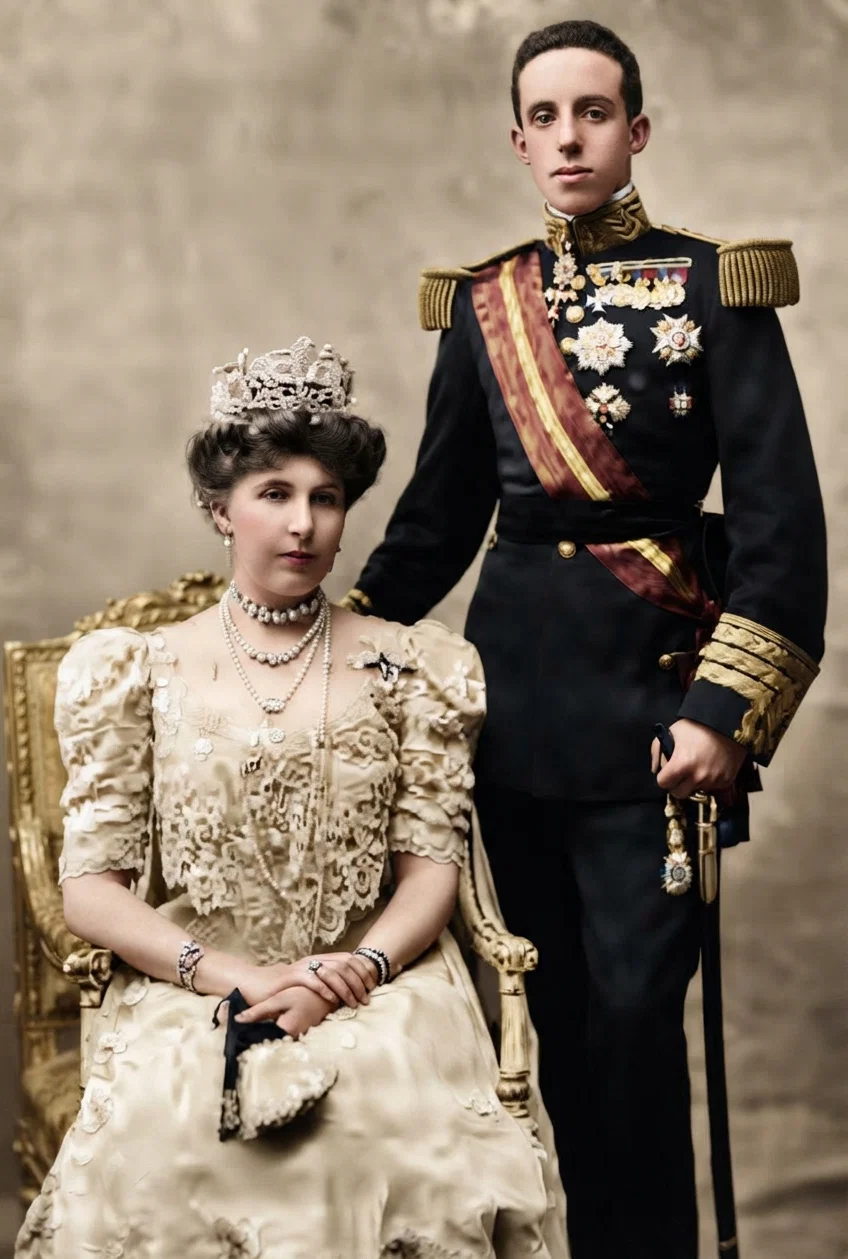
King Alfonso and Queen Victoria
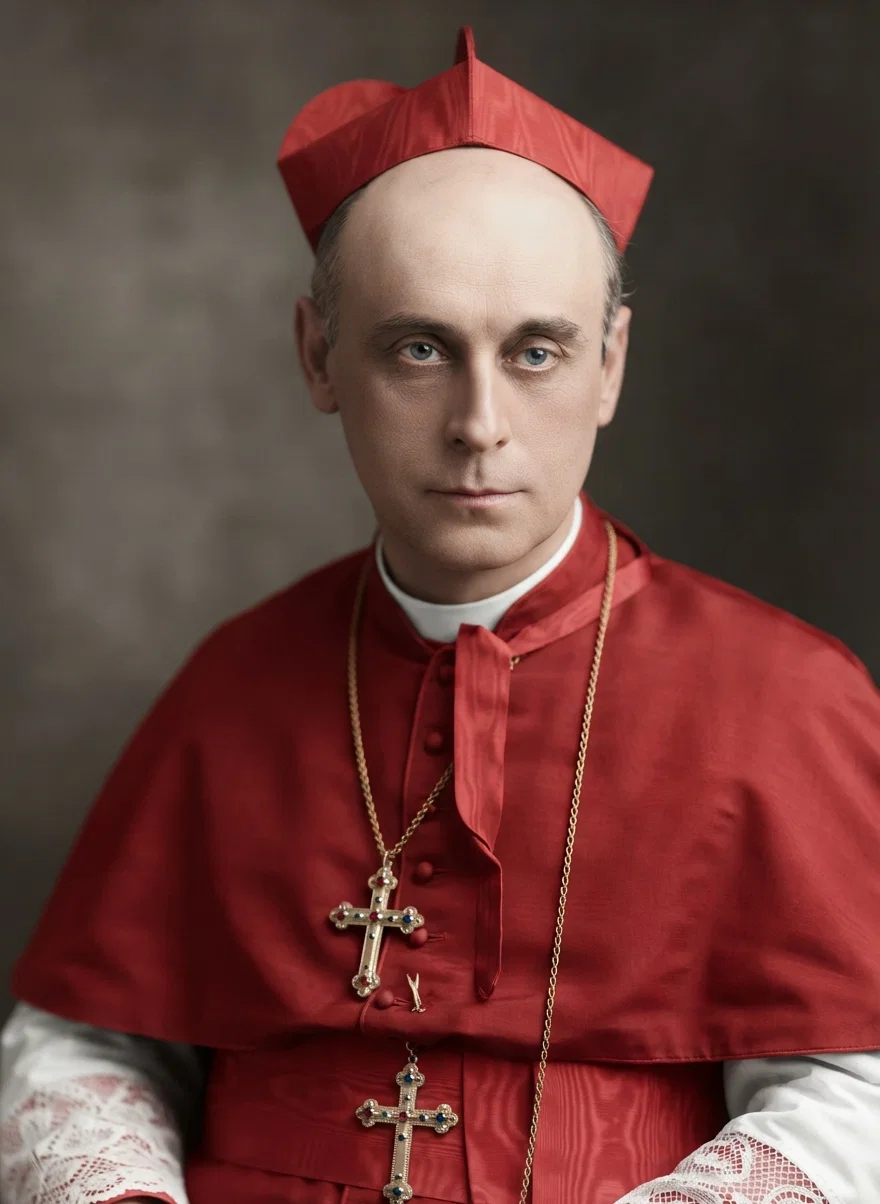
Cardinal Merry del Val
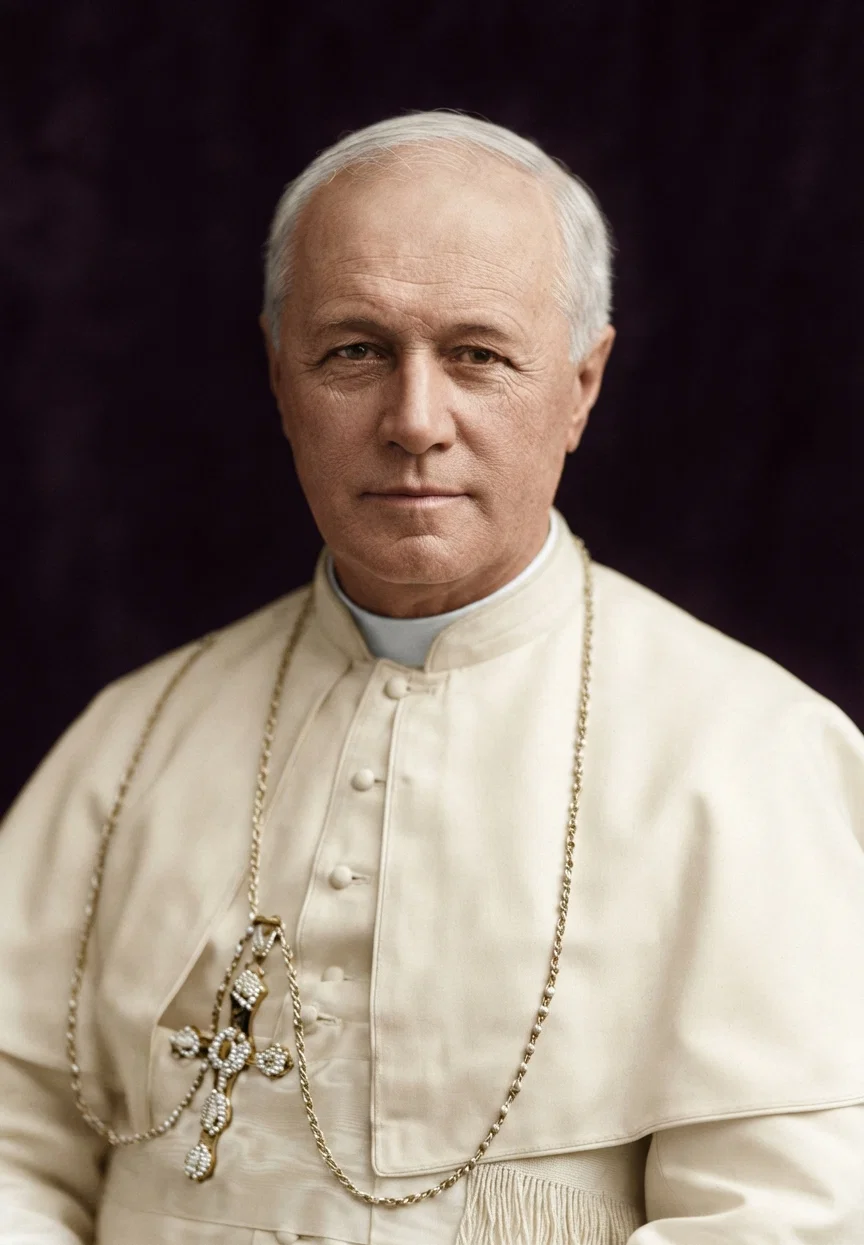
Pope Pius X
What Cardinal Merry del Val, the papal secretary of state, will do is not yet determined. This of course we know, that Rome will do all she can to hold her old-time power in Spain. We hope that public sentiment is sufficiently strong to sustain the premier and the king in the action that they have taken. Certainly the granting of full religious liberty to all classes is doing the Papacy no harm. It is but equal justice to all. It was Christ Himself who said, "If any man hear My words, and believe not, I judge him not: for I came not to judge the world, but to save the world." No true Christian church will ever demand alliance with the state or control of state funds or offices. When the time comes that a professed Christian church demands that, the indications are clear that she has let go of the arm of Infinite Power. The world will watch with interest the outcome of the Spanish struggle for freedom. We thank God that the struggle is on, and we hope that its issue will be favorable for the Gospel, for a little time at least before Christ shall come.
Four figures around which revolves the present crisis in Spain. What will Pius X do? What will his shrewd secretary of state, Merry del Val, devise to meet the vigorous premier of Spain, Señor Canalejas? Will Spain's weak king yield to the Vatican, or be dominated by his prime minister? What influence will Victoria, a sworn Catholic but at heart a Protestant, have upon the revolution? Will it involve England?
News and Notes
Much of the discussion on prehistoric man is based on measurements of the crania of early man. As our readers know, such study generally involves Evolution. The recent study of an instructor at Columbia University over the head forms of immigrants tends to show that head forms vary exceedingly in race types under new conditions. This is taken, even by scholars, as indicating the precariousness of classification upon crania alone.
The Syriac hymn-book that has been recently discovered shows acquaintance with John's Gospel. Dr. J. Harris, an English scholar, and Dr. Harnack, of the University of Berlin, unite in assigning the hymn-book to the period before 100 A. D. Some regard this ancient document as the most important found within the last fifty years as far as being a verification of the New Testament.
Thirty-seven countries have sent seventy scholars and diplomats to the International Monetary Conference which is sitting this summer at The Hague, working to secure unification of the laws of exchange and international coinage. The representative of the United States is Charles A. Conant.
Mr. W. D. Allen of Chicago would be glad to spend ten million dollars to help the poor; and he thinks that one of the very best ways—and who would say that he is not right?—would be to expend that in the abolition of the dramshop, so as to prevent men from using their wages for that which is a curse and not a blessing.
During the last ten years, the Federal Government has consigned thirty-six war-ships to the junk heap. Together these ships cost the United States $9,803,495, but when sold they brought only $266,779. For instance, the Hornet cost $117,500. It was recently sold for $5,100.
In an address before the graduating class of the Boston College of Physicians and Surgeons, Dr. J. H. Kellogg said that in case the present rate of increase of insanity continued, the whole world would be insane in 265 years.
The Chinese imperial edict forbidding the cultivation of opium has had a happy result. In a recent tour of 1,200 miles through the province of Szechuen, where formerly the farmers grew little else than opium, a commercial agent did not find a single plant visible.
One of the happiest little kingdoms of earth is Bulgaria, where there is said to be full liberty of the press, perfect understanding between king and citizens, and no caste. The king's court is merely a group of common people.
Moving-picture films are now made to represent the growing flower or insect. The bursting of a bud, the unfolding of a fern, the evolution of a chrysalis into a butterfly, would certainly be fascinating pictures.
While twenty years ago life in Rhodesia was very primitive indeed, now the traveler in the southern districts of that territory rides in luxuriously equipped railroad coaches, with sleepers and restaurant cars.
According to an estimation of Dr. Zeller, a German statistician, in every 1,000 of the earth's inhabitants, 346 are nominal Christians, 114 are Mohammedans, 7 are Israelites, and 533 are of other beliefs.
The various librarians of the country report a decrease in the circulation of books. Among the reasons assigned for this has been the growing interest in moving-picture shows.
The University of Chicago is building a Memorial Library in honor of William R. Harper, its former president and famous Hebrew scholar. The library is to cost $600,000.
Man's battle with the air has its fatalities as well as the strifes between man and man. Fourteen experimenters with flying-machines have perished since September, 1908.
The primaries in Texas compel the legislature to submit to the people of that state a constitutional amendment involving state-wide prohibition.
Pottery of Egyptian workmanship has been discovered in Italy. It is an eloquent affirmation of the trade relations of the ancient world.
The Chinese government, it is reported, has asked Lord Kitchener to take charge over the reorganization of the Chinese army.
In New York and Massachusetts fines are permitted to be paid on the instalment plan. This is certainly a humane system.
A French statistician claims that after an "analysis" of 872,265 households, only 135 couples are happy.
The Federal Government will establish cooking schools for the purpose of supplying cooks to the army.
There are 1,405 charitable societies of New York unconnected with ecclesiastical bodies.
It is interesting to note that the Bible is the best selling book in India at present.
Seven were killed within three days in Imperial Valley by the great heat.
Tarsus, the natal city of Paul, is now lighted by electricity.
King George of England will be crowned in June, 1911.
Amurru: The Home of the Northern Semites
"Amurru: The Home of the Northern Semites." By Albert T. Clay, Ph.D. Cloth. Price $1.25. The Sunday School Times Company, Philadelphia.
Professor Clay primarily makes this volume an attempted demonstration of his thesis that the Babylonian Semites were of Amorite descent. Then he shows that in such a case, Israel could not have received its religion from Babylon, as the rationalists of the Pan-Babylonian school assert. However, Professor Clay equally as well demonstrates that, whatever be the ethnologic relations of the Babylonians, the Hebraic religion is not Babylonian.
It is unfortunate that Dr. Clay interprets Oriental history according to the evolutionary hypothesis. Our knowledge of early Semitic life is exceedingly fragmentary. Semitic philology, upon which the major portion of this volume is based, is of itself a very precarious foundation as yet for any final explanation of the ethnology of Southwestern Asia. When such a science, legitimate only as we perceive its limitations, is combined with evolutionary theories, and their combined conclusions are dogmatically asserted to prove some such thesis as that of Dr. Clay's, we need not at all regard as the finalities of science the verdicts of such a method. Altho Dr. Clay does not regard the Jewish faith as of Babylonian origin, yet he does think it sprang from some heathen Aramean cult. One may pertinently ask if it makes any difference which of these theories a person accepts if he must accept one. At any rate Dr. Clay is not a Pan-Babylonian. He must be given credit for opposing many wild theories of the rationalists. And we trust that his historical appreciation may lead him to reject other fables which the men of this century are so prone to invent.
The Boy Aviators in Nicaragua
"The Boy Aviators in Nicaragua, or In League with the Insurgents." By Capt. Wilbur Lawton. Hurst & Company, New York.
This is an imaginative story of two boys who went to Nicaragua to assist the insurgents. Its aim is to tell of conditions in Nicaragua, and the justification of the government in taking a hand.
Books We Should Not Read
Mr. Henry Lavaden, of the French Academy, in a series of articles, has said some good things on books that we should not read. He tells us that “the danger line is when our conscience begins to flinch. If a certain phrase seem innocent in appearance, extremely perfect, if it touches the conscience, do not hesitate, but stop. It is the needle of the compass which quivers when it gets off the course.” He declares that “there is no one but has experienced that sure and silent reproach that never deceives; and if you think I am severe against bad, inopportune, culpable reading, it is because you can not yet imagine the ravages which it produces, even among those to whom it teaches nothing and who therefore persuade themselves—imprudent men!—that they need not worry about it. It disturbs, it agitates, it shatters the equilibrium of the higher forces, and above all it soils the soul, it splashes it with mud.” He declares that our reading ought to be such that it shall be “the logical and indispensable radiance of all the deeds of our life; that it shall escort our work, supplement our profession, finish and perfect at all times and under all circumstances the special men that we are,” and he declares that what one should read is that which “can be read aloud,” not alone, but to “one’s daughter or to one’s mother.”
The Palestine Texas Race War
One of the worst race wars which is on record opened near Palestine, Texas, July 30. It was brought about by a Negro killing a white man who had come to collect from him a debt which he owed. He, it is said, deliberately waylaid and shot the man before anything was said. He fled to a company of his own people and declared that two white men were after him; and they, not knowing his crime, attempted to shield him, and out of it grew the war in which hundreds of men were engaged on both sides. The Negroes a thousand strong entrenched themselves in the everglades and defeated two companies of state troops and a body of 300 armed planters. The whole Negro population is aflame with racial bitterness. Fifteen white men have been killed. The latest news at this writing is that many of the colored people have yielded themselves to the sheriff on promise of protection, and it is thought that the most serious difficulty is over. A little consideration at the beginning would have saved all these lives.
A New Work of Importance
By Editor
Every work which will help in Bible study or religious knowledge should be welcomed. Every book which is broadly planned and is yet true to the Old Book should be doubly welcomed. Such a work lies before us. It bears the title of—
"The Popular and Critical Bible Encyclopedia."
It is published by the Howard Severance Company, of Chicago, in three substantial volumes, the set before us in three fourths leather. It is a Scriptural dictionary as well as an encyclopedia, defining and explaining all religious terms on Biographical, Geographical, Historical, Archeological, and Doctrinal Themes. It is well illustrated by over 600 maps and engravings.
The work is edited by the Right Rev. Samuel Fallows, A.M., D.D., LL.D., assisted by Andrew C. Zenos, A.M., D.D., and Herbert Willett, A.M., Ph.D. Its list of named contributors numbers 128.
One notable and helpful feature is the pronunciation of each word, the original word, the transliteration of the original, and definition, if definition is demanded. In matters of doctrine it aims to give all views where there are decided differences. For instance the article on the Sabbath was prepared by the Rev. Baden Powell of Oxford University, and "J. K.," and presents about five different views of the Sabbath question; but a supplementary article is given by W. C. Whitford on "The Seventh Day of the Week the Only Divinely Appointed Sabbath," a well-written paper.
Regarding the great questions of sin, atonement, resurrection, it is Biblical; and so far as our examination has gone, on other typical articles we find it loyal to the Word, frequently and admirably refuting the views of the Higher Criticism. Its archeological information is valuable. We are glad of the work, and sincerely hope that it may have a sale worthy of its merits. The letter-press, illustrations, and binding are all that could be desired, and it is the newest encyclopedia of this character before the public.
Shiloh: the Man of Sorrows
By Mrs. L. D. Avery-Stutle
Chapter XXIV.—At Nazareth
Up in the quaint little village of Nazareth, among the hills of limestone rock and jagged, precipitous bluffs, there was profound excitement and astonishment. Strange tales were told of a wonderful Miracle-worker and Teacher, who had appeared in Judea and Galilee; and now at last He was about to visit Nazareth; and, wonder of wonders, men said that it was none other than the Man Jesus, the Son of Joseph and Mary.
This hardly seemed among the possibilities. The people of Nazareth were so intimately acquainted with this Jesus! they knew Him so well! It was not so very long ago that He was laboring in the shop of the carpenter,—a common working man among them. It could not be possible; there must be some mistake. What! He, so quiet, so unassuming, so obedient, so humble,—He a mighty physician, a worker of wonderful miracles, and even, as some said, the Messiah, the long-looked-for Deliverer! Impossible!
So declared some of the dwellers of Nazareth. Others, remembering His life of perfect purity, His unusual kindness of heart, His wonderful precocity as a child, and His astonishing wisdom, discussed the question more favorably among themselves.
Many remembered little kindnesses done them by this quiet Man—even as a child—and a youth. Others called to mind lessons of wisdom and fervent piety which fell from His lips, even while performing His humble tasks.
But not one could recall an impatient word, an unloving or ungracious remark, a single act of disloyalty or disobedience toward His humble parents, or a solitary instance in which He ever failed to heed and to obey the written Word of God, with the most scrupulous and earnest zeal. The rolls of the prophets had been His constant guide, and their teachings were always upon His lips.
But there was one fact which stood out prominently in the memory of the dwellers of Nazareth: This Man had never heeded the traditions of the rabbis. None mentioned this oftener, or made greater use of it, than did Shaphan the rabbi, whose cruel face we remember too well. Time has given him a coronet of grey hair, but it has added no lines of loveliness or grace to the sallow, sunken cheek, or the narrow, sloping forehead. The thin hooked nose has grown thinner, and the small, fiery eyes have acquired an added venom with the passing years. Always following close behind him is his son Tubal, his exact image in form, feature, and disposition.
These men allowed no scruples of conscience or feelings of humanity to stand in their way. So long as they were to be benefited, either in the attainment of honor or riches, or in securing the punishment of those unfortunate enough to stand in their path, they were entirely unscrupulous as to the results which might affect others. By profession they were Pharisees. Still they were not seemingly hampered by any dread of the future. The praise of men sounded sweet to them, and the applause of their fellows was rich music in their ears. Hence they were strict in the outward observance of the law,—as were all Pharisees. But that any should aspire to greater holiness or wisdom than their own, was an offense which neither Rabbi Shaphan nor his son Tubal ever forgave.
The astonishing wisdom and the godlike virtues of the Son of Mary, together with His utter refusal to be influenced by him, even from childhood, had ever been a source of humiliation and anger to Rabbi Shaphan. He had been glad when the Man had departed from Nazareth. But now He had returned—and with what prestige! All Galilee was ringing with tales of the Wonder-worker; and Rabbi Shaphan considered His return a personal affront.
And so from group to group of excited people gathered in the familiar streets, hurried the scowling rabbi, close followed by his pompous son.
The grey head with its rich bonnet of crimson was everywhere. The sunken black eyes gleamed ominously as he hissed in the ears of the expectant people: "The Man is coming — the Pretender to the throne of David! To-morrow is the Sabbath. Make ready for Him. Verily we will show this Son of Mary that He can not deceive the men of Nazareth."
"What evil knowest thou of the Man, Rabbi Shaphan?" cried a kindly voice from among the people; "for, behold, we know no evil of Him."
"Thou speakest as one of the foolish men speaketh, O Uriah; for, behold, thou hast not long dwelt in Nazareth, and thou dost know little of this Pretender. But verily I have known both Him and His family these years. He hath been of a rebellious spirit from His youth up, not heeding the voice of His elders; and of a truth, even in His childhood have I found Him in the society of evil men and robbers."
"But hast thou heard, O rabbi," inquired another,—"hast thou heard of the miracle at Cana,—the miracle of the wine? for, behold, I saw the bridegroom, Chuza, but yesterday."
"A foolish trick! I tell thee we have known this Man from His youth,—have we not, Tubal? and we know that He is but a carpenter, and doeth no miracles."
"But verily it hath been told us," continued the first speaker, "that He hath driven the priests and rulers from the temple at Jerusalem, for that they desecrated the holy house; and, behold, they fled before Him. And hast thou not heard of the healing of the son of Lentulus the nobleman, at Capernaum? The youth liveth and is in good health, even this day."
"Ha! this is but a work of sorcery. Behold, this Fellow eateth and drinketh with publicans and sinners; and verily," continued the rabbi, with a pretended look of horror, "verily, He hath conversed with a harlot—and she a Samaritan! and now, behold, the Samaritans rise to do honor unto Him. But we know that a true son of Israel hath no dealing with these Samaritan dogs. What evil know I of Him? Man! dost thou not know that He hath no father?"
"Nay, rabbi," replied the first speaker, Uriah, "I am told that His father Joseph hath been a long time dead."
The lip of Rabbi Shaphan curled, until the long, yellow, fang-like teeth showed prominently, while a look of malignant triumph lighted up his ugly face. "His father! the man Joseph the carpenter was not His father,—tho we all do know that he treated the Child kindly enough, tho he knew as well as we, that He was born of fornication. Who His father was, none knoweth, save the woman Mary. But see," continued the rabbi, "this Pretender will assuredly enter the synagog on the morrow, even as He is wont to do upon the Sabbath; and, verily, we will watch the words of His mouth, and if this Sorcerer speaketh folly, and His words be boastful, we must silence Him, for it is not lawful for us to hear blasphemy. Men of Israel, harken unto me, Shaphan, a rabbi, a teacher of the law, a man of wisdom and good report among you, a man whose father and whose mother were doers of the law,—harken unto me: Is it meet for us to listen unto this Babbler, whose mother Mary we know, and whose brothers and sisters are with us?"
"But and if He be the Messiah! Rabbi Shaphan, thou knowest well that the Shiloh of Jacob, promised by the holy prophets, must already be come; for the time is fulfilled!" exclaimed he whom they called Uriah. "And verily," he continued, "this Man doeth many miracles."
"But look you," interrupted the young man Tubal, who had been anxiously watching an opportunity to champion the cause of his father, "look you; say not the prophets that the Messiah must be born in Bethlehem of Judea? and of a truth this Jesus was born in Nazareth, where He hath abode, both He and His mother and His brethren, until He had heard that John, the son of Zachariah, baptized in Jordan. And as for the miracles which this Man doeth, surely there is another greater than He, who dwelleth among the mountains, and who doeth wonderful miracles. He is a mighty prince, and he also declareth that he is the Messiah,—and I doubt not, was born in Bethlehem of Judea. But now we know that this Son of a carpenter was not born in Bethlehem."
At this moment a stalwart figure was seen making his way through the crowd gathered about the rabbi and his son.
"Wherefore sayest thou, O Tubal, the things which thou knowest not? for behold I know and do testify that Jesus of Nazareth was born in Bethlehem of Judea!"
The speaker paused a moment, and glanced defiantly at the rabbi and his son. "It is Barjona, the fisherman of Bethsaida, the son-in-law of Sylvanus, the shepherd of Bethlehem," whispered Uriah.
"The fisherman!" exclaimed Shaphan scornfully; "verily he also is in league with the Deceiver, and they both be in league with Beelzebub!"
The dark, fiery eyes of the Galilean flashed. "Art thou a teacher in Israel, O Shaphan, and knowest not that thy miracle-worker who dwelleth in the mountains is a robber and a leader of sedition? Hear, ye men of Israel! his name is Barabbas, the robber, whom all Galilee and Judea fear; for his hand is lifted against every man."
"Well!" exclaimed Shaphan, "and this thy Master accompanied him, even in His youth!"
"How can this Barabbas be the Messiah?" questioned an earnest voice. "Verily the Messiah cometh not in guise of a robber."
"We will rest the matter until the morrow," scowled Shaphan, "for, behold, the sun is almost set, and the Sabbath cometh on. But look ye; on the morrow this Fellow will condemn Himself by the words of His own mouth."
A little later, after the people had dispersed each to his own home, the keen eyes of Barjona discovered a strange sight, as he was hastily making his way toward the home of Mary, the mother of his beloved Master. Secreted in one of the gardens of Nazareth, were the pompous rabbi and his son, behind a hedge of cactus, engaged in earnest conversation with a half dozen evil-faced men who had gathered closely about them, and whom Barjona recognized as some of the most notoriously vile characters of that little village from whence it was a matter of astonishment that even one good thing could come.
"These men devise no good toward my Master on the morrow," he muttered to himself, as he hastened onward.
(To be continued)
God Is, and All Is Well
By John Greenleaf Whittier
BEFORE us, even as behind, God is, and all is well.
—Whittier.
Seek God in the Morning
THAT day is rightly begun in which we go early to the presence of God, and fill our life with the influences of His presence in prayer, and put our hands in His hand, to follow His guidance through the day.
We may indeed say our prayers and be little the better for it; but we can not really and earnestly seek God and commune with Him in the morning without being better prepared for all that we must meet.—Every Where.
Underwood
Standard
Typewriter
For Billing, Invoicing, Bookkeeping,
Correspondence, Etc.
It is a thorough systematizer.
"The Machine You Will Eventually Buy"
UNDERWOOD TYPEWRITER COMPANY
(Incorporated)
San Francisco Branch, 133-135 Sutter St.
Tract
By Editor
Sample Case
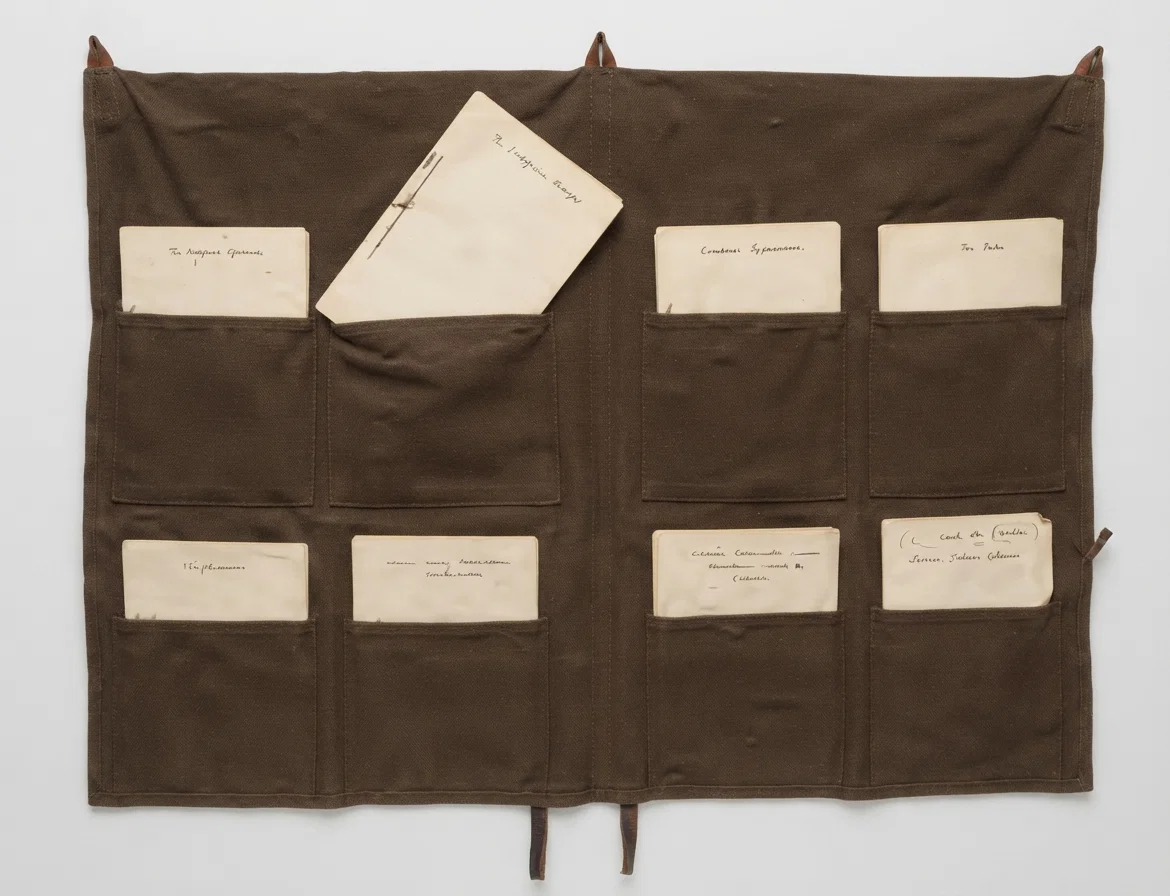
One of the neatest little sample cases for tracts we have ever seen has recently been devised for the benefit of church librarians, missionary workers, and, in fact, any one who wishes to have a complete list of Gospel tracts for ready reference. It consists of heavy cloth covers, 19x 26 inches in size, with pockets as shown in the accompanying picture.
In each of these pockets is a file of tracts and pamphlets topically arranged. Holes are punched in the back of these publications and a string run through them and through a stiff piece of cardboard at the back. This makes a regular file of tract samples for instant reference. There are three loops at the top by which the case may be hung to the wall. Or it may be folded as shown in the cut. The price is $2.00, post-paid, but a special rate of $1.00 post-paid is made to librarians purchasing for the use of the church. As this is considerably less than cost, only one case can be furnished to any church at this rate.
Address your state tract society, or the manufacturers.