The Youth’s Instructor, Vol. 33, No. 26.

PLYMOUTH

The Youth’s Instructor

Jul 15, 1885

S. D. A. Publishing Association · Battle Creek, Mich. · Jul 15, 1885

PLYMOUTH
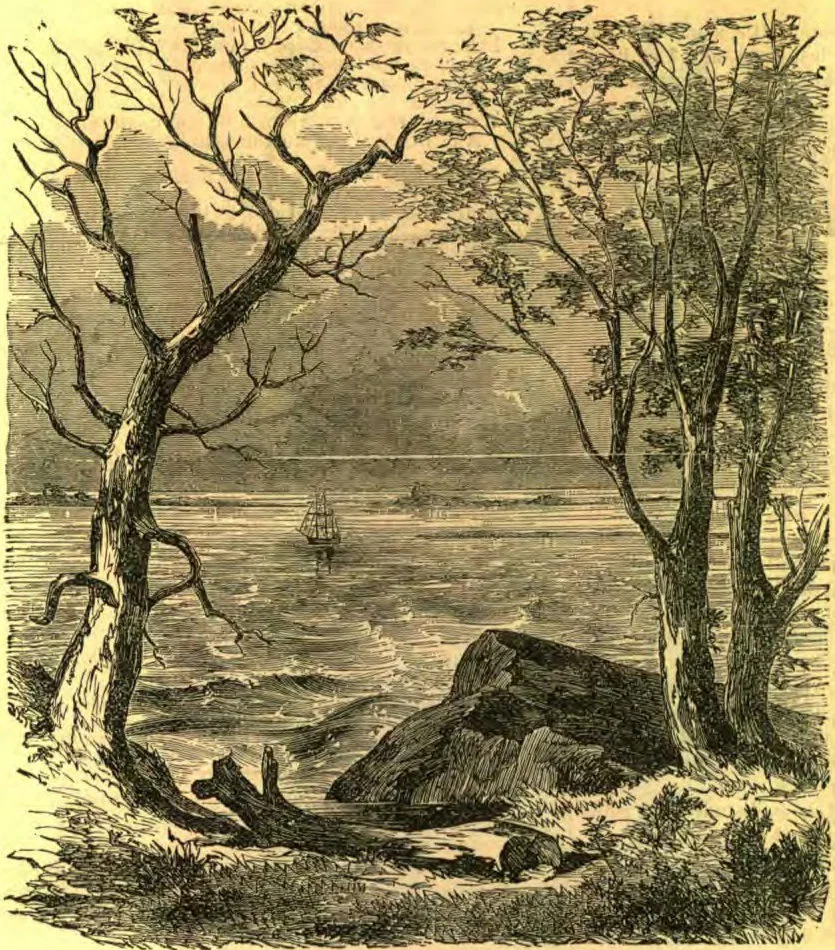
Ay, call it holy ground, The soil where first they trod; They have left unstained what there they found,— Freedom to worship God!"
“Plymouth,” as a traveler aptly remarks, “is the American Mecca. It does not contain the tomb of the Prophet, but the Rock of the Forefathers, their traditions, and their graves.”
Over two hundred years ago the Pilgrims first set foot on Plymouth Rock, to them the door-step into an unknown world; and with this rock for a corner-stone, they laid the foundations of our great Republic.
“God had sifted three kingdoms, to find the wheat for this planting, Then had sifted the wheat, as the living seed of a nation; So say the chronicles old, and such is the faith of the people.”
These were stout-hearted men, and brave, trustful women, who willingly faced the hardships of pioneer life, that they might have a place where they could worship God in simplicity.
How pleasant it would be if we could know more about the every-day life of these noble men and women. Before them lay an untamed wilderness; but they did not falter. In that first, terrible winter, many died; so that, as the governor touchingly wrote, “Ye well were not in any measure sufficient to tend ye sick; nor the living scarce able to burie the dead.” There was nothing but steady, hard work before them; but I fancy these stern men enjoyed it, and cared little for recreation.
But some of the new-comers were not inclined to lead so industrious a life. It was the custom for the governor to call all the able-bodied men together each morning, and lead them to their work in the fields. On Christmas day, some refused to go, saying that it was against their conscience to work on that day. Very well, the governor said; if it was against their conscience, he would leave them until they were better informed. But upon returning at noon, he found them playing ball and pitching quoits in the street. With a twinkle of fun in his eyes, the governor took away their implements, and sent them into the house, saying that it was against his conscience that they should play while others worked.
And, girls, do you know what was done to the scolds? They were gagged and set at the door for certain hours, for all comers and goers to gaze at. Undoubtedly, with such severe treatment in prospect, the shrews very prudently held their tongues, and peace reigned at the hearthstone.
All who were inclined to find fault with the government were promptly banished from the settlement. One John Oldham, who had been driven out for causing a revolt among the disaffected, dared to return. He was more contentious than before, and was put under guard until his wrath had cooled. Then he was marched between a double file of musketeers, each man giving him a “thump with ye but end of his musket.” He was then taken to a boat, and told to go and mend his manners. This may seem like severe treatment, but all the success of the little colony depended on the good-will that prevailed among its members.
On the top of the hill stood the fortress and church, a “large, square house, with a flat roof, made of thick, sawn planks, stayed with oak beams.” To intimidate the Indians, there were placed upon the top six cannon,—
“Preachers that spoke to the purpose, Steady, straightforward, and strong, with irresistible logic, Orthodox, flashing conviction right into the hearts of the heathen.”
It would be a satisfaction if we might visit the ruins of this first church, but there is not a vestige left. The governor’s house, together with all the other dwellings, have been torn down. In their places stand newer ones, and this first city looks like any other New England town.
We would expect the rock to remain the same as when the Puritans set foot on it that cold December day. But here, too, there have been changes. At one time the people tried to move it to a more conspicuous place in the town; but the rock split in two. So only the top part was taken, which now lies in the yard in front of Pilgrim Hall. It is surrounded by a pailing, and on it is chiseled the date, 1620. The lower half remains where it was, but it is inclosed by a canopy. Our picture shows us Plymouth Rock as it was, and as we always imagine it to be.
But whatever changes have been made in the town, the hills are the same, and the sea; and tender memories will always cluster around them. And after all, the Forefathers need no other monument than that which may be found in the good government built upon the foundations they laid. May it long stand as a witness to their wisdom and forethought.
W. E. L.

FOR HIM.

NINE o’clock, and Hettie still standing by the stove, baking pancakes. The family breakfast had been eaten and cleared away a full hour and a half before.
Hettie was baking cakes for brother Rob, who at that moment was sitting in the dining-room, leisurely eating his breakfast-cakes and maple syrup, regardless of what the clock said, or of the work that was waiting for Hettie. Rob was nineteen, four years older than Hettie, and considered it his privilege to tease his sister, and domineer over her generally. Often would he come down-stairs late, and demand his breakfast of Hettie in a tone of authority, as if it was the business of her life to wait upon him. As often, too, the sister would reply with sharp words that left a sting all day long.
On this particular morning, Rob had been more exasperating than usual. He said that the cakes were burned, then that they were raw; and he asked Hettie if she had to wait to have some flour ground before she brought any more. Besides all this, it was a warm morning, and mother was sick, and life seemed all awry to poor Hettie. Do you wonder that her face was drawn into a scowl, and that the frowns grew deeper with each cake turned? To tell the truth, I don’t think she tried very hard to have those cakes right, for certainly they were not done as nicely as Hettie Bryson could bake cakes.
“Rob says he wants a glass of water.”
The small messenger who said this was the pet of the house. Now if it had been any one else but little Lillie, Hettie would have said, “Tell him to get it, then;” but she could not quite bring herself to send such a message by this gentle little sister, so she slammed her plate onto the table, and went to get the water.
Lillie watched her sister a moment as she jerked the pump-handle up and down, and then, with a puzzled look, asked:—
“Hettie, are you getting it for His sake?”
“For His sake! What do you mean? Whose sake?”
“Why, for Jesus’s sake, I guess. It is in my lesson, about getting a cup of cold water for his sake, and I don’t see how we can when he isn’t here. Will it do to give it to anybody?”
Poor, startled Hettie! It was in her lesson too. She had so longed last night for an opportunity to give a cup of cold water for His sake, to prove that she was trying to be a disciple, had thought wearily of the coming morning, with its round of homely duties, and had sighed, and said there was nothing she could do. Was it possible that here was a chance right in her own home? Could she even give this cup of water in His name?
These thoughts rushed swiftly through her brain, and quick as the thoughts followed this answer:—
“Yes!”
Yes, it should be done for Jesus. She looked at the glass. It was not clear, and she knew that the water she had filled it with must be warm, and taste of the iron pipe, because she had not pumped out enough.
Hastily she reached after a clean glass, and pumped until the water was cold and sparkling as crystal. Instead of the hard thump she had intended, she set the glass down gently and in silence by Rob’s plate, and went swiftly back to those cakes. The dried-up things were thrown away, the damper opened, the fire made to roar, the griddle to smoke, and soon another set of golden-brown cakes had taken their place on the plate.
“I say, how many years are you going to keep me waiting for those cakes?” was her greeting, as she opened the dining-room door.
“The fire wasn’t burning brightly; it is all right now,” she said meekly.
Amazement showed in every line of Rob’s face, as he saw the tempting cakes, and heard the gentle reply. But Hettie did not see his face, for she was standing over the stove again. The next time she went in, he said, in a pleasant tone:—
“That will do, Hettie; they are beauties, though, and I wish I had time to eat more of them.”
Hettie was almost tempted to tell him that he would have had more time if he had come down stairs sooner. But she didn’t; she shut her lips firmly.
After Rob was gone, Hettie sat down on the back door-step to cool herself off, and think a minute. Rob was not a Christian; she had been praying for him, and here, perhaps, her own cross words and ways were keeping him back.
The next evening, as she was starting for church, she lingered in the hall a moment when Rob was putting on his coat preparatory to going, she did not know where, for it was not his habit to attend this meeting.
“Rob,” she said, half timidly, “I wish you would go to young people’s meeting with me to-night!”
“How do you know but I will?”
“Oh! will you?”
“I shouldn’t wonder. You see, Hettie, somebody told me you took part in the meeting last week, and I’ve been watching you to see if it was all talk. Yesterday morning I made up my mind that you had something that you didn’t have once, something that helped you. I’m sure if there is anything, I’d like to find it too. I said to myself, If she can stop snapping and snarling, why can’t I? At any rate, I mean to go to this meeting every Sunday night after this.”
And Hettie, full of smiles and tears, could only murmur below her breath, “O Rob, I’m so glad!”—The Pansy.

DAY DREAMS.

WHILE the slighted grammar unopened lay, The little maid dreamed of a fairy clue, A magic thread that led far and away, The deep, tangled maze of the forest through.
“Oh! I wish there were things to do to-day, Queer riddles to solve, great prizes to gain, Enchantments to break, magicians to slay, And that I, a queen, on the throne might reign!”
“But the puzzles are lost, the queens are dead, And there’s nothing to do,” she sighed and said.
A little lad leaned on his hoe that morn, And longed for a horse, and a burnished shield, To ride away from the pumpkins and corn, To the tourney’s lists on the tented field.
“Oh! I wish there were things to do to-day, Great dragons to kill, and battles to fight; I would break a lance in the fiercest fray, I would fling a glove at the proudest knight.
“But honor is lost, and glory has fled, And there’s nothing to do,” he sighed and said.
And the poor little maiden never knew That Knowledge was ready to crown her queen, And the clue that led his labyrinth through, Lay hidden the leaves of her book between.
And the little lad never even guessed That the dragon Sloth conquered him that day, While he lightly dreamed of some idle quest, And the unused hoe in the young corn lay.
But Honor and Fame passed the dreamers by, And crowned brave Toil, who found no time to sigh. —S. S. Times.

SIR JOSHUA REYNOLDS.

One morning in July, 1733, the little village of Plympton Earl, that lay so quietly on the fair English sea-coast, was gifted with a great treasure. This was nothing more than a baby—a weak little creature, who cried as all babies cry, and who had nothing remarkable about him at all.
Moreover, as he was the seventh son of the poor schoolmaster, he might have been very well spared, the neighbors thought; but his parents welcomed and loved him, and the little fellow, who was christened Joshua, proved to be the greatest artist of the age.
He grew up, with his eleven brothers and sisters,—for there was always a baby in the house,—and his greatest delight was to draw. They were very poor, so Joshua had no paper nor pencils, but drew with charcoal on the cellar walls. His brothers could draw, too; but Joshua’s drawings were different from theirs, for they were always finished with the most scrupulous care.
Before he was eight years old, he had studied the rules of perspective, and oh, how he worked at his drawing!
In after years, when the whole country was filled with his fame as a painter, he said to a young artist:—
“The man determined to excel, must go to his work, willing or unwilling, morning, noon, and night; and he will find it to be no play, but, on the contrary, very hard labor.”
It was in this way that Joshua Reynolds succeeded. He studied his art as others study arithmetic and languages. His father intended him to be an apothecary; but when he found how the boy was attached to his art, and how he studied and worked at it, he sent him as a pupil to Hudson, then the greatest portrait painter of England.
Joshua remained with him for four years, learning all that his master could teach him; but he studied, too, from nature, and at length his master was compelled to confess that the pupil was the better artist of the two.
When Joshua was twenty-six years old, he painted the picture that brought him immediate fame. It was a portrait of his friend, Admiral Keppel, who stood upon a stormy beach, with the wind blowing his hair and mantle—such a beautiful, true portrait, that it opened the door of fame to Joshua; and from that day his life was filled with triumphs.
All the beautiful ladies and great men of England came to Joshua Reynolds to have their portraits painted; and now, though one hundred and fifty years have passed, they are still preserved as works of the great master painter.
Later in life he was knighted, and became Sir Joshua; and though he never married, he possessed a stately home, where his sisters and their orphan children were ever welcomed, and around his table gathered the most noble and illustrious people of the time.
One day, as he sat at his work on the portrait of a great lady, he felt a sharp pain in his eyes, and then he knew that his sight was gone. He was sixty-five years old at that time, and for five years longer he lived, honored and respected by the whole nation. For he had worked long and well, and had put his talents to good use. His fame is world-wide, and his name is immortal.—The Kaleidoscope.

THE NAVY YARD.

Having a little time to spend when we were in Boston the other day, we went to visit the Navy Yard. The yard belongs to that part of the U. S. army which serves on the sea.
Here are kept all the materials needed for war, such as swords, rifles, cannon, balls, and war vessels. The yard is situated on the bay, so that large vessels can go up to the wharf. The first thing we saw, was a long row of cannon, laid out in perfect order, and always ready for use when wanted to be sent to any part of the country. There are several hundred of them, and they are of all sizes, from the little cannons not larger than a good-sized fence post, to monstrous ones fifteen feet long.
Here is one of the fifteen-foot guns; it measures five feet across the butt end, and it is about the height of a man. It carries a fifteen-inch ball; that is, the hole, or bore, is fifteen inches across. It is large enough so that I could crawl into the cannon, for I tried it. This big gun weighs 42,250 pounds, or over twenty-one tons. It would take a good many horses to pull it. The ball is larger than a good-sized water-pail. Some of the guns are so large and powerful that they will throw a ball fifteen miles. You know how far fifteen miles would be. Just think of a cannon ball flying such a long distance through the air! Cannons are very costly. Here lie seven medium-sized ones, which cost $75,000.
Yonder stands a curious gun, called a mortar. It is broad, but very short, and so fixed that a ball may be thrown high into the air, and fall inside the fort.
Passing on, we see large numbers of anchors, which are used to hold a ship still. The anchor is fastened to the vessel by a rope or chain, and then cast overboard into the water. The anchors used for row boats are so small that a little boy could lift one; but the large ones are extremely heavy. These are fastened to strong chains, and are turned up by a windlass.
At the wharf lies a very large vessel, called the Wabash, which was in two battles during the war of the Rebellion. It is now used for a receiving ship. It carries fifty guns, and an engine of eight hundred horse-power. These guns are placed inside the vessel, all around the sides. The muzzles of the guns are run out through the loop-holes that everywhere pierce the sides of the ship, so that when on the outside, you see a large number of cannon pointing right at you.
Here we have what is called a Gatling gun, a most terrible little thing. It is not very large, perhaps not larger than a stove-pipe. It has ten little barrels made so as to turn by a crank, and can fire off four hundred and eighty shots in a minute.
This receiving ship is used for training men for sea-service. Persons from fourteen to forty years of age are enlisted, their term of service lasting from one to many years. They are taught all about our vessels, and how to manage one in a battle. Persons who enlist must be in sound health. They are not allowed to swear or drink. They hold religious services every Sunday. There are about fifty men on it at present. We were very kindly shown all over the vessel; everything is just as clean as it can be. As we turned to go, an officer very politely told me that it was contrary to their rules for a person to take notes on a war vessel. I told him I meant no harm, and that I was taking down a few items so as to write about it for a child's paper. He said he waited till I got through before telling me, but he had to obey orders.
Not far away was another old vessel, called the Magaria, a famous ship, years ago. It was used in laying the Atlantic cable, and it was the first American ship to enter Japan. At the time of building, it was the largest vessel owned by the United States. It is three hundred and sixty-three feet long, and fifty feet wide. Can you tell how long that is? It is about a quarter of the way across a forty-acre field. A man would have to take about a hundred and twenty steps to walk the length of it.
Another time I will tell you about the rope-making that we saw going on here.
D. M. CANNIGHT.

“FEAR NOT.”

At morn, in the western sky, was seen The storm-rack rising high; And the threatening clouds, as they onward rolled, Betokened the tempest nigh. The bright sun veiled his glorious face, Not a whisper the breezes spoke; But soon the thunder’s muttering voice The solemn stillness broke.
Within the cottage, the children three Drew close to their mother’s chair; Pale were their faces, forgotten their sport, As they stood in silence there. Then the mother’s work aside was laid, And she gathered them at her knee, And smiled at the troubled, questioning eyes Turned up so anxiously.
While the tempest raged, she told the care Of the Father to the dove; That even the tiny, houseless birds Are objects of his love; That he it is who rules the storm, Obedient to his word; His hand through sunshine and through cloud Safe will his children guard.
“O mamma!” cried Paul, “I remember now The lesson you read to me, Of Christ’s disciples all alone On the sea of Galilee, Toiling at night on the stormy waves, Trembling with dread and fear; But Jesus came to them on the sea, And brought them help and cheer;
“For he bade the angry waves be still, And guided them safe to land. Is he not the same to-day, mamma? Does he not the storm command? I think I shall not forget it now, Nor fear the storm again; We may trust him in sunshine and in storm, And we shall not trust in vain.”
And by and by, when the storm-cloud rolled Away o’er the eastern hill, And the thunders silenced, as if they heard The mighty “Peace, be still,” The children out to the garden ran, Where each leaf and flower, arrayed In sparkling rain-drops, diamond bright, To the gentle breezes swayed.
As Mabel stood where the lilies spread Their leaves to the sun, and smiled, They seemed to say, in sweetest tones, “Consider the lilies, child. Lessons of truth we have for you, And faith in a Father’s care; The kings of the earth, in their regal robes, With our beauty cannot compare.”
That night, when the sun had set, and the moon Was climbing the star-lit stairs, Three little children, in robes of white, Knelt down for their evening prayers. They had learned from sunshine, storm, and flowers, To trust in the heavenly care; And, like incense, up to the courts above Was wafted each simple prayer. For truly, “of such is the kingdom of heaven.” “Let the little ones come unto Me.” They will share in redemption’s joyous song, Through all eternity.
EMMA REA WAKEHAM.

AN EMPEROR AT THE FORGE.

BOYS often resent being called upon to do a piece of work which they think beneath them; especially if it is a task which generally belongs to some one else. But every one should cultivate an obliging disposition, and be able to help in any emergency to the extent of his ability.
The Emperor Joseph set a good example in this respect, when traveling one day in Italy. A wheel of his carriage broke down, and he repaired to the shop of a blacksmith in a little village, and desired him to mend it without delay.
“I would,” said the smith, “but this being a holiday, all my men are at church; even the boy who blows the bellows is away.”
“Now I have an excellent chance to warm myself,” said the unknown emperor. So, taking his place at the bellows, instead of calling an attendant to do so, he followed the smith’s directions, and worked as if for wages. The work was finished, and, instead of the little sum he was charged, the sovereign handed out six golden ducats.
“You have made a mistake,” said the astonished blacksmith, “and given me six gold pieces, which nobody in this village can change.”
“Change them when you can,” said the laughing emperor, as he entered his carriage. “An emperor should pay for such a pleasure as blowing the bellows.”
I have known some shop boys who would have waited long, and sent far for help, before they would “come down” to blowing a blacksmith’s bellows.
It is not boys with the best sense who thus stand upon their dignity. A readiness to oblige, and to take hold of unaccustomed work when necessary, has often been excellent business capital for a young man; while the opposite spirit never wins friends. “Pride goeth before destruction, and a haughty spirit before a fall.”—The Youth’s World.

ONE BLACK DROP.

ONLY one black drop, but what a tinge it gives that water! Spreading to every other drop in its neighborhood, it clouds the whole mass.
That is the way with a thought that is not pure. It affects the desires, and there follows the wish to do the wrong. It reaches the will, and there follows the deed. Then how the recollection of it clouds the hour of prayer, the hour when the Bible is read and God's house is visited, the hour of solitary study, of intercourse with friends.
Look out for this evil. How? A man says of the water obscured by the black drop, “I will expel this dusky cloud.” Let him go farther back, and not admit that drop in the first place. Don't gratify that impure desire. Put a hundred feet as quickly as possible between you and that impure book. Who will promise in this one thing to look not, touch not? That promise will make a memory of sunshine for you.—S. S. Classmate.

THE MYSTERY OF NIAGARA.

None of us care to sound the depths of that awful abyss at the base of the Niagara Falls, nor of the gorge through which those fallen waters are borne onward; but we are interested in what others have ascertained by their measurement. The New York Times is responsible for the following:—
“The mysterious and awful depths of Niagara’s canon are fruitful subjects of comment. Some portions of it are reasonably supposed to be bottomless. When the first railway bridge was constructed here, some ambitious persons attempted to sound the canon directly beneath it. They filled a large tin pail with stones, and lowered it. The currents merely played with it. Then they took a stronger cord, attached a bar of railway iron to it, which actually floated, owing to the fierce counter currents.
“A few years ago the United States lake survey came here, and, as recorder of the survey, I know of the remarkable data obtained. We saw at once that the current would buoy up a large sinker, and proposed to test the smallest possible surface with the greatest possible weight. We took a lead weight in the form of a plumb bob, weighing thirteen pounds, and attached it to a small but strong cord. Then we secured the services of one of the ferry boatmen, and started out into the stream. The boatman was ordered to row as nearly under the falls as possible, and the result will never be forgotten by a member of the party in that skiff.
“As we approached the falls, the roar became more and more terrible, until we were not only unable to hear, but the lips positively refused to open and utter a sound. For several days afterward some of the party were so deaf as to be unable to distinguish one word from another. The lead was cast first near the American falls, where bottom was found at eighty-three feet. Near the main falls we found 100 feet of water. Here the oarsman’s strength failed, and the little craft began to dart down stream.
“At every cast of the lead the water grew deeper, until in front of the inclined railway the old guide and most of the party became terror-stricken and refused to go further down stream. Here the lead told off 193 feet. We were then able to compute the depths lower down by simply ascertaining the width of the stream. Directly under the lower bridge, the water narrows considerably, and deepens to 210 feet. Lower down, at the Whirlpool rapids, the gorge becomes very narrow, and the currents terribly fierce. Here the computed depth was 350 feet. One place in the gorge is still narrower, and would exceed a depth of 400 feet.
“When the depth of water is taken into consideration, the height of the canon walls above the surface must not be forgotten. These walls range from 270 to 360 feet in height, often perpendicular, so that the total depth of the canon ranges from 350 to 700 feet. This great depth of the gorge leads directly in imagination to the canon’s wear.”

IMPORTANT BIBLE SUBJECTS.

LESSON 55.—INHERITANCE OF THE SAINTS.

(Continued.)

REJECTION OF SAUL AS KING OF ISRAEL.

[NOTE TO THE STUDENT.—Do not consider the lesson learned until you can give at least the substance of every text, with the correct reference for each. The references in black letters indicate those texts that should be committed to memory. A little diligent application each day will enable you to do this.]
1. Who was the first king of Israel?
2. By whom was he chosen?
3. How long did he reign?
4. On one occasion, what message came from the Lord to Saul, through Samuel? 1 Sam. 15:1-3.
5. How did Saul carry out his instructions? 1 Sam. 15:7-9.
6. What excuse did Saul make for thus disobeying the command of the Lord? 1 Sam. 15:20, 21.
7. What did Samuel say the Lord values more than sacrifice? 1 Sam. 15:22.
8. To what was Saul’s stubbornness equivalent? 1 Sam. 15:23.
9. What had he rejected? Ib.
10. Since rebellion is equal to idolatry, had not Saul, in rejecting the word of the Lord, rejected the Lord himself?
11. Because Saul had thus rejected the Lord, what had the Lord done? 1 Sam. 15:23, 26.
12. What had he rent from Saul? 1 Sam. 15:28.
13. To whom did Samuel say the kingdom was given? Ib.
14. What important lesson may we learn from the narrative in this chapter?

REASONS WHY.

SABBATH-SCHOOL teachers should never allow themselves to be unduly cast down or disheartened. Discouragements will come, and the heart be sore inclined at times to withdraw from labors in the Sabbath-school; but when this is the case, teacher, reflect for a moment that it is a marvelous kindness that our Master permits us to be his fellow laborers and co-workers here at all. How much there is in the thought, “I am a servant of Jesus, doing his will, telling his love, pointing and leading souls to him, and spending and being spent in his service.” If you have started to teach, keep right on. Be sure it will not be in vain. A crowd of unseen witnesses behold your efforts, and they rejoice when they see you persevering. Jesus says, “No man, having put his hand to the plow, and looking back, is fit for the kingdom of God.” And so far from being willing to drop out, we ought to have, in an intense degree, exactly the opposite desire, for again Jesus said, “The harvest truly is great, but the laborers are few: pray ye therefore the Lord of the harvest, that he would send forth laborers into his harvest.”
Teachers imagine they are making no impressions upon their scholars. They cannot perceive that their lessons are heeded or ever remembered. How hard it seems to make the scholars realize that the great need of their souls is Jesus! But impressions are made. Silently and softly many a lesson sinks down deep into their hearts, sometimes to be vividly remembered long, long years after, and become wonderfully and powerfully operative then for good. Nobody ever sees the sap that runs up from the roots of the trees all around us, through their great trunks and the limbs and branches, until the furthermost and tiniest leaves are reached and fed; but yet we know that the sap is flowing every moment. So no one ever sees—and who can pretend to describe?—all the mysterious movements and workings of the Spirit; but we know that he does work in answer to our prayers. Be very careful, then, and very hopeful. Ask the Master to help you to be full of faith. Believe that your scholars will, every one of them, be converted to Christ. The longer we teach, the greater aptitude we gain in teaching, and we are better equipped than otherwise we should be to work for Jesus in other spheres.
What work is there on this earth that has so much of joy, blessedness, peace, and surest hope of glory in it, as work that is done for Jesus? When once we are fairly embarked in it, for what else would we exchange it? Blessed work! It does not save us. Faith in Jesus alone does that; but, having this faith, we are all constrained to work. Let us be “always abounding in the work of the Lord, forasmuch as ye know that your labor is not in vain in the Lord.”—S. S. World.

STUDY THE BIBLE.

By study I do not mean learned criticism. I mean deep attention—to be often pondering its truths. Men complain of their dwarfishness in religion. Can this be wondered at, if they cannot keep their eye on the great rule of duty for an hour continuously? We shall never see our duty if we do not study it. God will not do miracles for an idle man, and cast rays of light into his mind, when he is indifferent to it. If we neglect the guide he has given us, we shall lose our way.—Sel.

A PEBBLE AT THE RIVER'S SOURCE.

A pebble at the river's source May but a trifle seem, And yet it shapes the water-course Toward the rushing stream.
'Tis little efforts for the right That turn good fortune's key, And close on hinges small and light The doors of destiny.

THE REVISED BIBLE.

ANYTHING that is revised, is looked over with care, and corrected. During the last fourteen years, some of the most learned Greek and Hebrew scholars of all denominations, both in England and America, have been revising King James’s version of the Bible. The editor of the Youth’s Companion gives us the reason for making this revision:—
“King James’s version has been universally admired for majesty and elegance of style, and for general fidelity to the original text. But the wonderful progress made during the last fifty years in knowledge of the Oriental languages, of Eastern customs, and of Biblical geography, seemed to demand a revision of their labors, and a version representing the best scholarship of the age.”
The following paragraphs from the Well-Spring tell how they did their work. We quote:—
“The English company began their work of revising the Bible in June, 1870; and completed it in May, 1884. Since then, the presses at Oxford and Cambridge have been preparing the various editions, and now we have them. Students looked forward eagerly to the appearance of the new edition.
“Four years ago the Revised New Testament appeared. Last month the Old Testament was given us revised, as the other; and to-day we have the whole Bible, changed but little after all the severe scrutiny that it has undergone. But how did Englishmen and Americans agree across the three thousand miles that separated them?
“First the British committee studied and revised one book of the Bible. Then it was printed and sent to the American committee to be criticised by them. Each member was furnished with a private copy for his own study, after which the committee met in the Bible House in New York, and discussed, one by one, the changes proposed in England. Most of them were agreed upon by both committees. But, as was natural, there were changes proposed in America that met with opposition in Great Britain, and others proposed there that were contested here. The American variations were printed and sent to England, and with these in their hands the British committee went through the books a second time.
“It was thought best on both sides that the British committee should decide disputed questions finally, and that the revised edition should be printed first in England. The American work, however, appears on every page, having been accepted cordially by the English committee.”

A TREE THAT GIVES LIGHT AT NIGHT.

The owner of a luminous tree like one recently described in Golden Days could pass the warm summer evenings very pleasantly out-of-doors, provided he could screen himself from the annoying insects which are attracted by the light. The following is the description:—
“A most remarkable tree or shrub grows in a small ravine near some springs about twelve miles north of Tuscarora, Nev. It is about six or seven feet in height, with a trunk which, at its base, is three times the size of a man's wrist.
“Its leaves, at certain seasons of the year, are so luminous that it can be plainly distinguished in the darkest night for a distance of over a mile; while in its immediate vicinity it emits sufficient light to enable a person to read the finest print.
“Its foliage is extremely plentiful, and resembles somewhat in size, shape, and color that of the aromatic bay-tree of California.
“The luminous property is evidently parasitic, and consists of a sort of gummy substance, which is transferred, by rubbing, to a person's hand, imparting to it the same apparently phosphorescent light, while that on the leaf entirely disappears.
“The Indians regard it with superstition, and will not approach it, even in the daytime, if they can possibly avoid it. They have a name for it, which, literally interpreted, means ‘witch tree.’ An old Soshone Indian said there were but two others in the entire country.”

A LONG NAP.

We are indebted to the School Newspaper for the following account of a snail’s long sleep:—
“A certain famous historical desert snail was brought from Egypt to England as a specimen, in the year 1846. This mollusk, at the time of his arrival in London, was really alive and vigorous; but as the authorities of the British Museum, to whose tender care he was consigned, were ignorant of this important fact in his economy, he was gummed, mouth downward, onto a piece of cardboard, and duly labeled and dated with scientific accuracy, March 25, 1846.
“Accustomed to long droughts and corresponding naps in his native sand-wastes, the mollusk simply curled himself up into the topmost recesses of his own whorls, and went placidly to sleep, in perfect contentment for an unlimited period. Every conchologist takes it for granted, of course, that the shells which he receives from foreign parts have had their inhabitants properly boiled and extracted before being exported; for it is only the mere outer shell, or skeleton, of the animal, that we preserve in our cabinets, leaving the actual flesh and muscles of the creature himself to wither unobserved upon its native shores.
“At the British Museum the desert snail might have slept his life away unsuspected, but for a happy accident which attracted public attention to his remarkable case. On March 7, 1850, nearly four years later, it was casually observed that the card on which he reposed was slightly discolored; and this discovery led to the suspicion that perhaps a living animal might be immured within that papery tomb. The Museum authorities accordingly ordered our friend a warm bath, upon which the grateful snail, waking up at the touch of the familiar moisture, put his head cautiously out of his shell, walked up to the top of the basin, and began to take a survey of British institutions. The desert snail at once awoke, and found himself famous. He actually sat for his portrait to an eminent zoological artist.
“A writer in Cornhill says it is the best authenticated case on record (so far as his knowledge goes) of any animal’s existing in a state of suspended animation for any long period of time together.”
Continue reading: WORTH WHILE