Did Christ Change the Sabbath?—Did the Papacy Attempt It?
Bible Testimony and History on the Subject
This is the first of three articles by Elder Porter on the question of the change of the Sabbath from Saturday, the seventh day, to Sunday, the first day of the week. In this article he presents what Christ Himself taught in regard to the law of God, also what the historian says concerning the change by which the mass of mankind are now keeping Sunday. In the succeeding articles, Elder Porter will quote what leading Protestant authorities have admitted and affirmed on the subject, also what the Catholics have taught and are teaching. It will be interesting to study the strong array of evidence as to who is responsible for the existing conditions and sentiments in reference to the sacred day of rest.
Editor.
The Sabbath was instituted at creation, before the fall of man; and there is positive evidence that there has been no revision or repeal of the Sabbath statute by divine authority. Yet we are confronted by the fact that the majority to-day regard the first day of the week as the Sabbath or Lord’s day. How was this change of custom established?
Two Opposing Mysteries
It should be remembered, in studying the Bible, and the lack of agreement in the world upon the divine precepts, that two great powers are at work in the earth, Christ and antichrist. Two great mysteries are being worked out, “the mystery of godliness” and “the mystery of iniquity.” Christ is working out the mystery of godliness by the pathway of love and loyalty to law and righteousness. Satan is working out the mystery of iniquity by hatred and disloyalty to the law and government of God. These two principles are from first to last in direct conflict with each other.
To Magnify the Law Predicted of Him
Two texts speak of the relation of these two powers to the law of God. In Isa. 42: 1-4 we read of Christ: “Behold My Servant, whom I uphold; Mine Elect, in whom My soul delighteth; I have put My Spirit upon Him: He shall bring forth judgment to the gentiles. He shall not cry, nor lift up, nor cause His voice to be heard in the street. A bruised reed shall He not break, and the smoking flax shall He not quench: He shall bring forth judgment unto truth. He shall not fail nor be discouraged, till He have set judgment in the earth: and the isles shall267wait for His law.” In verse 21 the Lord says of Him: “The Lord is well pleased for His righteousness’ sake; He will magnify the law, and make it honorable.” This is a prophecy of Christ.
The Attempted Change Predicted
In Dan. 7: 25 we read of antichrist: “And he shall speak great words against the Most High, and shall wear out the saints of the Most High, and think to change times and laws; and they shall be given into his hand until a time and times and the dividing of time.”
Paul, speaking of this power, says: “Let no man deceive you by any means: for that day shall not come, except there come a falling away first, and that man of sin be revealed, the son of perdition; who opposeth and exalteth himself above all that is called God, or that is worshiped; so that he as God sitteth in the temple of God, showing himself that he is God.” “For the mystery of iniquity doth already work: only he who now letteth will let, until he be taken out of the way. And then shall that wicked be revealed, whom the Lord shall consume with the spirit of His mouth, and shall destroy with the brightness of His coming.” 2 Thess. 2: 3, 4, 7, 8.
We have plainly before us the conflict between Christ and antichrist. The battle is over the law of God. The prophet foretells an act of high treason against the government of God. There has been an unauthorized attempt to change the law of the government. Who is guilty of the charge, Christ or antichrist?
Christ is loyal to the law. He obeyed all its requirements in man’s stead, and bowed beneath its penalty in death—a witness to its justice and majesty. He thus magnified the law, and made it honorable, while at the same time He stooped to the lowest depths of earth’s woe and sorrow, to lift man up to the standard of the law, and save him from its death penalty.
Did Christ Revise or Abolish It?
Before Christ came, the prophet said, “He will magnify the law, and make it honorable.” Does that mean that He will revise or abolish it? Let Him answer: “Think not that I am come to destroy the law, or the prophets: I am not come to destroy, but to fulfill. For verily I say unto you, Till heaven and earth pass, one jot or one tittle shall in no wise pass from the law, till all be fulfilled. Whosoever therefore shall break one of these least commandments, and shall teach men so, he shall be called the least in the kingdom of heaven: but whosoever shall do and teach them, the same shall be called great in the kingdom of heaven.” Matt. 5: 17-19. Christ emphatically repudiates the charge that He came to destroy or revise the law. He says, “I came not to destroy, but to fulfill.”
The text is translated by Drs. George Campbell, James MacKnight, and Philip Doddridge, thus: “Think not that I am come to subvert the law or the prophets. I am not come to subvert, but to ratify.” To ratify is to establish.
Another translation reads: “Do not think that I have come to abolish the law or the prophets; I am not come to abolish, but to accomplish.” “For verily I say unto you, till heaven and earth pass, one jot or one tittle of the law shall not pass till all be accomplished.”—Ostervald, French Bible.
“Ye shall not think that I am come to unloose the law and the prophets. I am not come to unloosen but to fulfill.”—Dr. Luther’s German Bible.
“Think not I am come to unloosen the law or the prophets. I am not come to unloosen, but to complete.”—Danish Bible.
Till All Be Fulfilled
So we find that Christ did not come to do away with the law, but to ratify, confirm, and establish it.
Of what law is He speaking? Verses 21 and 27 show that it is the Ten Commandments. In the seventeenth verse He mentions the law for the first time, when He says: “Think not that I am come to destroy the law, or the prophets: I am not come to destroy, but to fulfill,” or to ratify—to set a perfect example of obedience to the law for His followers. “For verily I say unto you, Till heaven and earth pass”—that is the first “till”—“one jot or one tittle shall in no wise pass from the law, till all be fulfilled.” Here we have the second “till” used. The first “till” reaches to the passing away of heaven and earth. The next “till” goes beyond that: “till all be fulfilled.”
He is speaking of the law and the prophets. There are prophecies reaching through the eternal ages: and till the last prophecy that reaches into eternity is fulfilled, the law cannot pass away. So there is no possibility that the law can be abrogated.
Again, note the conclusion from His statement as it is recorded in the next verse: “Whosoever therefore shall break one of these least commandments, and shall teach men so, he shall be called the least in the kingdom of heaven: but whosoever shall do and teach them, the same shall be called great in the kingdom of heaven.”
The American Tract Society, in its New Testament with notes, gives the following upon this text: “Destroy the law; set aside either the principles or the moral precepts of the Old Testament. To fulfill; rightly to explain the nature, and perfectly to enforce the precepts, of the moral law, as well as perfectly to obey them in His own person, bear the curse which was prefigured in the ceremonial law, and thus fulfill the predictions of the prophets concerning the Messiah.”
Eighteenth verse: “One jot; no part of the moral law or of the obligations to obey it shall be done away.”
Would It Abolish All Righteousness?
These notes were compiled by the leading ministers of the different orthodox denominations. They were designed to be undenominational and unbiased in their comments. They agree perfectly with Christ’s own definition of the word “fulfill” in Matt. 3: 15. Jesus came to be baptized by John, but John refused Him. “And Jesus answering said unto him, Suffer it to be so now: for thus it becometh us to fulfill all righteousness. Then he suffered Him.” He did not do away all righteousness, but established it. If “fulfill” means to do away, then Christ, at His baptism, in fulfilling all righteousness, set it aside, and caused it forever afterwards to cease. This is unthinkable of Christ.
Does Magnifying Mean Destruction?
This text is therefore a fair rendering of Christ’s statement about the law. He has made it honorable. He has magnified it. To illustrate: Place any object under a magnifying glass. Does magnifying change or destroy it?—No; it makes it appear larger, and brings to view things in it before unseen. So in His life “the law appears, drawn out in living characters.” He placed the magnifying glass over the commands “Thou shalt not kill,” and “Thou shalt not commit adultery,” and showed that the violation of these commands was not only in the overt act, but as well in the thought of the heart.
Why the warning against the breaking of this law (verse 19), or the admonition to do and teach it, if by His coming He abolished it? Why were the disciples admonished to teach it to all nations, if it was abolished? Matt. 28: 19, 20. Were they to teach an abolished law? What had He commanded to be taught with reference to the law of His kingdom, the Ten Commandments?—That it should never pass, and every precept of it must be heeded and taught by those who would be subjects of the eternal kingdom. The gospel commission instructs that ministers who go forth to carry the gospel to all men must teach them all things commanded by Christ. We can therefore never look to Christ to abolish or revise the law of His kingdom.
Did the Papacy Try to Change It?
Did the papacy attempt to change the times and the law of God? Does it bear the following marks of identification recorded in the prophecy, Dan. 7: 24, 25?
Among the ten kingdoms of western Rome, “another shall arise after them, . . . and he shall subdue three kings.”
“He shall speak great words against the Most High.”
He “shall wear out the saints of the Most High.”
He shall “think to change times and laws” of the Most High.
“They shall be given into his hand until a time and times and the dividing of time.”
The Historian Says Yes
Does this apply to the papacy? The answer of history is plain. Let the following witnesses testify. The extracts from Catholic and other works present some of the “great words” and “blasphemies” of this power, as foretold in Scripture:
“Marcellus, referring to Pope Julius, in the Lateran General Council, called him ‘God on earth.’”—Labbeus, in his “Concilia,” volume 19, page 731.
“The bull of Clement XI, dated at Madrid, March 18, 1718, refers to the pope as ‘most holy father.’”—Quoted by Anthony268Gavin, formerly priest at Saragossa, Spain, in “The Great Red Dragon,” page 77.
“Prince of the world.”—Labbeus’s “Concilia,” volume 19, page 700.
“Pope Martin V, in the dispatches which he sent to Constantinople, called himself ‘the arbiter of heaven and the lord of the earth, the successor of St. Peter, the anointed of the Lord, the master of the universe, the father of kings, the light of the world.’”—Giustiniani’s “Rome as It Is,” page 181, quoted in “Facts for the Times,” edition of 1893, pages 47, 48.
“The pope occupies the place, not of a mere man, but of the true God.”—Jacobatius, in his “De Concilia,” volume 1, page 7.
“The pope is the supreme judge of the law of the land. . . . He is vicegerent of Christ, who is not only a Priest forever, but also King of kings, and Lord of lords. . . . The pope, by virtue of his high dignity, is at the summit of both powers.”—From the Civiltà Cattolica, the official organ of Pope Pius IX, March 18, 1871; quoted in “The Vatican Council,” by Leonard Woolsey Bacon, American Tract Society edition, page 229.
The Dictatus Papae, Pope Gregory VII, epistle 55, book 2, among others has the following propositions: “Prop. 9. All princes should kiss the feet of the pope.” “Prop. 18. His judgment no man can reverse, but he can reverse all other judgments.” “Prop. 19. The pope can be judged by no man.” “Prop. 22. The Roman Catholic Church never erred, nor will she ever err.”—Bower’s “History of the Popes,” London edition, 1761, volume 5, page 292. “The pope can dispense with any law.”—“Notes on the Second Plenary Council of Baltimore,” by Smith, preface, page 17, quoted in “Papacy and Civil Power,” by the Hon. R. W. Thompson, secretary of the navy under President Hayes’s administration, edition of 1876, Nelson and Philips, page 609.
“None may reopen the judgment of the apostolic see, than whose authority there is no greater, nor can any lawfully review its judgment.”—“First Dogmatic Constitution on the Church of Christ,” chapter 3, paragraph 4, adopted by the Vatican Council at Rome in 1871; quoted in “The Vatican Council,” by Bacon, page 203, American Tract Society edition.
Thus the papacy has spoken great words against the Most High.
R. C. P.
Question Corner
By Milton C. Wilcox
Conducted by MILTON C. WILCOX
Mountain View, California
NOTE.—This department is for the purpose of helping Bible students. Answers must of necessity be brief, often only suggestive, never exhaustive, never infallible only as they agree with the infallible Word. Such questions only will be answered as seem to the editors to minister to the mission of the paper. Questions of the same import can not be answered repeatedly in the same volume. Name and address must be given, not for publication, but as evidence of good faith and to insure reply by letter if thought best. It is well always to inclose stamp, not stamped envelope, unless answer is desired by letter alone.
We would say to E. D. and others who have asked questions concerning Revelation 17, that articles have been published in the SIGNS OF THE TIMES recently upon this chapter, that deal with it at much greater length than is possible in the Question Corner. It is almost impossible to explain any verse or two of the chapter unless the whole is explained.
The apostle Peter tells us that in Paul's writings there are some things “hard to be understood,” and there is a possibility that in endeavoring to explain them, we might wrest them to our own discomfort at least, if not destruction. And these passages are among them. If we knew the character of the women that lived in the apostle's day, and out of what they had come, we would see with a great deal more clearness the reason for the prohibitions or admonitions the apostle gives concerning them. We do know this,—that one of the wickedest cities in the world was Corinth; that some of those who accepted the faith of Jesus there were among the very wickedest. They believed in all sorts of wickedness, and in fact their idolatry led them into it. Some of these women doubtless harangued as did the heathen priestesses. That seems to be indicated by the instruction in the eleventh chapter of 1 Corinthians. And some of them seemed to think that the church of God could be used in about the same way as the heathen temples, as indicated by the instruction the apostle gives concerning the Lord's Supper.
Now, it is of women of this character, who should be in subjection to those whom God in His providence had placed over the churches, that the Scripture speaks. It does not mean that the Lord would not have women work for Him, because He has honored such through all the past. It does not mean that they should not speak, because God has used women to speak for Him, as witness Deborah, and Miriam, and Huldah, and Phebe, and Priscilla, and Anna, who spoke in the very temple itself. Furthermore, the apostle gives specific instruction as to the dress of women when they should prophesy, in the eleventh chapter of 1 Corinthians. We cannot therefore believe that he utterly contradicted himself in the fourteenth chapter and the thirty-fourth and thirty-fifth verses. It was simply to correct abuses of a good thing that the apostle spoke as he did.
We know that there are some who would press the matter, and endeavor to make good, conscientious women believe that it is their business to keep still, even though they wish to praise God for His goodness to them; and there are conscientious women who would take it home to their heart, and feel that they ought to say nothing in meetings of praise or prayer. Let no Christian woman believe that God has commanded that she should keep silent when the spirit of praise and thanksgiving within her tells her to speak. One of the precious promises of God for the last days is that “your sons and your daughters shall prophesy.” Acts 2: 17. See also Luke 2: 36-38; Acts 21: 9. As to the way in which this should be done, the apostle himself tells us, in 1 Cor. 14: 40, that “all things be done decently and in order.” We believe that if these instructions are carried out in the proper spirit, it will bring blessing to all classes.
118—THE SON OF GOD AN ANGEL
In Question 81, in the SIGNS for February 8, 1915, this statement is made: “During the time previous to His coming to the earth, He was an angel among the angels.” Would you please answer in the Question Corner Heb. 1: 5 and also Heb. 2: 16? W. H. C.
That our Lord was an angel among the angels is indicated by various scriptures. First, in His meeting with Jacob. Gen. 32: 24-30. After Jacob's victory by faith, he says, “I have seen God face to face, and my life is preserved.” Earlier than this, in fact, we have the meeting of the same Being with Abraham. See Genesis 18 and 19. The One who appeared to Abraham is called Jehovah. He seems to remain with Abraham while the two who were with Him—angels—go on to Lot in Sodom. When the Lord would take the children of Israel out of Egypt to the promised land, He assured them: “Behold, I send an Angel before thee, to keep thee in the way, and to bring thee into the place which I have prepared. Beware of Him, and obey His voice, provoke Him not: for He will not pardon your transgressions: for My name is in Him.” Ex. 23: 20, 21. Now we could not understand this language of any other except our Lord Jesus Christ. He is the Angel of Jehovah,—God's special messenger.
Again, after Joshua had entered the promised land, before the first city, Jericho, fell, he met a man with a sword drawn in his hand. Joshua with boldness and courage went over to him, and said, “Art thou for us, or for our adversaries?” But the answer was, “As Captain of the host of the Lord am I now come.” Joshua fell on his face and worshiped Him. It was the Son of God, as God's messenger, come to Joshua in human form.
There are still other passages, which Isaiah sums up as follows—Isa. 63: 9: “In all their affliction He was afflicted, and the Angel of His presence saved them; in His love and in His pity He redeemed them; and He bare them, and carried them all the days of old.” In the tenth chapter of Daniel we find Him associated with Gabriel; and Gabriel calls Him Michael, one of the chief princes. In the last verse of the tenth chapter He is called “Michael your Prince,” and in Jude 9, “Michael the Archangel,” that is, the chief of all the angels. And this Archangel, we learn from 1 Thess. 4: 15-17, compared with John 5: 28, 29, is the Son of God. He was God's special messenger, even as angels are God's messengers; and He was the chief of them all, because He was the chiefest servant of them all.
Another thought: When our Lord descended, He went to the very lowest depths that sin had reached; and when He ascended, He ascended high above all things, that He might fill every vacancy in God's kingdom. See Eph. 4: 9, 10. That meant that the very rupture that sin had caused among the angels should be repaired by our Lord Jesus Christ Himself, in the great gathering in the eternal future, the center. Eph. 1: 10.
What, then, are we to understand of Heb. 1: 3?—Simply this: that God is speaking of the angels as such, not of One who voluntarily took upon Himself the nature of angels. He did not gather His Son out from among the angels. He did not say to any of the angels, “Thou art My Son, this day have I begotten Thee.” It was the Son Himself who gave Himself for the service of all God's creatures, who stepped down among the angels, that He might minister with them to man. Also in Heb. 2: 16, as an angel, He could not make a sacrifice for man. So in His last step downward He did not take upon Himself the nature of angels. This is not the priest whom the apostle to the Hebrews is bringing before us. “But He took on Him the seed of Abraham.” He must take upon Himself the seed of those whom He desires to help. With the angels He labored until He became flesh, and Heb. 2: 16 refers to the time when He took upon Himself flesh and blood. The downward steps are clearly set forth in Phil. 2: 5-7. We quote from the American Revised Version:
“Have this mind in you, which was also in Christ Jesus: who, existing in the form of God, counted not the being on an equality with God a thing to be grasped, but emptied Himself, taking the form of a servant, being made in the likeness of men.”
First, He had the right to be on an equality with God if any being in the universe had, but He did not count it a thing to be grasped. He therefore “emptied Himself,” first of all taking the form of a servant—an angel among the angels. Secondly, He was made in the likeness of man. Thirdly, as a man He died. Out of the humiliation came His exaltation—able to save to the uttermost all who trust Him.
Danger in the Common Fly
By D. H. Kress
The Dirtiest Creature of Its Size—How It Spreads Disease and Death: How to Get Rid of It
By D. H. Kress, M. D.
During the Civil War, four men died of germ diseases to every one killed by the bullet. During the first five months of the Spanish-American War, there were 158,000 admissions to the hospitals, and thirteen men died to one man killed by the enemy.
It Was Death to Go to Panama
A few years ago, conditions were such at Panama that when a man from the north went there to work, friends and relatives bade him an affectionate farewell. They did not expect his return. Death was almost a certainty.
Throughout the Middle Ages, whole nations were stricken with epidemics of disease, and half of the population were frequently laid low. Cholera, yellow fever, bubonic plague, smallpox, and other messengers of death, waged a relentless warfare upon the race.
To-day these things are possible only where ignorance and superstition reign. Unable at that time to discover the causes of these epidemics, the people resorted to fasting and prayer. Their prayers have been heard, and these epidemics have been stayed—not miraculously, but through an increase of knowledge. The people had been “destroyed for lack of knowledge.”
The Fly, the Flea, and the Rat Together
The bubonic plague, it has since been discovered, is due to a germ that is spread through the medium of the flea, often using the rat as a vehicle. The relentless warfare against the rat has aided in suppressing this epidemic.
Yellow fever, it was found, was communicated by means of the mosquito. By exterminating the mosquito, yellow fever has practically been wiped out.
The mosquito and the flea are not our most deadly enemies, by any means. It is probable that the ordinary house fly is responsible for a greater number of deaths than even the mosquito. The deaths during the Civil and the Spanish-American War were probably chiefly due to the fly. It indirectly causes most of the deaths in infancy, and many of those in adult life. During the summer months especially, thousands of little innocents will fall victims to diseases spread by the fly.
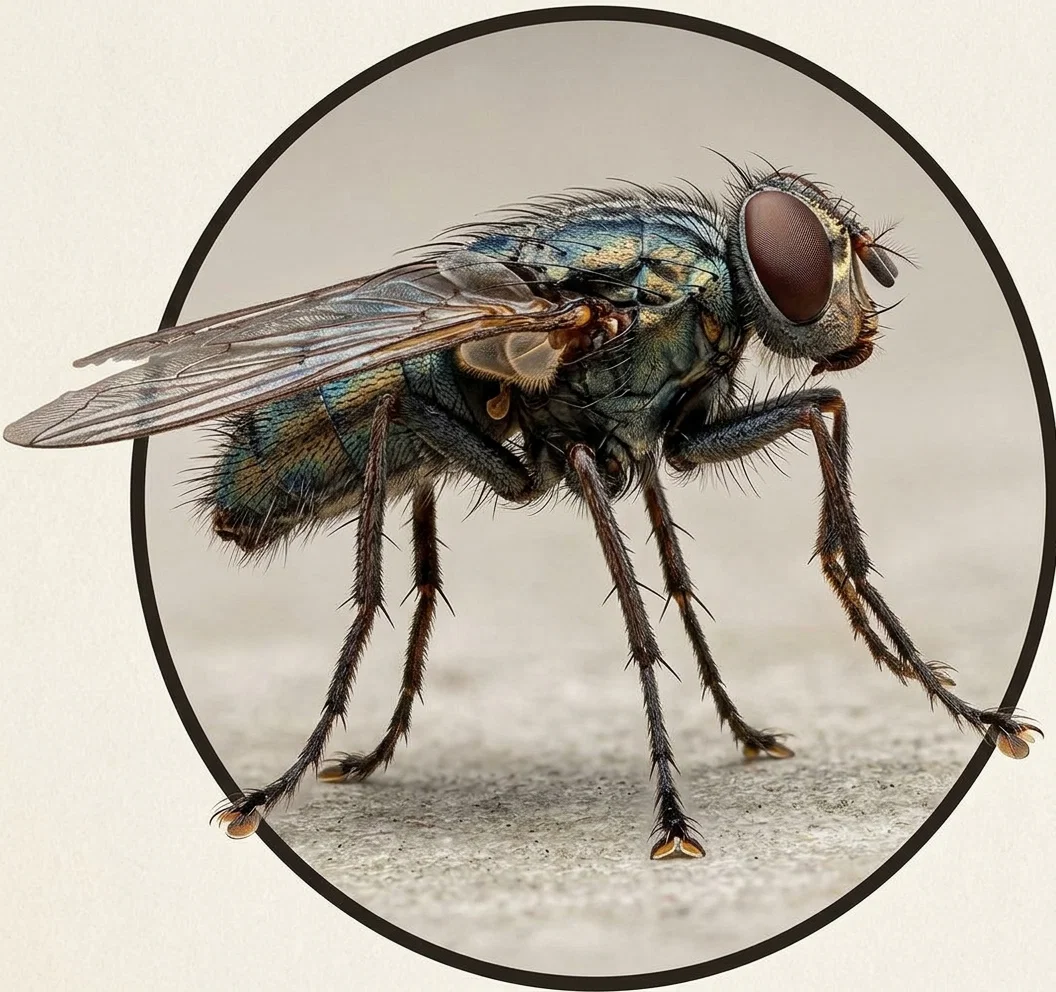
For its size, the fly is the dirtiest creature that exists. It is bred in filth, it lives in filth, and it feeds on filth. In fact, it cannot exist without filth. Wherever filth is, the fly is. Where filth is not, the fly is seldom found.
Where the Fly Comes From
The fly comes from the barnyard, from the cesspool, or from a feed on tubercular sputum. Unceremoniously it enters our homes without even wiping its feet. Other visitors prefer the sitting room or the parlor. It prefers to remain in the kitchen, the pantry, or the dining room. There it may plunge into the dish of milk, or alight on the butter or other foods.
It may carry anywhere from fifty thousand to fifty million bacteria on its legs and back. Germs of disease are in this way planted in these foods, and under favorable conditions they multiply with enormous and almost unbelievable rapidity. In some homes, the milk, containing millions instead of a few bacteria, is fed to the innocent children. A child sickens and dies. Its parents wonder why. Lack of knowledge is the cause of death.
A few seeds of tuberculosis or typhoid planted on a piece of meat, in a milk pail, or in other suitable soil, in a few short hours have produced a crop of their kind. The food is served to the family. Then we marvel that one fourth of our young men and women die of tuberculosis, and that typhoid fever so mysteriously enters our homes. The fly is undoubtedly a chief agency through which germs of disease are conveyed from places of filth to man, and from man to man.
How to Get Rid of the Fly
To keep the fly out of the house, it is merely necessary to screen the windows and the doors, and to make a liberal use of fly paper. But it is possible for a fly to carry infectious diseases from one person to another on the outside. Epidemics of sore eyes are frequently spread by the fly. It seems to have a special preference for this delicate member, and may carry infection from one child to many others. Even syphilis, that dreadful malady, may be conveyed from man to man in this way. The aim should be not merely to shut flies out of our homes, but to get rid of them. This cannot be accomplished by the ordinary means we have thus far employed. This is evident.
They Did It at Panama
At Panama, people could not dispose of the mosquito by the ordinary means they had employed up to six or seven years ago. While they were killing a dozen mosquitoes, they were at the same time cultivating in breeding beds a million to take their place. There is truth in the saying, “Kill one mosquito, and a dozen will come to the funeral.” Panama and Cuba did away with mosquitoes by doing away with their breeding places. The mosquito needs warm, stagnant water, in which there is dead organic matter, for the purpose of propagation.
Clean Premises Do the Work
Flies may be avoided in the same manner. It is not so difficult a problem, in fact, to get rid of them as it is to get rid of mosquitoes. Flies are cultivated chiefly in manure heaps, around stables, in garbage tins, and in outhouses. A proper disposal of manure and garbage will go far toward disposing of the fly. Clean premises and proper sanitary conditions will eliminate it. Garbage cans should be kept covered or screened, to prevent breeding. So long as the kitchen is kept scrupulously clean, cleaner than the outside of the house, the flies naturally prefer to remain on the outside. But when meats are cooked, and animal fats are freely used in frying foods, flies are attracted. Persons who subsist upon grains, breads, fruits, and nuts chiefly, find it less difficult to keep flies out of their dwellings.
It Attacks the Very Best
By E. R. Potter
The Warmest Hearted and Most Generous in Greatest Danger
By E. R. POTTER
An important point that needs to be emphasized is the fact that it is the kind-hearted, liberal, and sociable sons and husbands that are taken in the snares of the demon drink.
While I was talking a few days ago with a man who claimed he made all the money he ever had, out of the liquor business, he said, in trying to justify the traffic, that only the naturally weak-minded become drunkards; and in almost the next breath, he boasted of the generosity of the drinking class in helping the needy. But what are the facts in the case?
Attacks the Largest Brains
The popular Canadian evangelist, the Rev. H. T. Crossley, has well said: “Any person270who says those who become drunkards are weak-minded, shows that he is lacking observation and common sense. Whether a person shall become a drunkard, if he drink, does not depend upon the strength of character or will. He who has the largest brains and finest nervous organization is the one who most readily becomes a victim. He who boasts how much he can drink and not get drunk, is ignorantly boasting that he is lacking in brains or fine organism. The greatest minds have been overcome by this giant foe.”
Captured Kings, Statesmen, and Poets
“I would sadly mention Philip the Great, Alexander the Great, Frederick the Great, as kings; Pitt, Burke, and Sheridan, as great statesmen; and Burns, Poe, and Prince, as brilliant poets, that have been laid low by this spoiler of humanity.”
I said to the friend of the liquor traffic: “I agree with you that many of the men who are ruined by drink may naturally be more liberal, kind-hearted, and generous than many of us who are temperate. Can you blame us, then, for trying to save such noble men?”
The Cold-Blooded and Stingy
On this point also, Evangelist Crossley says: “Those who are cold-blooded, hard-hearted, or skinflints, may possibly drink, if they are not too stingy to buy it, and not become drunkards; but if you are warm-hearted, social, and generous, do not touch the drink, unless you want to become a drunkard.”
Some people have told me they thought liquor was actually necessary for the health of certain persons. But the fact is that the best physicians have largely discarded liquor in their practice, as they have bleeding, which used to be commonly employed. Liquor destroys the health of pulse and pocket.
The drink habit poisons the influence of the best of men. One moderate drinker will influence more young men to begin the drink habit than will half a dozen drunkards.
John B. Gough, after he was reformed and became one of the greatest and truest reformers, said, “My father drank all his life, and never got drunk; but I, his son, thinking to follow in his footsteps, became a drunkard.”
The Catawba Indians used to poison arrow tips with rattlesnake venom, and place these, with points up, in the path, to destroy their enemies as they, barefooted, pursued them. Can we be guiltless if we set an example before our family and friends that may lead to their ruin for time and eternity?
Responsible for Most Crimes
One of the best known modern moral reformers and legislators of Great Britain says: “Wherever you find human beings huddled together in wretchedness, wherever you find men living in a condition of vice and crime, they all bear testimony that drink is the prime agency in the creation of all those unsightly masses of pain and degradation.”
Our jail here at Vernon, British Columbia, recently held five young men charged with the murder of a fellow logger while all were on their way to a logging camp. On all hands it is admitted that this most brutal murder in the history of the fair Okanagan Valley is due directly to the accursed drink.
The General Synod of the Church of England in Canada, meeting in Ottawa in 1908, passed the following resolution: “In glancing over the several provinces of the dominion, it is manifest that there is a great consensus of opinion concerning the bar under the present licensing system, namely, that it is a public menace; and your committee would urge upon the synod that it is the duty of every man to endeavor to further the effort to abolish the bar.”
Not in This Case
The liquor business is arraigned before the great bar of public opinion, and I trust that every member of the great “jury” has as clear convictions concerning the punishment due the “prisoner at the bar” as the man who, preparatory to being sworn in as a juryman, was asked if he had any conscientious scruples against capital punishment. “Not in this case, your honor,” was the prompt reply.
Oakland, Antioch & Eastern Railway
It's — SAFE SWIFT SURE TO TRAVEL ON THE
Oakland, Antioch & Eastern Railway
Electric Service to and from Water Gate of EXPOSITION GROUNDS and SACRAMENTO
Chico, Oroville, Marysville, Woodland, Dixon, and Other Sacramento Valley Points
Reduced Round Trip Rates
From All Points
Every Day During the Exposition
TICKET OFFICES
Key Route Ferry in San Francisco, Kearny 2399
Fortieth and Shafter Avenue, in Oakland, Piedmont 670
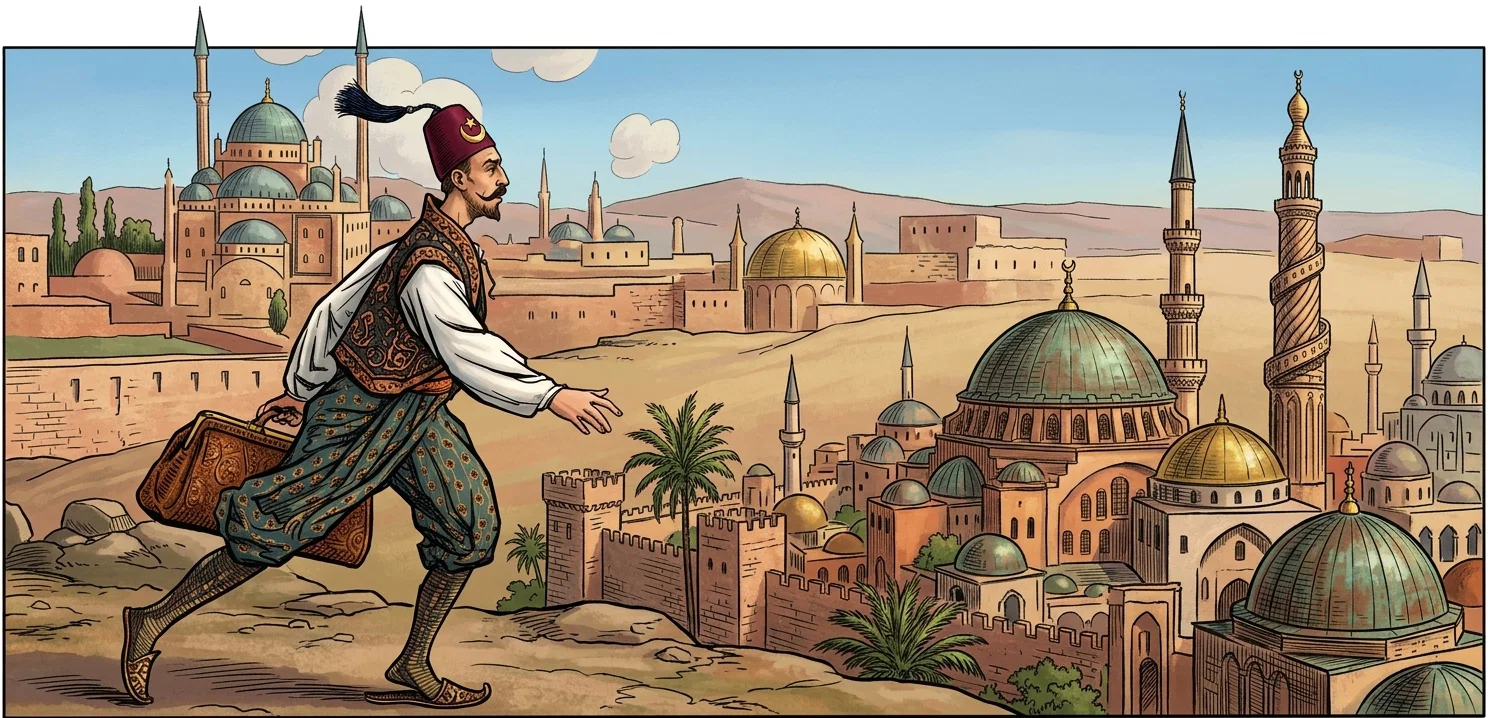
When the Turk Leaves Europe
By Editor
Two Remarkable Signs to Take Place in the Turkish Empire Soon
Turkish Capital Moved to Jerusalem—The Nations
Assemble Armies on the Plain of Esdraelon
Two Remarkable Signs to Take Place in the Turkish Empire SoonTurkish Capital Moved to Jerusalem—The Nations Assemble Armies on the Plain of Esdraelon