JESUS taught his disciples that a humble and contrite spirit is an inward principle; that the austere, gloomy countenance is not an index to a humble, submissive spirit. While the heart should have the grace of humility, the countenance should be cheerful, not gloomy and repulsive. His words of instruction to them were: "Moreover, when ye fast, be not as the hypocrites, of a sad countenance; for they disfigure their faces, that they may appear unto men to fast. Verily I say unto you, They have their reward. But thou, when thou fastest, anoint thine head, and wash thy face; that thou appear not unto men to fast, but unto thy Father which is in secret; and thy Father, which seeth in secret, shall reward thee openly."
Like other observances of a religious character, fasting, when practiced from right motives, will prove a blessing. But this, like almsgiving, had been perverted. The Pharisees put on an outward appearance of great sanctity, of humiliation and contrition, while in their hearts they cherished sins of a revolting character. They made their religion unattractive by their stern, forbidding appearance.
But the true Christian will never chill the atmosphere with severe exactions and painful stiffness. He is to have a sweet, subduing, cheerful and saving influence upon those with whom he comes in contact.
The object of the Pharisees in giving publicity to their prayers,—to be exalted in the opinions of men,—was that which Christ condemned. And the same self-righteous prayers he rejects to-day wherever they are offered among the professed people of God. In our day, as in Christ's, unworthy motives often prompt the prayers and almsgivings. These things are done to obtain the approval of men; but they bear the disapproval of the world's Redeemer. God's name is profaned every day in the meaningless prayers of many who profess to be Christians.
This sin is not found alone with the illiterate, but frequently even with men who have ability and influence. They will professedly pray to God, while in truth they are preaching a sermon to him. As though he lacked information, they give him a definite account of everything. Their prayers are to the people; God scarcely enters their minds. All such prayers are as sounding brass and a tinkling cymbal, with no heart, no purpose, no point. Such prayers will be only a curse to the ones who thus profane this sacred privilege. Nothing is so repulsive to Christ as insincere devotion, voluntary humility, and hypocritical almsgiving. He said, "When thou fastest, anoint thine head, and wash thy face;" appear comfortable and cleanly. It is a great mistake to suppose that the unwashed face and tangled locks proclaim your sanctity.
This lesson to the disciples is applicable to every Christian to the end of time. Devotion to God does not consist in groans and sighs and a sad countenance. Many give to the world wrong impressions in regard to the religion of the Bible by complaining of trials and crosses and hardships. The true servants of the heavenly King are the most happy people in the world. While their service is earnest and sincere, they carry with them the rays of the Sun of Righteousness, to lighten the path heavenward for all those who will
walk in it. The religious life is one of conflict and trial; yet of spiritual happiness and joy.
Some professed followers of God utter loud prayers, and exercise the body in a violent manner. The prophets of Baal worked themselves up into a frenzy when praying to their idol gods. These heathen cried, and cut themselves with lancets and knives until they presented a frightful appearance. But they were more sincere than are many who to-day offer prayers in a storm of excitement. Their conduct was in keeping with their ideas of devotion to their gods. But Christians have a living and all-powerful God, whose ear is quick to detect the real needs of the suppliant, and by their excited and unnatural manner they dishonor their prayer-hearing and prayer-answering God.
Our hearts have been pained when we have listened to prayers which have been made to men and not to God. Self-righteous, self-confident prayers never rise higher than the lips that utter them. Prayer offered in spasmodic fervor, merely a storm of words, will not be heard and answered by God
Some think it a mark of humility to pray to God in a common manner, as though talking with human beings. They profane his name by needlessly and irreverently interlarding their prayers with "God Almighty,"—awful and sacred words, that should never pass the human lips except with bated breath and solemn and subdued tones.
The humble, intelligent prayer of faith, that comes from unfeigned lips, is wholly acceptable to God. It is the heart-felt prayer that is heard in heaven and rewarded by an answer on earth. "But to this man will I look, even to him that is poor, and of a contrite spirit, and that trembleth at my word." "For thus saith the high and lofty One, that inhabiteth eternity, whose name is Holy; I dwell in the high and holy place, with him also that is of a contrite and a humble spirit, to revive the spirit of the humble, and to revive the heart of the contrite ones." "The sacrifices of God are a broken spirit; a broken and a contrite heart, O God, thou wilt not despise."
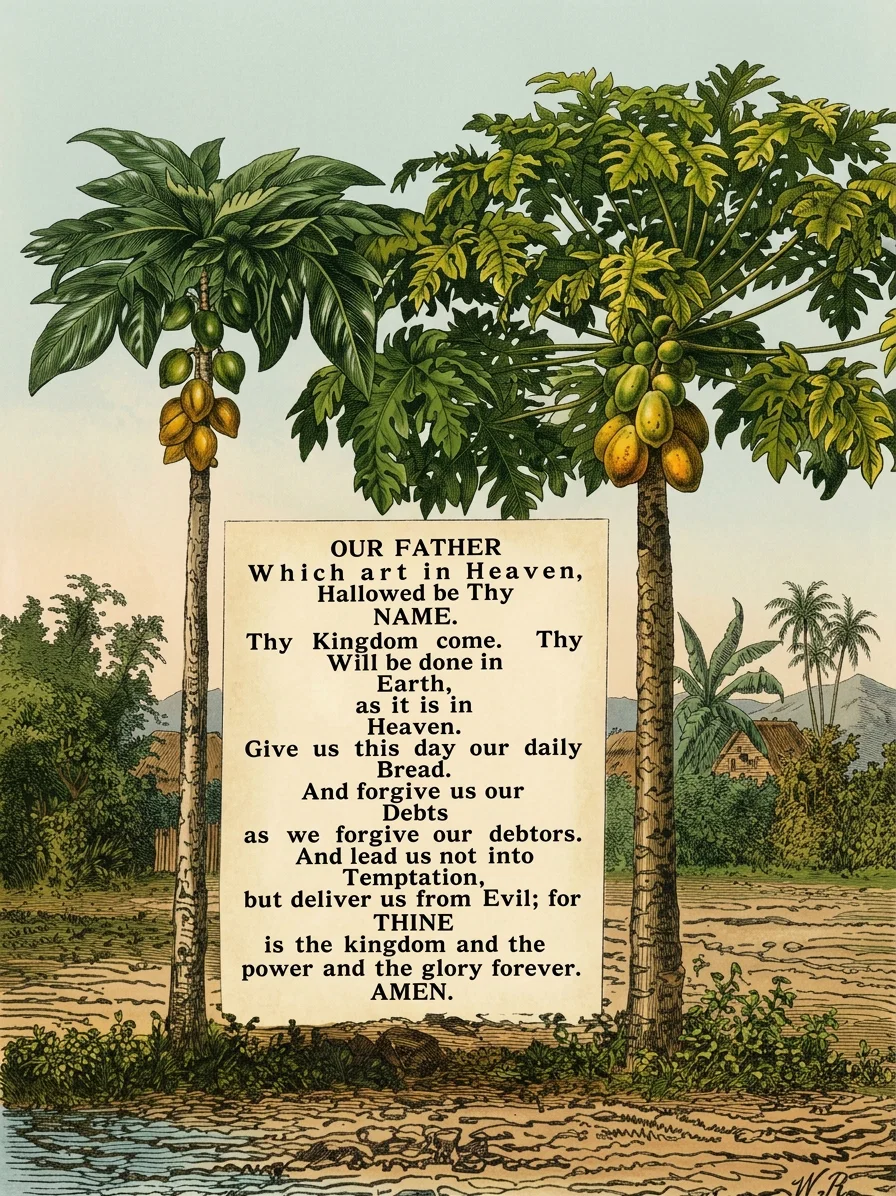
Jesus taught his disciples that only that prayer which arises from unfeigned lips, prompted by the actual wants of the soul, is genuine, and will bring heaven's blessing to the petitioner. He gave a brief, comprehensive prayer to his disciples. This prayer, for its beautiful simplicity, is without a parallel. It is a perfect prayer for public and private life; it is dignified and elevated, yet so simple that the child at its mother's knee can understand it. The children of God have repeated this prayer for centuries, and yet its luster has not dimmed. Like a gem of value it continues to be loved and cherished. This prayer is a wonderful production. None will pray in vain if in their prayers are incorporated the principles contained therein. Our prayers in public should be short, and express only the real wants of the soul, asking in simplicity and simple trusting faith for the very things we need. Prayer from the humble, contrite heart is the vital breath of the soul hungering for righteousness. God6understands the needs of humanity.
He knows what we desire before we ask him. He sees the soul's conflict with doubt and temptation. He marks the sincerity of the suppliant. If the heart is afflicted, if the spirit is humble before God, he marks it. He will accept the humiliation and affliction of soul, and will reward according to the purity of the motives that prompted the action.
As a faithful physician, the world's Redeemer has his finger upon the pulse of the soul. He marks every beat; he takes note of every throb. Not an emotion thrills it; not a sorrow shades it; not a sin stains it; not a thought or purpose passes through it, with which he is not acquainted. Man was purchased at an infinite cost, and is loved with a devotion exceeding that which a father feels for his child. The prayer that comes from a sincere heart will ever find a response in heaven.
LIVING FAITH.
By A. T. Jones
BY A. T. JONES.
THE term "living faith" is strictly proper, because faith indeed is a living thing. The just live by faith, and no man can live by what has no life in it.
Again, faith is the gift of God (Eph. 2:8), and he is a living God; Jesus is its Author (Heb. 12:2), and in him is life—he is the life. In the nature of things, that which comes from such a source must be of itself imbued with life.
Again, faith comes by hearing the word of God (Rom. 10:17); that word is the "faithful word" (Titus 1:9), that is, the word full of faith; and that word is "the word of life" (Phil. 2:16). Therefore as the word of God brings faith, and is full of faith; and as that word is the word of life, it is evident that faith is life.
The Life of Faith.
What life is it, then, which faith brings to men? Coming as it does from God, through Jesus Christ, who is the "Author of life," the only life with which it is imbued, and which it could possibly bring to men, is the life of God. The life of God is what men need, and what we must have. And it is the life that God wants us to have; for it is written: "Walk not as other gentiles walk, in the vanity of their mind, having the understanding darkened, being alienated from the life of God." Eph. 4:17, 18.
Jesus came that men might have life, and that they might have it more abundantly. John 10:10. "And this is the record, that God hath given to us eternal life, and this life is in his Son. He that hath the Son hath life; and he that hath not the Son of God hath not life." 1 John 5:11, 12. And Christ is received by faith, and he dwells in the heart by faith. Eph. 3:17. Therefore as the life of God only, eternal life, is in Jesus Christ, and as Christ dwells in the heart by faith, it is as plain as anything can be that faith brings the life of God to him who exercises it.
It is the life of Jesus himself that is to be made manifest in our bodies; "for we which live are alway delivered unto death for Jesus' sake, that the life also of Jesus might be made manifest in our mortal flesh." 2 Cor. 4:11. And the life of Jesus is manifested in us by Christ himself living in us; for "Christ liveth in me; and the life which I now live in the flesh I live by the faith of the Son of God." Gal. 2:20. This is living faith.
The Blessing of the Real Presence.
Again He says, "I will dwell in them and walk in them;" "I will not leave you comfortless; I will come to you;" and "because I live, ye shall live also." John 14:18, 19. It is by the Holy Spirit that he dwells in us; for he desires you "to be strengthened with might by his Spirit in the inner man, that Christ may dwell in your hearts." Eph. 3:16, 17. And "at that day"—the day that ye receive the gift of the Holy Ghost—"ye shall know that I am in my Father, and ye in me, and I in you." John 14:20. "And hereby we know that he abideth in us, by the Spirit which he hath given us." 1 John 3:24. And we "receive the promise of the Spirit through faith." Gal. 3:14.
"Christ hath redeemed us from the curse of the law, that the blessing of Abraham might come on the gentiles through Jesus Christ; that we might receive the promise of the Spirit through faith." We must have the blessing of Abraham in order to receive the promise of the Spirit. The blessing of Abraham is righteousness by faith. See Rom. 4:1-13. Having this, Abraham "received the sign of circumcision, a seal of the righteousness of the faith which he had." And we, having this, can freely receive the promise of the Spirit, circumcising the heart unto holiness and the seal of the righteousness of the faith which we have. Having the blessing of Abraham, and so being sons of God, God sends forth the Spirit of his Son into our hearts. Gal. 3:26; 4:4-6. Having the blessing of Abraham, that you may receive the promise of the Spirit through faith, then ask that ye may receive—yea, ask and ye shall receive. For the word of God has promised, and faith cometh by hearing the word of God. Therefore ask in faith, nothing wavering: "for every one that asketh, receiveth, and he that seeketh findeth, and to him that knocketh it shall be opened."
Such is living faith—the faith that comes from the living God; the faith of which Christ is the Author; the faith which comes by the word of God; the faith which brings life and power from God to men, and which works the works of God in him who exercises it; the faith which receives the Holy Spirit that brings the living presence of Jesus Christ to dwell in the heart and manifest himself still in mortal flesh. This and this alone is living faith. By this Christians live. This is life itself. This is everything. Without this everything is simply nothing or worse; for whatsoever is not of faith is sin.
Living Faith Works.
With such faith as this, that is, with true faith, there never can arise any question as to works; for this faith itself works, and he who has it necessarily works. It is impossible to have this faith, and not have works. "For in Jesus Christ neither circumcision availeth anything, nor uncircumcision; but faith which worketh by love." Gal. 5:6. This faith being a living thing, can not exist without working. And coming from God, the only works that it can possibly work are the works of God.
Therefore anything that professes to be faith which of itself does not work the salvation of the individual having it, and which then does not work the works of God in him who professes it, is not faith at all, but is a fraud that that individual is passing off upon himself, which brings no grace to the heart, and no power to the life. It is dead, and he is still dead in trespasses and sins, and all his service is only a form without power, and therefore is only a dead formalism.
But on the other hand, the faith which is of God, which comes by the word of God, and brings Christ, the living Word, to dwell in the heart and shine in the life—this is true faith, which through Jesus Christ only lives and works in him who exercises it.
Christ himself living in us; Christ in you the hope of glory; God with us; God manifest in the flesh now, to-day in our flesh, by the faith of Jesus Christ—this and this only is living faith. For "every spirit that confesseth that Jesus Christ is come in the flesh is of God; and every spirit that confesseth not that Jesus Christ is come in the flesh is not of God; and this is that spirit of antichrist, whereof ye have heard that it should come; and even now already is it in the world. Ye are of God, little children, and have overcome them; because greater is he that is in you, than he that is in the world." 1 John 4:2-4.
Therefore, "examine yourselves, whether ye be in the faith; prove your own selves." Jesus said unto them and to us all: "Have the faith of God." Mark 11:22, margin.
NOT HEARD OF GOD.
By John Norton Loughborough
BY J. N. LOUGHBOROUGH.
A MINISTER, who was zealously advocating that there was to be still a preaching of the Gospel to the unconverted after the second coming of Christ, thought he could make that doctrine "very plain" to me. He said there was "one text of scripture that would settle that." I asked him for the text. He said it was in Isaiah, and then turned and read the following: "And I will set a sign among them, and I will send those that escape of them unto the nations, to Tarshish, Pul, and Lud, that draw the bow, to Tubal and Javan, to the isles afar off, that have not heard my fame, neither have seen my glory; and they shall declare my glory among the gentiles." Isa. 66:19.
I said to the minister, "When I am reading a scripture that mentions countries I like to know a little of the geography of the text; I can then understand a little better what I am reading about. Won't you show me on the map of ancient countries where those countries are?" "O," said he, "I do not know where they are; but this I do know from the text, they are a great way off, and they are nations that never heard of God." "Well," I said, "I shall want to find out where they are, if possible, and that may help me to decide whether they never yet have 'heard of God.'"
I took an hour to carefully look over an ancient map, comparing it with a modern map of the same countries; and here are some of my thoughts of the matter, as I, in my imaginations, went to those countries.
Before we report on our search, however, let us see what those people were to do. "They shall declare my glory among the gentiles." God's glory is his character of love, mercy, and goodness. See Ex. 33:18, 19; 34:5, 6. If these nations are to proclaim the message of God's love and compassion to the gentiles, they will have to hurry up, or some one hurry the light to them; for the gentile age for the Gospel is almost completed. If those nations have not "heard of God" yet, they will stand a poor chance of doing much7in making known the Gospel to the gentiles. But, according to the words of our Saviour, in Matt. 24:14, the Gospel is to be "preached to all nations," "for a witness," before the end should come. And, really, if all nations hear the Gospel before Christ comes, it must be those mentioned by Isaiah must hear it; for they are a part of the ALL. Then how could it be that after Christ comes these nations have "not heard of God?"
In looking for these nations we will take them in their order. Tarshish, that is the country Jonah started for when the Lord told him to go to Nineveh. I see by comparing an ancient and modern map that Tarshish was the southeastern part of Asia Minor. In that country is the city of Tarsus, where Paul was born. Acts 22:3. He lived there some time after he was converted (Gal. 1:21), and the brethren in Judea heard that he was preaching Christ (Gal. 1:22, 23). He also preached at Lystra, Iconium, and Derbe, which were all in that part of Asia Minor. At Lystra an impotent man was healed, and the people were about to offer sacrifices to Paul and Barnabas as gods. They certainly heard of the true God then. Acts 14:15. It was then that Paul was stoned, and the persecutors supposed he was dead, but he arose and went on his way to Derbe. The news of Paul's coming to life, and his preaching, must have stirred that country. It sounds strange to say that people have not heard of God. They may have forgotten him, but the Lord has not promised a second chance to nations that have forgotten him.
We will notice the second nation mentioned in the prophecy—Pul; that is Pul, or Lybya. There were people from that part of Egypt at Jerusalem on the day of Pentecost, and heard, in a miraculous manner, through the gift of tongues, the "wonderful works of God," in their own language, spoken by men that only understood the language of Galilee. Acts 2:5-11. It would be strange if they never heard of God, and that they did nothing to spread the knowledge of these wonderful manifestations to their own countrymen. But they did hear, and proclaim too; for Gospel churches were established in Egypt; so it will not do to say that Pul never has heard of God.
The third nation mentioned is Lud. That is the west part of Asia Minor. There are the seven churches to whom John sent the book of the Revelation. There is also Troas, Assos, and even Antioch, in Pisidia, who all enjoyed the labors of the apostle Paul. In Antioch, one Sabbath, nearly the whole city were out to hear Paul preach. Can it be possible that that country had all these churches in their midst, and all these advantages, and never heard of God's "fame" or were given a knowledge of his character? That sermon of Paul in Antioch (Acts 13) gave the listeners a good opportunity to learn of God, as well as of the power of the resurrection. We see the text will not apply now to Lud, or Lydia, for they had a most glorious opportunity to hear of God in the days of the first churches.
Now let us try the fourth nation mentioned—Tubal. That is Pontus and Galatia. These are in the northern part of eastern Asia Minor. This country was also represented in Jerusalem on the day of Pentecost. There was a time when the Galatians did not know of God, but it seems, from Paul's letter to them, that they had then heard of God and knew him, but were in danger of turning back to the heathen idea of getting godly favor by their own acts; so it will not fit Tubal to say that they never heard of God, and so an extra chance must be provided for them after the time when it will be said in heaven, "He which is filthy let him be filthy still," and, "Behold, I come quickly; and my reward is with me, to give every man according as his work shall be." Rev. 22:11, 12.
The fifth place mentioned is Javan. That is Greece and Macedonia. There were Greeks also at Jerusalem on the day of Pentecost, and, with the others, heard of the wonderful works of the Lord. The Greeks had an advantage over some of the other nations in that some three hundred years before our Saviour's first advent, the Old Testament Scriptures were translated into their language. As for Macedonia, in a night vision, Paul had an invitation to go to Macedonia and preach the Gospel (Acts 16), so he and Silas went. True they did not do much preaching before they got into prison. But they sang the truth in the prison. The jailer was converted, and they were set free again. The people in that quarter must have heard how the prison doors flew open when the Lord's worshipers were singing his praise. In the seventeenth chapter of Acts we find Paul down in Athens, the great center of learning of the Greek nation. He was stirred in spirit when he saw they had representations in that city of all the false gods of which they had any knowledge, so that it "was easier for a man from any nation to find his favorite god than to find the residence of his friends in the city." As Paul was looking around, he found his text. He saw an altar inscribed, "To the Unknown God." They were in as much ignorance of the true God as any people; so Paul gave them the truth respecting the creative power of the true God, and the worship acceptable to him.
Then, in Greece there is Corinth. They had heard of God, for there was a large church there, and to them Paul addressed two of his longest letters of counsel and instruction. So I do not see how we can say that Javan never has heard of God.
There is one more place mentioned, "the isles afar off." At that time the islands thus called were what we now call "Great Britain"—England, Scotland, Wales, and Ireland. It is true that in the days of the prophet Isaiah these people were wild, savage heathen, and were worshiping the sun and serpents; but they have certainly heard of God before this time. How would it sound to tell the people of England that they had not yet heard of God, when they organized the first Bible society, in 1804, and now it annually sends out millions of Bibles to all parts of the world.
Seeing we fail to find that any of the six countries in the text have not "heard of God's fame, nor seen his glory," the question arises, What does the text mean? In the days of the prophet Isaiah (between 600 and 700 years before Christ) it was true that those nations mentioned were in ignorance of the true God; but the Saviour has been set as a "sign among them" (see Luke 2:34), and those nations have spread the Gospel to the gentiles. Paul, chosen especially as a gentile minister, was from Troas in Tarshish; Barnabas was from Antioch, and he was Paul's first associate in the work for the gentiles. They were both ordained to the work by a direct testimony from the Lord. Acts 13:2. After a while Paul had Timotheus with him in his labors, and Timotheus' father was a Greek. Acts 16:1. Then, there was that man who was "an eloquent man, and mighty in the Scriptures." Acts 18:24. He was from Alexandria in Egypt—from Pul. He declared the truth to Jews and gentiles.
What need to trace this further? When we consider what the text says, and the countries to which it applies, all is plain, and there is no necessity for such unreasoning as that of the minister mentioned at the opening of this article. "Now is the accepted time; now is the day of salvation." Soon the great conflict of the ages will close, and the sinner be left without an advocate. May none of us, in that day, be left to take up the sad lamentation, "The harvest is past, the summer is ended, and we are not saved." Jer. 8:20.
EVERLASTING PUNISHMENT.
By C. A. Wyman
BY C. A. WYMAN.
[The previous article closed with the Scripture proof that the devils, or demons, had not yet come to a place of torment. This continues the subject.]
Where Is Hell?
SAYS an inquirer, "Are not the devils in hell?" To this we reply, Yes, but not the hell of the popular creeds, for that has no existence.
The testimony of Peter is sufficient to show that they are in hell: "For if God spared not the angels that sinned, but cast them down to hell, and delivered them into chains of darkness, to be reserved unto judgment." 2 Peter 2:4. As to the place of hell, John bears witness as follows:—
"And there was war in heaven; Michael and his angels fought against the dragon; and the dragon fought and his angels, and prevailed not; neither was their place found any more in heaven. And the great dragon was cast out, that old serpent, called the Devil, and Satan, which deceiveth the whole world; he was cast out into the earth, and his angels were cast out with him." Rev. 12:7-9.
Thus the earth is seen to be the hell where Satan and his angels are, and to no other place can the Scriptures possibly refer, as here is the only place in the universe where sin exists, and the tempter's work is here alone. And since all beyond this earth, and its surrounding envelope of air, is clean, it follows that the place of hell is this place where Satan, as "prince of the power of the air, the spirit that now worketh in the children of disobedience," reigns. Eph. 2:2.
The Earth the Place of Final Reward.
"Behold, the righteous shall be recompensed in the earth; much more the wicked and the sinner." Prov. 11:31. All through the Scriptures the inheritance of the earth is promised to the faithful. "Blessed are the meek," says Jesus, "for they shall inherit the earth." Matt. 5:5. But as that inheritance is not now, because of sin, the removal of sin and sinners must precede the inheritance; and thus we read:—
"For evil-doers shall be cut off; but those that wait upon the Lord, they shall inherit the earth. For yet a little while, and the wicked shall not be; yea, thou shalt diligently consider his place, and it shall not be. But the meek shall inherit the earth; and shall delight themselves in the abundance of peace." "Wait on the Lord, and keep his way, and he shall exalt thee to inherit the land; when the wicked are cut off, thou shalt see it." Ps. 37:9-11, 34.
The Time of Cutting Off.
That this cutting off is limited to a time of beginning is abundantly shown from the Scriptures; for at the close of the thousand years succeeding the second advent of our8Lord, the city of God descends upon the earth, and the faithful of every age enter within its walls. Rev. 22:15, 16. With the descent of the city there takes place the resurrection of the unjust of every age, together with those who are "destroyed by the brightness of His coming" at the resurrection of the just. These all come forth, numberless as the sands of the sea, and, with Satan as their leader, make a last desperate attempt to take the seat of empire, and overthrow the government of God. Then fire comes down from God out of heaven and devours them. Rev. 20:9.
This is the time so long foretold, when "the heavens shall pass away with a great noise, and the elements shall melt with fervent heat, the earth also, and the works that are therein shall be burned up." 2 Peter 3:10. "For, behold, the day cometh, that shall burn as an oven; and all the proud, yea,
and all that do wickedly, shall be stubble; and the day that cometh shall burn them up, saith the Lord of hosts, that it shall leave them neither root nor branch." Mal. 4:1.
The fire of "Tophet," ordained of old, envelopes the earth in a sheet of flame, and "the breath of the Lord, like a stream of brimstone, doth kindle it." Isa. 30:33. The whole earth becomes the "lake of fire;" "the streams thereof shall be turned into pitch, and the dust thereof into brimstone, and the land thereof shall become burning pitch." Isa. 34:9.
Who Dwell in Everlasting Burning.
Thus the devouring fire will encompass the earth; and the beloved city, with its ransomed inhabitants, will dwell securely amidst the final destruction. Foreseeing this, the prophet exclaims: "Who among us shall dwell with the devouring fire? who among us shall dwell with everlasting burnings? He that walketh righteously, and speaketh uprightly; he that despiseth the gain of oppressions, that shaketh his hands from holding of bribes, that stoppeth his ears from hearing of blood, and shutteth his eyes from seeing evil." Isa. 33:14, 15. Contrary to the contrary creeds of this world, the righteous are seen to be the ones that are able to dwell in everlasting burnings instead of the sinner. Thus the "everlasting fire prepared for the devil and his angels" (Matt. 25:41) is still future, and the place thereof is this sin-cursed earth.