The Youth's Instructor, Vol. LIII, No. 27

Good Angels

The Youth's Instructor

July 4, 1905

Review and Herald Publishing Assn. · Washington, D. C. · July 4, 1905

Good Angels

MUCH is said in the Bible concerning the holy angels, and their ministrations to fallen men, and from early childhood we have learned something concerning these celestial beings. Many, however, erroneously believe that angels are the spirits of the departed dead who return and minister unto us in this life. This is a dangerous error, founded upon a falsehood which the devil told in the garden of Eden, when he contradicted the Lord, and said that man would not die if he ate of the forbidden tree. Gen. 3:1-4.
Angels are not the spirits of dead persons, for several reasons. First, for the same reason which the attorney gave why his client was not present in court. He said he had three reasons. The first was because he was dead. It was of course unnecessary to give the other two reasons. So, one reason why we know they are not the spirits of the departed is that the departed are dead. “His [man's] breath goeth forth, he returneth to his earth; in that very day his thoughts perish.” Ps. 146:4. “His sons come to honor, and he knoweth it not; and they are brought low, but he perceiveth it not of them.” Job 14:21. “For the living know that they shall die: but the dead know not anything, neither have they any more a reward; for the memory of them is forgotten. Also their love, and their hatred, and their envy, is now perished; neither have they any more a portion forever in any thing that is done under the sun.” Eccl. 9:5, 6. It is clear from these scriptures, and many others which might be given, that angels are not the departed dead. The Spiritualists believe that they are, but let us not be ensnared with this soul-destroying delusion.
Then again, angels existed before man was created, and before sin and death had entered to mar the work of God. Man was made a little lower than the angels (Ps. 8:5), which shows that angels existed before man. And when the work of creating the earth was completed, and it stood forth in its Edenic beauty fresh from the hand of the Creator, at the dawn of the Sabbath, the angels sang a song of joy. The “morning stars sang together, and all the sons of God shouted for joy.” Job 38:7. When man sinned, and because of his transgression was forced to leave his beautiful home in paradise, cherubim, a high rank of angels, were sent to guard the way to the tree of life, so that man should not partake of it and live forever.
The Father and the Son are real beings, so the angels which they created as their messengers are real beings, too, and not incorporeal phantoms as many think. Ezekiel, who frequently saw them in holy vision, describes them as real beings, and speaks of their whole body (margin, “flesh”), and their backs, and their hands, and their wings. Eze. 10:12. They appeared to Abraham in the plains of Mamre, and ate of the food which he prepared for them. Gen. 18:1-8. Two angels appeared to Lot in Sodom, who with true hospitality invited them to tarry with him during the night. He made them a feast, and they ate. Gen. 19:1-3. They appeared as material beings, and ate material food, which shows beyond question that they are real beings. In fact, the manna which fell in the wilderness for the children of Israel is called the “corn of heaven,” or, “angels’ food.” Ps. 78:23-25. The ass on which Balaam was riding saw an angel standing in the way, which was afterward seen by Balaam himself. Num. 22:22-31.
The definite number of the angels is not recorded in the Bible. Inspiration speaks of the vast throng as “an innumerable company of angels.” Heb. 12:22. John in his lonely exile on Patmos was shown the majestic glory of God, around whose burning throne he beheld a countless number of these holy beings pouring forth their songs of love and adoration. He describes their number thus, “And I beheld, and I heard the voice of many angels round about the throne and the beasts and the elders: and the number of them was ten thousand times ten thousand, and thousands of thousands.” Rev. 5:11. See also Dan. 7:11, 12. Bengel translates the text thus, “myriads of myriads, and thousands of thousands,” and adds the following comment: “A myriad consists of ten thousand; myriads, if only two of them are meant, make twenty thousand; a thousand taken twice, makes two thousand. But there are myriads of myriads, and thousands of thousands, that is, the myriads are multiplied with each other, and likewise the thousands. In order to more easily conceive the meaning, it could be imagined thus: Here is a regiment consisting of ten thousand angels; thus there would be ten thousand such regiments, and this not only once, but at least twice. In the same way are thousands to be taken thousandfold; that is to say, if one counts a thousand angels to one body, then there are of such bodies of thousands (in the plural) at least two thousand bodies. The myriads make two hundred million, and the thousands two million, a vast throng.” And all these harken to his word (Ps. 103:20, 21), and are “all ministering spirits, sent forth to minister for them who shall be heirs of salvation.” Heb. 1:14. They visit not only this world, but all the worlds of the Creator’s empire. Through the regions of space millions of these celestial messengers are winging their way with lightning rapidity. Eze. 1:14.
This world, divorced though it is from the family of worlds because of sin, is visited by myriads of the angelic host, who minister to the children of the Lord. “By the holy beings surrounding his throne the Lord keeps up a constant communication with the inhabitants of the earth.” “All the blessings from God to man are through the ministration of holy angels.”—“Spirit of Prophecy,” Vol. II, page 68. “All the angels that are commissioned to visit the earth hold a golden card, which they present to angels at the gates of the city as they pass out.”—“Early Writings,” page 32. This “golden card” is a passport, perhaps lest the evil angels or Satan should transform themselves into angels of light, and get into the city. Not having this “golden card,” they are barred.
G. B. THOMPSON.
(To be concluded)

Get Wisdom, Get Understanding

Few persons are content with what they have; therefore they are continually seeking for something. Usually young people, when they start out in life, long to get something that will bring happiness, and that will satisfy their desires, and make them upright, noble men and women. But they are often sadly disappointed.
Satan is a deceiver. He is the one that constantly holds before the eyes of the youth that which appears to be true and genuine, but which is not. In this way he is deceiving and wrecking many of our young people. Unnumbered are the schemes the deceiver works to keep the young from obtaining something that is sound, uplifting, and genuine.
Dear young reader, would you like something that is genuine and true, that is free to all, yet the very best thing that is possible for any one to possess? If so, “get wisdom, get understanding: forget it not; neither decline from the words of my mouth.” “Wisdom is the principal thing; therefore get wisdom: and with all thy getting get understanding.”
“Happy is the man that findeth wisdom, and the man that getteth understanding.” “The merchandise of it is better than the merchandise of silver, and the gain thereof than fine gold. She is more precious than rubies: and all the things thou canst desire are not to be compared unto her. Length of days is in her right hand; and in her left hand riches and honor. Her ways are ways of pleasantness, and all her paths are peace. She is a tree of life to them that lay hold upon her: and happy is every one that retaineth her.”
What will wisdom do for us? “Forsake her not, and she shall preserve thee: love her, and she shall keep thee. . . . Exalt her, and she shall promote thee: she shall bring thee to honor, when thou dost embrace her. She shall give to thine head an ornament of grace: a crown of glory shall she deliver to thee.”
“Keep sound wisdom and discretion: so shall they be life unto thy soul, and grace to thy neck. Then shalt thou walk in thy way safely, and thy foot shall not stumble. When thou liest down, thou shalt not be afraid: yea, thou shalt lie down, and thy sleep shall be sweet.”
How can we get wisdom? “The fear of the Lord is the beginning of wisdom.” “Trust in the Lord with all thine heart; and lean not unto thine own understanding. In all thy ways acknowledge him. . . . Be not wise in thine own eyes: fear the Lord, and depart from evil.” “If any of you lack wisdom, let him ask of God, that giveth to all men liberally.”
“Yea, if thou criest after knowledge; and liftest up thy voice for understanding; if thou seekest her as silver, and searchest for her as for hid treasures; then shalt thou understand the fear of the Lord, and find the knowledge of God. For the Lord giveth wisdom: out of his mouth cometh knowledge and understanding. He layeth up sound wisdom for the righteous.”
FRED ZAPPE.

Three Gardens

O garden fair! no taint of sin / Or sorrow dwelt thy walls within, / But all was sweet and pure and clean. / O garden fouled! man was but frail, / The serpent, as he crossed thy vale, / Left sin and death along his trail.
O garden dark! within thy shade / Thy Saviour knelt, alone, afraid; / “Father, remove this cup,” he prayed. / O garden, brighter than the sun! / He added, “Yet thy will be done,” / And then and there salvation won.
O garden sad! upon thy breast / They laid their weary Lord to rest,— / A wondrous, honored, three-days’ guest. / O garden glad! across thy sod / Thy risen Lord a victor trod, / And from thee rose to meet his God.
MRS. ELIZABETH ROSSER.

Cormorant Fishing in Japan

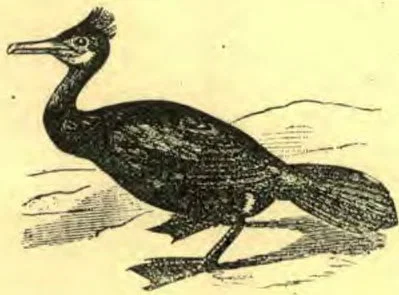
THE cormorant is a voracious sea-bird of the pelican family, about the size of an ordinary goose, and subsists entirely upon fish, says George Elmer Scott in the Booklover’s Magazine. The extraordinary rapacity with which it devours these has led to its being employed as a symbol of greed. It dives with arrow-like rapidity, and is an unwearied swimmer, keeping so low in the water that only the head and neck and top of the back are visible. Unlike most other fishing birds, it dives not from the wing, but from the surface of the water.
In spite of this lack of a flying start, it can dive to great depths, thanks, in great part, to the use of its wings under water. A British species has been caught in a crab net a hundred twenty feet below the surface. It usually seizes the fish crosswise, but it is not, like the heron, under the necessity of bringing its prey to land before it can swallow it. It turns the fish in the water, or tosses it up in the air, and catches it with great dexterity as it falls head foremost.
When fully grown, each cormorant has a metal ring fastened around the base of its neck, care being taken that this ring, while small enough to prevent the swallowing of the marketable fish, shall, at the same time, be large enough to admit the smaller fish which from now on must serve as its food, since the ring is never removed. When fishing, each bird has a kind of cord harness about its body, to which is attached a line about fifteen feet long, with which the master controls it.
Four or five good-sized fish are as many as a cormorant is able to swallow at one time, and as each bird becomes gorged on an average of every two or three minutes, the bottoms of the boats are soon piled with hundreds of fish.
The cormorant fishing season in Japan lasts five months,—from the beginning of May to the end of September,—and is so profitable that a well-trained bird is a valuable asset, guarded with such care that during the months when mosquitoes pester the birds, even the cages are carefully covered with protective netting.—Search-Light.

How Some Flowers Got Their Names

The origin of the names of flowers is an interesting study. Have you ever wondered how they got their names—their every-day, simple names by which we call them?
We all know how people get their first names. Uncles and aunts, brothers and sisters, and cousins, perhaps, all have their suggestions to make, and finally the father and mother decide what the baby shall be called. The name may be chosen because it belongs to some one else, or just because it is pretty. It has nothing to do with the appearance or character of the baby. Blanche, Lily, and Pearl may be brunettes, and Philip may prefer an automobile to a horse, but they still keep the same names, though they do not suit them at all. I do not think that the flowers were named until after they were quite grown up, so that such mistakes have been avoided with them. Their names in some cases, however, have been changed from their original forms, and it is often hard and sometimes impossible to find the reason for our calling them as we do.
Some flowers, however, are named after the men who discovered them, or after famous botanists. Among these we have the gardenia, the fuchsia, the dahlia, the wistaria, and the camellia, after Garden, Fuchs, Dahl, Wistar, and Kamel. So remember that, and you will not misspell fuchsia, nor mispronounce wistaria and camellia.
It is easy to see why some flowers are named as they are, for it does not seem as if the buttercup or the bluebell could have been called anything else. But there are not many flowers the meaning of whose names is as easily guessed as those, though there are a number which get their names from the appearance of the blossom, leaves, or seed pods.
Who could guess that the dandelion was the “dent-de-lion,” or lion’s tooth; the tulip so called because it looks like a turban, and tulip was another name for turban?
The beautiful gladiolus is a sword-lily: “gladiolus” in Latin means “a little sword.” It is so called from the shape of its leaves.
The asphodel is from the Greek word meaning “king’s-spear.” The name daffodil comes from “asphodel,” and so means the same thing.
Some country people will tell you that a cow-slip is so called because the cows will not eat it; others think it means “cow’s lip;” but the explanation accepted as the true one is that the color of the flower suggests bits of butter that the cow has scattered around her path.
The columbine, geranium, and larkspur we think of together because they are all named after birds—the dove, the crane, and the lark. The meaning of geranium is “crane’s-bill,” and if you notice the seed pods of a geranium, you will see that they do look like the long bill of a crane. The touch-me-not gets its name from a peculiarity of the seed pod, too, but not a peculiarity of appearance. It is the pod you must not touch, for if you do, it will burst and out will fly the seeds.
The lupine gets its name from a Latin word, lupus, meaning wolf. Some think the plant was thus named because it is very greedy and takes so much nourishment from the soil around it.
The lycopodium owes its name to the wolf, too; it means “wolf’s-foot,” and is intended to describe the appearance of the roots.
The mimulus is sometimes called monkey-flower, but the word really means “little mask.” From mime we get our word “mimic,” and as there is no greater mimic than the monkey, the common name seems quite suitable.
Another plant we may associate with animals is the equisetum, which means “horse-bristle,” and is sometimes called horsetail. This is a kind of rush; and there is a variety of it which contains so much silica that it is found very useful for scouring purposes, and is called scouring-rush.
Then there is the dogwood; but this has no reference to the dog. It is so named because in olden times skewers, called “dags” or “dogs,” were made from the wood, which does not splinter easily.
The horse-chestnut, likewise, has no relation to the horse, for there seems no reason for believing that horses were ever fed on these chestnuts . It is thought that possibly the word was first used here to mean “large.”
The buckeye, which is a kind of horse-chestnut, gets its name from the appearance of the naked seed, which is like the eye of a deer or buck.
Just one more tree, and that one because the meaning of its name has been so misunderstood, and then we must return to our flowers.
The witchhazel, the tree supposed to be endowed with so many wonderful properties, is not “bewitched” at all: it is just a hazel somewhat similar in appearance to the elm, which long ago was called wych.
Hock, perhaps you know, is another name for mallow, and a hollyhock is a holy hock—a mallow brought from the holy land.
The word narcissus comes from the Greek word meaning “numbness,” “torpor,” and the plant has that name because of its narcotic or sleep-giving qualities.
The jonquil is of the same genus as the narcissus, but is not named in the same way. Like the asphodel and the gladiolus, its name comes from the shape of the leaf. It has rush-like leaves, and “jonquil” comes from juncus—a rush.
Heliotrope means, literally, “sun-turn,” and is the Greek word for sun-dial. The flower of that name needs a great deal of warmth, and is said to turn toward the sun, just as the sunflower is supposed to do. The heliotrope is sometimes called turnsol, which means just exactly the same as heliotrope, and is a name also given to the sunflower. The wind, too, has a flower named for it—the anemone.
Shakespeare makes Ophelia say, “There’s rosemary, that’s for remembrance: there is pansies, that’s for thoughts.” Did you ever realize that pansies really are “for thoughts”? The French word pensee means “thought.”
The daisy, it has always seemed to me, has the prettiest name of all—the day’s eye. Wide open when the sun shines, it dozes when night comes, and its duties are ended; for the night has other eyes all her own, as we find in the beautiful aster.
The aster I have left to the last—it comes from aster, a star. It probably was named when it was still a single flower like the daisy, and some wild asters are still called daisies. And their names are not so very different; one is the day’s eye, the other the star—the eye of night.—St. Nicholas.
A CORMORANT
A CORMORANT

The Ribbon-Fish

A STRANGE denizen of the deep is the so-called ribbon-fish. This creature is one of the most beautiful of all fishes. It resembles a white or silver ribbon slashed with black. A long fin extends its entire length, and over the head forms a number of plumes or pompons of a vivid red, which, in long specimens, might easily be taken for a mane waving to and fro. That this delicate ribbon-fish attains a large size is generally believed, as large specimens have been captured.
Some years ago a fisherman was hauling a net on the coast of Scotland, when it was found that some heavy weight was holding the net back. Additional help was obtained, and twelve men finally hauled in a monster fish, which was estimated to weigh eight hundred pounds. It was a gigantic ribbon-fish, thirty feet or more in length, so long and heavy that it required the efforts of six men to carry it along the deck. It was a veritable sea-serpent, and extending from its head were tall deep-red or scarlet plume-like fins, which formed a sort of “mane,” frequently described as being seen on the typical sea-serpent. If these fishes attain a length of thirty feet, there is no reason why they should not exceed this, and it is very possible that some of the sea-serpents which have been observed at various times were gigantic ribbon-fishes, which came up from the deep sea, and moved along with undulating motion at the surface.—Leaves of Light.

Acquired Immunity

WOULD it not be a clever trick for the Japanese to compel the Russians to manufacture ammunition and guns to destroy themselves, or lay mines to blow themselves up?
Well, some clever scientists have done just such a thing with the diphtheria germ and other dangerous germs; for they make the diphtheria germ help in the manufacture of the diphtheria antitoxin, which is now regarded as a certain cure for diphtheria, when used soon enough.
INOCULATING THE FLASKS WITH DIPHTHERIA GERMS
You are familiar with the process of vaccination, by which a mild kind of smallpox, we may call it, is produced on the arm. A successful vaccination, if recent, seems to be almost an absolute protection against smallpox. A case was recently reported, in which a mother with a seven-months’ sucking child was taken with a very severe form of smallpox, fourteen days after the child had been vaccinated. The mother was taken to the pest-house with the child, and during her entire illness, nursed the child, which was also handled daily by about fifty smallpox patients in all stages of the disease, without contracting the disease. One who can not take a disease is said to be immune to that disease. This child was evidently immune to smallpox, having been rendered so by the vaccination. One who is not immune to a disease is said to be susceptible.
The method of making diphtheria antitoxin is very interesting. A horse is exceedingly susceptible to diphtheria toxin or poison; but by beginning with very small doses, and gradually increasing the dosage, the horse, after a number of months of such treatment, becomes immune, so that a dose of diphtheria toxin that might be sufficient to destroy several hundred horses may be injected into it with impunity. The blood of such an immune horse contains a substance called antitoxin, which, if injected into the body of a child having diphtheria, will, if given early enough, and in sufficiently large doses, save the life of the child.
In order to produce the diphtheria poison in large quantity, beef broth is prepared and put into flasks holding, perhaps, half a gallon. These flasks of broth are sterilized by utilizing the same principle that your mother uses when she cans fruit. But much more care is needed here than in the canning of fruit. Before anything is put into the flasks, they are cleansed, dried, and plugged with stoppers of absorbent cotton. They are then placed in a sterilized oven, and left there long enough for the heat to destroy any germs that might be in the flasks. Then they are filled about two thirds full of the beef broth, corked with the cotton stopper, and placed in a steamer, and left long enough to raise the temperature of the broth to the boiling-point. This steaming process is repeated on three successive days.
The broth in each flask is next sown or planted with diphtheria germs, as shown in an accompanying illustration. The flasks are now placed in an incubator where the temperature is most favorable for the growth of the diphtheria germs. It is necessary that this be a “pure culture,” that is, a culture containing nothing but diphtheria germs. At the end of two or three weeks, the germs will have formed a scum on the top of the liquid; meantime, there will have formed in each flask, as the result of the growth of the diphtheria germs, a quantity of the deadly diphtheria toxin. The flasks are now examined by an expert bacteriologist to make certain that they contain nothing but the diphtheria germ.
It is necessary that extreme care be exercised at every step, for a little carelessness might result in the loss of many lives. Such a case occurred a few years ago in St. Louis, when several children, inoculated with antitoxin, afterward died of lockjaw because of carelessness in the preparation of the antitoxin.
The broth is now filtered through paper and then porcelain, in order to separate the germs from the liquid.
This liquid, which contains diphtheria toxin, but no diphtheria germs, is now ready to be used in the manufacture of antitoxin. Here, it is necessary to have the help of the horse. One might think that any broken-down horse would do for this purpose, but the conscientious manufacturer does not think so. He realizes the importance of having sound horses, and of keeping them under hygienic conditions which will insure the preservation of their health. We give herewith a picture of the interior of a stable used entirely for the housing of horses used in the manufacture of serum. The next article will describe the method of producing diphtheria antitoxin from the toxin. MIKE ROSE.

A Bit of Valuable Information

It has been discovered in England that if wood is soaked in a solution of beet sugar, and then dried in an oven, the wood becomes—
Tougher, more durable, heavier, stronger.
More ornamental when planed and polished.
Soft woods are thus greatly improved.
Unseasoned timber, after treatment, can be used at once, and will not warp or shrink.
The treatment fills the pores of the wood, and renders it more sanitary.
Wood thus treated resists dry rot.
Poison may be added to the sugar solution, and the wood made proof against destructive insects.
There! Quite an idea, isn't it?
And the moral—for a man—is—
HORSES USED IN THE MANUFACTURE OF SERUM

Keep, Sweet

Soak your life in loving-kindness.
Let it enter every pore.
The process will make you also—Stronger, more durable, more beautiful, more constant, more healthful, and proof against those little gnawing frets and worries that are worse than white ants to eat out the best character.
Try it, and see.—Caleb Cobweb.

Obedience to Parents in the Last Days

Obedience

1. What does the Bible say will be one of the chief sins of the last days?
“For men shall be lovers of their own selves, covetous, boasters, proud, blasphemers, disobedient to parents, unthankful, unholy.” 2 Tim. 3:2.
2. What promise does the Lord give to those who honor their parents?
“Honor thy father and thy mother: that thy days may be long upon the land which the Lord thy God giveth thee.” Ex. 20:12.
3. How does the Lord look upon obedient children?
“Children, obey your parents in all things: for this is well-pleasing unto the Lord.” Col. 3:20.
4. How long is this respect from sons and daughters due to parents?
“Harken unto thy father that begat thee, and despise not thy mother when she is old.” Prov. 23:22.
5. How should the aged be treated at all times?
“Thou shalt rise up before the hoary head, and honor the face of the old man, and fear thy God; I am the Lord.” Lev. 9:32.
EMMA S. NEWCOMER.

Adulterated Foods Destroyed by New York Health Department

“Six million pounds of adulterated and harmful foods were destroyed by the Health Department of New York in the last twelve months.”

BENJAMIN KEECH

Choose

If you'd like to be healthy and wise and good, Do all of the things that you know you should; Or, if you'd be sickly and ignorant and bad, Do things that you shouldn't, and then you'll be sad.
If you'd like to be loved for your goodness on earth, Sow seeds that will bloom into blessings of worth; Or, if you'd be hated for badness down here, Do deeds that can't fail to make all your life drear.
If you are a positive, good, helpful force, You'll aid the old world to adopt a right course; But if you are negative, bad, weak, and blind, Your world will remain where it is, you will find.
“You always will be what you will be,” dear one. In the end you'll have won every race that you've won; So wisely decide which will be for the right, And battle with skill till you've won a brave fight.

BENJAMIN KEECH

THE WEEKLY STUDY

Paul on Trial at Caesarea

OPENING EXERCISES.
SCRIPTURE FOR STUDY: Acts 24: 1-10.
TEXTS FOR PERSONAL STUDY: Matt. 5: 11, 12; Heb. 10: 32-37.
REFERENCE STUDY: “Sketches from the Life of Paul,” pages 234-237; “Great Controversy,” chapters 36, 39.
TOPICS FOR STUDY:—
  • Prosecutors arrive from Jerusalem.
  • Paul placed on trial.
  • Tertullus flatters Felix.
  • False accusations against Paul.
  • Affirmed by Jews.
  • Paul permitted to defend himself.

Notes

One writer reckons the twelve days mentioned in verse 11, as follows: first day, departure from Caesarea; second, arrival at Jerusalem; third, trial before the Sanhedrin; fourth, arrest in the temple; fifth, trial before the Sanhedrin; sixth (at night), departure to Caesarea; seventh, arrival; twelfth (five days after), Ananias leaves Jerusalem; thirteenth, Ananias reaches Caesarea; trial before Felix.
Notice the charges brought by the orator, Tertullus, against Paul: (1) that he was a “mover of insurrection,” which would be treason against the Roman empire; (2) that he was the leader of a peculiar “sect,” which involved a charge of heresy against the teachings of Moses; (3) that he profaned the temple, an offense against the law which protected the Jews in their worship; (4) that he was taken from them forcibly by Lysias. Though all these charges were false, the Jews present affirmed they were the truth.
“Those who honor the Bible Sabbath will be denounced as enemies of law and order, as breaking down the moral restraints of society, causing anarchy and corruption, and calling down the judgments of God upon the earth. Their conscientious scruples will be pronounced obstinacy, stubbornness, and contempt of authority. They will be accused of disaffection toward the government.”—“Great Controversy.”
“The character of Felix was base and contemptible. . . . His acts of cruelty and oppression caused him to be universally hated. The treacherous cruelty of his character is shown by his brutal murder of the high priest Jonathan, to whom he was largely indebted for his own position. An example of the unbridled licentiousness that stained his character is seen in his alliance with Drusilla, which was consummated about this time. Through the deceptive arts of Simon Magus, a Cyprian sorcerer, Felix had induced this princess to leave her husband and to become his wife.”
“The Jews present at Paul’s examination shared in the general feeling toward Felix; yet so great was their desire to gain his favor in order to secure the condemnation of Paul, that they assented to the flattering words of Tertullus. . . . What an illustration of the blindness that can come upon the human mind! Here were the representatives of those who claim to be God’s covenant people.”
“Felix had sufficient penetration to read the disposition and character of Paul’s accusers. He perceived the motives of their flattery, and saw also that they had failed to substantiate their charges.”},{

A Belated Missionary Garden

Beneath the windows of the library where my work has been for a few years past, shut in by buildings high or low on every side, is a plat of ground about twenty feet long and twelve wide. Last spring this place was covered with rubbish. In one corner was a large pile of plumber’s piping, and sticks, stones, papers, old matting, bricks, boxes, and other things lay scattered about. But in spots there were proofs that a good soil was beneath, in bunches of grass and weeds which grew rank and rapidly.
Having occasion to pass this place daily, I often thought that something might grow there which would be of some value, if proper work were put upon it, but no one was sufficiently interested to make the effort. Finally, while speaking to a man of responsibility one day about the matter, he replied, “Well, if you want to fix up the place, I think no one will object.”
The janitor with surprising readiness consented to spade up the ground, and within an hour we had the rubbish nearly all out, and he had mellowed up quite a good soil. While we were hard at work, people were passing, and many explanations were required, for this was altogether a new course of proceedings, both for the plat of ground and for those working on it, and again it was very late in the season to begin a garden. At last “the woman with the hoe” said to a questioner, “We read and hear a great deal about the missionary acre and missionary gardening; now what is the result of reading and hearing if we do nothing about it?” After a few minutes of silence the brother with the spade quietly remarked, “I’ll tell you what it does. If we don’t put in practise what we ought to, it hardens our hearts.” Isn’t that very true? and do we want hard hearts?
This was the sixth of July. Next day I planted several rows of navy beans, and transplanted tomatoes. Several days later twenty hills of white seed wax pole beans were put in, also a bed of radishes and lettuce was made. All the seeds were soaked overnight. Asters, morning-glories, ivy, geraniums, and pansies were transplanted, also foliage plants on the shady side, and tuberous begonias, which blossomed beautifully there.
At one end the sunshine came on about ten o’clock, while from about noon till three nearly all of this little garden had the benefit of the sun’s rays. The fireman in the power-house kindly volunteered to sprinkle the new plants when necessary, and they grew rapidly. A carpenter offered to place the bean poles.
Ripe tomatoes and beans were not expected, yet there were several large, fully ripened pods of pole beans before the September frosts came, and nearly all the beans would have ripened but it seemed more desirable to pick them green. Tomatoes, string beans, lettuce, and radishes brought nearly a dollar. The sum would have been more had the work been begun earlier. But in His own way, and to my surprise, the Lord more than made up the deficiency; for the publishers of a popular journal having information about this garden with pictures of it, sent a check for six dollars. Thus after taking out the tithe, there is over six dollars for the Missionary Acre Fund.
This gardening was a real blessing, and gave the Lord opportunities to teach me precious lessons, especially during the early morning hours when all alone with him. Thinking one morning of our utter inability with all our hard work to make anything grow, these words came to me:—
“I love planting and sowing, Pulling weeds and hoeing, And to watch God’s part of the working, For he causes all of the growing.”
These few items of experience are given with the hope that some others may by this means be encouraged to do what they can this year in tilling the soil for missionary work, even though the circumstances may be unfavorable.
S. ADALINE BOWEN.
Continue reading: News from New Zealand