In All Things He Conquers in Our Behalf — We May Rest in the Authority of His Decrees
By GEORGE B. STARR
In the presence of wind and wave and storm at sea; in the chamber of sickness, contending with the angel of death, and with our loved ones or ourselves in the grip of some deadly malady; or in the known presence of demons or of those possessed by them,—humanity at its best and strongest stands paralyzed and helpless.
He Proved His Power
Not so the Author of Christianity. Jesus came to our little world clothed with all power in heaven and earth, and proved His power by meeting and conquering all man's strongest and deadliest foes. The winds and the waves obeyed His voice, and rested at His “Peace, be still.” Calmly they folded their wave-tossed crests in His presence. The winds knew their Master, and obeyed His will.
“And there arose a great storm of wind, and the waves beat into the ship, so that it was now full. And He was in the hinder part of the ship, asleep on a pillow: and they awake Him, and say unto Him, Master, carest Thou not that we perish? And He arose, and rebuked the wind, and said unto the sea, Peace, be still. And the wind ceased, and there was a great calm. And He said unto them, Why are ye so fearful? how is it that ye have no faith? And they feared exceedingly, and said one to another, What manner of man is this, that even the wind and the sea obey Him?” Mark 4:37-41.
Recognized Their Conqueror
The legions of demons in the man of Gadara whom they had tormented, and whose helplessness they gloried over, immediately recognized their conqueror when in the presence of Jesus. “What have I to do with Thee, Jesus, Thou Son of the most high God?” one of them cried; and when He commanded them to come out of the man, they could go only where He permitted. “And all the devils besought Him, saying, Send us into the swine, that we may enter into them. And forthwith Jesus gave them leave.” Mark 5:1-20. And the afflicted man, “clothed, and in his right mind,” was commissioned of Jesus to be a missionary to his people. “Go home to thy friends, and tell them how great things the Lord hath done for thee, and hath had compassion on thee,” were the words of his loving Deliverer.
Torment Him No More
At another instance of the casting out of a demon, the blessed command came from Jesus, which every demon-possessed soul to-day may have repeated in his behalf, “I charge thee, come out of him, and enter no more into him.” Mark 9:25. Blessed deliverance forever—“Enter no more into him”! And the combined forces of evil are powerless to pass that fiat of Jesus, who lives to-day to hold in check their power over every soul who trusts Him as his deliverer.
To His disciples Jesus gave this same power. It was to accompany the gospel message of deliverance to the close of time as an essential part. Satan’s captives were to be delivered, and their souls and bodies redeemed. See Mark 6:7, 13; 16:15-20; Matt. 28:18-20; 10:7, 8.
Conquers the King of Terrors
And now we come to the supreme test: Has Christianity power over death, the king of terrors, the great slayer of our loved ones, the destroyer of our homes? And again the reply is the emphatic Yes, truly yes, over all manner of disease.
“When the even was come, they brought unto Him many that were possessed with devils: and He cast out the spirits with His word, and healed all that were sick: that it might be fulfilled which was spoken by Esaias the prophet, saying, Himself took our infirmities, and bare our sicknesses.” Matt. 8:16, 17.
The lepers were cleansed, the palsied hands and limbs restored, the eyes of the blind opened, the ears of the deaf unstopped. The touch of faith checked the deadly malady, and the dead were raised,—the widow’s son, the little maid, and Lazarus, and a multitude later, to prove His words true, “And this is the will of Him that sent Me, that every one which seeth the Son, and believeth on Him, may have everlasting life: and I will raise him up at the last day.” John 6:40. “Marvel not at this: for the hour is coming, in the which all that are in the graves shall hear His voice, and shall come forth.” See John 5:25-29. The sick restored in a thousand homes testified to the power of Jesus, and their happy presence witnessed to His loving ministry in their behalf, and awakened faith in thousands more; and the same is just as true to-day. In every land, in every nation, in unnumbered homes, the witnesses live, made whole physically by this same Jesus, and kept whole by this same power.
The Power for To-Day
The gospel “is the power of God unto salvation” to-day, as verily as when Jesus stood upon our earth in the midst of the people; and it is as truly doing things, conquering the unconquerable, saving from sin and sickness to the uttermost, snatching men and women from death and sending them forth to the work of saving others. Those who know its power to the uttermost are in our midst, and rejoice to bear witness to its effectiveness. They are God’s witnesses that Jesus lives; that He is the same yesterday, to-day, and forever.
These proofs of the gospel’s power were those given to the messengers sent by John to know if Jesus was the one who was to introduce the blessed gospel of deliverance to a captive world: “And John calling unto him two of his disciples sent them to Jesus, saying, Art Thou He that should come? or look we for another? When the men were come unto Him, they said, John Baptist hath sent us unto Thee, saying, Art Thou He that should come? or look we for another? And in that same hour He cured many of their infirmities and plagues, and of evil spirits; and unto many that were blind He gave sight. Then Jesus answering said unto them, Go your way, and tell John what things ye have seen and heard; how that the blind see, the lame walk, the lepers are cleansed, the deaf hear, the dead are raised, to the poor the gospel is preached. And blessed is he, whosoever shall not be offended in Me.” Luke 7:19-23.
Life’s Little Frets Call for Its Largest Faith
“LIFE’s little frets call for its largest faith.”
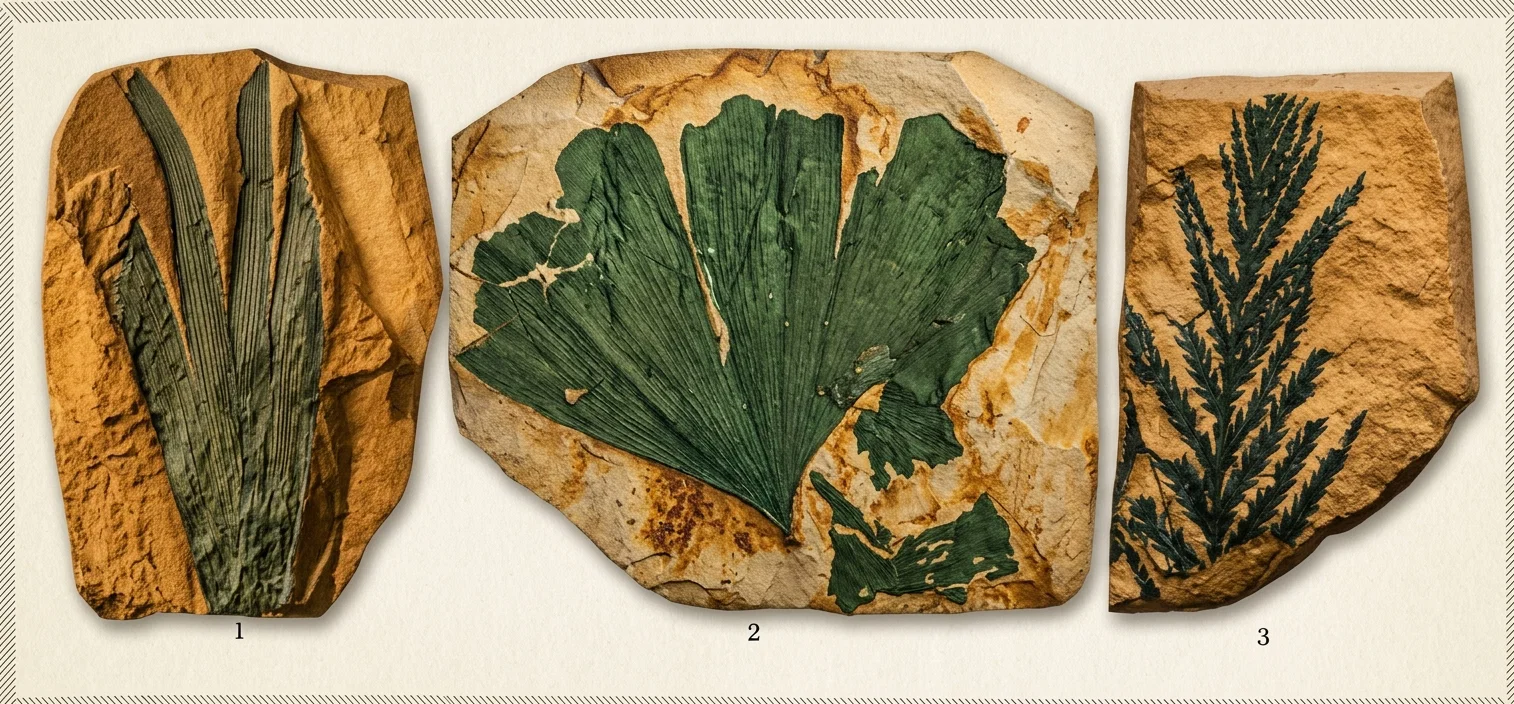
These cuts from U. S. Geol. Survey, professional paper No. 85
Voice of the Plants in the Coal Beds
By George McCready Price
Remains of Tropical Plants in the Frozen North—Evidences of a One-Time Luxuriant Vegetation—How Did It Get There?
By GEORGE McCREADY PRICE
If you take your map of Alaska, you will find a point one hundred sixty miles north of the Arctic Circle, and about three hundred miles directly north of Nome, which is called Cape Lisburne. This cold, desolate region, where the soil is frozen hundreds of feet deep and only thaws out a little on top in the short summer sufficiently to support a few stunted plants, is extremely interesting because of its coal beds and the facts they tell us. Coal, as we know, was made from immense quantities of vegetable matter covered up in the earth and partly oxidized. Here at Cape Lisburne there are forty or fifty successive beds of coal, ten of them being four feet thick each, and one over thirty feet.
When It Was Perpetual Springtime
The plants that contributed to the formation of this coal are largely ferns, palms, equisetums (horsetails), lycopods (club mosses), cycads, and ginkgoes, some of them much larger than the living representatives of the same families. But the chief interest centers in the proof they give of a climate of perpetual spring that must have prevailed there within what are now called the Arctic regions. “A mild and probably frostless climate” is what the Bulletin of the Geological Survey says about it; while F. H. Knowlton, the well-known botanist, says that “the presence of large and luxuriant ferns, many of them tree ferns, and cycads, and of very abundant and large sized leaves of ginkgo,” etc., . . . indicates a moist, warm, possibly subtropical climate.” (Professional Paper 85, page 46.) And that it must have been a profusely abundant and luxuriant vegetation, is attested by the quantity of the coal; for it takes several feet—five to ten—of pressed vegetable matter to produce one foot of coal, and here we have a total of one hundred fifty feet of coal beds.
Has the Earth Shifted?
Some people, on learning of such conditions in the Arctic, immediately think that the earth’s axis must have shifted, and that what are now the Arctic regions were once the tropics, and vice versa. But of this there is no evidence whatever. On the contrary, there is every evidence that at the time indicated here, a mild, equable climate covered the entire globe. Plants even identical in species with these found here have been reported from the Antarctic, as well as various other parts of the Arctic regions, Siberia, China, Japan, Germany, France, England, Oregon, and now here in Alaska. As the Geological Survey Bulletin expresses it, a large percentage of the whole Jurassic flora “was practically world-wide in its range.”
It Was Done Suddenly
But the change from that Eden-like condition of universal loveliness to our present conditions of violent extremes, was no gradual process, as the followers of Lyell would like to have us believe, but a sudden, violent change, an accompaniment of the Deluge. The huge animals—elephants, rhinoceroses, etc.—still preserved in the ice of Siberia and Alaska, are incontestable proof of this, even apart from the evidence in the coal beds themselves that they were buried by a sudden and awful catastrophe.
But though all these things are proofs of that world disaster called the Flood, I always like to look upon them more as relics of that Eden world upon which the Creator looked in its finished perfection and which He pronounced “very good,” and also as pledges of that happy coming time when He will again “make all things new.”
And how appropriate that the Lord is now uncovering these buried witnesses to refute the theories of the present generation, who have so completely explained away creation and the Creator! Surely the facts above enumerated have a large part in swelling that message which calls upon this age of evolutionists to “worship Him that made heaven, and earth, and the sea, and the fountains of waters.” Rev. 14:7.
The Antichrist
By W. H. Edwards
The Great Original Antichrist Himself Is Back of All Others
By W. H. EDWARDS
In 1 John 2:18 we read, “Little children, it is the last time; and as ye have heard that antichrist shall come, even now are there many antichrists; whereby we know that it is the last time.”
From the context, one would be led to conclude that a certain class fulfills this scripture; and commentators likewise lodge the burden of this wickedness on one, and give marginal reference to that one—the “man of sin, . . . who opposeth and exalteth himself above all that is called God, or that is worshiped.” Be that as it may, whether sect or individual, the part that is seen in the operation, the visible, the human, is but the weak place in the fabric, as potential as it may be, and as cruel as are its persecutions. The motive power, the unseen agent, the power behind the throne, is the great antichrist, the originator of sin—the devil.
“And there was war in heaven: Michael and His angels fought against the dragon; and the dragon fought and his angels. . . . He was cast out into the earth, and his angels were cast out with him.” Rev. 12:7, 9. The fourth verse would imply that the angels cast out with Satan equaled one third of the whole angelic family: No wonder John wrote that there are many antichrists; for their number is legion, as they told the Saviour when He permitted them to go into the herd of swine.
Not Against Flesh and Blood
So we wrestle not against flesh and blood in reality, only as the church of Christ is brought into contact with the visible, subjugated and manipulated by Satan, the invisible.
The real foe, then, is Satan, Christ’s antagonist, who makes war with the church.
As Christ prosecutes His work through human flesh, in the realm of love, so the adversary works his propaganda through flesh, in his principles of hatred and evil.
Satan can not be converted. He had his opportunity to repent and reform before his eviction from heaven’s courts; so his objective point is man, to cause the destruction, with himself, of as many as possible. But the flesh through which he works is that of our kind, our neighbors, friends, relatives, and acquaintances. So while those who arrogate and assume blasphemous prerogative are counted as antichrist, it is the dogma, and not the person.
Many Antichrists
The scripture says there are many antichrists gone out into the world. While we are prone to lodge the responsibility on the papacy, Mohammedanism, Buddhism, Confucianism, fetish worship, Mormonism, et al., a little further examination of the same chapter of John quoted, will give evidence that54there are as many antichrists as there are objects, principles, or desires that are seated on the throne of the affections and worshiped in the place of the Creator.
“Love not the world, neither the things that are in the world. . . . For all that is in the world, the lust of the flesh, and the lust of the eyes, and the pride of life, is not of the Father, but is of the world.” Not of the Father! Then it is against the Father, or anti-Father, hence anti-Christ.
By far the most dangerous and the most numerous are the antichrists of the individual heart. In the words of the hymn:
“Of all the foes we have to meet,
None so apt to turn our feet,
None betray us into sin,
Like the foes we have within.”
This, then, dear reader, is the perilous thing to us—the antichrist of our own deceitful hearts controlled by Satan.
The Wily Foe
I wish to strengthen that statement by the following quotation: “Satan is constantly at work; but few have any idea of his activity and subtlety. The people of God must be prepared to withstand the wily foe. It is this resistance that Satan dreads. He knows better than we do the limit of his power, and how easily he can be overcome if we resist and face him. Through divine strength, the weakest saint is more than a match for him and all his angels, and if brought to the test, he would be able to prove his superior power. Therefore Satan’s step is noiseless, his movements stealthy, and his batteries masked. He does not venture to show himself openly, lest he arouse the Christian’s dormant energies, and send him to God in prayer.”
Now we have it. Let antichrists be as many as they may and are, do their work in bringing the Armageddon, hiding the knowledge of Christ, and bringing sorrow and persecution on the world, let us see to it that we are divorced from them all, and ally ourselves to everything Christian, that “the peace of God, which passeth all understanding,” may keep our “hearts and minds through Christ Jesus.”
Who Was the Writer of the Law?
By F. D. Starr
The Context, the Facts, and the Sense Must Be Taken into Account — Otherwise We May Wrest the Scriptures
By F. D. Starr.
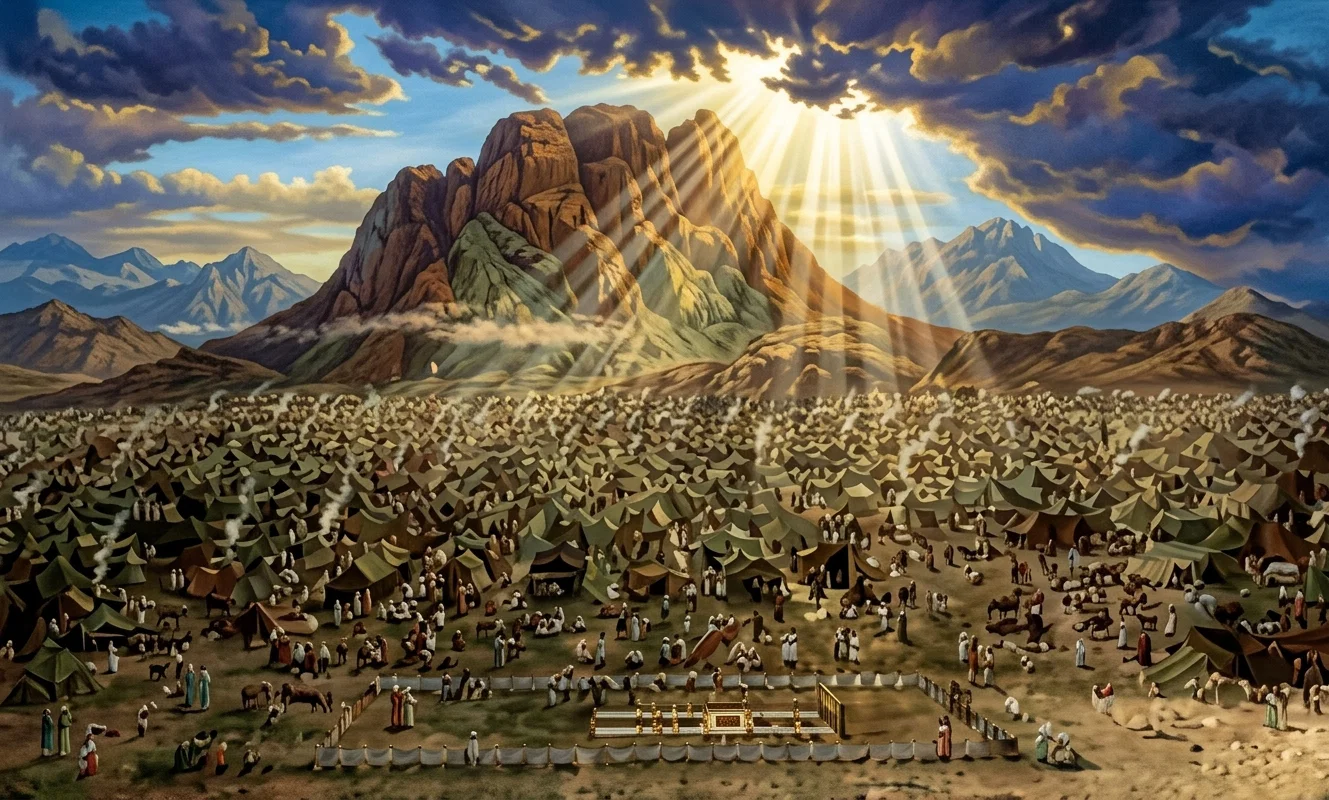
Much query and some misunderstanding has arisen concerning the statement found in Ex. 34:28: “And he was there with the Lord forty days and forty nights; he did neither eat bread, nor drink water. And he wrote upon the tables the words of the covenant, the Ten Commandments.”
The claim is made that inasmuch as the “he” used in the first two instances in this text, most surely refers to Moses, this pronoun must also refer to him in the last instance. To hold to such a rule of interpretation would bring us into serious difficulties. Let us examine a few passages.
“And it came to pass, when he made mention of the ark of God, that he fell from off the seat backward by the side of the gate, and his neck brake, and he died: for he was an old man, and heavy. And he had judged Israel forty years.” 1 Sam. 4:18.
Who was it that made mention of the ark of God?—Of course it was the messenger mentioned in the preceding verses. Who was it that fell from his seat and his neck broke? Was it the same person? There is nothing to indicate a change of antecedents. Was the messenger who ran from the army an old man, heavy and blind? And had he judged Israel forty years?—Evidently not. To whom, then, does the “he” in the last four instances refer?—As all can plainly see, to Eli, to whom the tidings were brought.
Decided by Facts
We decide the matter not by our ideas of grammar, but by the undisputable facts in the case. “If any man see his brother sin a sin which is not unto death, he shall ask, and he shall give him life for them that sin not unto death. There is a sin unto death: I do not say that he shall pray for it.” 1 John 5:16.
“Was there with the Lord forty days”
No one will fail to understand that the “he” that asks, that prays, is a mortal man. But who is it that gives life? Is that the same person? All give the prompt reply, No, of course not: It refers unquestionably to the One who is asked for life and forgiveness, the only Being in the universe who can give life. We must not ascribe to fallible man an impossible attribute, so as to defend grammatical construction.
“For he hath put all things under his feet. But when he saith all things are put under him, it is manifest that he is excepted, which did put all things under him. And when all things shall be subdued unto him, then shall the Son also himself be subject unto him that put all things under him, that God may be all in all.” 1 Cor. 15:27, 28. In these numerous occurrences of the personal pronoun “he,” it is evident that they do not all have application to the same person.
To substitute the nouns for the pronouns, the passage would read thus: “For God hath put all things under Christ’s feet. But when God saith all things are put under Christ, it is manifest that God is excepted, which did put all things under Christ. And when all things shall be subdued unto Christ, then shall the Son also himself be subject unto God that put all things under Christ, that God may be all in all.”
Verses 23-25 are similar, and help to make the true meaning clearer. We must decide the application of the word “he,” etc., by the context and the facts in the case. We must not apply it in such a way as to make the Scriptures stultify or contradict themselves.
David Could Not Uphold the World
In Psalm 75, David evidently alludes to himself in verses 1, 2; but when he says in verse 3, “I bear up the pillars of it” [the earth], we know very well that he does not mean himself, for he was surely unable to bear up the pillars of the world.
In Ps. 81:6-8, the personal pronoun “I” clearly refers to God; but if we persist in applying the same word to Him in the verse immediately preceding, then we are to suppose there are some languages that the Lord does not understand. “I heard a language that I understood not.” This was Israel’s experience, not the Lord’s.
In all such cases, we may say in the language of Acts 8:34: “Of whom speaketh the prophet this? of himself, or of some other man?” and by “comparing spiritual things with spiritual,” and seeking, like Daniel, for the meaning, we shall arrive at conclusions which are not out of harmony with other scriptures and with the facts in the case.
What are the facts in reference to Ex. 34:28?—They are these: The Lord promised Moses that He would write on the tables of stone that Moses was to hew out, the words that were in the first tables, which Moses broke. Did the Lord keep His promise? Who dare think otherwise? In Deut. 10:4, Moses distinctly states that the Lord did write the commandments on the second set of tables of stone. Then we can not suppose that Moses wrote the commandments on the tables of stone. This could be done by God only, just the same as He only can give life.
It may be said that God told Moses to write these words, Ex. 34:27. But the words to which reference is here made are those preceding, and refer to ceremonial rather than moral requirements. We should be careful not to wrest the Scriptures.
What Some Soldiers Say About Drink
COUNT VON HAESELER, of the Sixteenth Army Corps, in Germany: “The soldier who abstains altogether is the best man. He can accomplish more, can march better, and is a better soldier than the man who drinks even moderately. Mentally and physically he is better. Brandy is the worst poison of all. Next to it comes beer. Each limits the capacity and lowers mind, body, and soul. Strong drink tires, and only increases thirst.”
Gen. Frederick D. Grant, U. S. A.: “I have favored the cause of prohibition all my life. Not that I have always been a total abstainer, for I have not been, although I am one now; but I have believed consistently that the liquor traffic was a source of evil. As my belief was strengthened by my observations, I decided that the cause demanded more than passive acknowledgment of the truth. So I am an out-and-out prohibitionist.”
Sir Frederick Treves: “As a work-producer alcohol is exceedingly extravagant, and, like all other extravagant measures, leads to a physical bankruptcy. It is also curious that troops can not work or march on alcohol. I was, as you know, with the relief column that moved on to Ladysmith, and of course it was an extremely trying time by reason of the hot weather. In that enormous column of thirty thousand, the first who dropped out were not the tall men, or the short men, or the big men, or the little men. They were the drinkers, and they dropped out as clearly as if they had been labeled with a big letter on their backs.”
Wages of Sin
“THE wages of sin are worse than no pay.”
The Rich Man and Lazarus
By Hampton W. Cottrell
The Impassable Gulf—Did the Rich Man Go into a Literal Burning Hell?—Is the Story a Parable?—What Does It Teach?
By HAMPTON W. COTTRELL
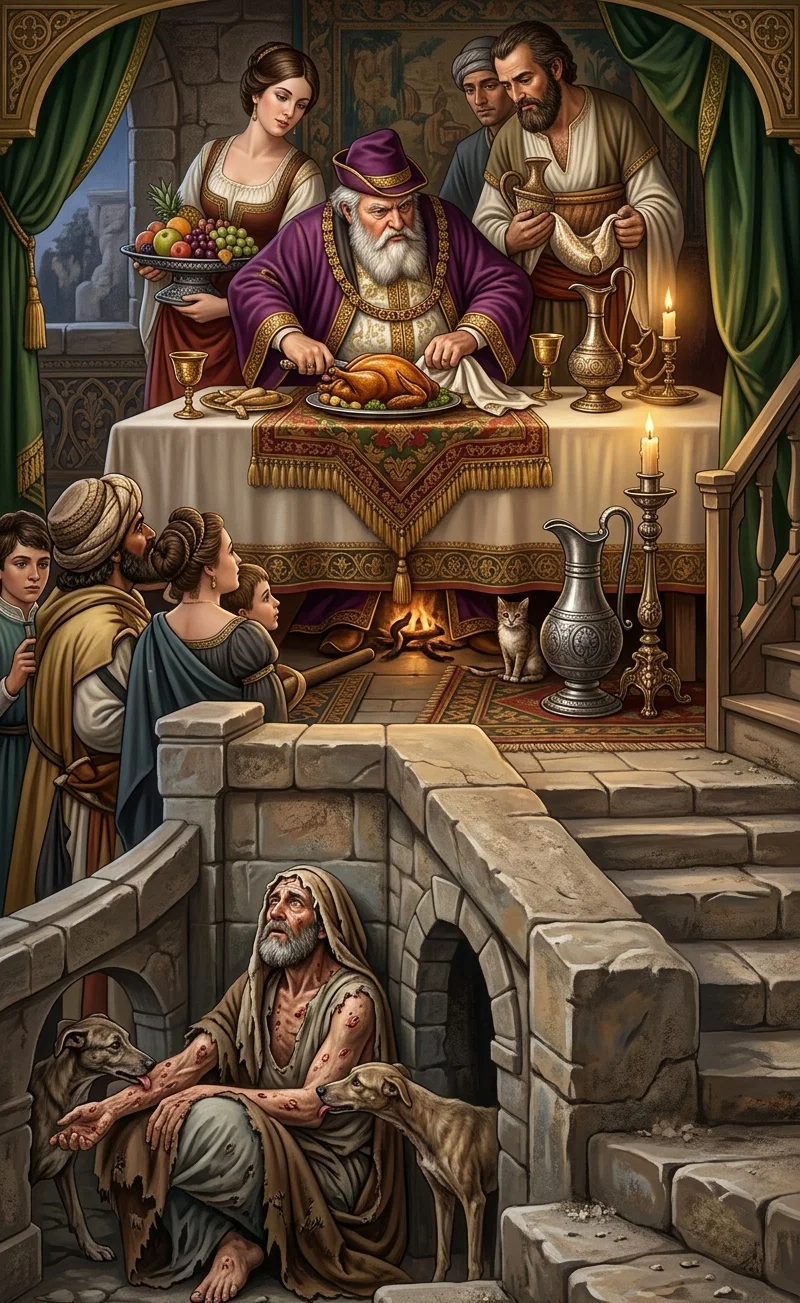
“God . . . calleth those things which be not [but are to come] as though they were.” Rom. 4:17. Thus Christ spoke in the parable of the rich man and Lazarus, which is one of a series of parables, and was set forth to represent the final rewards of both the wicked—self-centered, covetous, and self adorers—and the righteous—unselfish, liberal, and Deity worshipers. The rich man—the wicked—is represented as being robed in “purple and fine linen,” and faring “sumptuously every day.” Luke 16:19. We do not understand that the Saviour designed to teach that because a man is rich in this world’s goods, he is doomed to eternal loss; but rather, only those who worship riches in preference to worshiping God, and retain their wealth wholly for selfish purposes, failing to supply food, clothing, and the necessary medical aid to those of their fellow men who are less fortunate in life than themselves; and, as in the parable, permitting the dogs to minister to such.
The Self-Opinionated Also
The personnel of the class for which the rich man stands, evidently includes those who, though they have not monetary wealth, are so self-opinionated that they are blinded to the needs of others to whom they might render helpful service, and to the extension of the gospel of God’s salvation.
The Master further states that “the rich man also died, and was buried; and in hell he lifted up his eyes, being in torments, and seeth Abraham afar off, and Lazarus in his bosom. And he cried and said, Father Abraham, have mercy on me, and send Lazarus, that he may dip the tip of his finger in water, and cool my tongue; for I am tormented in this flame. But Abraham said, Son, remember that thou in thy lifetime receivedst thy good things, and likewise Lazarus evil things; but now he is comforted, and thou art tormented. And beside all this, between us and you there is a great gulf fixed: so that they which would pass from hence to you can not; neither can they pass to us, that would come from thence.
“Then he said, I pray thee therefore, father, that thou wouldest send him to my father’s house: for I have five brethren; that he may testify unto them, lest they also come into this place of torment. Abraham said unto him, They have Moses and the prophets; let them hear them. And he said, ‘Nay, Father Abraham: but if one went unto them from the dead, they will repent. And he said unto him, If they hear not Moses and the prophets, neither will they be persuaded, though one rose from the dead.’” Luke 16:22–31.
The Great Gulf That Is Fixed
This parable teaches men the eternal gain or loss sustained in this world as determined by the course one pursues in life. If this life is spent in the uplifting of humanity to the glory of the Deity, it leaves the individual on the side of the gulf toward the city of God. The course of conduct men take in this life constitutes the gulf that is fixed between the righteous and the wicked, as photographed in the parable; so that gulf can not be crossed, as the life can not be lived over again. On the other side of the picture may be seen the one who spends this life—influence and money—for self glorification, on the opposite side of the fixed and uncrossable gulf, doomed to eternal loss.
“one who spends this life—influence and money—for self glorification.”
The five brethren mentioned in the parable, who are in need of help, represent the class of men and women who are living now, but have no personal acquaintance with Christ, and no knowledge of the pending future. They are represented as having “Moses and the prophets [the Bible]; let them hear them.”
Must Make the Choice Now
This parable is a clarion note to all men that if they would live eternally, they must make that choice now, in this life, or be forever lost.
But if it be contended that this was a literal occurrence, not a parable, then let us notice a few of the inconsistencies connected therewith:
1. Abraham was dead. Lazarus died, and took up his abode in “Abraham’s bosom.” Verse 23. Could one literal man find a place of abode in the bosom of another?
2. The rich man requested that Lazarus be sent to his relief—“dip the tip of his finger in water, and cool my tongue.” Verse 24. Would one drop of ice water have been sufficient to cool the crisping tongue of the rich man?
3. Would not the one drop of water have been boiling hot, if not entirely evaporated, by the time it passed through the writhing flames of torment?
4. The unrolling of the divine scroll reveals the popular theological dilemma in which those are found to be who hold that the lesson of the rich man and Lazarus was a literal occurrence and taught the existence of a lake of fire awaiting the wicked at death; for it would prove that the soul of the rich man had a tongue, which is not conceded by those who believe in the inherent immortality of the soul. It would also prove that the spirit of Lazarus had a literal finger, which is diametrically opposed to the theory.
5. “The dead know not anything, neither have they any more a reward; for the memory of them is forgotten. . . . Neither have they any more a portion forever in anything that is done under the sun.” Eccl. 9:5, 6. Surely, then, this lesson of Christ was a parable, and should be a constant rebuke to all covetous, self-loving people, and tend to show the vanity of trusting in self or riches.
The Penalty Is Death
By E. Lloyd
A TOURIST relates that when passing through an Austrian town, his attention was directed to a forest on a slope near the road, and he was told that death was the penalty of cutting down one of those trees. He was incredulous until he was further informed that they were the protection of the city, breaking the force of the descending avalanche, which, without this natural barrier, would sweep over the quiet homes of thousands. When a Russian army was marching there, and began to cut away the defense for fuel, the inhabitants besought them to take their dwellings instead, which was done.
So likewise on the integrity and support of God’s law depends the safety of the universe. “The soul that sinneth, it shall die,” is a merciful proclamation. “Whosoever shall . . . offend in one point, he is guilty of all,” is equally just and benevolent. To transgress in any point is to lay the ax at the root of the tree which represents our security and peace. E. LLOYD.
Faith in Christ and Confession
“We come to God in the name of Jesus by special invitation, and He welcomes us to His audience-chamber. He imparts to the humble, contrite soul that faith in Christ by which he is justified. Jesus blots out as a thick cloud his transgressions, and the comforted heart exclaims, ‘O Lord, I will praise Thee: though Thou wast angry with me, Thine anger is turned away, and Thou comfortedst me.’ Isa. 12: 1. Such a one will understand by his own experience the words of Paul, ‘With the heart man believeth unto righteousness; and with the mouth confession is made unto salvation.’ Rom. 10: 10.”
Witnesses for Christ
“God has given us the gift of speech that we may recite to others His dealing with us, that His love and compassion may touch other hearts, and that praise may arise from other souls also to Him who has called them out of darkness into His marvelous light. The Lord has said, ‘Ye are My witnesses.’ Isa. 43: 10. But all who are called to be witnesses for Christ must learn of Him, that they may be efficient witnesses. As children of the heavenly King, they should educate themselves to bear testimony in a clear, distinct voice, and in such a manner that no one may receive the impression that they are reluctant to tell of the mercies of the Lord.”
Joys and Sorrows
By Jean Paul Richter
Joys are our wings; sorrows are our spurs.
— Jean Paul Richter.