All reasonable effort will be made to preserve accuracy of statement, and to verify all authorities quoted.
Scripture quotations, when not from the Authorized Version, are taken from the American Standard Revised, unless otherwise stated.
Persons receiving copies of this paper without ordering them are not indebted to this office. Such papers are paid for by others.
Manuscripts should be addressed to the editor. Address all business and make all money orders, etc., payable to the SIGNS OF THE TIMES, Mountain View, California.
God's Love for the Church of Jezebel
By Percy T. Magan
Space Given for Repentance
By PERCY T. MAGAN
THE term "that woman Jezebel," as used in the book of Revelation, applies to the Roman Catholic power. But because much is written in Scripture against the practices of the Church of Rome, it must not be for a moment supposed that the God of heaven is devoid of love and compassion for her. In fact, the love of God as manifested in calling the Church of Rome to repentance is one of the most wonderful examples of divine affection and forbearance in all the Scriptures.
God had a love for the church of Jezebel; and in spite of all her heart wanderings, He would have saved her and redeemed her, had it been possible for divine mercy to do so. God would have healed even Rome if He could; but she would have none of His healing. In the same scripture in which He calls her "that woman Jezebel," it is written: "And I gave her space to repent of her fornication; and she repented not. Behold, I will cast her into a bed, and they that commit adultery with her into great tribulation, except they repent of their deeds." Rev. 2: 21, 22.
Had "Space to Repent"
THIS is a wonderful scripture. In terms most concise, yet pregnant with deepest love, God tells how He gave the Church of Rome "space to repent," and how she repented not. And He warns her how He will cast her and those who commit adultery with her into great tribulation, "except they repent of their deeds."
The great Reformation of the sixteenth century, in the days of Martin Luther and Melanchthon, has been studied, and much has been written in reference to it. With its fundamental principles, many are very familiar. But with the call of God to the Catholic Church which preceded the days of "the monk of Wittenberg," few are familiar. Yet there is no more instructive and comforting lesson in church history than this one which lies hidden and buried amongst other events of the time, of only passing and superficial value in comparison with it.
God Called the Church of Rome
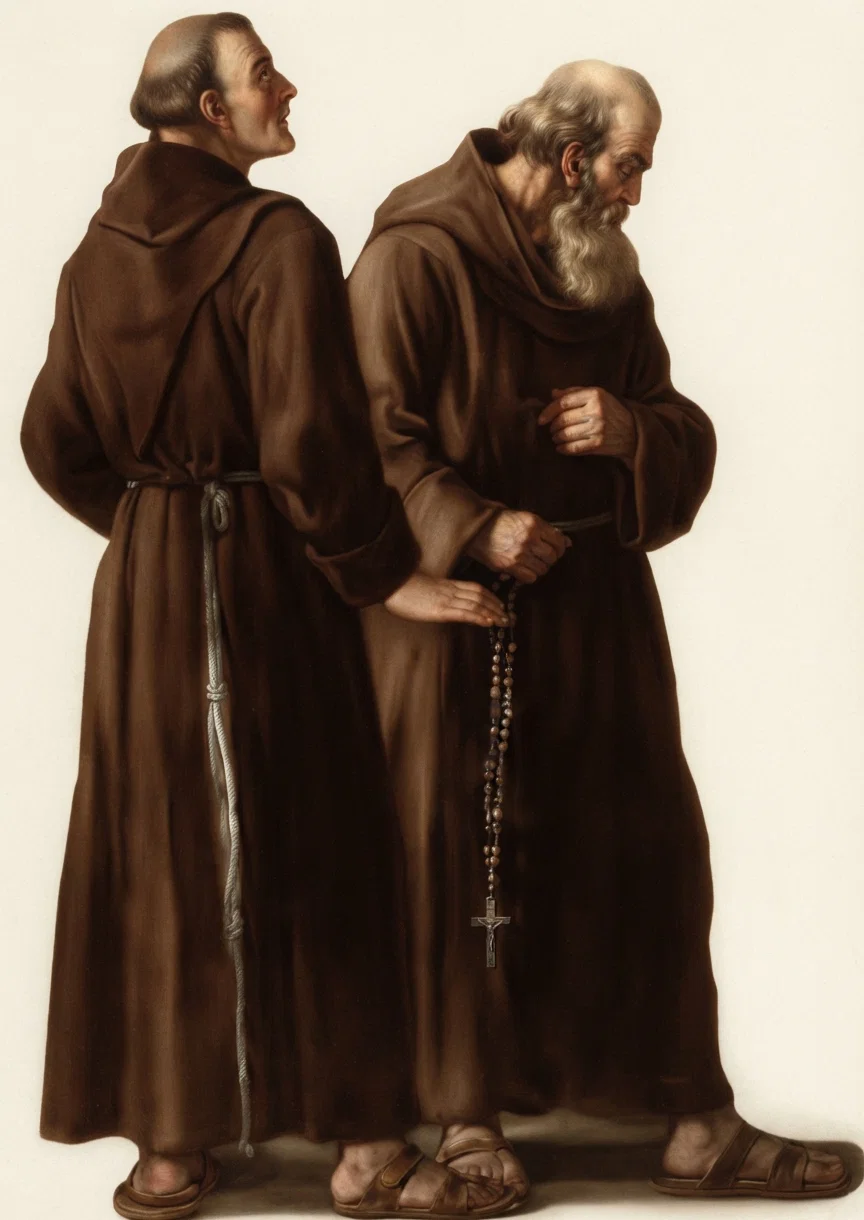
FOR more than a hundred years before the Reformation of the sixteenth century began, God called the Church of Rome, and especially her dignitaries and princes, to repentance. For far more than one hundred years, He gave her space to repent. This plea of heaven in which God called the apostate church to better ways and a purer life began under Wycliffe, and continued under Mathias of Janow, Conrad of Waldhausen, Militz of Prague, Huss, Jerome, and a host of others.
The labors of these men were, in many respects, primarily devoted toward the salvation of the Church of Rome and of men in the Church of Rome. Theirs was an endeavor to persuade the church to adopt a new walk in life, together with sanctified practices and policies, instead of the evil and perverted ones which infested her. Theirs was an attempt to have her abandon devious and tortuous paths, to let affairs of state alone, and to confine herself to spiritual matters.
Called to Abandon Her
BUT when Martin Luther, the doctor of Wittenberg, began his great career, a different plea rang out in clarion tones. He called for the regeneration of the individual through the gospel of justification by faith. This is not saying that the teachings of the pre-Reformation evangelists were not designed, under the hand of God, to bring salvation to the individual soul; but it is to emphasize that Martin Luther called men to abandon the church, and to leave her to her ruin. His was not an attempt to reform her, or to reform men in her, but to wreck her, and to reform men outside of her. No one can carefully read the history of the earlier and the later reformatory movements without being struck by this fundamental difference in the work of the two groups of reformers.
The reason is found in the Scriptures: God was giving "that woman Jezebel" "space to repent." If the Church of Rome had only heeded the pleadings of these noble spirits who arose in her own fold, the history of later years would have been altogether different. She never would have received the "deadly wound" elsewhere mentioned in the Scriptures; for under the hand of God and these His faithful servants, she would have cleansed her life, and stanched the streams that were sapping her vitality. She would voluntarily have relinquished her temporal power; and that episode in her history wherein it was rudely snatched from her hand, first by the generals of the great Napoleon, and later by Victor Emmanuel, would never have been written.
England Rejects the Pope
THE movement to save the church by pointing her to better paths, began in England. In the year 1365, Pope Urban V demanded that England pay the annual tribute of one thousand marks which Pope Innocent III had levied on King John. This had not been paid for five and thirty years.
King Edward, therefore, assembled the Parliament of the realm of England in 1366, and laid before that body the letter of the pope, and requested the members to take counsel, and determine what answer should be given. Parliament asked for one day to "think the matter over." The next day, that great body reassembled, and returned to the sovereign its memorable answer.
The first member to arise spoke thus:
"The kingdom of England was won by the sword, and by the sword has been defended. Julius Caesar exacted tribute by force; force gives no perpetual right. Let the pope then gird on his sword, and come and try to exact his tribute by force. I, for one, am ready to resist him."
Quoth the second speaker:
"He only is entitled to secular tribute who legitimately exercises secular rule and is able to give secular protection. The pope cannot legitimately do either. He is a minister of the gospel, and not a temporal ruler. His duty is to give ghostly counsel, not corporal protection. He should follow the example of Christ, who refused all civil dominion. The foxes have holes, and the birds of the air their nests; but He had not where to lay His head. Let us see that the pope abide within the limits of his spiritual office, where we shall obey him. But if he shall choose to transgress these limits, he must take the consequences. Let us boldly oppose all his claims to civil power."
Spoke the next:
"On what grounds was this tribute originally demanded? Was it not for absolving King John, and relieving the king from interdict? But to bestow spiritual benefits for money is sheer simony; it is a piece of ecclesiastical swindling! Let the lords, spiritual and temporal, wash their hands of a transaction so disgraceful. But if it is as feudal superior to the kingdom that the pope demands this tribute, why ask a thousand marks? Why not ask the throne, the soil, the people of England? If his title be good for three thousand marks, it is good for a great deal more. The pope, on the same principle, may declare the throne vacant, and fill it with whomsoever he pleases."
The Parliament gave the following unanimous decision:
"For as much as neither King John, nor any other king, could bring his realm and kingdom into such thralldom and subjection, but by common assent of Parliament, the which was not given, therefore that which he did was against his oath and his coronation, besides many other causes. If, therefore, the pope should attempt anything against the king, by process, or other matters indeed, the king with all his subjects should with all their force and power resist the same."
Now from these speeches, and the unanimous decision of the Parliament, it is quite plain that there was a general repudiation of the doctrine of the temporal power of the pope, and of his infallibility, and of his being the vicar of Christ. The members of the House also made it very plain that the doctrine of the union of church and state is wrong, and has no foundation in Holy Writ. The papacy saw and heard these doctrines, which constituted a clear call to her to amend her way and live. She was urged to leave the civil power to itself, to give "ghostly counsel," and "not corporal protection," and to quit wooing, wedding, and lording it over earthly kingdoms.
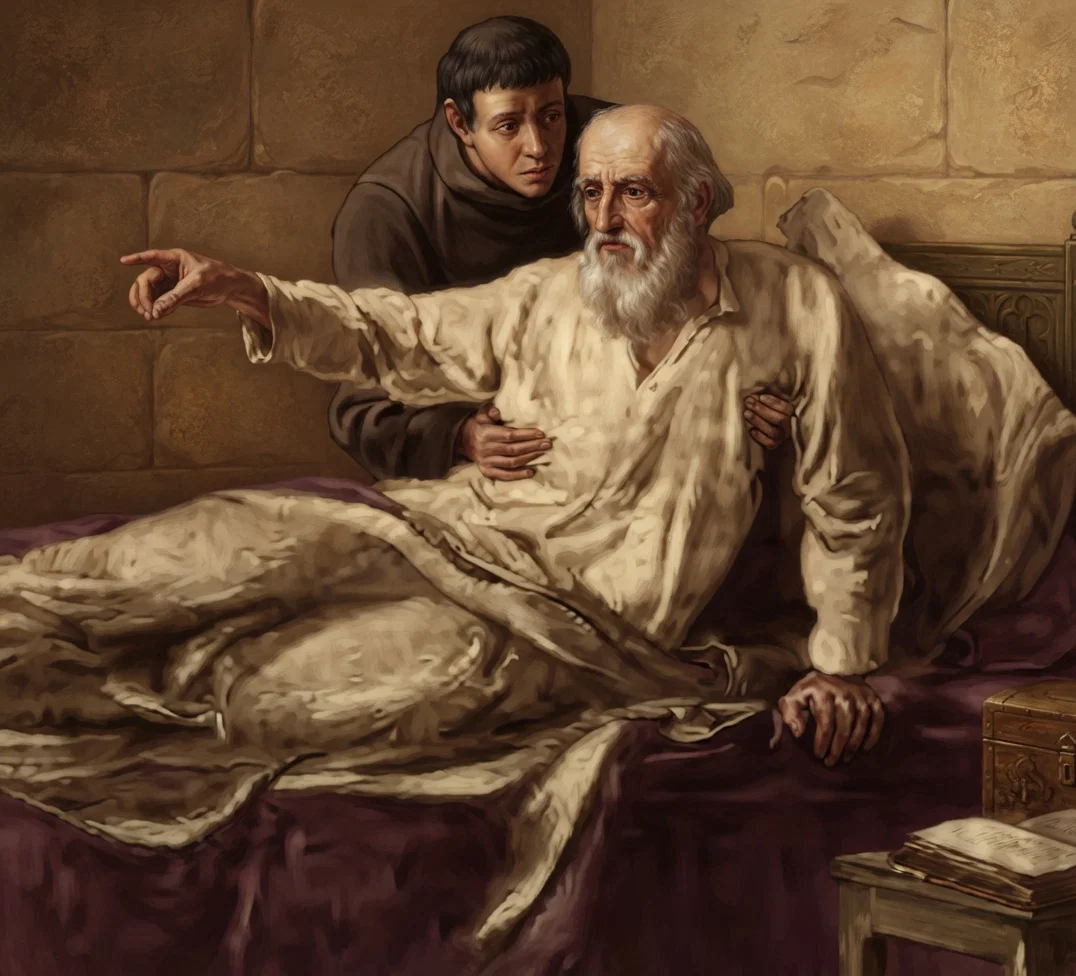
Nothing can be plainer than that the court of Rome held Wycliffe responsible for the11doctrines the Parliament had put forth. In this, Rome was absolutely right. Wycliffe was the king's chaplain at this very time. As he studied the Scriptures, he saw what the papacy really is, and fearlessly he told the king and the nobles of the difference between it and Christianity.
Wycliffe understood perfectly that he was accused of firing the action of Parliament. Said he: "Inasmuch as I am the king's peculiar clerk, I the more willingly take the office of defending and counseling that the king exerciseth his just rule in the realm of England when he refuses tribute to the Roman pontiff." As the basis of his defense, he set forth "the natural rights of man, the laws of the realm of England, and the precepts of Holy Writ." He declared that "already a third and more of England is in the hands of the pope. There cannot be two temporal sovereigns in one country. Either Edward is king or Urban is king. We make our choice. We accept Edward of England, and refuse Urban of Rome."
The Pope Would Take All
"He spoke and wrote against the worldly spirit of the papacy, and its harmful influence. He was wont to call the pope Antichrist, 'the proud, worldly priest of Rome,' 'the most cursed of purse-carvers.' He says in one of his papers: 'The pope and his collectors draw from our country what should serve for the support of the poor, and many thousand marks from the king's treasury for sacrament and spiritual things. And certainly though our realm had a huge hill of gold, and no man took therefrom but this proud priest-collector, in process of time the hill would be spent; for he is ever taking money out of the land, and sends nothing back but God's curse for simony, and some accursed clerk of Antichrist to rob the land still more for wrongful privileges, or else leave to do God's will, that which men would do without his leave, and buying and selling.'"
It will be clear, from all the above, that the abuses in the church at which Wycliffe struck were fundamental tenets of her policy — temporal sovereignty, union of church and state, the placing of civil rulers in subjection to herself, etc. Had Rome heeded Wycliffe's doctrine and exhortations, and reformed on these things, she would have answered God's call to repent; for the work of Wycliffe was God calling her to repentance, during that time of which He says, "I gave her space to repent of her fornication; and she repented not."
Some Fall on the Rock and Are Broken—Others Are Crushed to Powder as the Rock Falls on Them
By Walter E. Gillis
The Rock of the Eternal Ages
By
Walter
E. Gillis
ASKED what he considered the most potent proof of the genuineness of the Bible, Sir William Gladstone, England's "grand old man" of the nineteenth century, quickly replied, "The Jew."
The annals of the origin and history of the Hebrew people constitute a major portion of the Old Testament. Of their beginning, the inspired record says: "The Lord thy God hath chosen thee to be a special people unto Himself, above all people that are upon the face of the earth. The Lord did not set His love upon you, nor choose you, because ye were more in number than any people; for ye were the fewest of all people: but because the Lord loved you, and because He would keep the oath which He had sworn unto your fathers, hath the Lord brought you out with a mighty hand, and redeemed you out of the house of bondmen, from the hand of Pharaoh king of Egypt. Know therefore that the Lord thy God, He is God, the faithful God, which keepeth covenant and mercy with them that love Him and keep His commandments to a thousand generations; and repayeth them that hate Him to their face, to destroy them: He will not be slack to him that hateth Him, He will repay him to his face. Thou shalt therefore keep the commandments, and the statutes, and the judgments, which I command thee this day, to do them." Deut. 7: 6-11.
The romance attending the divine call of Abraham, and the wonderful story of his faith that resulted in the founding of a nation at the close of almost a century of severest trial, have given him a charmed place in the hearts of millions of his own race, and proved a magnet of superior power in binding the worship of the gentile world to Israel's God.
Abraham Obeyed
GOD appeared to Abraham in Ur of the Chaldees, and invited him to leave his ancestral home, with its idolatrous practices, and go out whithersoever the Spirit would lead him, and serve in spirit and in truth the Creator. God did this that He might save Abraham, it is true, but primarily to launch a challenge to every individual of every race to do likewise; in proof whereof we read, "If ye be Christ's, then are ye Abraham's seed, and heirs according to the promise." Gal. 3: 29. "For the promise, that he should be heir of the world [2 Peter 3: 13], was not to Abraham, or to his seed, through the law, but through the righteousness of faith." Rom. 4: 13.
The enthralling story of Jacob, with his complex character, and the vicissitudes attendant upon his transformation from the supplanter to Israel, the upright one, who as a prince prevailed with God, must prove of more than historic interest; for we find him declaring to his sons, by the spirit of prophecy, what will befall them in the last days (Gen. 49: 1); and for each one represented, the apostle John records by the same spirit of prophecy, a gate of pearl swings in the walls of the heavenly Jerusalem (Rev. 21: 12), and through these precious portals will pass the nations of the saved, led by twelve thousand of each tribe, a remnant translated from the earth when the Lord shall come (Revelation 7).
The charm of history that must inevitably bind us as we give time to the study of this people, eventually deepens into the conviction that they hold a vital place in the spiritual story of all nations and all peoples; for the reason that for nearly two thousand years, the Lord made them the custodians of His oracles, and in the development of their family, tribal, and national existence, they exhibited, for the world's enlightenment, the character of Jehovah-God, and the one plan by which a rebel race might be won back to its allegiance to heaven. The story of the intimate place the altar of sacrifice maintained in the daily life of the patriarchs, and the revelations of God connected therewith, becoming the mainspring of their life, was recorded with intent that all might learn that Heaven expects all departments of practical life to be molded by the principles of the spiritual realm.
Thus we see the interdependence of sacred history and divine revelation, and how the warp and woof of man's salvation is developed in all of it.
Has God Changed His Plans?
FROM the ancient days when Enoch walked with God and was translated, the divine plan for man has remained unchanged. Man's best works disintegrate and are lost in the dust of ages, but the centuries have only served to reveal the symmetry and effectiveness of the plan of salvation. Like a great rock in a weary land, it has loomed upon the vision of earnest souls longing for light amid the grossness of earthly pleasure and commercialism. The infinite treasures of truth have been accumulating while man has attempted to build empires and perpetuate his puny fame; but, like the wonders revealed by the telescope to the patient astronomer, or by the microscope to the untiring investigations of the student, these vast and rich resources of divine wisdom are only revealed to those who appreciate them, those who hunger and thirst for them, those who will sacrifice for them. "The meek will He guide in judgment: and the meek will He teach His way. . . . The secret of the Lord is with them that fear Him; and He will show them His covenant." Ps. 25: 9, 14.
The Tested Corner Stone
To the Hebrews, their Jehovah-God, and more especially the promised Messiah, were known as the Rock.
The Lord Himself proclaimed through the prophet Isaiah, "Behold, I lay in Zion for a foundation a stone, a tried stone, a precious corner stone, a sure foundation." Isa. 28: 16.
The royal singer of sacred themes often referred to the Lord as a rock, in such familiar lines as: "The Lord is my rock, and my fortress, and my deliverer; my God, my strength, in whom I will trust; my buckler, and the horn of my salvation, and my high tower." "For who is God save the Lord? or who is a rock save our God?" Ps. 18: 2, 31.
And Moses, who lived as seeing the invisible, sang: "Ascribe ye greatness unto our God. He is the Rock, His work is perfect: for all His ways are judgment: a God of truth and without iniquity, just and right is He." Deut. 32: 3, 4.
To the disobedient he declared, "Of the Rock that begat thee thou art unmindful, and hast forgotten God that formed thee;"; and again, "Their rock is not as our Rock,588even our enemies themselves being judges." Deut. 32: 18, 31.
Isaiah, the gospel prophet, admonishes, "Trust ye in the Lord forever: for in the Lord Jehovah is the Rock of ages." Isa. 26: 4, margin.
During the formative period of the nation, water for the thirsty multitude flowed from the smitten rock, typical of the water of life that flows from the smitten Son of God. The faithful apostle Paul, referring to that experience, says, "They drank of that spiritual Rock that followed them: and that Rock was Christ." 1 Cor. 10: 4.
Thus in all their sacred literature, the Hebrew people were familiar with the rock as representing the confidence-inspiring character of their Jehovah-God, who assured them, "I am the Lord, I change not." Mal. 3: 6.
The Same God Still
As God revealed Himself to the Hebrew people in the time of their visitation, so is He to-day revealing Himself to seekers after truth who will obey Him. When the madness of human ambition has filled the earth with the turbulent strife of war, the mystery of divine revelation is to be finished. The messengers of salvation have girded the world.
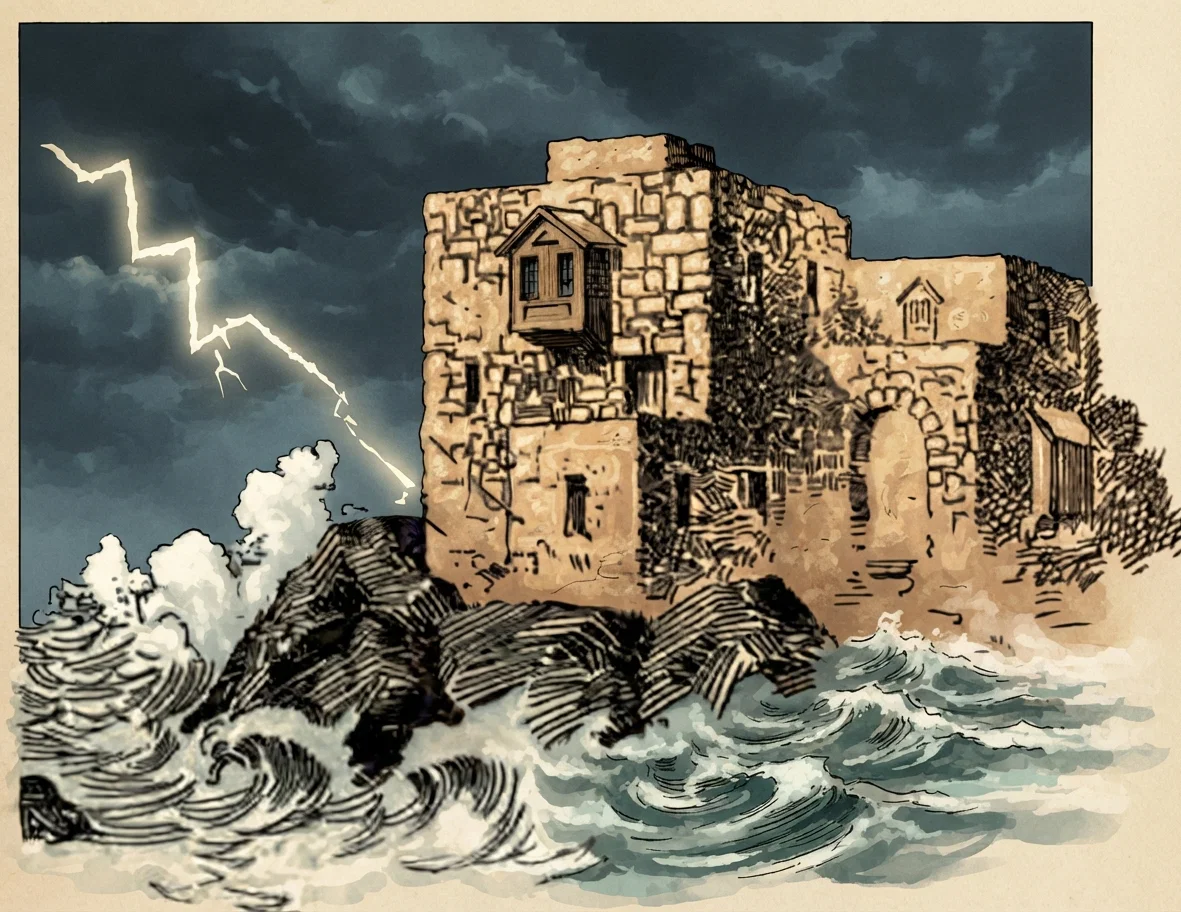
The time is at hand when the Rock is to finish history by smiting the remnant of the nations, as foretold by the prophet Daniel (Dan. 2: 31-45); and as the Saviour assured the Jewish people, "Whosoever shall fall upon that Stone shall be broken; but on whomsoever it shall fall, it will grind him to powder." Luke 20: 18.
The
By Clarence Santee
Eternal
Home
By
Clarence Santee
I'VE a message from my Saviour
That I bring to you to-night,
Of a land of fadeless beauty,
Of a city pure and bright,
Of a country free from sorrow,
Where the dwellers know no care;
No sad parting comes to-morrow,
For they dwell forever there.
It's a message of salvation,
Brought by angels from the throne,
With a song of joy and gladness
From the Lamb, who loves His own.
Would you dwell among the angels,
With the victor's crown of gold?
Would you join that happy chorus
Of redemption's love untold?
There's a fountain for our healing,
There's a balm for every care,
Where the loved will dwell forever,
And their Saviour's glory share.
Will you tell it to the loved ones,
And to darkened lands afar,
Till the earth itself is lightened,
While the gates are still ajar?
Oh, yes, tell it in the highways,
In the hedges, and the lanes.
To the soul that once has heard it,
Let its notes be sung again.
He perchance is worn and weary,
With the battle almost won.
Sing aloud the grand old story,
"Whosoever will, may come."
Suffragettes and
By Mary Alice Hare Loper
Peruna
In the which Samantha Spriggins doesn't believe in women "galavantin' over the country stumpin' for politics."
By
Mary Alice Hare Loper
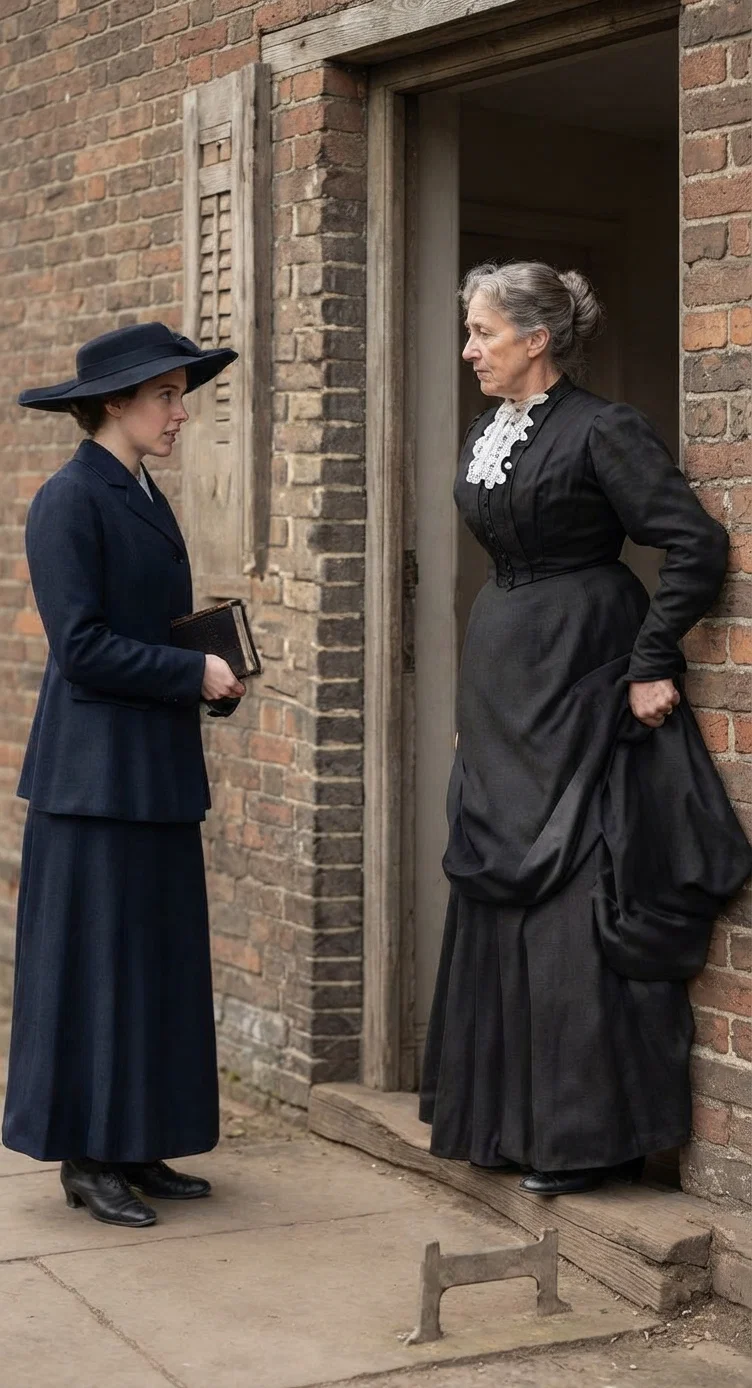
"GOOD morning! This is Mrs. Spriggins, I believe."
"Yes, ma'am, Samantha Jemima Spriggins. My father's name was Zedekiah. They called him Zed for short. And my mother's name was Jemima. They called me after her because I was the only girl, and some folks thought I looked like her. It's powerful strange how many different ones people say a baby looks like. I've heard my father say that he heard so many opinions about me that he concluded I looked like the whole neighborhood. But may I ask your name? And do be seated."
"Thank you! My name is Miss Wilson."
"Any relation to Wheeler and Wilson? They made my sewin' machine. It's a little out of order, and I didn't know but you might know how to fix it."
"I am not a relative that I know of. I called to speak with you concerning the temperance issue at the coming election. Have you registered?"
"Land, yes; my name was on the official records sixty-five years ago come September."
"I mean, have you registered recently as a voter?"
"Yes, somebody had me put my name down; but they said I didn't have to vote just because of that. But I believe in temperance as much as you do."
"But your vote may mean much in deciding the temperance issue."
Women Should Mind Their Own Business
"I DON'T believe in women's voting. There's no Susan B. about me. I think a woman ought to mind her own business — and goodness knows she has plenty to occupy her time without dabblin' in politics. In these days, the women seem to think they don't have to cook, nor wash dishes, nor sew, nor darn their husbands' socks, much less take the burden of training up their children in the way they should go."
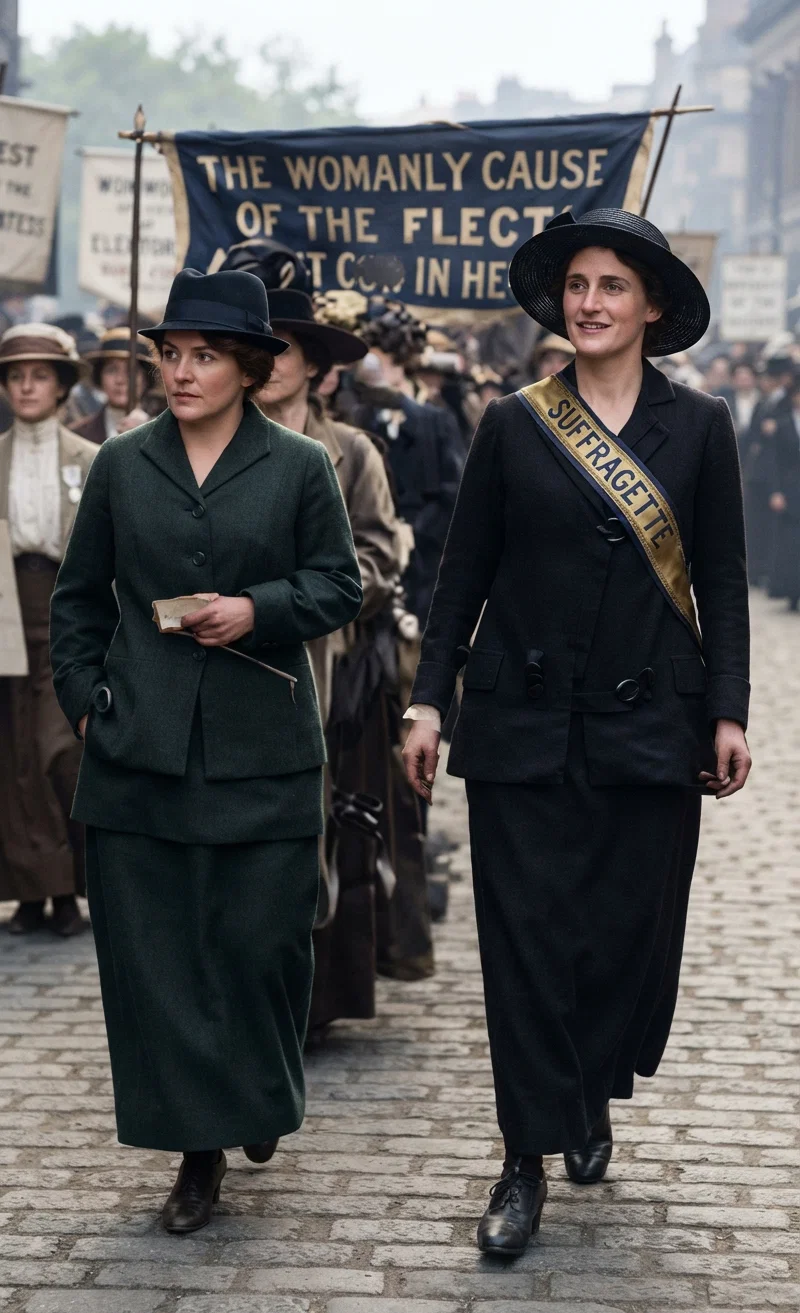
"Yes, grandma, there is a great deal of truth in what you say. But the liquor women will vote; and it seems to me we should help counteract the terrible evils of strong drink, now that the privilege to vote is ours."
"I don't have to answer for other people's sins. That's their business, not mine. Anything but a woman galavantin' over the country stumpin' for politics."
"Yes, I know; I used to feel that way myself. But now that all the women of California have the opportunity to vote, don't you think the temperance women should exercise their privilege in this direction, and thus overrule the 'wet' votes? Don't you think God will hold us responsible for neglecting to do what we can to annihilate the liquor traffic — in other words, for neglecting our plain duty in this respect?"
"Well, maybe so. I never thought of it in that way before. But I never believed in what they call women's rights, and I never shall. If I was a man, I'd never marry a woman's rights woman, that's sure — unless I liked to cook, and mend, and take care of babies, better than most men do."
"I see you have some patent medicine bottles on your table. Have you been very ill?"
"Oh, not particularly so. I always have aches and pains more or less; but I have not been bedfast for three months or more. I take medicine regularly, or I suppose I should be in bed most of the time."
"Do you know what you are taking, grandma?"
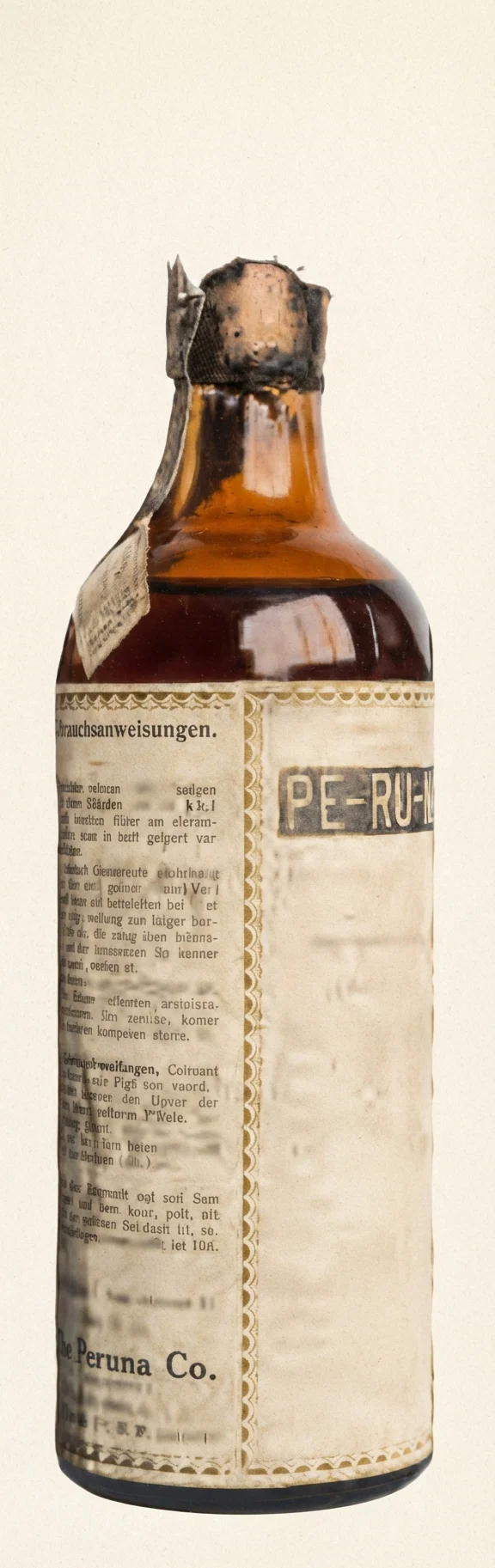
"To be sure I do. I always take Hostetter's bitters, Lydia Pinkham's compound, and Peruna, three of the best medicines ever put up by mortal man. They're good for whatever ails you — regular life preservers."
"But do you know just what is in these medicines?"
"I don't know the names of the different ingredients; but I don't see what difference that can make, so long as they cure people."
"Do they cure you?"
Kept Me from Dying
"YES — well — no, not exactly. But they've kept me from dying for the last twenty years. These damp winters are hard on me; and when the cold rains set in, I take medicine even more regularly from that time till spring, and then I get along better the rest of the year."
"I should like to have you know just what is in these medicines, grandma, and then you could judge as to whether they have prolonged your life, or whether you have lived in spite of their ill effects."
"How do you know what is in a medicine? By smelling it, I suppose. When I was a girl like you, I knew a young man who thought he was just that smart. But I never put much confidence in his opinion, especially after I put some perfume of wild flowers into a small vial of glycerine and asked him what it was, and he said it was 'a rare combination of costly Oriental perfumes, distilled by a special and intricate process.' I learned that speech by heart. But if you are agoin' to talk like that, I shall not really know any more about it when you are through than I do now. You'll have to talk United States if you want me to understand you."
"Well, grandma, there is no danger of my being misunderstood. I know something of the medicines that I see on your table, and I know they cannot possibly do you any good, but may do you a great deal of harm. Do you like the taste of them?"
"Yes, I do now. But I had to learn to like them."
"Do you find it difficult to give them up?"
"Oh, I never try to do entirely without them. I feel so let down and good for nothing that I could not work. If it were not for my medicines, I do not know what I should do."
"Grandma, you should quit those medicines, and then diet."
"I don't want to die yet, even if it takes all I have to buy medicines to keep me alive."
"Your medicines, grandma, are simply stimulating, and are fast burning your stomach out. It is the alcohol in them that gives you such ill effects."
"Alcohol!"
"Yes, alcohol. Those medicines all contain a large per cent of alcohol."
Record for Wheeler and Wilson
"THERE! I've found you out. You're a regular woman's rights gossiper. They're all just that stamp — every one of them. If it wasn't for the respect I have for my sewin' machine, I'd not care to talk to you any more; but I should not wish to mistreat a relative of Wheeler and Wilson, and you might be one. If I wanted to know what is in a medicine, I'd have to get my information from somebody besides a woman suffering to vote, that's sure."
"Well, grandma, all you need to do to find out is to look on the label. The manufacturers are compelled to comply with the law in this respect, for the safety of the public. There, look. The Hostetter's bitters label says twenty-five per cent alcohol. Think of it — one fourth alcohol! Lydia Pinkham's compound is fifteen per cent alcohol; and Peruna is twenty per cent, or one fifth alcohol. A few years ago, Dr. Ashbel P. Grinnell, of New York City, made the astonishing statement, after making a statistical study of patent medicines as he found them then, that 'more alcohol is consumed in this country in patent medicines than is dispensed in a legal way by licensed liquor vendors, barring the sales of ale and beer.' Patent medicines are too frequently but stepping stones to drunkenness. Even the clergy589and the W. C. T. U. have had representatives who have fallen a prey to alcoholic intoxication because of having innocently and ignorantly imbibed the poison of alcohol in patent medicines."
"You can count on me on election day."
"Do tell! I never heard anything like this before. I do remember I had better health before I began to take these medicines. And I am sure I had more money. I have enough empty bottles in my cellar to almost start a drug store."
"You must have been blessed with a good constitution, grandma, or you would be worse off than you are. You would better see a good physician, and get his prescription, and then follow it."
Wanted Grapeshot Medicine
"YES; but you see, I have rheumatism and headache and backache and heartburn; and a doctor's medicine is good for only one thing, while a patent medicine is good for almost everything. And to make sure of it, a person can get two or three different kinds that cure most everything, and nothing escapes. But from what you say, it seems the medicine is what has been making me worse."
"No doubt of it, grandma, no doubt of it."
"Well, if I am to be what I want to be, and what I supposed I was — a good temperance advocate — I shall have to give up the habitual use of alcohol — that's sure."
"Yes, grandma, I think you will; and I hope you will not neglect to vote for having everybody else give it up. But I guess I shall have to be going now."
"I am sorry to have you go so soon, but you can count on me on election day. I shall not forget to vote after all this enlightenment."
"Good-by, grandma, and thank you!"
"Good-by, Miss Wilson! Call again when you can."
"Thank you! I shall be pleased to do so. Good-by!"