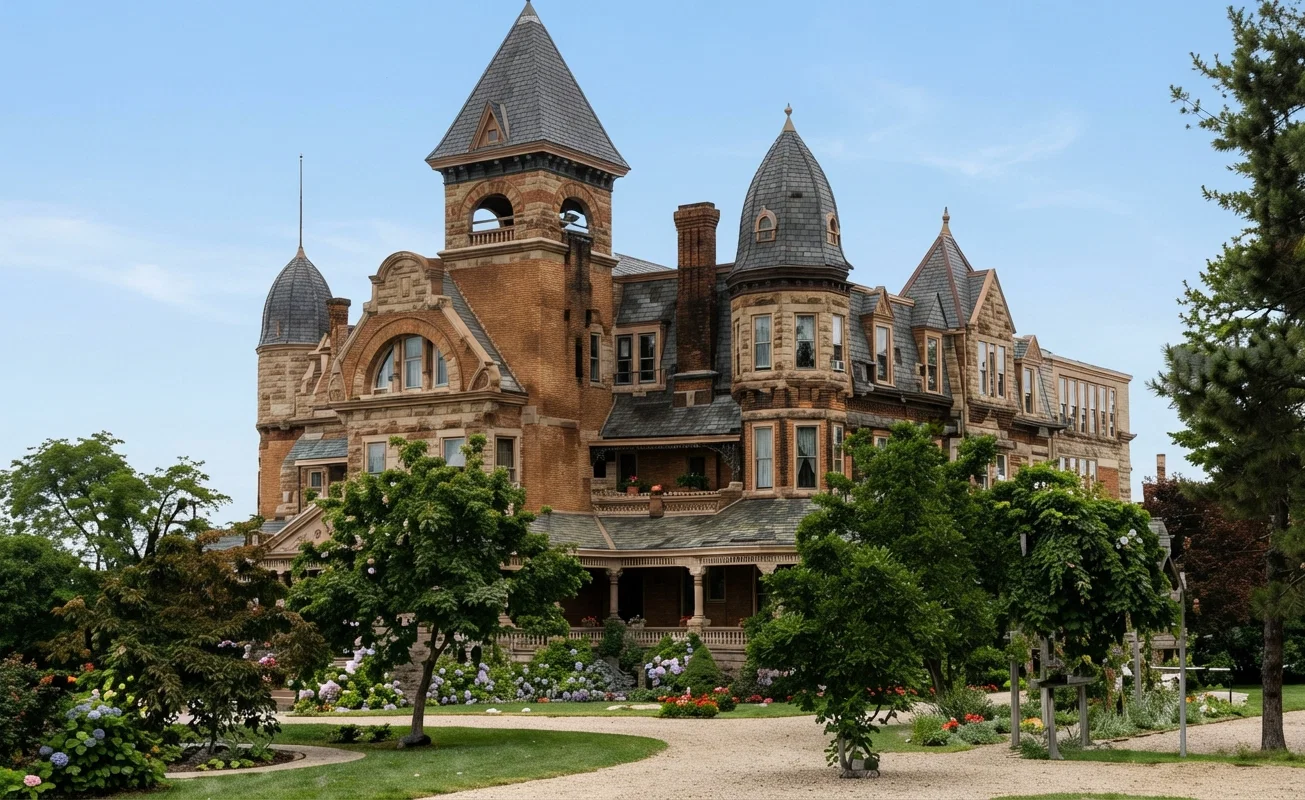
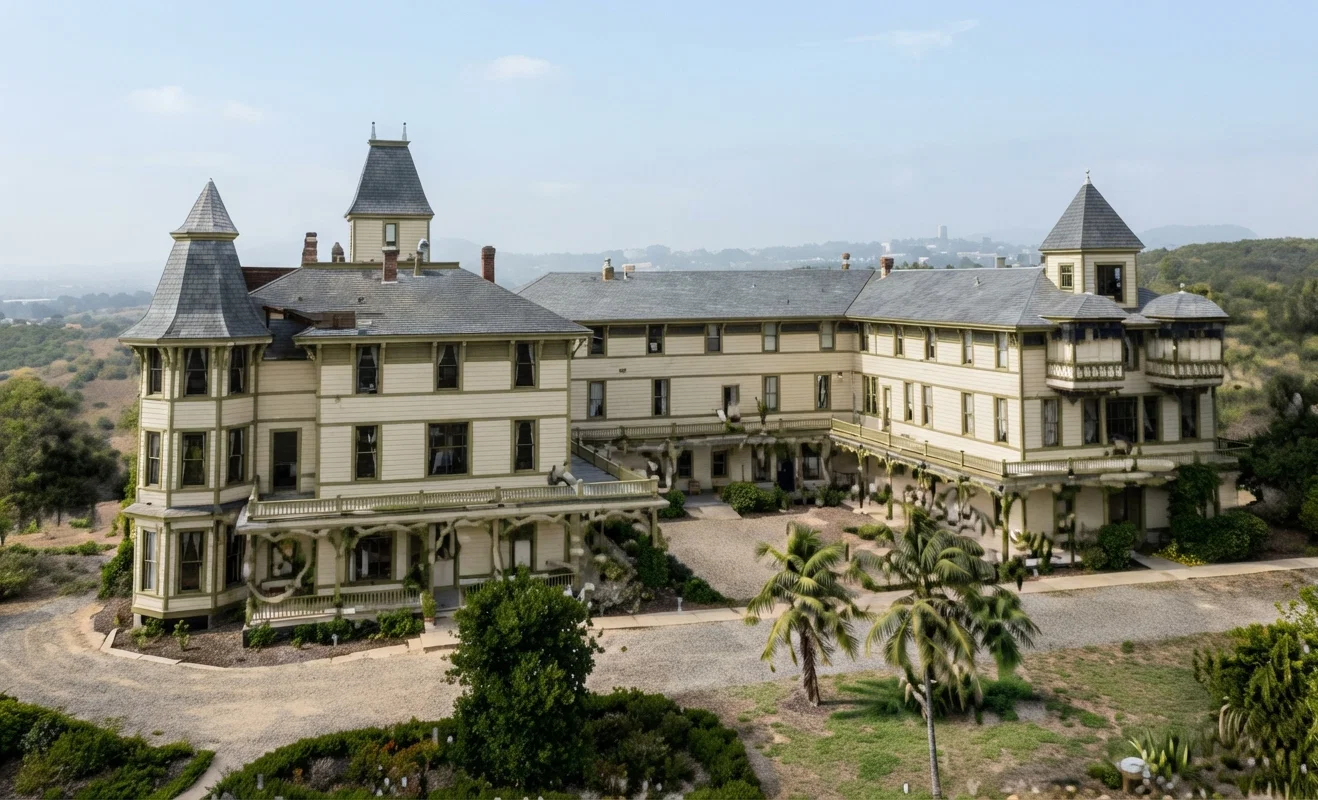
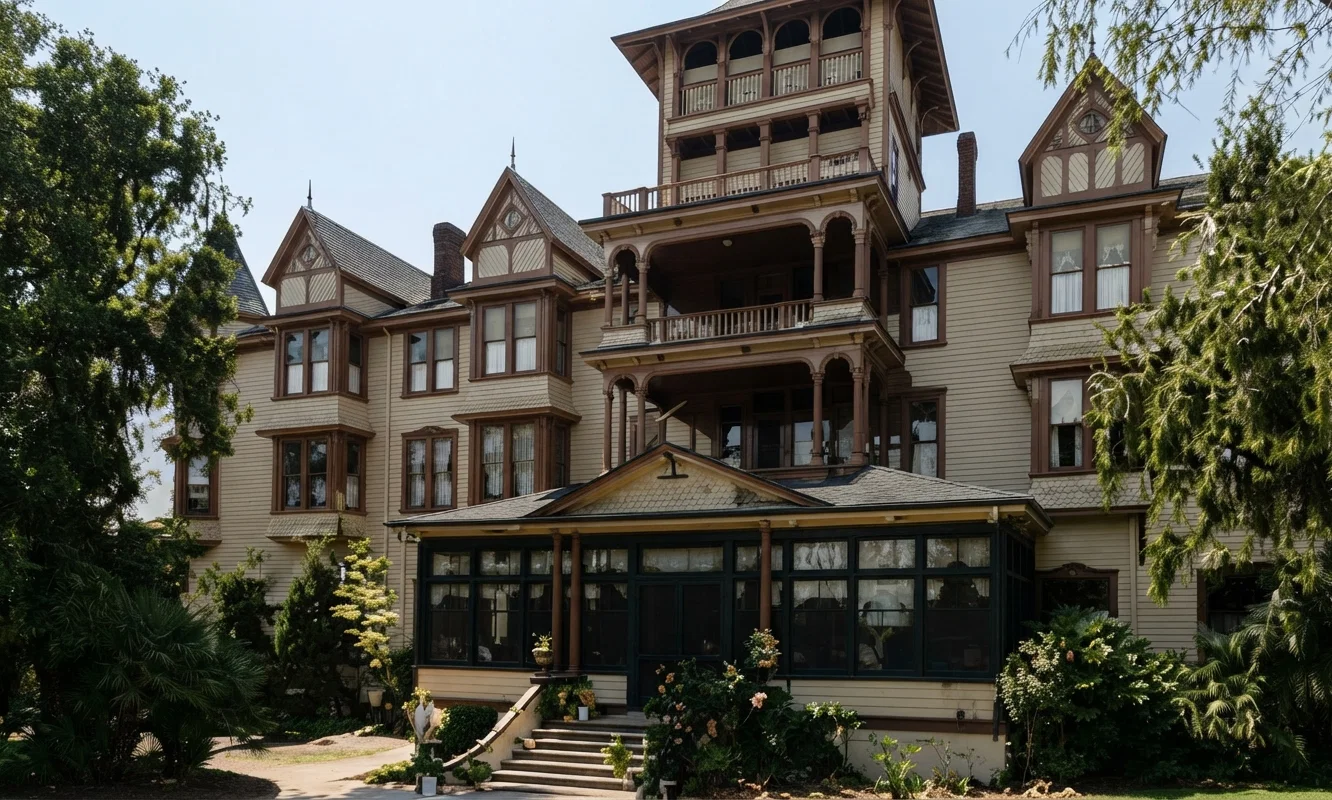
Take electric car at Pacific Electric Building, Los Angeles. Write for free booklet "A." Address, Glendale Sanitarium, Glendale, Cal.
PARADISE VALLEY SANITARIUM.
(San Diego)
Reached by Santa Fe to San Diego or National City. Write for free booklet 23. Address, Paradise Valley Sanitarium, National City, Cal.
LOMA LINDA SANITARIUM
(Redlands)
On main line Southern Pacific Railroad, near Redlands. Write for free booklet "A." Address, Loma Linda Sanitarium, Loma Linda, Redlands, Cal.
I. JAPAN IN HISTORY.
By F. W. Field
An Ancient Empire.
THE early history of the Japanese people, like that of many another nation, is lost in the fogs of ancient myths and uncertain traditions. Japanese accounts of the origin of the world differ somewhat, but agree that the world was at first ruled by Ama-terasu, the sun goddess. And Jimmu Tenno, the fifth in descent from this goddess, became the first ruler of Japan. The date of his accession is placed at 660 B. C.; but the sacred histories which contain these early records, date only from the early part of the eighth century, A. D. The Japanese claim that an unbroken line of rulers has descended from Jimmu Tenno, the present emperor being the one hundred twenty-second in order. This would make their dynasty the oldest in the world.
There is good evidence that many of the earlier monarchs of Japan were vigorous and able rulers. In the first century A. D., Yamato-da-ke subdued most of the aboriginal inhabitants of the north. In the third century the Empress Jingo is said to have conquered Korea; and her son, O-jin, is worshiped as Hachiman, the god of war. During the succeeding centuries the arts of peace were encouraged by various rulers. Intercourse with the Koreans led to the cultivation of literature and of the fine arts.
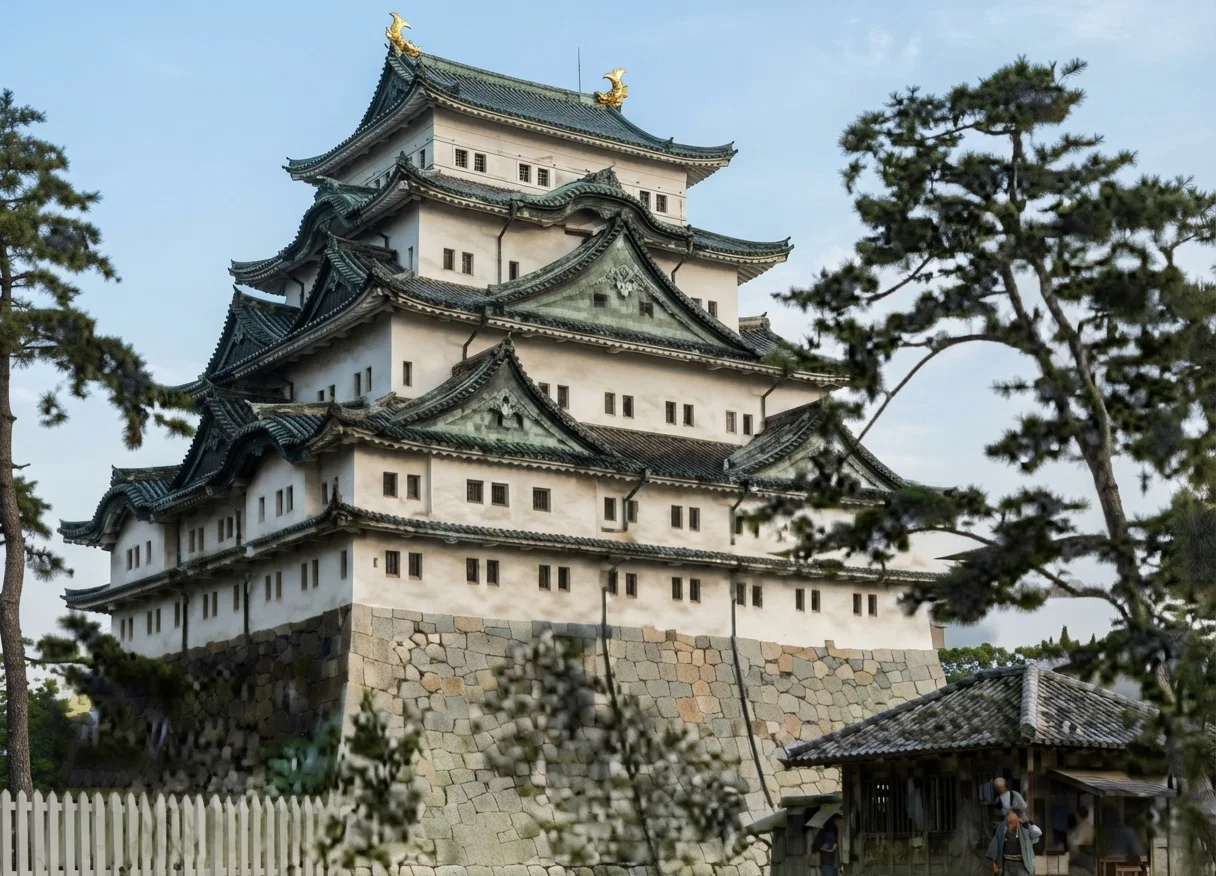
An Old Feudal Castle in Nagoya, Japan.
Emperors Lose Influence.
But the belief in the divine descent of the emperors was to exert a strong influence to lessen their power. This belief naturally led the people to regard their rulers with much reverence. Their persons came to be regarded as too sacred to be looked upon by the common people. Even high officials were allowed only a partial view of the Son of Heaven as he sat behind a screen. The result of this excessive reverence was that the emperors became virtual prisoners in their palaces at Kyoto, which became the capital near the close of the eighth century A. D.
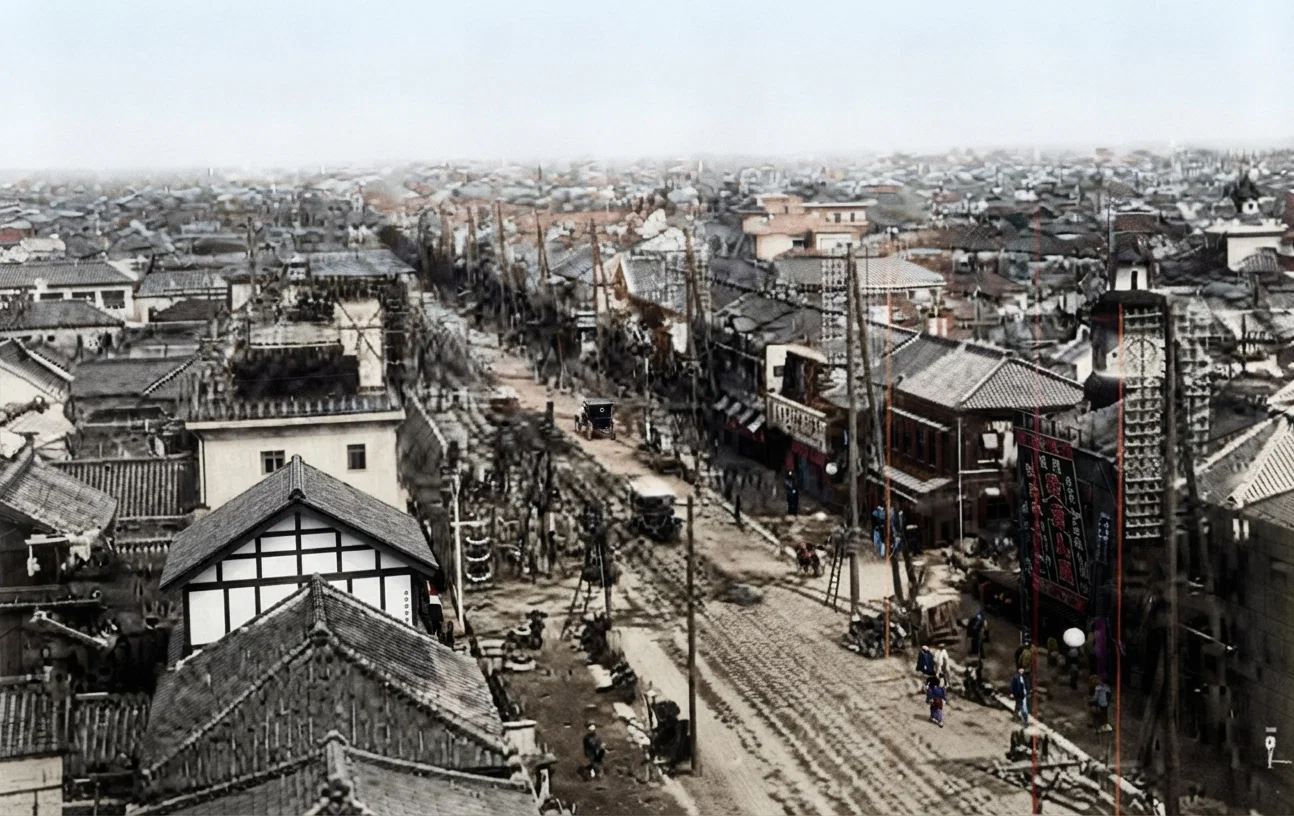
The Main Business Street of Tokyo, Japan.
This condition paved the way for the usurpation of power by the strongest and most popular military leader of the times. And so, just at the time when feudalism was developing in Europe, an almost exact counterpart was arising in Japan, altho there was absolutely no intercourse at that time between Europe and Japan. This period of Japan's history is full of tales of revolt, and of strife for supremacy. The rival families of the Fujiwara, Taira, Minamoto, and Hojo successively rose and fell. The military chieftain of the country finally came to be recognized as the virtual ruler of the country by the emperor, in whose name he ruled. Thus Yoritomo, the head of the Minamoto clan, became the recognized master of the country in the latter part of the twelfth century, and received from the emperor the title of shogun, or great general.
Yoritomo fixed the seat of his government at Kamakura, a few miles south of the present city of Yokohama. From this time the dual form of government became well established, and continued till the Restoration in 1868. At the death of Yoritomo in 1199, the power passed to the Hojo family, which retained it till 1333. Following this the Ashikaga family came into power, and governed the country till the latter part of the sixteenth century.
Three Noted Men.
At this time there arose three men, whose names are household words in Japan. The first of these was Nobunaga, who exercised all the power of a shogun, tho he never received that title. When Nobunaga was assassinated, his murder was avenged by Hideyoshi, the most powerful of his retainers. Hideyoshi was of very humble origin, but was a born leader of men with a genius for war. After securing himself in control of the whole country, he planned and partly executed an invasion of Korea. But his death in 1598 put an end to his ambitious schemes.
Hideyoshi left a son as his successor, and named Tokugawa Ieyasu, his most powerful retainer, as the young ruler's guardian. But suspicion and jealousy arose, civil war followed, and the widow and son of Hideyoshi were finally put to death. Tokugawa Ieyasu then received the title of shogun from the emperor; and this was the beginning of the Tokugawa line of shoguns, which continued for fifteen generations, from the year 1603 till the Restoration in 1868.
The period of the Tokugawa shogunate was one of peace and material prosperity. The genius of Ieyasu and his immediate successors brought the existing feudal system to its highest state of perfection, thus securing their position at the head of the government. Ieyasu removed the seat of his government to the little fortress town of Yeddo, which has since become Tokyo, the present capital of the country.
Why Isolated from the World.
With Hideyoshi and Ieyasu began that policy of seclusion which sealed Japan to the rest of the world for nearly three centuries. Historians are not fully agreed as to the reasons for the adoption of this policy; but it would seem that the suspicions of the rulers were aroused against foreigners by the arrogance and meddlesomeness of certain of the Roman Catholic missionaries; and possibly also by misrepresentations of the Dutch traders against the Portuguese. At any rate, one thing is clear, that the Japanese authorities feared that the foreigners intended finally to bring the whole country under their control.13As results, there followed the persecution of Christians to the point of extermination, and the closing of the country to all foreign intercourse. Death was alike the penalty for adhering to the foreign religion, and for attempting to leave the country. The only Europeans allowed in the country were a few Dutch merchants, and they were confined to a small tract of land in the harbor of Nagasaki. And when this policy of seclusion was abandoned a few decades ago, Japan emerged at once from the feudalism of the Middle Ages into the full glare of nineteenth-century civilization.
Open to the World.
Altho the power of the Tokugawa shoguns was secured by every device that their genius could invent, there were some who never forgot that the emperor at Kyoto was the real source of authority. Various causes operated to bring this question to the front during the nineteenth century. Prominent among these was the effort of various foreign powers to secure the opening of Japan to the world commerce. In 1854, Commodore M. C. Perry, with a squadron of American war-ships, came to Japan, and secured a commercial treaty with the shogun's government at Yeddo. This treaty was entered into very reluctantly by the Japanese, as it were by compulsion; for they feared the foreigners' gunboats. And because the shogun did not secure the consent of the emperor to the treaty, the loyalists started an agitation for the overthrow of the shogunate, and the restoration of the emperor to his rightful position as the real ruler of the country.
The agitation continued for years, and resulted in much strife and bloodshed. Finally the young shogun Keiki was induced in 1867 to resign his position in favor of the emperor. Through dissatisfaction with the new government, he soon took up arms to regain his lost power. A short, sharp struggle ensued, in which the imperial forces were at last successful. So the year 1868 marks the beginning of the present era of Meiji, or Enlightened Reign.
More Modern History.
With the history of Japan during the last forty years, the intelligent reader is more or less familiar. The Japanese have proved that they are not naturally conservative and seclusive, as their long isolation might seem to indicate. On the contrary, they have appropriated with avidity the civilization of the Western nations. And in this they have shown that they are not mere slavish imitators, but that they are able, not only to imitate, but also to adapt the ways and means of other peoples to their own peculiar needs and conditions. Furthermore, during this modern period, Japan has developed men who rank high among the world's scientists and scholars.
But we sometimes hear it said that the new civilization of the Japanese is merely a veneer, an outside show that has not really affected the character of the people. What truth is there in such a claim? It is sufficient to observe that civilization of itself is entirely apart from morality and religion. Civilization alone does not refine and ennoble the character, or change the moral nature of mankind. Its refinements may render wrong doing more pleasing and less offensive; but the result is often to make sin more seductive.
The conclusion is that Japan, in common with all other nations in this sinful world, needs the everlasting Gospel of Jesus Christ to transform the hearts of her people. And we rejoice that Japan is now open to the messengers of the Gospel, and that souls are here being reclaimed from the innate barbarity that deforms the unregenerate heart in whatever nation. And may this good work go forward till the Lord of the harvest shall, at His coming, find many a precious sheaf to garner in these islands of the sea.
F. W. Field.
Tokyo, Japan.
THE LOWLY TASK.
By Max Hill
STAND ready for the task that comes to you,
Take up the cross, nor stand to idly view
With longing eyes the ever-distant star;
God's wisdom placed you here, work where you are.
Perhaps the task may seem a thankless one
And no man note or praise when it is done;
Mayhap the labor seems to be in vain,
The only recompense a wage of pain.
But look again, where your most lowly deed
A weary, burdened soul from care has freed;
The task you thought a burden hard to bear
Is blessed beyond your dreams with fruitage fair.
So labor on, tho small the task, nor count
The way too hard; 'twill give thee strength to mount;
For stepping-stones the deeds of duty are
That lead you onward to the distant star.
MAX HILL.
OUR WORK AND WORKERS.
By Editor
BROTHER W. W. SIMPSON is conducting meetings in a large tent in the business center of Oakland, Cal.
WRITING to the Worker's Bulletin, Brother N. C. Bergersen reports the baptism of five candidates during recent labors at Ute, Iowa.
A RECENT tent effort at Cedar Rapids, Iowa, by Brethren E. G. Olsen and S. B. Kephart, have resulted in a dozen new Sabbath-keepers.
AT the last quarterly-meeting of the church at Antigo, Wis., eight members were added. Bro. C. J. Hermann was present to conduct the services.
BROTHER G. W. REASER, president of the Southern California Conference, writes that Sister A. M. Althaus, in Los Angeles, sold SIGNS to the amount of $19 in one week recently.
THE opening of Walla Walla College for the fall term was quite auspicious, the enrolment being 128 on the opening day, or thirty more than last year. By the end of the first week there were 152.
THE Welcome Visitor, organ of Ohio Conference, announces the departure (October 17) of Sisters Esto Miller and Orvie Gibson for China. Their first aim is to study the language while reading medicine under Dr. Miller.
THE attendance at Union College, College View, Neb., this year is considerably in advance of last year. The enrolment the first day of the term was 204 against 165 last year. October 3 it had reached 357, with students arriving every day.
WISCONSIN has again been called upon for a worker in foreign fields, and in response to the call Brother A.Moody is to go at once to Asia Minor. He leaves America about the 10th inst. Two missionary nurses are also soon to leave for service in Korea.
BROTHER C. H. JONES, manager of the Pacific Press Publishing Company, arrived home from the East on the 23d ult. He had been in attendance at the General Conference council and bookmen's convention at Washington, D. C., where important steps were taken which are expected to give a new and extended impetus to the work.
ON the 15th inst., Brother Joel C. Rogers will leave New York for Nyassaland Mission in Central Africa. He and his wife have had a former experience of seven years in South Africa, since when time they have labored in the North Pacific Union Conference. He recently spent a Sabbath in Mountain View, and gave an interesting discourse on their former school and mission work in South Africa.
Southern Pacific
Whether going East or coming West, do not fail to take advantage of the most essential features of traveling
Speed,Comfort,Safety
Which are given the greatest attention in the equipment of the
Overland Limited
Running over the Southern and Union Pacific. Secure tickets and make reservations for berths from any
Local AgentSouthern Pacific Company
--- OR ---
City Ticket Office,Ferry Bldg., San Francisco, Cal.
Personally Conducted
Tourist Cars
ON THE
UNION PACIFIC
Operate daily between principal Eastern points and California. The route of the Overland Limited.
S. F. BOOTH, General Agent,
San Francisco, Cal.
E. L. LOMAX, G. P. A.
Omaha, Neb.
Bank of Mountain View
By Editor
If you haven't already done so, why don't you drop us a postal asking us to send you a copy of our monthly paper, "The Bank of Mountain View Journal." It is very interesting. It is full of good ideas, and it is free to you for the asking. If you live in the East, send for a copy and see how we do it in California. We still hold ourselves ready to furnish you with information about Mountain View. Write us.
Address
Bank of Mountain View
Mountain View, Santa Clara County, California
EASY MONEY.
A. E. Loveland, Johnson, Vt., writes: "On Friday I sold six dozen E-Z Washing Tablets; my mother sold five dozen, and another friend sold four dozen,—fifteen dozen in one day! Nearly every one likes the Tablets."
Agents make a profit of over 100 per cent. Not necessary to canvass. Send 5 cents for samples and particulars. Either sex. Address, Alfred Mallett, Elkridge Station, Baltimore, Md., or to Clinch Mercantile Co., Grass Valley, Cal., Pacific Coast Supply House.
PROTESTANT AND CATHOLIC PERSECUTORS.
The Vital Difference.
IN the Catholic World for October is a review article on new books entitled, "Protestant Persecutors," in which the writer says:
"Educated Protestants are well aware of the crushing tu quoque ['you too'] to which they expose themselves if they advance against the Catholic Church the old charge of being a bloody persecutor which their forefathers urged so vociferously and so long. Catholic writers, for two hundred years, pointed out, in vain, that if Catholicism had its Inquisition, and if Catholic rulers did not hesitate to employ the sword against heretics, the reformers and their followers, with less excuse and in defiance of their own special principles and professions of tolerance and the right of private judgment, in practise equalled, if they did not better, the example which they reprobated in words."
Professed Protestants did persecute, and we have no more defense for the persecutors of the Elizabethan period or the intolerance of John Calvin than we have for the Roman Inquisition or the spirit of Torquemada. But there is a vital difference between the attitude of Protestantism toward persecution and intolerance and the attitude of Catholicism. And this is admitted by the writer above quoted. Roman Catholicism has ever tried to explain away the intolerance by declaring that all the prosecutions were not of the Church but of the State, or has openly justified the persecution. Of course the Roman Catholic would not call it persecution, but prosecution. Church and state were united. The dogmas and tenets of the church were entrenched in civil statutes. They were upheld and promoted by the civil power. He who trespassed upon those tenets, who showed contempt or disrespect for the dogmas, was a criminal, and ought to be, must be, proceeded against by the civil power and suffer its penalties.
But all the persecutions of the Papacy are inherent in her theory of a union of church and state. Out of it is bound to grow intolerance, injustice, and persecution for conscience' sake. To justify that union is to justify all that logically grows out of it, and those Catholic writers are consistent Catholics who defend the cause that church pursued toward heretics and who defend the Inquisition in Spain and Rome.
There are Roman Catholics in America who contend that their church does not ask for a union of church and state. Of course she does not where and when there is no hope of securing it; but she nor her prelates do not so express themselves when some government is anxious to bring about this separation. Take for instance the following anent the troubles in France, from Cardinal Lecot, Archbishop of Bordeaux, quoted in the New York Independent of October 4:
"The priests will not leave the churches until they are forced by the authorities to do so, when they will say mass in places which are already being prepared. Seminaries will be transferred to other buildings owned by the church. I personally will leave the palace for a house rented by me. We have appealed to the generosity of the faithful and have gathered together a large amount of money, which I will distribute to the most needy of the priests, and we shall live as best we can. We shall be careful to observe all laws except that of separation of church and state. That we can not accept because it tramples upon the dignity of the Pope and the bishops, not only of France, but of the whole world. The pope must look at the question as a whole. He can not abdicate his authority for a moment when the church is the object of attacks. In other countries, notably Spain, all eyes are watching to see the outcome of the struggle between the government and the Vatican. It is impossible for Pius X. to countenance the act which broke off the relations between France and the Vatican, and since he rejects it, no arrangement of the matter is possible if the government does not modify its laws."
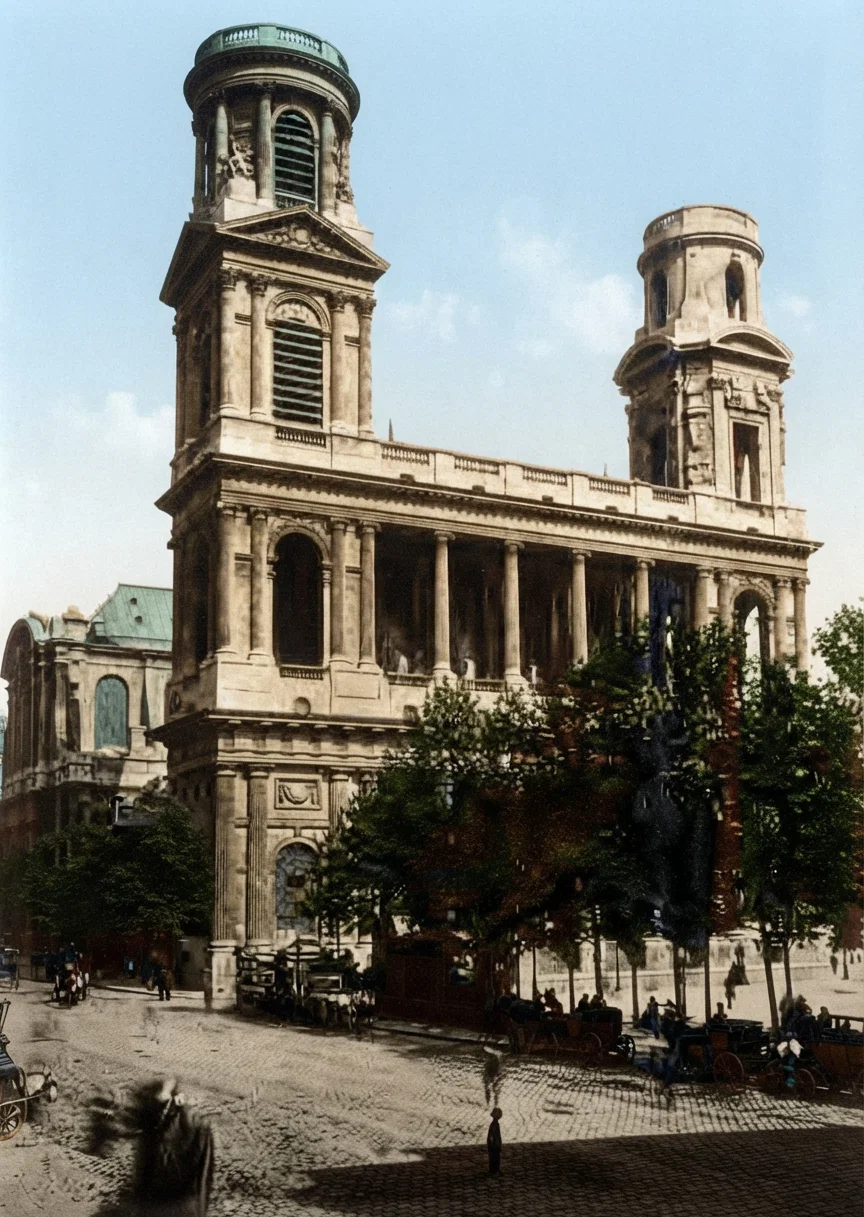
The Church of Saint Sulpice, Paris.
And the same journal quotes from the Gaulois, the clerical organ of France, the following words from the Pope Pius X., which states his position:
"It is not I who condemned the law, but Christ, of whom the pope is simply the vicar. The Saviour granted the church a constitution and a doctrine, against which no human law can prevail. The sep-
aration law is contrary to Catholic doctrine and opposed to divine rulings. It is an unjust law, and therefore carries no obligations to obey it. Providence will decide the future and fix the mundane consequences. My resolution was taken in pursuance of the will of God."
It would be difficult for the pope, or any other Catholic to prove from the great Christian standard, the Bible, that Christ taught the union of church and state. It is easy to prove that He condemned it. It seems to us that Minister Clemenceau has stated very well the true civil idea in the following:
"I see the people seek to foresee what action the government will take. What more simple? Rome has refused the law of privilege made for her profit. She said all or nothing. The time is past when she had all. She ought to be content to-day with the right of everybody to a regime of liberty. We offered privileges. She haughtily refused. We are asked to negotiate.
With whom? A foreign power? On what?—On the French law. There is no foreign power on French soil. We stand on the French right not to tyrannize, but to liberate. We shall know how to resist all factitious enterprises. We are sure that time and the evolution of the human disposition toward the diffusion of knowledge will work for us. Our force is in the right and the resolution of all France is to maintain it."
The true Protestant idea is thus stated by Luther:
"Christians fight, not with sword and arquebus, but with sufferings and the cross."
To the Elector of Saxony he said:
"This protest opposes two faith: each one should believe at his own risk and peril."
The Protestant historian thus summarizes the Protest at the Diet of Spires:
"This protest opposes two abuses of man in matters of faith; the first is the intrusion of the civil magistrate, and the second is the arbitrary authority of the church. Instead of these abuses, Protestantism sets up above the magistrate the power of conscience, and above the visible church the authority of the Word of God. It declines in the first place the civil power in divine things, and says with the prophets and apostles, 'We must obey God rather than man.' In presence of the crown of Charles the Fifth it uplifts the crown of Jesus Christ."—D'Aubigne, Hist. Ref., bk., 13.
The Master Himself said:
"My kingdom is not of this world." "If any man hear My words and believe not, I judge him not; for I came not to judge the world, but to save the world."
Insomuch as Protestants have departed from these principles they have departed from true Protestantism and true Christianity and have placed themselves on papal ground. They are not consistent Protestants.15
Holding these principles, the true Protestant has never defended prosecutions for religion's sake or conscience' sake, never has sought to hide "Protestant" persecutions or expunge them from the pages of history. He is willing that the story may be told, that men may be warned against the fatal error, fatal ever to both, a union of church and state. It is for this reason that the Protestant historian writes down so faithfully Zwingli's awful error of uniting the Protestant movement in Switzerland with the state, or even sanctioning the movement. We close with his eloquent words, beseeching our readers to trust in Christ alone, in His Word, in His power, and utterly and forever repudiate all union of church and state:
"Thus the Reformation, that had deviated from the right path, was driven back by the very violence of the blow into its primitive course, having no other power than the Word of God. An inconceivable infatuation had taken possession of the friends of the Bible. They had forgotten that our warfare is not carnal; and they had appealed to arms and to battle. But God reigns; He punishes the churches and the people who turn aside from His ways. We have thus taken a few stones, and piled them as a monument on the battlefield of Cappel, in order to remind the church of the great lesson which this terrible catastrophe teaches. As we bid farewell to this sad scene, we inscribe on these monumental stones, on the one side, these words from God's Book: 'Some trust in chariots, and some in horses; but we will remember the name of the Lord our God. They are brought down and fallen; but we are risen and stand upright.' And on the other, this declaration of the Head of the Church: 'My kingdom is not of this world.' If, from the ashes of the martyrs at Cappel, a voice could be heard, it would be these very words of the Bible that these noble confessors would address, after three centuries, to the Christians of our days. That the church has no other king than Jesus Christ; that she ought not to meddle with the policy of the world, derive from it her inspiration, and call for its swords, its prisons, its treasures; that she will conquer by the spiritual powers which God has deposited in her bosom, and, above all, by the reign of her adorable Head; that she must not expect upon earth thrones and mortal triumphs; but that her march is like that of her King, from the manger to the cross, and from the cross to the crown;—such is the lesson to be read on the blood-stained page that has crept into our simple and evangelical narrative."
CHINATOWN IS IN IT.
By Journal of Progress
ONE of the first permanent buildings to be erected in the old Chinatown district is now well under way. It is a Class C, with pressed brick exterior and will comprise four stores and about fifty rooms for a lodging-house. The picturesque old hillside with its squalid tenements has been purged by fire, but the placid celestials will gather on the old site, in more conventional houses, and set up again their joss-houses and put out their cabalistic red paper and their crimson lanterns. We shall always have an oriental city in the heart of San Francisco.—Journal of Progress.
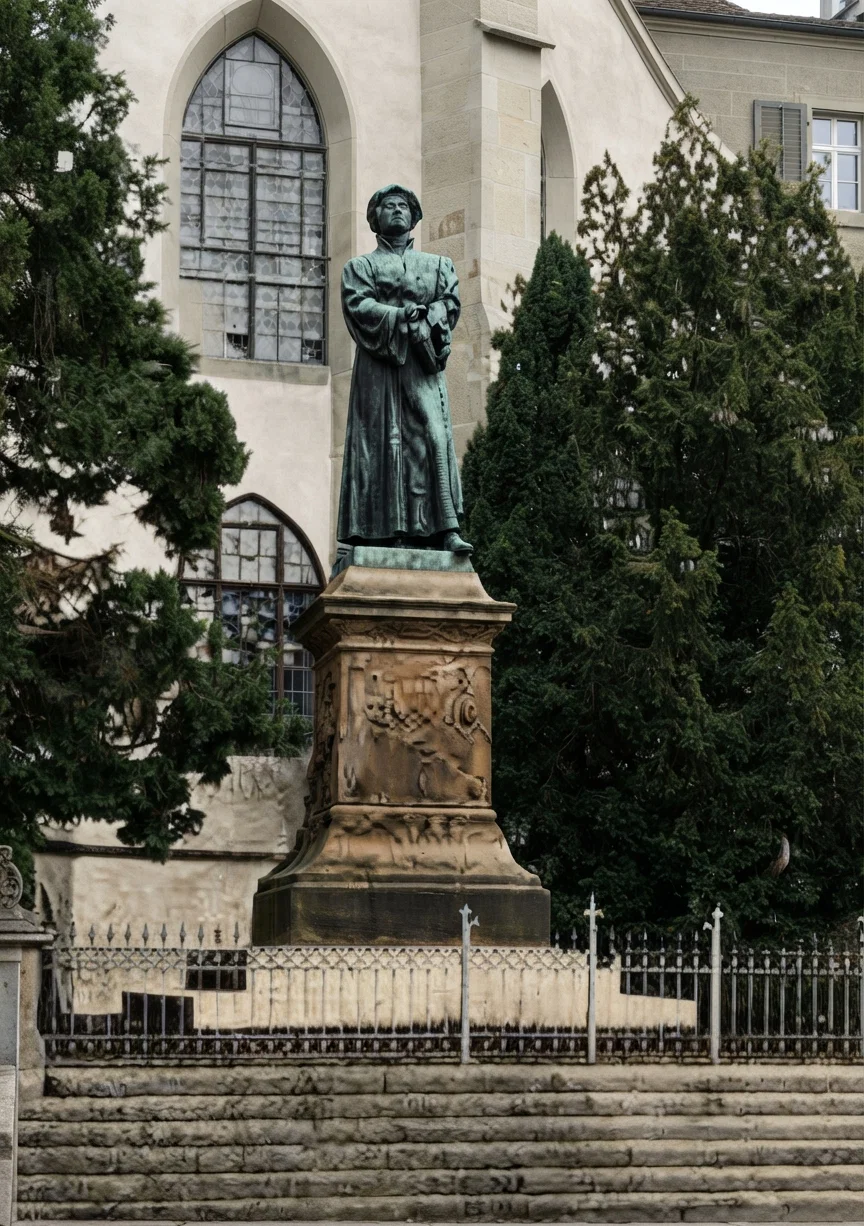
Statue of Zwingli, Zurich, Switzerland.
Oversight of San Francisco Relief Funds
So much complaint has been made about maladministration of the relief fund in San Francisco, that Massachusetts contributors have determined to see that the remainder of their donation (about $550,000) is spent as designed by the donors. The executive committee of the Massachusetts Association for the Relief of California have designated two representatives to personally look after this work. The purpose of this special move is stated as follows:
"Our committee desires that the money collected shall be expended only for the purpose for which it was received, the relief of the victims of this catastrophe. They do not wish it to be used to advance theoretical schemes of charity administration, but to be devoted to the downright purpose of relief, where every dollar will accomplish the greatest good, and to be of the most permanent benefit to persons who are in need as the result of the earthquake."
Labor Unions Raise Political Campaign Funds
It takes money to carry on politics to any degree of success. And now that the labor union element has openly entered the arena, the necessary funds must be raised. The president of the National Federation of Labor asks for $250,000 from union men comprising the federation, for the purpose of defeating certain Congressmen who are candidates for re-election. The plan of the president is somewhat similar to that of the National Reform Association's Bureau of Reforms, whose headquarters are also at Washington. The head of the bureau
presents his "reforms" to individual members of Congress, and if they do not favor the schemes, they are given to understand that the bureau has agencies in the member's district which may possibly endanger his prospects for re-election. The "bureau" has boasted of carrying several measures by this means. The president of the federation has adopted the same tactics, and his efforts will bear fruit just to the extent that he can make his influence felt, and that will depend, in no small degree, on the amount of money he can put into a campaign. Congressman Gillett, now a candidate for governor of California, is one man marked for defeat.
Ability to Work on Vegetarian Diet.
A Catholic missionary, reported in the Catholic Mirror, in speaking of the people in India, says:
"The majority of Indians eat only two meals a day. As the Hindu gives divine honor to the cow and ox, the Indian, as a rule, eats very little meat. Our children also are brought up accordingly, and very rarely eat meat, but in its place get "rotis," or unleavened bread, which has the form of pancakes, is made of wheat flour, water, and salt. With it they receive a dish of beans or peas cooked in Indian fashion. They eat, as is customary, only at noon and in the evening, but if they like may retain some bread for the morning. It is surprising how the people labor with so poor a vegetable diet."
And why not? The ox works without meat, and so does the horse. These are among the strongest of animals. It is all nonsense to suppose that unless a man has meat he can not be strong. There are thousands who have tested the matter both ways, and choose the preferable vegetable diet because it is the better diet. The vegetarian does not need so much food, and he can endure more.
CUBA.
WHAT student of human nature with "historical eyes" is surprised at the turn of affairs in that long-distracted isle? The United States is pledged to Cuba by contract, and to the world by equity, not to see it become as to insurrections, assassinations, and instability of government, another San Domingo. It is this country's "burden." Happy shall we be if it becomes not its bridle and bit. The situation will be better described in records of accomplished facts than in uncertain or unrelated items.—The Christian Advocate.
Slave-Trade Cells Found in Philadelphia
A relic of the slave trade has just been unearthed in Philadelphia. Workmen excavating under the house once occupied by the noted millionaire merchant, Stephen A. Girard, have found a series of cells which were evidently used for detaining negro slaves. The place is near the bank of the Delaware River, and therefore convenient for the traffic. The traction company had recently bought the place from the Girard estate, and excavation was being made for a station. There are three tiers of cells, each tier containing six cells, and each cell capable of holding six persons. It is said to be a tradition that Girard made considerable of his great fortune in the slave trade. He also owned a sugar plantation in Louisiana, which was cultivated by slave labor. Girard College was given to Philadelphia by the man whose fortune as a merchant rolled up into the millions in the days when a millionaire was a curiosity.