A Tour among the Tamil Sabbath-Keepers of South India
By J. L. Shaw; GEO. F. ENOCH; J. S. JAMES
OUR hearts are being greatly stirred as we are visiting among the Tamil Sabbath-keepers of Tinnevelli, a fertile district in the southernmost point of India, bordering on the Indian Ocean, a short distance from the island of Ceylon. We are made very happy to be able to give you a report of our visit among this people.
About three years ago our workers first came in touch with them. Elders G. K. Owen and H. Armstrong, who were then working in Ceylon, held meetings with a few of their traders who came to Colombo, and a tract in Tamil on the Sabbath question was prepared and circulated among them, copies of which different families are carefully preserving. We also find letters from Elder F. M. Wilcox, written fifteen years ago, when he was secretary of the Foreign Mission Board, together with books which he sent to them.
The urgency of opening up work among these people was presented at our biennial conference one year ago, and Brother J. S. James was asked to go to South India and settle at Bangalore, where an interest among English-speaking people was being developed, with the idea of further instructing them, and at the same time studying the Tamil language preparatory to working among the Tamil people of South India, and especially the Tamil Sabbath-keepers of whom we had heard.
While at Bangalore, providentially the teacher whom Brother James engaged to teach him and his wife the Tamil language was acquainted with the Tamil Sabbath-keepers, and had lived near them for some time, and was able to furnish him with the names of their leaders, so that through him Brother James was able to get in touch with them by correspondence. He learned that there were about one thousand of them, counting men, women, and children.
When written to, they immediately replied, and sent a cordial and very urgent request that a visit be made to their villages. Tracts were prepared and sent to them in their own tongue, the first one bearing the title, “Which Day Do You Keep, and Why?” to which they immediately replied, asking for more, and sending money for the same. Another tract, “Is the End Near?” was equally well received, and a number were purchased by them for distribution.
As soon as the cool season came, a trip to the home of these people was arranged by the writers of this letter, and we met at Bangalore, about eight15hundred miles from where the Tinnevelli Sabbath-keepers live. The journey to their nearest railway station took two days and nights. Upon alighting from the train at this station, we received a cordial welcome from five representatives of the sect of Sabbath-keepers who live in a village twenty-two miles distant. As the day was far spent, they had secured a room for us in a travelers’ bungalow, and made every provision possible for our comfort.
This was the first of a series of kind acts accumulating as the days passed, anticipating our every want, that spoke in the language of kindness and hospitality easily understood by us, though we speak different tongues.
Two bullock bandys, a very comfortable one for ourselves and the other for
the luggage, conveyed us through a fertile country, with beautiful green paddy (rice) fields, fringed here and there with cocoanut and palmyra palms, stretching away in the distance.
At the outskirts of their main village (the name of which, being interpreted, means the home of the Sabbath-keepers), on emerging from a fringe of low bushes, we saw a little way from us a company of about one hundred fifty men dressed in their very best, their clean, white clothes and beautiful turbans showing to splendid advantage in the morning sun.
Upon our near approach to this large company so respectfully assembled, we received a most cordial greeting in true Oriental style, with many salaams. Then immediately the band struck up what was supposed to be a most joyful tune. This band was composed of six pieces, two cornets, one clarionet, one alto horn, one tenor horn, and a bass drum.
Words can not express the feeling which swept over us as we grasped the fact that this vociferous music and large procession was intended solely for us, and was to convey us through the streets of the village. At the entrance of the narrow village street we were met by the women and children. Immediately the entire congregation, now numbering hundreds, began to sing in Hindi meter a joyful song, the title of which, translated freely, was “Gentlemen, We Thank You for Your Coming,” followed by the twenty-third psalm chanted in wonderful unison. When our stopping place in the center of the village was reached, the crowd had increased tremendously, pressing in upon us on every side, and extending away behind us.
Immediately in front of the church-school building of the Sabbath-keepers, one of the best in the village, we were surprised to see a nice arch supported by four large banana trees, with the English word “Welcome” in large bright colors across the top. Dismounting, and making our way in the dense crowd, through the school building, we found a booth sixty feet long and twenty-four feet wide very nicely ornamented with white cloth covered with rows of rosettes neatly arranged, and pretty festoons.
About twenty feet from the farther end was a table, behind which were three large easy chairs. By this time the overwhelming heartiness of the ovation had so overcome us that it was under a feeling akin to embarrassment that we were escorted to the seats of honor, while more than one thousand people crowded into the booth. Immediately behind us was a solid phalanx of more than one hundred school children, while to our right, seated upon mats on the ground, were about three hundred women of the Sabbath-keepers.
The leaders of the congregation, six in number, then came forward and placed two wreaths of sweet-scented jasmine flowers about each neck. Only one of the leaders could understand a very little English, yet he had composed a brief address of welcome, which he read to us.
Each of us then responded through an interpreter, saying a few words from the Bible as to our doctrines, purposes in coming, and presenting them with greetings from our people across the seas.
The large congregation then chanted the one hundred forty-ninth and one hundred fiftieth psalms. These psalms, in Tamil meter, were set to a tune that was an expression of joyful feeling. The chant was ended by saying amen twice. “And all the people answered Amen, Amen, with lifting up their hands: and they bowed their heads, and worshiped the Lord with their faces to the ground.” Neh. 8:6. This is precisely what was done by these Sabbath-keepers as they thanked God for sending us to them.
After the benediction was pronounced, and we were about to separate, as is usual at the close of a service, the people, particularly the children, carried out in a most literal manner the instruction found in Ps. 47:1. This showed us from the very beginning that we had come among a people well acquainted with the Bible.
We can not express to our people in other lands our feelings through all these experiences. Our nerves were relieved when the trying ordeal was over. Yet it seemed clear to us that the entire demonstration was but the expression of great joy and praise to God for our presence among them, as is customary among Oriental people.
For fifty years they have withstood the most bitter persecution both from the heathen and from professed Christians. Only their splendid organization, and their simple devotion to a plain “Thus saith the Lord,” had brought them through.
As we come near to the people, we find what seems to us a remarkable purity of doctrine when we consider their surroundings. They have been surrounded by heathenism on the one hand, and on the other about all the Christianity they have known is represented by that branch of the Anglican Church, known as the High Church, very similar in some of its beliefs to the Roman Catholic Church.
Yet in the midst of such surroundings they hold tenaciously the following points as taught in Scripture:—
1. The inspiration and infallibility of both the Old and the New Testament, which they study diligently.
2. Strict observance of the seventh-day Sabbath from 6 P. M. Friday to 6 P. M. Saturday, in this latitude nearly equivalent to from sunset to sunset.
3. Baptism by immersion.
4. Systematic giving for the support of gospel work in the form of tithes and offerings.
5. The use of unleavened bread and unfermented wine in the Lord’s supper.16
6. The wearing of jewelry, especially by the women.
We were surprised to see the permanent facilities used by these people in carrying forward their work. This village, where the greater part of the sect resides, contains about five thousand people. Here they have their largest school building and church. They believe very strongly in the education of their own children, and have labored against great odds in the past to preserve their members from the inroads made by other Christian sects with their
worldly educational system. Their school building is one of the best in the village. It is built of brick and cement, covered by a strong tile roof, and completely surrounded by a five-foot veranda. The building is eighteen by fifty-four feet, and is divided into two rooms. It is provided with all the necessary furniture for a native school.
A few yards north of this building stands their church. This building is thirty by fifty-four feet, with high, tiled roof. It is fully enclosed by a wall, around which is a space covered by tile roof. Between this and the main building except the front, is an open space forming an outer court. In front of the building is a large covered veranda. In the north and southwest corners of the inner court are two rooms, one of which is used to store the first-fruits, and the other is the treasury. This church building is nicely furnished inside with tables, lamps, candlesticks, etc. No chairs are used, as the people sit on the floor in Oriental fashion.
In another village three miles and a half east of their main city is another church building the same size as the one already described. This congregation is maintaining a church-school for their children. They have no school building at present, but the court of the church building is used for that purpose. A good school can be built at this place, and they are calling loudly for help.
Eight miles from their headquarters is another village, and a church, which is endeavoring to maintain a school of forty children. They have a building of their own.
One mile north is another village and church. This congregation is sending their children to the main school, which we first visited, until they can start a school of their own.
It is a most wonderful thing that these native Christians have maintained their educational system and their form of services for over fifty years without any European supervision or counsel. They pay their own teachers and meet their own expenses. Their organization and discipline is something to be admired, and compare very favorably with some of our schools at home. These people have had to fight the fiercest opposition on the part of other missionary societies.
The Sabbath truth came to them about thirteen years after Elder Joseph Bates wrote his book on the Sabbath question. It would seem that while light and truth were shining upon the ten commandments, making clear the Sabbath to the pioneers of this cause in America, a light was kindling in the hearts of native Christians in South India, which, thank God, is yet burning. We have visited the home of the man who led out in the Sabbath reform.
He is now eighty-five years old, and bowed with age. In 1857 he broke away from the Church of England, and in 1860 began to preach the Sabbath openly. Blessed by nature with a keen and studious mind, his ability as a scholar in ancient and modern languages and in the knowledge of the Bible and religious history became widely known in South India. We visited his library, consisting of six thousand volumes. It is well classified, and comprehends various religious and historical subjects in different languages. As we talked with this aged man and his two scholarly sons, they assured us of their joy that Sabbath-keeping Americans had come among them, for they believed it to be but the fulfilment of a dream the father had thirty years ago.
We were shown a diary for the year 1878, old and brown, in which this dream was at the time recorded. The figure 1878 and the word “Americans” written in English we could read. The rest in Tamil they translated, which was to the effect that Sabbath-keeping missionaries from America would come among them as teachers. They therefore welcome us as sent of God, and are continually beseeching us to locate a missionary in their village to take the oversight of their schools, and further instruct their young people in the truths of the Word of God.
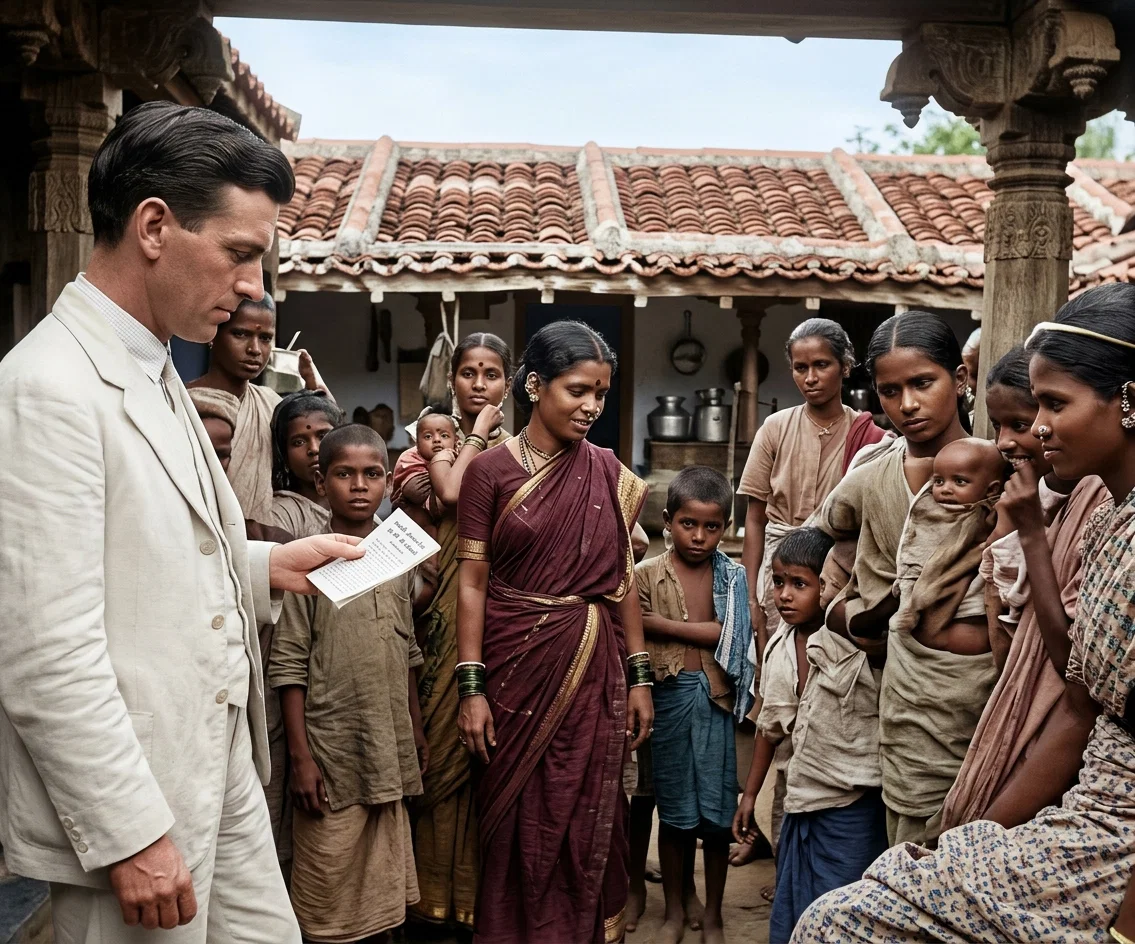
For years these people had no definite knowledge that any other people in the world were keeping and teaching the fourth commandment, and to keep the light of truth burning they have endured bitter persecution. They are not Seventh-day Adventists, but they are Sabbath-keepers, and have accepted the light on the second coming of Christ as far as it has been presented. They have some ideas borrowed from Judaism and others of a Hindu nature, as, for example, the wearing of jewels. The ears and necks of the women hang heavily with gold and silver ornaments, and it will be a great cross when they are asked to give them up. Yet who knows that these gold and silver ornaments are more objectionable to God than the flowers, ribbons, and costly dresses with frills and tucks and laces which many of our more enlightened sisters in the home land wear? One long strip of cloth wound modestly about them, with their ornaments, forms their attire.
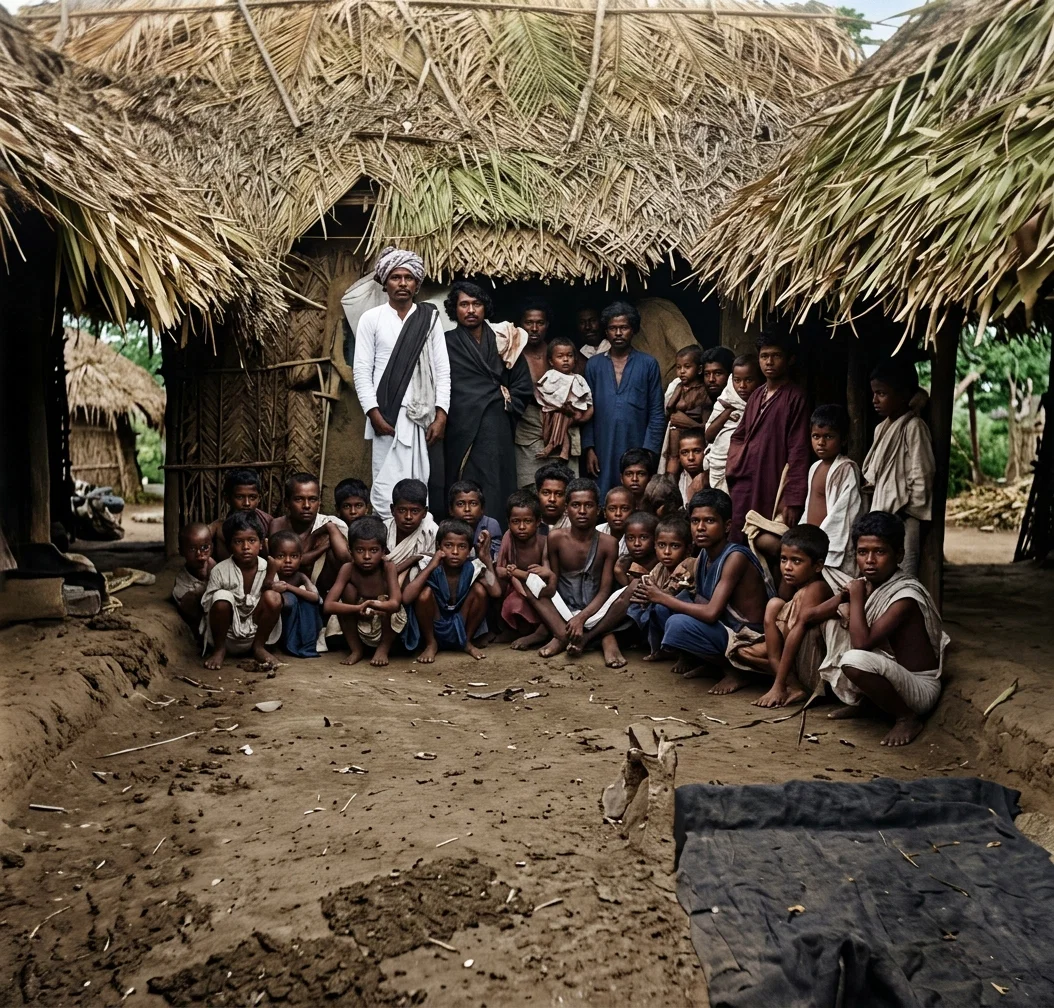
We are visiting a number of their homes. There are no glass windows or papered walls. Their houses, closely packed together, are made of mud, thatched over the top with palm leaves, having earthen floors; yet there are many earnest-hearted men and women in these rude houses, who, with their families, seem to be reaching out for more light and truth. They have not less than three or four hundred young people and children whom they wish to place under our teaching, and the question uppermost in our minds is how we shall meet the situation.
Dear brethren and sisters in America, we ask you to pray for these people. It may be that here are the forces that shall swell the loud cry among sixteen millions of Tamil-speaking people, and from them to kindred tongues, of whom there are more than fifty million in South India. We beseech you, pray unceasingly for the Tamil Sabbath-keepers.
J. L. SHAW,
GEO. F. ENOCH,
J. S. JAMES.
A BULLOCK CART OF INDIA
CHURCH-SCHOOL BUILDING OF TAMIL SABBATH-KEEPERS
INTERIOR COURT OF HOME, WEALTHY CLASS
INTERIOR COURT OF HOME, POORER CLASS
Hayti
By U. Bender
LEAVING San Juan, Porto Rico, November 4, the morning of the seventh found our boat putting into the harbor at Cape Haytien. I landed about 8 A. M., and found Elder W. J. Tanner on the wharf, waiting for me. We spent one day in the Cape, visiting several men of influence who have become interested in the truth and are doing what they can to make it stand in a favorable light before the government and people.
Friday morning we boarded the train for Grande Rivière, distant about twenty miles inland, where we were to hold a general meeting. Brethren Fawer and Isaac, with a number of others, met us, and escorted us to the house rented for meeting purposes.
After paying our respects to the general in command of the militia of that part of the republic, we were free to meet all the friends, as they came in to give us the polite welcome, which has become a part of the life of the people of Hayti—from custom rather than feeling.
Beginning Friday night, we had meeting as often as opportunity would permit, until Sunday night. Sabbath morning I spoke to the people, and Brother Fawer interpreted. That afternoon Elder Tanner baptized five dear souls in the river, and returning to the place of worship, he conducted a good social meeting. Although I could not understand a word of what they were saying, I enjoyed the meeting very much. Sunday morning I spoke again to the people on the subject of organization. In the afternoon Elder Tanner laid before them the responsibilities as well as the privileges of each member of Christ's body. At the close of these remarks a church organization was formed, and officers were elected and ordained. The presence of the Lord was very manifest during the latter part of this service, and the members of this company, with the friends present, were impressed that everything connected with the service of God is holy. And so the first church representing this last message, was organized in Hayti, with a membership of twenty-five. There are several others to be added, and the membership will soon be forty. Let us pray that the work may be hastened, so that soon there may be in many places companies of believers growing up into church organizations. There are more than eighty Sabbath-keepers in Hayti at the present time, and the hearts of many people are becoming stirred to seek after truth.
Quite a number of brethren from other companies were present at this meeting. I think the believers in attendance18numbered more than fifty. Brethren Fawer and Isaac conducted the night services, presenting the general topics of present truth.
Elder Tanner, as his reports show, attributes the prosperous condition of the work in Hayti to the scattering of the printed page during the last twenty-eight years. This should be an encouragement to all, for if the Lord can use our books and papers in Hayti, shall we neglect to scatter them in the more favored fields?
Hayti is no easy place in which to work. Only the love for souls would keep one there. Of all the different fields in this union conference, I can say emphatically, Hayti is the least inviting. Is any land poverty stricken? Hayti more. Is any suffering from moral pollution? Hayti more. Do any feel the blighting, degrading effects of papal rule? Hayti more. One might go on through the whole catalogue of curses that rest upon the human race, and it will be found that poor Hayti is struggling under the burden of all. When I say conditions there politically, financially, and morally are terrible, you can only form an idea of what that word terrible means, by comparing it with the worst you know, and then you have not comprehended, unless you have been in and known Hayti.
This last message, which is to go to every nation, is the only hope of Hayti's sons and daughters. What a glorious light, as it breaks through the darkness that surrounds them! Many are responding to the light, and as these believers have multiplied, it has become apparent that we must have a little sanctuary in which to worship. The brethren in Hayti are very poor in this world's goods, and can not bear all the burden of acquiring this meeting-place.
While I was there, we located a very desirable property which could be obtained for about six hundred dollars. In their recent council, the union conference voted to raise funds with which to purchase this place. It will be a day of rejoicing in Hayti when this is secured. It will be our first property there. May God prosper the work until there shall be many more memorials erected for the truth.
Remember at the throne of grace those who have given their lives to the promulgation of the third angel's message in benighted Hayti. U. BENDER.
China
By Percival J. Laird
SHANGHAI.—When Brother Anderson’s invitation came to us to attend their conference of workers in Shanghai, the water in our river had dropped so low that the large steamers had ceased to ply. But fortunately, when inquiries were made, it was found that a small steam launch was to leave soon. As it might be our last chance, we decided to take it. But the first-class compartment had been booked by the British consul, and the second-class section had been secured by an official. There were two berths available in the third-class. It was a case of take those, or leave on a sailing-vessel, which might be weeks with the strong head wind that was blowing all the way down. We decided to be brave, and travel with the Chinese.
The room was a small one, but contained thirty berths. These were arranged in sets of three, one over the other, ours being on top. There being no room between the rows of bunks for baggage, we had to take up one berth for our lunch baskets and small things. The smoke from the men’s pipes and cigarettes, as well as from the kitchen, just in the rear, made it a trifle uncomfortable. When we were not lying down, we had to stand up straight; for there was no place to sit. However, we survived, and reached Hankow after three nights and days, with no further mishap than running onto a sand-bar, which delayed us about an hour. But we would not care to take a like trip in the hotter weather.
Our quarters in the Japanese steamer from Hankow were very comfortable. We arrived in Shanghai on Sunday, January 12. I do not remember better opportunities for witnessing for Jesus than we had on this steamer. Even the Chinese clerks, etc., came and listened as we talked with one and another. One man appealed to our sympathies—a man of means, but a slave to opium. The doctor said his case was hopeless. Finding he was going to Shanghai to consult a Chinese practitioner of some repute, I showed him his hopelessness in this life, and tried to point him to the Lamb of God.
On seeking out a good, clean Chinese hotel, we were not disappointed. The only things Chinese in our room are those we brought with us from Changsha. None of the brethren have come in as yet, but we expect them every day. We are praying for God’s richest and fullest blessings to attend our gatherings. May he enlarge our capacity to receive of his divine life and power for the stupendous task that lies before us. Praise him, he is able, because he is almighty. Ours is no small privilege to be associated with a Commander who always wins.
We rejoice to relate that the cause of God is onward in Hunan. For obvious reasons, it was thought unwise to wait an indefinite time for the mission press to be working again. Having the tracts already translated, we had them cut from slabs of wood. This at least secures an exact copy of the Chinese handwriting.
Two of the men we have in training study the Bible with me part of the time, and go out canvassing the remainder of the day. The first edition of the tract showing the evil effects of tobacco smoking was soon sold. Then another, on “Signs for Good and Evil,” was published. Later, a third was added—“No One Cares for My Soul.” We began translating “The Nature of Man” just before leaving. Such success attended our prayers and labors, that tracts were being disposed of at the rate of more than one hundred a day. Brother Chang Kangheo said he had never seen such success since he had known the city. Shall we not praise God for his goodness in coming to our assistance at this hour, and encourage ourselves in him?
It was with feelings of reluctance that we left the little flock; yet they all realized the greater issues at stake, when we should assemble to discuss the needs of their countrymen. I wish you could have heard their prayers, as they bore us up before the God of missions. Even our language teacher, seeing my time was fully taken up in getting off the annual report, while my wife was preparing some food for the journey, requested permission to go out and sell tracts. His face glowed with pleasure when, on his return, he told me that he had sold a few tens of cash worth. I think it is of the Lord that our canvassers are not such as one usually meets doing such work.
I am looking forward with much interest to the meetings to be held here.
PERCIVAL J. LAIRD.
Iowa
By Mr. G. P. Hawkins; Mrs. G. P. Hawkins
MUSCATINE.— We moved to this place during the week of prayer, and have been holding public meetings most of the time, also giving readings during the day. We are reaching more people at each Bible reading than sometimes attend meetings in a tent effort. Often we begin readings with one family, and at the second reading there are ten persons present, then twenty, and sometimes thirty. Our first public meetings were held in the church. As a result of them, seventeen, thirteen adults and four youth, have united with us. The people of Muscatine have had a great spiritual awakening as a result of a six weeks' meeting held by Evangelist Wm. Sunday. There were more than three thousand converts. Many of these are searching their Bibles for the truth, and we have not been able to fill a tenth of the calls for reading. We have longed for ten lady Bible workers to assist us in giving the message in the homes now open to the third angel's message. But our church people have stood by us nobly, and in all our associations with them we have never heard a word of criticism. If it had not been for their kind words of good cheer and their prayers, we could never have carried the amount of work that we have carried since coming here.
We are now holding meetings in a hall in South Muscatine. This hall is rented and furnished almost entirely by those not of our faith who are eager to hear the preaching of the commandments of God and the faith of Jesus. The hall is full every night, and we expect to see many of them soon take their stand with this people. This has been the happiest winter of our experience, and we have never enjoyed our work so much among any people. Remember us in your prayers.
MR. AND MRS. G. P. HAWKINS.
Argentina
By N. Z. TOWN.
FLORIDA, F. C. R.—I have just returned from a six-weeks' trip among some of our churches. My first stop after leaving home was at Concordia, which place I reached by a twenty-four-hours' boat ride up the Uruguay River. In 1904 four canvassers arrived in that town, where they were able to sell a goodly number of books, and found some souls who were interested in the truth. Later, Dr. Habenicht, with several native workers, held a tent-meeting there for a few weeks. Since then, other workers have labored there more or less, with the result that there is a company now of about twenty who keep the Sabbath, the greater number of whom are natives. I spent ten days there, laboring in connection with Brother Jacob Mangold; and during that time we organized a church of eighteen members. This company has been one of the most active in the conference, in missionary work, so we expect to see its numbers increase.
From Concordia Brother Mangold accompanied me to the province of Corrientes, where formerly there were but two companies of believers. Every member of one of these companies had removed to other places, so we were unable to see them. But in Bella Vista we had the privilege of visiting a company for the first time. In this place Dr. Habenicht baptized fifteen souls about eighteen months ago. Since then they have been left largely to themselves, and the enemy has known how to take advantage of the opportunity. A large mob, headed by the Catholic priest of the town, swore death to one of the brethren there, and gathered about his house to carry out their threat. But others who were his friends heard of what was going on, and they also gathered there at the same time, so the priest and his mob left. We were able to restore the confidence of these souls to some degree.
We next crossed over the Paraná River to the Chaco, where we spent nearly two weeks visiting the brethren and holding meetings. These Sabbath-keepers are very much scattered, and we had to make some long journeys on horseback, in order to see them all.
In every place we visit we can see that we are truly in the shaking time. Those who are true to God and his truth are making progress in the divine life; while those who are half-hearted hangers-on are losing their grip.
On arriving home, I found that the masons had just finished plastering the printing-office and the offices on the outside. The different departments are already installed in their respective places. We have a good place now in which to carry on our work.
There is no discouraging word to send in regard to the progress of the work in general. Since our annual meeting in October, twenty persons have been baptized. Our canvassers are having good19success, principally with La Verdad Presente. Leaving out the wages of the editor, last year that paper gained about eighty dollars, gold. In our tithe receipts for Argentina there was also a gain of more than two thousand dollars over the previous year. Our school buildings and printing plant are humble affairs, in comparison with some of our larger institutions; but they have been paid for from funds raised here in the field, and are practically free from debt. The printing plant is entirely free, and the school has only a small debt. Our union meeting in March will be held in the Camarero school, and we hope at that time to be able to dedicate the new school building we are putting up.
N. Z. TOWN.
North Carolina
By H. B. TILDEN
“In the Southern field are many thousands of people who have souls to save or to lose. Are there not many among those who claim to believe the truth who will go forth into this field to do the work for which Christ gave up his ease, his riches, and his life?”
As you meditate over an answer for this question, study Phil. 2:4-9. Here we are admonished not to be wholly wrapped up in our own interests, but to consider our neighbor’s needs. This is the attitude which Christ manifested toward us. He the Son of God, “made himself of no reputation,” but became a “servant,” humbling himself, “and became obedient unto death,” and for this reason God has “highly exalted him.”
After doing all that he did for us, he commissioned us to carry to the world the news of his return, and the need of a preparation for that event.
Referring to the Southern field, the following is to the point: “God holds us accountable for our long neglect of doing our duty to our neighbors.” “Here is a field in America that is nigh at hand. There is a variety of work which must be done now while the angels continue to hold the four winds. Many who desire to do missionary work may labor in this field. There is no time to be lost.” “The Lord has long been waiting for human instrumentalities through whom he could work. How much longer shall heavenly agencies be obliged to wait for human agents who will respond to the words of Christ, ‘Go work to-day in my vineyard’?”
North Carolina is a part of this great Southland, and much work is yet to be done for its inhabitants. The angels are holding the four winds, that the work may be done which should have been done long ago. Jesus invites us to work for him. Shall we accept the invitation? When the call comes, “Whom shall I send, and who will go for us?” send back the answer clear and distinct, “Here am I; send me.”
The needs of this field appeal loudly for help; and carrying the last message of mercy to this people is indeed a blessed privilege to the God-fearing, truth-loving canvasser. If the Spirit of the Lord is speaking to you in behalf of this needy field, do not quench it.
Any one desiring information concerning the canvassing work in North Carolina may address the writer at 276 Boulevard St., Winston-Salem, N. C.
H. B. TILDEN, State Agent.
Ecuador
By Thos. H. Davis.
AMBATO.—After my last writing from Guayaquil I had a good visit there with the two resident brethren. One of these, a printer, keeps the Sabbath very strictly, and the other is trying to arrange his business so he can not only observe the day better, but go into the work.
I regretted leaving the province of Manabí so soon, where the Lord was giving me such wonderful success in the sale of “Patriarchs and Prophets.” The idea that these people will not buy large books is a wrong one, as the longer I work on the large books, the more orders I take.
It seemed providential that I returned to Ambato sooner than I had expected. I found my baby seriously needing my care, and my presence here permitted Elder G. W. Casebeer to leave on his trip sooner than he expected. Brother F. L. Perry had invited Brother Casebeer to accompany him into the interior of Peru before leaving for the South American Union Conference. They have found some interested ones as far up as Lake Titicaca, over twelve thousand feet above sea-level.
As I would be tied down here in Ambato on account of my children, it was thought best for me to have charge of the school work, taking the English class in the college, and the day-school for children, and teaching the young men who were coming at night. I can say I am about as busy as I have ever been in my life. However, I can thank the Lord for such good health as Ambato provides with its bracing atmosphere.
We are strongly hoping that some one will come as a self-supporting missionary to take charge of the school work here. Several towns which have good colleges want American teachers, and will pay from fifty to one hundred sucres a month, requiring three lessons a week, of an hour each, which would leave the teacher nearly all his time to teach private classes and do missionary work.