The Youth’s Instructor, Vol. 65, No. 25.

Miscellaneous News Items from Current Events

The Youth’s Instructor

Jun 19, 1917

Review and Herald Publishing Assn. · Takoma Park Station, Washington, D. C. · Jun 19, 1917

Miscellaneous News Items from Current Events

The selective draft bill that has passed both the House and Senate fixes the age limit from 21 to 30.
The highest patriotic duty of a mother, say Uncle Sam's doctors, is a simple one: to keep her children's teeth in good condition.
Representative William B. Walton of New Mexico is wearing for a scarfpin a spotted bean, set in two spirals of gold and well mounted.
The largest coal pier in the world is a part of the Baltimore and Ohio railroad terminal in Baltimore harbor. It handles 12,000,000 tons of coal a year.
John D. Rockefeller has subscribed for $5,000,000 of the government Liberty Loan bonds. The government presents a “liberty loan” button to every person who subscribes for a bond.
Premier Lloyd-George's correspondence is more than ten times as large as that addressed to the head of any other department of the British government. Sometimes it exceeds 1,000 letters a morning.
The Washington Herald says: “Nation-wide prohibition was never nearer than now. Senators and Representatives alike agree that at almost any time Congress may pass a measure that will make the country ‘dry.’”
On May 21, ten thousand persons in Atlanta, Georgia, were left homeless, when thirty-six closely built city blocks were destroyed by fire. Dynamite was finally used to check the conflagration. The property loss is estimated between five and three million dollars.
Bread having fifteen per cent of cottonseed flour mixed with wheat flour, baked at the Bureau of Chemistry, was served to guests of Senator Sheppard of Texas, at luncheon in the Capitol. This was an effort on the part of Senator Sheppard to demonstrate a suitable war bread. By using the cottonseed flour, 115,000,000 bushels of wheat can be saved annually and nutriment of bread doubled.
We can go a long way toward paying the bills of the war, and render real war service at home, our government says, if each of us will do his part to stop the enormous wastage of food, which amounts to $700,000,000 annually. Our enemies owe their survival in large part to the willingness and ability of all their people to abolish waste of food and make every ounce count. The United States Department of Agriculture, as one part of its work in war, is attempting to mobilize American women for a fight in dead earnest against waste of food.
If all the blind people in the world were brought together, they could form a city as large as Chicago, or, possibly, Paris. No one knows just how many blind people there are, for in many of the countries worst afflicted — China, Arabia, Turkey in Asia, and North Africa — they do not care enough about the blind even to count them. Our Census Bureau, on the basis of ascertained figures covering about half the world's population, estimates the total number as more than 2,400,000. Egypt, Cyprus, Formosa, Uganda, the Philippine Islands, and India, in the order named, suffer most among the countries for which there are reports.
A West Seattle man, now nearly 102 years old, is living with his son, Alonzo, aged seventy. On the occasion of Mr. Wardall's one hundredth birthday, Dr. Edwin Fraser of the University of Washington, made the following interesting summary of the accomplishments of his physical life: “Mr. Wardall has lived 36,500 days; translated into hours, the total is 876,000; into minutes, 52,560,000. He has drawn 26,280,000 normal breaths; his heart has beaten 105,120,000 times. Eating three meals a day, he has taken 109,000 meals, which, figuring sixteen ounces of food per meal, would amount to 547 tons of food, enough to load a good-sized ship. Since the above was compiled, Mr. Wardall has rounded out nearly two more years, with a digestion fully as keen as of yore, and keener than that of any one of his 126 living descendants. What would not some chronic dyspeptics give for a digestion like this centenarian's, who has already consumed and digested over a hundred thousand meals.”
President Wilson has appointed Mr. Herbert Hoover, who had charge of the Belgian Relief for two years, to serve this country during the war as its food administrator. Mr. Hoover serves without pay, as do his assistants, except the clerks. The work of this new office is to secure the voluntary mobilization of food producers and distributors for intelligent control of food consumption; to prevent all food hoarding and “corners;” prohibition of food waste; government establishment of prices to guarantee farmers their profits; full inquiry into existing available food stocks, costs and prices of food-producing and food-distributing trades; and requisitioning of food supplies and equipment for handling them when necessary.
If the six million people who live on or near the Lincoln Highway from New York to San Francisco will follow the lead of Dekalb County, Illinois, it will become a veritable “beauty belt” across the American continent. For Dekalb County has started the first “beauty mile” on this 3300-mile highway. Trees, wild flowers, and green grass are being used to set off the natural attractiveness of this mile in a planting scheme worked out by experts.
A contract was closed with a man at Cleburne, Texas, for one hundred carloads of peanut hulls to be used in a combination feed for live stock. The nut itself is now a popular and important article of food instead of a luxury. The people of the South used to throw away the seed of their cotton. Now they extract the oil for table purposes, and make cattle food of the hulls, and are commencing to make paper out of the stalks.

God’s Way, or Mine

CLARK F. BENNETT
Why do we worry and try to plan And our wants for tomorrow heed? Is it always true that the things we want Are the things that we really need?
Shall we struggle along dissatisfied When we’ve lost what we hoped to gain? Shall we waste our present in discontent, And dread of the future’s pain?
Shall we set our knowledge of what is best O’er the wisdom of infinite God, As narrowly, darkly, we see through a glass, We mortals of common clod?
No, human heart, thou shalt not complain, Although it is hard to see That God’s plan for me is my treasure chest, And my faith is the only key.

The Strength of Our Elder Brother

CHARLES A. COLE
ALL power is given unto me in heaven and in earth." These words are as potent today as when uttered by the Saviour on that memorable afternoon on the hillside by the Sea of Galilee, nearly two thousand years ago.
In simple words the story is told that the eleven disciples went away into a mountain where Jesus had appointed them. His ministry is ended, the plan of salvation established. Satan is a conquered enemy and man's redemption assured.
“All power is given unto me.” The Saviour pronounces these words as a solemn benediction upon the wondering, half-skeptical throng. A few days before at Golgotha, many of these same persons had seen him hanging on the cross between two outlaws. His arrest, trial, and resurrection, and the attending events had been common topics of conversation in city and country, for, since these things had taken place at the time of the yearly Passover, the news had penetrated to the utmost regions of Palestine.
What did they think of him? Who uttered these words? A Jewish peasant; a Jewish carpenter. We have all seen many carpenters. This man was a carpenter. He made doors, windows, sashes, plows, boxes, and chests. He was a poor man, educated in a carpenter shop. When he began preaching he left the ordinary rut and went out among the common people. Some ridiculed and spoke slightly about his methods and his work. He was recognized as a teacher, but because he did not follow the beaten paths, they said he was crazy or possessed of a devil; others said he was a disturber of the peace and a mover of sedition.
There were not many who believed in him—a few fishermen and the like. Although they had been witnesses of his arrest, trial, crucifixion, and burial, yet here he stands in their midst according to his appointment, and they take note of the nail-scarred hands and feet and the thorn-pierced brow as he says, “All power is given unto me in heaven and in earth.”

Power Fills the World

Did you ever think how much power there is on earth? Who can control the power of the wind? Can mortal man control or master the power of the waves? Is there any estimate of the power that tides are capable of generating? The power of heat liquifies the strongest iron. Of the power that pours floods upon the earth, it is estimated that an inch of water falling upon a square mile of land weighs about sixty thousand tons, and all that power patters down so gently that we scarcely notice it. We call it a shower of rain.
Think of the millions of orbs that flame through the skies. Think of this world rolling on in its mighty orbit. Think of the sun sweeping on in its eternal pathway. Think of the power that moves all these things. And yet, here is a man who had been hung up between two thieves until he was dead, who said, “All power is given unto me.” A man asked one who denied the divinity of Christ: “Could you say, ‘I am the resurrection and the life’?” “Yes,” said he. “Well, could you make any one believe it?”
There were millions of people living on the earth then—how many of them do you know of now? This man had power to make himself remembered. Although he was born and lived and died in a remote corner of the world and in comparative isolation, yet he is known more widely than any man that ever lived since the creation of the world. Millions of men, some of fame and renown, have lived and died since then, and few of them are ever known to have lived.
Nebuchadnezzar was a great king, Alexander a great conqueror, Charlemagne a great warrior, and so was Napoleon a warrior, yet few today are much influenced by what these men said or did. But how vast is the number whose lives today are not only influenced but definitely molded by what Jesus said and did? How is it that he who hung on a Roman cross nineteen hundred years ago is held in such reverence today? There is not a king on earth who wields such sway as he. There is not an emperor who ever lived that has such a host to bow to his commands. He had power to be obeyed and he had power to make friends. Few persons have friends that would put themselves out very much or go very far out of their way to let others know about them; but, although it has been nineteen centuries since Jesus lived, thousands are penetrating into the remotest regions of the earth to tell the story of his love for the human race.

“Ye Are My Friends”

Friends? he never has lacked them during all these ages. Friends of every nation, clime, and color; friends in palaces and huts, in cottages and in caves of the earth. The average man may count his friends on his fingers, but hundreds, thousands, and millions have attested their friendship for this man by a martyr’s death.
There is power in his words. Millions of people talk, talk, talk, but few remember what they say. Books, stories, and poems are written, orations are recorded, but they perish. Jesus said, “Heaven and earth shall pass away, but my words shall not pass away.” No reporter was ever present when he spoke to few or many, yet his words live on. He spoke to a little company on the mount, and the world still listens to what he said. He told Nicodemus one night that “God so loved the world, that he gave his only begotten Son, that whosoever believeth in him should not perish, but have everlasting life,” and those words have been ringing through the world for nearly two thousand years, bringing comfort, hope, and cheer to perishing humanity.
While on the Sea of Galilee one stormy night he gently rebuked the storm, and the tempestuous waves subsided and the waters became calm and placid.
He had power over sickness and disease, for when he spoke they were dissipated. He had power over evil spirits, for he cast out devils and healed the raving mind. He had power over death, for he called the dead from the silence of the tomb and bade them rise and live. All these things were but samples of his power.
Jesus raised a ruler’s daughter from the grave. He is going to raise your daughter by and by, and my daughter. He raised one widow’s son; he is going to raise your son soon. He raised one dead brother; he is going to raise your dead brother. “All that are in the graves shall hear his voice, and shall come forth,” for he says, “I am he that liveth, and was dead; and, behold, I am alive forevermore, Amen; and have the keys of hell and of death.” John 5:28, 29; Rev. 1:18.
You may write on a piece of paper, put it in an envelope, seal it, stamp it, and deposit it in a mail box. It is a small affair, but the government is behind that stamp, and it goes over seas and across continents and no one may hinder it. So it is when a man has the seal of God upon him. You may think he can be crushed, but he who has “all power . . . in heaven and in earth” is behind him, and if he says “Go,” he goes.

The Gospel to All Nations

Jesus said, “Go ye into all the world.” Rome tried to oppose that command. The lions gnawed the bones of Christ’s followers, but old Rome went down with her idols, her slavery, and her abominations, and the messengers of God went on with their simple story of a crucified and risen Saviour.
“Go ye into all the world” is the command to which thousands have responded. What do they carry with them? That same simple story about a man who loved humanity, and who died blessing his murderers. To the Jews it was a stumblingblock, and to the Greeks foolishness. Christ said, “You go and tell it,” and all through the vast empires where men worshiped heathen gods, today there is not a knee bowed to Jupiter or Mars or Venus or any of those deities. Their oracles are dumb. Their priests have perished in the corruption of ages, but this “foolishness” of preaching that saves them who believe still marches on.
Out of fifteen hundred million people on the face of the earth, nearly seven hundred millions are today under the control of governments and governors who acknowledge that Jesus Christ is Lord of all. More than three fifths of this wide world has come under the influence of this name. Has any one who ever lived in this world been so honored? He had power to make himself remembered. Every bank note in your book has a date upon it, and that date records the birth of that man. Every check you draw has that man’s birth date upon it. The deed by which you own your farm, the bond you hold, the note you give, the contract you make—none are worth the paper they are written on without that date. I saw an infidel book that rejected the prophets and denied the Lord, but on the back of the title page it was copyrighted “in the year of our Lord,” and where there is no “year of our Lord” there will be little need of a copyright.
Nineteen hundred years ago a dozen persons sat in an upper room around a table, ate bread, and drank wine from a cup, and the Master said, “Do this in remembrance of me.” If you had been looking on, and, knowing that their Leader would be betrayed, denied, and forsaken, had then been asked, “How often will they do this?” very likely you would have said, “They will never meet again.” Those nineteen centuries have passed, and doubtless there has never been a year, nor a week, that some one has not obeyed that command; and today, in different lands, in different quarters of the earth, hundreds, thousands, millions of people gather, and with tearful eyes and tender hearts take the cup and break the bread in memory of him who died on Calvary’s cross. “All power is given unto me in heaven and in earth.”
It is said that when three German children were about to start alone for America, a friend took a little book and wrote in it their destination and a sentence in French, German, and English, and said, “Children, if you get into trouble, stand still and open this book and hold it right up.” They sailed from Liverpool to New York, went a thousand miles west, and found friends everywhere. When they got lost, or needed help, they opened the little book. People would come and look, and that was enough. What was it? Was it a message from the German emperor? Was it the password of some great secret society? No, it was this: “Inasmuch as ye have done it unto one of the least of these my brethren, ye have done it unto me.” That took them through Germany. It took them through England and across the ocean. It took them everywhere. Was it the word of a dead Jew? It was the word of a living Christ, that friend of humanity, who had said, “All power is given unto me in heaven and in earth.”
Dear friend, you want to be on the strongest side. Then be on the side of Christ. You want to be with the noble, the godly, and the good. This is the company you wish to join. Opposition to Christ will soon cease. Today men may mock and ridicule and scoff, but a time is coming when he shall be Lord of all; when it shall be said, “Thou hast taken to thee thy great power, and hast reigned.” Today we may testify of his goodness; today we may glorify his name.
One afternoon this man led a small company of followers out as far as Bethany, and said to them, “Ye shall receive power, after that the Holy Ghost is come upon you: and ye shall be witnesses unto me both in Jerusalem, and in all Judea, and in Samaria, and unto the uttermost part of the earth. And when he had spoken these things, while they beheld, he was taken up, and a cloud received him out of their sight. And while they looked steadfastly toward heaven as he went up, behold, two men stood by them in white apparel, which also said, ‘Ye men of Galilee, why stand ye gazing up into heaven? this same Jesus, which is taken up from you into heaven, shall so come in like manner as ye have seen him go into heaven.’”
The time is near at hand when that declaration is to be fulfilled. Jesus is coming soon. Are you sure you are prepared for that event?

Food Notes

OVER half a billion dollars’ worth of vegetables, exclusive of all cereals, are grown in the United States yearly.
The term “vegetable” is applied to a mixed group of foods, and not to one specific part of the plant. For instance, we eat the leaves of the cabbage and lettuce, fruit of the tomato and cucumber, seed of the pea and bean, bulb of the onion, tubers of the potato, root of the carrot, stalk of the celery, and stem and leaf of the spinach.
Such vegetables as cabbage, carrots, and tomatoes, are more digestible raw than cooked.
A strong argument for cooked food is improvement in flavor.
A strong argument against cooked food is loss of nutritive substances.
Spinach contains more iron than any other known vegetable.
If we consider all-round “vegetable efficiency” we can probably do no better than to pin the “blue ribbon” on the potato.
The paring of potatoes in the careless manner so often prevalent causes a loss of about twenty per cent of the food substance of the vegetable.
In war-torn Germany the paring of potatoes is now prohibited.
The sweet potato contains more fat, starch, and mineral matter than does its white rival; but the white potato contains at least twice as much iron as does the sweet.
Baked potato is one of the first solid foods given invalids and children, because the starch in this form is particularly easy to digest. The starch in the uncooked potato is inclosed in cells having a more or less insoluble and indigestible wall. The steam bursts this wall and even some of the starch granules, so that the starch-digesting ferment of the saliva can begin the work of digestion more readily.
Rice and potatoes are both useful foods, but they are not interchangeable. Rice contains three times as much fat, over three times as much protein, and over four times as much starch as does the potato, and a given weight yields four times as many heat units when burned in the body.
Steaming is preferable to boiling in the cooking of vegetables. In the boiling process there is a loss of mineral salts and other food constituents.
Mushrooms are very hard to digest. The best the stomach can do is to reduce the fungus pieces to a form somewhat resembling thin scrap leather with frayed edges.
The soaking of cucumbers in salt water does not make them easier to digest.
Sauerkraut leaves the stomach rather more quickly than plain boiled cabbage.
Cauliflower has been called “the most easily digested of all vegetables.”
Many vegetables are principally water. Cabbage, cucumbers, lettuce, celery, and tomatoes are more than ninety per cent water. It would be necessary to eat nearly ten dollars’ worth of sliced tomatoes with lettuce and mayonnaise dressing in order to secure the same number of heat units as are in fifteen cents’ worth of bread.
The foregoing notes are some of the food observations made by Dr. Philip B. Hawk in the Ladies’ Home Journal. Dr. Hawk has charge of the laboratory investigations made by a recently developed method of observation in the Psychological Chemistry of the Jefferson Medical College of Philadelphia. This method is superior to the X-ray examination or the stomach-pump observations, as it allows the observer to follow the changes in the food as it is actually being digested by the human stomach.

The Wheel of Silence

THE wheel of silence has been invented and given a year's test. It has been demonstrated that a noiseless street car is a possibility, and that a sleeping-car berth need not be a place from whence sleep is banished.
The inventor has already done a good turn to every man who has carried in his vest pocket one of the little stamp books with waxed paper leaves, for the silent wheel was perfected by Edwin C. Madden, who as Third Assistant Postmaster-General devised the nonadhesive stamp booklet, an invention that has made a couple of million dollars profit for Uncle Sam.
For more than a year a street car in Portland, Maine, has been running upon eight experimental wheels of the Madden type, and the inhabitants of that city refer to Number 404 as the “Ghost Car” because it glides by without making a noise like a boiler factory. The new wheel is a nerve saver for the public, and a money saver for the railroad.
The silent wheel installed on the car gives no clue to its construction, but when the cases which protect it from dirt and side strain are unbolted, it is seen to be of unique design. It really consists of a wheel within a wheel, with a cushion of springy rubber between the inner and outer sections. There are three recesses which are devised to prevent any creeping, either backward or forward, while side strain is cared for by the cases that at the same time protect it from injury, dirt, and grease. The effect of the rubber cushion is to lessen the jar and to deaden the sound that is produced by either pounding of the tires or by scraping of the flanges on the rails.—C. L. Edholm.

For the Finding-Out Club

PART I

  1. Who invented the submarine?
  2. How many national parks have we?
  3. To what position has President Wilson appointed Herbert C. Hoover?
  4. On what date did the United States declare war against Germany?
  5. Name the justices of the Supreme Court of the United States.
  6. Where is Roberts College, and why has it recently been closed?

PART II
How long—
Was Moses hidden by his mother?
Was King Herod building the temple?
Did the ark of God remain with the Philistines?
Did the Israelites wander in the wilderness?
Was Israel governed by judges?
Was Noah building the ark?
Did the disciples tarry at Jerusalem waiting for an outpouring of the Holy Spirit?

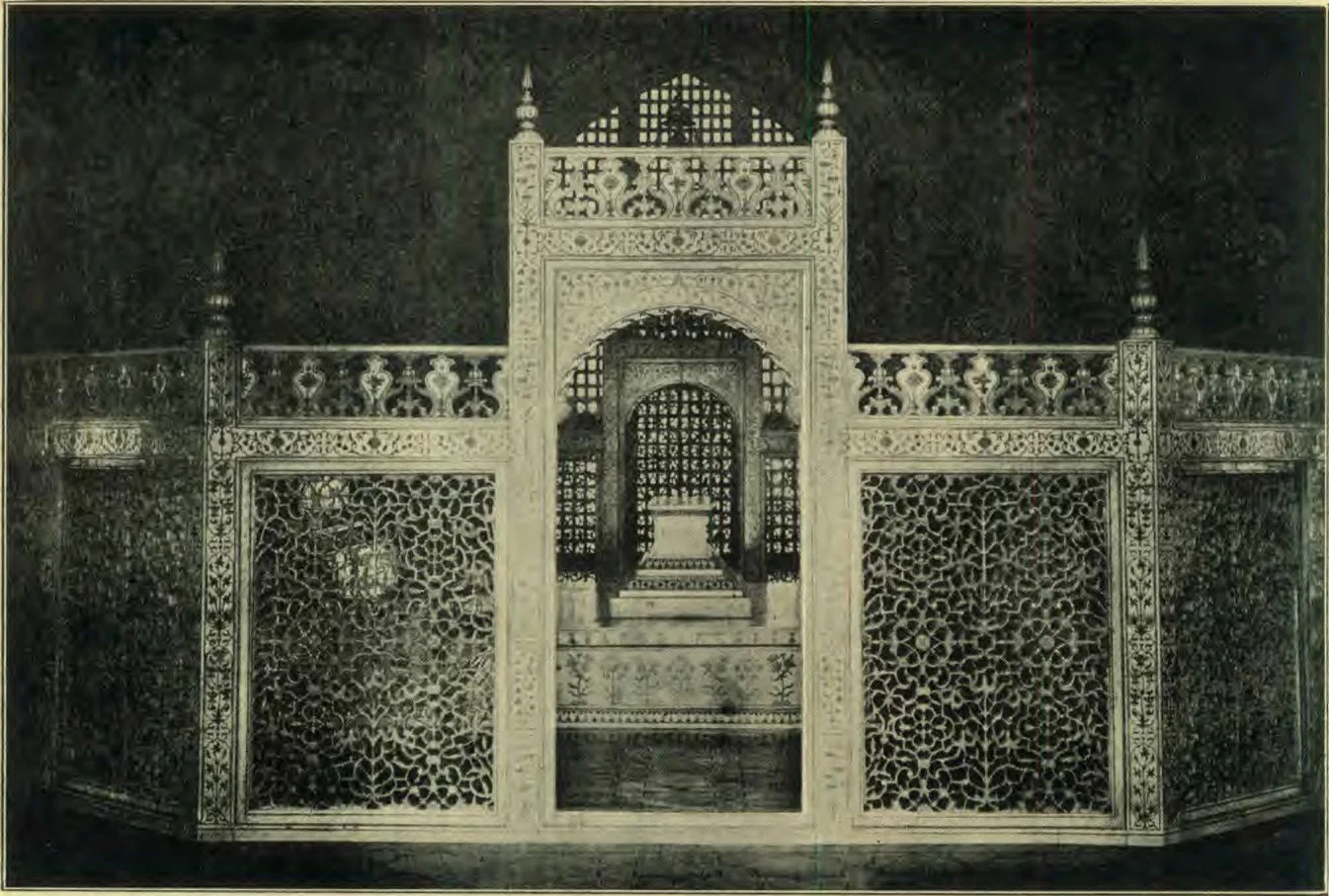
The Taj Mahal, Tomb of Moomtaz-i-Mahal
LORA CLEMENT
The beautiful Taj Mahal is said to be “the greatest love story ever written.” Completed more than two hundred years ago, it remains today in perfect condition, the most magnificent mausoleum upon which the sun has ever shone.
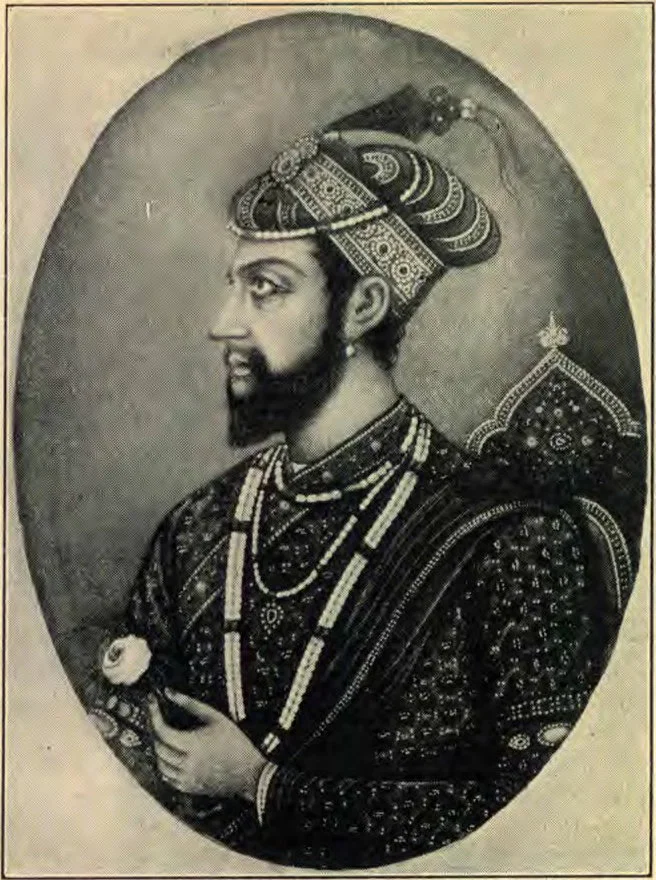
The idolized wife of Shah Jehan, one of the greatest of the Mogul emperors of India, was Moomtaz-i-Mahal. For fourteen years he devoted his energies to satisfying her every desire, and they were supremely happy. When she died in 1629 the emperor determined to perpetuate her memory and his love for her by building the finest tomb the world had ever seen, in a garden on the banks of the Jumna River, which had been her favorite resort. The best architects of the world were summoned to compete for the contract, and the winner was Eesa Mohumed Effendi, sent by the Turkish sultan. Some time was spent in perfecting the plans, and collecting necessary materials, and the actual work of building required twenty-two years. Various figures estimate the cost as not far from $15,000,000, and 20,000 workmen were employed.
The Taj stands on the bank of the river, its grounds forming a garden in the midst of an extensive plain, and is visible for miles in its dazzling whiteness from any direction you may chance to approach. The visitor enters the inclosure through a great ornamental gateway. The ascent is by stairway to the second story where from a lofty balcony may be obtained a beautiful panoramic view. “Just below begins the garden, laid off in sixteen sections, stretching far back, and the whole forming a square of 890 feet. Each of the sections is appointed for a distinct class of vegetation—one for roses alone, another for ferns, and another for palms. At the farther end of the garden stands the Taj Mahal, resting on its vast platform, 313 feet square and eighteen feet in height. On each side of the outer edge of the platform is a mosque, and at each corner rises a minaret 133 feet high. The main dome of the mausoleum is fifty-eight feet in diameter, and eighty feet high. At each corner is a smaller dome which gives completeness to the picture. The mausoleum itself would be a perfect square of 186 feet except that the corners are cut off opposite each of the towers.” Each of the broad sides has a grand half-dome entrance rising nearly to the cornice, while on each side are arches, one above the other. Around this magnificent doorway are Arabic inscriptions. Thomas W. Knox says that the whole of the Koran is on the walls of the Taj, written by the inlaying of black marble in the white walls.
“Straight through the garden, all the way from the gateway where one stands to the Taj itself, there runs a stream of pure, clear water. This, with its twenty-three fountains and the central platform and fountain, gives a variety and movement to the whole scene, which at once take from the place all appearance of a tomb.”
“Everything is of polished white marble. The bed and sides of the broad way down which the water runs; the splendid terrace on which minarets, mosques, and the wonderful central mausoleum stand; every part of the Taj itself from the lowest step in the dark crypt to the topmost stone of the dome,—it is all a wealth of spotless marble.”
The tombs of Shah Jehan and his wife are in the vault beneath the central floor, while the monuments for show are erected on the floor itself, surrounded by a marble screen. The body of the beautiful Moomtaz-i-Mahal lies directly beneath the central dome; that of her disconsolate husband at one side.
SHAH JEHAN
SHAH JEHAN
MOOMTAZ-I-MAHAL
MOOMTAZ-I-MAHAL
Within the Taj we find marvels of Oriental workmanship. “Tombs, monuments, screen, walls, and pillars are covered with mosaic work, chiefly of flowers and scrolls.” Here we also find texts from the Koran in black marble, “but the flowers and scrolls are of jasper, carnelian, agate, and other semiprecious stones, with here and there an addition of mother-of-pearl.” One writer says: “We saw a single rose containing more than thirty pieces of stone, and yet the whole flower was not more than an inch in diameter.” “These stones are thrust into the walls with such profusion that one is bewildered by the display. Yet when you realize the design you could not spare a single rosebud or lily leaf. Look as closely as one may, he can hardly distinguish the lines between the stones, so minute is the workmanship, so deft the hand.”
There is a wonderful echo in the dome of the Taj. It repeats every sound of the voice with great distinctness when words are spoken slowly. Very low music is also exquisitely echoed. “An English writer says the chord of the seventh produces a very beautiful effect, and it was this chord that Bayard Taylor heard and described as floating and soaring overhead in a long, delicious undulation, fading away so slowly that you hear it after it is silent, as you see, or seem to see, a lark you have been watching after it has been swallowed up in the blue vault of heaven.”
The Taj is wonderful in the sunlight, exquisite in the soft shadows of twilight; but magnificent, gleaming white, in the moonlight. It is one of the world’s greatest buildings, man’s richest tribute to a woman’s love and memory.

Value of Our Missionary Volunteer Emblem

As I was leaving my home early one morning to make preparations for my Sunday-night meeting, a man that seemed to be in haste stepped up and asked for our church. He seemed to have something on his heart. As he looked at me his face brightened, and he exclaimed: “I know the colors!” He then grasped my hand and said: “That’s a Missionary Volunteer button?” “I came in on the train,” he continued, “and am on the way to my home in the East. I attended the Battle Creek College and used to be an Adventist, but I went to the world and married outside the church. I am leaving on the next train for home, and I want you to pray with me. I have just given my heart to the Lord, and I am going to live a true Christian life.”
As in the cold morning hour we stepped into my office and sent up our petitions to our heavenly Father, for this dear man and his family at home, that the Lord might bring them into the truth, I kept thinking about my Missionary Volunteer button. After supplying my newly made friend with tracts, as he was leaving he asked: “Have you another one of those buttons?” I let him take mine, as I knew it would not be misused. Since this experience I feel that the Missionary Volunteer button has a mission. Let us wear it where it can be seen. Perhaps some soul looking for help may see it and grasp the chance.
LOUIS HALSVICK.

Lend a Hand

As a worker passed along, Gone was all the busy throng Which that day upon the street Hurried with a thousand feet. There within the gutter lay Something men had cast away— Human flesh and human bones Lying there upon the stones. To such depths does manhood sink Through the dreadful curse of drink.
And the wretch, on bed so hard, Called the passing man his “pard;” Asked that he would “lend a hand.” So he helped the fellow stand, Started him along the street On his drunken, tottering feet. Let us hope he’s standing, still, With a firm and manly will, In the strength of Christ to go Battling on against the foe.
Many thousands in our land Crave a strong and helping hand. Some are ready now to sink Underneath the curse of drink. Some have sunk and cannot rise, Cannot gain what they would prize. While we may abhor their sin, Think that they are vile within, ’Twas for sinners Jesus came. Do we not profess his name?
We may not have thought before That beside our very door People pass, and pass again, Looking for our help in vain. They are of our flesh and blood, Children of the same dear God. Shall we ever cast aside One for whom the Saviour died? Let us, rather, “lend a hand,” Help some fainting brother stand.
MINNIE EMBREE PARKER.
Continue reading: Famous Christian Workers