The Youth’s Instructor, Vol. 65, No. 25.

Miscellaneous News Items from Current Events
Earlier text: Famous Christian Workers

The Land of the Book

CENTURIES ago, the Lord, by his strong arm, led the Israelites up out of Egypt into a land “flowing with milk and honey.” Leaving behind them in the wilderness a vast expanse of eternal, shifting sand, where the scorching rays of the summer sun made the existence of varied plant life practically impossible, they entered a country where there were lofty trees, and beautiful flowers to delight the eye and bring rest to the soul. The psalmist found this scenery a fitting source from which to draw illustrations. For example, “He maketh me to lie down in pastures of tender grass.”
When we consider its vegetation, Palestine stands out uniquely from other countries. A noted scientist has said of this beautiful land: “There is not another spot on earth where so much of nature is focused as in this little corner. You have Alpine cold and torrid heat. Here are all the animals, birds, insects, plants, shells, rocks, of all zones.” One is not surprised, then, when he learns that in the Bible are mentioned about one hundred and fifteen different kinds of plants, among the most common of which are the apple, wheat, thistle, bean, and onion. But we must not stop here: mention should be made of the stately cedars of Lebanon, highly prized for centuries. Then there is the tropical vegetation of the Jordan valley; oaks abound in upper Galilee, and fir and poplar are found in the vicinity of the Dead Sea. Near by is the beautiful Wady el Werd, valley of roses; and everywhere are the beautiful and well-known buttercups, tulips, geraniums, and anemones. But below, and east of the Jordan valley, the country is volcanic and destitute of trees, and it is necessary to irrigate the orchards of Tiberias by an aqueduct.
The particular science of botany has held the interest of men from ancient times; for we find that away back in the days of David, there was a young man growing up who finally knew so much about plants that it could be recorded of him that “he spake of trees, from the cedar tree that is in Lebanon even unto the hyssop that springeth out of the wall.”
And now, when the flowers of spring are opening all about us, and the tender blade for the herd is quietly springing from a thousand slopes, it would be well for us to follow the example of the wise man of old, to become better acquainted with, and see new beauties in, the plants which the Lord has given us, and written about in his Word. J. W. SALISBURY.

The Song of the Umbrella

D r i p, drip, drip! The rainy days have come, and me you'd better always take, When- ever you leave home. For when the sun is shining bright, And down the street you trip, A little shower may come up, D r i p, d r i p, drip!
— Maggie Wheeler Ross.

The Bible Year

Senior Assignment

June 24: Psalms 56 to 61. Trusting in Jehovah.
June 25: Psalms 62 to 67. Confidence in God.
June 26: Psalms 68 to 71. Prayer on removing the ark.
June 27: Psalms 72 to 77. Prayer of David for Solomon.
June 28: Psalms 78 to 80. God’s dealings with Israel.
June 29: Psalms 81 to 85. An exhortation to praise.
June 30: Psalms 86 to 89. A prayer of David.
For notes on this assignment, see Review for June 21.

Junior Assignment

June 24: Proverbs 15. Humility and forgiveness.
June 25: Proverbs 20. Admonitions and warnings.
June 26: Proverbs 25. Humility and forbearance.
June 27: Ecclesiastes 1, 3. Submission to God’s plans.
June 28: Ecclesiastes 5. Vanity of riches.
June 29: Ecclesiastes 7. Benefits of suffering, patience, and wisdom.
June 30: Ecclesiastes 11, 12. Charity; youth and old age.

Ecclesiastes

Ecclesiastes is composed of thoughts on human life. It tells how vain are the things that men seek after, such as riches. Such things do not make people really happy. The last two chapters give some fine instruction to young people. Every boy or girl ought to commit to memory the first verse of the twelfth chapter. How sad that any one should fail to give his life to God when he is young, and that the evil days should come, when he has no desire to do so. The most terrible fate in the world is to become a hardened sinner.
M. E. K.

Missionary Volunteer Society Programs for Week Ending June 30

THE programs for this date, with notes, illustrations, and other helpful material, will be found in the Church Officers’ Gazette for June.

Question Box

ARE Seventh-day Adventist children who are not members of the church listed as Volunteers or not? Are those who are church members listed as Seniors, and those who are not church members as Juniors?
One qualification for membership in the Senior Volunteer Society is church membership. Only those “who really love Jesus” and have given their lives to his service can truly enter into the real work of the Missionary Volunteer Society, and such persons, of course, should be members of the church. This does not mean that persons who are not church members cannot attend. Indeed, those who are not members of the society may sometimes be called upon to take some part in the meetings. But those who unite together in prayer for others and who work for the salvation of souls truly must themselves be earnest Christians. This qualification for membership is not required of the Junior Society, because the conditions are somewhat different. Then, too, we have children who are Christians who have not yet been baptized and united with the church. But the members of the Junior Society should be those who can sign the Junior pledge, and who wish to take a part in the work of the society. M. E. K.

XIII — The Review

(June 30)
LESSON SCRIPTURES: Chapters 21:18 to 28:31.
MEMORY VERSE: Review the memory verses for the quarter.

Questions

1. Why did Paul go into the temple at Jerusalem with four other men to purify himself? What caused a mob to try to take his life on this occasion? How was he rescued from the Jews? How did he gain permission to speak to them? Acts 21: 18-40.
2. How did Paul address his persecutors? What experience did he relate? How was his address interrupted? What punishment did the chief captain command should be inflicted upon him? How did he escape scourging? Acts 22: 1-30.
3. When Paul appeared before the council what was the first statement he made? What two classes of people composed the council? What did Paul say that caused a division among them? Acts 23: 1-11.
4. What plot was laid to kill Paul? How was he rescued? To whom did Lysias send him? Acts 23: 12-35.
5. Who appeared before Felix to accuse Paul? How did Paul prove that he was innocent? Of what did he reason before Felix? Why was Paul not released? How long did Felix keep him a prisoner? Name the governor who succeeded Felix. Acts 24: 1-27.
6. Give an account of Paul's trial before Festus. To whom did Paul appeal? Acts 25: 1-11.
7. What led to Paul's being brought before King Agrippa? Give the main points of his address before the king. What effect did it have upon him? Acts 25: 12 to 26: 29.
8. What did Felix and Festus both say of him? Why was Paul not set at liberty? Acts 26: 30-32.
9. Give an account of Paul's journey to Italy as far as the city of Lasea. Acts 27: 1-8.
10. What warning did Paul give the officers of the ship as they started on the second part of their voyage? Why was this warning not heeded? Give an account of the storm encountered. How was Paul used of God to save the lives of all on board the ship? Tell how the ship was wrecked. Acts 27: 9-44.
11. On what island did Paul and his fellow travelers find refuge? How were they treated there? Give two experiences of Paul that filled the people with wonder. Acts 28: 1-10.
12. How long did Paul and his companions remain at Melita? Give the principal events connected with their journey from there to Rome. How was Paul permitted to labor in that city? What was the result of his first trial? How was he again brought to Rome? How did his life come to an end while there? Acts 28: 11-31; 2 Tim. 4: 6-8.

Memory Verses for the Quarter

1. “Blessed are they which are persecuted for righteousness’ sake: for theirs is the kingdom of heaven.” Matt. 5:10.
2. “Thou shalt be his witness unto all men of what thou hast seen and heard.” Acts 22:15.
3. “In the world ye shall have tribulation: but be of good cheer; I have overcome the world.” John 16:33.
4. “God is our refuge and strength, a very present help in trouble.” Ps. 46:1.
5. Felix trembled, and answered, Go thy way for this time; when I have a convenient season, I will call for thee.” Acts 24:25.
6. “If ye be reproached for the name of Christ, happy are ye.” 1 Peter 4:14.
7. “Ye shall be brought before governors and kings for my sake.” Matt. 10:18.
8. “Then Agrippa said unto Paul, Almost thou persuadest me to be a Christian.” Acts 26:28.
9. “All things work together for good to them that love God.” Rom. 8:28.
10. “Many are the afflictions of the righteous: but the Lord delivereth him out of them all.” Ps. 34:19.
11. “They shall take up serpents; and if they drink any deadly thing, it shall not hurt them; they shall lay hands on the sick, and they shall recover.” Mark 16:18.
12. “I have fought a good fight, I have finished my course, I have kept the faith.” 2 Tim. 4:7.

What Came from a Good Beginning

As the result of agitation in the Parent-Teachers’ Association of Takoma Park, D. C., in the spring of 1916, a group of mothers devised an industrial club for summer instruction for their girls from the fifth to the eighth grade. The girls were formed into groups of four or five, and once a week they met at the homes of volunteer teachers who gave them instruction in cooking, first-aid treatments, tatting, crocheting, and raffia work. This club work was meant to cover but one month’s instruction; but so interested did the girls become in some phases of the work that those classes were continued throughout the summer.
The result of the club work surpassed the brightest expectations of those who were responsible for starting it. An experienced dressmaker and professional sewing teacher gave the girls instruction in sewing during the school year, so that those of the eighth grade, by combining their summer knowledge of crocheting, tatting, and embroidery with their sewing instruction, were able to make garments that would have been a credit to far more experienced seamstresses. Those younger in years also produced very creditable work. Altogether the church school craft exhibit of Takoma Park, D. C., was one of exceptional merit.
So satisfactory was the work accomplished for the girls during the summer that this spring it was determined that the boys should have instruction in several phases of handicraft work especially suited to them. They have been organized under the name of Mission Scouts, and while their leader, on account of university work, has not yet been able to get the work fully organized, the boys have made a good beginning in gardening. A detailed report from them will be given after they get into full working order. Meanwhile are there not other communities that will organize to do really helpful, earnest work for their boys and girls?

Always Unprofitable

You may worry when you're weary, You may worry when you're well; You may worry when life's dreary Or when buds begin to swell; You may worry in December And keep worrying in May, But in any case remember That you cannot make it pay.
You may worry when disaster Hovers o'er you in the night; You may worry when your master Has declined to treat you right; You may worry when they've taken The last chance you had away, But the fact remains unshaken That you cannot make it pay.
—Record-Herald.

The Artist’s Hand

A YOUNG woman who had been studying music in one of the leading conservatories of the country, was asked to play at a seaside hotel. Seating herself at the instrument, she struck a few chords, then rose with an air of disgust. “Oh,” she exclaimed, contemptuously, “I can’t do anything with such a piano.”
The guests, who had gathered anticipating a musical treat, attempted to persuade her to go on, but in vain. Moving disdainfully through the disappointed group, she took a book and began reading. And then a gray-haired man, coming from an adjoining room, seated himself at the piano, and ran his hands over the keys. The guests, who were on the point of dispersing, turned back. The girl musician looked up from her book with a start.
The piano was not of the best make, it is true. A trained ear would have recognized that it was not in perfect tune. But the music that came from it that evening held the listeners spellbound. Even the noisy fringe on the outskirts of the group, who, as a rule, seemed of the opinion that music was the best accompaniment to conversation, sat motionless and silent. The eyes of some listeners were full of tears.
Among them all, none listened more raptly than the girl who had declared that she could not play on such a piano. And when the musician at last ceased playing, she rose and went to him.
“You have taught me a lesson tonight,” she said, lifting grave eyes. “I am only a beginner, and I did not think that any one could play on so poor a piano. But now I see that the master hand can bring music from any instrument.”
Life is continually demonstrating the lesson the girl learned that night. Some people bring nothing but discord from their surroundings. They are all the time making themselves unhappy by trivial misunderstandings. They quarrel with their associates. They are embittered by every disappointment. And others in the same environment make friends and keep sunny, and somehow, out of trying circumstances, make the sweetest music. Less depends on the instrument than on the hand of the musician. And there are no imaginable circumstances from which the artist in life is unable to evolve harmony.—The Way.

Regulations for Playing The Star-Spangled Banner

“The Star-Spangled Banner” is by official regulation the national air, and the only national air. When it is played ceremoniously, all persons within hearing should rise immediately, and should stand, uncovered, during its rendition. The playing of “The Star-Spangled Banner” as part of an entertainment program or in a medley is not generally regarded as a ceremonious playing of the national air, and consequently there is no offense to the flag if no honors are accorded it by the people present at such a rendition.

Mrs. Helen Gould Shepard's Week of Charity Requests
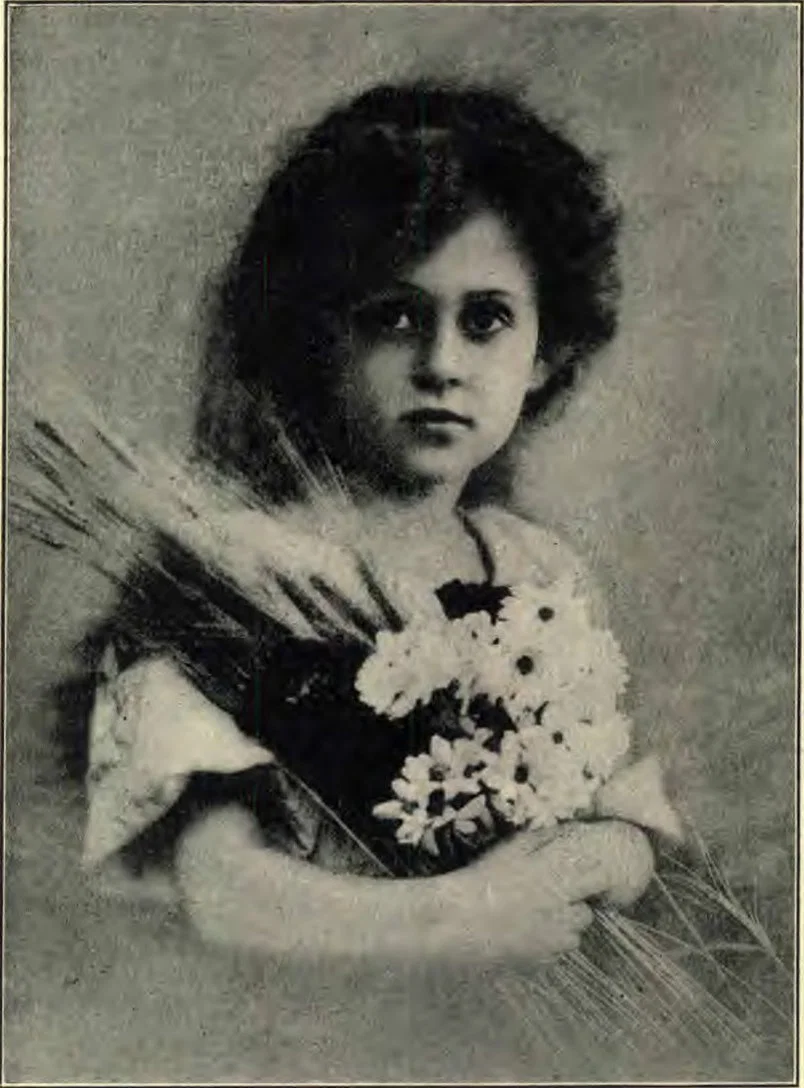
One week's mail brought to Mrs. Helen Gould Shepard 1,303 pieces of mail, most of which were requests for charity. The amount desired was not always named, but there were definite requests totaling the modest sum of $1,548,502.
THE EARLY MORNING OFTEN FOUND JESUS IN SOME SECLUDED PLACE, MEDITATING, SEARCHING THE SCRIPTURES, OR IN PRAYER.

You have reached the end of this edition.

The Youth’s Instructor · Jun 19, 1917