The Youth’s Instructor, Vol. 36, No. 31.

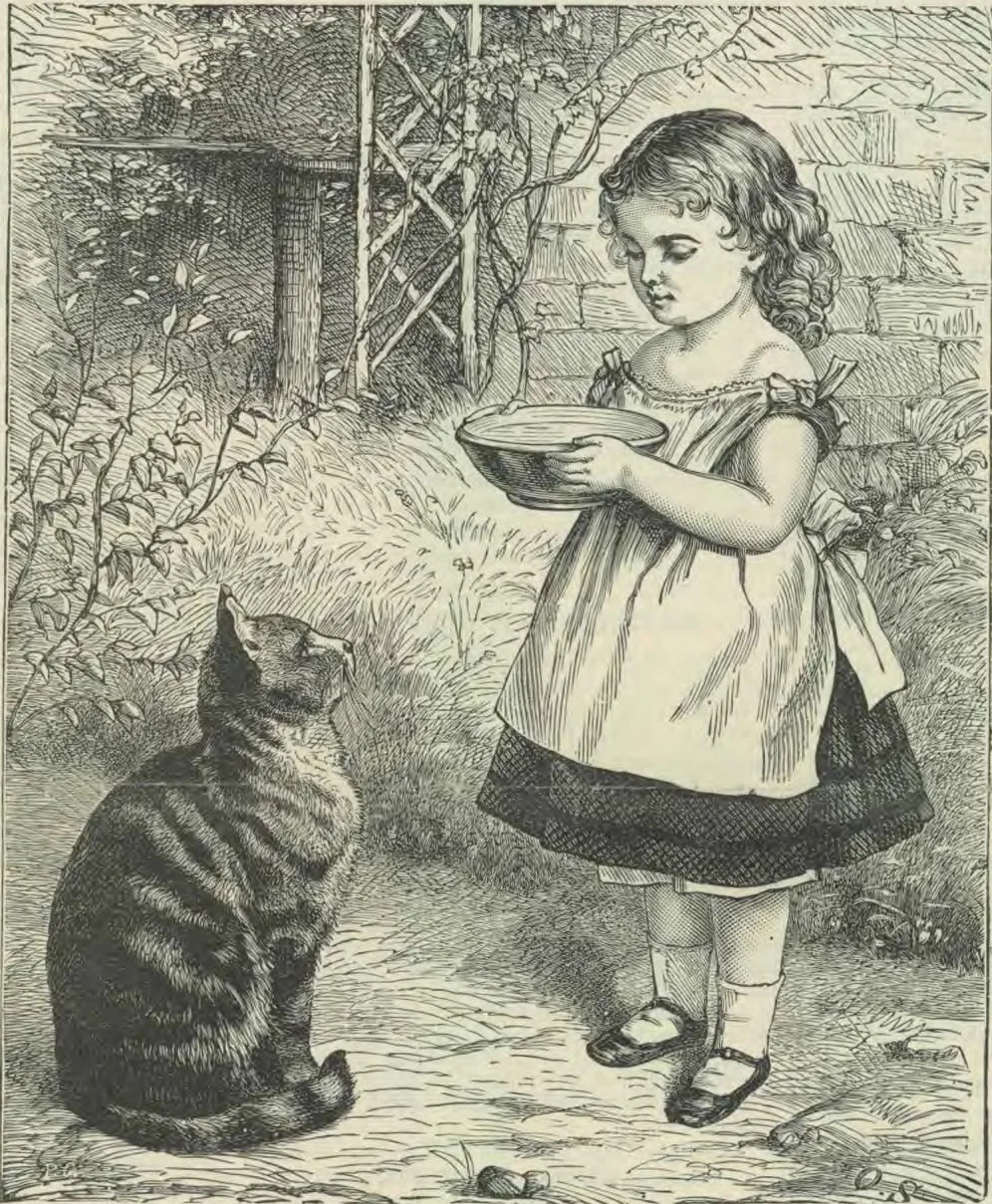
THE LITTLE RUNAWAY
Earlier text: A MODEST BEGINNING

WISCONSIN S. S. ASSOCIATION PROCEEDINGS.

The Wisconsin S. S. Association held its tenth annual session in connection with the camp-meeting at Neenah, Wis., June 12-19, 1888.
FIRST MEETING, JUNE 14, AT 6 P. M. The President, W. W. Sharp, in the chair. The Secretary being absent, Mary T. Westphal was chosen secretary pro tem.
Voted to waive the reading of the minutes of the last session.
Remarks were made by the President on the importance of the work and its progress in the State during the past year. He spoke of the interest every parent should take in this branch of the work, as it is an important means for the salvation of our children.
On motion, the Chair was empowered to appoint the usual committees.
SECOND MEETING, JUNE 18, AT 10 P. M. The committee on nominations reported as follows: For President, W. W. Sharp, Madison, Wis.; Vice-President, B. M. Shull, Beldenville, Wis.; Secretary and Treasurer, Mary T. Westphal, Hancock, Wis.; Executive Committee, W. W. Sharp, B. M. Shull, Mary T. Westphal, W. H. Thurston, and B. J. Cady.
The report was adopted.
The committee on resolutions made the following report:—
Whereas, Experience has shown that where earnest personal labor has been devoted to the Sabbath-school work by some practical Sabbath-school worker, the interest has greatly increased; therefore—
Resolved, That this association request the State conference to instruct the President of this association to devote a portion of his time particularly to the Sabbath-school work.
Whereas, The Kindergarten work has been successfully introduced in some Sabbath-schools; therefore,
Resolved, That we recommend the organization of Kindergarten classes, wherever competent teachers can be obtained.
Resolved, That we recommend our Sabbath-schools to procure necessary helps, such as bells, maps, blackboards, etc.
Resolved, That we request the parents, teachers, and others, to assist the children in getting perfect lessons and in being regular in attending the Sabbath-school.
The resolutions were unanimously adopted.
On motion, the meeting adjourned sine die.
W. W. SHARP, Pres.
MARY T. WESTPHAL, Sec. pro tem.

THE KANSAS S. S. ASSOCIATION.

This Association held its eleventh annual session in connection with the camp-meeting at “Soden’s Grove,” Emporia.
FIRST MEETING, MAY 23, AT 5:30 P. M. Meeting was called to order by the President. The Secretary being absent, Lucy M. Olds was appointed secretary pro tem. Minutes of the previous session read and approved.
On motion, the President appointed the usual committees, on nominations, resolutions, and auditing.
SECOND MEETING, MAY 25, AT 9:30 A. M. The committee on auditing submitted the following report:—
“We, your auditing committee, have examined the treasurer’s accounts and find them correctly kept.
“(Signed,) CHAS. E. KNIGHT, “H. EDSON ROGERS.”
The President then gave a short talk on Sabbath-school work, its objects, how accomplished, and the spirit which should characterize teachers who would see results of their labor in the kingdom of heaven.
At the third meeting, held May 25, 5 P. M., the committee on nominations submitted the following: For President, Eld. L. J. Rousseau; Vice-Presidents, C. H. Parsons and Levi Turney; Secretary and Treasurer, Lucy M. Olds.
The report was accepted, and the nominees duly elected. Meeting adjourned sine die.
The camp-meeting Sabbath-school, held on the morning of May 26, was of unusual interest. The class recitations were marked with life and animation, as the lessons had been well prepared. The reviews which followed were of much interest. The school numbered 467, and was divided into 63 classes, of which 4 were German. The donations amounted to $25.63.
JAMES A. MORROW, Pres.
LUCY M. OLDS, Sec. pro tem.

OUT-OF-DOOR ARITHMETIC.

Add bright buds, and sun, and flowers, New green leaves, and fitful showers To a bare world, and the sum Of the whole to “Spring” will come.
Multiply these leaves by more, And the flowers by a score; The result—if found aright— Will be “Summer,” long and bright.
Then divide the flowers and sun By gray clouds and storms begun, And the quotient found will be “Autumn,” over land and sea.
From this then subtract the red Of the leaves up overhead, Also every flower in sight, And you’ve “Winter,” cold and white. —Selected.

THE THIRD ANGEL'S MESSAGE.

LESSON 7.—THE DEVELOPMENT OF THE BEAST.

(Concluded.)
1. What did we find in the preceding lesson was the determination of the bishops of the fourth century? Ans.—To make use of the power of the State for the furtherance of their own aims.
2. What was one of the principal aims of the Western bishops, especially the bishop of Rome? Ans.—The exaltation of Sunday.
3. What did they secure from Constantine? Ans.—An edict, in A. D. 321, in favor of Sunday—the first Sunday law that ever was.
4. What was this law? Ans.—“Let all the judges and town people, and the occupation of all trades rest on the venerable day of the sun; but let those who are situated in the country, freely and at full liberty attend to the business of agriculture; because it often happens that no other day is so fit for sowing corn and planting vines; lest, the critical moment being let slip, men should lose the commodities granted by Heaven. Given the seventh day of March; Crispus and Constantine being consuls, each of them for the second time.”—History of the Sabbath, chap. 19.
5. Who convened the Council of Nice? Ans.—Constantine, A. D. 325.
6. What was one of the two principal decisions rendered by that council? Ans.—That Easter should always and everywhere be celebrated on Sunday.
7. Under what authority were its decrees published? Ans.—“The decrees of these synods were published under the imperial authority, and thus obtained a political importance.”—Neander, Vol. II., p. 133.
8. Who was bishop of Rome during twenty-one years and eleven months of Constantine's reign? Ans.—Sylvester, January 31, 314, to December 31, 335.
9. What did he do by his “apostolic authority,” shortly after the Council of Nice? Ans.—He decreed that Sunday should be called the Lord’s day.—History of the Sabbath, p. 350.
10. What was commanded by the council of Laodicea, A. D. 363 or 364? Ans.—“That if Christians should rest on the Sabbath, ‘let them be accursed from Christ;’ and that they should rest on Sunday.”
11. Did Constantine’s Sunday law apply to all classes?
12. Were other laws demanded by the bishops, which should be more general? Ans.—“By a law of the year 386, those older changes effected by the Emperor Constantine were more rigorously enforced, and, in general, civil transactions of every kind on Sunday were strictly forbidden. Whoever transgressed was to be considered, in fact, as guilty of sacrilege.”—Neander, Vol. II., p. 300.
13. What petition was made to the emperor by a church convention in A. D. 401? Ans.—“That the public shows might be transferred from the Christian Sunday and from feast days, to some other days of the week.”—Id.
14. What was the object of all these State laws? Ans.—“That the day might be devoted with less interruption to the purposes of devotion.” “That the devotion of the faithful might be free from all disturbance.”—Id., pp. 297, 301.
15. What was it that so much hindered the devotion of the “faithful” of those times? Ans.—“Owing to the prevailing passion at that time, especially in the large cities, to run after the various public shows, it so happened that when these spectacles fell on the same days which had been consecrated by the church to some religious festival, they proved a great hindrance to the devotion of Christians, though chiefly, it must be allowed, to those whose Christianity was the least an affair of the life and of the heart.”—Id., p. 300.
16. How was their “devotion” disturbed? Ans.—“Church teachers . . . were, in truth, often forced to complain that in such competitions the theater was vastly more frequented than the church.”—Id.
17. What does Neander say of all this? Ans.—“In this way, the church received help from the State for the furtherance of her ends. . . . But had it not been for that confusion of spiritual and secular interests, had it not been for the vast number of mere outward conversions thus brought about, she would have needed no such help.”—Id., p. 301.
18. When the church had received the help of the State to this extent, did she stop there? Ans.—No, she demanded that the civil power should be exerted to compel men to serve God as the church should dictate.
19. Which of the fathers of the church was father to this theory? Ans.—Augustine, who lived from A. D. 354 to 430.
20. What did he teach? Ans.—“It is indeed better that men should be brought to serve God by instruction than by fear of punishment or by pain. But because the former means are better, the latter must not therefore be neglected. . . . Many must often be brought back to their Lord, like wicked servants, by the rod of temporal suffering, before they attain to the highest grade of religious development.”—Schaff’s Church History, sec. 27; Augustine Epistle 185 ad Bonifacium, sec. 21, 24.
21. What does Neander say of this? Ans.—“It was by Augustine, then, that a theory was proposed and founded, which, . . . contained the germ of that whole system of spiritual despotism, of intolerance and persecution, which ended in the tribunals of the inquisition.”—Church History, Vol. II, p. 217.
Thus was formed the union of Church and State out of which grew the Papacy. Thus was developed “the beast,” which made war with the saints of God, and wore out the saints of the Most High.

VENTRILOQUISM IN NATURE.

While pioneering in South Brazil, Mr Withers was struck by the low and plaintive cry of some creature calling in the night. He was at first impressed with the idea that it was the cry of a child, but the tones soon convinced him that this could not be the case. He says:— “I had never heard a more pure and liquid musical sound than this was. The pleasing effect upon the ear was but little diminished on learning by what animal it was produced. The vocalist was a frog,—and soon another from a more distant spot took up the strain, and the two sang together, now in solos, now in chorus. Curious to see this musical frog, I took a torch from the fire, and went to look for him. I arrived at the spot whence the sound was proceeding, but, as I stooped to search the grass, the music seemed to float away to another place some yards distant. I followed, and still the sound moved, and nowhere could I discover whence it came. I searched for nearly a quarter of an hour, without being able to fix the spot, and then I gave up in despair. The fact is, this frog is recognized to be a ventriloquist of no common order. I have many a time since heard him crying in broad daylight; and the power of ventriloquism is no doubt given him as a protection against the numerous cranes and other frog-enemies that would otherwise be guided by the sound, and soon render the species extinct.”—Exchange.

COMMUNICATION IN EARLIER TIMES.

DURING the recent great snow-blockade of the eastern cities and the Atlantic coast, telegraphic as well as railway communication was for a few days greatly disturbed. On the 13th and 14th days of March dispatches between New York and Boston could only be sent by the Atlantic cables by way of Liverpool, England, the messages thus passing twice under the ocean, over a distance of six thousand miles, instead of over the short and direct lines between the two cities. The fact is only one of many which illustrate the wonderful triumphs of modern science and invention.
At so recent a period as 1825, on the completion of the Erie Canal from Albany to Buffalo, and the passage of the first vessel from the latter city to Albany, the news of the arrival was telegraphed to New York, and also back again to Buffalo, not by means of the electric wire, but by the firing of cannon placed within hearing distance of each other along the entire line. The time required for communicating the message was fifty-eight minutes, indicating very quick work for that period.—Sel.

WAITING ON THE SUN.

EVERYBODY knows with what glee the birds in the morning hail the coming of the day. It is not so generally known that they watch with silent sadness the departure of the sun at night. Their quiet ways at that time are not calculated to attract notice. A recent English writer, Mr. St. John, touches upon this point:—
“The blackcocks, like other birds, are very fond of catching the last evening rays of a winter’s sun, and are always to be found in the afternoon on banks facing the west, or swinging, if there is no wind, on the topmost branch of the small fir-trees.
“On the mountains, too, all birds, as the sun gets low, take to the slopes which face the west; whilst in the morning they betake themselves to the eastern banks and slopes to meet his rays. No bird nor animal is to be found in the shade during winter, unless it has flown there for shelter from some imminent danger.
“This is very remarkable in the case of the golden plovers, who in the evening ascend from slope to slope, as each becomes shaded by intervening heights, until the birds are all collected on the very last ridge which the sun shines upon. When this is no longer illuminated, and the sun is quite below the horizon, they betake themselves to their feeding-places near the seashore or elsewhere. Goats have the same habit.”—Companion.

A CURIOSITY IN TELEGRAPHY.

WHEN Professor Morse was trying to secure an appropriation from Congress to build the first telegraph line, he met with considerable opposition from skeptical members, who did not know anything about electricity, and thought that Professor Morse was either a charlatan or a lunatic and his invention simply a clever fraud. He was finally successful, as all the world knows, and telegraph wires now cover the earth, while the daily receipts run up into the millions. Yet it was only forty-three years ago, in 1845, that the first office was opened in Washington, and the receipts from April 1 to 4, inclusive, were one cent. On April 5 the receipts rose to 12½ cents, and on the 6th and 7th fell off to nothing. April 8 the office took in $1.32, and April 9, $1.04. What a curiosity these figures are nowadays!—Sel.

MEXICAN POST-OFFICES.

The Mexicans have the worst-managed post-offices of any civilized country. Go anywhere and ask, in English, for a letter, and the obliging postmaster will toss out the whole stock addressed to foreign names, whether a peck or a bushel, and allow you to select for yourself, quite indifferent as to whether you confine yourself to your own or other peoples' mail. This is hardly agreeable to American notions of the fitness of things, and, to make it more aggravating, the letters of the natives are not treated so, being served from pigeon-holes alphabetically arranged. The laws against opening other peoples' letters are very severe, but they are enforced only among those of Mexican birth. While the Mexicans feel that the Americans despise them, the Americans need not expect redress for wrongs of any kind from them.—Exchange.

SOMETHING WORTH KNOWING.

A bank cashier says the best way to tell counterfeit money is by sound and feeling:—
“Take a bill firmly between the thumb and index finger of your left hand, and pull it quickly through your fingers, like this. Now listen to the sound it makes. It is not just like rubbing silk, and neither does it resemble a paper sound closely. It is a noise that is too peculiar to admit of description. “Now listen to the sound made by this counterfeit twenty-dollar bill. You see, that’s a sleek noise, something like pulling glazed or oiled paper through the fingers. A child could tell the difference between that bill and a genuine one. But look at it, and you would think it would pass muster for twenty dollars’ worth of groceries.”—Ex.

GLASS MADE FROM PAPER.

Paper window-glass is now said to be an assured fact. A window pane is made of white paper, manufactured from cotton or linen, and modified by chemical action. Afterward the paper is dipped into a preparation of camphor and alcohol, which makes it like parchment. From this point it can be molded and cut into remarkably tough sheets, entirely transparent, and it can be dyed with almost any of the aniline colors, the result being a transparent sheet, showing far more vivid hues than the best glass exhibits.—Sel.

IMPORTANCE OF PUNCTUATION.

Some years ago a merchant in the West telegraphed to another in an Eastern city: “Am offered 10,000 bushels of wheat on your account at $1. Shall I buy, or is it too high?” The reply came: “No price too high,” when he intended to say, “No. Price too high.” The omission of the period cost the Western merchant $1,000.—Ex.

CLEANING HORSES BY STEAM.

In the Palmer House stables, Chicago, they clean horses with brushes worked by steam. The brush revolves many hundred times a minute, and two cleaners will accomplish more in one minute than four men with the old fashioned brush and curry comb could in twenty. In two hours' time a hundred and fifty horses are cleaned.—Northwestern Live Stock Journal.

Letter Budget.

You are wondering whose letters are printed this time. Well, let us see. The first is from—
EDNA MAY REED, of Placer Co., Cal., who writes: “I am a little girl ten years old. I have been reading the children's letters in the INSTRUCTOR. They are nice. I thought I would write one for the Budget also. I live with my auntie. She is an Adventist. I have a little sister five years old. We all attend Sabbath-school. My father and mother do not keep the Sabbath. My mother is a music teacher, and my father is a railroad man. Pray for them, that they may have the light on the Sabbath. I want to be a good girl, and try to do God's commandments.”
Here are letters from ROSA and CALVIN STARR, who live in Shelby Co., Iowa. Rosa says: “This is the first time I have written to the Budget, but I do want a place with the INSTRUCTOR family. We have taken the INSTRUCTOR ever since I can remember, and I do love it. My two younger brothers and I keep the Sabbath at home. I have two brothers and one sister keeping it who are not at home. Father and mother do not keep it. I hope you will pray that they may do so soon. I am trying to set a good example before them and my neighbors, that they may see I am trying to keep the commandments of God. I am trying to be a good girl, and with you want to be saved in that beautiful city.”
Calvin writes: “I am twelve years old. I go to Sabbath-school and study in Book No. 3. I have five brothers and three sisters. One of my sisters is secretary of the Sabbath-school. I want to be a good boy, that I may be saved in the kingdom of God.”
CLARA and ALMA MEHLKE send letters from Jackson Co., Minn. Clara writes: “I am a little girl thirteen years old. I have two brothers older than I am, and one younger. I have two sisters, and both are younger than I am. One of them is nearly as large as I am, and the other is a sweet little baby seven months old. We shall have eighteen milch cows this summer, and we already have five little calves. We have six working horses and two colts. It has been very cold here this winter, and we have had a good deal of snow. I can wash dishes, sweep the floor, tend the baby, and help mamma in many other things. Sometimes we have Sabbath-school at our house, and at other times at a neighbor's, because we have no church. Some of the Sabbath-keepers live eleven miles away, so we can meet only every other Sabbath. I am trying to be a good girl.”
Alma writes: “I am eleven years old. We go to Sabbath-school as often as we can. There are twenty-eight members in our school, but only three in our class. Mamma is our teacher. When our day school closed, we received some quite nice cards. We had a very good teacher. Every Sunday evening when the weather was good, we had singing school. I like to read the INSTRUCTOR, and am very much interested in the Budget. I am trying to be a good girl, so I can be saved.”

A Child's Idea.

The pet of the household had overslept, While breakfast was waiting below; And his auntie was chiding the little boy That he was dressing so slow.
A shoe-string was missing, a button was off, And everything seemed out of place, And clouds of discouragement gathered around The dear little fellow's face.
At length his toilet was all complete, But the little boy still delayed, And cried, “Dear auntie, I can not go down Till my morning prayer I've said.”
“Wait till breakfast is over,” his auntie cried. “For once it will not be wrong.” The little boy, startled and grieved, replied. “What, keep God waiting so long?” —The Congregationalist.

A CAT HOSPITAL

STUTTGART is a large city in Germany. Many travelers go there. A really true letter came to me from a little lassie who spent several months there. This is what she said:—
“DEAR AUNTIE,—We took a beautiful ride to-day to a little village a few miles out of the city. We went to a place where a man keeps dozens of cats and kittens to sell. I never knew how many different kinds there were before.
“How I wish you could have seen them! Black cats, white cats, grey cats, yellow cats, streaked and spotted cats, and such darling little kits rolling and tumbling about! Uncle Tom told me to choose one for myself.
“There was a lovely Persian cat, that I wanted very badly. She had long white hair, ‘like a baby Polar bear,’ Uncle Tom said. Her eyes were as blue as the forget-me-nots we used to find down by the old mill. Her tail puffed out like a fox’s.
“But she was quite deaf. All the Persian cats are. Just think of a kitten that couldn’t hear you call Kittie, Kittie, Kittie, when you wanted her to jump up into your lap to be petted, or when you had a saucer of milk for her.
“We all laughed at the Manx cats. They are from the Isle of Man. They have stumpy tails, and their hind legs are the longest. They make you fancy they are thinking of turning a somersault. But they are too ugly to make pets of.
“At last I chose a cunning, frisky kitten. Uncle Tom paid quite a handful of silver pieces for her. We squeezed her into an old willow bird-cage for the journey home.
“She was full of fun and frolic, and soon grew fond of me. Aunt Laura gave me some scraps of flannel, and I made her a blanket, in stripes of red and white, with a dab of blue in one corner, like the American flag.
“I only had her about ten days when she began to mope about. I’m afraid I fed her with too many good things. She got worse, and then somebody told us about the hospital where they take care of sick animals. Horses, and dogs, and cats, and monkeys, and birds, and other creatures are sent there. They take good care of them, and a good many are cured.
“I wrapped my kitty in her blanket, and we took her to the hospital. We gave her to a young man, who promised to be very kind to her.
“But, oh, dear me! In three days a grand-looking servant, with a great many gilt buttons, came to tell me kitty was dead. I paid eighteen cents. They charge six cents a day for cats.
“I wrapped her in her flag and buried her in the garden.
“I am your loving little Grace.”
—Sydney Dayre, in Our Little Ones.

A CHAT WITH THE CHILDREN.

It is some time since we have had a talk with you, but we do not forget you, nor cease to pray for you; and with real interest we read of your joys and sorrows, your losses and crosses, your trials and victories; of your efforts to be helpful in the family, in the school room, and with your mates. And very often we wonder how many of you will really and truly see the “inside of the City.”
It is one thing to want a thing, and quite another to take the right way to get it. Wishing alone don’t help one. If ever we would live with the angels in heaven, we must have clean hearts,—hearts that have had all the wicked gotten out of them.
Do you know why this is so?—It is because sin costs so much. You know it entered heaven once, and it cost the life of God’s own son to pay for it. Then don’t you think the Lord will be very particular not to have any one in heaven the second time who has any root or seed of sin in his heart?
Who of us are now without sin? Not one of us can hold the heart before God’s mirror, or examine it by his law, without finding much that will not be allowed in heaven. A clean heart is the only passport that will let us into the New Jerusalem.
We need not think God will excuse sin in us if only we try to do right, so long as we love sin so well as to keep thinking and doing wicked things. We must hate sin, and keep up a continual warfare against it. On the other hand, we must seek for that love that will keep us from sinning.
Even you little people must learn to love the Lord so well that you will be obedient. Don’t wait till you are older; for you are not certain of any time only the present time.
Would any of you miss having a home in heaven? None of you mean to do this; then will you not be diligent now to make God your true friend by loving obedience? If you do, he will wash away all your sins in the blood of the Lamb, and that will give you a pass into the city of the saved, and make you an heir to the wealth of heaven. Do you know any greater pleasure to live for than this? Who will be truly wise?
M. J. C.

On Kindness: Thought, Speech, and Action

To think kindly of each other is good; to speak kindly of each other is better; but to act kindly towards another is best of all.

You have reached the end of this edition.

The Youth’s Instructor · Aug 1, 1888