THE religious dogma, then, of the idle and cheerless Sunday is not a Christian dogma at all, but a dogma of the Cromwellian Church militant. The development of this dogma is as curious as the origin of the first Sunday law, which, as we have seen, was avowedly created in honor of Mithra, the sun god, and applying as it did to work alone, and very partially to that, of course established nothing like “our American Sunday.” The distinguishing attribute of the Puritan was moroseness. His pet aversion was gaiety, light-heartedness, play, sport. To be serious, solemn, and gloomy was, outwardly at least, to manifest a respect for Puritan ideas, to be Puritan-like, if not Puritan. When the Puritans got the power to compel by law special “observance” of their sacred day, they naturally turned their minds in the first instance to the requirement of that form of observance which was calculated to make everybody, externally at least, respectful toward the puritanic idea, and imitative of the puritanic deportment and behavior. Their first Sunday legislation, therefore, was directed against sports, play, diversions, visiting from one parish to another, etc. It was not till they had been tinkering at the subject for about fifty years that it occurred to them to prohibit work as a “profanation” of “the Sabbath.” And even then it was not work per se that they objected to. It was only work of one’s “ordinary calling.” Thus, a carpenter might engage in blacksmithing, and a farmer build on his house; and persons who had no “ordinary calling,” e. g., noblemen and tramps, remained as free on Sunday as on other days. In consequence of the application of these words, “ordinary calling,” by the English courts they365were omitted from the puritanic Sunday law, as transplanted to this country.
The manner in which the Puritans attained “the immortal honor” of an idle and cheerless Sunday by law established, was as follows: They repudiated all tradition, holding, as they said, to the “written Word” alone, meaning thereby the King James’ Version of the Bible. Now, there is nowhere in this “Word” any prescription or even suggestion regarding the “observance” of Sunday in any manner, the only day of the week “set apart” therein being Saturday. But the Puritan repudiator of tradition altered the fourth commandment as given in the “written Word” so that it read: “Remember Sunday to keep it holy, . . . the first day is the Sabbath of the Lord, thy God,” etc., and this alteration he made on the strength of tradition alone. Again, the Puritan repudiated with scorn and indignation the authority of the Catholic Church; he appealed to the “written Word” against her and all her works. But the written Word says “the seventh day is the Sabbath,” etc.; and for his authority to change “seventh” to “first,” the Puritan repudiator of Catholicism had nothing to rely on except the Catholic Church, and her incorporation into a dogma of a traditional practice.
Having by this strange process fixed upon his sacred day of the week, the Puritan next proceeded to settle the manner of its observance. And here he displayed an originality for which he does not usually receive sufficient credit. The “Sabbath” of the fourth commandment is only half of the Puritan Sunday. The first involves abstinence from work alone. Saturday was a day of play, recreation, social visiting, and entertaining, etc., with the Jews in Palestine. The Puritan Sunday involves abstinence from work and play. The inhibition of the latter is, as already shown, the stamp of puritanism upon the day. As Sunday play and social intercourse were objects of Puritan antipathy long before Sunday work, so it is safe to challenge contradiction of the assertion that if our Puritans of to-day were given their choice between the repeal of the prohibition of Sunday work and the prohibition of Sunday play, they would, to a man, vote to retain the prohibition of play. “They hated bear-baiting,” says Macaulay, truly, “not because it gave pain to the bear, but because it gave pleasure to the spectators.” They hated Sunday opening of the World’s Fair, not because it kept the employés at work, but because it enabled non-Puritans to enjoy themselves on Sunday. A man may work on Sunday and still pay puritanism the compliment of an outwardly gloomy and morose,—that is to say a puritanic, demeanor on its sacred day. But if non-Puritans are to be permitted to enjoy themselves on Sunday at their own sweet will, just as they may on other days, there is an end of external deference to puritanism by law compelled; there is an end of the union of the Puritan Church with the American State; there is an end of the embodiment of the Puritan dogma of the idle and cheerless Sunday in an American statute.
All history shows that attempts of the civil power to enforce religious duties, while sure to fail of their purpose, develop the most objectionable traits of human nature, and debauch the moral sense of the community. It may be true, that the more profound philosophers of the Inquisition looked on as calmly and dispassionately at the sufferings of the heretic, as a surgeon views the lacerated limbs of a patient under his knife, being wise men as well as good, and so knowing that their work was a salutary one, and that it was necessary for the sufferer’s own sake that he should be tortured into conversion here to save him from eternal agony hereafter. But the masses were not philosophers; and it is impossible to doubt that their interest in an auto da fé was little connected with their appreciation of its value as a means of grace to the victims, and that it was mainly based on the love of cruelty and the appetite for blood always latent in human nature, and like all our baser passions “growing by what it feeds on.” We have gotten rid of the stake and the rack, let us hope, forever. The Sunday laws are about the only means left of invoking the power of the State to compel an external compliance with a dogma of the Church. The Sunday opening of the World’s Fair has attracted special attention to these laws, and sporadic and spasmodic attempts have been made to enforce them. The obvious futility of the attempts renders them ridiculous. But they have a serious side. While the instinct of cruelty, in its worst and extremist manifestation, the delight in actual physical torture, cannot be gratified by means of persecutions under the Sunday laws, other low, shameful, and deplorable instincts find in such proceedings at once a vent and a stimulus.
Not the least conspicuous of these is the desire to cause others annoyance because they differ from us on religious points and the impulse of meddlesomeness, the spirit of “setting others straight,” the ambition of “bossing” one’s neighbor and compelling him to govern his private conduct by our standard instead of his own. If we consider that to instigate and subserve the cause of prosecutions under the Sunday laws requires the sacrifice of manliness and self-respect to the extent of playing the part of a volunteer detective and spy, we may form some idea of what a man must be or become, who habitually foments such prosecutions. Add to the demoralizing effects upon the prosecutors of such proceedings, the inevitable rankling in the hearts of the prosecuted, who, being reasonable creatures, understand perfectly that they are proceeded against not because they have done any harm to anybody, but solely because they have violated a religious dogma, in which they do not believe, and we begin to get some idea of the evil effects on any community of Sunday law trials.
(To be continued.)
Apply This to Sunday.
THE following is from an Irish paper:—
MR. WM. JOHNSTON.—I beg to ask the Chief Secretary whether he is aware that (as has been stated in the Westmeath Independent of July 1st) Father Kelly informed five painters employed in Mr. Coen's premises on June 29th that it was a religious holiday and that he would not allow them to work; that because they declined to leave off work the men were denounced from the altar afterwards by Father Byrne at ten o'clock mass, that after the artisans were denounced they left their work and returned to Dublin; and whether he will take steps to prevent the recurrence of such action on the part of ecclesiastics.
MR. J. MORLEY.—I am afraid that the facts are substantially as stated in the gentleman's question. I am forced to think, however, that the case is one in which the aggrieved persons themselves should take action rather than the Government.
Mr. Johnston is a member of Parliament and Mr. Morley Chief Secretary for Ireland. The question put implied that a priest had no right to interfere with men because they worked on a saint's day or other religious holidays. Mr. Morley's answer grants that such interference is improper. But why any more improper for a priest to denounce men for working on a saint's day than for the boycotting Sunday preachers to denounce men for working on Sunday?
The Cities and Sunday Trains.
THE papers report that at the recent Boston meeting of the League of Railway Trainmen a resolution was adopted declaring against Sunday trains. Commenting on this fact, a paper of this city says:—
There are some considerations involved which are amply conclusive against the wisdom of such a resolution, and we are confident that when railway workmen examine them carefully they will refuse to maintain the position the league is said to have taken, and this, without reference to the Church and State issue, which is the real question at the bottom of all Sunday law agitation.
The population of the cities increases in a much more rapid ratio than does that of the country. It is not necessary to our present purpose to inquire regarding the cause of this difference; we are here concerned only with the fact, and the sequences. The rich and moderately well-to-do city residents have, most of them, homes in the suburbs, or at least some distance removed from the crowded centers, and hence are not directly so vitally interested in the question of transit. But the masses of the people are forced to live in close quarters, contiguous to their work, and so their surroundings are often unsanitary to a degree, and even when not so bad as the worst, are far from healthful or desirable in other ways. By millions so situated Sunday is hailed as a day of release. On cheap excursion trains and boats they flock into the country and to the seashore or to the marge of some inland lake. They get away from the noise and dust and unwholesome odors of the city. The restful, cooling green of forest and meadow delights eyes strained by the glare reflected from towering walls of brick and stone. Children dance and roll and play merry games upon the sand or under the trees. They watch in wondering awe the incoming366and receding tides, or with bare feet and rolled-up clothes wade in the limpid waters. To old and young is brought relaxation, rest and quickened pulses, but the benefit to the children is greater than to the elders. They are growing, and they need every touch with nature that can be given them. To none, however, is it less than a positive blessing, and he is an enemy of his kind who would lift a finger in opposition to the weekly outflow into the country and to lake and ocean.
Then there are other multitudes who have relatives and friends in the country, and in neighboring villages, towns and cities. On Sunday, with proper traveling facilities, they can hold delightful family reunions or make and receive pleasant visits to and from valued friends and agreeable acquaintances. Or they can go and hear a lecture or attend an entertainment in some other place. All these varied forms of recreation, entertainment and instruction are rendered possible by the Sunday train, electric or cable car, and boat. They are all innocent and health-bestowing. The trouble is that there are not half enough trains and boats running on Sunday.
In view of these self-evident facts, and many more equally unassailable, it is a matter of amazement that any laboring man can oppose Sunday trains. All classes of workingmen are benefited by them, and this is especially true of trainmen themselves. It is perfectly easy, with the power possessed by organized labor, to so arrange business that each man will get his weekly rest-day without depriving any other person of the opportunity to go into the country, to the seashore, or on a visit on Sunday.
This shows how strong are the holiday tendencies against which friends of Sunday sacredness protest so loudly. But their protest is in vain. Whatever may be true of Sunday labor, Sunday recreation, Sunday play, is bound to increase. The rapid growth of our cities makes this inevitable. Enforced idleness on a given day in cities cannot fail to make it a holiday. Civil law can never make a holy day. It does make holidays, and it is fast making little else of Sunday.
Be Not Deceived!
ROMANISTS are in a sweet mood these days. They are preaching up charity at a great rate. They are profuse in their declarations of loyalty to country and love to its institutions. They talk very glibly about the Republic, as if they owned it and as if its liberties were due to their efforts, and under their special guardianship. Chicago has been fairly overrun with smooth speeches in favor of the educational and religious institutions of the land. It is wonderful the effect which the Columbian year has had upon Romish liberality. But what does it all mean? Has there been a change of heart in Jesuitism? Are we to see a new era of friendship toward Protestantism? Is the Roman Catholic hierarchy really in love with Protestant development? This Republic is the product of the principles and life of Protestantism. But Americans are not blind to facts, nor are they ready to shut their eyes to Jesuitic intrigue. They hear much just now about the good points in Leo, but they have no disposition to encourage his advances. It is a fine stroke of policy on his part, and that of his supporters, to fall in with the current and exalt America—what she is and what she may become—but he and they are working for ulterior ends, and discerning Protestants see through their cunning devices, and will watch the movements of Rome under various guises with growing vigilance.—Presbyterian.
An English “Protestant Alliance.”
An English exchange contains an account of the Protestant Alliance, its object and work, from which this extract is made:—
The object of the Protestant Alliance is to maintain and defend against all the encroachments of popery, the scriptural doctrines of the Reformation and the principles of religious liberty, as the best security under God for the temporal and spiritual welfare of the British empire.
And for this purpose: “To unite the Protestants of the empire in a firm and persevering demand, both in Parliament and out of it, that the national support and encouragement given to popery of late years should be discontinued. In this demand would be included all indorsements of popery in every form and of every kind drawn from the public revenues, concession of rank and precedence to Roman ecclesiastics, and the allowance of conventual establishments, not subject to the inspection and control of the law.”
It seems that organizations to unite Protestants against the encroachments of Roman Catholics are not confined to this country alone.
An Epoch in Politics and Religion.
REV. DR. SCUDDER, pastor of Jersey City Tabernacle, sees roseate hues in the political horizon, the first beams of a better day in municipal, State and National rule; and all the result of the late election. Referring to the result in New Jersey, he said in a recent sermon:—
One peculiar feature of this moral revolution was the interest taken in it by the churches and the coöperation of all the sects against a common enemy. There was a prodigious moral current in this election, and in my judgment it marks a new epoch in both politics and religion. Hereafter these two forces are to be combined. A religion that cannot enter politics is not worth having. Christianity is leaven, not sawdust. Its business is to quicken, to put moral life into political dough.
Not until recent years have we ministers of the gospel done our duty toward our country. We were afraid to bring politics into our pulpits—cowards that we were! But all this has changed and when great moral interests are concerned, we shall speak out like men. We are here to build up the kingdom of righteousness, and one of the best ways to accomplish that result is to purify politics. The modern clergyman is becoming more courageous and cannot be quieted or bluffed by low-down politicians, who cry “keep politics out of your pulpits.” Our churches are moral forts, from which we shall pour shot and shell into all forms of wickedness.
Sectarianism is dying out, and coöperation between the various sects of Christendom is already an assured fact. Even Protestants and Catholics are learning to work shoulder to shoulder in behalf of good government and a variety of useful reforms.
I am proud to say that the churches of Hudson County had much to do with this recent election. They will have more to do in years to come.
The doctor forgets that rings have been “smashed” before and new ones formed in their stead. He who looks to political agencies for the moral reformation of man must look in vain. Human nature does not change, and political corruption is the legitimate and inevitable fruit of human greed. It is well to “smash” the rings occasionally; and all who had a part in “smashing” the particular rings in question are entitled to credit for it; but churches in politics, as churches, are a dangerous force, and it is far from reassuring to be told that Protestants and Catholics are learning to work together shoulder to shoulder. Good may come of it occasionally, but it must in the end result in disaster to free institutions.
A Significant Interview.
A PROMINENT Catholic in Washington, in an interview with a representative of the New York World, said:—
Archbishop Satolli becomes more and more impressed all the time with the United States and her institutions. He is enthusiastic indeed about our great arena for the battle of human progress and he wants to see, and expects to see, Catholicism having a leading part in all the work. It is everything, even for so great a man as the apostolic delegate, to gather his information at first hand—to see for himself, as the phrase is.
This Archbishop Satolli is doing as rapidly as possible; and every time he returns here it is with increased encouragement in his work. The result of all this of course is to advance the church in America, in the eyes of the supreme pontiff and to insure it consideration at Rome that it has never enjoyed before. As a matter of fact, Leo is looking367to America for that distinct triumph of his policy which is to insure him the title he so much covets—that of “The Pope of the People.” His work in France is great, but his work in the United States is even greater. This is the larger field. Here the people have been born to the estate of freedom, and to that of self-government and Leo wants Catholicism to go hand in hand with popular suffrage.
Such things are significant, and especially when taken in connection with the trend of public sentiment in the United States Romeward. The coming of Satolli, the Catholic Congress, and the World’s Parliament of Religions have directed all eyes toward Rome as never before in the history of the country, and the increase of popish influence is simply astounding. Nor is this remarkable turning toward Rome confined to the United States; all the world is wondering after the beast.
Where Shall the Line Be Drawn.
By G. C. Tenney
THE State cannot do the work that has been assigned to the Church by her Lord. When it undertakes that work, it ceases to be the work of Christ and becomes antichrist. The Church of Christ cannot retain her purity and do the work of politicians. The question arises, Where shall the line be drawn between the civil power and the work of the gospel? There must be a clear distinction; their work though not antagonistic, is not interchangeable.
There is no work that the State and Church can do in conjunction, acting as Church and State. They cannot join hands except at the peril of the legitimate work of both, and therefore a clear-cut line of separation should ever be maintained between them. Any infringement of this condition is fraught with danger, not only to the citizen, but to the cause of true religion and of true statecraft as well.
These words are written with a profound impression that they convey the truth upon this vital question, with the earnest prayer that this truth may be deeply impressed on the mind of every reader, and with the ardent wish that it might become the ruling sentiment of our country at large; for herein lies our public safety, the integrity of the Government, the security of individual rights, and the success of the gospel. Some who adopt this position in theory desire to see it modified in actual practice, and do not hesitate to curry favors for their church from the civil power. There are some people who are totally opposed to any union of State and Church when it means their State and somebody else's Church, but look very pleasantly upon the scheme when it is their State and their Church. Indeed, this is where the great majority of the people really stand upon this subject.
But there is a better place for honest people, and many such there are, who seek for right principles, and having found them, are willing to abide by them wherever the lines may be drawn. Such our readers are taken to be. It is in this confidence that the position before stated has been taken, that the separation of the Church from the civil power should be entire and complete. In taking this position no one places himself alongside the infidel or the anarchist. He who stands on these grounds stands by the Bible. He stands in the full light of the genius of Christianity and is in accord with the teachings of its great Founder. History justifies the stand he has taken, and every consideration of justice declares that his position is right. G. C. TENNEY.
Rome in New England.
THERE is an alarming condition of affairs in New England. The census of 1890 shows that the communicants of Roman Catholics in New England exceed the number of all the members of Protestant churches combined, by nearly a quarter of a million. New England churches contain 1,005,120 Catholics and 763,987 Protestants. Dr. Wordsworth, in the Congregationalist, explains the condition of affairs in this wise: “The pulpit of New England in the last twenty-five years, has changed, as to the style and quality of its preaching. Up to that time it had a strong doctrinal cast and tone. The older New England pulpit was militant, and was not only ready to defend itself, but to attack error and unbelief, on any ground it might choose to occupy. But for a generation it has been growing pacific and has been quite content to let false doctrine and false teaching shift for themselves, while its own tone has been apologetic, and as little antagonistic as possible. There has been a cry, Let controversy alone. Don’t hold up the dry bones of orthodoxy. Preach Christ, and cease from the hard doctrines of the fathers! The cry has prevailed and the pulpit has supplied the demand made upon it. The old doctrines are still formulated in the creeds, and are still assented to by candidates for church membership; but they are held very much as the fossils of extinct animals are held in our cabinets of natural history.” The lesson for us to learn in view of these facts is this: First, that we should maintain a high degree of spirituality and that we “contend earnestly for the faith once delivered to the saints,” without fear, favor, or affection. A cold-hearted membership and a cringing, time-serving ministry, present the most inviting field on earth for the Catholics.—Central Baptist.
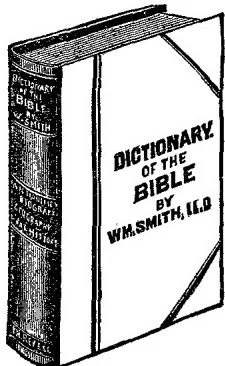
SMITH'S DICTIONARY of the BIBLE.
Edited by Wm. Smith, L.L.D.
COMPRISING ITS ANTIQUITIES, BIOGRAPHY, GEOGRAPHY, AND NATURAL HISTORY.
Price, $2.00.
This work contains every name in the Bible respecting which anything can be said; over 500 engravings, and is a complete guide to the pronunciation and signification of scriptural names; the solution of difficulties of interpretation, authority and harmony; also a history and description of Biblical customs, manners, events, places, persons, animals, plants, minerals, etc., and comprises a most complete encyclopedia of Biblical information.
Address all Orders to
PACIFIC PRESS PUBLISHING COMPANY,
12th & Castro Sts., Oakland, Cal. 43 Bond St., New York.
The November Arena Closes Its Eighth Volume
THE November Arena closes the eighth volume of this popular review, which, by the conspicuous ability of its contributors, has become a power in our land. The November issue contains, among other brilliant papers, a noteworthy article written by the late Richard A. Proctor, in which the eminent astronomer reviews the claims of Bacon and Shakespeare at length. This paper was originally a portion of a correspondence between Mr. Proctor and his daughter. The Bacon-Shakespeare case closes in this issue. Rabbi Solomon Schindler contributes a very thoughtful, though rather Socialistic paper, entitled, “Thoughts in an Orphan Asylum.” E. P. Powell’s contribution is a strikingly interesting “Study of Thomas Paine.” Louis Frechette, the poet-laureate of Canada, appears in an interesting historic story entitled, “La Corriveau.” The book reviews are also a noteworthy feature of this number. Those who would keep in touch with live issues should include this review in their list for the ensuing year. The announcements for 1894 are very interesting.
SOME VALUABLE BOOKS FOR YOUNG MEN.
We have secured the following books which we can recommend, not only as unobjectionable but as highly beneficial reading for young men:—
Moral Muscle and How to Use It, by FREDERICK ATKINS. A Brotherly Chat with Young Men.
“This is positively the best book for young men that we have seen. It looks the facts of young men’s lives full in the face, and proclaims the gospel of industry, perseverance, self-control, and manly Christianity. We can certify that no one will find it stupid.”—St. Andrew’s Cross.
First Battles and How to Fight Them, by F. A. ATKINS. Friendly Chats with Young Men.
“It is true in substance, attractive in its style and admirable in its spirit. I heartily commend this little volume.”—Rev. John Hall, D.D.
The Spiritual Athlete and How He Trains, by W. A. BODELL. Introduction by REV. B. FAY MILLS.
A work for young men, pithy, pointed and practical.
“Its power and value lie in the consistent carrying out of the comparison between physical and spiritual training.”—The Independent.
Brave and True, by J. THAIN DAVIDSON. Talks to Young Men.
“This is one of the books the wide distribution of which cannot be too greatly desired.”—Presbyterian Journal.
Each of these books is complete in itself, and so can be sold separately at fifty cents each; but as they are all about equally good, and desiring to encourage the dissemination of such literature, we offer the four for $1.75. They are all bound alike, and put up in a neat box present a very attractive appearance. They will form a valuable addition to any young man’s or youth’s library.
PACIFIC PRESS PUB. CO., 43 Bond Street, New York City.
SPECIAL HOLIDAY OFFER.
Having purchased several hundred copies of Illustrated Quarto Poems at a price BELOW COST we are able to offer to our customers an assortment of 25 different Titles at the astonishingly low price of
50 CENTS EACH, POSTPAID.
These are from the Fine Art Publishers. Each poem is beautifully illustrated and bound in Antique Vellum or Embossed Silk Paper, Padded, and make Elegant Presentation Volumes. These are usually sold at 75 cents and $1.00, but our price is 50 cents, while the stock lasts.
Below we give the Titles, with Author’s Name following:
Oriana, KEATS.
The Earl’s Return, OWEN MEREDITH.
The Bugle Song, TENNYSON.
Song of the River, KINGSLEY.
Fair Ines, HOOD.
Lenore, POE.
Elegy in a Country Churchyard, GRAY.
Rock Me to Sleep Mother, ALLEN.
Rime of the Ancient Mariner, COLERIDGE.
Eve of St. Agnes, KEATS.
Song of the Brook, TENNYSON.
Song of the Bell, SCHILLER.
Songs from Faust, GOETHE.
Annie and Willie’s Prayer, SNOW.
Bells Across the Snow, HAVERGAL.
Wreck of the Hesperus, LONGFELLOW.
Village Blacksmith, LONGFELLOW.
Hark! the Herald Angels Sing, KINGSLEY.
Evening Hymn, KEBLE.
Pilgrims of the Night, FABER.
Songs of Christmas, HAVERGAL.
Sweet By and By, BENNETT.
The Raven, POE.
Unknown Way, BRYANT.
Daisy Seekers.
It will be well to make second and third choices, so that we may not disappoint you in case the book chosen is sold out. These cannot last long at this price, so order now.
The Grand Trunk Railway of Canada and the Chicago & Grand Trunk Railway
Form the GREAT THROUGH LINE to all Points in the West,
AND OFFER TO THE TRAVELING PUBLIC THE ADVANTAGE OF THROUGH TRAINS WITHOUT TRANSFER, AND A VIEW OF
THE ST. CLAIR TUNNEL,
“THE LINK THAT BINDS TWO GREAT NATIONS.”
It is the greatest submarine tunnel in the world, extending from Port Huron, Mich., under the St. Clair River to Sarnia, Ontario, and connecting the Grand Trunk Railway System of Canada with the Chicago & Grand Trunk Railway. It has just been completed at a cost of $2,700,000.
The tunnel proper is a continuous iron tube, nineteen feet and ten inches in diameter, and 6025 feet, or more than a mile, long. The length of the approaches, in addition to the tunnel proper, is 5603 feet, making all told a little over two miles.
Trains of the Grand Trunk and Chicago & Grand Trunk Railways are hauled through this tunnel by engines specially constructed for the purpose. They are said to be the largest engines in the world. The entire weight of the engine and tender rests upon ten drive-wheels. The weight of one of these monster engines in actual service is found to be approximately one hundred tons.
N. J. POWER,
G. P. A. Grand Trunk Ry.,
MONTREAL, CANADA.
W. E. DAVIS,
G. P. & T. A. C. & G. T. Ry.,
CHICAGO, ILL.
FRANK P. DWYER,
Eastern Passenger Agent, G. T. Ry.,
271 BROADWAY, NEW YORK CITY.
MEMOIRS OF EDWIN BAINBRIDGE.—
The subject of this memoir is the young English tourist who met his death at the dreadful volcanic eruption of Tarawera, New Zealand, on the 10th of June, 1886. 12mo, 160 pages, fully illustrated, cloth extra, 75c.
Waterman's Ideal Fountain Pen
“I find the most satisfactory pen of its kind,” says Chauncey M. Depew, President of the New York Central R.R., and thousands of others are ready to bear a similar testimony. This pen is simple and yet highly philosophical in its construction. It rarely gets out of order and seldom needs repairs.
The pen-points are fine, medium or coarse, and of all grades of flexibility from soft to very stiff. Any hand can be suited. A full guarantee goes with each and every pen. The cut shows a No. 4 pen (gentleman’s size) reduced about one half in size.
No. 1, $2.50
No. 4, $4.00
“ 2, 3.00
“ 5, 5.00
“ 3, 3.50
“ 6, 6.00
THE PARLIAMENT OF RELIGIONS
AT THE COLUMBIAN EXPOSITION.
Authentic Edition.
Compiled from original manuscripts and stenographic reports.
Being a Narrative of the Grandest Achievement and the Most Important Event in Modern Religious History.
A Fascinating Story. A Book of Universal Interest.
Attractive in literary style; popular with the reading public; a companion of the scholar; of the greatest value for reference; unique among all publications.
The book contains origin of the Parliament of Religions; proceedings of every meeting of the Parliament; speeches delivered and papers read at every session of the noted gathering; the beliefs of the various religious denominations; opinions of eminent divines in regard to the Parliament; influence of the Parliament upon the religious thought of the world.
Complete in one large volume. Nearly 800 pages.
Price: Fine English Cloth, Gold Side and Back, $2.50; Full Sheep, Library Style, $4.00.
Largest Advance Orders ever known.
AGENTS WANTED.
F. T. NEELY, Publisher, Chicago.
AGENTS MAKE 100 PER CENT. PROFIT
and more. Get samples free. Best known goods in all America. Corsets, Belts, Brushes, Safety Razors, Curlers, Insoles, Plasters, and all our other popular goods. (Either sex.) Address, DR. GEO. A. SCOTT, 842 Broadway, N. Y. City.
Scientific American Patent Agency Advertisement
Scientific American Agency for PATENTS CAVEATS, TRADE MARKS, DESIGN PATENTS, COPYRIGHTS, etc.
For Information and free Handbook write to MUNN & CO. 361 BROADWAY, NEW YORK. Oldest bureau for securing patents in America. Every patent taken out by us is brought before the public by a notice given free of charge in the Scientific American.
Largest circulation of any scientific paper in the world. Splendidly illustrated. No intelligent man should be without it. Weekly, $3.00 a year; $1.50 six months. Address MUNN & CO., PUBLISHERS, 361 Broadway, New York City.