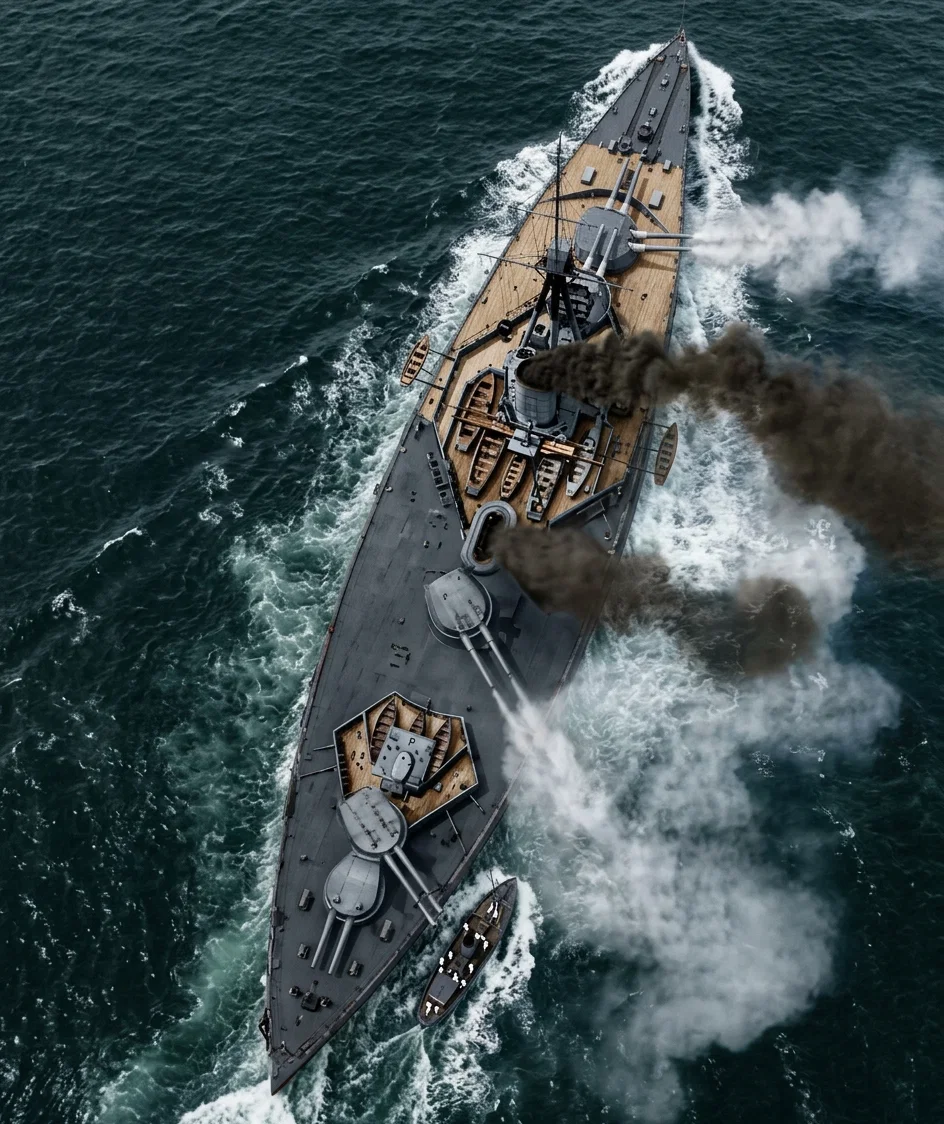
To say that the great nations of the world are to-day absorbed in a feverish preparation for war, is to utter a hackneyed commonplace. Colonel Richard Gaedke, a military expert of the German army, recently wrote in an article contributed to "McClure's Magazine":
The fever for armaments has seized upon almost the whole world. Nations great and small are increasingly trying to perfect armor and guns, and, as far as possible, to place every man capable of bearing arms in the ranks of the national defense. . . . The whole of Europe appears to have been converted into a great armory, where all the material, intellectual, and moral forces are applied in the service of a single idea — the service of destruction, the service of the bloody "struggle for existence."
In territorial extent Europe is only a little greater than the United States. Yet within that comparatively small area, more than three and a half million men are under arms day in and day out, withdrawn from peaceful labor, and training only for battle against one another. And if we were to include those that belong to the militia or to the reserves, who are called out for periodical drilling, we should find as many as six millions sometimes engaged in warlike exercises in the midst of peace. More than a sixth of the number belong to Germany alone, almost a third to Germany and France combined. Both nations, in case of need, would be able to pit against each other the gigantic number of more than seven million men.
Strange to say, all the advocates of our present-day ultra-militarism insist that the only way to insure peace is to be prepared for war, and that the prodigious outlay of money involved in a militarist policy is simply the premium that the nations must pay to insure against war. Not a few, however, of these "Fighting Bobs" contend that war is not only inevitable but a necessity, and hence for a nation to remain unprepared for war is to be criminally derelict.
Influence of the Dreadnought on Naval Armaments
This terrible mania for big navies and big armies has by no means reached its climax. It is still growing lustily. In February, 1906, England launched the original Dreadnought battle-ship; Germany responded by laying down two. To preserve her lead in the race for naval supremacy, England must lay down three; Germany retorts by laying down four; and England, making a gallant effort to retrieve herself, lays down six. Whereupon Germany devises the super-Dreadnought, much more terrible than anything yet invented, and the whole game must begin anew.
The parent Dreadnought had a displacement of 17,900 tons; its immediate successor ran to 18,600 tons; and those which next followed, to 19,250. In 1904 the General Board of the United States Navy recommended the Connecticut, of 16,000 tons, to be the standard of displacement and dimensions. But the advent of the Dreadnought rendered all previous standards obsolete. Hence the latest planned battle-ships for the American navy call for a displacement of 27,000 tons. Because of strained relations between Brazil and Argentina, the former is building three Dreadnoughts of 19,000 tons displacement each, and the latter, two of 28,000 tons each. It is now universally held that only Dreadnoughts can contend with Dreadnoughts. In March, 1910, Secretary Meyer, of the United States Naval Department, actually requested Congress to authorize the building of a 32,000-ton battle-ship, to be the largest in existence, at an estimated cost of $18,000,000. Congress has not yet complied with the secretary's request.
The Monarch, England's latest improved war-ship of the Dreadnought type. She carries but one military mast, and is so built that she has the least possible superstructure, so that "every scrap of unnecessary gear may be done away with." She can fire a broadside of ten 13.5 guns, each projectile weighing 1,250 pounds. She has a displacement of 22,500 tons, and 27,000 horse-power. Her small boats, two of which are shown in the cut in the act of being launched, are provided with "shelter screens," so that they may be protected from the fire of the enemy.
Up to the year 1900, Great Britain and France were the only really strong naval powers in the world. Rear-Admiral A. T. Mahan tells us that the great navies of Germany, of the United States, and of Japan were created during the last decade. It was England's construction of the initial Dreadnought that enabled Germany, which was hopelessly behind in numbers of smaller battle-ships, to start, by prompt action, nearly even in the class of fighting-ships "which by preponderant contemporary naval opinion is alone fit to lie in the first line of battle." This condition is the essential factor that led to the present frantic building competition between Germany and Great Britain. As the London "Times" (March 21, 1910) said, "Our naval program is made abroad, and made mostly in Germany." The British prime minister predicts that by the spring of 1913 Germany will have twenty-one super-Dreadnoughts to Great Britain's twenty-five — a narrow margin compared with England's traditional advocacy of the two-power standard. In this class of battle-ships the number built and building in 1910 were: Great Britain, sixteen; Germany, thirteen; United States, eight; Japan, four. In the January (1911) issue of the "World's Work," Rear-Admiral Mahan tells his readers that at the present moment the German navy is second to that of Great Britain; that of the United States is a close third; while France has dropped to fourth place; Japan follows France, with fifteen battle-ships to the French twenty-three.
Even poverty-stricken Italy has authorized the construction of three pre-Dreadnoughts, each of which will have a displacement of 24,000 tons and will carry thirteen 12-inch guns and eighteen 4.7-inch rapid-fire guns. They will have the unprecedented speed of twenty-three knots. A recent despatch from Vienna states that Austria's naval program for the next five years will necessitate an expenditure of $200,000,000. The United States is now expending $135,000,000 yearly on her navy.
Apropos of the Dreadnought-mania the world over, that sturdy journal "The Nation" indulges in the following bit of irony:
Are treaties observed by your neighbor? That is because you have a large navy; make it bigger still. Are treaties violated? Then you must increase your navy. Are you anxious for peace? Build a bigger navy. Are you determined upon a policy of aggression? Build a big navy. Are you prosperous? Build ships, or you will be attacked. Are you poor? Build ships, or you will be prevented from attaining prosperity. The Dreadnought underlies all things, remedies all things, answers all things. . . . It does not matter that Great Britain's increased armaments would only spur on the other nations and leave relative conditions as before. No; in rain or shine, in calm or storm, in hard times or easy times, against everybody and against nobody, build ships.11
Militarism and Poverty
Stupendous are the pecuniary burdens imposed by the militarist policy upon the people of the several nations. A London despatch, dated October 16, 1910, to American newspapers, stated that Mr. Lloyd George, the British chancellor, said at the Mansion House in London:
I must admit that the increase in expenditures, not only in this country, but in every land under the sun, is due to the insane competition in armaments between the nations of the world. These nations are spending annually $2,250,000,000 upon the machinery of destruction. In ten years there has been an increase of one billion dollars per annum on this expenditure. All nations seem to be infected with an epidemic of prodigality in that respect, which seems to be sweeping over the world, and sweeping to destruction.
I must remind the reader that in 1866 the gross expenditures of all Europe upon armaments was only $600,000,000.
According to the "Mexican Herald," and corroborated by the "safe and sane" "Springfield Republican," it has cost Europe, since 1885, to maintain its armed peace footing, the fabulous sum of $29,000,000,000, all this apart from the cost of wars actually fought. Since 1866 the public debts of Europe have risen from $5,325,000,000 to $30,200,000,000. A noted French economist says that disaster must inevitably come, for the colossal aggregate of obligations can never be paid. President Jordan, of Stanford University, said to a Chicago audience last December that one third of all the money in the world is due on the war debt of Europe alone. The Rothschilds and a few other money-lending families control the situation.
Mr. Lloyd George further testified that it costs England $350,000,000 yearly for her army and navy, or forty dollars for every household in the kingdom. He goes on to say that of the 420,000 adults who died last year in the British Isles five sixths were in poverty. They left no property worth any one's while to pick up. The other one sixth who died in the same period left property worth $1,500,000,000.
Were England's militarist burden removed, says the chancellor, the government could afford to pay every wage-earner in the kingdom an additional four shillings a week. In London alone 1,800,000 people live in dirty poverty, and still another million have nothing between them and deadly want but the scanty wages of a week, while there are 125,000 registered paupers, and one person of every four is buried at public expense. In the world's metropolis 300,000 people belong to families that have one room to a family, and each family has from five to twelve members. "Is there any horror recorded of war that compares to this?" asks Charles Edward Russell. The coroners hold 600 inquests yearly in the East End over babies smothered in bed by their parents. Yet London is but an epitome of England, and England of the world. Of every 1,000 persons in Great Britain 939 die in poverty; 8,000,000 simply struggle on the ragged edge of starvation; and 30,000,000 more "may not be comfortable in the simple, clean sense of the word."
According to Congressman Tawney, the United States devotes seventy per cent of its annual expenditure of $1,260,000,000 to war disbursements. In an article entitled "An Appeal to President Taft," contributed to the February number of the "North American Review," the Hon. Wayne MacVeagh informs his readers that in 1863, in the midst of the Civil War, when our navy was blockading the coast from Maine to Texas and pursuing the Confederate cruisers on every sea, the entire cost of the naval establishment was $63,000,000. In 1910, in time of profound peace, without an enemy in the world or the rational possibility of an enemy, the cost of the navy was $130,000,000. In 1895 the cost of our army was $24,000,000; in 1910 it was $110,000,000. Mr. MacVeagh declares that Congress, in its reckless waste of money on the army and navy, is exhibiting "a kind of insanity in throwing away taxes wrung, in considerable part, from the unskilled and inarticulate men, women, and children who are already living in a destitution of which we all ought to be ashamed."
In the last eight years the appropriations for the navy were in the aggregate $600,000,000 in excess of the aggregate for the preceding eight years. A similar comparison of army expenditures shows an excess of $472,000,000. All this in the face of the terrible fact that 10,000,000 of our population are, owing to their extreme poverty, living beneath the line of physical efficiency. In this, the richest country on earth, there are 500,000 children who go hungry to school every day because their parents are too poor to supply adequate food. One person of every eight in New York City is doomed to a grave in the potter's field.
Scores of thousands of families in Germany are compelled to live almost exclusively on a regimen of potatoes, while the army and navy of Germany cost her people $350,000,000 annually. France sacrifices annually $250,000,000 to the Moloch of war, most of which is wrung from the miserable earnings of the peasants. Nine tenths of the people of Russia are desperately poor, yet they are compelled to lay $270,000,000 yearly on the altar of the god of war. The Young Turks, administering the affairs of a nation on the brink of bankruptcy, recently prostrated themselves before all Europe in order to wheedle from the money lords another thirty-million dollar loan for war purpose — to maintain peace. Owing to Italy's policy of extreme militarism, the burden of taxation has become positively insupportable, and as a consequence millions of her people are emigrating from her shores every year. Italy taxes salt and all the other necessaries of life until the children of the poor (the vast majority of her people) have rickets and are half famished, and then she lavishes the money on Dreadnoughts.
A modern navy is a fabulously expensive luxury. The San Francisco "Examiner" (February 24, 1911) says editorially that warships that cost Uncle Sam $140,000,000 are now obsolete. Recently the cruiser Detroit was sold for $20,000. She cost $1,250,000 in 1890. The world-noted Oregon is in reserve. Even the battle-ships of the famous fleet that sailed from Hampton Roads in 1908 have passed from the first rank. For several years England has been selling to junk dealers ships that ten years ago were the fighting monarchs of the seas. How true it is that, as the "Examiner" says, "science daily makes war more expensive as well as more terrible."
It has been said that there are twelve hundred millions of poor in the world, and that every one "carries a soldier on his back." What can rid our stricken world of the all-consuming fires on the altars of the time-old war-gods Woden and Mars? — Nothing but the advent of the timeless kingdom of the Prince of Peace.
Items of General Interest
Li Lien Ying, "the power behind the throne" during the reign of the late Empress Dowager of China, Tze-Hsi, is dead at the age of 69. His fortune is estimated at $13,000,000, and was nearly all accumulated since the Boxer rebellion, at which time his vast treasure of gold, silver, and gems was pillaged. He began his career as a cobbler's apprentice, and later won the favor of the Empress by his good looks and engaging manners. He was, it is said, a cunning, unscrupulous politician and grafter, hated and feared by high dignitaries all over the empire. He lost all prestige on the death of the Queen, and pined away. His ill-gotten gain and honor brought neither joy nor rest in his last days.
Prof. Ernst Sellin, the Austrian Egyptologist, thinks that he has found between Jerusalem and Jericho the ruins of a palace built by Herod the Great. The expedition financed by Jacob H. Schiff, of New York, has discovered the ivory palace of Ahab on the site of ancient Samaria, near the modern Nablus. Clay tablets with inscriptions are also in evidence.
Doctor Morris H. Richardson, with an extended reputation as a surgeon, in delivering a lecture recently in the Harvard Medical School, stated that cancer on the lip is largely due to the stem of the clay pipe, and also to the cigaret, both of which remove portions of the membrane from the lip and thus make a seat for the cancer.
A cow in Missouri, belonging to the College of Agriculture, a part of the university of the State, gave in six months 17,088.8 pounds of milk, thus beating the best record by 1,458 pounds. Her name is Missouri Chief Josephine. If used for butter the milk will produce between three and four pounds daily.
The Sabbath Question and Religious Liberty
This matter is not a question affecting this one man merely, nor a denomination of 100,000 conscientious Christians, nor one State, nor one country; it affects the world. The Sabbath question is a vitally important world question. In it is involved the veracity, the infallibility as a moral standard, of Holy Writ. In it are involved the authority of God's Word and the example of Jesus our Lord as against tradition and apostasy. In its decision is involved the very existence of Protestantism. Shall the question be decided by the Bible or by tradition? by the Spirit of God upon men's hearts, or by man-made laws? In it is involved the future of civil government. If the government and people shall choose the side of tradition and religious legislation, they set themselves against the eternal principles of religious liberty which have their springs in God, their nourishment in true Protestantism; and whoever or whatever rushes against the thick bosses of God's buckler of truth is bound to go down. The government which leaves conscience free, and protects the man, and conserves his rights, will endure. Where will you stand?
— ★ ★ —
IS SATURDAY OR SUNDAY THE SABBATH?
TOPEKA, Kan., May 10.—"If a man's religion causes him to recognize Saturday as his Sabbath and he fittingly observes the day, has he a right to keep his place of business open on Sunday?"
This question must be decided by Attorney-General John S. Dawson of Kansas, who has started a crusade to close all places of business in this State on Sunday. The argument is advanced by a Seventh-day Adventist, who operates a picture show in Leavenworth, Kan.
The man closes his place of business Saturday, but desires to keep his show open on Sunday. The laws of Kansas say all places of amusement must be closed Sunday, but also say that no man's religion may be interfered with.
It is declared that the picture show will be closed Saturday, but will be open Sunday, and a test case may result.
A Question for the Nations
By Editor
THE following in border and bold face we clip from the San Francisco Bulletin of May 10:
Financial Influx Expected at Coronation
The coronation of George V is expected to bring into London through the foreign invasion at that time from $150,000,000 to $200,000,000.
LETTERS TO A YOUNG MAN
BY A YOUNG MAN
II. System—Social and Religious Duties—It Pays
MY DEAR ROBERT,—
You are doubtless right in thinking that a man may carry system to unjustifiable lengths, so that from being helpful it becomes burdensome; but with most young men the tendency is all the other way. They are so afraid of getting into a rut that they shun even a well-beaten road. The men of accomplishment in all ages have been systematic workers. When John Wesley was working in Georgia he recorded in his journal the work not only of the day but of every hour of the day. Moreover it was his custom to begin each hour with a short ejaculatory prayer, and to bring it to a close with a few moments' quiet meditation. This was carrying systematic devotion pretty far, but it did not prevent Wesley's performing an immense amount of valuable work. Indeed, he was throughout his long and busy life a remarkably systematic man; and it was his methodical habits, first brought into prominence at the founding of the Holy Club in Oxford University, that gave the name to the denomination which is numerically the greatest of the Protestant bodies in America, as well as very strong in other parts of the world.
Taking men of an entirely different type, Napoleon owed much of his success to his love of system. The ruling passion showed itself strongly even in those last sad years at St. Helena. No sooner had the melancholy prisoner reached the island than he laid down for himself and his associates a regular daily program which he rigidly followed. The Duke of Wellington was almost laboriously systematic; and the same is true of England's Chief of Staff to-day, Lord Kitchener, who, it has been aptly said, conquered the Boers by means of a card catalog and thousands of feet of barbed wire.
In your case there is, of course, only a part of the day's work to plan. Your duties at ——'s will be planned for you. There you drop into a great and finely organized concern, and take a certain share in its activities. But you will have your evenings to yourself, and if you retire at a proper hour, can also count on a little time in the morning for self-improvement. With the help of these precious leisure hours you must carve out your destiny. Do not, then, despise them. The wise use of leisure time gives strength of character which will make you worth more in your present position, and fit you for a broader field of usefulness hereafter. Many a man has achieved world-wide fame as a scholar and writer by careful use of the hours which with most people go to waste. To mention only one instance, Elihu Burritt, called "the learned blacksmith," found eight to ten hours spent daily at the forge in no way inconsistent with an evening devoted to Arabic or some other difficult tongue, and throughout his busy life he combined physical toil with linguistic studies of a high order.
Now to proceed to actual hours, beginning work as you do at nine o'clock, you ought to have a little more than one clear hour in the morning, presumably before breakfast. This will be the freshest hour of the day, and it should be devoted to what is most difficult. Besides this hour given to arduous intellectual toil, you should have adequate time for your morning Bible study and devotions, for a few minutes' brisk exercise, followed by the morning bath and breakfast, after which you will have to take the car to your place of business. The program would be something like this: Rising, 5.30; exercise, bath, and toilet, 5.30-6.00; Bible study, 6.00-6.30; study hour, 6.30-8.00; breakfast, 8.00-8.30. So much for the morning. In the evening there will be a longer period of time that can be devoted to intellectual pursuits. Your dinner hour, I believe, is 5.30. Allowing generous time for it and for a little recreation immediately following, you should be able to resume your studies at 7.30 and continue them till 9.30. There would then be a few minutes for helpful reading of a less arduous kind and for a chapter or so in the Bible before retiring. The program I have roughly sketched out would give you from three and a half to four hours on working days for pursuing studies along the lines in which you are most interested; and if carefully adhered to, it would not only make definite and satisfactory progress well-nigh certain, but it would also add greatly to your happiness. Regularity always produces the latter result. It is wishing to be regular and continually failing in the effort that brings discouragement and unhappiness.
Of course, too great rigidity should not be insisted upon. Social and religious duties are not to be ignored. For one evening in the week your study hour will be cut short by the weekly prayer-meeting; and there will be occasional lectures of a helpful character, which it will be well for you to attend. Now and then you will wish to make a call, or some one will call on you. But back of your daily life there will be this program; and if true to the idea of systematic work, you will not break into it unless the good to be derived from the interruption will more than make up for the loss sustained in missing the regular pursuit of the hour. I might say that in first starting out on such a program it is well to adhere as strictly as possible to the regular routine, in order that fixed habits may be formed. It will then be an easy matter later on to introduce a little elasticity without overturning the scheme as a whole. If you should incline to think the program leaves little time for rest, I reply that change of work is the best rest for a healthy young man. Moreover, there is the weekly Sabbath rest, not to mention the valuable time we necessarily spend in bed.
The advantages to be derived from a life according to program are both direct and indirect. The direct advantage lies in enabling a man to give some time daily to what we may call his avocation — something apart from the work by means of which he earns his living, but which duly cultivated may in time enable him to earn a better living, as well as more nearly fulfil his destiny in the world. The indirect benefits are various. Intellectual effort is bracing. To have a program and adhere to it gives one a certain independence of time and circumstances, and fosters the sense of power and achievement, thus making a man more valuable in his every-day business. Then it frees him from many temptations which come to the man who has idle time on his hands. The program, again, tides a man over his dull days. When one has something to do each hour, and goes about it as a matter of habit, he is not likely to waste time waiting to feel like taking it up. Feelings come to be a secondary matter, and duty looms larger and larger. The value of time becomes a very real thing, and life fills with interest and movement. It becomes a habit to pass quickly from one thing to another, and no time is left for listlessness or idleness, nor for foolish dreaming. But I need not expatiate further. I touched on some of these things in my previous letter; and my only excuse for repeating them here is that irregularity is so common a vice, especially with young men, and one so hard to break away from.
I am well aware that it will cost you a severe struggle to adopt a daily program and faithfully carry it out. You will gain the day, however, if you enter the conflict whole-heartedly, looking to God for help, and realizing that the maintenance of your religious life is itself dependent on the formation of right habits of work. The weakest thing about the religious life of many a young man, is that it is such a shifting thing, lacking so largely in that element of fixedness and permanence which is a very large factor in a successful career. Religion is conceived of as having to do only with the emotions, and as therefore fluctuating and uncertain. But the rational element is large in any religion worth the name.13It is with the mind, all its powers of apprehension and reasoning, as well as with the heart, we are to serve God; and the Sacred Book tells us, "Ponder the path of thy feet, and let all thy ways be established." Our Master said, "I must work the works of Him that sent Me, while it is day: the night cometh, when no man can work."
Needless to say, it is only when the day's routine is permeated by a great life purpose that its various duties rise above the mere mechanical and become enjoyable in themselves. Self-improvement becomes selfish as soon as it loses the inspiration of an all-embracing purpose. Time itself is valuable in the fullest sense only as we see it as something given us in which to do God's will and finish His work.
But I must not continue this letter to greater length. I see you are already troubled over the matter of amusements. Perhaps some of the thoughts dropped in this letter may indirectly throw a little light on the subject. In any case I shall give you my full mind later. Meanwhile believe me as ever, your friend, L. P.
Die Fliederblumen
By Grace Ada Brown
(Grace Ada Brown in "Springfield Republican")
Guten Morgen, Fliederblumen,
Lady of the spring!
How my heart is dancing with you
In a fairy ring!
Take my thanks and take my blessing
For the gifts you bring.
In your arms the redbreast robins
Flutter, preen, and sing;
But from you float songs of perfume,—
Ever on the wing.
Guten Morgen, Fliederblumen,
Daughter of the spring!
Gott sei dank, lieb' Fliederblumen,
That you've come once more!
The bright world seems swiftly sailing
Toward a golden shore—
Silver seas behind us dancing,
Rosy seas before—
Gaily sailing toward the treasures
Summer holds in store,
'Neath fair skies where white-winged islands
Float and swing and soar,
Gott sei dank, lieb' Fliederblumen,
That you've come once more!
Wie ich lieb' die Fliederblumen!
Memory's mystic key—
Memory of a little cottage
Nestling by the sea,
Painted fair with merry sunbeams,
Filled by songs of glee
From the prattling lips of childhood—
Ah, the years may flee,
But small Hans and blue-eyed Gretchen
Stand close, close by me,
Brought here by lieb' Fliederblumen,
Over land and sea.
Royal Canners
You can make a good living on a small piece of ground with one of our Royal Fruit and Vegetable Canners. Good money in canning for the market. Easy to learn. We teach you how. Our methods retain all the delicate, natural flavors. A splendid Health Food Business all your own. Write to-day for our illustrated circulars. Full equipments from $8.50 to $25.00. Also cans, labels, etc.
HOME SUPPLY & MFG. CO.
Chattanooga, Tenn.
News Building, Department D.
ELO THE EAGLE
By Floyd Bralliar
AND OTHER STORIES
BY FLOYD BRALLIAR
THIS new animal book for young folks is receiving an eager welcome by all nature lovers. ELO THE EAGLE is the first of a series of ten interesting stories of animals, wild and otherwise; being, with one exception, the life histories of boyhood friends of the author. Many strange and laughable anecdotes are related by Mr. Bralliar, all of which are strictly true and vouched for by reliable witnesses.
The book is lavishly illustrated by special drawings, with a full-page half-tone design printed in Luxotype, at the beginning of each chapter. Two hundred pages, printed on egg-shell paper, beautifully bound in red cloth. Price, post-paid, $1.00.
Easily sold by young people. Agents wanted.
Pacific Press Publishing Assn.
Mountain View, California
Portland, Ore. Calgary, Alberta Kansas City, Mo.
Bibles.—Remember that we are headquarters for anything in the Bible line. We shall be pleased to send you our catalog of Bible selections on application. Pacific Press, Mountain View, Cal.
UNDERWOOD
Standard Typewriter
Approximate Chronology
"Type and Antitype"—a booklet giving the Scriptural and historical facts, physical and climatic conditions, and astronomical calculations, that enable us to establish in our own modern calendar time the exact date of the Passover, Crucifixion, and Resurrection of Jesus. Price 25 cents. Address H. H. Perry, 67 19th St., San Diego, California, or your tract society secretary.
Hygienic Vegetable Cooking Oil
No More Healthful Shortening Made
Like Olive-oil and keeps indefinitely. 5-gal. can, $4.50; two cans, $8.50; 8 1-gal. cans, $7.75; half barrel (about 32 gal.), 76c per gal. Cash with order. By freight from Louisville or New Orleans. Address Dr. O. C. Godsmark, Chattanooga, Tenn. Department D.
1,000 Samples Free
By Alfred Mallett
Washing Made Easy
I want 1,000 lady readers of the "Signs" to try E-Z Washing Tablets and will send 1,000 packages free. Washing is so easy when you use E-Z Washing Tablets. Just boil your clothes in a solution of water, soap, and Tablets for 20 minutes and they are clean without rubbing. Enclose two 2-cent stamps to pay postage. Address Alfred Mallett, 721 H St., Sacramento, Cal.
Underwood
Incorporate every desired feature of all other machines into ONE and compare it feature with feature, working part with working part, and the
Underwood
will stand out superior. It permits of the greatest latitude of work — does
Underwood Typewriter Company
more and better work per given effort, and admits of the greatest speed.
"The Machine You Will Eventually Buy"
Underwood Typewriter Company
(Incorporated)
San Francisco Office 133 Sutter Street
Where Is My Blood?
By Ladies' Home Journal
THE average person carries about him something like two gallons of blood. The moment we begin to eat, the larger part of this total amount of blood runs to the stomach so as to help in the digestion of the food. There is not enough blood left to do special work in any part of the body. The same thing happens when we do brain-work. The brain immediately draws to it something like two thirds of the total blood so as to help it in its work, and again not enough blood remains in any other part of the body for active work.
If we exercise, the same condition prevails. The muscles called into play immediately call to the blood to help them do the active work asked of them. In other words, the bulk of the blood can never be in two active places at the same time. Thus, if we exercise immediately after eating, the blood is called to the muscles before it has finished its work in the stomach, and leaves that work undone and the food undigested. The same condition is true if we do active brain-work either while eating or directly after eating. The blood is asked to be in two places at one time, and that it can not be, as there is not enough to go around.
The lesson of the blood is very simple if we look at it in this way — it can do but one thing at a time and do it well. And the woman who wants to be healthy should ask herself, "Where is my blood now?" and then see to it that it is not taken away from one piece of work before it has finished that work, or to do two things at the same time. And after all, the lesson of the blood is the lesson of life — we can only do one thing at a time and do it well.—Ladies' Home Journal.
The Hope That Wins
"The hope that wins is the hope that waits. The wise man knows that he can afford to be patient in awaiting the fulfilment of his purpose. Everything worth wishing for is worth waiting for."