WE are contented, and are very glad to be safe on China's shores once more. China seems different to me from any other mission field I have ever been in. It is more like home to me than my native country.
A new railway line has been put through from Shanghai, our new headquarters, to Nanking, a distance of about two hundred miles, with as fine passenger coaches as are to be seen on any railroad. The fare in American currency is four dollars for first-class. Second-class is one cent a mile. Third-class, which is good enough for any one for the day coach, is only one-half cent a mile, or one dollar for the distance, which requires about six hours.
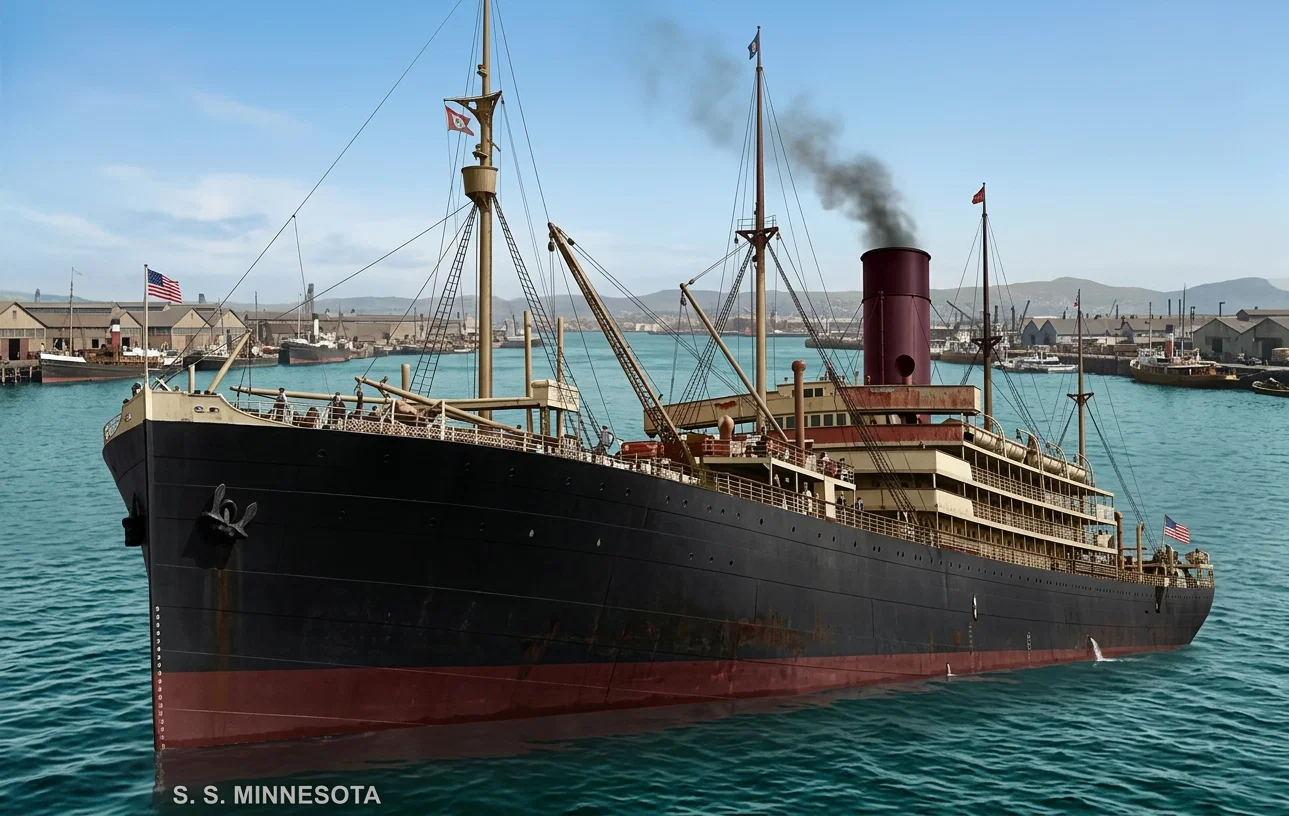
On our voyage across the Pacific, we had smooth seas most of the way, and during the roughest our boat glided along so smoothly that none of our party were afflicted with that uncontrollable affliction, which yields to no remedy yet known,—sea-sickness. The “Minnesota” is perhaps as steady a boat as sails on the seas to-day. Walking around her deck, one covers the distance of about a quarter of a mile. She is capable of carrying thirty thousand tons of freight, and draws thirty-five feet of water. About half the second-class cabins were filled with our own missionaries. The American ambassador to China, Hon. W. W. Rockhill, was also a passenger on this boat. With but few exceptions, we held Bible studies each day, to which we invited the other missionaries. Thus they had the message placed before them. Some became very bitter, while others are studying.
We were a little unfortunate in having an epidemic of the mumps, in which some of our party also participated, but we were able to pass the quarantine at Tokyo. Smallpox is raging in Japan, and there was some doubt as to whether we would be allowed to land. We were anchored five miles out of the harbor, and the Japanese launch came out with three doctors on board. They first lined up the cabin boys, and looked at their eyes, and felt their pulse, one by one. After this came the deck hands, and then the ship’s crew, the steerage passengers, the second-class and the first-class passengers. Then we were permitted to go into the harbor and anchor.
In the distance could be seen an active volcano, with the smoke and fumes pouring forth from its crater. This tended to make one feel rather unsafe.
Our missionaries at the capital gave us a hearty welcome. Three days in this harbor gave us opportunity of seeing the land of the rising sun. Upon landing, we were greeted by a company of men drawing jinrikishas, who were able to speak a few words of English. They promised to take us around the city for twenty sen, assuring us they knew all about the city and the points of interest. But when they land you at the place you desire, instead of ten cents, they will want one or two yen, or fifty cents or a dollar. And if you do not have the correct change, it is no easy matter to pay them the price bargained for.
Japanese civilization seems to have made but little headway in the Christianization of the empire, so far as any exterior appearance presents itself to the visitor.
After another day’s travel along the coasts of Japan, we arrived at Kobe, and there spent another three days.
THE STEAMSHIP "MINNESOTA"
During our stay we took a trip up to Kyoto, the old capital of the empire. It is claimed that one of the old temples there contains three hundred thirty-three thousand three hundred thirty-three idols. We also visited a new museum, which the government has just built for the collection of old relics, and for storing some of the trophies of the Russo-Japanese war and the late war with China. We were particularly interested in the industries of Japan. While it is true that the Japanese are turning out nearly everything, still they are doing it in small houses, and with very crude equipments. We visited a firm that makes printing-presses. Instead of a factory constructed of brick in the foreign style, we found a one-story native house, the castings out on the street, and the workmen out there with their files and chisels, making the parts as fast as orders were received for them. One could not but marvel, after visiting the crude-looking factories, to see how well the presses look when finished. The Japanese have, however, a few modern buildings, which are large and well-equipped.
Our sanitarium at Kobe was filled with patients when we were there. One of our party, Miss Dehn, stopped there to take up her work. From this place we continued our journey through the Inland Sea of Japan, which is one of the most interesting parts of the whole trip, land being in view on both sides nearly all the way.
It was Thursday morning when our boat was carried into the harbor of Nagasaki by the rising tide. Here nearly all the trans-Pacific vessels coal, and this process is a very interesting sight. There were about twelve hundred men, women, and children standing on the scaffolding outside the boat, lifting little baskets of coal from little junks into the port-holes of the coal-bins. During that day about three thousand tons of coal were loaded. At all these ports the boat is filled with Japanese selling their wares, curios, and post-cards. One man had two little metal cups, with nice engravings outside, and asked me five yen, or about two and a half dollars, for them. To get rid of him, I offered him what I considered a small price. He hung around a little while, trying to get more, but finally took the one yen. From this you can see it is almost unsafe to offer them one tenth of their price, or one fifth at the most.
After leaving this last port of Japan, we steamed out into the China Sea, and when within one hundred fifty miles of land, the water became yellow, owing to the deposits from the Yangtse-Kiang River. We arrived at Woosung harbor Saturday evening, and it was about eleven o’clock when the tender landed us in front of the custom house on the bund of Shanghai. Since part of our company were to locate at Shanghai at once, we began to look about for suitable living quarters, and within a week’s time were located. We have since rented temporary quarters for our printing-press, and already have the press removed from the interior, and have received two of our shipments, including two printing-presses, paper-cutter, and other articles. Chinese teachers have been employed, and our workers are busy studying the language.
Elder and Mrs. R. F. Cottrell and Miss Schilberg continued their journey inland, accompanied by Brethren Anderson, Selmon, and Hankins, so that all were quickly located, and the query that arose was, “Who are to come to fill the many other calls that are being made?” I was very glad to report that we have some at the Washington Seminary and the Sanitarium, and that also in our other institutions are many who are interested and planning for work in this13field, and who will, we hope, in a short time take a journey similar to the one I have described.
As I landed again on Chinese soil, China appealed to me as never before, and I felt that we must press into these fields where just now opportunities are presenting themselves, and the calls are so urgent. May God’s richest blessings attend those who are now in preparation. And may we who have gone out be remembered in your petitions to the throne of grace.
Shanghai.
The South American Union Conference
By J. W. WESTPHAL
J. W. WESTPHAL
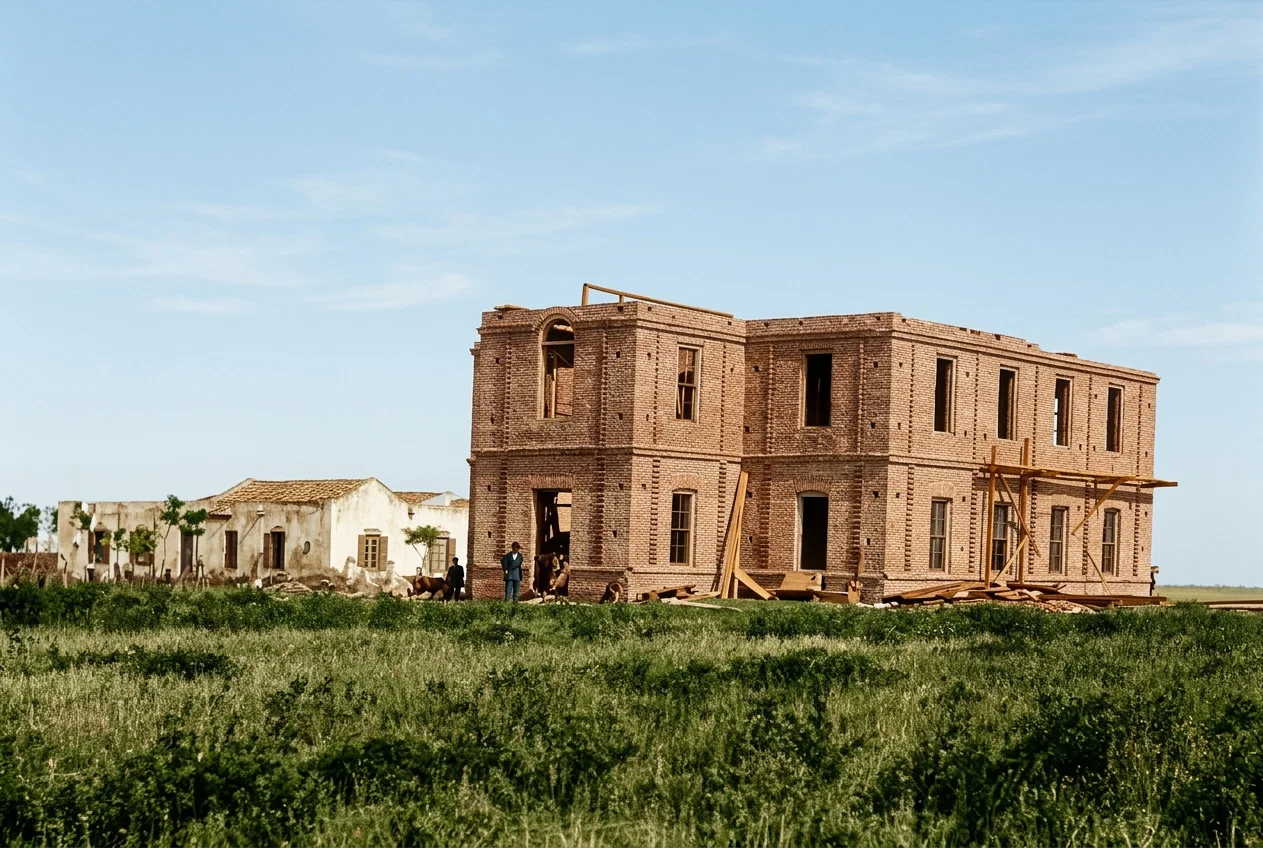
The South American Union Conference meeting was held at our River Plate school, near Diamante in the province of Entre Rios, Argentina, March 7-21. Although the new school building was not yet completed, it could be used for meeting purposes. A forty-by-sixty-foot tent was also pitched, with ten small tents. Room was thus supplied for those in attendance.
Twenty-eight delegates, representing all the fields of the South American Union Conference, were present. North Brazil, Ecuador, Peru, Bolivia, and Alta Parana were each represented by one delegate. From the rest of Brazil there were seven; from Chile, four; from Uruguay, four. The remainder were from Argentina. Our work in South America had never before seen such a representative gathering.
Over the platform in the school building was the motto, "The Gospel to the World in This Generation," and this was the spirit that controlled in the work of the conference. The object ever in view was to enlighten South America with the glory of the great threefold message.
Two years had passed since the organization of the union conference. Rapidly the field had been subdivided from two conferences and one mission field, as they existed before the organization of the union conference, to four organized conferences and seven mission fields. The reports from the different fields showed the wisdom of the arrangement. It has put the leaders in the several fields in closer touch with the people, and placed responsibilities on more men. The tithes and donations have materially increased, and four fields — Argentina, Uruguay, Rio Grande do Sul, and Santa Catharina-Parana — have become wholly self-supporting. As a result, more work has been done. Owing to a cleaning-up of the church records, the increase was apparently not what we had hoped. But the reports showed that a goodly number had been baptized who are firmly established in the truth.
Owing to the former division of South America into three fields, as many separate special interests grew up. After the further division of these fields, it was recognized that these interests should not belong to the local conference or mission in which they might be located, but that they should be general interests of the several conferences and mission fields.
This was held to be true of the publishing and tract society work of Brazil, the publishing, tract, and school work in Argentina, and the publishing work in Chile. This was definitely recognized by the union conference, so that these institutional interests belong to the Brazil, River Plate, and West Coast fields, respectively. They are under the direction of committees composed of the presidents and superintendents of the several fields in each of these grand divisions, the president of the union conference, and three other persons named by the union conference, until such time as the further organization or division of the South American field shall make a change in this arrangement necessary or desirable.
On account of the magnitude of our field, a resolution was adopted, to the effect that a vice-president of the South American Union Conference be elected, located in Brazil, who, together with the other Brazil members of the union conference committee, and in the absence of the president, be authorized to control matters pertaining to the Brazilian fields in harmony with the general plans of the union conference.
From every quarter came appeals for more help. Each field feels its destitution of laborers. Brother Octavio Navarettu, a canvasser of Chile, was recommended to go to Ecuador to labor in the same capacity. Brother Walter Thomann, also a canvasser of Chile, was recommended to go to Bolivia, to assist his brother. Brother T. H. Davis, of Ecuador, was invited to take charge of the canvassing work on the West Coast. Elder George Casebeer, superintendent of the Ecuador mission, was recommended to take charge of the Chile school; and Brother William Steele, of the Chile Tract Society office, was asked to take Brother Casebeer's place in Ecuador. Brother Carlos Krieghoff, who had had charge of the Chile school, was asked to take the place made vacant by the removal of Brother Steele. Brother Ignacio Kalbermatten, of Argentina, was asked to return to the Alta Parana mission to labor. It was recommended that Brother John Gaede, on reaching Brazil from the States, go to the Santa Catharina-Parana Conference to labor.
A resolution was adopted asking for two men of experience to take general charge of the canvassing work in the Brazil and River Plate fields.
The millions of Indians of Peru, Bolivia, and Ecuador enlisted the interest of the conference. A resolution was adopted to open a fund for the purpose of beginning mission work among them, and that the donations of our young people in South America be directed toward this fund. For this purpose one hundred twenty-five dollars was at once subscribed.
THE SCHOOL BUILDING IN ENTRE RIOS, ARGENTINA
Steps were taken to get out more literature in both the Portuguese and Spanish languages as quickly as possible. The first steps were taken to procure a new printing-press for Brazil, a thing that is greatly needed there.
The conference closed with a good feeling of unity, and of hope for the future of the work. The writer was chosen president; Elder F. W. Spies vice-president; and Arthur Fulton, secretary and treasurer.
Buenos Aires, Argentina.
Entering Guatemala
By C. A. NOWLEN
C. A. NOWLEN
Shortly after making our plans to come here, our little girl was taken seriously ill, and it was not best for me to leave. We finally decided that if, on the day set for our departure, the child should show symptoms of recovery, I was to go, and if not, to stay. In the meantime I had been sick for about a week, with malaria; and we would have to produce a doctor's bill of health at the steamship company's office before they would sell us tickets. Monday came, and as Marjorie seemed better14[later she grew worse, and died, the mother being left alone through this trying ordeal.—Ed.], I mustered up strength enough to accompany Brother Cardey down to the hotel, where we found the doctor, and, very fortunately, he made no personal examination, but gave us our health certificates at once. On board the boat I could rest most of the time, as well as on the train, and soon after arriving at Guatemala City, I was able to walk about considerably.
We spent two or three days around town, looking for some suitable place where we could begin operations. We did not seem to find the exact spot. About the third day, we succeeded in finding two vacant houses, right beside each other, situated on a wide avenue, with tram-cars passing in front, in a quiet suburban part of town. The larger house was built on such a scale of magnificence as to size, number of rooms, etc., that Brother Cardey had no idea that we could obtain it, at any rate such as we could afford to pay.
As I speak the Spanish, the negotiations had to be left in my hands. Under the circumstances, I did not feel that we could offer more than three hundred dollars national money, which, with the lowest ordinary rate of exchange, would not be more than twenty-five dollars gold. The contracting parties on behalf of the president, decided to accept our proposition, and in the contract as finally made out, we have a clause inserted giving us an option on the property for four years longer, on same conditions, with rental as the first year, excepting that the government should raise additional taxes, etc.
Monday was to be a memorable day to all the Guatemalan people. On that afternoon, April 20, a serious attempt was made on the life of the president, and at once all the city was in an uproar, and banks, money exchanges, and shops were closed. Passenger trains could not depart, nor people leave the city. Even now, if I wish to go away, I hear I must secure a passport. This was the very day upon which we were to complete the contract for the president's property; and if he had been injured seriously, or killed, doubtless we would not have been able to rent the place at all. Of course the party never came to us on Monday, as he had agreed, and, in fact, did not put in an appearance until three days later, when he called at the hotel, and we had the contract made out for one year, with two months' rent in advance.
I have just learned that there are in Guatemala only about five hundred thousand people who are white, including all the Spanish, French, and Germans,—practically all foreigners who can read or write. The balance is composed of seven Indian tribes, with different languages of their own, understanding but little Spanish. And, while there are a few scattered Protestant missionaries, we are satisfied they will be no help to us. But our trust is in God.
Guatemala City.
The Work in Florida
By R. W. Parmele
NOTWITHSTANDING the many difficulties we are having to encounter, the work is onward in this field. Our constituency is small, and our force of workers is correspondingly small, but the Lord is blessing our efforts. Since our last camp-meeting, over thirty persons have accepted the truth. Every preacher in the conference has had some fruit from his labor.
Our best time for tent work is in the winter. It is hardly feasible to run tents from June to October on account of the rains. But the winters are delightful, and generally very dry. During the winter months there are thousands of tourists in Florida, and the residents of the State are busy entertaining them, while the tourists are busy seeking amusement. So our congregations are largely made up of tourists. Thus it is readily seen that for many years the Florida Conference has been engaged in presenting the truth to people from the Northern States, and then sending them home to bless the conferences whence they came, while the membership of the Florida Conference has not materially increased.
The result of our work, as noted above, has not been attained without a battle. The first of this month I received word from one of our white ministers that his tents had been cut down, and he and his company had been ordered to leave town, or they would be carried out on rails. The opposition was so determined that it seemed the only thing for them to do. In a letter from our only colored preacher, dated May 22, occurs the following: “I have left—for a while. The white citizens first cut our tent-ropes, and later threatened to burn them down, and I was ordered to pull up and leave.” Enclosed with this letter were two threatening letters this brother had received, with no names signed to them, and one from the town council, ordering him to leave. The reason for this action, is, I believe, exactly as stated in the brother’s letter: “The people said the preaching was all right, but they could not have their negroes stopping work on the Sabbath.” (Some had begun the observance of the Sabbath.)
As a people, we expect this work soon to come to a close. We believe that the work will close, and Christ will come, “suddenly and unexpectedly.” And we profess to believe the Testimonies which have said repeatedly that the work will close first in the South. If this is really the case, should we not be putting forth our strongest endeavors in the South, that all may be warned before the work is stopped entirely? Such experiences as these should spur us on to greater activity, as they are but the first mutterings of the coming storm. Rowdy elements have often disturbed our meetings all through the history of this work; but this is the first instance that has come to my knowledge where the town council has ordered our meetings stopped.
I am glad to be able to report, also, an increased interest in the canvassing work. One of our ministers found it impossible for him to continue actively in the ministry on account of failing health, due to bronchial affection; but he is spending two days of each week in the canvassing work with excellent results. The Florida Conference now ranks the first in the reports of the canvassing work in the conferences composing the Southern and Southeastern union conferences.
R. W. PARMELE, President.
Asia Minor
By Claude D. AcMoody; Z. G. Baharian
BRUSA.—I am now on a trip through Asia Minor, and have been having some good meetings. I held a two and one-half months' workers' institute this winter with ten in attendance.
This is Turkey yet, but careful management will bring better relations with the government and with the Protestants, and is doing so. I have some warm friends among leading Protestant missionaries.
This is a very interesting city. It was a Grecian capital at one time, and was the capital of Turkey before the Turk took Constantinople. The place is full of mosques and thermal baths, the hot water coming directly out of the mountains.
I am now preparing some matter to be translated into the language of the people for our field work.
Remember the work in this part of the earth, and pray that more help may be sent. CLAUDE D. AcMOODY.
MERSINE.—Mersine is an important port of Cilicia on the Mediterranean Sea. During the last twenty-five years, it has grown larger, and has been beautified with magnificent buildings, roads, and gardens. Its population is of different religious beliefs,—Moslems, Orthodox Greeks, Catholics, Armenians, Protestants, and Fellahs,—the remnants of the nations of Canaan at the time of Joshua. The American Reformed Presbyterians have established a mission among the Fellahs to educate their children.
We are glad to see that the third angel's message has entered this city also. A brother who had accepted the message in Tarsus, went to support himself about five years ago, and has lived there since then. As he was not a man of fluent language, he let his deportment bear testimony to the truth. And so it has done. Many times the Protestant minister has openly told his congregation to look on him as a model of Christian life. Lately a revivalist has gone there, and held revival meetings. In one of the meetings, a prominent Protestant named Hovakim prayed, saying, “Show me in whatsoever thing that I lack, and I will obey thee.” After the meeting was over, our brother called on him, and told him that he would show him in what he was lacking; that is, Sabbath-keeping. Then they called on the revivalist preacher. He tried to cover up the15truth; but when he saw that he was unable to do it, he recommended the man not to talk with our brother. This behavior of the preacher moved the heart of a Greek to investigate the truth, and he soon began to see that the preacher was full of hypocrisy. Our brother reported the condition of things to our minister in Adana, Alexan Buzugherian. At once he wrote a letter to Mersine about true Christianity. This letter moved the heart of an English merchant to keep the Sabbath. As soon as our minister heard about it, he went to Mersine, and at once a Greek brother also obeyed, and a backslidden soul returned. Now our minister has been there since April 3, and we receive encouraging letters from him. In his letter of April 8 he writes:—
“As you know, I came here April 3. Thanks to God I have much work. To-night I returned from Brother Charles' house, having had a Bible study. . . . Now there is much persecution against me and him. Two days ago the brother of Lazari [the above-mentioned Greek, who began to investigate about the truth] attacked me with great wrath to beat me, while walking in a lonely place. I thank the Lord he saved me from his hand. As he is an old Greek, he can not bear his brother's apostatizing from the orthodox religion. Let us pray together that the Lord may change his heart. Mr. Andonaki, the Russian consul, has called Brother Lazari and rebuked him severely, and even attempted to beat him, but his brother prevented him. Let us see what will happen on next Sabbath. Will Brother Lazari be strengthened to keep the Sabbath? and what will the consequence be? Brother Charles, the English merchant, is speaking about the truth to many, and I am teaching him the truth step by step. His heart is open to the truth. Though he is a son of a great man, he is very humble. Brother Hovakim also is near the truth. He was present in our study to-night.”
There are now four souls obeying the message here. This is a good beginning. The Englishman above spoken of, heard about our truth while in England; but the seed sown at that time has borne fruit now. Our minister finds him a help in his work. May God stablish him in the faith. Z. G. BAHARIAN.
The Takoma Park (D. C.) School
By T. E. Bowen
On Wednesday afternoon, June 3, a few friends gathered at the school building to join in the closing exercises which marked the end of the first year's work of this school. A brief review of the year's work was given by the writer. During the term sixty-four students were enrolled, the average attendance being about fifty. The work done extended over grades one to eleven, and although the year was a short one, nearly all the studies outlined for a full year's course were completed.
Stanley C. Morian and Miss Sadie Clark, assisted by Miss Eva Bowen, have carried on the work of the school. Besides these regular teachers, Miss Etta Spicer has given lessons each week in drawing, and Miss Bula Russell, instruction in music.
The principal, Mr. Morian, then made a short address, giving a little of their experience in the regular work of the school. Elder A. G. Daniells made some appropriate remarks regarding the school and its work, and also gave some good instruction to the pupils.
Prof. Frederick Griggs followed with a short address filled with kindly thoughts of appreciation of the faithful efforts put forth by the teachers in behalf of the children and youth connected with the school.
The school closes with good prospects for another successful year's work. Plans are being laid for a larger attendance, with better facilities for carrying on its work.
We feel very thankful, indeed, for the blessing of the Lord attending the work of the past year. To him belongs all the praise.
T. E. BOWEN.
Closing Exercises of Walla Walla (Wash.) College
By M. E. Cady
ANOTHER year of school work is just completed at Walla Walla College, and a very prosperous one it has been in every way. The enrolment in the college department was two hundred fifty-two, with ninety-six in the normal department, making a total enrolment of three hundred forty-eight, as against two hundred sixty-eight the previous year. This indicates a gain of eighty students for the year just passed. The average attendance throughout the year has been very good, a larger percentage of the students entering the college at the opening and remaining until the close. The college has also been favored with an older and more mature class of students than in former years. This enables the college to carry a more advanced and substantial grade of school work.
There has been an excellent degree of spiritual interest during the year. About forty have been baptized, several of whom knew nothing of the truth before coming to the college. Two of these were members of the Roman Catholic Church, but have now identified themselves with our faith, and are out this summer in the canvassing work. One of these two young women completed the advanced normal course, but both will return to college next fall, as they wish especially to continue the study of Bible and history. A young man, a member of the Presbyterian Church, accepted the truth and is out in the canvassing work this summer. He also expects to return to the college in the fall, that he may further qualify himself for service in the Lord’s cause. A Japanese, a member of the Methodist Church, was converted and baptized, and has now a strong and determined purpose to go to his native country, and give the light of the third angel’s message. Others might be named who have come to the college strangers to present truth, but who have yielded their hearts and lives in obedience to its convicting power.
About sixty have entered the canvassing field this summer, expecting to earn scholarships for the next school year. An excellent degree of interest was manifested in the canvassers’ institute, and a large majority of the students took advantage of the instruction given. Besides the regular Missionary Volunteer Society, a Foreign Missionary Volunteer Band was organized having a membership of about forty. The work and study of this band brought a splendid missionary spirit into the school. Several of its members are planning to enter a foreign field soon.
Commencement Week Program
The closing exercises of the school consisted of several programs rendered during the week. These programs were helpful in showing the character of the work done in the various departments.
Sunday evening, May 3, the children from the normal department gave an interesting program bearing on the work in Spanish America. The children had raised by self-denial $11.38 to be used to help in buying a mule for a canvasser in that field. The audience added $17.59 to the children’s offering, making a total of $28.97 to be applied in purchasing a mule. The many scriptures repeated from memory by the children, and the enthusiasm manifested in missionary work, showed how they are being prepared to act a part in the closing work of the message.
On Sunday, May 10, the class in physical culture rendered an interesting program, which showed that this work in the school is very helpful in developing the body physically.
On Wednesday afternoon and Thursday evening, May 13, 14, were given two musical recitals consisting of numbers rendered in both vocal and instrumental music. These programs indicated that progress has been made in this department during the past year.
Thursday morning were held the industrial graduating exercises. Elder E. E. Andross, lately from England, gave the address on this occasion. He emphasized the value and importance of this phase of the educational work in preparing men and women for work in foreign fields. There were eight graduates,—three from the printing department, three from the dressmaking department, one from the bakery department, and one from the broommaking department.
Friday morning, May 15 a program was rendered by the members of the normal training class. It consisted of selections of music rendered by the children, and several interesting papers prepared by different members of the class on the subject of Christian education. These papers briefly covered the history of Christian education from Eden lost to Eden restored, emphasizing the great work of educational reform that is to be carried on under the third angel’s message.
A Good Sabbath
ON Sabbath, May 16, Elder H. A. Washburn delivered the baccalaureate sermon, dwelling upon the words found in Heb. 3:1. As he considered “the Apostle and High Priest of our profession, Christ Jesus,” showing what a complete and perfect Saviour we have,—one who has been tempted in all points like as we are,—the Spirit of God came in and witnessed to the word spoken. Hearts were melted by the recital of Christ’s temptations and sufferings in the wilderness, and the agony and anguish that he experienced on the cross, which assures his followers that the enemy has been vanquished, and the victory won for those who are faithful.
The student social service in the afternoon was a blessed occasion. It was a meeting of praise to God for the manifold blessings of the year. From ten to16thirty were standing on their feet at a time, waiting to give their testimony of praise and thanksgiving for the blessings of the past year. Some who had grown careless, and some for the first time in this last students’ meeting, yielded to the influence of the very manifest presence of the Spirit of God. About fifty thus responded to the call for consecration. Just before closing the meeting with the prayer that God would bless those who had thus responded, and would be with all during the summer vacation, a request was made for all who were fully determined to live for Christ to stand. It was very gratifying and cheering to the teachers to observe that the entire audience arose to their feet. This service was a blessed occasion, and one that will be long remembered.
The Closing Exercises
Sunday, May 17, at 11 A. M., the regular graduating exercises were held. The writer gave the address on this occasion, the subject being “Christian Education: a New and Living Way.” The graduating class was a large one, numbering twenty-two. Three received diplomas from the advanced normal course; four from the elementary normal; two from the preparatory medical; two from the German Biblical; eight from the commercial; and three from the stenographic course. With scarcely an exception the members of this large class have dedicated themselves to the work of the Lord. One matter, perhaps seemingly small, connected with the class shows how the missionary spirit is burning in their souls: Instead of spending money, as usual, to have a class picture taken, it was decided to take this means and start a fund to be used in helping train young men and women in the schools in their native land. The sum given by the class for this purpose amounted to twenty-five dollars. When this matter was spoken of at the class meeting held Sunday evening, the amount was increased by contributions from some in the audience. The class exercise was interesting and profitable. It was preceded by a farewell reception held on the lawn. This was an enjoyable occasion, but not unmixed with sorrow as we thought of the happy hours spent together in the work of the past year, and that not all would be privileged to associate thus together again; but our hearts were cheered by the thought that the grand reunion will soon take place for those who are faithful; so with kind admonitions to faithfulness and perseverance, and with expression of good wishes for success, we said farewell.
The past year has been a very successful one, and has given to the faculty a clearer view of the great work that God designs shall be done in this institution. The prospects for the year to come are very bright. The debt of the college is nearly paid off. About nineteen thousand dollars is already paid, and there is a good prospect for the balance (six thousand dollars) to be paid before the school opens, Sept. 16, 1908. With this burden off from the college, better facilities can be provided, and much better work can be done. As we review the work of the past year, and note the progress that has attended it in its various features we can only say, “What hath God wrought.”