(NOTE.—The first chapter gives us a great general view of God's purpose concerning man, of the power that He has furnished for the working out of that purpose in His Holy Spirit of promise, of His desire expressed in the inspired prayer of the apostle, that God's people might meet all that He required of them, that they should be "to the praise of the glory of His grace." The remainder of the epistle has more or less to do with personal experience, and what God does for the children of men.)
Questioning the Text
1. What did God do to these believers?
"And you did He make alive, when ye were dead." Verse 1. Note 1.
2. By what means were they dead?
"Through your trespasses and sins." Verse 1. Note 2.
3. How, then, did these who were thus made alive once walk?
"Wherein ye once walked according to the course of this world, according to the prince of the powers of the air, of the spirit that now worketh in the sons of disobedience." Verse 2. Note 3.
4. Was that true of these particular believers alone?
"Among whom we also all once lived in the lusts of our flesh." Verse 3. Note 4.
5. What did we do while living in the lusts of the flesh?
"Doing the desires of the flesh and of the mind." Verse 3. Note 5.
6. Of what were we children during this time?
"And were by nature children of wrath, even as the rest." Verse 3. Note 6.
7. By what was the great change wrought?
"But God, being rich in mercy, for His great love wherewith He loved us, even when we were dead through our trespasses, made us alive together with Christ." Verses 4, 5. Note 7.
Notes
1. "And you."—Let the letter of the epistle come home to each one of our hearts,—count ourselves among the "you." "You did He quicken," we have in our Common Version; "you did He make alive," literally. When God created man he had the twofold life of the soul and the spirit,—the soul the life of the flesh, the life that is in the blood (Lev. 17:11), the life that is common to both man and beast; but he had a life higher than that, the spirit-life, the life direct from God. Losing that, man became a dying creature; losing that, he was spiritually dead, or, as expressed by the apostle elsewhere, "separate from Christ," "without God," "alienated from the life of God," accounted dead because doomed to die, and requiring the creative power of God in order to make him alive.
2. "Through your trespasses and sins."—If man had lived according to the law of his being, which was the great moral law of God, he would never have died, never would have been accounted dead. The higher life was in harmony with the higher law; the lower, soulical life was in harmony with the physical law of the being. But when man transgressed the higher law of his existence, the results of that transgression extended through everything below, and the very law that was transgressed became the power which destroyed. And so we read in 1 Corinthians the 15th chapter and the 56th verse, "The sting of death is sin; and the power of sin is the law," which causes the death of the sinner. It is the turning aside of the electric current from the wire which is supposed to be its proper channel into the body of the man who intercepts that current, that causes his death. He has perverted the law, or the channel, of that current's operation. When man perverts the power of the living law of God, that law must cause his death. All death is in consequence of sin. Death is but finished sin. James 1:15. Would we know, therefore, how evil sin is? Look upon death, its finished work.
3. "According to the course of this world."—When man departed from God, he followed the lower plan, he chose another leader, yielded allegiance to another kingdom, and that kingdom was the kingdom of this world, the course of this age—this world that had yielded itself to the prince of the powers of the air. When Lucifer transgressed the higher law of his being, he fell, and there fell with him a third of the angels of God. Those are the powers of the air under the control of Satan, and those who turn from God and yield to him are walking "according to the course of this world, according to the prince of the powers of the air, of the spirit that now worketh in the sons of disobedience."
4. "Among whom we also all once lived."—God makes no discrimination among men, so far as their salvation is concerned. "All have sinned, and come short of the glory of God." Rom. 3:23. "There is none righteous, no not one." All, therefore, need saving. Some have not yielded themselves to sin as deeply as others. Some are not as sick with the awful malady of sin as are others, but the same deadly disease germs are indigenous to every son and daughter of Adam, and without Christ we all follow the lusts of our flesh. There is no respect of persons with God. However men may regard them, He sees mankind utterly lost and without hope in themselves.
5. "Doing the desires of the flesh and of the mind."—The flesh is sinful flesh, and the mind is the carnal mind, or the mind of the flesh. See Rom. 8:7. The doing, therefore, is fleshly, sinful doing; in fact, there can be no other doing. One is bound to sin who is ruled by the carnal mind. Outwardly his works may seem to be good, but the motive that prompts him is a selfish motive after all. There is no difference between the purchasing power of a dollar given by a sinner and a dollar given by a righteous man. There is greater potency, however, in the latter for good than there is in the former. The one has behind it the selfish motive and selfish thought of the giver; the other has behind it a life that is consecrated to God, a prayer that the dollar may be used for all that God designed that it should be used in the conversion of souls to Him. It is not that God wishes to decry, or belittle, the deeds which men do, the efforts they put forth to do good; it is that He may save them that He would lay bare the hopeless condition of the man without a divine Saviour.
6. "Children of wrath."—The Bible calls men the children of that which they assimilate in character. Jesus called the Jews the children of the devil, because they were doing the work that Satan would have them. Some of them are called children of Belial, or worthlessness, because of their worthless lives. The apostle calls them in this our lesson "sons of disobedience," because those thus called love disobedience. But he would also have us understand that the sons of disobedience are the children of wrath, and God's wrath ends in death. God tells us this that He may save us from it. He would have us understand that disobedience will end in utter extinction of being, and that all those who are like-minded will be found at the last children of wrath.
7. "But God."—In this is our hope. Notwithstanding the awful condition of the children of men and their utter hopelessness so far as man is concerned, in God there is hope. First, He is rich in mercy toward the sons of disobedience; secondly, His great love wherewith He loved us moves Him to do all in His power that He may save us, and that great love has demonstrated itself in the giving of the Lord Jesus to die that the sinner might be saved. He loved us even when we were dead through our trespasses. That is when we needed to be loved, saved when we needed to be saved, mercy extended when the mercy was needed; and all this made us alive together with Christ, not apart from Him, where we are left to ourselves, but with Christ, or, as some of the ancient authorities read, in Christ, in Him who lives forever.
We will have more of this wonderful sentence in our next study.
Decorative Divider
—★—
Decorative Divider
—★—
Eugenics and the Improvement of Humanity
By Editor
Several of the states have under consideration laws on the subject of Eugenics. It appears as if they will, in some instances, be passed. The demand for such laws is a confession that the race is deteriorating, and that mankind is becoming so filled with disease that it is no longer safe to issue marriage licenses to people who can not present a clear bill of health from competent physicians. The California League of Justice has another plan to propose. It desires to get authority, by state enactment, to “mate in marriage twenty-five selected couples on a state farm, where they and their offspring can be reared under idyllic conditions and the eyes of experts.” It is interesting to observe all the plans that men advance for the improvement of the race. It is interesting also to note that the Lord, in His patience and kindness, permits mankind to try out all its futile plans, while at the same time He tells them that there is just one effectual way of really improving men and women, and that is by the means of the regeneration that comes through the salvation provided in Jesus Christ.
Hatred for Turkish Rule
[We clip the following from the Wilkesbarre Record, Pennsylvania, of December 23, 1912. It throws light on some phases of the Balkan question not often discussed. The missionary is Mr. R. S. Greaves, and the article is a letter he writes to an old companion in labor, Pastor Victor A. Klein, of Wilkesbarre.]
It is now over four years since the eyes of the world were turned on Turkey, as amidst general rejoicing the constitution was proclaimed; and people were surprised to find Moslem and Christian hanging the one on the other's neck, and with knife in hand calling each other brother. For a brief moment, religion and nationality seemed to be forgotten, as amidst the general excitement each vied with the other as to who could seem the most patriotic toward his country. It was an immediate emancipation from many heavy burdens and restrictions, and everywhere there seemed a spirit of greater liberty and freedom. For a time all went well, but little by little one could notice the reaction setting in. The Turks did not do all that was expected of them, and on the other hand the Christians were not slow to find fault, and felt greater liberty to air their grievances than formerly they had dared to do. It was not long before it could be plainly seen that the Turks and Christians no longer considered themselves brothers, and as the Turk had power on his side, it is not difficult to guess how things generally went. From petty things often hard feelings arose, until it got to be the common saying that, whereas under the old régime they had one master, now they had a dozen. Personally, I have failed to find this true, for under the new administration I have seen many improvements that formerly were never thought of.
Hatred for Turkish Rule
"In the country places and small towns, perhaps, the people have had the most cause for complaint, and often their position has not been an enviable one. At times there have been reprisals with the natural consequences, until hatred for the Turkish rule has spread everywhere.
"The Christian people do not by any means always agree among themselves, and the name is often the only thing that reminds one of the Saviour of mankind. Many of the priests know practically nothing of the Word of God; but they are able to perform the rites of the church, and they can baptize the babies, marry the people, and bury the dead. There is one subject, however, on which these people have perfect agreement, and it is the thoro detestation of the Turk. It is this, rather than either love or religion, that has bound them together during the present crisis.
"A Greek or Bulgarian may be an Ottoman subject, but his heart is with his own nation, and his fellow countrymen across the border have always had an open ear for his troubles, until sympathy has taken the form of strong action; and the outcome of the whole thing is the present war.
"In the press one sees the opinion of writers divided; some speak of the Turks as brave and honorable men, while others describe them as a lot of barbarous people. If we could divide them into two classes, and place each man with the class to which he belongs, undoubtedly we should find gentlemen who earnestly and sincerely desire the good of their country, while on the other hand we should find a rabble that are ready for any work, no matter how inhuman.
The Turk and His Religion
"A Turk is looked upon as being fanatical, and he certainly regards his religion as superior to all others, and is not willing to allow any Mohammedan to change his faith. Yet he allows Christians to have their own forms of religion, and also extends the same privilege to the Jews. It is well to note that this latter race of people have no complaint against Turkey from a religious standpoint, and it is the Mohammedan soldier who has often protected her from an infuriated Christian(?) mob, especially on such days as Good Friday, when certain demonstrations are held. In certain parts of Turkey, had the Greeks been the rulers, probably most of the Jews would have had to leave, exactly as they have had to do under the same priesthood in Russia. Even in Greece itself, where the people are better educated than the Christian element in Turkey, one can visit Athens and other principal cities, and almost the entire absence of the Jew is quite remarkable.
"In the splitting up of a portion of the Turkish Empire, nations acquiring new territory will have to face new duties; for races will fall under their rule with different ideas and conceptions of religion than they themselves hold. In what spirit are these nations going to meet their new subjects? Also, how are the different missionary societies going to be dealt with, who, under the Turkish government, had much freedom? I think it is well to call attention to the fact that only a few months ago a Protestant missionary in Greece was sent to prison because he preached things out of harmony with the Greek Orthodox Church. Such things are against the Greek law. Also the Bible is allowed to be printed only in the ancient language; and, as the common people can neither read nor understand this language, they practically are without the Bible, and know nothing except what they hear from the mouth of the priest. The Turkish government places no such restrictions, and the agents of the American and British Bible Societies carry on their work to the benefit of the people; whereas in one of the principal cities of Greece a Bible agent was recently arrested because a lawyer thought he had some Bibles in his possession which were translated into the modern language. The agent was bound with a rope, and led publicly to the station, where he was taken by train to Athens. The accusation was entirely false, and the colporter was given his liberty.
Bibles Excluded
"Much of the territory formerly governed by Turkey now falls under Greek rule, and it certainly would be very regrettable if the spirit of religious intolerance should be exercised in the newly acquired land. It would mean that the people could no longer hold the Bible they now possess, and that henceforth the Bible colporters must sell no Bibles unless printed in the ancient language — a language even less comprehensible to the inhabitants of Epirus than those of Greece.
"Let us hope that with the enlargement of territory there may be a corresponding enlargement of ideas, and that every person who is willing to conform to the government in temporal matters, may be allowed perfect religious freedom. This would be a good way of celebrating the new rule, and of showing good intentions toward the various peoples who have been brought under it.
"Surely the war ought not to be without its lessons, as we see the once proud nation getting ready to leave the territory over which she has ruled for 500 years. Christians and Mohammedans have not equally enjoyed the same benefits, while on the other hand in certain matters of religion, Turkey has given some privileges which have been much appreciated.
"There have been some men in the empire who have urged reforms, but she has been slow to listen to advice, and failed to do to others as she would have been done by. The rule of the sword has not been a successful rule, and in the hour of calamity she has stood as a stranger in her own country. The inhabitants have ever been more ready to help the invader than their own ruler, and the conquering armies have been hailed with delight and glad shouts as soon as it was thought to be safe to show their real feeling. In her dying moments her own subjects have left her, and would gladly help to thrust her deeper into her grave.
Beaten at His Own Game
"The Turk has been proud of the fact of not only being a soldier, but also a conqueror. During the Albanian troubles I have seen troops with long lines of cannon and machine guns marched to the front; officers giving sharp orders here and there. I have seen armed soldiers leading rows of chained captives to prison. I have seen policemen roughly dictating what must and must not be done, but never until the last few days have I seen the Turk with his sword and rifle taken from him, and being compelled to march along as a prisoner of war, with naught left of his manly bearing, and being governed by the men, between two rows of glistening bayonets, and behind these huge crowds of people. The haughty spirit had all gone, and mostly all seemed to be looking toward the ground, as they were led on their way to prison. Quite a change, indeed, for the former conquerors, and it is doubtful whether the Turk will ever again be quite what he has been. He has been beaten at his own game, the only game he ever pretended he was any good at playing; and not only beaten, but badly beaten.
"And now, as this part of his history is drawing to a close, let us hope there may be a good future for him, a future that will bring him far more happiness and peace than in the past he has ever known. This war may have a bearing on the greatest of all missionary problems,—the conversion of the Mohammedans. The proud warrior may find that the dead prophet has been unable to help him in his struggles, and may turn to the One who is not dead, but alive forevermore, and the Turk's closing battles may be far more glorious than any of his former ones. He may learn to get the victory over himself. At least let us not only hope so, but try to do our part toward helping him."
News From the Mission Field
By Editor
OUR WORK AND WORKERS
[Gleaned from our exchanges since last report, January 21, 1913.]
A SMALL Sabbath-school has been organized at Suva, Fiji.
A REPORT from Pastor G. W. Caviness states that the work is progressing very encouragingly. He baptized 14 during a recent trip to La Visnaga.
IN Malolas, P. I., three souls have been baptized; in Porto Rico five, and four others are walking in the light who will doubtless follow their Master in baptism soon.
FOUR individuals in Assiut, Upper Egypt, are observing the truth, one of whom — a Greek sister — has already been baptized, and the other three expect to be baptized soon.
PASTOR F. H. DEVINNEY, of Japan, reports a recent trip during which he baptized three adults in Yusawa, three in Kuji, three in Saseho, and seven helpers in our Japanese sanitarium in Kobe.
PASTOR F. A. STAHL writes of the work among the Indians of Peru, South America, and tells of the finishing of the mission buildings at Platiria, where he says there is a greater interest than ever. About 100 were baptized last year in Argentine. In a little more than two years 142 members have been gained in the East Brazil Mission.
AN account comes to us of two men who recently walked 40 miles to one of our missions in India to inquire why the workers there observed the seventh day. After careful Bible study the men returned home, returning in about two weeks, this time bringing others with them. The workers have since learned that the whole village from which they came11are now keeping the seventh-day Sabbath and working on Sunday. Thus honest hearts in the dark portions of the earth are being convicted and converted by the great threefold message.
• REPORTS from Africa tell of prosperity in the work of the various missions. In Matandane recently 24 adults were baptized, and there are 66 in the Bible classes in that district. Baptism has been administered to 15 at the Fish River Mission, to nine at the "Rustica" church, Wynberg, to three at Bloemfontein, to 24 in Neno, Nyasaland, 65 at Gendia. Within a few months' time a little church of about 35 members has been raised up in Keizan, and about 30 more are obeying the truth, most of whom it is hoped will be baptized later. Three at the Shangani Mission are awaiting baptism. Eight new converts at Kihuiro have made their covenant with God, and 90 or a 100 more are being prepared for baptism.
PASTOR R. F. COTTRELL writes from Chang-Sha, China, that "excellent reports are coming in from our out stations. About 50 are reported as desirous of baptism in various places. We have never had the interest in Chang-Sha that we are having at present. . . . Twenty or more students from one of the government schools are attending daily Bible studies at our chapel. The average Sabbath attendance is over 50, and the women's meetings held on Tuesdays of each week are also well attended." A report from Shanghai states that four women, all converted from heathenism, have received baptism, one of whom is over 80 years of age. In Hongkong, a few weeks ago, six were baptized, one of whom is manager of the largest firm of Chinese printers, bookbinders, and stationers in the city. He is now superintendent of the Sabbath-school. The offices and plant of the China Union Mission and Signs of the Times Publishing House in Shanghai, have been transferred to their new headquarters in the eastern district of Shanghai, the buildings of which have just been completed.
In the Home Country
BAPTISMS: South Carolina, 15; Ohio, 17; California, 46; Washington, 21; Idaho, 6; Ontario, Canada, 3; North Dakota, 14; Iowa, 6; Colorado, 3; Kansas, 39; Nebraska, 14; Illinois, 9; Michigan, 14; Pennsylvania, 25; Massachusetts, 42; Texas, 4; North Carolina, 30; Kentucky, 17; Alabama, 6; Tennessee, 5; New York, 22; Greater New York—Brooklyn and New York City—during the year, 150, comprising nine nationalities,—English, German, Swede, Finn, Italian, Hungarian, Scandinavian, Jew, Afro-American, and possibly others; Virginia, during the year, 96; Richmond, Virginia, during the year, over 50 white and about 20 colored persons; over 600 in all, and not all are ever reported.
CONVERSIONS: Virginia, 34; California, 11; Oregon, 11; Montana, 18; Washington, 6; Ontario, 7; Quebec, 5; Iowa, 25; North Dakota, 3; Minnesota, 38; Colorado, 5; Kansas, 24; Missouri, 26; Michigan, 33; Illinois, 15; Indiana, 7; West Virginia, 8; Pennsylvania, 4; Ohio, 2; Massachusetts, 6; Tennessee, 29; Georgia, 35; Louisiana, 18; North Carolina, 30; Mississippi, 15; Chesapeake Conference—Delaware and part of Maryland—during the year, 100.
ADDITIONS TO CHURCH-MEMBERSHIP: South Missouri, 75 since camp-meeting; Arizona, 4; Washington, 3; Hamilton, Ontario, 29 during the year; St. Johns, Newfoundland, 7; Manitoba, Canada, 3; Iowa, 5; Minnesota, 17; Wisconsin, 8; Michigan, 6; New York, 4; Tennessee, 7; Kentucky, 9; Jackson, Mississippi, 15 during the year.
Back numbers of the SIGNS to Mrs. James F. Woods, 322 South Detroit Street, Warsaw, Indiana.
Copies of our papers and tracts to Myrtle Harrell, 208 Francis Street, Hot Springs, Arkansas.
Copies of SIGNS OF THE TIMES weekly and monthly; Watchman, Protestant, and good tracts to W. H. Armstrong, Banners Elk, North Carolina.
Tracts, Liberty, Protestant Magazine, SIGNS OF THE TIMES, Youth's Instructor, and Little Friend, to Mrs. C. Fraser, Homewood, Illinois.
Signs of the Times Magazine, Watchman, Good Health, Life and Health, and old Christian books for Sabbath-school Library, to Will T. Dawson, 971 Joseph Place, Memphis, Tennessee.
Seventh-day Adventist literature to Mrs. B. A. Nickerson, Orleans, Massachusetts, and Mrs. E. A. Robinson, Holtville, California.
STANDARD HOUSEHOLD LUBRICANT
For Everything About the House that Needs Oiling.
Standard Household Lubricant is put up in a can that is itself an oiler—cannot break, as a bottle may.
Always ready for use. Just the right oil for sewing machines, baby carriages, door hinges, locks, etc. Never gums or corrodes.
Get a tin of Household Lubricant today—have it at hand when you need it.
Put up in 4 oz. and 8 oz. lithographed tins.
Dealers Everywhere
Standard Oil Company
(Incorporated)
461 Market Street San Francisco
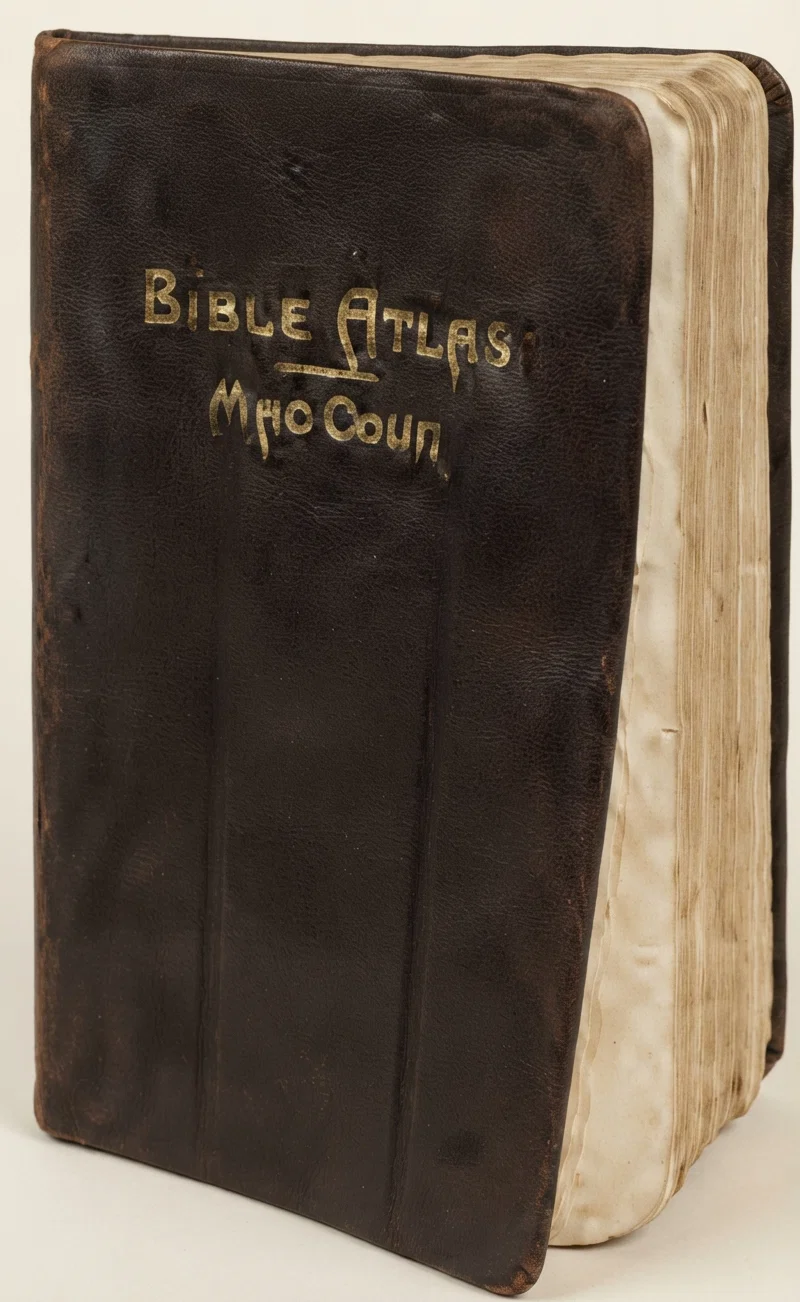
A Bible Atlas
By Editor
New Premium of the
Signs of the Times Weekly
The Bible Atlas contains 38 Physical Maps of Palestine, based upon the results of an actual survey, with an identification of the Biblical Sites as far as known; also 82 Progressive Historical Maps embracing a special map for each specific period of the country's history, from the earliest date to the present time.
These maps have been endorsed by Historical Authorities and by Religious Workers, irrespective of Creed, as the best maps on the subject ever printed, and we are glad to provide this helpful volume for our Bible Students.
Bound in Leather All maps are in colors
Rates
"Signs of the Times" Weekly, 1 year......................$1.75
Total value.............................................$2.75
Special, the two......................................$2.25
"Signs of the Times" Weekly, 1 year......................$1.75
Atlas, with text and maps, 246 pages.................... 1.50
Total value.............................................$3.25
Special, the two......................................$2.50
Address our depository for your state, or
Signs of the Times, Mountain View, Cal.
"Patriarchs and Prophets"
By Editor
in Limp Leather
An edition of "Patriarchs and Prophets," on thin paper, and bound in limp leather, has just been prepared. This is identical with the large work, except that the full page illustrations and division section pages have been eliminated. In size of page it is uniform with "The Acts of the Apostles," and will weigh but a trifle more than that book.
Every Bible student should have "Patriarchs and Prophets." Just now it serves as an invaluable commentary on both the Sabbath-school and the International Sunday-school lessons, and will be appreciated particularly in this beautiful, durable, light edition. 736 pages.
Price, in limp leather........................$ 2.00
" " durable cloth ........................ 1.50
Prices 10% higher in Canada
Address your tract society or
Pacific Press Publishing Assn.
Mountain View, California
Kansas City, Mo. Portland, Oregon
Calgary, Alberta, Canada