Your ShelfYour Projects

Review and Herald, Vol. 90, No. 20.

Resting With Jesus
Earlier text: Statement of the Fifteen-Cent-a-Week Fund for Quarter Ending April 1, 1913

Hearing Before the Commissioners of the District of Columbia

When Judge Pugh of the police court of the District of Columbia declared an old Sunday law of the District void, 210 barbers of the District shortly afterward presented a petition to the commissioners, requesting them to introduce a bill into Congress, prohibiting all barbers from opening their shops on Sunday.
As soon as the Religious Liberty Association learned what was contemplated, a hearing was requested, which was freely granted by the commissioners, and was held in the District building on April 29. The commissioners listened very attentively to the arguments that were made against all Sunday legislation. Mr. A. C. Luber, Mr. Myers, and others representing the larger barber shops of Washington, appeared in opposition to any law being passed that would close the barber shops on Sunday. Mr. Myers presented a petition from the managers of some nineteen of the leading hotels in the city against Sunday closing of barber shops. He also stated that clergymen, senators, and representatives stopping at the hotels, frequently come in to be shaved on Sunday.
Mr. Rudolph Sauer, a citizen of the District, read a paper, in which he contended that the law asked for by the barbers would be an unreasonable, vexatious law, and a needless restriction of personal liberty of the citizen. “I have an old-fashioned idea,” he said, “that in a free country like ours, as few laws as possible should be made, and only such as are deemed necessary for the welfare and protection of the people.”
Mr. John D. Bradley, secretary of the Washington Secular League, appeared in opposition of any Sunday legislation, and submitted a series of strong, well-written resolutions previously passed by the league, asking that there be no legislation upon this subject.
Prof. W. W. Prescott, secretary of the Religious Liberty Association, spoke particularly in reference to some of the legal phases of this kind of legislation. He said: “I should like to make a brief statement concerning the ground on which I appear to oppose this petition. I am not engaged in the barber business. It is not because we are opposed to the observance of the day, but it is because we are opposed to any legislation tending in any way to interfere with religion or to force religion or religious observances. We are in favor of religion ourselves. We practise it and try to induce others to do so, but we are absolutely opposed to any ordinance or law of any kind that would attempt to compel even an apparent outward observance of any religious institution whatever.”
“I ask first why this petition comes in, on what basis it rests. Certainly these 210 barbers who have signed this petition, if they are proprietors, can close their shops on Sunday if they wish. There is no law existing compelling them to keep their shops open on that day. If they are journeymen, they are not compelled to work. Every man is free in the matter of contract for labor. He is not under duress; and if he prefers not to work on Sunday, or has religious scruples, he is not compelled to do so. That is a matter of arrangement between him and the employer.
“The only reason I can see for this petition would be this: Some proprietors are fearful that if they close their shops, the others might keep open. That is a matter of competition between different members of the same trade. Now I submit that there should be no law established prohibiting honest, honorable competition; that a law should not be invoked to settle controversies between employees and employers.
“I should like to read a brief extract from a speech by ex-Senator Bailey, of Texas, as reported in the Congressional Record of Jan. 26, 1910: When the Johnston Sunday Bill was under consideration in the United States Senate, Jan. 26, 1910, Senator Paynter, of Kentucky, stated that ‘the employees of barber shops desired that the shops should be closed on Sunday because they did not want to work on that day; they wanted it as a day of rest. If the law required that the shops should be closed on Sunday, then the proprietors could not ask them to work on that day.’ In reply to this Senator Bailey, of Texas, said, ‘I am not disposed to allow any class of people to come to legislative assemblies of the country to settle controversies between them and their employees. I certainly would not insist that a barber ought to work if he does not want to work. . . . So far as I am concerned, I am not disposed to allow any class to come and ask for a law that interferes with some man who wants to pursue his calling, simply because some other man does not want to pursue it.’”
“I have here an opinion of the United States Supreme Court which is found in the United States Court Reports, law edition, pages 939-949. This opinion relates to the ten-hour law for bakers, forbidding bakers to keep persons at work more than ten hours a day. The court held that it was an abuse of the police power, that there was nothing in the matter of health or morals that required such a law. Mr. Justice Peckham made a very strong statement on this:—
“‘The statute necessarily interferes with the right of contract between the employer and employees, concerning the number of hours in which the latter may labor in the bakery of the employer. The general right to make a contract in relation to his business is part of the liberty of the individual protected by the Fourteenth Amendment of the federal Constitution. Under that provision no State can deprive any person of life, liberty, or property without due process of law. The right to purchase or to sell labor is part of the liberty protected by this amendment, unless there are circumstances which exclude the right. . . .
“‘Therefore, when the State, by its legislature, in the assumed exercise of its police powers, has passed an act which seriously limits the right to labor or the right to contract in regard to their means of livelihood between persons who are sui juris (both employer and employee), it becomes of great importance to determine which shall prevail,—the right of the individual to labor for such time as he may choose, or the right of the State to prevent the individual from laboring, or from entering into any contract to labor, beyond a certain time prescribed by the State. . . .
“‘It must, of course, be conceded that there is a limit to the valid exercise of the police power by the State. . . . There is no reasonable ground for interfering with the liberty of person or the right of free contract, by determining the hours of labor, in the occupation of a baker. . . . The legislature of the State has no power to limit their right as proposed in this statute. . . . It is impossible for us to shut our eyes to the fact that many of the laws of this character, while passed under what is claimed to be the police power for the purpose of protecting the public health or welfare, are, in reality, passed from other motives. We are justified in saying so when, from the character of the law and the subject upon which it legislates, it is apparent that the public health or welfare bears not the most remote relation to the law.’”
The following extracts are taken from Elder G. B. Thompson’s argument:—
“I wish very briefly to call attention to the fact that all Sunday legislation is unconstitutional and is based upon religious grounds. Any legislation upon religious questions violates both the letter and the spirit of the Constitution. There is nothing in nature which indicates a weekly day of rest, and we must needs go to revelation for the origin of Sabbath observance. Any law which seeks to regulate a man’s conduct differently on Sunday than on other days of the week must be based on religious grounds. Why do the barbers wish to close on Sunday rather than on Wednesday or Friday? It may not be because they have any religious convictions personally in the matter, but because Sunday, being a religious institution, can be more easily secured as a day of idleness. The laws which maintain the order and civility of the citizens of the District of Columbia on other days of the week will do the same on Sunday. The province of the civil government is to regulate the civil and not the religious conduct of the citizens.
“Sunday legislation makes that which is right and proper on other days of the week a crime on Sunday. But why? Honest labor is always honorable. Industry is to be encouraged. There is no special virtue in Sunday loafing. Why then should a man be fined for shaving or cutting hair on Sunday more than on other days of the week? Why should a law be enacted which makes honest toil a crime? Such a law is wrong. Legitimate business can never be viewed differently on Sunday than on other days, except from the religious convictions of the individual. Civil government is to protect a man in the exercise of his religious conviction, but not to formulate his convictions into law as a compulsory guide for other people. When the government does this, it becomes a despotism, and it is that which the Constitution prohibits.
“No legislation concerning the observance of Sunday is possible without deciding a religious controversy. We are not all agreed as to which day is the Sabbath. A reasonable minority disagrees as to which is the proper day to keep. Now the religious convictions of the minority are to be as sacredly guarded as the convictions of the majority. The final appeal to settle the question as to which day is right must be to Holy Writ. But the interpretation of the Bible is a work of an ecclesiastical body, and not of the state. Any legislation therefore on the question of the Sabbath which involves a decision of a religious controversy must be religious in character, and therefore unconstitutional. It would be just as proper for Congress to pass a bill defining the proper mode of baptism and enforce the ordinance by the police power. The United States Congress in 1829 and 1830 regarded Sunday legislation as religious. The Senate Committee gave consideration to this question and decided adversely. The committee assigned as a reason that to pass a Sunday law would be to enter the realm of religion and decide a religious controversy, a question which pertains to ecclesiastical councils, but not to legislative assemblies. I quote an extract from this famous report:—
“‘Should Congress in legislative capacity adopt the sentiment, it would establish the principle that the legislature is a proper tribunal to determine what are the laws of God. It would involve a legislative decision on a religious controversy, and on a point in which good citizens may honestly differ in opinion, without disturbing the peace of society or endangering its liberties. If this principle is once introduced, it will be impossible to define its bounds.
“‘Let the national legislature once perform an act which involves the decision of a religious controversy, and it will have passed its legitimate bounds. The precedent will then be established, and the foundation laid, for that usurpation of the divine prerogative in this country which has been the desolating scourge of the fairest portions of the Old World.’—Senate Report, 1829.”
The writer himself presented a number of arguments against such legislation, showing that it is an infringement upon the natural rights of man, and to what such legislation would ultimately lead.
The commissioners were very courteous throughout the hearing, and while they reserved their decision in the matter, we are quite sure that they will not recommend any Sunday bill to Congress in response to the petition from the barbers.
We may have another hearing soon before the Senate Committee on the Johnston Sunday Bill. We earnestly solicit the prayers of all our people that the Lord will give us wisdom to present the truth to these lawmakers so that they will see the beauty of it and stay the hand of oppression. It is only as God grants us favor that we can stand before these men and keep back this kind of legislation. Certainly there is a great demand on the part of religious people for religious laws, and we must be wide-awake and meet all these issues.
C. S. LONGACRE.

State and Church

Reports, Notes, and Comments Pertaining to the Current History of Religious Freedom, and the Campaign “to Make America Catholic.”
Conducted by the Religious Liberty Association
W. W. PRESCOTT         SECRETARY

News and Miscellany

Notes and clippings from the daily and weekly press
— The strike of the Welsh coal-miners in protest against the open-shop policy of the mine owners is spreading to a serious extent in Cardiff, Wales. Fifty-five thousand men have stopped work.
— Twenty-five persons lost their lives May 2, when the steamer “Concordia,” loaded with refugees from the Southern flood district, crashed into a bridge pier in the Mississippi River near Natchez, Miss.
— Thirty-three buildings, including practically all the principal business houses in the town of North Sydney, Cape Breton, Nova Scotia, were destroyed by fire May 4. One life was lost. The property damage is estimated at $300,000.
— An army of women, twenty thousand strong, marched up Fifth Avenue, New York City, on the afternoon of May 3, parading in behalf of equal suffrage. A forest of yellow banners appealed for “votes for women,” and the spectators were estimated to number half a million.
— Approximately $1,000,000 annual income will be added to the government coffers as the result of a recent action of Secretary of the Treasury McAdoo, requiring all government depositaries to pay interest at the rate of two per cent on average monthly balances, to be credited semiannually. Accountings will be made on January 1 and July 1 of each year.
— The entire silk industry of the country was tied up May 2, when 4,200 weavers in the silk-mills of West Hoboken, Union Hill, and Jersey City Heights, N. J., went on a strike, demanding an eight-hour day and a twenty-per-cent increase in wages. The strike is in sympathy with the one at Paterson, N. J., the men at present working ten hours a day.
— The Baltimore and Ohio Railroad alone suffered loss to property amounting to nearly $3,000,000 during the floods in Ohio and Indiana, according to estimates of the president, Daniel Williard. The total loss to all roads, not counting the very large item of loss of income, will be nearly $20,000,000 in the two States.
— Boston has appropriated $3,000,000 for the construction of a dry dock capable of taking the largest ocean liners. New York lacks such facilities. If the “Titanic” had been able to crawl to New York harbor after encountering the iceberg, she would have had to remain there indefinitely, for there is not a dock in the country that would have accommodated her.
— A new epoch in ship propulsion is promised through the launching, at Middlesborough, England, of the first seagoing vessel to be electrically propelled. The new craft, the “Tynemount,” which has a load weight of 2,400 tons, and is 250 feet long, will be controlled with ease, it is expected, by means of electric switches. A large boat with electrical propulsive power is also being constructed on the Great Lakes.
— Belgian strikers returned to work last week, for the most part satisfied with a compromise which amounts to victory. The government receded from its first position and agreed to a revision of the constitution and laws with reference to suffrage, and the objectionable plural voting system will probably be abolished. Thus peacefully ends the largest and apparently the most successful political strike in the world’s history.
— The condition of affairs in Mexico seems about as chaotic as it has been at any previous time. There are numerous bands of revolutionists operating under independent leaders. The larger and more important bodies are known as Constitutionalists, and are made up of sympathizers with, and former supporters of, the murdered Madero. They appear to have undisputed control of extensive areas which are among the most important in the country, commercially and politically. Their strength is steadily increasing by reason of growth in numbers and seizure of towns and means of transportation. Public sentiment in the city of Mexico is represented as pessimistic with respect to the stability of the Huerta provisional government. Lack of cohesion and unity is attributed to the members of it. The treasury is in straits for lack of funds; and owing to the fact that there has been no recognition of the Huerta government and because of the increasing strength of the revolutionists, there is reluctance to finance the provisional government. The warfare carried on has the savage and barbarous characteristics which have hitherto been practised. As conditions present themselves to the news gatherers at the capital, “the government is face to face with the most serious situation which it has been called to meet in many years.” Many foreigners are leaving the country in the fear that anarchy will follow revolution. The United States government appears alert as to its responsibilities along the Mexican frontier.

Camp-Meetings for 1913

CANADIAN UNION CONFERENCE

Quebec, Ayer's Cliff ............ June 12-22

COLUMBIA UNION CONFERENCE

Eastern Pennsylvania, Allentown (Emmanuel Grove) ............ June 19-29

NORTHERN UNION CONFERENCE

Minnesota .......................... June 17-23
North Dakota, Bismarck .......... June 23-30
South Dakota, Sioux Falls ........ June 23-30

SOUTHEASTERN UNION CONFERENCE

Georgia .............. July 31 to Aug. 10
South Carolina ................ Aug. 14-24
North Carolina ............... Aug. 21-31
Cumberland .................... Sept. 4-14
Florida ........................ Oct. 2-12

SOUTHWESTERN UNION CONFERENCE

South Texas ............. June 26 to July 6
North Texas ................... July 10-20
Arkansas ........................ July 17-27
West Texas ..................... July 31 to Aug. 10
New Mexico .................... Aug. 7-17
Oklahoma ...................... Aug. 21-31

Manitoba Conference

THE tenth annual session of the Manitoba Conference of Seventh-day Adventists will be held in connection with the annual camp-meeting in Brandon, Manitoba, June 23-29, for the election of officers and for the transaction of any other business that may properly come before the conference. Each church is entitled to be represented by its elder, and by one additional delegate for each seven of its membership. The opening meeting will be held at 10 A. M., Monday, June 23. O. E. SANDNES, President.

Quebec Conference

THE thirty-third annual session of the Quebec Conference of Seventh-day Adventists will be held in connection with the camp-meeting at Ayer's Cliff, in the province of Quebec, June 12-22. Officers for the ensuing term will be elected, and such other business will be transacted as may properly come before the meeting.
W. J. TANNER, President; I. S. JONES, Secretary.

Meeting of the General Conference Corporation

NOTICE is hereby given that a regular meeting of the members of the General Conference Corporation is called to convene on the grounds of the Washington Foreign Mission Seminary, Takoma Park, Md., on Wednesday, May 21, 1913, at 5 P. M., to receive the report of the trustees and for the transaction of such business as may come before the meeting. The members consist of all accredited delegates to the General Conference.
By order of the board of trustees.
A. G. DANIELLS, President.

Western Oregon Conference

The eleventh annual session of the Western Oregon Conference of Seventh-day Adventists is hereby called to be held at Portland, Oregon, in connection with the annual camp-meeting, June 19-29, 1913, to enjoy a spiritual feast and to transact such business as may be the pleasure of the delegates. Conference will organize for work Friday, the twenty-seventh, at 9 A. M. Each church is entitled to one delegate for the organization and to an additional one for every ten members.
H. W. COTTRELL, President; J. L. KAY, Secretary.

Obituaries

HUNT.—Died, Arnold Pearl Hunt, infant son of C. C. and Grace Walker Hunt, of Flat Rock, Ill. B. T. WALKER.
DOBBINS.—Mrs. Mary Dobbins died April 11, 1913, aged 45 years. The deceased came to Ontario about one year ago, and with two of her daughters was baptized, uniting with the Hamilton Seventh-day Adventist Church. Ten children survive. The funeral service was conducted by the writer, assisted by Elder G. H. Skinner. MATT J. ALLEN.
JOHNSTONE.—Miss Bessie J. Johnstone was born in New Orleans, La., Oct. 16, 1867. She became one of the charter members of the first Seventh-day Adventist Church organized in that city, and remained a faithful member of the same until her death. She quietly fell asleep in Jesus April 5, 1913. Her loss will be felt by a large circle of relatives and friends. R. W. PARMELE.
STEELE.—Flora May Steele died in Pueblo, Colo., Feb. 13, 1913. She was born in Peru, Kans., Jan. 18, 1878. Her husband, one little son, mother, two brothers, and two sisters survive. Sister Steele was reared in a Seventh-day Adventist home. She was fully resigned to the will of God, and we are comforted with the assurance that she will come forth at the resurrection of the just. G. W. ANGLEBARGER.
KNUDSON.—Mrs. Bertie Berg Knudson died at her home in Denver, Colo., Jan. 26, 1913. She was born in Sweden, April 4, 1863, and came to this country when twelve years old. She spent some time in Worcester, Mass., and later came to Denver, where she was married to Ole E. Knudson, and where she lived for thirty years. The deceased accepted present truth thirty-two years ago, and at that time united with the Seventh-day Adventist Church at Algona, Iowa. At the time of her death she was a faithful member of the Denver church. Her husband and three children survive. G. W. ANGLEBARGER.
STRAW.—Rachel Parsons Straw was born in Indiana Sept. 28, 1830, and died April 7, 1913, at the home of her daughter in Pierz, Minn., aged 82 years, 6 months, and 10 days. When a child she moved with her parents to Illinois, and later to Wisconsin, where she grew to womanhood, and on Aug. 25, 1849, was united in marriage to Edwin Cole. Four children were born to them, three of whom are left to mourn. Mr. Cole died in the civil war, and several years later the deceased was married to Mr. Straw, after which the family moved to Minnesota. Sister Straw accepted the truths of the third angel's message in its early days, and was a faithful and consistent member of the Seventh-day Adventist Church. ELLA E. MERICKEL.
BUTCHER.—Theodore P. Butcher was born in Hamburg, near Buffalo, N. Y., March 20, 1842, and lived in Erie County, New York, most of the time until he was eighteen years of age, when he moved to Niagara County, where he lived until he enlisted as a volunteer in the United States Army in December, 1861. When his term expired in the spring of 1864, he reenlisted. At that time, while home on a furlough, he was united in marriage to Miss Marinda Gaylord, April 4, 1864. In 1865, they moved to Spring Arbor, Mich., where he lived most of the time until his death, which occurred Sept. 25, 1912, as the result of an automobile accident and heart failure. It was not until after the close of the war that he became interested in present truth, and accepted it. For a short time he engaged in ministerial work, in which he was successful in bringing a number of persons into the truth. Later he turned his attention to teaching, but by Bible work and responsible positions in the church and Sabbath-school, continued his efforts in Christian endeavor. He leaves a wife, one daughter, and two sons to mourn their loss. *
GOODMANSON.—Christian L. H. Goodmanson, native of California, died in Oakland, April 8, 1913, aged 31 years, 3 months, and 12 days. He embraced the truth of the third angel's message about one year before his death, and fell asleep in hope. He is survived by his companion, one son, his mother, one brother, and two sisters. B. E. BEDDOE.
DARNELL.—Mrs. Annie Darnell, eldest child of Mr. and Mrs. J. S. Mosley, and wife of Mr. Jesse E. Darnell, was born June 29, 1881, and died April 12, 1913, at Keene, Tex. She united with the Seventh-day Adventist Church when fifteen years of age, and was a faithful member and active worker in the same until she fell asleep in Jesus. For six years she was a faithful wife, and was a loving mother to the little one she adopted. H. S. PRENER.
MOWERY.—Rachael Ann, wife of John Mowery, was born Oct. 1, 1850, and died April 10, 1913. Five of her eleven children, with the husband and father, are left to mourn, but they sorrow in hope. About eight years ago the deceased accepted this message under the labors of Elder R. T. Nash, and her love for the truth helped to soothe her days of sufferings. We laid her to rest in a quiet country churchyard, near Salisbury, N. C. U. D. PICKARD.
ROTHWELL.—The funeral service of William Rothwell was held near Booneville, Ark., April 3, 1913. Although the deceased believed the truth as taught by Seventh-day Adventists, he was not a member of the church. He was born near Manchester, England, July 31, 1830, and died April 1, 1913. In 1855 he came to the United States, and was married to Harriet Eliza Heywood, who survives, together with six sons and four daughters, one of whom is Mrs. U. Bender. W. E. BAXTER.
MINISEE.—At the advanced age of 90 years, 1 month, and 11 days, James Henry Minisee, of the Byron Center (Mich.) Seventh-day Adventist Church, fell asleep in Jesus April 6, 1913. Brother Minisee was born in Dutchess County, New York, Feb. 25, 1823, and was a Sabbath-keeper for more than fifty years. He settled in Jamestown, when about forty-seven years of age, and held his membership in the Gaines church until the organization of the company at Byron Center. His companion and eight children preceded him in death. S. B. HORTON.

The Minnesota Conference Association

THE Minnesota Conference Association of Seventh-day Adventists will meet on the camp-ground in St. Paul, Minn., at 9:30 A. M., Friday, June 20, 1913, for the purpose of electing officers for the ensuing year and of transacting such other business as may properly come before the delegates. The regularly accredited delegates to the conference are delegates to the association.
G. W. WELLS, President; H. R. GAY, Secretary.

The Minnesota Conference

The fifty-second annual session of the Minnesota Conference of Seventh-day Adventists will convene in connection with its camp-meeting at St. Paul, Minn., at 10 A. M., June 17, 1913. G. W. WELLS, President; ARTHA ZOLLER, Secretary.

Loma Linda Sanitarium Training-School for Nurses

THE training-school for nurses of the College of Medical Evangelists will open its next class Aug. 24, 1913. Also a class for post-graduate nurses will open at the same time. Those desiring to take their training here should correspond at once with Dr. Julia A. White, Loma Linda, Cal.

Tri-City Sanitarium Nurses' Training Course

OPPORTUNITY is offered for receiving ten or twelve young women into the nurses' training course. Write for application blanks. Make application between now and June 1. Address Tri-City Sanitarium, Moline, Ill.

Western Oregon Conference Association

THE Western Oregon Conference Association of Seventh-day Adventists (a legal corporation) is hereby called to meet on the camp-ground in Portland, Oregon, Thursday, June 26, 1913, at 10 A. M., for the purpose of electing a board of five trustees, whose offices shall continue for one year, or until their successors are elected and are qualified, and of transacting such other business as the delegates may desire. The accredited delegates to the religious body are the delegates to the association.
By order of the board of trustees.
H. W. COTTRELL, President; C. E. OLCOTT, Secretary.

Business Notices!

WANTED.— Strong man or woman to learn hygienic cooking. Good wages from the beginning. Address Wabash Valley Sanitarium, La Fayette, Ind.
WANTED.— Young men to do mill work, carpentry, and gardening, who wish in this way to pay their way at school. Address Cumberland Industrial School, C. G. Howell, Principal, Earleyville, Tenn.
ANY Seventh-day Adventist wishing general health food store and restaurant, established where good company of church people reside, membership large enough to insure paying investment, please write Wm. Finger, 406 W. Ransom St., Kalamazoo, Mich.
FOR SALE.— In Takoma Park, D. C., within one block of Sanitarium and Seminary, seven-room house, with bath, hot and cold water, furnace, telephone, etc., two and one-half acres of land, abundance of fruit. Offered for sale on account of change of field of labor. Will sell at a bargain, or might trade for place in New Jersey. Address W. B. Walters, Care New Jersey Tract Society, 1109 Division St., Trenton, N. J.

“A Mouth Speaking Great Things and Blasphemies”

Full Proofs Justifying This Bible Definition of the Papacy Found in This “Papal Blasphemies” and “Convent Tragedy” Number! (See Rev. 13: 5)

Centuries ago, by divine inspiration, the prophet Daniel and the apostles Paul and John drew three clear-cut pen pictures of the Papacy (Dan. 8; 2 Thess. 2; Rev. 13). Note how the papal utterances in this number fulfil these Bible prophecies.
ONLY A FEW COPIES LEFT of the THIRD large MARCH and the SECOND large APRIL editions! If you wish subscriptions to begin with the MARCH number, containing Part I of “Convent Tragedy” series, PLEASE SAY SO!

PARTIAL JUNE CONTENTS

Double Frontispiece: View of Rome from Dome of St. Peter’s—Great Altar in St. Peter’s Church
The Priest as God
The Next Pope
The Priest as “Creator of His Creator”
A Convent Tragedy—Part IV
One Phase of the “Falling Away”
Persecution in Peru To-Day
A. T. Pierson’s “Apocalyptical Crisis”
Alleged Foundation of Roman Claims
Preach the Word
Rome’s Hand in the Balkan Conflict
School Question in Australia
St. Patrick and Columbus
“Absolute Submission”
Show your Protestantism by sending the “Protestant Magazine” to your friends.
TO TEN FRIENDS: You can send $3.00 for 10 six months’ (or 5 yearly) subscriptions, in behalf of friends. These will be sent to different names, your own included if desired.
BE OUR AGENT: You can become our agent for your locality, and purchase from 5 to 1,000 copies every month. For wholesale prices address our nearest agency, or
THE PROTESTANT MAGAZINE, Washington, D. C.
PRICES, POST-PAID
PRICES, POST-PAID

Two Valuable Atlases

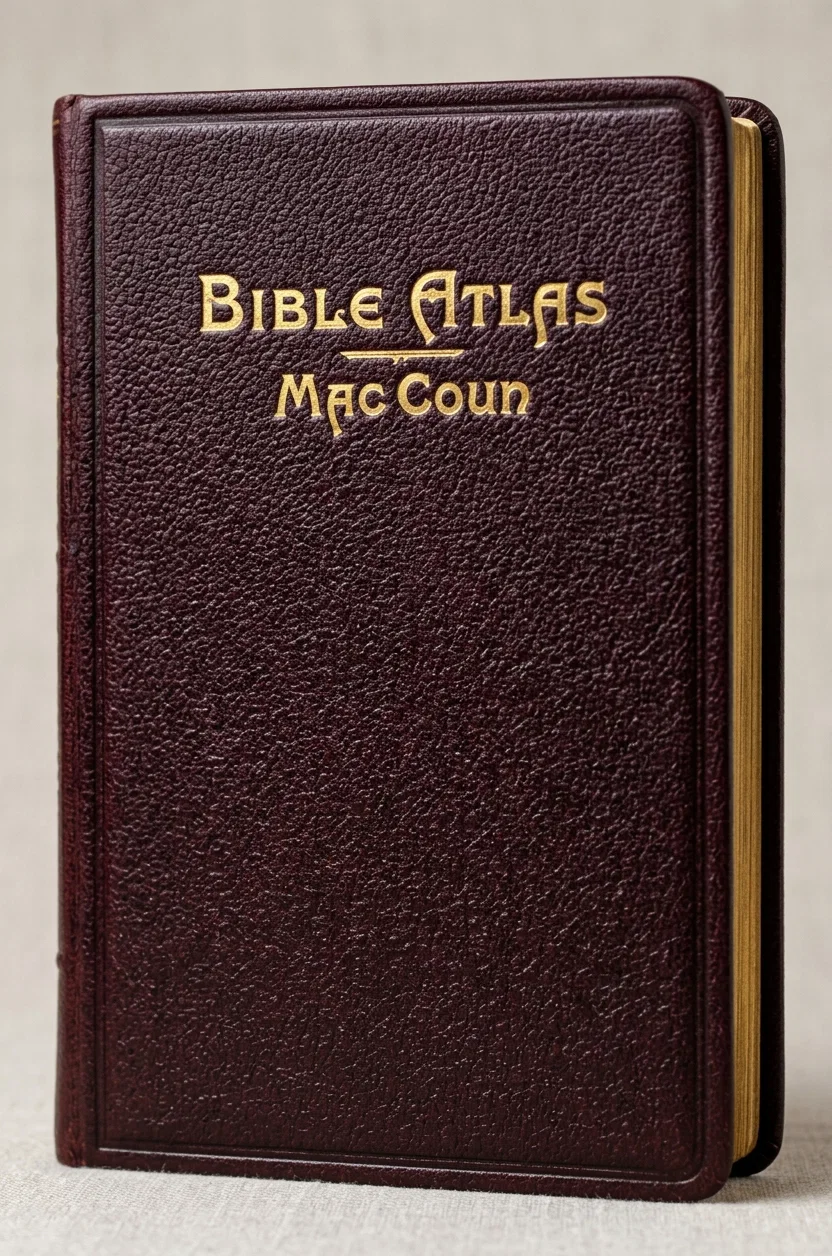
BIBLE ATLAS

MacCoun's “Bible Atlas, With Text,” is a combined Bible atlas and history of Palestine.
The atlas contains 38 physical maps, based upon an actual survey of Palestine, with identifications of Bible sites; 82 historical maps, one for each period of the country's history; and a concise history of Palestine.
The monuments and literature of all races and all times have been drawn upon by the author with rare judgment and impartiality, and the result is a masterpiece of concise scholarly composition. Price, $1.50.

ATLAS OF THE WORLD

Poates's Atlas contains a large map of every State in the Union and every country in the world. It is printed from new plates, and includes the latest geographical changes in Canada, Africa, and other countries, as well as new counties recently formed in the United States.
The atlas contains 193 pages; an alphabetical index of states and countries, a list of the large cities of the world, with their population in 1910; and a list of the counties of the United States.
The pages are 7 x 10 inches. Prices:
Cloth, $1.50; leather, $2.
Review and Herald Publishing Association, Washington, D. C.
ORDER THROUGH YOUR TRACT SOCIETY

Late, but Not Too Late to Order

THE GENERAL CONFERENCE DAILY BULLETIN

Price, 50 cts. With Review 1 yr., $2.25
heavenly sanctuary above; and the judgment work which takes into account the destinies of the whole human family. These and associated truths constitute this message which we are bearing to the world. We need to place upon these truths continual emphasis. In our preaching we must not get away from these fundamental principles. This message of the speedy coming of the Lord should be preached again and again to all our own people. It is this message above every other that will keep their hearts warm, that will inspire them with enthusiasm for the finishing of this work. The triumph of this movement is absolutely certain. We have not been deluded. Our faith is not built upon the specious devisings of the human mind. It rests upon the unerring Word of God. We can well afford to trust our all to that Word. We can rest our all upon the triumph of this work. God is true; his truth will triumph in the end, and if we are faithful to it, we shall triumph with it.

Just Before the Opening

THIS paper goes to press just before the opening of the General Conference. While it is on the press the delegates and visitors will be arriving, and Takoma Park will be a scene of busy activity. The construction work at the camp is well forward, and all will be in readiness for the opening of the meeting at the appointed hour, 10 A. M., Thursday morning. The construction committee, led by Elders S. E. Wight, Chas. Thompson, and H. S. Shaw, assisted by students, early missionary arrivals, and others, have had earnest work to prepare for the meeting. Just over six hundred small tents have been pitched and floored for the accommodation of the vast majority of those attending the three weeks' Conference session. To these tents and to the rooms available in the buildings of the Foreign Seminary and Sanitarium, 2,400 people have been assigned. Others will be accommodated in the village of Takoma Park, and possibly some will have to go into the city, if the attendance should continue to increase.
The new large pavilion, lent by the Southern California Conference, is pitched on the same spot used four years ago, a few more trees having to be cut out for the larger tent. Three smaller meeting-tents will be used for department meetings, departments also having the use of assembly-rooms in the Seminary. The Medical Department will hold its sessions in the Sanitarium gymnasium. The departments will doubtless hold their sessions simultaneously, from 4:30 to 6 P. M. Some of the departments have prepared exhibits to illustrate progress and methods of work. While not a part of the official Conference proceedings, these councils of workers in all the various lines of work will be a most profitable feature of the gathering.
It is practically decided that the Bible study hour will come about nine o'clock in the morning, and that the regular Conference sessions will follow in the morning and afternoon, with preaching and missionary addresses in the evening.
Continue reading: China Asking Christian Prayers