Review and Herald, Vol. 10, No. 9.

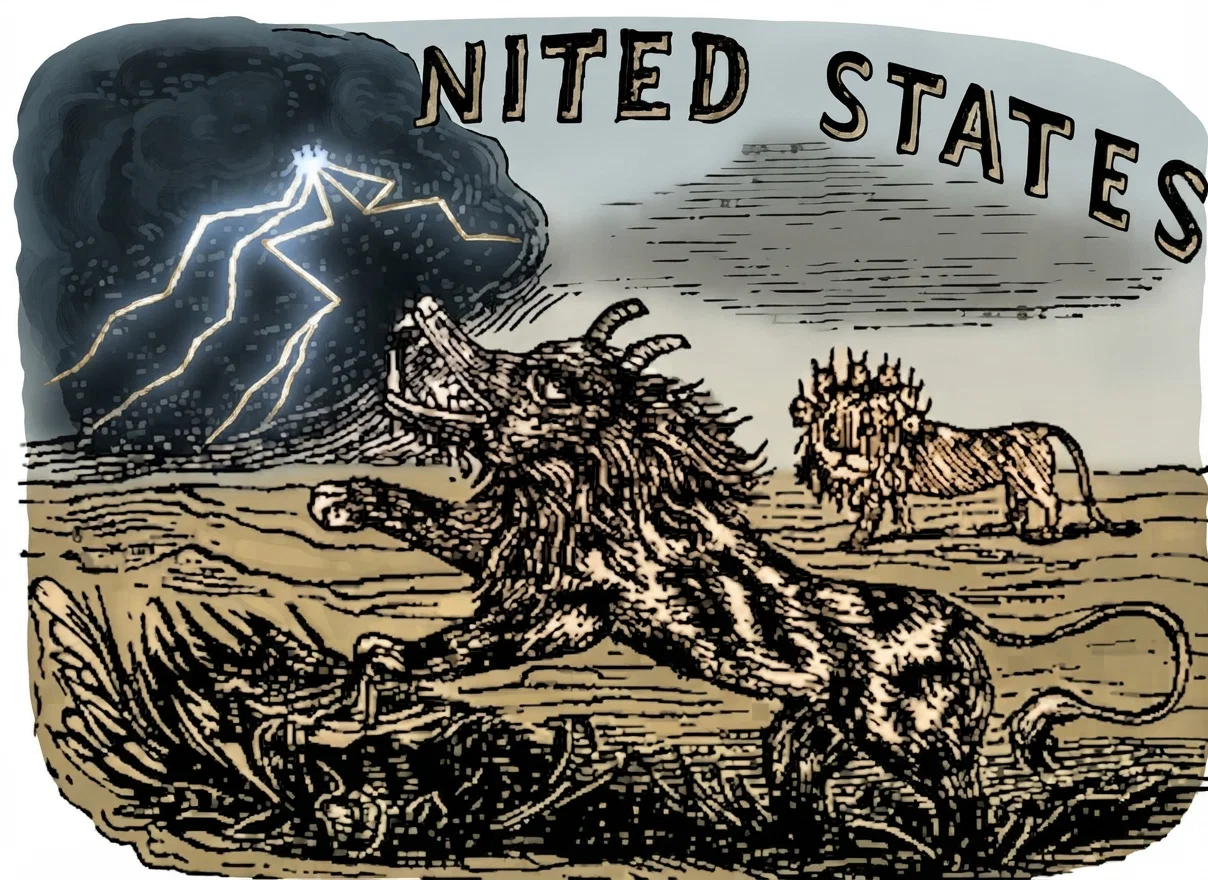
THE TWO-HORNED BEAST
Earlier text: OUR EXAMPLES

S E L E C T I O N S.

A CAUSTIC NOBLEMAN.—The Earl of Orford, in reply to an application made to him by the secretary of the Norwich [England] Bible Society, to take the chair at their meeting, writes as follows:

"Sir—I am surprised and annoyed at the contents of your letter—surprised, because my well known character should have exempted me from such an application, and annoyed because it obliges me to have this communication with you. I have long been addicted to the gaming-table—I have lately taken to the turf—I fear I frequently blaspheme—have never disturbed religious tracts. All this is well known to you and your Society; notwithstanding which you take me a fit person for your President. God forgive your hypocrisy! I would rather live in a land of sinners than with such saints."
I am, Sir, &c. (signed.) ORFORD.
[Dublin Freeman's Journal.]

Encouragement in a Dark Corner

Bro. J. R. Belnap writes from Crete, Ills., June 20th, 1857: "I wish to say that I am striving to heed the counsel of the faithful and true Witness. I am living in a dark corner of the earth, surrounded with Catholics; but thank the Lord he has promised us grace according to our day. 'The eyes of the Lord are over the righteous and his ears are open unto their prayers.' I can say the Review is a welcome visitor to me. It is cheering to hear from the saints scattered abroad. It seems the cause is rising. My prayer is that I may rise with it. I feel that I need the gold that is tried in the fire, the white raiment and the eye-salve that I may see, and be zealous and repent. Pray for us that we may let our light shine before the world that we may have a part in the first resurrection and reign with Christ in his peaceable kingdom."

Wilt Thou Be Made Whole.

Sinner, whether you know it or not, you are the subject of a fearful disease, and if its progress is not checked, you must die; and this death will be eternal.
You cannot cure yourself of this disease. You may try whatever plan you please, you may strive as long as you will, and still this disease will remain unchecked, and will continue to exert its harmful influence upon you, and you be still exposed to death.
Yet there is hope for you. There is a remedy for your disease. There is a physician who understands your case. The blood of Jesus Christ cleanseth from all sin, and Jesus Christ says to you to-day, "Wilt thou be made whole?"
Understand that your acquiescence is necessary. God will not save you against your will, nor by any peculiar process without your knowledge; but you, understanding your danger, your inability to help yourself, and that your help is alone in Christ, must go to him, and being willing to be saved in his way, must trust in him for salvation.
"Wilt thou be made whole?" This is a personal question, addressed to you. It is an important question, for you are diseased. It is a pressing question, for you may soon be beyond the hope of cure.
Give it then your attention. Attend to it to-day. Place yourself under the care of Christ, and he will save you even to the uttermost.

Peace of Mind Through God's Promises

Peace of mind is produced by reliance on God's promises.

Contentment Through Humility

Contentment springs from humility.

The Name Christian.

A CORRESPONDENT writes, inquiring what right we have to be called by the above title, and saying that he considers it a term of reproach and "a foul stigma upon his Master."
We do not think this conclusion tenable. The name occurs three times in the New Testament, namely, Acts xi, 26. "The disciples were called Christians first in Antioch." Chap. xxvi, 28. "Then Agrippa said unto Paul, Almost thou persuadest me to be a Christian." 1 Pet. iv, 16. "Yet if any man suffer as a Christian, let him not be ashamed."
In the text first quoted, who applies to the disciples the name Christian? Was it given to them by their enemies, did they assume it themselves, or did they receive it from Paul and Barnabas? If we can find a satisfactory answer to any of these questions, it will determine at once the use of the word.
The ground which we take is that the name was given to the disciples by Paul and Barnabas themselves. By reference to the Greek it will be seen that the verb, "were called," is in exactly the same construction with "assembled" and "taught" preceding it. The declaration about the disciples being called Christians is, in our version, written as a distinct sentence; but in the original is not so, it being only a clause of the preceding. It might therefore be rendered, "And it came to pass, that they assembled themselves with the church, and that they taught much people, and that they called the disciples Christians first at Antioch. And one translation, according to Dr. Clarke, the Codex Bezæ, reads the passage in this manner. In regard moreover to the word chrematizo, rendered, were called, it might be remarked that it is defined to mean "to appoint warn or nominate by divine direction." Therefore it was not wholly without the sanction of inspiration that the name, Christian, was applied to believers.
The name is evidently derived from Christ, and it is plain that some name would be necessary to distinguish the followers of Christ from other classes. The appellation of disciples or believers would be indefinite, for Plato had disciples, and believers, and so did Pythagoras, and so did Socrates.
There is nothing in the other two instances where the word occurs, to prohibit its being the divinely appointed name for believers on the Lord Jesus Christ. Does not James have reference also to the same thing when he says, [chap ii, 7.] "Do they not blaspheme that worthy name by which ye are called?"

Ohio Tent.

CONFERENCE AT GREEN SPRING.

PROVIDENCE permitting, there will be a General Conference of Commandment-keepers held in the Ohio Tent at Green Spring, Sandusky Co., commencing Sixth-day, July 10th, at 2 o'clock P. M., and continuing over Sabbath and First-day.
It is to be hoped there will be a general attendance of the Sabbath-keepers, and honest seekers after truth at this meeting. Bro and Sr. White are expected.
In behalf of the brethren. M. E. CORNELL.

A NEW WORK.

The Two-Horned Beast of Revelation xiii, a symbol of
This work which is now appearing in the REVIEW will be ready for distribution in a few days. Orders may now be sent in.—Price 10 cents.

Is there a Change of Heart?

A Correspondent makes the following request: "Please state in the REVIEW for the benefit of inquiring friends whether you deny what is called the change of heart, the passing from death unto life; and are we born again in this life? Explain what you think meant by the Spirit's witnessing with our spirit that we are his."
We do not most certainly deny the moral change above referred to, but rather advocate and plead its necessity, as may be seen by the following quotation from our remarks on the New Birth in REVIEW No. 12, Vol. ix:
But is there not a sense in which we are all the children of God now? Evidently there is: The Scriptures speak of a moral change which must take place here preparatory to the great and final change—the New Birth. The terms and expressions used to denote this change are various, but they all seem to center together upon one point; namely, faith in Christ.
Thus by faith we are now the children of God. "For ye are all the children of God by faith in Christ Jesus." Gal. iii, 26. By faith we receive him as our Saviour; by faith we look for his second coming; by faith we anticipate a part in the first resurrection, and "bodies like unto his glorious body." We are the children of God by adoption. "But ye have received the Spirit of adoption whereby we cry, Abba, Father." Rom. viii, 15. "To redeem them that were under the law, that we might receive the adoption of sons." Gal. iv, 5. "Having predestinated us unto the adoption of children by Jesus Christ to himself according to the good pleasure of his will." Eph. i, 5. But the spirit of adoption is not the adoption itself; Paul tells us what that is as follows: "For we know that the whole creation groaneth and travaileth in pain together until now; and not only they, but ourselves also which have the firstfruits of the Spirit, even we ourselves, groan within ourselves, waiting for the adoption, to wit, the redemption of our bodies." Rom. viii, 22, 23. "Now are we the sons of God; but it doth not yet appear what we shall be; but we know that when he shall appear we shall be like him, for we shall see him as he is." 1 John iii, 2.

An Adams Power Press

—We understand that our neighbors of the Advent Review and Herald have made all necessary arrangements for an ADAMS POWER PRESS. The large circulation of their paper, and the numerous religious books printed by them, make this addition to their establishment necessary. Though regarded by many as entertaining peculiar religious opinions, we have ever found all connected with that paper high-minded and honorable men. In this respect, speaking in a worldly manner, they are somewhat peculiar.’
The above we clip from the Battle Creek Journal published in this village by W. W. Woolnough, Editor and proprietor. We are happy to recognize in Mr. Woolnough a freedom from sectarianism which accords to every man ‘Freedom to worship God,’ according to the dictates of his own conscience, and suffers no prejudice based on religious considerations to interfere with any other relation. In this respect is not he also somewhat peculiar?

Power Press.

We wish to say to those interested in this enterprise that we have been prospered in raising means for immediate use to purchase the Press, &c. Brethren have put into our hands money, for which we have given our notes to the amount of nearly seven hundred dollars, and depend on the friends of the cause to make up the amount of about twenty-five hundred dollars in sums of $100, or $50 dollars each.
If there are those who wish to assist in this enterprise, who have not ready means, but can pay in three or six months, they can send on their pledges, and pay the amount they pledge when they can.
JAMES WHITE.

A Week

A WEEK.—The seven days of the week is by far the most permanent division of time, and the most ancient monument of astronomical knowledge; it was used by the Brahmins in India, with the same denomination used by us; and was alike found in the calendars of the Jews, Egyptians, Arabs, and Assyrians. It has survived the fall of empires, and has existed among all successive generations; a proof of the common origin of mankind. The division of the year into months is very old, and almost universal, but not so ancient or uniform as the seven days, or week.—Astronomer.

TENT MEETINGS.

Eastern Tour.

PROVIDENCE permitting, Bro. and Sr. White will meet with the church of God in General Conference as follows:
In Ohio, where the brethren may appoint, and pitch the Ohio Tent, July 11th and 12th.
We hope the brethren will come together prepared to work. We shall endeavor to bear testimony to the truth as far as health and strength may admit; but farther than this we hope to be free from the care and responsibilities of this meeting. JAMES WHITE.

Wisconsin Tent.

THERE will be a Tent Meeting in Dodgeville, Iowa Co., Wis., commencing June 27th, and continuing, the Lord willing, two weeks.
Also one six miles south of Warren Station, Jo Daviess Co., Ills., on the Chicago and Galena R. R., commencing July 11th, and continuing, Providence permitting, two weeks. Those coming on the cars should stop at Warren Station.
J. N. LOUGHBOROUGH. J. HART. E. EVERTS.

Business Items.

D. Ford. The dollar you sent May 12th was by mistake receipted to Wm. Baily. We now transfer that credit to your name on book, which with the $1 you now send pays you to xii, 1.
H. N. Bates.: The pledge on Book Fund for C. A. Bates of $5 has been paid. Does he intend this to apply on Book Fund over and above his pledge? Bro. Joseph Bates took from this office, May 27th, 1856, books to the amount of $4, "to be paid by Brn. in Green Vale, Ills." on account of books left there. Has this anything to do with that?
J. K. Belnap. The P. O. address of Geo. T. Smith is Allegan, Allegan Co. Mich.
M. C. M. Andrews: Your eight dollars for Power Press is received. We have been waiting for those who are able to contribute $100, or $50, to make up the amount needed. If necessary we will apply your money to that object, or hold it subject to your order.
BOOKS SENT. E. M. L. Corey, Mich., Chas. Jones, Mich. S. B. Southwell, Mich. H. L. Richmond, Mich. E. Sanford, Ills. J. K. Belnap, Ills. C. W. Stanley, Wis. M. C. M. Andrews, N. Y. Wm. Dawson, Iowa, L. M. Jones, Mich.

Receipts.

Annexed to each receipt in the following list, is the Volume and Number of the "Review and Herald" to which the money receipted pays. If money for the paper is not in due time acknowledged, immediate notice of the omission should then be given.

FOR REVIEW AND HERALD.

W. Grant 1,00,xi,1. J. Sevey (for O. B. Sevey) 1,00,xii,8. Ira Lake 1,00,xi,8. C. Smith (for T. Smith) 0,50,xi,7. D. Curtis 1,00,xi,1. D. Ford 1,00,xii,1. E. Sanford 1,00,xi,1. E. Sanford (for G. Hubbard) 0,50,xi,1. E. A. Averill 1,00,xi,1. H. Lyon (for A. Chase) 0,50,xi,7. Benj. Miller 0,25,x,20. H. Hemminger 0,25,x,20. W. Perin 0,25,x,20. Wm. H. Levers 0,25,x,20. T. Myers 0,25,x,20. M. Taylor 0,25,x,20. Dr. W. S. Foot 0,25,x,20. J. Marsh 0,25,x,20. Jno. S. Smith 1,00,xi,1. Louisa Tarbell 2,00,xi,1. J. K. Belnap 1,00,xi,1. W. H. Hilton 2,00,xi,1. R. Gorsline 1,00,xi,1. L. Carpenter 1,00,xi,1. Srs. Dickinson 1,00,xi,1. A. Tubbs 1,00,xi,7. D. Upson 1,00,xi,1. N. A. Hollis 1,00,xi,17. S. P. French 1,00,x,9. B. H. Peek 1,00,xii,1. G. W. Kellogg 1,00,x,9. S. W. Willey 1,00,xi,1. H. J. Clark 1,00,xi,1. A. R. Morse 0,50,xi,1. W. Peck 2,00,xi,1. Jno. Griswold 1,00,xi,1. Chas. McConnell 1,00,xi,1. R. J. Waterhouse 2,00,xi,1. N. Clafland 1,00,xi,1. C. Butler 1,00,xii,1. A. H. Hilliard 1,00,xi,1. C. E. Dalgrien 1,00,xiii,1. F. C. Castle 1,00,xi,1. R. Loveland 2,00,xii,1. E. Brackett 1,00,xi,8. Mrs. J. Edmonston 1,00,xi,1.
FOR REVIEW TO POOR. J. R. Belnap $0,50. E. W. Phelps $1. Wm. Dawson $1,50.
FOR MICH. TENT. J. Whitmore $3.

You have reached the end of this edition.

Review and Herald · Jul 2, 1857