Review and Herald, Vol. 93, No. 28.

Religious Liberty
Earlier text: Religious Liberty

Limits of Civil Authority

By L. A. Smith
THERE are limits to the authority of the civil power, and these limits should be clearly understood by the people. A republican form of government, as contrasted with an absolute monarchy, implies a limitation to the powers of the government beyond which it cannot rightfully go.
Civil government is not the custodian of the souls of the people. Upon all the pages of human history the truth is written plain that there are two spheres of life within which man moves, with one of which—the higher sphere of conscience and of his relation to God—the civil power can rightfully have nothing to do. Again and again the Almighty has vindicated the course of those who, in order to be true to him, have refused obedience to unjust mandates from the civil authority. The darkest pages of history are those recording the results of the invasion by the civil power of the realm of conscience. The early history of most of the leading religious denominations of this day was marked by their resistance to the dictates of the civil power outside the sphere of its legitimate authority.
The true sphere of civil government was well defined by the men who founded the American Republic. The Declaration of Independence, which led to the founding of this nation, says: 'We hold these truths to be self-evident, that all men are created equal; and that they are endowed by their Creator with certain inalienable rights; that among these are life, liberty, and the pursuit of happiness. That to secure these rights, governments are instituted among men deriving their just powers from the consent of the governed.' This is the principle of government upon which this nation is established.
Governments are instituted among men to preserve the natural, inalienable rights which men have by creation;—that is, as individuals;—not to curtail these rights, or to take them away. When civil government invades these rights, it does exactly the opposite of that which it is instituted to do. This is a perverted and illegitimate use of its power.
Legislatures cannot create natural rights, neither can they make right wrong, or wrong right. The law of right and wrong is a law antedating and wholly independent of any legislative enactments. Legislators are bound to shape their legislation by their knowledge of this law of justice which is inherent in the human mind, and their legislation will be excellent in proportion as they approximate to this ideal standard. It is proper to say, therefore, that the province of the legislature is not to create law, but to ascertain and define it. Righteousness is a law, and has been such from the foundation of the world. It is binding upon men everywhere, and at all times. All men are bound, always, to do right.
The question, What is the law? is therefore not the question lying at the foundation of one's duty in any religious or spiritual matter which is brought before him. There is another question lying deeper than that, and that is the question, What is right? Sometimes injustice becomes enthroned in law; but this does not put upon any person an obligation to do morally wrong. He is still bound to do right, still bound by conscience to the higher law of God. This higher law must be obeyed at any cost.
A statute commanding one to commit murder on certain occasions, or to steal, or to swear falsely, would not be binding on any one, and would not be obeyed; and the reason given for disobedience to it would be that it was unjust. No one would claim that it ought to be obeyed simply because it was “the law;” and what would be true of such a statute would be true of every enactment that is contrary to the law of God. Unjust enactments do not derive any sanctity from being on the statute books. They ought to be repealed, not enforced.
In secular affairs, the principle of majority rule is at the foundation of government; and this is proper and necessary. But in matters of conscience, majority rule has no place. An individual's duty toward God cannot be determined by a majority vote. Every individual's relation to God is a direct relation, not sustained through any other individuals or through the government. 'Every one of us shall give account of himself to God.'
Faith, which is the essence of Christianity, is individual belief of God's Word, irrespective of the belief or opinions of any or all other persons. In religion, the majority have always been on the wrong side. It is the majority that throng the broad way leading to destruction, and only the small minority who travel the narrow way leading unto life. Thus the spheres of religion and of civil government must be kept wholly separate.
Within its legitimate sphere the civil power should have the unhesitating obedience of all persons. Only the higher claims of duty toward God can justify any one in refusing obedience to the civil ruler. Only a plain conflict with the higher law of God can justify any disobedience to the laws of man. The legitimate realm of the civil power is that of preserving the rights of the people; and within this realm it has the sanction of God. No one can, under a plea of conscientious conviction of duty, be permitted to invade the natural rights of another person. These rights do not conflict, and each one must respect the rights of others.

Why Sunday Laws Are Wrong

BECAUSE Sunday is an institution of the church, and is therefore religious.
Because legislation in reference to a religious institution is religious legislation, and the passing of such laws is a long step toward the union of church and state.
Because, as James Madison says, “there is not a shadow of right in the general government to intermeddle with religion. Its least interference with it would be a most flagrant usurpation.”
Because, as expressed in the protest which gave rise to Protestantism, “in matters of conscience the majority has no power.”
Because Sunday laws mean enforced idleness, and idleness fosters intemperance, vice, and all other crimes.
Because, while frequently urged as temperance and other reform measures, their real and ultimate object is the compulsory observance of the day.
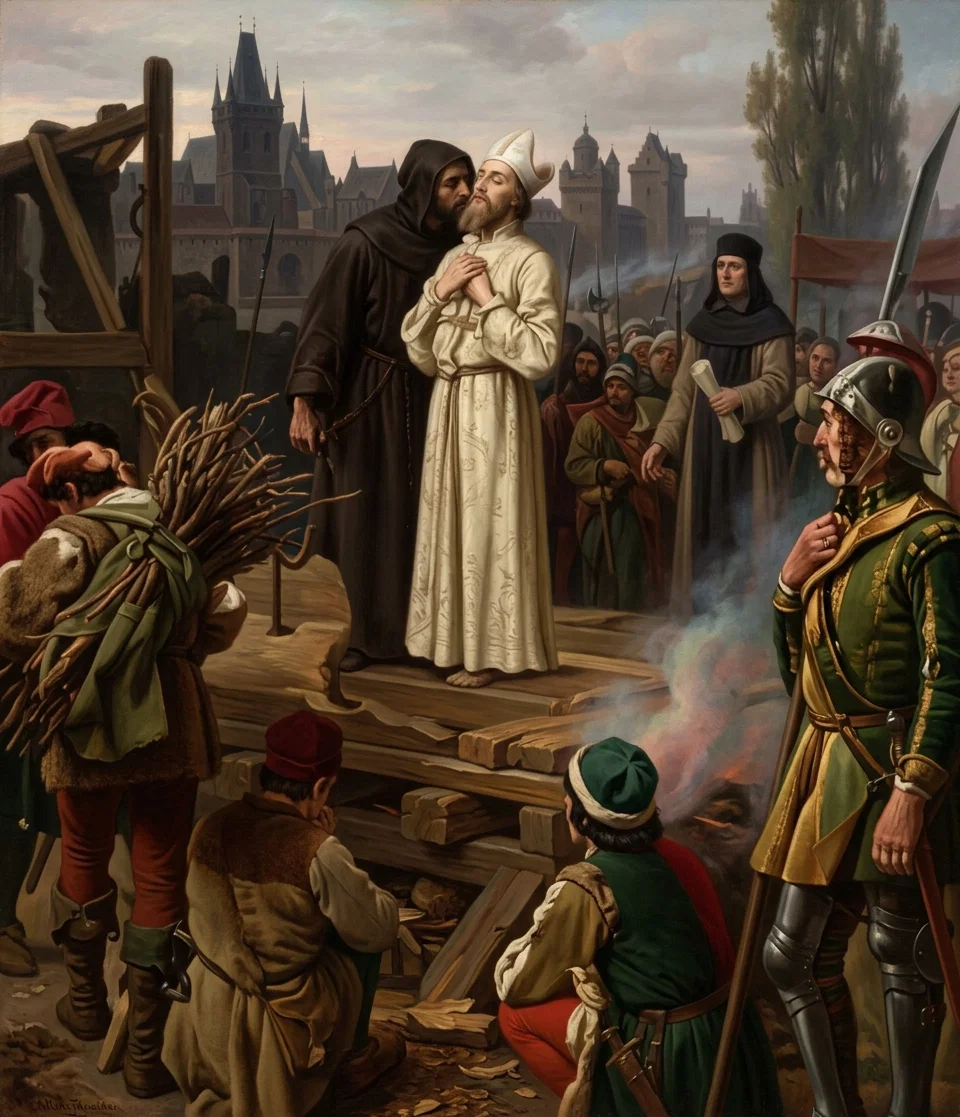
THE MARTYRDOM OF JOHN HUSS
Because, although professedly in the interest of the laboring man, such laws really enslave all labor. The assumption of the right to forbid honest labor on one day of the week involves the right to forbid it on any or all days of the week.
Because, as Neander informs us, they were the means through which church and state were united in the fourth century; and instead of preserving the Roman Empire, they contributed largely to its downfall.
Because they interfere with the religious freedom even of those who regard Sunday as the Lord’s day.
Because their whole tendency is to make men hypocrites instead of Christians.
Because they are both un-American and unchristian.
Because they require that men shall render to Caesar that which belongs to God.
Because, as stated in the Memorial of the Presbytery of Hanover to the Virginia General Assembly, in 1776, “the duty which we owe to our Creator, and the manner of discharging it, can be directed only by reason and conviction, and is nowhere cognizable but at the tribunal of the universal Judge.”
Because it is the very genius of Christianity to grant to every man the right to believe the gospel or not to believe it, to obey the divine law or not to obey it; and what the Author of Christianity has granted, no authority has the right to abridge or take away.
Because they deprive a considerable and respectable portion of the Christian community—the observers of the seventh day—of one sixth of their rightful working time.
Because they make criminals of a class of citizens against whom no criminal charges ought to lie.
Because they make criminal on Sunday acts which on any other day of the week are considered perfectly lawful and right. Honest toil and innocent recreation and amusement, while not consistent with proper Sabbath observance, are not crimes on any day. Crimes are not determined by the day of the week upon which they are committed.
Because Sunday laws are contrary to the principles of the gospel and of good government, and are in direct conflict with the law of God. They enforce a rival to the Sabbath appointed by Jehovah. If it is wrong for the state to enter the domain of religion and enforce the Sabbath observance of the day divinely appointed, it cannot be right for it to enter this domain and enforce the Sabbatical observance of a day not thus appointed.

Genealogy of Sunday Laws

[The following statements are not direct quotations, but merely statements of fact in the form of quotations.]
YOUNGER STATES OF AMERICA: “In Sunday legislation we have followed the example of the older States.”
OLDER STATES: “In Sunday legislation and judicial decisions we have followed the example of the oldest States.”
OLDEST STATES: “In the matter of Sunday legislation we have followed the example of the original colonies.”
ORIGINAL COLONIES: “In the matter of Sunday legislation we have followed the precedents and example of old England, which had an established religion and a church-and-state system.”
OLD ENGLAND: “In the matter of Sunday laws and religious legislation, they are the relics of the Catholic Church, incorporated among us when that church was the established church of the empire. When Henry VIII, about 1544, renounced allegiance to the Pope, we retained, and are still cherishing, these legal relics.”
CATHOLIC CHURCH: “Sunday laws and religious legislation were incorporated in our church by the craft, flattery, and policy of Constantine and the ambitious bishops of his time, together with the decrees of the popes and councils of later date, by which we transmitted the ‘venerable day of the sun,’ the ‘wild solar holiday of all pagan times,’ into the Christian Sabbath, in honor of the resurrection.”
PAGANISM: “With us, Sunday observance originated in sun-worship, the day on which the Almighty began his work of creation, and on which light was created, the day, the first in the week, being dedicated by us to the greatest, the brightest, and the most luminous visible object in the heavens, the sun.” See Rom. 1:21-25; Eze. 8:15, 16.

William Lloyd Garrison’s Protest Against Sunday Laws

The time was 1848. The occasion, a convention in Boston, in response to a call issued by Garrison and a score of associates, “To the Friends of Civil and Religious Liberty.” In that year an organization called the American and Foreign Sabbath Union had been particularly active in urging the enforcement of Sunday observance, and, in the midst of the historic antislavery agitation, of which Garrison was the leader, it was felt by friends of liberty that the occasion called for the sounding of a note in behalf of religious liberty. Truly a clarion note is sounded in the resolutions introduced by Garrison, and his speech upon them, which follow. It was of Garrison and his championship of civil and religious liberty, that John Bright, the English statesman, wrote to James Russell Lowell, “I know no nobler man than William Lloyd Garrison.”
In view of the present widespread agitation for Sunday enforcement, this trumpet call in behalf of true principles will be read with deep interest.

The Resolutions

“1. Resolved, That they who are for subjecting to fine or imprisonment such as do not receive their interpretation of the Scriptures in regard to the observance of the first day of the week as the Sabbath, are actuated by a mistaken or malevolent spirit, which is utterly at variance with the spirit of Christ; which, in various stages, has resorted to the dungeon, the rack, the gallows, and the stake, for the accomplishment of its purpose; and which ought to be boldly confronted and rebuked.
“2. Resolved, That the penal enactments of the State legislature compelling the observance of the first day of the week as the Sabbath are despotic, unconstitutional, and ought to be immediately abrogated; and that the interference of the State in matters of religious faith and ceremonies, is a usurpation which cannot be justified.
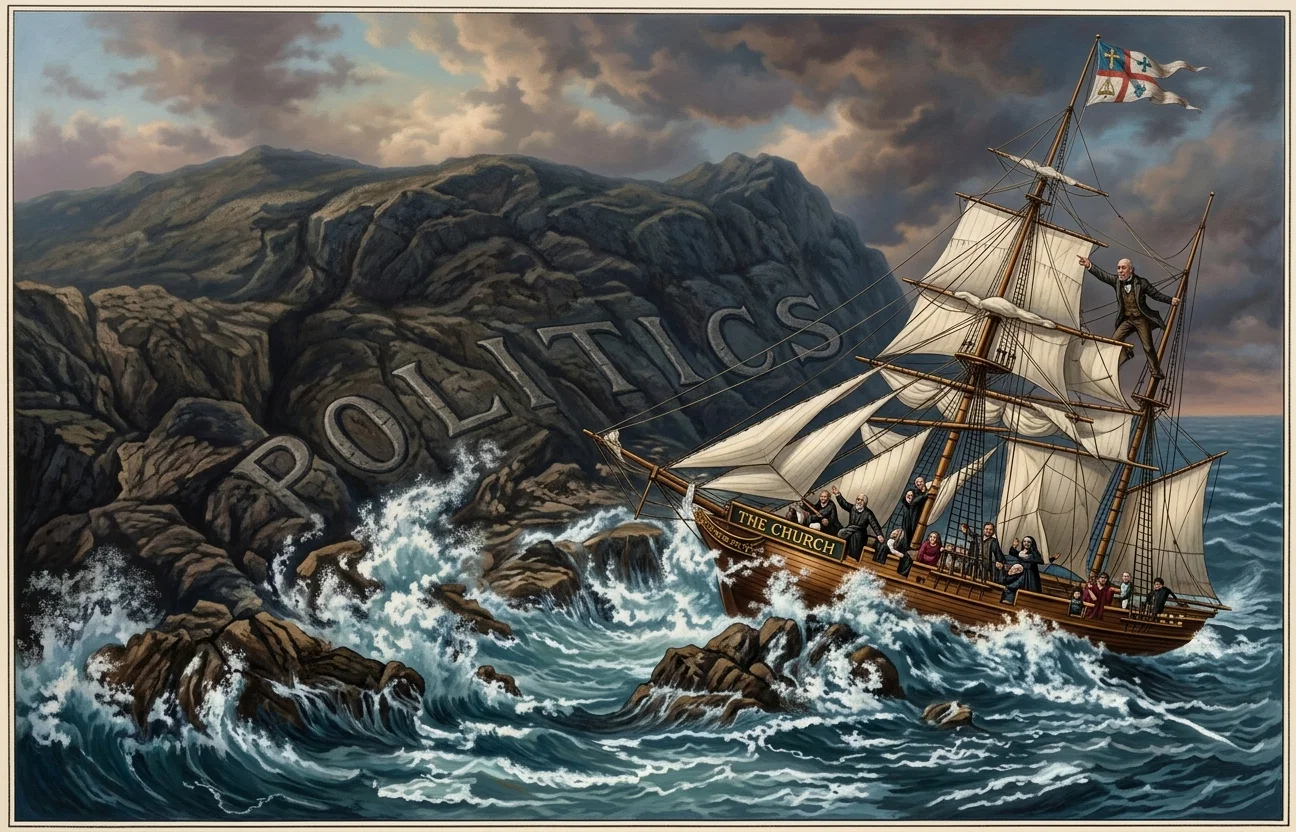
THE CHURCH RUNNING ONTO THE POLITICAL REEF
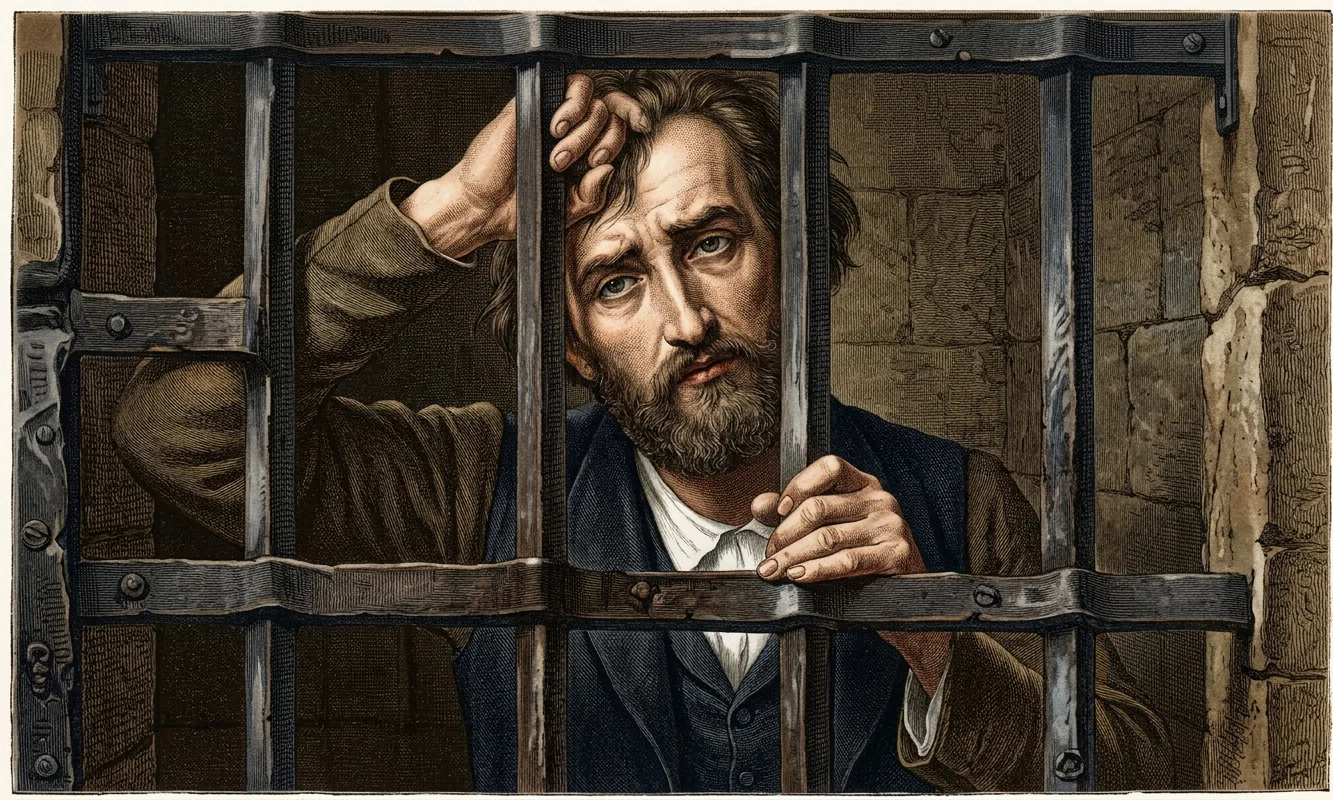
IN PRISON FOR CONSCIENCE’ SAKE
“3. Resolved, That as conflicting views prevail in the community, which are cherished with equal sincerity, respecting the holiness of days; and as it is the right of every class of citizens to be protected in the enjoyment of their religious sentiments on this and every other subject pertaining to the worship of God, all classes should be united in demanding a repeal of the enactments alluded to, on the ground of impartial justice and Christian charity.
“4. Resolved, That this convention recommend to all the friends of religious liberty throughout the country the presentation of petitions to the next legislature, in every State in which such laws exist, protesting against their enactment as an unhallowed union of church and state.
“5. Resolved, That if the legislature may rightfully determine the day on which people shall abstain from labor for religious purposes, it may also determine the place in which they shall assemble, the rites and ordinances which they shall observe, the doctrines which they shall hear, the teachers whom they shall have over them, and the peculiar faith which they shall embrace; and thus entirely subvert civil and religious freedom, and enable bigotry and superstition, as of old, to— “Go to their bloody rites again; bring back The hall of horrors and the assessor’s pen, Recording answers shrieked upon the rack, Smile o’er the gaspings of spine-broken men, And perpetrate damnation in their den!”
“6. Resolved, That as it has been found safe, politic, and beneficial to allow people to decide for themselves in all other religious observances, there is no reason to doubt that the same good results would attend their liberation from the bondage of a Sabbatical law; for ‘where the Spirit of the Lord is, there is liberty.’

Garrison’s Speech upon the Resolutions

“Of all the assumptions on the part of legislative bodies, that of interfering between a man’s conscience and his God is the most unsupportable and the most inexcusable. For what purpose do we elect men to go to the general court? Is it to be our lawgivers on religious matters? . . . This passing a law forbidding me or you to do on a particular day what is in itself right, on the ground that that day, in the judgment of those who make the enactment, is more holy than another,—this exercise of power, I affirm, is nothing better than usurpation. It is the spirit which in all ages has persecuted those who have been loyal to God and their consciences. It is a war upon conscience, and no religious conclave or political assembly ever yet carried on that war successfully to the end. You cannot by enactment bind the consciences of men, nor force men into obedience to what God requires.
“Who wants to be persecuted on account of his own conscientious views? I will ask the first-day Sabbatarian, Do you claim a right to entertain your views, without molestation, in regard to the holiness of time?—‘Most assuredly.’ How do you make it out that the first day of the week is the Sabbath?—‘I believe it to be so; if it is not, to my own Master I stand or fall. Under a government which avowedly tolerates all beliefs, I claim the right, as a first-day Sabbatarian, to keep that day as the Sabbath.’ Well, I do not recall that right. I claim the right also to have my own views of the day; the right to sanctify the first, second, or third, or all days, as I think proper.
“Now I turn to that first-day Sabbatarian, and ask him how he dares to dictate to me to keep the day which he regards as holy, and to say, ‘If you do not obey me, I will put my hands into your pocket, and take out as much as I please in the shape of a fine; or if I find nothing there, I will put you in prison; or if you resist enough, I will shoot you dead.’ How dare he do this? If he is not a ruffian, is he a Christian? Talk of the spirit of justice animating the bosom of the man who comes like a highwayman with, ‘Do, or die!’ Who made him a ruler over other men’s consciences?
“In a government which is based on equality, we must have equal rights. No men, however sincere, are to wield forceful authority over others who dissent from them in regard to faith and observance. The case is so plain that it does not need an argument; and I am confident that in the course of a few years, there will not be a Sabbatical enactment left unrepealed in the United States, if in any part of Christendom. It belongs to the tyrannical legislation which formerly sent men to the stake, in the name of God and for his glory, because they did not agree with the theological views of those who burned them.
“Christianity as taught by its Founder does not need any governmental safeguards; its reliance for safety and prosperity is not on the rack or the stake, the dungeon or the gibbet, unjust proscription or brutal supremacy. No; it is the only thing under heaven that is not afraid; it is the only thing that repudiates all such instruments.
“Let us be careful how we trample on human liberty or human conscience. Said the apostle, ‘Every one of us shall give account of himself—not to the legislature of Massachusetts, not to the Congress of the United States, but—‘to God.’ . . .”

What Eminent Authorities Say

God: “Proclaim liberty throughout all the land unto all the inhabitants thereof.” Lev. 25:10.
Jesus Christ: “Whatsoever ye would that men should do to you, do ye even so to them.” Matt. 7:12.
“If any man hear my words, and believe not, I judge him not.” John 12:47.
“Render to Cæsar the things that are Cæsar’s, and to God the things that are God’s.” Mark 12:17.
Paul: “Where the Spirit of the Lord is, there is liberty.” 2 Cor. 3:17.
George Washington: “Any man conducting himself as a good citizen and being accountable to God alone for his religious opinions, ought to be protected in worshiping the Deity according to the dictates of his own conscience.”—Reply to the Baptists of Virginia, 1789.
Thomas Jefferson: “Almighty God hath created the mind free; . . . all attempts to influence it by temporal punishments or burdens, or by civil incapacitations, tend only to beget habits of hypocrisy and meanness, and are a departure from the plan of the holy Author of our religion, who being Lord both of body and mind, yet chose not to propagate it by coercions on either, as was in his almighty power to do.”—Virginia Act for Establishing Religious Freedom, 1785.
Benjamin Franklin: “When religion is good, it will take care of itself; and when it is not able to take care of itself, and God does not see fit to take care of it, so that it has to appeal to the civil power for support, it is evidence to my mind that its cause is a bad one.”—Letter to Dr. Price.
James Madison: “The settled opinion here is that religion is essentially distinct from civil government, and exempt from its cognizance; that a connection between them is injurious to both.”—Letter to Edward Everett, 1823.
U. S. Grant: “Leave the matter of religion to the family altar, the church and the private school supported entirely by private contribution. Keep the church and state forever separate.”—Speech at Des Moines, Iowa, 1875.
Declaration of Independence: “We hold these truths to be self-evident: that all men are created equal; that they are endowed by their Creator with certain inalienable rights; that among these are life, liberty, and the pursuit of happiness.”
United States Constitution: “Congress shall make no law respecting an establishment of religion, or prohibiting the free exercise thereof; or abridging the freedom of speech, or of the press.”
United States Senate: “It is not the legitimate province of the legislature to determine what religion is true, or what false. Our government is a civil, and not a religious institution. Our Constitution recognizes in every person the right to choose his own religion, and to enjoy it freely without molestation.”—Sunday Mails Report, 1839.
United States House of Representatives: “Despotic may regard their subjects as their property, and usurp the divine prerogative of prescribing their religious faith; but the history of the world furnishes the melancholy demonstration that the disposition of one man to coerce the religious homage of another, springs from an unchastened ambition, rather than [from] a sincere devotion to any religion.”—Sunday Mails Report, 1830.
John Stuart Mill: “If all mankind, minus one, were of one opinion, and only one person were of the contrary opinion, mankind would be no more justified in silencing that one person than he, if he had the power, would be justified in silencing mankind.”—Essay on Liberty.
John Wesley: “Condemn no man for not thinking as you think. Let every one enjoy the full and free liberty of thinking for himself. Let every man use his own judgment, since every man must give an account of himself to God. Abhor every approach, in any kind or degree, to the spirit of persecution. If you cannot reason nor persuade a man into the truth, never attempt to force a man into it. If love will not compel him to come, leave him to God, the judge of all.”
Spurgeon: “I am ashamed of some Christians because they have so much dependence on Parliament and the law of the land.”
Gladstone: “Wherever the British rule exists the same respect which we claim for the exercise of our own conscientious convictions is yielded to the professors of every other faith on the surface of the globe.”—Prime Ministers of Queen Victoria, p. 363.
Queen Victoria: “Firmly relying ourselves on the truth of Christianity, and acknowledging with gratitude the solace of religion, we disclaim alike the right and the desire to impose our convictions on any of our subjects.”—Proclamation, 1858.
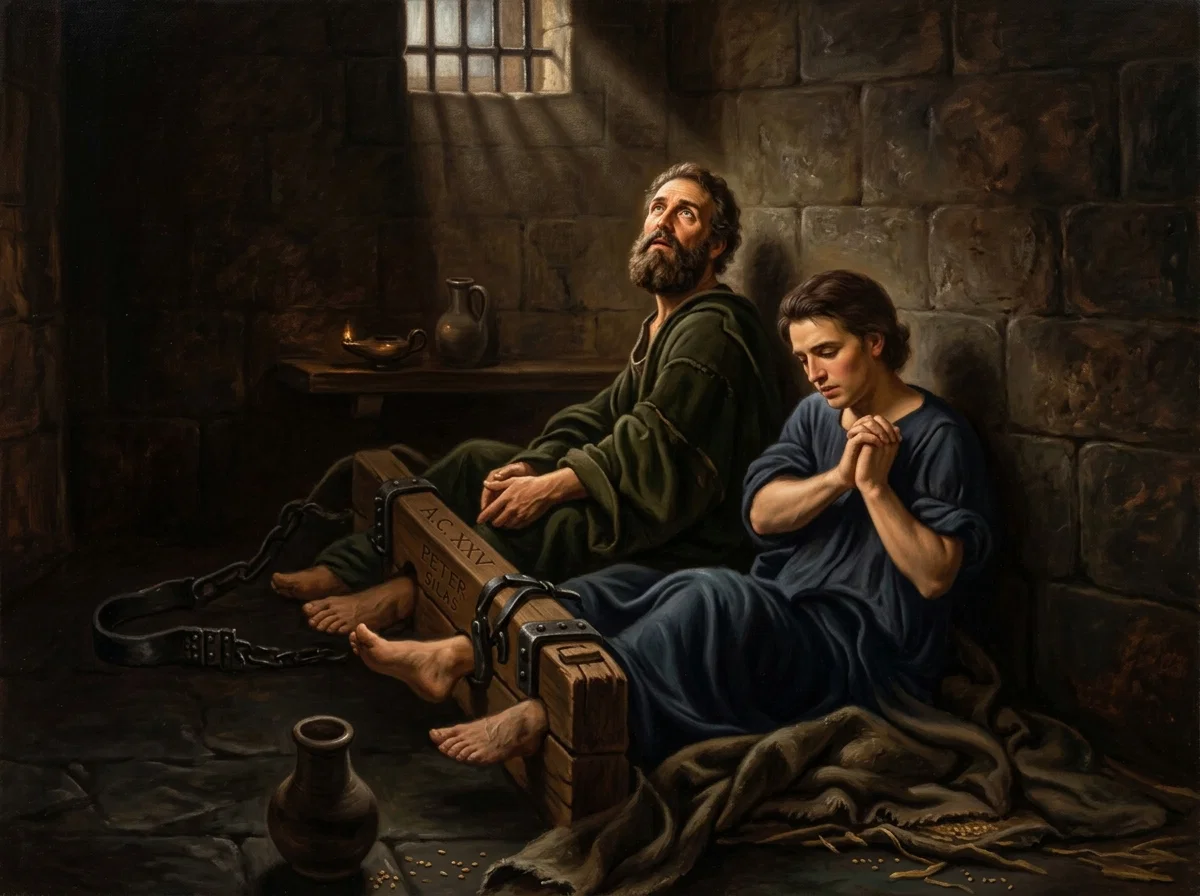
WE OUGHT TO OBEY GOD RATHER THAN MEN

You have reached the end of this edition.

Review and Herald · Jun 8, 1916