Your ShelfYour Projects

Signs of the Times, Vol. 31, No. 47.

THE CHURCH TRIUMPHANT
Earlier text: THE CHURCH TRIUMPHANT

"He Hath Set Some in the Church"

By J. N. Loughborough
A CHURCH blessed with the fulness of the Spirit of God is entitled to the gifts of the Holy Spirit. These gifts are the outward manifestation of the Spirit—the way in which the Lord by that agency works upon believers.
The apostle Paul verifies this when he says:
"The manifestation of the Spirit is given to every man to profit withal. For to one is given by the Spirit the word of wisdom; to another the word of knowledge by the same Spirit; to another faith by the same Spirit; to another the gifts of healing by the same Spirit; to another the working of miracles; to another prophecy; to another discerning of spirits; to another divers kinds of tongues; to another the interpretation of tongues; but all these worketh that one and the selfsame spirit, dividing to every man severally as he will." 1 Cor. 12:7-11.
These are ways in which the Spirit of God works on the human heart, and are denominated the gifts of the Spirit. These may not all be manifest in one individual, but are the privilege of the church when standing in the clear light of the Lord.
The apostle compares the church of Christ to the human body where all of the members are acting without "schism," and these gifts of the Spirit are members of that spiritual body.
"Now ye are the body of Christ, and members in particular. And God hath set some in the church, first apostles, secondarily prophets, thirdly teachers, after that miracles, then gifts of healings, helps, governments, diversities of tongues. Are all apostles? are all prophets? are all teachers? are all workers of miracles? have all the gifts of healing? do all speak with tongues? do all interpret? But covet earnestly the best gifts; and yet show I unto you a more excellent way." 1 Cor. 12:27-31.
Not a more excellent way than to have the gifts of the Spirit, but a better way than simply to covet them—that is to select some particular gift and determine that it would be a good thing for us individually to be in possession of that gift. The more excellent way is to have our hearts imbued with that charity which the apostle has so clearly set before us in the thirteenth chapter, that charity which will remain when the perfect state shall come in (1 Cor 13:10), when these gifts by which we now "see through a glass, darkly" (verse 12) shall be done away.

An Important Gift

After exhorting to the obtaining of the indwelling love the apostle continues the subject of the gifts, saying:
"Follow after charity, and desire spiritual gifts, but rather that ye may prophesy." "Even so ye, forasmuch as ye are zealous of spiritual gifts, seek that ye may excel to the edifying of the church." "Wherefore, brethren, covet to prophesy, and forbid not to speak with tongues." 1 Cor. 14:1, 12, 39. Instead of seeking gifts for honor or self-aggrandizement, the desire should be that the Lord's will be done, and the church built up. Therefore seek charity and full consecration to the Lord, and let Him impart the gifts of His Spirit "as He will."
The Spirit which manifests itself in the ways above specified was promised to the church until Christ should return again.
“When He ascended on high, He . . . gave gifts unto men.” Eph. 4:8.
"I will pray the Father, and He shall give you another Comforter, that He may abide with you forever." "But the Comforter, which is the Holy Ghost, whom the Father will send in My name, He shall teach you all things." "Howbeit when He, the Spirit of truth, is come, He will guide you into all truth; for He shall not speak of Himself; but whatsoever He shall hear, that shall He speak; and He will show you things to come." John 14:16, 26; 16:13.

On the Day of Pentecost

As promised, the Holy Spirit was poured out, and there began a working, in fulfilment of the prophecy of Joel (Joel 2:30, 31), in such manner as the Lord designed for His people even down to the "great and terrible day of the Lord"—the day of His second coming. To those inquiring on the Day of Pentecost as to what they should do, the apostle Peter said:
"Repent, and be baptized every one of you in the name of Jesus Christ for the remission of sins, and ye shall receive the gift of the Holy Ghost. For the promise is unto you and to your children, and to all that are afar off, even as many as the Lord our God shall call." Acts 2:38, 39.
As the Spirit is promised to all who respond to the Lord's call, so the gifts of that Spirit were to be manifest through this age, as it should please the Lord. To deny the possibility of their manifestation would be virtually denying the work of the Spirit. Speaking still farther on the establishment of Christ's church on earth the apostle said of Christ:
"When He ascended up on high, He led captivity captive [a multitude of captives, margin] and gave gifts unto men. . . . And He gave some, apostles; and some, prophets; and some, evangelists; and some, pastors and teachers; for the perfecting of the saints, for the work of the ministry, for the edifying of the body of Christ; till we all come in the unity of the faith, and of the knowledge of the Son of God, unto a perfect man, unto the measure of the stature of the fulness of Christ; that we henceforth be no more children, tossed to and fro, and carried about with every wind of doctrine, by the sleight of men, and cunning craftiness, whereby they lie in wait to deceive; but speaking the truth in love, may grow up into Him in all things, which is the Head, even Christ; from whom the whole body fitly joined together and compacted by that which every joint supplieth, according to the effectual working in the measure of every part, maketh increase of the body unto the edifying of itself in love." Eph. 4:8-16.
Here we learn that the Lord in establishing His church on earth placed in it the gifts of His Spirit for the upbuilding and perfection of His people. There is still the same need for this kind of work to be accomplished for His people in order to save them from the scores of spurious theories of the present day.

Early and Latter Rain

As the Lord, on the Day of Pentecost, poured out His Spirit in the "early rain" to cause the Gospel seed to germinate, so He has promised showers of blessings in the ripening-off of the harvest of the earth, preparatory to His second coming, and thus brings in the completion of the prediction in Joel's prophecy of what was to take place just before the "great and terrible day of the Lord."
The apostle James speaks of this refreshing on this wise:
"Be patient therefore, brethren, unto the coming of the Lord. Behold, the husbandman waiteth for the precious fruit of the earth, and hath long patience for it, until he receive the early and latter rain. Be ye also patient; stablish your hearts; for the coming of the Lord draweth nigh." James 5:7, 8.
The prophet Hosea, in speaking of the same event, says:
"Then shall we know, if we follow on to know the Lord; His going forth is prepared as the morning; and He shall come unto us as the rain, as the latter and former rain unto the earth." Hosea 6:3.
The predictions of the Scriptures concerning the perils of the last days show that the mighty power of God will be manifest to keep His people; for "when the enemy shall come in like a flood, the Spirit of the Lord shall lift up a standard against him. And the Redeemer shall come to Zion, and unto them that turn from transgression in Jacob, saith the Lord." Isa. 59:19, 20.
Of the same time (the last days) and the false workers the apostle Paul wrote, "Now as Jannes and Jambres withstood Moses, so do these also resist the truth; men of corrupt minds, reprobate concerning the faith. But they shall proceed no further; for their folly shall be manifest unto all men, as theirs also was." 2 Tim. 3:8, 9.

Spiritual Gifts

(Continued from page 5.)
Jannes and Jambres were chief magicians of Pharaoh, who resisted the message of the Lord by counterfeit miracles. Their folly was made manifest by miracles which they could not counterfeit. See Ex. 8:18, 19; 9:11.
The apostle Paul says of the church that will be found in waiting for Christ's second coming that it comes "behind in no gift, waiting for the coming of our Lord Jesus Christ; who shall also confirm you unto the end, that ye may be blameless in the day of our Lord Jesus Christ." 1 Cor. 1:7, 8.
The Apostasy
The Apostasy

Its Effect upon Spiritual Gifts

The Distinguishing Mark of Christianity

THE essential principle in Christianity, which distinguishes it from all false religions, is the union of Divinity with humanity actually realized through the incarnation of the Son of God. The eternal Word, who was in the beginning with God, "became flesh, and dwelt among us." When the Son of God thus took upon Himself our human nature and became the Son of Man, He was made the Head of a new humanity. As the second Adam He regained what the first Adam had lost. The divine-human family became a fact in Jesus, Son of God and Son of Man.
In His life upon earth the Son of Man revealed the efficacy of the covenant which He was to ratify with His own blood. He was tempted in all points like as we are. He was constantly beset by Satan and his emissaries. He was "despised, and rejected of men." And yet through all this experience He voluntarily made Himself wholly dependent upon His Father to keep Him, saying, "I can of Myself do nothing." To such an extent did He identify Himself with the weaknesses of humanity.

The Secret of Christ's Power

It will surely be profitable to study the life of the Son of Man that we may learn if possible the secret of His power to meet and to conquer temptation, and to reveal the divine character. And first, we note that He was born of the Spirit. Said the angel to Mary: "The Holy Spirit shall come upon thee, and the power of the Most High shall overshadow thee; wherefore also the Holy Thing which is begotten shall be called the Son of God." Being thus born of the Spirit He was kept by Him upon whom He had cast Himself before He gave Himself to become one of the human family. Thus the prophetic psalm reads: "Thou art He that took Me out of the womb; Thou didst make Me trust when I was upon My mother's breasts. I was cast upon Thee from the womb; Thou art my God since my mother bare Me. Be not far from Me; for trouble is near; for there is none to help."
Again we mark His experience at the time of His baptism just before He entered upon His public ministry. "Now it came to pass, when all the people were baptized, that, Jesus also having been baptized, and praying, the heaven was opened, and the Holy Spirit descended in a bodily form, as a dove, upon Him." This was the sign given to John the Baptist who testified: "I have beheld the Spirit descending as a dove out of heaven; and it abode upon Him. And I knew Him not; but He that sent me to baptize in water, He said unto me, Upon whomsoever thou shalt see the Spirit descending, and abiding upon Him, the same is He that baptized in the Holy Spirit."
After His baptism "Jesus, full of the Holy Spirit, returned from the Jordan, and was led in the Spirit in the wilderness during forty days, being tempted of the devil." Later He "returned in the power of the Spirit into Galilee," and in the synagogue at Nazareth He read Isaiah's prophecy, "The Spirit of the Lord is upon Me, because He anointed Me to preach good tidings to the poor," and declared, "To-day hath this scripture been fulfilled in your ears."
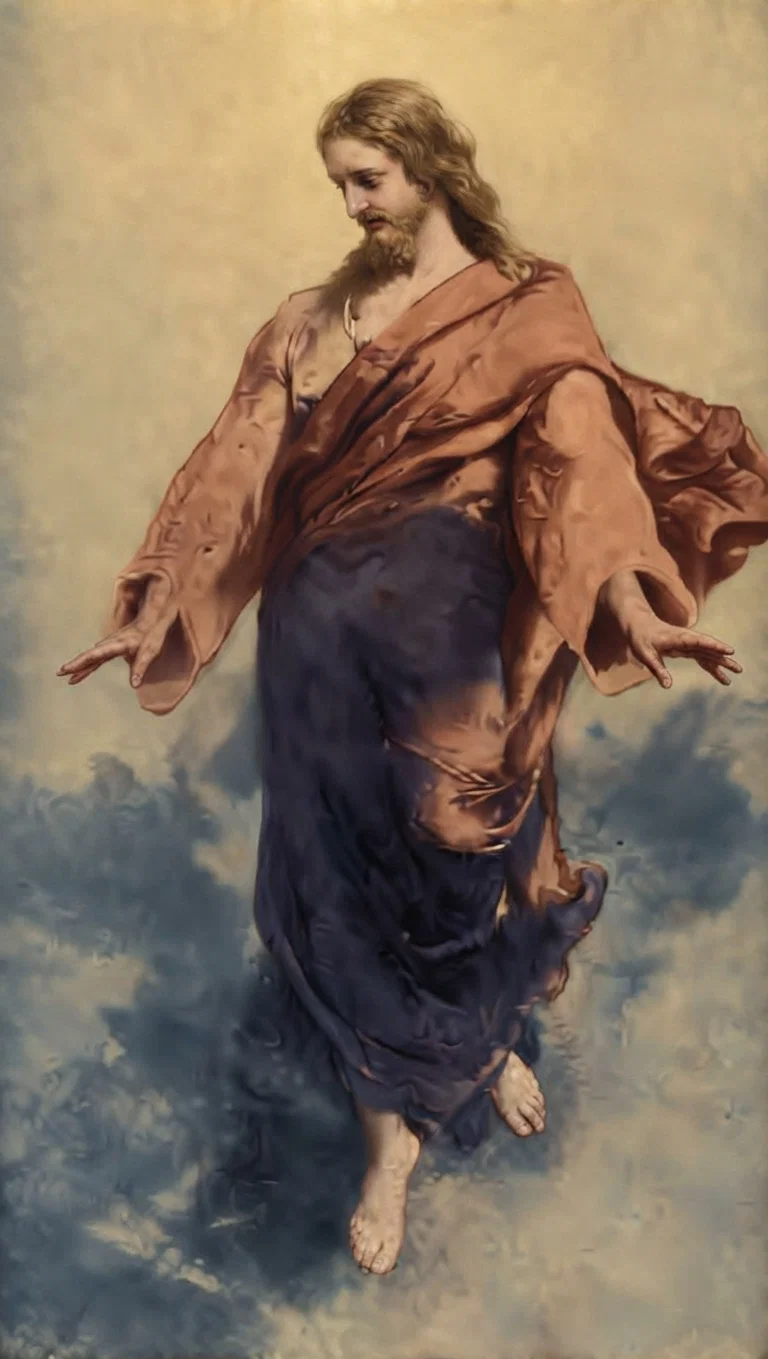
So filled was Jesus with the Holy Spirit and so fully was He subject to His working that "God was in Christ" and the Son could say, "He that hath seen Me hath seen the Father." Thus God was manifested in the flesh, Divinity was united with humanity, and the mystery of the Gospel was revealed.

The Gift of the Spirit

When Jesus was about to take His bodily presence from the earth and to return to His Father, He comforted the troubled hearts of His disciples with some most wonderful assurances. He said: "I will pray the Father, and He shall give you another Comforter, that He may abide with you forever, even the Spirit of truth." "I will not leave you desolate; I come unto you." "If a man love Me, He will keep My Word; and My Father will love him, and We will come unto him, and make our abode with him." "The Comforter, even the Holy Spirit, whom the Father will send in My name, He shall teach you all things, and bring to your remembrance all that I said unto you." "When the Comforter is come, whom I will send unto you from the Father, even the Spirit of truth, which proceedeth from the Father, He shall bear witness of Me." "It is expedient for you that I go away; for if I go not away, the Comforter will not come unto you; but if I go, I will send Him unto you." "He shall glorify Me; for He shall take of Mine, and shall declare it unto you."
"The Holy Spirit is Christ's representative, but divested of the personality of humanity, and independent thereof. Cumberd with humanity, Christ could not be in every place personally." Therefore it was for their interest that He should go to the Father, and send the Spirit to be His successor on earth. Because of this provision Jesus could say, as He was being taken up into heaven after His resurrection, "Lo, I am with you alway, even unto the end of the world."
The promise was made to the disciples before the ascension, "Ye shall receive power, when the Holy Spirit is come upon you; and ye shall be My witnesses." On the Day of Pentecost "they were all filled with the Holy Spirit" and testified of Jesus so effectively that "there were added unto them in that day about three thousand souls." The power of God was so manifested in the ministry of these humble men that even their opposers "took knowledge of them, that they had been with Jesus."

The Gifts of the Spirit—the Head of the Church

After Saul's remarkable experience on the way to Damascus, Ananias was sent unto him with this message, "The Lord, even Jesus, who appeared unto thee in the way which thou camest, hath sent me, that thou mayest receive thy sight, and be filled with the Holy Spirit." In the power of that Spirit he labored more abundantly than they all, and in him were revealed most fully the gifts of that Spirit.
Thus in the apostolic church the Holy Spirit, the representative of Jesus upon the earth, was given His place in the hearts of the believers, the church was a Spirit-filled church, and Christ was the Head of the church. This was manifested in the fact that the work which Jesus began was carried forward by the disciples and attended by the same signs through the working of the Holy Spirit. Of this the apostle Paul wrote in these words: "Unto each one of us was the grace given according to the measure of the gift of Christ. Wherefore He saith, When He ascended on high, He led captivity captive, and gave gifts unto men. . . . And He gave some to be apostles; and some, prophets; and some, evangelists; and some, pastors and teachers; for the perfecting of the saints, unto the work of ministering, unto the building up of the body of Christ."
It must always be remembered that the true church is the body of Christ, and that it continues to be the true church only so long as it is the body of which Christ is the Head. When Christ is no longer given His place as Head of the church, then the church itself becomes a body without a living head—a dead thing. In such a church the gifts of the Spirit need not be expected, inasmuch as the Spirit is rejected who worketh all these.

The Falling Away—Substitutes for the Divine

Before those men who shared in the Pentecostal blessings had all passed away there began to appear indications of that "falling away" or apostasy which, when fully developed, substituted the mystery of iniquity for the mystery of godliness, set aside Christ from His place as Head of the church, and robbed the church of those gifts which had been bestowed through the presence of the Holy Spirit, the representative of Christ.
This change was not wrought in a day. Step by step men departed from the simplicity of the faith, "speaking perverse things, to draw away the disciples after them." Little by little the traditions and commandments of men were added to, or put in the place of, the commandments of God. Gradually was developed "the man of sin, . . . the son of perdition, he that opposeth and exalteth himself against all that is called God or that is worshiped; so that he sitteth in the temple of God, setting himself forth as God." This is the divinely-drawn picture of the Papacy. In this organization, according to the definition of the Council of Florence (1439) "the Roman Pontiff is . . . the true Vicar of Christ, the Head of the whole church." This is explained by Cardinal Gibbons to mean that "the pope is the organ of our Saviour, and speaks His sentiments in faith and morals. . . . The pope is the representative of Christ on earth."
According to these authoritative definitions it is perfectly plain that in the great apostasy another representative of Christ has taken the place of the Holy Spirit, and that a so-called vicegerent of the Son of God has assumed to be the head of the church. As an inevitable result the gifts of the Spirit disappeared in this apostate church, while false signs and pretended miracles were resorted to to maintain the appearance of divine authority. This has been true for many centuries and is true to-day, and by the formal declaration of the infallibility of the pope the Roman Catholic Church has effectually closed the door of reform and set its seal upon its own apostasy.

The Apostasy

(Continued from page 6.)

The Waiting Church

But it is clear that the church which is waiting for the coming of the Lord will "come behind in no gift." There must therefore be a message of reform in the last days which will repudiate the false representative of Jesus Christ in the earth and dethrone the pretended vicegerent of the Son of God from his seat in the temple of God, proclaiming the eternal Son as the only true Head of the church and the Holy Spirit as His only representative in the world. As the result of such a message the true church will again be filled with the Holy Spirit and signs and wonders will follow them that believe.
Just such a message is found in Rev. 14:6-12 and it is now being proclaimed as God's appointed means of preparing a people for the second advent of our Lord. In this great advent movement some of the gifts of the Spirit have already been manifested, and before it comes to its climax all of them will be restored to the church. Thus the long, dark night of apostasy will be brought to an end, the Sun of Righteousness will arise, and the church, with Christ as her living Head, will triumph gloriously.

The Ark of God's Covenant

By J. O. Corliss
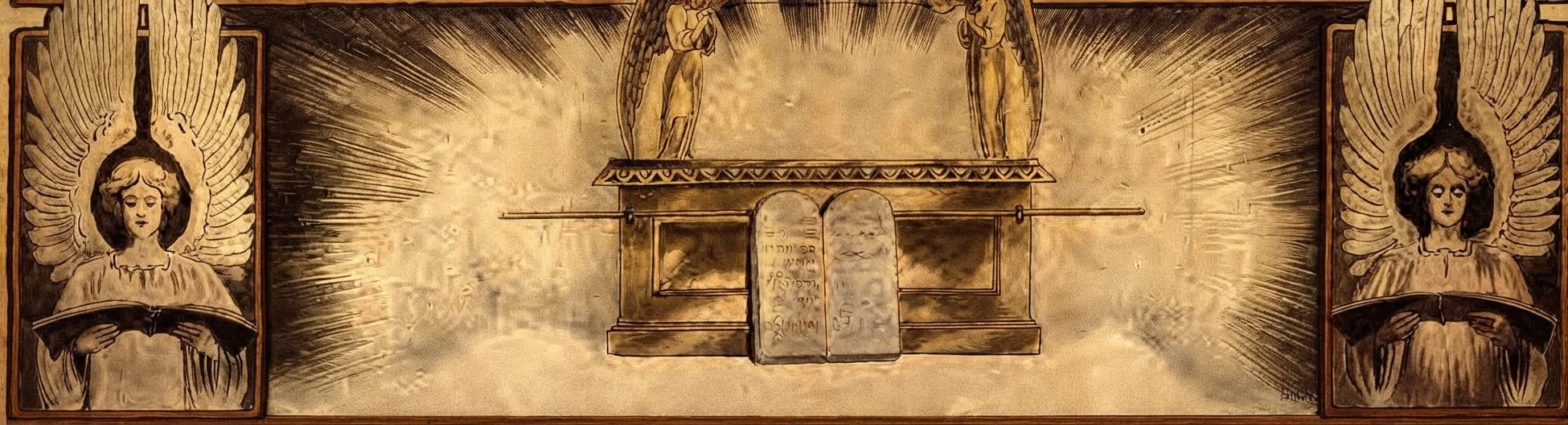
UNDER the Levitical priesthood, the center of all religious service was the sanctuary. This building consisted of two apartments, the first wherein was the altar of incense, the table of showbread, and the seven-branched golden candlestick. The other apartment contained the golden censer, and a chest, overlaid with gold (Heb. 9:2-5), which was called by different names, as, The Holy Ark (2 Chron. 35:3), The Ark of God (1 Sam. 4:17), The Ark of God's Strength (2 Chron. 6:41). The Ark of God's Covenant (Deut. 10:8), The Ark of God's Testament (Rev. 11:19), and The Ark of God's Testimony (Ex. 30:6).
By these several, yet similar, designations, it is at once discovered that the ark was the most important of all the vessels of the sanctuary. But the names by which this piece of furniture was distinguished do not alone point out its exalted position, or its noble import. In order to learn this, one must trace the sanctuary service through its various forms. Let us do this very briefly.

How the Sinner Became Free

When a sinner desired pardon for his transgressions, he brought a lamb to the door of the sanctuary, and, after laying his hand in confession on the victim's head, thereby transferring his sin from himself to the offering, he slew the lamb. Then by a certain process, the attending priest conveyed the sin thus received by the lamb into the first apartment of the sanctuary. Lev. 4:27-31; 6:25, 26. At the proper time, this sin was taken upon the high priest and conveyed by him into the second apartment, before the ark, where the atonement for that sin was completed. No sin was fully atoned for unless thus brought before the ark, and the service of the high priest there performed.
There was a sufficient reason for this service in behalf of sin before that ark within the sanctuary. That which gave it the title, Ark of God's Strength, was the law of God's government which it contained. It was the ark of God's testimony because the law it held testified of God's greatness, centering in His creative power. It was the ark of God's covenant, or testament, because the law therein was, and is, the basis of all God's promises to man. To violate any principle of that law was to deny the testimony of God concerning His greatness, to repudiate all claim to His covenant of grace, and to defy the greatness and power of His throne.

What the Transgression of That Law Is

In view of this it is not strange that the transgression of that law should be called sin. 1 John 3:4. Indeed, such a heinous thing should be called by a name more expressive of extreme wickedness if it were possible to find such a term. The fact is, however, that the word "sin," of itself, expresses the strongest condemnation known in the language of Inspiration. True, man has associated himself so much, and so intimately with sin, that the term has come to mean something only common, and of no very great consequence. But when one stops to think of what is involved in the transgression of a law which is the direct transcript of the infinite mind of Jehovah, he may then get some faint idea of the enormity of the first approach toward such transgression.
A step of this nature is, by the Word of God, designated sin. It was accounted the same in the days of the earthly sanctuary service. It was this character of sin which required the guilty Israelite to humble himself in the sight of all his people, by dragging before the door of the sanctuary an innocent victim, upon whose head he might confess his trespass. This was the requirement: "If any one of the common people sin through ignorance, while he doeth somewhat against any of the commandments of the Lord concerning things which ought not to be done, and be guilty; or if his sin, which he hath sinned, come to his knowledge; then he shall bring his offering, a kid of the goats, . . . and he shall lay his hand upon the head of the sin-offering, and slay the sin-offering." Lev. 4:27-29.

The Mercy-Seat

But as before stated, this was not enough to clear the sinner from his guilt. True, his act entered a stay of proceedings against the guilt discovered, which otherwise would end in death. Rom. 6:23. But before the entire at-one-ment with God could be found, the sin, in all its heinousness, must be brought before the law which had been transgressed. This law was enclosed in the ark, the cover of which was the mercy-seat of God. This seat was the throne of God, in figure, having under it the law of the Most High, as the ten pillars of His government.
Into this august Presence was brought every sin of every transgression, which had been confessed at the door of the sanctuary. The sprinkled blood of the sin-offering must be sprinkled before that transgressed law and the mercy-seat above it, as a testimony to the repentance of the sinner, before the sin could be blotted out.
That work was a figure or type of the work the Lord Jesus, as the world's High Priest, has to do for repentant sons of Adam. In that typical work the blood of animals was offered by earthly priests, but the Lord Jesus, our heavenly High Priest, offers His own blood to cleanse the guilty, yet repentant, soul. In the earthly sanctuary, the high priest presented the sins of the people before the law of Ten Commandments for the sinner's atonement because that law had been violated. That law was a copy of the one in heaven, before which Jesus must present the sins of the transgressor.
That heavenly law of Ten Commandments which defines sin must be satisfied of the sinner's repentance just the same now as then. Jesus, our great High Priest, enters the most holy place of the heavenly sanctuary, and there before the throne of God, and His broken law, pleads in behalf of the repentant sinner that his sins may be blotted out, so that he may become one with God, and thus be like Him. Without this service of our great High Priest, none would be acceptable in God's sight, but the wrath of God would abide upon them. Viewing this subject from such a standpoint, one can hardly refrain from exclaiming with the great apostle, "It is a fearful thing to fall into the hands of the living God." Heb. 10:31.

LO, HE COMES!

By C. M. Snow
Through the twilight, through the gloaming, Of the swiftly passing day, God is flashing to the nations Signals of the coming fray. Men may read it in the judgments That are falling on the world For the deeds that quench the Spirit Where Sin's banners are unfurled.
They may read it in the wreckless Race for riches, place, and fame, While the racers crush the helpless In their Mammon-maddened game. It is written in the records Of the stirrings of the soul That has bartered all of heaven For a gilded, crumbling goal.
Weary wasting, wanton wooing, Deep conspiracies of fraud, Can not still the mighty chorus That is crying up to God. Faithful witness is not wanting— God's own angels testify Of the deeds the strong are doing, Who God's holy law defy.
And the nations, how they wrestle! How they strive for place and power! Greedy, hungry, full of venom, Armed, they wait the fearful hour That makes battle-fields of meadows; Dyes the river and the plain; Drenches hill and vale and forest With its warm, red, rushing rain.
God is waiting, sternly waiting, Justly balancing the scale; And no power of man's devising 'Gainst that justice can prevail. Sure as shines the sun above us; Sure as rivers seek the sea; God will soon declare, "'Tis finished— Time is now eternity."
Then the kingdom of Messiah Every throne will overthrow, Every power crush and scatter, Every battlement lay low. From the glory of His presence Wicked men and demons fly, Vainly seeking now for shelter From the Christ they did defy.
Heed, ye careless! Heed the warning God is flashing forth to-day! Earth and heaven are loudly telling That our God will not delay. He is coming, say the prophets— Shout it till the welkin rings! He is coming—earth declares it— Lord of Lords and King of Kings!
Continue reading: God's Stamp of a Righteous Character