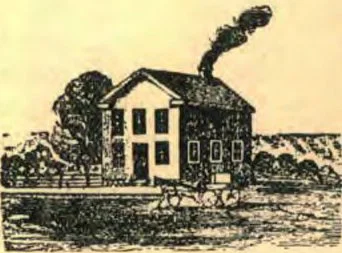
THE beginning of our educational work, which has grown to such an important place, reaching out to almost every country in which we have established foreign missions, was, like the other institutions of our work, very humble. In a copy of the Review of June 11, 1872, appears this simple announcement, telling of its start:—
This school commenced in Battle Creek at the time appointed, June 3, with twelve scholars, Brother G. H. Bell, teacher. Two have since joined. This is a better beginning than we had ventured to anticipate.
In this small beginning, however, our brethren saw the commencement of a movement which they had faith to believe would play a most important part in the development of this work, and one which would in its normal progress keep pace with the rapid growth of this denomination; for in this same announcement we read:—
This may seem to some like a small beginning. But a beginning, however small, is something; and it was expected that this would begin in a small and humble way, and come up to its true position by a steady and healthy growth. And we can never be discouraged at the smallness of any beginning, so long as we have the Saviour’s parable of the mustard seed, which is the smallest of all seeds, but finally becomes the greatest of all herbs.
FIRST SEVENTH-DAY ADVENTIST SCHOOLHOUSE
Two years later, in 1874, the little school, with one teacher, in an unpretentious building, had grown into the Battle Creek College.
Our brethren seem to have appreciated what the opening of Battle Creek College would mean to the work; for in an editorial in the Review which mentions the opening of the school, are these words: “We are reminded by the experiences of the past few days that important events, at least some that are important to us as a people, are following each other in rapid succession.” It is interesting to note that the students who entered Battle Creek College in its opening years are those who are now bearing the most responsible positions in our work in all parts of the world.
Battle Creek College remained the only training-school in this denomination until the year 1882. In that year South Lancaster was established, the report being, “It began under very humble circumstances, improvising such buildings as it could secure for its accommodation.” That humble beginning also developed beyond the expectation of its founders; for when I visited South Lancaster but a few weeks ago, I had the privilege of speaking to three hundred students in a chapel filled to its utmost capacity.
In this same year, 1882, Healdsburg also opened its doors, with two instructors and eleven students. This school is perpetuated in the new Pacific Union College at St. Helena, which has a much more favorable location than the one established at Healdsburg.
The next school to open was Milton Academy, in Oregon, in the year 1888, which might, perhaps, be called the beginning of Walla Walla College, inasmuch as it was discontinued when Walla Walla College opened, in 1892.
In 1891 Union College, which has grown to be the largest training-school in this denomination, was established, near Lincoln, Nebraska. The cause of present truth in the West had been very prosperous, so that this college opened with a large number of students, and has been a mighty factor, in the providence of God, in training students for the Master’s service in every part of the earth.
The year 1892 was marked by the establishing of the educational work beyond the home shores in two far-away countries. The Australasian Bible School was opened August 24, in Melbourne, and almost at the same time the Claremont Union College began its work at Cape Town, South Africa. Since that time the work has grown with such rapidity that not a single year has passed which did not see the opening of a new school in some part of the world.
Although the first general move to establish and maintain church-schools was not until the years 1896 and 1897—a quarter of a century after the opening of our first school in Battle Creek—yet I was interested to find these words, in an article by A. Smith, in the Review of June 25, 1872, calling attention to Christian education in our schools:—
Although the heart of the [educational] work will be at Battle Creek, I confidently expect it will quickly assume proportions that will enable it to extend its branches into all our churches of large membership, for the instruction of children and such as can not avail themselves of a course of study at Battle Creek.
Among the gifts to the church are not only apostles, prophets, etc., but also teachers. I do not know why young women could not qualify themselves, by a course of study at Battle Creek, to serve as teachers of select schools in our large churches, giving instruction in the common and higher branches of English, and in the principles of our faith and hope.
I greatly admire the faith those early workers had in the future of the educational work when it was yet in its infancy.
About the time that the church-schools began to be established, schools smaller than our training-colleges, and in rural districts, were established, under the name of “intermediate” schools. With the establishment of these, the educational link was complete, and for more than a decade it has been possible for a child to begin and end his training in Seventh-day Adventist schools.
From that little beginning at Battle Creek of one teacher and twelve students, thirty-eight years ago, that “mustard seed” has grown, until it has literally become a “great tree,” with its branches extending to the different parts of the earth. There are now, at home and abroad, not including mission schools abroad, 88 training and intermediate schools, with 522 teachers and 6,790 students, and 581 church-schools, with 668 teachers and 11,835 students. This makes a grand total in our schools of 1,103 teachers and 18,625 students of all grades. Are you a student in one of these schools?
“Picket Line of Missions”
THIS book is a series of missionary biographies by different authors. While some of the characters sketched are not as familiar as others, yet each one is truly heroic. Many who read will be inspired to answer the Macedonian call by an unreserved consecration of their all to the service of the Master. Surely Livingstone, Mackay, and Thoburn were heroes, and the lives of heroes have often inspired others to heroic deeds. The book contains valuable information concerning different mission fields where you may be some day called by your Master to take a place in the firing line. Cloth, fifty cents. Order from Review and Herald Publishing Assn.
A Chinese Lesson
By W. C. Hankins
W. C. HANKINS
As I was listening to the children in the Chin-chew boys’ school studying their lesson this morning, I noticed that all were making a slight mistake in the way they repeated the lines they were learning to read. They were learning part of a song, and the two lines they were repeating read like this:—
“Chit-si i-au goa koat-i,
Beh tak hang chiau Tsu ka-si.”
This means, “From this time on I am determined to do all things according to the Lord’s teaching.”
But one little lad had heard wrong, and so was repeating the lines like this:—
“Hit-si i-au goa koat-i,
Beh tak hang chiau Tsu ka-si.”
This means, “From that time on I am determined to do all things according to the Lord’s teaching.” Soon all the children were repeating it as he did.
Now you will notice that he only left off one letter, but the difference of that one letter made a difference of one word in the meaning, and the difference made by the change of that one word is eternal in its consequences,—it is the difference between eternal life and eternal death.
God’s book says to us, “To-day if ye will hear his voice, harden not your hearts.” And again, “But exhort one another daily, while it is called To-day; lest any of you be hardened through the deceitfulness of sin.” Heb. 3:15, 13. God calls us “to-day,”—“from this time on,”—to give our hearts to him. But how often we are like the little Chinese boy, and say, “Yes, Lord, I will do it by and by,”—“from that time on,”—and “that time” is like “to-morrow,” it never comes. Unless we are determined that “from this time on we will do all things according to the Lord’s teaching,” we are treading on dangerous ground, and are liable to lose eternal life.
Not only does this lesson apply to those who have never made a profession of accepting the Lord Jesus as their Saviour from sin, but it comes with a double force to us who have already started on the upward way. We know that sometime we must be holy, that we must prepare to meet the Lord, that we must get rid of these sins that overcome us so easily, and we say, “Sometime we will get ready; sometime we will stop doing these things.” But, dear friends, we do not know anything about the future, and the only time we really have to accomplish this work is now,—to-day. We will hear or see many like the Chinese boy, and we will be tempted to learn of them; but we must remember that the Master says, “From this time on,” and he will not accept any other rendering.
Have you been making a mistake in repeating the lesson? If so, the Master is sending this to you as a reminder that you have heard wrong, or have been led away from the correct rendering by the voices of those around you; and he bids you remember that the correct rendering is, “To-day,—from this time on.”
Perhaps some who read these lines have, in the past, had a bright experience in the things of God, and were at one time fully determined to do his will, but have now grown cold. This class are like the little boy in this same school who, on being corrected for saying, “From that time on,” began to quote the lines thus:—
“It-si i-au goa koat-i,
Beh tak hang chiau Tsu ka-si.”
This means, “At one time I was determined to do all things according to the Lord’s teaching.”
As I listened to this little fellow’s rendering, I thought of the large class that were doing just what he so thoughtlessly repeated. And I thought of how pitiful it was that one should start toward the goal of eternal life, know the joy of walking with God, and then stop short before reaching his destination. But may God grant that this experience may not be ours; may we not look back and say, “At one time;” may we not look into the future and say, “Sometime;” but may we, by the grace of God, say, “Now, to-day, I will give my heart to him, and ‘from this time on I am determined to do all things according to the Lord’s teaching.’”
Kulangzu, Amoy, China.
Take No Account of Evil
This seems to be the age of the big stick, when the whole country bristles with reformers bent upon clubbing evil to death. An excellent symptom. Nevertheless, there is a neglected aspect of this warfare which demands consideration.
A man can not contemplate evil, dwell upon it, live with it in his thought, turn it over and over in his mind, grow indignant about it, plan to thwart it, discuss it, lecture upon it, without being hurt by it in some subtle way. One may as well try to handle soot and escape a smudge.
I have often listened to the socialist street orator, with whose pathetic vision I most heartily sympathize, denouncing with hoarse and passionate eloquence the sins of the moneyed mighty, and doing his level best — ofttimes with success — to inspire in his hearers discontent, envy, and hatred. Probably the last thing in the world that such a man would think of is the effect upon his own character of the thoughts he entertains about the people and the wrongs that he criticizes. Yet the point is rather important. He may be separated by oceans and continents, both in this world and in the world to come, from the objects of his tirades; but he can never get away from himself.
The longer I live, the more convinced I am that evil can not harm a man. It is the person’s thought about the evil that contains the real poison. This is the reason why Jesus, in constant touch with suffering and sin and black injustice, nevertheless kept his own soul sweet and pure. He refused to think evil of evil. He refused to permit the sins of other men to overshadow his peace. Paul understood the Master’s attitude when he wrote, “Love taketh no account of evil.”
How sensitive we are! We are wronged in some way, and we instantly retaliate. We take account of evil, and give importance to it by taking notice of it. Jesus taught that we should not retaliate, but turn the other cheek; that it is better to suffer the same wrong twice than even to think of avenging it once; because thinking of the wrong done plants the thought of the evil in your own mind. The moment you think of it, it is inside. And it is poison. The heart burns with indignation. You desire revenge.
Therefore, take no account of evil. Pass it over; forgive it; refuse to think about it. Do not indulge9in self-pity. Why should another man’s sin embitter you? Why permit it to produce in you a state of mind which inevitably causes suffering?
I am told that this is impractical. How do we know? It has never been tried save by One — and he made the strongest impression on the world for vital good that ever was made since time began.
The fact is, it is much easier to salve our souls by a show of virtuous indignation at the wrong-doings of our fellows, and to pound them lustily with the big stick, than it is to take no account of evil, but go on building the good, thinking the good, talking the good, keeping the mind filled with things as they ought to be and might be, and enlisting a multitude not simply to fight evil, but to establish righteousness — first in ourselves, and then, by the influence of example, in all the earth.—Christian Endeavor World.
Knocking Down, and Lifting Up
A FATHER bade his son set up some bricks endwise in regular line a short distance apart, relates an exchange. “Now,” said he, “knock down the first brick.” The boy obeyed, and all the others fell with it. “Now,” said the father, “raise the last brick, and see if the others will rise with it.” But no; once down, they must be raised singly. How easy it is for one to lead others astray, but how difficult for him to restore them, however sincere his repentance may be!—Zion’s Herald.
Things I Have Observed Recently
By Ethel Le Baron
A MAN going into a lady’s office and carrying on a conversation of some length without removing his hat.
A boy not lifting his hat, nor apparently recognizing in any other way the salutation of an older person.
A boy who habitually lifts his hat and speaks audibly and pleasantly whenever greeted on the street by an older person. His gentlemanly conduct has frequently occasioned commendatory remarks from his elders.
A young man of mental and moral worth doing great injustice to his physical appearance by sitting so bent over at the dinner table that many an elderly man of threescore and ten would blush to be seen in that posture.
A young man of good physique and good principles taking such large mouthfuls at the table that he involuntarily excites the emotions of some observers lest he be unable to complete the operation so heroically begun. Why not be content with medium-sized mouthfuls?
A young woman sitting in a public gathering with her knees so far apart that her dress dropped loosely down between them. Ladies are expected to sit with knees near together.
A minister sitting in the pulpit with one leg thrown over the other in a way quite inappropriate for the sacred desk. Since his hose were light colored and the rest of his outer apparel black, his attitude attracted especial attention. It is better form to keep both feet resting on the floor when sitting behind the pulpit.
A young woman, in the presence of gentlemen and lady customers, sitting on top of a table in a store, swinging her feet, instead of occupying a near-by chair. It is unbecoming for girls and women to seek “the high places” when chairs and settees can be obtained.
ETHEL LE BARON.
Two Funeral Experiences
By Smith D. Baker
I HAVE never allowed myself to make any charge for attending funerals, and never expect anything from members of my own parish (presumably this is true of all pastors); but when strangers outside of the congregation have, unsolicited, given anything, I have not had any trouble of conscience in accepting it. Ministers generally expend more than they receive for funerals.
Once I was sent for to attend a funeral some five miles distant. It was at the home of an independent farmer, who was not an attendant upon any church. We went and returned without even a “Thank you” from any one.
Some six months after, another call came from the same family. I responded again, without even a “Thank you;” and in less than a year I was sent for again.
At the close of this service the old farmer said: “You have been very kind, elder, to come to us three times in our trouble. What do you ask?”
I replied that I never made any charge for funerals; but if people were disposed to give anything, I took it.
Whereupon the man said: “Wall, that is kind in you. Next fall take your horse, and come over and get some apples.”
I never went after the apples.
As an offset to this case is the following: It was the first of April; the frost was coming out of the ground, and the roads were terrible and even dangerous, when a messenger came at about ten o’clock in the morning, stating that I was wanted to attend that afternoon a funeral of an old lady some fourteen miles away.
I procured a horse and carriage, and went. It was a long and disagreeable ride. There were some fifteen houses in the little village.
It was quite late before the services were over, and the good woman’s son most thoughtfully and urgently said, “You must not think of returning home to-night; for the roads are bad, and it will be very dark.”
I did not need much urging, and just before supper he said, “I don’t know when we have had a sermon round here; would you preach this evening if I invite the neighbors in?”
I assured him it would be a pleasure. The people came, and filled two rooms of the farmhouse.
In the morning, as soon as breakfast was over, the young man said, “How much do you ask for attending a funeral?”
The usual answer was given.
“I can not have my mother buried for nothing,” he said, and gave me five dollars.
Then he asked, “How much do you ask for that sermon?”
I replied, “Nothing; it was a pleasure.”
“I can’t have our preaching for nothing,” he said, and gave me another five dollars.
Then he asked, “How much will you have to pay for your horse?”
I replied that, if I had returned the night before, it would have been one dollar and a half, but I presumed they would ask another dollar and a half.
He handed me another five dollars. “If it costs you any more, let me know.”
I always thought that young man would make a good city deacon.—Smith D. Baker, D. D., in Christian Endeavor World.
Good Company
And then there's Guy Frazier,” said Bruce Calvert rather hesitatingly; “but you don't like him.”
“Not like him!” said Mr. Calvert. “My dear Bruce, this is your party, not mine. Select your guests without regard to my likes and dislikes. I expect to be so busy that I shall have very little time to be with you lads.”
Bruce wrote the name with a feeling of relief. “I never can imagine why you dislike Guy, Uncle Fred,” he said. “He is such good company, and the life of every gathering. I'd give anything to be as merry and entertaining as he is. It isn't often that our crowd takes up with a newcomer at once, but Guy is so jolly and pleasant that we have to like him. We are sure to have a good time when he is about. I believe, Uncle Fred, you will agree with me after his visit.”
“I don't dislike Guy, Bruce; but there are other young fellows I like much better,” said the middle-aged man, “my nephew, for example. You are a great deal better company, if you only knew it, than your friend. No, I'm not saying this to flatter you, but simply to tell the truth.”
In honor of Bruce's nineteenth birthday Mr. Calvert had arranged a sort of house party for his nephew at his beautiful farmhouse thirty miles out in the country, and the youth was bidden to select six or eight guests to spend a week in December with him at the hospitable home, where all the delights of country sports and long, quiet evenings before a wood-fire could be enjoyed. The ideal weather of that autumn promised to continue; so the fortunate young men set out for their visit in high glee, with Guy Frazier the center of the laughing, joking group.
But the autumn, after lingering through the delightful Indian-summer stage just one more day for the house party, came to an end in a sobbing, fitful rain that kept the boys close to the big house during the rest of their stay. Not that that would have afflicted them greatly, under ordinary circumstances, but with Guy Frazier in the crowd, enjoyment proved to be out of the question. He could not sing, could not play any of the musical instruments belonging to the house or the guests, showed no appreciation for the playing of the others, would not read, did not care for games, and did nothing but sit about telling jokes and stories from morning till night.
Mr. Calvert was secretly pleased with the weather and the party; for he had feared that his nephew might select Guy Frazier as a model, and pattern his conversation after the light, frivolous, patent-medicine jokes of the new member of the little crowd; but that week in the farmhouse opened the eyes of all the boys; and from that very moment the popularity of shallow Guy Frazier was on the decline. Without being rude or ungentle in their actions, they gradually dropped him when they returned to the city, and he quickly and naturally drifted into a lounging set of young fellows who spent all their time in cigar stores and billiard halls, telling jokes, and taking interest in only the shallow things of life.
To be good company implies more than a fund of humorous stories, though often young people are years in finding that out. They look with envious eyes at the glib-tongued talker, wishing they were only as talented and popular as the one in the center of the laughing group; but in many cases there is nothing that deserves to be envied. To be gay and merry, and to know how to tell a good story are accomplishments worthy the attention of all young people; but underneath and behind must lie the solid foundation of common sense, discretion, learning, and tact, if any one is to merit the honor of being called good company by the people whose opinion is worth having.
The most tiresome people on earth are the ones who are never serious, and who manage to turn about the most serious things into so-called jokes. To be shut up with such a person an entire day is to become so exasperated and tired that silence is more than golden when it at last comes. There are young men and women whose sole and only idea of literature is obtained from the humorous columns of newspapers and the light stories and articles purporting to be “funny,” that abound in many publications. Such young people grow into the empty-headed middle-aged men and women who are the bane of every community.11
On the other hand, the young people who look longingly at the talkative, joking, popular young folk and sigh for their gifts, have the chance to develop into brilliant conversationists and really good company, because of the very modesty that they deplore. Not occupying the center of the stage at all times, they have the opportunity to observe, and to read, and to cultivate their minds, in time becoming far more popular than their shallow companions. Innocent fun makes a fine dessert for life, but a very poor steady diet.— Young People.
Double Duty
Boo-Hoo-Hoo! we've foughted,
My Teddy Bear and me,
And now he wants to make it up,
And I just won't, you see.
Boo-hoo-hoo! it's horrid
That Teddy won't cry too;
I have to cry just twice as hard,
And don't know what to do.
— Good Housekeeping.
A Great Gentleman
At one time Mr. McKinley was closely followed by a reporter for a paper of the opposing political party. While Mr. McKinley was annoyed by the misrepresentations to which he was almost daily subjected, he could not help admiring the skill and persistency with which he was assailed. His admiration, too, was not unmixed with compassion; for the reporter was ill, poorly clad, and had an annoying cough.
One night Mr. McKinley took a closed carriage for a near-by town, at which he was announced to speak. The weather was wretchedly raw and cold. He had not gone far when he heard that cough; and he knew that the reporter was riding with the driver on the exposed seat. The major called to the driver to stop, and alighted.
“Get down off that seat, young man,” he said.
The reporter obeyed, thinking the time of his vengeance had come.
“Here,” said Mr. McKinley, taking off his overcoat , “you put on this overcoat and get into that carriage.”
“But, Major McKinley,” said the reporter, “I guess you don’t know who I am. I have been with you the whole campaign, giving it to you every time you spoke, and I am going over to-night to tear you to pieces, if I can.”
“I know,” said Mr. McKinley, “but you put on this coat and get inside and get warm, so that you can do a good job.”— Selected.