The Work in Italy — Testimony to the Swiss Brethren
By John Vuilleumier
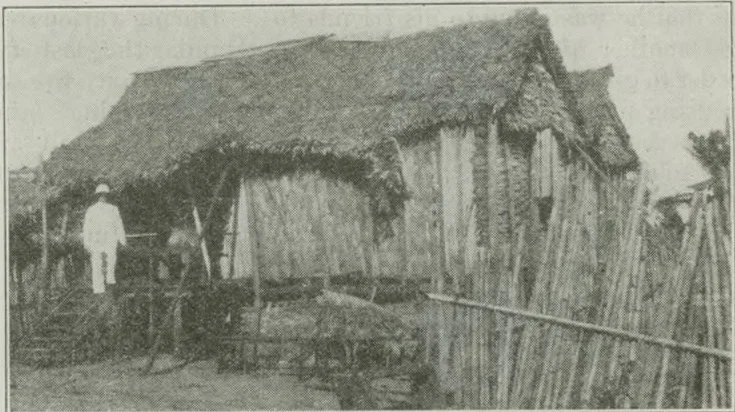
Chapel at Tamatave, Madagascar
Early Days of the Message in Europe — No. 2
The Work in Italy — Testimony to the Swiss Brethren
BY JOHN VUILLEUMIER
IN October Elder Bourdeau started meetings in the region of Valence, our first public effort in France. Chapels and even temples were at first opened to this strange speaker, but as the cross of the last message was presented, the people refused to hear, and opposition arose. In searching for halls to follow up his interest, Brother Bourdeau was faced with opposing the laws, enacted under the influence of the church. Both he and Elder Andrews, who had recently been ill with pneumonia, went to Paris to see what could be done in the matter.
A Group of Believers
at Tsararay,
Madagascar
“They were cordially received by Mr. Washburn, the American minister, who promised them his co-operation in their efforts to secure greater liberty in pursuing their work. They also corresponded with Mr. Jules Simon, at that time prime minister of France, who took his stand in favor of their plea in the organ of the government. The political crisis which followed resulted in the resignation of President Mac Mahon, whose administration was succeeded by one which gave its influence in favor of the desired reform. As the result of the changes which followed, the laws have become very much more favorable to the public proclamation of the message in this country, and the principal legal obstacles to the carrying forward of the work have been removed.”—“Historical Sketches,” pp. 27, 28.
This fact is well worthy of being mentioned in this connection. Soon after this trip, Elder Andrews made his first and only journey to Italy. Stopping at Valence, where he saw cheering evidences of success and gave some assistance, he went on to Naples to visit Dr. H. P. Ribton, an Irish physician, gained to the truth by correspondence. He baptized him, his wife, and his daughter, at Puteoli, the landing place of the apostle Paul, and left him in charge of a small work already started in the great metropolis. After laboring in Naples two years Dr. Ribton went to Alexandria, Egypt, where he, Brother Rupp, and Brother Allegretti were killed in a political uproar, on June 11, 1882.
After spending five weeks in Naples without succeeding in giving more than one public lecture, Elder Andrews returned north, stopping at Torre Pellice, to meet our faithful and courageous sister, Catherine Revel, who had been keeping the Sabbath of the Lord for more than ten years, and who is still doing so at this writing (Dec. 19, 1928).
In October the third annual meeting took place in Bienne. It was reported that there were Sabbath-keeping Adventists in France, Germany, Alsace, Denmark, Holland, England, and Italy. The committee was re-elected as follows: Brethren Andrews, Albert Vuilleumier, Hanhardt, Aufranc, and Dietschy.
Before leaving Valence, D. T. Bourdeau baptized fifteen persons. He then visited Alsace and opened work in Morges. Early in 1878, a company being raised in this quiet city on Lake Geneva, he made another tour in France, and sounded the warning in Orbe, Valleyres, and Chavornay, where he was joined by Elder Andrews, who took part in the public speaking.
All this time Brother James Erzenberger was not idle. He baptized thirteen at Morges and thirteen at Tramelan. Nor had the publishing work been at a standstill. The paper was entering new regions, and tracts in German and Italian were being printed and circulated. A future Italian preacher and editor, A. Biglia, had embraced the truth at Naples.
Thus the work seemed to move on slowly, but steadily and encouragingly. There were many obstacles, and a lack of confidence and unity. As was the case with Elder and Mrs. White in the early stages of the work, Elder Andrews was looked upon by some with suspicion, and hearty co-operation was lacking on the part of those whom he had come to help.
In a letter to the Swiss brethren,13dated from Ballardvale, Mass., Aug. 28, 1878, Mrs. White wrote thus about the work in Europe:
“I was shown that many more in Switzerland might have been brought to believe the truth, but those who first accepted the Sabbath have themselves been hindrances to the onward movement of the truth among them.”
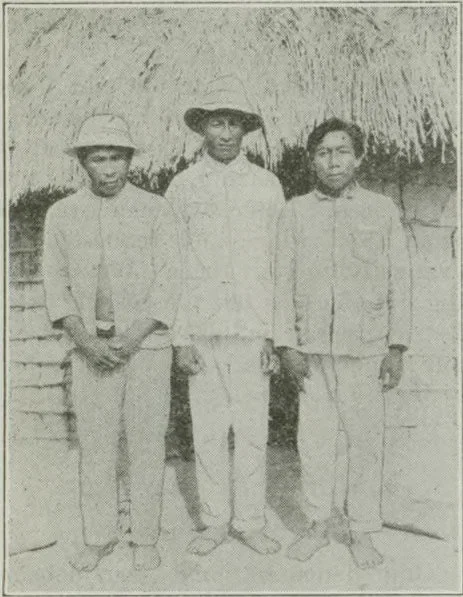
Chief Cipriani and two of his men. Esedires, on the right, can read Portuguese, and acted as interpreter during the meetings with the Makusi Indians at Nonzerarook, Brazil.
“God had sent to you two of His ministers. These were men of marked experience and conscientiousness. . . . But you have not co-operated with them as God would have you.”
“I was shown that a very much greater work might have been done, had you been humble and teachable, and had you heartily co-operated with those who have been sent to you. . . . There might have been an army of Sabbath keepers in your own country, had you received God’s messengers as you should and given them your sympathy, your confidence, and your love. If our brethren in Switzerland had received Elder Andrews and cared for him as the American brethren had cared for those who came to us from Switzerland, he need not have suffered one twentieth part as much as he has in that new field. . . .”
“Calls came to us from Europe for help. We sent you the ablest man in all our ranks, but you have not appreciated the sacrifice we made in thus doing. We needed Elder Andrews here. But we thought his great caution, his experience, his God-fearing dignity in the desk, would be just what you needed. We hoped you would accept his counsel and aid him in every way possible while he was a stranger in a strange country. But he has had to make his way himself, while you have stood by to question and cast doubts in reference to his suggestions and plans, when you were unprepared to take hold yourselves and move the car of truth onward.”
This much relating to Elder J. N. Andrews. But the testimony—as do all the Testimonies—does not confine itself to pointing out the fault committed; it contains much valuable advice and Bible instruction. Past experiences carry their lessons with them, and the Lord’s reproofs, though painful to hear, are meant for our good, and given to be a warning against repeating sad mistakes.
A Rock for a Bed
By A. W. Cott
From Mt. Roraima Into Venezuela and Brazil — No. 3
BY A. W. COTT
Early Sunday morning we made preparations to leave Acurima, and to cross over from Venezuelan territory into Brazil. Before starting out on the trail we were asked a question which gave us some idea of the extent to which the Indians had heeded the counsel given them the day before. On two different occasions, first by the men and afterward by the women, we were asked how many “Sabbaths” we would be away. These people, after but a few days of instruction from us, had already begun to compute their time in terms of the Sabbath. That they were consistent we afterward had the proof, for on our return, more than three weeks later, we learned that about sixty of them had faithfully kept the Sabbath in our absence. There is a Roman Catholic church in the village of Acurima, and an itinerating priest sometimes visits the neighborhood, but the Indians are unanimous in their desire that we should establish a mission among them.
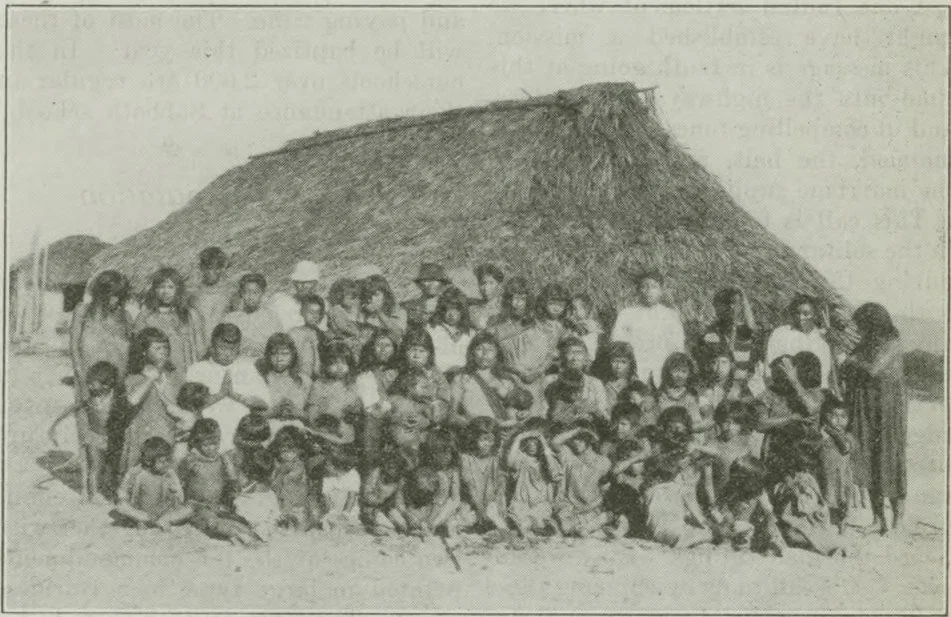
The Company of Indians at Acurima Who Kept the Sabbath During Elder A. W. Cott's Three Weeks' Absence in Brazil
Three more days’ marching over difficult ground brought us from Acurima in Venezuela, which is Arekuna country, to Nonzerarook, a settlement of Makusi Indians in Brazil. On our arrival we were soon greeted by Chief Cipriani and his people, and were shown into a hut which had been specially reserved for our use, the dirt floor of which was as clean as a dirt floor could be. We also became acquainted with an Indian called Esedires, who, besides being anxious for further Bible instruction, was an efficient interpreter, as he could read Portuguese and was able to interpret from that language into the Makusi dialect.
In order to reach Nonzerarook on this day, we had marched several miles under a hot sun, and on our arrival, Brother Gonsalves and I felt that we were too tired to hold a meeting that night, but some of the Indians gathered outside our hut and waited for us to come out and speak to them. The Lord gave us renewed strength, and I decided to hold a meeting, as Esedires was willing to interpret for us. The Lord greatly blessed the words spoken, and during the night that followed we heard prayers and songs ascending to God from a near-by hut. On our return from Boa Vista, the chief of this village told us that he wanted us to open a mission station among his people.
A Rock for a Bed
We met with some hardship while on the trail to Boa Vista on account of the long distances that we must march under a tropical sun, together with the lack of suitable food and water, and also owing to the great number of biting flies and mosquitoes which we encountered almost continually. On one occasion, after marching all day and covering many miles, we selected a camp site having14two stunted trees, one of which was quite bare of leaves. In this part of Brazil one can travel great distances where there is but little shelter from the sun, and no wood suitable to build a frame for the erection of a tarpaulin.
At this particular camp a thunderstorm was in progress on our arrival, and the sand flies penetrated our mosquito nets in such quantities that sleep was almost impossible. We therefore decided to strike camp, and continue our march through the night to some more convenient resting place. This we reached shortly before dawn. It proved to be a large piece of flat rock, upon which we lay down and slept, after first removing our wet shoes, for we had come through a considerable amount of water during the night’s march. This rock was to me the most comfortable bed I had had for a long while. We spent a night here during our return journey, as it was the most suitable camping place in the neighborhood.
The Lord blessed us abundantly while on this trip along the Brazilian border, and the spiritual benefits that were showered upon us far outweighed any hardships that we encountered. We were indeed glad to return to our mission, for we had been away five weeks, and it took us some time to recuperate from our experiences on the trail.
God is working in the section of the field we have just visited. As in other parts of the world, the doors are open to us, and with sufficient workers and means we could gather the ripening grain. We have already lost one Indian settlement where we might have established a mission. This message is in truth going at this time into the highways and hedges, and in compelling tones is bidding the maimed, the halt, and the blind to the marriage supper of the Lamb.
This call is to-day being answered in the solitary places of the earth, and during the silent watches, mingling with the cries of night birds and animals of the lonely forests, the earnest voices of the Indians are heard pleading with God for a better knowledge of Him whom to know aright is life eternal. But how many thousands of Indians there are in this great continent who have not yet heard the glad tidings! May we answer God’s call to us by entering these fields during this hour of opportunity. Let us without further delay make a covenant with Him by sacrificing our all to the finishing of the work.
A Good Reputation
By J. L. Christian
BY J. L. CHRISTIAN
One of the pioneer members of our Meiktila church is a criminal lawyer of considerable fame in Upper Burma. This brother is an ardent believer in home missionary work, and keeps a supply of papers, tracts, and Scripture portions available in his office.
Recently he gave a copy of Genesis and the Gospel of Mark, together with two copies of the ten commandments printed in large type, to a Burmese client. The Burman took them to his native village, about eleven miles distant, and knowing the village pagoda to be the center of the religious life of the community, he posted one of the commandment charts on each of the two gateways to the pagoda grounds.
Soon afterward, on a special feast day, our brother went to this village, which is a stronghold of Buddhism. Large crowds of people were visiting the pagoda, and there seemed to be an air of special interest, so our brother went over. He saw two men reading the commandment charts aloud, and commenting on them to the people gathered at each gate.
Ordinarily the charts would have been torn down in anger, but the name and influence of our brother gained respect and a hearing, and results are being seen. Later five men came in from this village and requested an evangelist to visit them. We are going out there to tell the gospel story. Let us use our influence and improve our opportunities.
Meiktila, Burma.
God Is a Stronghold in Trouble
God is a stronghold in the day of trouble.
Liberality of Native Believers
THE following interesting items are culled from a private letter written by Mrs. Eric A. Beavon, a missionary in Kisii, British East Africa:
“This week has been a great rush for Eric, and I have not been able to give him the usual help. He is leaving for his three months’ trip among the outschools next Friday, so he must have his books closed and his reports made up. Last week he was paying teachers and evangelists and taking in tithes and offerings, including the Harvest Ingathering and Annual Offerings, which amounted to more than £150 ($750). There were 2,000 shillings (24 cents each) and 50,000 cents (100 to the shilling) and the rest paper. Eric and the natives who were helping him worked all day counting shillings and cents, and they were all ill when they finished. It took five men to carry the money to the district commissioner’s office the next day, and the sight of so much cash created a real sensation.
“The average income of a Kisii is one shilling (24 cents) a week. If he is working on a plantation owned by a European, he may earn from two to five shillings.
“The gifts from these poor natives, for 1928, in tithes and offerings amounted to £550 ($2,750)! A zealous native Christian does not stop to think whether he is giving a tenth or a half of his income when giving to God, and this is true of the poorest of them.
“The church membership in Kisii is 297, with 400 in the preparatory classes, who are keeping the Sabbath and paying tithe. The most of these will be baptized this year. In the outschools over 2,000 are regular in their attendance at Sabbath school.”
A More Effective Name
By O. B. Kuhn
BY O. B. KUHN
OUR denominational terminology, while very effective in English, often loses its pith and point when translated literally into the Chinese. This was pointed out to us by the Chinese delegates who attended the publishing, home missionary, and tract society secretaries’ convention recently held at Chiao Tou Djen, Kiangsu Province.
I will mention one change that was suggested, that of the term for Big Week. In Chinese this has been called “Da An-Hsi” (great peace rest). The days of the week are called An-Hsi one, An-Hsi two, An-Hsi three, etc., similar to the ancient Hebrew style, “one of the Sabbath,” “two of the Sabbath,” etc. The word “an” means peace, and “hsi” means rest. The two in combination stand for “Sabbath.” “Da” means great, therefore the term, Da An-Hsi means the week of greatest peace and rest — not a fitting name for Big Week, as we know it in America.
The delegates asked for a name that had more swing and motion in it, so they chose the term “Shu Bao Yun-Dung Djou” (book, paper, circulation cycle).
Villagers in China Find Faith Through Sold Bibles
“A BAPTIST missionary in China says that three men came from a distant village in the hills, begging the missionary to visit them. He expected to find some lawsuit at the bottom of their eagerness, but instead found a chapel built and everything ready for a splendid work. Three years before, a colporteur of the British and Foreign Bible Society had sold them Bibles, and without any human instruction they had come to believe in Christ.”
A Spiritual Church
By Francis M. Wilcox
Spiritualizing Our Plans and Methods the Basic Principle in all Christian Service
THE church of Christ is a spiritual institution. “God is a Spirit: and they that worship Him must worship Him in spirit and in truth.” The apostle Peter, addressing the church, declares: “Ye also, as lively stones, are built up a spiritual house, a holy priesthood, to offer up spiritual sacrifices, acceptable to God by Jesus Christ.” 1 Peter 2:5.
The service of the believers should be a service of love. Every act should be an act of faith. “Whatsoever is not of faith is sin.” The spirit of the Master should be the prompting motive, and His glory the one objective in all our labors and strivings. We cannot truly separate the material from the spiritual in the work of God, because all work for Him, every service rendered, should be spiritual in its character. That service may have to do with so-called material things, but the use made of the material things and the spirit of the service rendered should constitute the service truly spiritual. It is this conception of God’s work with which we should seek to carry on every department.
Our Paramount Objective
The mission of the church in the world is for the salvation of mankind. Christ came into the world to save sinners, and He declares, “As Thou hast sent Me into the world, even so have I also sent them into the world.” We should never lose sight of this one great objective. Every means and agency which effectively contributes to the accomplishment of this objective, we should employ; every means and agency which in any way detracts from it, we should reject and avoid. If we preach the word of life, it is not to gain glory to ourselves, it is not to use the holy office of the ministry as a means to a livelihood; it is for the salvation of those for whom we minister.
If we distribute literature, our objective is not primarily to reach some goal, to gain a livelihood, to receive some award for the reaching of a certain standard; it is that we may place in the hands of our fellow men books and papers which will lead them to accept Christ as their Saviour. Success in salesmanship will follow as a natural result of this spirit of consecration. Money for the purchase of life’s necessities and for the support of one’s family will come as the natural fruit of this kind of labor.
And it is only labor of this character, whether with the minister or with the colporteur, that God can truly bless. The heavenly benediction cannot rest upon the preacher who preaches for hire or for glory, nor upon the missionary worker who distributes literature for mercenary ends. The same principles that apply to the preaching of the gospel and the circulation of gospel literature, apply also to the raising of money and the carrying forward of every line of gospel endeavor.
Our Prompting Motive
It is well for us to analyze the motives that prompt us in the raising of church funds. Why do I give for foreign missions or solicit from others money for this purpose? Because my brethren and sisters give? Because if I do not give, I shall be looked upon as penurious by the other members of the church? Because by giving I hope to gain a home in the kingdom of heaven? Because I fear the final judgment of God if I am not liberal toward His work. These are all selfish and unworthy motives.
While honesty, gratitude, the proper sense of stewardship, and other considerations may prompt the payment of our tithes and offerings, the great underlying motive should be that of love. Declares the apostle, “If I bestow all my goods to feed the poor, and if I give my body to be burned, and have not love, it profiteth me nothing.” It was love that prompted the gift of Christ. Because of this great principle, which dominated His very existence, He gave His life, He poured out the treasures of heaven, for our salvation. And when His Spirit abides in our hearts, when we receive Christ as our Saviour, when we receive His truth in the love of it, the same spirit which actuated His endeavor will actuate us in our activities.
Sometimes the manifestations of the justice of God will lead men to see their need and turn to Him. “When Thy judgments are in the earth, the inhabitants of the world will learn righteousness.” “Knowing therefore the terror of the Lord,” says the apostle, “we persuade men.” But while God’s judgments may serve to awaken men to their danger and impress them with the need of a Deliverer, the fear of final retribution cannot continue to be the controlling or prompting motive in the life. Fear must give place to love, the sense of stern duty to the satisfaction and joy of willing service. The great incentive that must move the heart of the believer is the promptings of love, of gratitude for all that God has done for his salvation. Declares the apostle, “The goodness of God leadeth thee to repentance.”
Love the Mainspring of Service
When I was a boy at home, my mother was the disciplinarian of the family, and more than once was I the object of just and righteous punishment; but it was not the fear of this punishment which awakened my love and devotion. It was when I considered all that she had done for me, her daily toil and care, her sacrifice in my behalf, her loving ministry in sickness, her sympathy with my hopes and ideals in life, her companionship in my experiences; the thought of this relationship called out my deepest gratitude and caused my heart to throb with pulsating love.
Thus should it be in our relationship to the God of all comfort and to the Father of all mercies. We love Him because He first loved us. We love Him because He has died for us, and redeemed us, and put a new song in our mouths, and called us to a new inheritance, and placed before us eternal hope and joy. We love Him as we love our dearest human friend,—only better,—because of the sweet companionship, the communion we have with Him in prayer, the messages He gives to us through His Spirit and through His word. We think of Him in the hours of the night and know that He is near. We sense the companionship of His presence as we walk abroad by day. And in this loving friendship and sweet communion we dedicate our service to Him, we place ourselves upon the altar, a glad and willing sacrifice, willing to spend and be spent, willing to give our all—our life if need be—for16the service of those for whom He died.
This is the true basis of giving to the cause of God; this is the incentive that should move us as we go out to gather money from others for the prosecution of gospel work. And when this spirit does move us, the payment of tithes and offerings will become a holy service, a spiritual act, an expression of love and gratitude to our great Benefactor.
The Letter Killeth, the Spirit Giveth Life
It was this spirit which led the church in the wilderness to bring of their offerings for the sanctuary service in such abundance that it was necessary to restrain further giving. It was this spirit of love and complete consecration which led the apostolic church to place their all upon the altar, no man counting that “ought of the things which he possessed was his own,” but that as God’s steward he held his property in trust to be dispensed as fast and in such ways as the Spirit of God might indicate.
This spirit of love and whole-souled consecration will possess those who triumph with the gospel message when Christ comes. It will be a spirit which places all upon the altar, a spirit which has its wellspring in love for God, in gratitude for His goodness. And when this spirit of full and complete consecration possesses the remnant church, we shall not need heart-rending appeals as we need today, to awaken our interest in the cause of missions. We shall need only the information as to the need and instruction as to how we can best meet that need, and a hearty and joyous response will come from every sincere believer.
Standards and Goals
We may still employ devices as educational factors in our Sabbath schools. Their proper use is in no way out of harmony with the spirit of consecrated and sacrificial giving. We may properly set before the church, standards of giving, goals to be attained, as an expression of the need of the mission fields, and the co-operative effort required on the part of the believers in meeting that need. Indeed, God places before us in His word standards of giving. Such is the tithe, or one tenth of the income. Such are offerings given on the basis of prosperity enjoyed.
These are initial steps leading on and up to that plane of consecration where the believer places all he has—his life, his plans, his hopes, his ambitions, his property, his family—on the altar of service, even as Christ surrendered His all for us.
We have known of some who sought to evade the just claims of God’s work upon their liberality by the specious argument that they had dedicated their all to God. Similarly, some seek to evade the claims of the Sabbath commandment by arguing that they have dedicated all their time to God. These are delusive errors. The one who refuses to take the initial steps in Christian benevolence, will never enter into the fullness of consecration represented in the sacrificial life and example of the blessed Master. And the believer to-day who refuses to co-operate with his brethren in the blessings and privileges of attaining some standard of Christian liberality, will fail to receive to-morrow the greater blessings from the Pentecostal consecration awaiting the church of Christ.
Pentecostal Consecration
Into this Pentecostal consecration the church of Christ will again enter. It is no Utopian dream, no beautiful ideal, impracticable and impossible of realization. It is the spirit of the gospel, the spirit which inspired Christ, the spirit which will inspire His church when they are truly and wholly consecrated to Him and guided by His Spirit. For this consecration let us seek in our own personal experience, and let us pray that this may speedily be the spirit which shall move and actuate the entire church in all their financial operations.
We are saved by faith, by faith in the unmerited favor and sacrifice of the Lord Jesus Christ in our behalf. But the proof of that faith, the demonstration of that love, the fruits of that changed life, which the grace of God has wrought in our souls, will be seen in glad and willing service. The absence of this service proves the superficiality of the faith. When we speak, may we speak as the oracles of God. When we minister, may it be as of the ability that God giveth; that Christ may be all in all, that whether we eat or drink or whatever we do, we may do it all to His glory. In this and this only is found the expression of true spiritual living.