TOWERING up among the clouds, as if to storm the very heights of heaven, the kingly Alps, the theme of poet, naturalist, and historian, have for ages stood as noble sentinels, guarding that Alpine country around which so many of our conceptions of beauty, sublimity, and grandeur cluster.
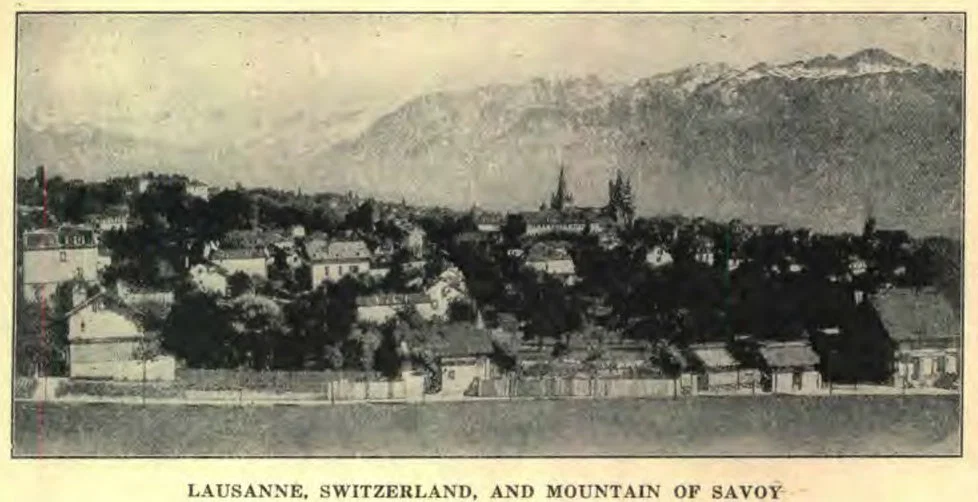
LAUSANNE, SWITZERLAND, AND MOUNTAIN OF SAVOY.
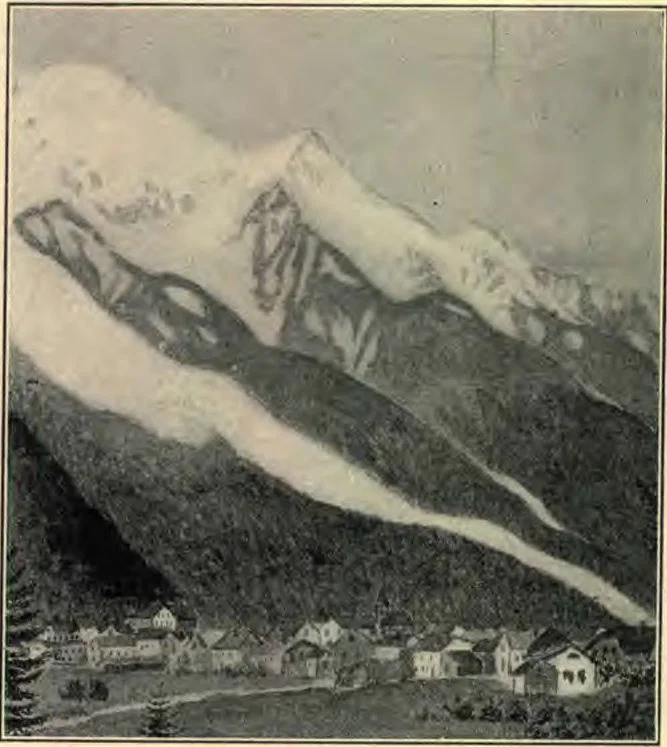
Let us bestow a glance upon this entrancing region. Coming from the south across the level plain of Piedmont, we see the Alps stretching before us like a great wall upon the horizon. From the gate of the morning to that of the setting sun, these mountains run on in lines of towering magnificence. Some rise like lordly castles, others shoot up like needles, while others have their summits torn and cleft by the storms of many winters. Range upon range lift their lofty summits heavenward amid the moving stars that light the vaulted blue, while at their bases luxuriant vegetation furnishes a carpet of emerald green, besprinkled with flowers of every hue and delicacy of odor.
Held tightly in these mountains’ arms, are the Waldensian Valleys, seven in number, each so related to the other as to form one impregnable fortress of matchless strength. What a picture these fertile valleys furnish, with their fields of golden grain, mantling vines, darkened aisles of pines, fragrant acacias, and feathery birches, with here and there a meadow dotted over with purple cyclamens! Now and then a lake arises in whose breast at night the countless eyes of heaven are reflected, and in whose mirrored depths by day the picturesque and frowning peaks catch glimpses of their wrinkled visages. Here, too, the pine tree tells its story to listening brooks and waterfalls, who prattle it in turn to romantic vales, dainty and lovely as dimples in the cheek of nature can ever be.
Along the crest of snowy ramparts, what a glory kindles at sunrise, and at evening, glows anew, when the golden orb of day, weary with his long journey, finds in their towering heights an inviting resting place. Slowly he sinks beneath these misty peaks, leaving behind an illumination of gleaming gold and gorgeous splendor soon replaced by lengthening shadows which lend their charm to eventide.
As we turn from these pleasing and suggestive scenes of nature we are not surprised that the humble peasants of these blest heights saw in them the gate of paradise. Behind their lofty bulwarks, the persecuted and oppressed have in all ages found a refuge; and to those faithful exiles the mountains were an emblem of the unchanging majesty of Jehovah. To them they stood as giant mountains of God’s creative power—the gem of all stupendous wonders.
Yes, higher interests than that of mere symmetry and grandeur are here entwined—forever linked with them are martyr memories that borrow a halo from their sacred place in Christendom. Amid the gloom that settled upon the earth during the dark period of papal supremacy, the faithful men of the valleys held high the beacon light of truth. Heroically and with unabating zeal they resisted the sweeping tide of papal encroachments. Careless of hardships and unmindful of the loneliness of mountain solitudes, they kept their ancient faith alight when it was threatened with extinction. Their mountain fastnesses were the lamp of Christendom through all the long night when the shadows of apostasy lay like an impenetrable pall upon the world.
And when at length the shadows began to break away in the dawn of the Reformation, a light was kindled anew among the mountains by the coming of Ulrich Swingli, the zealous Swiss Reformer. Born in a herdsman’s cottage, amid the scenes of natural grandeur, he early learned to sense the greatness of God’s might. To him these unrivaled peaks and tranquil spots of sylvan beauty were molding influences that fitted him for his noble career. And through him and their other children, the pure influence of the mountains has gone forth to the whole earth.
Blest mountains of the Alpine land,
Protectors of the Waldensian band,
Our debt to thee, we ne’er shall know
Till there shall be no Alps.
ELLA NELSON.
MONT BLANC, FRANCE
The Bible as Rock, Chain, and Sword
By T. Watson
The Bible is a rock of diamonds, a chain of pearls, the sword of the Spirit; a chart by which the Christian sails to eternity; the map by which he daily walks; the sundial by which he sets his life: the balance in which he weighs his actions.—T. Watson.
The “Instructor” Canning Club
Uncle Sam, with all his weighty and multitudinous tasks and problems, has not forgotten the young people of the nation. He knows that sensible boys and girls get more real fun from learning to do useful things than in any other way. So for several years he has been organizing garden clubs throughout the country. The response to this work has been very enthusiastic, but not all the products raised could be sold or eaten while fresh; so Uncle Sam bethought himself that the young gardeners should know how to preserve the products of their gardens. He therefore started the canning club work, and he has proved himself such a capable instructor in the art of canning fruits and vegetables that even experienced housewives as well as boys and girls, gladly sit at his feet to learn of him.
The government's slogan for the coming canning season is, “A can of fruit, a can of vegetables, and a can of soup for every man, woman, and child in the United States.” Many of the INSTRUCTOR readers, with thousands of other boys and girls, are making gardens. Why not all join hands in canning the products of their gardens?
The INSTRUCTOR will give “Stories Worth Re-Reading,” or “Manual of Pronunciation,” or four pictures of the life of Christ (9 x 11), to every boy or girl under fifteen years of age, who fulfils the following conditions: 1. Can according to the government recipes given in the INSTRUCTOR three dozen quarts of food products, there being among these samples of berries, apples, pears, peaches, greens, string beans, peas, tomatoes, and corn. Lima beans may be substituted for greens.
In the case of part of the fruit the open kettle or common method of boiling the fruit may be used if an approved recipe is followed. One sample jar of each kind of fruit, according to the government recipe, is required, however.
2. It is desired, but not obligatory, that the contestant send to the editor of the INSTRUCTOR an inexpensive picture of himself and of his canned products, similar to the accompanying illustration. This picture should bear on the back the age, name, and address of the contestant, and the choice of premium.
3. The contestant must send to the editor a statement, signed by two adults, that he has done the work represented in the picture, or called for in the foregoing requirements. This statement, if no picture is sent, must contain the age, name, and address of the contestant, and the choice of premium.
Government demonstrators in canning are men; so we hope the boys will engage in this work as enthusiastically as the girls. We are anxious for pictures of the boy canners.
The names of those who fulfil the requirements of the club, and are awarded a prize, will appear in an issue of the paper after the canning season is over. We should be glad to receive the names of those who plan to take up the work. We hope all beginners will be finishers. No reward in any work of life is promised to any but those that “endure unto the end.”
This INSTRUCTOR, which contains the suggestions and recipes, should be kept on file for reference during the canning season.
General Suggestions
The suggestions which follow are given by government experts in canning, and should be studied thoroughly before beginning the canning work.
Remember that adequate heat, plenty of clear water, and complete sterilization are absolutely necessary.
Glass jars should be thoroughly cleansed, and should be taken directly from hot water to be filled.
The tops should receive the same treatment as the jars. In coring, peeling, or slicing apples or pears, drop the product into a vessel containing cold, slightly salted water, in order to keep it from discoloring before packing.
Canned products in glass jars will bleach, fade, and sometimes deteriorate in food value if exposed to light, hence the necessity of wrapping in paper.
Use the cold-pack method of preparing products for sterilization.
Avoid the use of too much salt in the canning of vegetables, greens, tomatoes, and sweet corn. A little sugar added before sterilization will improve the product, and sometimes shorten the time required for processing.
Avoid destroying the vegetable or volatile oils in products such as greens, cabbage, Brussels sprouts, and cauliflower when canning, but be sure to eliminate the excessive acids. This is done by blanching the product in steam.
An adequate supply of convenient and efficient canning equipment is important to success.
Begin the canning work with a small quantity of one product the first day. Take time to do the work well, and test the products before canning large quantities.
Prepare material for only one can at a time.
In the hot-water bath the top of the jar must be covered with water to a depth of two or three inches to insure success.
Metal tops and rubbers should be used only once.
Do not use two rubbers. If the top fits too loosely, slightly bend the wire up that passes over the top of the jar.
Pint jars of product require less time for sterilization than do quart jars.
All recipes given are for quart jars.
Business organization and management are also important in successful canning operations. The proper placing of tables with relation to the canner, water, fuel, and supply of vegetables or fruit, the arrangement of the utensils, the system with which the canning work is executed, are all essential matters.
In the recipes given the time stated for cooking the product is the time required by the hot-water-bath outfit. If the steam-pressure bath is used, under five pounds of steam, one half the time is required. If the aluminum pressure canning outfit is used, under ten pounds of steam, still less time is required.
All jars should be neatly labeled. Stickers for this purpose may be purchased for a small sum.
Use the best rubbers, those that will quickly assume a natural position on being released after being stretched.
Materials
Vessel for sterilizing jars and tops.
Tightly covered vessel for cooking or sterilizing product after it is placed in the can.
Wire or wooden rack to keep the cans from coming in direct contact with the bottom of the cooking vessel.
A duplex fork for lifting the jars out of hot-water bath.
One square yard of white cheesecloth to hold the fruit or vegetables while being blanched.
Take a wash boiler, tin pail, lard can, or any similar vessel with tightly fitting cover, and of ample depth for the desired fruit jar. Allow several inches of space above the top of the jar. Place the wooden or wire rack in the bottom of the vessel, so that the jars will not rest upon the bottom. Put in the boiler sufficient water to cover the jars to a depth of two or three inches.
The Cold-Pack Method
This is the method now in general use by the members of the home-canning clubs as well as many adults in the Northern and Western States. In this method, vegetables are blanched in boiling water or live steam, then quickly dipped into cold water, the skins removed, and the products cut into sizes for jars or packs. The products are then packed without further preparation in glass jars or other containers. Hot sirup is added in case of fruit, hot water and a little salt in case of vegetables and greens. Sterilization is done in the jar or container after it is partially or entirely sealed, making it impossible for bacteria or spores to enter the container after the product has been sterilized. By this cold-pack (or cold-fill) method of canning, all food products, including fruits, vegetables, and meats, can be successfully sterilized in a single period, with but one handling of the product, in and out of the canner.
Blanching Process
Tie the product loosely in the square of cheesecloth. When the recipe says blanch in steam, use only a small quantity of water in the sterilizing pail, allowing no water to come above the wire or wooden rack used for holding the product. Lay the cheesecloth with the product on rack. Hang the ends of the cloth over the edge of pail, so that when the cover is placed in position, it will hold the cloth or product out of the water. When the recipe requires the product to be blanched in hot water, hang cloth over side of vessel as described, but low enough to allow product to rest in water.
Sirups
An Eastern formula for fruit sirup is 3 quarts of water to 2 quarts of sugar; heat sufficiently to dissolve all the sugar but not enough to make the sirup sticky. Such a sirup has a density of from 12 to 20 per cent, and is known as thin. Medium thin sirup is that which has begun to thicken and is sticky when cooled on the finger or spoon. A sirup made of 3 pounds of sugar to 8½ quarts of water gives a density of 15 per cent.
Canning Recipes
Soft Fruits
(Strawberries, blackberries, raspberries, blueberries, sweet cherries, peaches, and apricots)
STRAWBERRIES.—Can fresh, sound berries the same day they are picked. Hull by twisting berries off the hull, and place in strainer. Pour cold water over berries to cleanse. Remove one of the empty jars in the sterilizing bath, pack with berries without crushing. Pour hot sirup over berries to top of jar. Put rubber and cap in position, not tight. (In case of Lightning jars place only wire that fits over top in position. In case of Mason jars use little finger and thumb to twist the cover merely until it catches.) Place jar in hot-water bath and boil or sterilize 16 minutes. Huckleberries, grapes, and firm peaches require 20 minutes. Remove jars, tighten covers. Invert to test joints. Cool and wrap in paper before storing.
Sour Fruits
(Gooseberries, cranberries, and sour cherries)
Can same day as picked. Stem, hull, and cleanse. Blanch in hot water one minute. Remove and dip quickly in cold water. Pack berries closely in containers, add hot sirup of 28 per cent density (7 pounds of sugar to 9 quarts of water), till full. Place rubber and cap in position. Seal partially, not tightly. Sterilize in hot-water-bath outfit for 16 minutes. Remove jars, tighten covers, and invert to cool and test joints. Wrap in paper.
(To be concluded)
‘A Pleasant Fourth
By Bertha Pierce Close
At the St. Helena Sanitarium
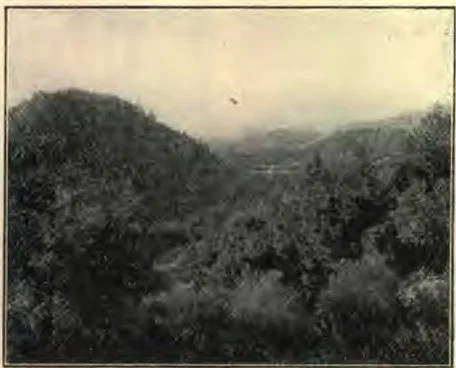
NATURE gave us a perfect day. The shower of a few days before, a rare thing in California at that time of year, had laid the disagreeable midsummer dust, washed the abundant foliage, and refreshed not only all things in nature but all the people as well.
Up here on our beautiful sanitarium hillside the program for the day had been planned in a way most fitting and appropriate to the occasion. Clear notes of the bugle and the answer from a distance were the awakening signal given at 7 A. M.
At nine o’clock all who could not walk were wheeled or carried, and were seated around the front of the sanitarium. Soon the band was heard,—the parade, original and interesting, had started. First came the huge flag, with a Teddy bear, miniature emblem of our State, fastened to the top of the pole, and carried by a tall young man in immaculate white. Following the flag was our sanitarium band, all the members of which were also dressed in white. Then came the graduate nurses, all in white from cap to toe. The training school nurses were next, in regulation uniform (blue and white stripe), such a lot of them. The dining-room girls, in white middies and white skirts, followed, and to close the procession, a young girl led a small boy, a son of one of the patients, with his flag in his hand. They marched as far as the hospital and back to the sanitarium around one of the driveways, and formed a circle while the flag was raised.
VIEW NEAR ST. HELENA SANITARIUM
A prayer by Pastor S. T. Hare, was followed by a short but inspiring speech by our manager. Briefly, but in a comprehensive way, he reminded us of the blessings enjoyed where civil and religious freedom is guaranteed, and he admonished us not to forget that our nation and its liberties cost many lives. This uplifting speech concluded one part of the program.
Twelve o’clock noon saw the beginning of funny feats in the swimming pool: diving, and more diving, of various kinds, with underwater, tub, and barrel racing. The most striking feature was a short trombone solo played while the musician was hanging by his toes from the trapeze bar over the water.
After dinner there was an exciting baseball game. The married men versus the single men, with a score of 6 to 0 in favor of the former, to the great confusion of the single men. The game concluded, all assembled on the hill crest, and were pleasantly surprised by the announcement that Elder R. C. Porter, of the Asiatic Division Conference, would speak to us. Such a glimpse as he gave us of Chinese cities! We were glad that we saw through our mind’s eye and were not near enough to sense conditions with our olfactory organs. People, pigs, cows, and chickens all housed under the same roof for safe-keeping!
The people of the Orient think stealing is all right if you don’t get caught. That is the only crime connected with it. Thieving is common, and in China thieves are dealt with summarily. Once a missionary had occasion to complain to the police department that a number of articles had been stolen from the mission compound. Later the officer inquired if the trouble had ceased. The missionary replied that they were having no more trouble in that way, and asked if any offenders had been caught. “Yes,” said the officer, much to the chagrin of the informant, “thirty-five have been beheaded!”10
While in the Philippines, one native sister told the speaker that her husband had not come to the meeting because he was some older than she and felt it hardly wise to walk the two and a half miles to the service. When questioned as to the age of her husband, she replied that he was one hundred and thirty-six years of age! Brother Porter asked if he might meet her husband, and she said, “Certainly.” Accompanied by Elder F. A. Detamore and another worker, he called the next morning at this centenarian’s home, and was greatly surprised to see the door opened by an erect, active man who looked scarcely half his years. He remarked that his birth was inscribed in the records of the Catholic church. Elder Porter had the record verified. When questioned as to his diet, this old brother said that with the exception of a little fish he had always lived on fruit, grains, nuts, and vegetables.
Elder Porter spoke of this remarkable case to an officer of the ship crossing over to Hongkong, and that gentleman said that he had known several of these centenarians. One had recently died at the ripe old age of one hundred and forty-two years.
After tug of war, running, and jumping, the band played and lunch was announced. The nurses and helpers passed picnic plates with sandwiches, buns, and fruit nectar, followed by delicious sherbet. A very large crowd did full justice to the sanitarium hospitality.
The evening program of band music, recitations, a solo, and a splendid patriotic speech, concluded the day’s celebration. MRS. BERTHA PIERCE CLOSE.
No Summer Slump
By Matilda Erickson
“There’s no use trying!” Miss Marvin dropped her pencil on the half-finished report, and sat back in her chair, her face the picture of despair. “There’s no use trying,” she continued; “the officers of our society have worked fearfully hard to keep up our meetings and missionary work through the summer, but just look at these reports. Our attendance has dropped more than thirty per cent, and the reports of work done are not more than half so large as they were last winter.”
It was an older friend who received the benefit of that little speech, and here she broke in with, “But, Lillian, don’t get discouraged. You must remember that summer is the testing time.”
“Testing time! What do you mean?”
“Well, let me ask you a question before I answer yours. Why did you throw into the garbage can the lettuce left over from dinner?”
“Why, it wilts so quickly these hot days that it wouldn’t be good for luncheon.”
“Exactly, but did you ever draw a lesson from that fact? Have you stopped to think that the same hot days that wilt the vegetables in market and spoil the fresh fruit on the tray, change the broad acres of grain to gold, and ripen the fruit on the trees? The difference lies in being ‘rooted.’ When the hot, testing days come, the superficial Christian yields to the temptation to do nothing, and at once decay of his spiritual life sets in; on the other hand, the earnest young Christian works faithfully, drawing inspiration even from the discouragement about him, and day by day he grows more like his Saviour. I know it is easy to find ten apparently good excuses for leaving our missionary work undone. But after all, we cannot be unfaithful and still expect to succeed.”
Just here the clock on the mantel interrupted the conversation. It was striking four, and Lillian’s friend arose hastily, saying, “Really, I almost forgot my four-thirty appointment with the dentist. I must go or I shall be late; but I shall hope and pray that all the members of your society will stand the test, and prove that they are rooted, deeply rooted, in the love of God for souls.”
This bit of conversation is passed on with the prayer that it may inspire other Missionary Volunteers to faithfulness. It reminds me of a notice that caught my eye as I was walking down the street in Boston one hot July morning. The notice was on a church, and thinking it probably concerned the delegates to the National Educational Convention, I stopped. These were the words I read: “This church will be open all summer.” Such a notice is a danger signal, and reflects sadly upon general conditions; but it commends the individual church for its faithfulness when interest is slack and discouragements are numerous.
What will be the record of your society during the summer? Doubtless it “will be open,” but will there be a drop in the reports of work done, a falling off in attendance? Summer may lessen the need of certain lines of missionary work, but think of the rare opportunities it offers for almost every line of missionary activity. The work on the farm, in the kitchen, the office, or the shop does not stop for hot weather. Then should our business for the King?—Surely not.
Plan your work in harmony with the summer’s needs and opportunities, and work your plan with courage and zeal. If you are asked to coöperate with a big tent effort in your city, you are greatly favored, for that is the very kind of service that will afford great opportunities for the truest kind of Missionary Volunteer work. Of course, you may not be able to meet in the church and at just the same time as formerly, but what difference does that make? Meet at the tent at a suitable hour for rallying your Volunteers to the work. Have your meeting, cutting short the literary part of the program (but not omitting it, as a rule), and lengthening the time for “reports and plans.” If any one should be shortsighted enough to suggest the abandonment of your organization in order to coöperate with the tent effort, withstand him to the face. The very purpose of our organization is to do organized missionary work. Rally your forces, and show that your months of organization and training have only put you in good trim for a vigorous soul-winning campaign.
Remembering that the best way to succeed is to determine not to fail, let us as individuals and as societies firmly resolve that there shall be no summer slump, and then pray, plan, and work to that end.
MATILDA ERICKSON.
Worth While Sayings
“THE best kind of ability is reliability.”
“MANY receive advice; few profit by it.”
“A MINUTE’S drift means an hour’s pull.”
“EVERY man is the architect of his own fortune.”
BE satisfied with nothing but your best.—E. R. Hill.
“TRIFLES make perfection, but perfection is no trifle.”
BIGOTRY dwarfs the soul by shutting out the light.—Chapin.
Are We Honest?
By O. S. Marden
An Honest President
“Put that back!” exclaimed President John Quincy Adams, when his son took a sheet of paper from a pigeonhole to write a letter. “That belongs to the government. Here is my own stationery, at the other end of the desk. I always use that for letters on private business.”
Mr. Adams was as particular in other ways, and is celebrated for his accuracy, truthfulness, and punctuality. When a member of the House of Representatives, his entrance was a sure indication that the time to call to order had arrived. He always kept his appointments, and would no more think of taking others’ time by tardiness than their money by theft.
Abd-el-Kader and the Robber Chief
“Go, my son, I consign thee to God,” said the mother of Abd-el-Kader, after giving him forty pieces of silver, and making him promise never to tell a lie; “we may not meet again until the day of judgment.”
The boy left home to seek his fortune, but in a few days the party with which he traveled was attacked by robbers.
“What money have you with you?” asked one.
“Forty dinars are sewed up in my garment,” replied Abd-el-Kader; but the robber only laughed.
“What money have you really with you?” inquired another sternly, and the youth repeated his former answer; but no attention was paid to his statement, which was not believed on account of its frankness.
“Come here, boy,” called the chief, who had noticed the men talking with the young traveler; “what money have you in your possession?”
“I have told two of your men already that I have forty dinars sewed up in my clothes, but they do not seem to believe me.”
“Rip his garments open,” commanded the chief of the robbers, and soon the silver was found.
“And how came you to tell this?” he was asked.
“Because I would not be false to my mother, whom I promised never to tell a lie.”
“Boy,” said the leader, “are you so mindful of your duty to your mother, although so young, and am I insensible, at my mature age, of the duty I owe to God? Give me your hand, that I may swear repentance upon it.”
He did so, and his followers were greatly impressed. “You have been our leader in guilt,” said his lieutenant; “be mine, at least, in the path of virtue,” and he took the boy’s hand as his chief had done. One by one all the rest of the band did the same.
Honesty and truth, even in children, cannot fail to exert an influence for good upon those around them. It may not produce such remarkable results as in the Arab’s story, but none the less it is felt by all.
Too Honest to Lie
“If honesty did not exist, we ought to invent it as the best means of getting rich,” said Mirabeau.
In a country school, the teacher put a very hard word to the pupil at the head of a class in spelling, and he missed it. She passed it to the next, and the next, and so on, till it came to the last scholar,—the smallest of the class,—who spelled it and went to the head, above seventeen boys and girls, all older than himself. The teacher then wrote the word on the blackboard, that they all might see how it was spelled, and learn it better. But no sooner had she written it than the little boy at the head cried out, “O Miss Wright! I didn’t spell it that way; I said ‘e’ instead of ‘i;’” and he went back to the foot, of his own accord, quicker than he had gone to the head. He was too honest to take credit that did not belong to him.
The Example of Lincoln
Lincoln was very poor when he began to practice law. One day a post-office agent called upon the young lawyer, who had recently closed a term of service as postmaster, and asked for the balance due the government. Dr. Henry went with the agent, to loan the money, feeling sure that the young man was too poor12to have any. Lincoln excused himself, went to his boarding house, and soon returned with an old stocking, from which he took seventeen dollars and sixty cents, the exact balance due, in the identical coins that had been paid to him. He never used, even temporarily, money not his own.
“You must tender $30,000 first,” said he to a client who consulted him about a land claim.
“But I can’t get so much money,” objected the man.
“I’ll get it,” said Lincoln; and, stepping into a bank, he told the cashier that he wanted to take $30,000 to make a legal tender with, adding, “I will bring it back in an hour or two.” The cashier handed him the money without even taking a receipt.
“Mr. Lincoln would not take a case unless he really thought the client ought to win,” said a lawyer of Springfield, Illinois; “and it came to be understood by court, bar, jury, and spectators that when Abraham Lincoln brought a suit, his client was in the right, and ought to obtain a verdict. I do not say this from political favoritism; for we belonged to opposite parties, but simply because it is the truth.”
He refused to argue a case when he learned that his client had deceived him by representing that his cause was just. His partner, however, took the case, and won it, receiving a fee of nine hundred dollars, of which Lincoln refused to take his half. He had an ambition to be right, and yearned for wholeness and symmetry of character. When he received a joint fee, he would always divide the very money received, and tie his partner’s half in a separate parcel.—O. S. Marden, in “The Secret of Achievement.”
Photo by W. C. Eaton, Medina, New York.
Childhood Days
By J. G. Lamson
O HURRAH! for the days when we're out on the farm;
The city's so hot and the yard is so small;
But the country is wide and away from much harm,
And the country sends in to the children its call:
Come out where the grass is not killed by the feet;
Come out where the air is not stifling with heat;
Come out where the beasts and the birds love to stay;
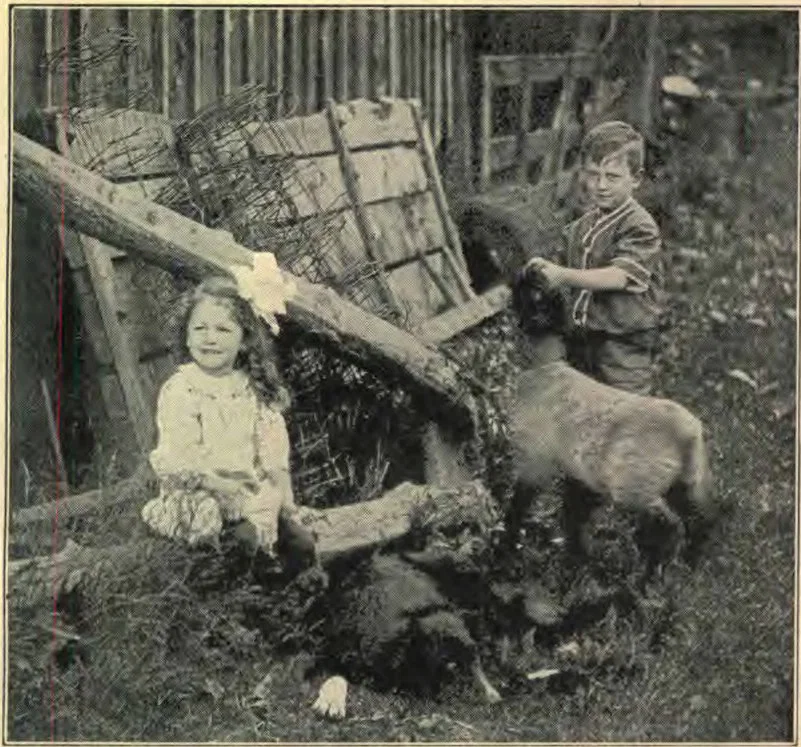
Come out where the lambs and the children can play.
Then hurrah! for the days when the snow is all gone
And the Ice King has traveled away to his home;
When Nature sings loud at the coming of dawn
And the Sun King swings out through the blue vaulted
dome.
So come to the farm with its lambs and its sheep,
And come where Old Span will a faithful watch keep;
Yes, come and we'll play by the barn and the trees,
And be just as happy as ever you please.
Then hurrah! for the days we can be on the farm:
The city's so hot, and we're oft in the way;
So we'll go from the city and all its alarm
And get on the farm where we wish we could stay.
For "God made the country;" the city, by man.
The city was never a part of God's plan.
Then hie to the country and worrying cease,
For God's in the country and offers us peace.