The Youth’s Instructor, Vol. 48, No. 39.

THE ALAMO CITY

The Youth’s Instructor

Oct 4, 1900

Review and Herald Publishing Company · Battle Creek, Mich. · Oct 4, 1900

THE ALAMO CITY
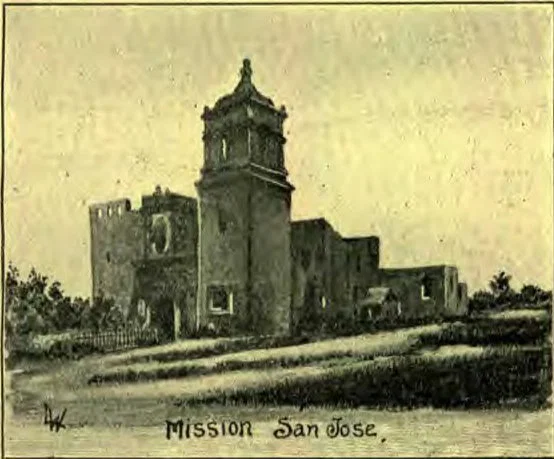
Mission San Jose
Mission San Jose
It was almost two hundred years ago that the Jesuits pushed inland from the Gulf of Mexico, and beheld in rapture the curling stream and the lovely valley where now is situated the city of San Antonio. Far enough from the Gulf to escape undue humidity, and at an elevation of about six hundred and fifty feet, it is practically free from malaria. For years this city has been a Mecca to those afflicted with throat and lung troubles. The soil is porous, and the rains therefore sink quickly. The winds are dry, and there are no fogs. Because of these advantages, and also because of the mild and delightful winter weather, San Antonio is fast becoming the popular health resort of the Southwest. Many make this place their home during the winter months, thus escaping the rigors of more northern latitudes during that season.
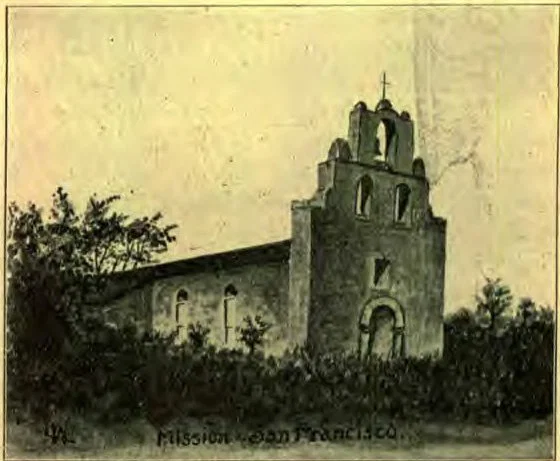
Founded by the Spanish, there yet remain some of the buildings that they erected, though by far the greater number are in ruins. The old ascequias missions have almost crumbled to the ground; a few, however, have been restored as relics of the old Spanish domination.
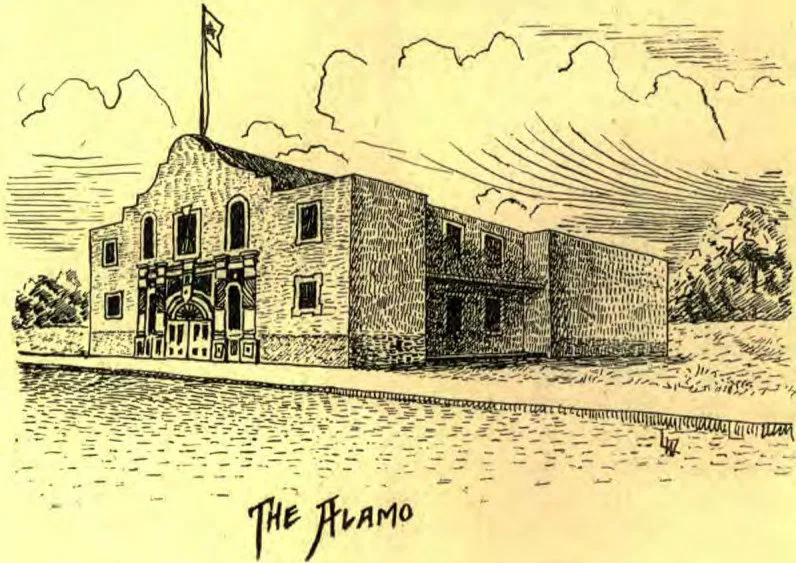
Historically, San Antonio is interesting for having been a fortress and a battle-field. More than a dozen times has it been besieged and captured. The most notable siege was that of the Alamo, March 6, 1836, in which David Crockett’s little band of Texans, under Colonel Travis, in defending the place against overwhelming numbers of Mexicans, were slain to a man. Upon the heavy stonework of the Alamo were carved many inscriptions, now almost obliterated by the effacing hand of time.
Much has been done in recent years to increase the attractiveness of the city. Parks, plazas, boulevards, asphalted streets, and many handsome public buildings are to be seen. The plazas, together with the large Mexican population, give to the city a Mexican likeness, as do also the crumbling adobe huts surrounded each with its clump of mesquite trees, in which, morning and evening, may be heard the mocking-bird.
The river itself is not without interest. Indeed, it is a wonderful river. Only a few miles farther up, in the foothills of the Guadalupe Mountains, the water bursts forth from beneath the rocks a full-fledged river. The water is exceptionally clear. Little is yet known of the subterranean origin of this stream.
One must not miss visiting the market on market morning. It is a motley throng that greets the eye,—negroes, Mexicans, Italians, Jews, Chinese, each busy making his purchases of poultry, eggs, vegetables, meats, fish, oysters, crabs, fruit, etc. Each vender calls out his wares; and the tumult occasioned by so many voices, mingled with the sound of numberless feet, the squawking of poultry, etc., combines to make the place a pandemonium. One is glad to escape, and make his way to the river’s cool and shady banks, where the results of the curse are less apparent.
Leslie J. Weese.

Boundaries

There are many who deplore the narrow sphere of their lives, and long for an opportunity for larger usefulness. In an incident I once read I found an idea that has helped me to be content with the small duties of life.
Two ladies and a gentleman were enjoying a drive up a mountain. Out beyond the woods they came to a certain broad swell, that seemed to raise itself as a center, zenithward, whence the horizon line, broken and closed in here and there by scattered forest growth, fell away from the slight, beautiful uplift, leaving it in nearer communion with the sky.
“Stop here a minute, Putnam,” said one of the ladies, reaching out her hand.
“There! now look up. Did you ever see the blue and the clouds so near? And yet we are not very high. I have noticed the same effect in one other place—in Cousin Sarah’s brook-orchard. I have walked there at twilight, when there seemed a close tent of the loveliest colors dropping just overhead and about me. I have seemed to be right in the sunset. Here we are in the blue shine and the soft whiteness. It is wonderful. What makes it?”
THE ALAMO
THE ALAMO
“We are a little shut in as to our horizon, and we are just a little lifted above it,” was the reply.
It is our privilege to walk always in the light of the Sun of righteousness. Though we may be a little shut in as to our life’s horizon, we may be so lifted above it as to be brought out into the blue shine and soft whiteness of the light and atmosphere of heaven.
In “Steps to Christ” we find these words: “Although there may be a tainted, corrupted atmosphere around us, we need not breathe its miasma, but may live in the pure air of heaven. We may close every door to impure imaginings and unholy thoughts by lifting the soul into the presence of God through sincere prayer. Those whose hearts are open to receive the support and blessing of God will walk in a holier atmosphere than that of earth, and will have constant communion with Heaven.”
Mission San Francisco
Do not mourn because you can not see any great work that you have done for the Lord. Remember that it is the tiny screws in a watch that hold the different parts together, so that the watch can run, and be an accurate time-keeper. You may not be a mainspring or a wheel in God’s great plan; but if he has set you to do the work of a little screw, do not repine, but keep still, and hold fast. Thus will you glorify the Lord in the place he has chosen for you.
MARY E. INMAN.

Gentleness and Patience Toward Those Who Err

Don’t cast people off, when they go wrong. Don’t talk them down. Quit your gossiping about other people’s mistakes. The man who never made a mistake is a myth. Mingle gentleness with all your rebukes. Make allowances for constitutional frailties. Never say harsh things where kind words will do as well. Let us make men feel that we love them, and that we mean to help them, and they will be helped. “The bread can not rise when the yeast is kept apart from the dough.” Happy is the man and blessed the woman who have in their souls that which gives to life the warmth of the sunshine, the redolence of the rose, and the freshness of the dew,— M. C. Peters.

REAL AND APPARENT BACKSLIDING

As there are real and imaginary physical diseases, so there are real and imaginary spiritual diseases. There is a chronic spiritual disease called “backsliding,” and there is an imaginary form of the same disease, with which many are affected. Those who have it are acquainted with its characteristic symptoms, and nearly always think they have the real disease. They may belong to the class who are sitting at the feet of Jesus, and are not neglectful of the word of God; they take a reasonable amount of spiritual exercise in helping others; they take spiritual respiration in the form of prayer; yet this disease seems to affect them.
But God says, “Be not deceived; . . . whatsoever a man soweth, that shall he also reap.” Unless persons are sowing for backsliding, they do not have the disease. It is their privilege to deal with this thought just as they would if Satan should present before them the exact figures of their dead friends. They would look upon such figures as creations of the evil one; and when they look at this apparent condition of backsliding in the same way, Satan will soon cease to vex them with the vision of it.
The principal symptoms of the imaginary disease of backsliding are in some respects similar to the real disease. There is a feeling of depression of spirits, and waves of discouragement sweep over the soul. The victims feel that their prayers do not rise above their heads, and are constantly tempted to dwell upon the weak points of their character, and to think that it is of no use for them to read the Bible or pray, although they are faithfully doing both. It is the blessed privilege of such Christians to do with this feeling just as Paul did with the viper—shake it off. Deal with it just as you would if you saw the figure of your dead father or mother approaching you: say to it, “Get thee behind me, Satan.” Reckon that the ghost of backsliding is dead, and that you are alive. Then claim the promise that all this experience has, since you have been sowing for something better, been cast into the depths of the sea; and that God certainly will not resurrect it, and the devil can not, and so has simply got up a cheap imitation, with which to trouble your soul.
If you will take your stand deliberately and definitely upon God’s word in reference to this imaginary disease, you will soon find that, like other imaginary diseases, it will slough off; and you will experience the meaning of the promise, “Ye shall know the truth, and the truth shall make you free.” But if your unpleasant feelings do not leave you as soon as you would desire, you should look upon the experience as being permitted as a sort of gymnasium, wherein to exercise your faith. By and by, when you have secured all the exercise you need in resisting this delusion, Satan will be bidden to depart for a season, and you will then have a new lesson to learn. Then, and not until then, will you be able from the word, and also from your own experience, to teach others the sweetness of how to be cured from the disease called “imaginary chronic backsliding.” DAVID PAULSON, M. D.

WE ARE HIS WITNESSES

II

In their very first work, the disciples met with trial and persecution, even as Christ had forewarned them. As Peter and John went up to the temple at the hour of prayer, a lame man who was daily carried to the gate Beautiful to petition help from the worshipers who came thither, asked alms of them. “And Peter, fastening his eyes upon him with John, said, Look on us. And he gave heed unto them, expecting to receive something of them. Then Peter said, Silver and gold have I none; but such as I have give I thee: In the name of Jesus Christ of Nazareth rise up and walk. And he took him by the right hand, and lifted him up: and immediately his feet and ankle bones received strength. And he leaping up stood, and walked, and entered with them into the temple, walking, and leaping, and praising God. And all the people saw him walking and praising God: and they knew that it was he which sat for alms at the Beautiful gate of the temple: and they were filled with wonder and amazement at that which had happened unto him. And as the lame man which was healed held Peter and John, all the people ran together unto them in the porch that is called Solomon’s, greatly wondering.”
Then Peter and John preached Christ to the people, saying: “The God of Abraham, and of Isaac, and of Jacob, the God of our fathers, hath glorified his Son Jesus; whom ye delivered up, and denied him in the presence of Pilate, when he was determined to let him go. But ye denied the Holy One and the Just, and desired a murderer to be granted unto you; and killed the Prince of Life, whom God hath raised from the dead; whereof we are witnesses. . . . And as they spake unto the people, the priests, and the captain of the temple, and the Sadducees, came upon them, being grieved that they taught the people, and preached through Jesus the resurrection from the dead. And they laid hands on them, and put them in hold unto the next day.”
The next day the disciples were brought before the high priest and elders and scribes, who demanded by what name or power they had healed the lame man. “Then Peter, filled with the Holy Ghost, said unto them, Ye rulers of the people, and elders of Israel, if we this day be examined of the good deed done to the impotent man, by what means he is made whole; be it known unto you all, and to all the people of Israel, that by the name of Jesus Christ of Nazareth, whom ye crucified, whom God raised from the dead, even by him doth this man stand here before you whole. This is the stone which was set at naught of you builders, which is become the head of the corner. Neither is there salvation in any other: for there is none other name under heaven given among men, whereby we must be saved.”
“Now when they saw the boldness of Peter and John, and perceived that they were unlearned and ignorant men, they marveled; and they took knowledge of them, that they had been with Jesus. And beholding the man which was healed standing with them, they could say nothing against it. But when they had commanded them to go aside out of the council, they conferred among themselves, saying, What shall we do to these men? for that indeed a notable miracle hath been done by them is manifest to all them that dwell in Jerusalem; and we can not deny it. But that it spread no further among the people, let us straitly threaten them, that they speak henceforth to no man in this name. And they called them, and commanded them not to speak at all nor teach in the name of Jesus. But Peter and John answered and said unto them, Whether it be right in the sight of God to hearken unto you more than unto God, judge ye. For we can not but speak the things which we have seen and heard. So when they had further threatened them, they let them go, finding nothing how they might punish them, because of the people: for all men glorified God for that which was done.”
MRS. E. G. WHITE.

ELIZABETH ROSSER

BY GALILEE

In such a spot by Galilee My Saviour bowed his head in prayer; The dews of evening on him fell, And dawning day still found him there.
Where none besides his God might see, Far from the ways of men apart, He bore all night before the throne His loved disciples on his heart.
All day he taught them by the sea,— Hot-headed Peter, James, and John,— Then, while they took their rest in sleep, He prayed for them from dark till dawn.
And while he named them, one by one, By softly whispering Galilee, And asked for grace divine for them, He prayed for you, he prayed for me!

ELIZABETH ROSSER

A FAR VISION

I WENT to an oculist the other day to beg for glasses that would keep my eyes from getting tired.
“My dear madam,” the doctor said, earnestly, “the prescription for tired eyes is not a new pair of glasses, but rest.”
“Of course,” I answered, impatiently, “but in my case that is impossible. I am obliged to use my eyes steadily, twelve hours, at least, out of the twenty-four. Now please don’t say ‘rest’ to me again, but do the best you can to help me work.”
The good man sighed. No doubt he was often perplexed with unreasonable persons like myself; so I waited in silence while he considered my case.
“You live in the country, I believe?” he said, presently.
“Yes, in a small village; it is the same thing.”
“Have you a distant view from your window?”
“O doctor!” I cried, “if I could only show it to you!” And, forgetting my business and his, I began to expatiate, with an enthusiasm known only to the mountain-born and mountain-bred, upon the glories of the Alleghany foothills, as seen from my back window, and the noble Blue Ridge peaks facing my front door.
“That will do,” the busy man interrupted me, smiling, “that will be better than glasses. When your eyes are tired following your pen or the lines of a book, go and stand at your back window or your front door, and gaze steadily at your mountains for five minutes. Ten will be better. You see what I mean? This will serve to change the focus, and so rest your eyes, just as walking up-hill rests a man who has been footing it all day on a level.”
I have profited daily by this simple prescription. Do not think, however, that I am giving you this as medical advice. How do I know what your eyes need? But to me has been given a daily parable. “Soul of mine,” I say to myself, as I stand gazing at old Jump Mountain, “are you tired of the little treadmill of care and worry, tired of the smallness of self, tired of the conflict with evil, tired of the struggle after holiness, tired of the harrowing grief of the world, tired—tired to death—of to-day? Then rest your spiritual eyes by a far vision. Look off to the mount of God. Look up to the beauty of his holiness. Look upon that great multitude whom no man can number, who stand in the presence of your Lord. Look away to the day, the promised day, when Jesus will come again, in power and great glory. Rest you, soul, by these far, fair visions.”
This is not my prescription nor my good doctor’s; but “we, according to his promise, look for new heavens and a new earth, wherein dwelleth righteousness.”—Selected.

THE BURDEN BEARER

Along the quiet village street Two oxen came with heavy load; And, as the driver paused to greet A friend, one, weary, sank upon the road; The other, patient, stood and bore the yoke, Now doubly weighted by his partner’s fall. Wondering, I saw, and light upon me broke. “O Lord! it is thy yoke I bear, The strength to hold it comes from thee; If thou wilt stoop to draw with me Earth’s heavy loads, and all my burdens share, Oh, grant that I may ne’er again despair, And, by my faltering, added burden be.” — Selected.

OCTOBER STUDY OF THE FIELD

PART II: EVANGELICAL WORK AMONG THE GREEKS
(October 7–13)

How Mary Baldwin Became a Missionary.

For several years before the death of her mother, Mary Baldwin’s thoughts had turned toward missionary work. After her mother’s death, the two eldest children, Mary being the second, took charge of the household, their father having died two years before. So it was that, burdened with domestic cares, Mary’s mind was diverted. At the end of a year the boys were sent to the public schools, and the girls spent some time with their relatives. After devoting a year to pleasure, Mary saw the unprofitableness of such a course, and felt that it was not in accordance with God’s will. Hearing from her eldest sister of the destitution of schools and religious instruction in a certain part of Virginia, she determined to prepare herself for teaching, so that she might return to the neglected part of that State. While she was attending school, a friend requested of her the favor of inquiring privately of the missionary society if there was an opening for a woman missionary in the domestic field. Through a gentleman who was a member of the church in the place at which Mary was staying, the letter was written. While dictating the letter to this gentleman, the desire to become a foreign missionary was again awakened in Mary’s heart, and she caused the words “or foreign” to be added after the word “domestic.” The answer came that there was no opening in the home field, but that Mrs. Hill had written from Greece, urging that a woman be sent to aid her in the schools that she had established. The letter was taken to the young woman at whose request it had been written. She refused to enter the foreign work. Thus was the way opened for Miss Baldwin; and the training that she was acquiring for work in her native State was put to use in the foreign field.

Her Work in the School.

In the eyes of his fellow countrymen, every Greek is regarded as a member of the Greek Church. Miss Baldwin began work among little girls who were nominally members of the church, having received a small amount of instruction in the truths of religion, but being ignorant of all save superstitions and errors. Her object was to reach the homes of the people, through the daughters, endeavoring to train them to keep homes. Besides the common branches and useful employments, the word of God was taught. Much good was accomplished by the training in needlework that the girls received at her school. After Greece was delivered from the Turkish power, and Otho was made king, he established the court at Athens. Milliners and dressmakers followed. They inquired for girls who knew how to use the needle. Miss Baldwin’s pupils were the only ones who knew anything of sewing.

The Acropolis.

A flat, oblong rock, about two hundred and sixty feet high, one thousand feet long, and four hundred feet broad in the widest places, situated in a wide plain that is surrounded on three sides by mountains and bounded on the south by the sea, is the Acropolis, the center of Athens. Here the earliest settlement of the city was made. The western side is the most accessible. The citadel was surrounded by a wall, but it is probable that a great number of the inhabitants lived on the southern slope, within easy reach of the fort that guarded the inclosure.

The Temple of Jupiter.

This, the largest temple ever erected in honor of Jupiter, was one of the first conceived, but the last executed, of the “sacred monuments” of Athens. It was finished by the Roman emperor Hadrian, more than six hundred years after the first stone was laid. It thus became a byword to designate great intellectual efforts that were left uncompleted. In it was a statue, in ivory and gold, of the Olympian Jupiter. Immense sums were spent upon this temple, and it was one of the largest in the world.

The Arch of Hadrian.

Hadrian erected many new buildings. Most of these were in an addition to the southeastern portion of Athens. The suburb formed in this way was named Hadrianopolis, or New Athens, to distinguish it from the old city. The Arch of Hadrian marked the boundary between the two towns. See the illustration in the October Missionary Magazine.

Education of the Ancient Greeks.

Until their sixth year, boys and girls were brought up together, under the care of their mother. At that age they were sent to school. Gymnastics, music, and grammar were the subjects commonly taught. The Greeks considered physical training as necessary as training of the mind. The children were probably first taught their letters. The letters were next combined in syllables, and then words were formed. The master made the copy on a wooden, wax-covered tablet, which took the place of our slate. The letters were scratched on the waxen surface with a pointed style made of bone, ivory, or metal, and having one side broad, so that when the tablet was filled, it might be smoothed over for use again. Two or three of these tablets were generally fastened together with hinges. Only the more advanced pupils were permitted to use such expensive material as papyrus, and then they wrote on both sides of the sheet.

Why There Are Not More Protestants in Greece.

The ignorant classes are blindly fanatic, and see no necessity for any religion but their own. The enlightened and intelligent class fear anything that will bring disunion into their present church; for this would weaken their political power. Again: from infancy all are communicants of the Greek Church, and grow up in the belief that the external rites of their religion are all that is necessary for their salvation, and it is difficult to make them see that their religion is vain. So it is that those who become Protestants are liable to persecution and ostracism.

HIS PRAISES

Down in the meadow the flowers bloom, Purple and crimson and snowy white; Deep in their hearts lies a message sweet, Borne on the breeze for our delight.
Out in the orchard, bending low, The bluebird carols his sweetest lay; On his airy perch swinging to and fro, He tells of his joy the livelong day.
When flowers and birds God’s praises sing, And a spring of joy from each heart wells, I’ll sing of the light his blessings bring, And the peace of a heart where his presence dwells.
JANET WOOD.

COWARDICE

A CRAVEN disciple, a faint-hearted follower, a cowardly Christian! What will my Lord say to me in that day when he speaks his praise, and utters his terrible blame? I have heard Christ reviled, and my silence condemned myself more than it abashed the blasphemers. I have listened to skeptics parading their willful doubts, and my faith has been as mute as unfaith. When testimony to God’s love and power has been wanted, my lips have been dumb. When others have been tearing down the idols of error, my hands have hung by my side. Where witness-bearing was easy, and to be applauded, I have lifted up my voice. Into places where men scorn the name of Christ, into drunkard’s dens, the hovels of outcasts, prisons, and haunts of vice, I have not gone. What sacrifice have I made for thee, O Christ? What hardship have I borne for thee, O Christ?
And thou hast loved me! And thou hast heaped thy kindnesses upon me! I am rich in all things except service. I quiet myself with the thought that no chance for heroism has come; but it has. I quiet myself with the thought that thou hast called others to these tasks; but thou hast called me. I persuade myself that at some future time I will do thy will; but I will not, because I am not about it now. As thy apostles of old prayed to thee for boldness, so do I, out of my craven fear and indecision, O Lord, Christ of Gethsemane! Grant that I may speak thy word with all boldness, while thou stretchest forth thy hand! And as thou didst shake their meeting-place, in testimony of fulfillment, shake thou my very life from its foundations, if thou wilt. Lift my spirit, O Lord! into thy places of power. — Amos R. Wells.

OUR READING CIRCLE

This week we begin our regular winter work in the Missionary Reading Circle, according to the plan which was recently adopted by those having the matter under their direction, and which was outlined in last week’s INSTRUCTOR by Mrs. Plummer. According to this plan, there will be but one lesson each week,—three lessons in Bible study, and one on the field, each month. The notes this week are on the field study for the week ending the second Sabbath in October, and the next set will appear in season to be studied the second week in November, the second Sabbath in each month being, as most of you know, devoted especially to a consideration of the needs of foreign missions. Next week the first notes on the studies on Revelation will be given. With only one lesson to prepare each week, we are sure many of our young people will find time for the important studies of the Missionary Reading Circle.

HAPPINESS OR FUN

THERE is a very wide difference between the two, though in some youthful minds they seem to be reckoned as one and the same thing. “The pursuit of happiness” is properly declared to be an inalienable right, belonging to all men. But the pursuit of fun is usually no right at all. Happiness is a composite quality, into which every feeling of peace, contentment, satisfaction, and joy enters. Fun is simply intense amusement. There may not be a particle of happiness about it. One may be happy in suffering. One may be happy in grief—not happy because of grief or suffering, but in the consciousness that beyond the suffering is felicity. Thus happiness may, and often does, come through expectation. Jesus, “for the joy set before him,” endured suffering, shame, and the cross, and was happy in bearing the burdens that his mission imposed upon him. But who would ever look for fun in the life of Jesus?
Three words seem to be closely related, perhaps not etymologically, but by their fruits as well as by alliteration. They are Fail, Fool, Fun. A fool is a failure, and fun is foolishness. Fun is folly, and folly is the failure of good sense. Allied to “fail” is fault, and a fool is a faulty person. It is thought that the word “fool” is from the Latin follis,—a bellows, or an inflated bag,—a bag of wind; and that describes fairly well a clown, or a “funny fellow.” In fact, clowns were formerly called fools. A person who devotes himself to the pursuit of fun, or folly, is a sad failure. He entirely mistakes fun for happiness.
One point of difference between happiness and fun is that the former can not be obtained at the expense of anybody else. No one can be truly happy in making others unhappy. But any amount of fun is created by making other people miserable. A joke, a trick, may seem very funny to those who perpetrate it; but such enjoyment is wicked, because bought at other people’s expense. The wise man said: “It is sport to a fool to do mischief” (Prov. 10: 23); and, “Folly is joy to him that is destitute of wisdom” (Prov. 15: 21); and again, “Enter not into the paths of the wicked; . . . for they sleep not, except they have done mischief; and their sleep is taken away, except they cause some to fall.” Prov. 4: 14-16. That is the character of fun.
Let us, then, beware of those witticisms or jokes that please us while they wound another. Let us avoid being amused at other people’s misfortunes. Think how satanic was the sport that the soldiers had with Jesus that night. Let us seek happiness in benefiting others, and making them happy. The memory of one good deed of love has more joy in it than a lifetime of reckless folly.
G. C. TENNEY.

DANGER FROM WEAK POINTS IN CHARACTER

Day by day we should carefully examine the life-structure that we are building. Do the fruits of the Spirit appear in our life? Are we becoming more and more conscientious in the small details of Christian experience? Is the conscience more sensitive to the call of duty? Does the ear of the soul hear more readily each day the still, small voice that speaks within? Do we enjoy communion with Heaven to-day as never before? The answers to these questions will enable us to know whither we are drifting.
One of our greatest dangers is the tendency to retain in the character some peculiar weakness, whose presence, in a crisis, may mean downfall and utter defeat. A chain is no stronger than its weakest link. A noble ship may sink as the penalty of carrying one rotten plank. We should closely study our characters, to learn their weak points, and then, by earnest prayer and sincere human resolution, seek God for strength and grace to overcome and put away each of these danger-spots.
One demoralizing trait of character, if allowed to remain in the experience, will sooner or later corrupt every virtue. Just as one decayed apple in a barrel of sound fruit will contaminate the whole, so the indulgence of appetite, the gratification of pride, a spirit of levity, and other kindred compromises, however small in human estimation, will surely accomplish the ultimate downfall and destruction of the soul that dares trifle with them. It was one little weakness of character, growing stronger because not overcome, that proved the ruin of Judas.
Again: this fault, which you may consider trifling, and which may be occupying but a small place in your experience, may, because of your influence and example, be reproduced in the experience of another, and become the cause of his ruin. Thus the influence exerted by your compromise with this apparently small evil becomes directly responsible for the loss of a soul that might have shone with eternal brightness in the kingdom of God if you had been conscientiously strengthening your character instead of compromising with evil, and excusing its weaknesses.
Every Christian will surely be called upon not only to give an account of the influence he has exerted, but also for the influence he might have exerted. W. S. SADLER.

OCTOBER COLORING

By a curious analogy with the daily glories of sunrise, repeated at evening in the sunset glow, the woods and fields that have been green or sere through midsummer now put on colors as rich and varied as were worn in the gayest weeks of spring; only now it is not a multitude of brilliant flowers that enrich the landscape, but a greater and more extensive display of gaudy leaves.
The universal greenness of plants is due to the presence of a complex pigment called “chlorophyl,” the varying abundance and mixtures of which give the diversified greens of foliage. It is most abundant and important to the plant when it is growing, and putting forth its leaves vigorously in the spring; and after the plant has accomplished its duty of flowering, the leaves grow duller in color, because the chlorophyl has begun to be absorbed. This goes on until finally, when autumn comes, all or most of the chlorophyl has disappeared from the foliage and herbaceous stems, and has been transformed into something else in the plant. Along with it, however, other color-making materials form a part of the cell sap. One of these is tannin, present in all plants, especially in woody ones, and giving rise, under the influence of growth and chemical influence, to a class of pigments called “anthocyanins,” which furnish a range of purple, red, and brown tints. When the green chlorophyl disappears, these other colors show themselves in the foliage; and their varying intensity, mingling and changing under the chemistry of sunshine, air, rain, and frost, furnish the hues of autumn, and out of the same materials that, acted upon in a different way, and under other circumstances, make the flower tints of spring. The petals of the rose, the brown leaves of its bush, and its scarlet seed-case, or “hip,” which remains to glow against the snow and feed the birds, are all painted from the same palette, but with different brushes.
Another assistant material in producing bright colors is the fatty particles in the plant juices, which, when the chlorophyl retreats, appear upon or near the surface, and give a yellow or reddish tinge to the stems and leaves, and sometimes to the bark and seeds.—Well-Spring.

Verses on Autumn Glory and the Bobolink

“WHEN Grandeur tells her story, Merriment is mute; We miss, ’mid autumn’s glory, The Bob-o’-Lincoln flute.”

The Turn of the Lane

A year ago to-night I did not dream That I could be so full of happiness, Nor that my heart would beat a happy tune From notes set on the staff of thankfulness.
The days are often sad, the way is dark; But, unexpectedly, a sudden gleam Bursts through the clouds of sorrow overhead, And through the rift a heaven of joy is seen.
The desert path we follow day by day, By toil and heat and weariness oppressed, Sometimes turns swiftly to a cool, sweet spring, That offers shade and rest—refreshing rest.
God’s ways are mysteries. To human minds His paths are hard to find and understand; But future days are fraught with ill unless They fall beneath the shadow of his hand.
MINNIE ROSILLA STEVENS.
Continue reading: THEY SPEAK FOR THEMSELVES