The Youth’s Instructor, Vol. 37, No. 17.

A FAMOUS PREACHER

The Youth’s Instructor

Apr 24, 1889

S. D. A. Publishing Association · Battle Creek, Mich. · Apr 24, 1889

A FAMOUS PREACHER.
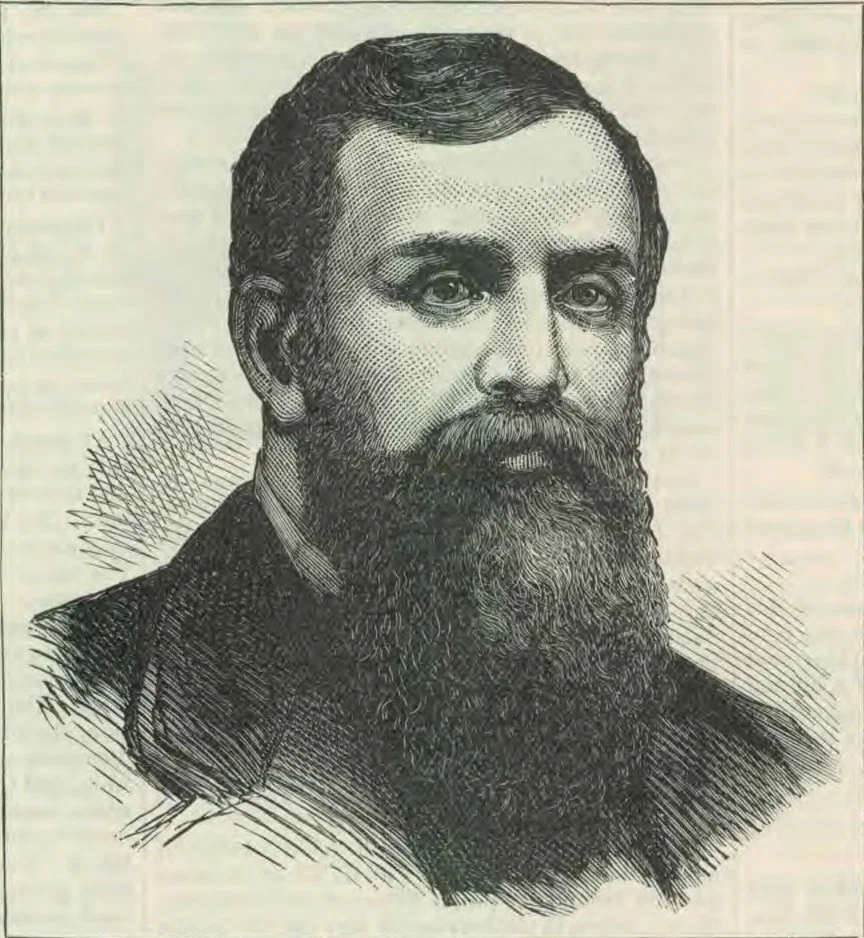
One day, when two boys were going down the streets of a town a few miles from their home, they saw an old man approaching them. Said the elder boy, who had been in the town before, “There is a man that will give you a cent. He gives a cent to every new boy who comes into this town.” The older, not wishing his young brother to lose the cent, told the old man that the boy with him was a stranger in the town. The old man gave him the cent, and, with a kindly smile, placed his trembling hand on the lad’s head, and told him that he had a Father in heaven. The lad was Dwight L. Moody. He never forgot the old man’s kindness.
Dwight’s father died when the little lad was only four years old. He left his widow with a large family of little ones to provide for, and with no means of support. Mrs. Moody refused, when her neighbors suggested it, to give her children away, and, with remarkable energy and courage, by tilling the garden and doing odd jobs for the neighbors kept her family together.
There was not much schooling to be had where there were so many little people to be cared for, and only one woman’s hands to supply the needs. Dwight did not like to go to school. The teacher was a quick-tempered man; and to this little boy no learning at all seemed preferable to the rattan that was laid about the boys’ backs for every misdemeanor. When speaking once of those early days, he told how a change took place in the school. “After a while there was somebody who began to get up a movement in favor of controlling the school by love. I remember how we thought of the good time we should have that winter, when the rattan would be out of school. We thought we should then have all the fun we wanted. I remember who the teacher was—a lady—and she opened the school with prayer. We hadn’t seen it done before, and we were impressed, especially when she prayed that she might have grace and strength to rule the school with love. The school went on several weeks, and we saw no rattan; but at last the rules were broken, and I think I was the first boy to break them. She told me to wait till after school, and then she would see me. I thought the rattan was coming out sure, and stretched myself up in warlike attitude. After school, however, she sat down by me, and told me how she loved me, and how she had prayed to be able to rule that school by love. and concluded by saying, ‘I want to ask you one favor; that is, if you love me, try to be a good boy;’ and I never gave her trouble again.”
Farming was too dull work for such an energetic boy as Dwight; so he gained his mother’s consent to go to Boston, where he finally obtained a place in his uncle’s shoe store. He attended the Mount Vernon church and Sunday-school, in accordance with his uncle’s advice. The preaching was beyond his understanding; but his Sunday-school teacher had great tact with boys, and persuaded him to be a Christian. Little did he dream what far-reaching results would attend his faithful efforts for this one boy. Young Moody was so awkward in expressing his thoughts that it was not until a year after his public confession of Christ that he was taken into church membership. Even then they thought him “unlikely ever to become a Christian of clear and decided views of gospel-truth; still less to fill any extended sphere of public usefulness.”
But the good people seemed to have forgotten that when a man is in Christ, he becomes a new creature; they forgot the humble fishermen whom God made mighty instruments to do his work. Young Moody did not forget. He believed, as did the apostle Paul, “I can do all things through Christ which strengtheneth me.” The love of God toward sinners seemed so precious that he knew of no reason why he should not tell it, and of many reasons why he should. It was like fire shut up within him. It impelled him to speak even when the more cultured in his church told him that his silence would be more effective for good than anything he could say!
He came to Chicago, where he hoped to find a wider field for usefulness than he could get in conservative Boston. He rented four pews in Plymouth church, for the young men he hoped to bring in. He offered his services to a mission school, and astonished those in charge by bringing eighteen rugged urchins to the school the next Sunday. He distributed tracts among the sailors at the wharves, and went boldly into saloons to work for the inmates. Wherever he saw a soul in wretchedness, there he went to hold up Christ, the joy-bringer.
“Finally,” says his biographer, “he wanted a larger field still, and opened an old saloon, which had been vacated, as a Sunday-school room. It was in the neighborhood of two hundred saloons and gambling-dens! His heart was full of love for the poor and the outcasts, and they did not mind about his grammar. A friend came to see him in these dingy quarters, and found him holding a colored child, while he read, by the dim light of some tallow candles, the story of the prodigal son to his little congregation. ‘I have got only one talent,’ said the unassuming Moody. ‘I have no education, but I love the Lord Jesus Christ, and I want to do something for him. I want you to pray for me.’”
“Thirteen years later, when all Great Britain was aflame with the sermons of this same man, he wrote his friend, ‘Pray for me every day; pray now that the Lord will keep me humble.’”
It is hardly necessary to tell you how his work has grown from these humble beginnings, until now thousands flock nightly to hear him in his commodious tabernacle. He has made two visits to Great Britain. “For the past ten years his work has been a marvel to the world, and, doubtless, to himself. His sermons have been scattered broadcast by the hundreds of thousands. He receives no salary, never allowing a contribution to be taken for himself; but his wants have been supplied. A pleasant home at his birth-place, Northfield, has been given him by his friends, made doubly dear by the presence of his mother, now over eighty years old. He has established two schools here, one for boys and another for girls, with three hundred pupils, trained in all that ennobles life.
“The results from Mr. Moody’s work are beyond computing. In his first visit to London a noted man of wealth was converted. He at once sold his hunting dogs, and made his country house a center of missionary effort. During Mr. Moody’s second visit the two sons at Cambridge University professed Christianity. One goes to China, having induced some other students to accompany him as missionaries; the other, just married to a lord’s daughter, has begun mission work among the slums in the East End of London.”
This is only one instance among the thousands that might be pointed out. One poor, unlearned lad, because he loved the Lord, let the light he had, shine out. He believed the Bible true when it says Christ died for all, and that whosoever believed on him might be saved. He was willing to sacrifice his own comfort to help others. He was dead in earnest. He used his one talent. Mighty results followed. What are you doing with the light God has given you? Have you told others of the merciful Father, who is not willing that any should perish? Do you say it is so little you can do? Suppose Mr. Moody had stopped when he was told that his silence would serve God better than active service! God gives to “every man his work,” and to every child his work, and you may be sure he has some for you to do. He wants you to work for him because you love him, and to leave the results to him.
W. E. L.

PASS IT ON!

HAVE you found the heavenly Light Pass it on! Souls are groping in the night, Daylight gone! Hold thy lighted lamp on high, Be a star in some one's sky; He may live who else would die, Pass it on!
Did you hear the loving word? Pass it on! Like the singing of a bird? Pass it on! Let its music live and grow, Let it cheer another's woe, You have reaped what others sow, Pass it on!
'T was the sunshine of a smile, Pass it on! Staying but a little while, Pass it on! April beam, the little thing! Still it wakes the flowers of spring, Makes the silent birds to sing, Pass it on!
Be not selfish in thy greed, Pass it on! Look upon thy brother's need, Pass it on! Live for self, you live in vain; Live for Christ, you live again; Live for him, with him you reign, Pass it on!
—Selected.

WHAT IT COST.

“ORANGES! Fine, sweet oranges!” Very juicy and inviting the tempting yellow fruit looked, and as the wagon passed him, and the man loudly called attention to his wares, Fred Winston felt in his pockets to see if he could not find some stray coins there, so that he might refresh himself with one of the juicy globes.
He had had a walk of a mile along a dusty country road, and an orange would be very refreshing; but no pennies were to be found, though he searched in every pocket.
He had walked into town to answer an advertisement for a boy in a large grocer’s store, and he had made an early start from home that he might be in time to apply before some one else should be engaged. The wagon laden with oranges had not gone very far before it jolted over a crossing, and a fine, large orange fell out, and rolled into the gutter.
Fred sprang forward, and picked it up eagerly, thrusting it into his pocket so that the huckster should not see it if he chanced to look around.
When he was satisfied that the man had not noticed his loss, he eagerly ate the juicy fruit, chuckling to himself as he thought that it had cost him nothing. When he reached the store, he presented his references to the proprietor, and as the gentleman was looking them over, he glanced around the store and thought how he should enjoy the place if he was only fortunate enough to get it, where he could dip into all the good things at will, and go about with his pockets filled with nuts and raisins if he wished.
“These references are all very well,” said Mr. Bradbury, presently, looking over his glasses at Fred; “but, if I mistake not, you are the boy I saw enjoying an orange two or three blocks from here.”
Fred flushed guiltily. Had Mr. Bradbury seen how he procured the orange?
“That orange was rather an expensive one for you, young man,” Mr. Bradbury said. “You thought you got it cheaply enough, I dare say, but it has cost you this place. If I knew nothing of you except what is contained in these references, I should have thought you were the boy I wanted, and engaged you at once; but I saw all I wanted to see of your character when I walked down the street behind you. A boy who will dishonestly indulge his appetite at other people’s expense is not the boy I want in my store; and, moreover, I could never trust you to be honest in large matters after I have seen for myself that you are not honest in little things. The huckster could better afford to lose that orange than you could afford to steal it.”
Do you envy Fred’s feelings as he retraced his steps homeward, knowing that by his own act of dishonesty, trifling though it had seemed to him, he had lost a desirable position?
He thought that the stolen orange had cost him nothing, but in reality it had been a most expensive indulgence; it had cost him his good name and the place he had hoped to win.—Youth’s Evangelist.

EASTERTIDE

EASTER has just passed. In the churches, decorated with white flowers, joyous worship has been held, and a great portion of the religious world has kept festival. Seeing Easter has come to be so generally observed, it may be of interest for the INSTRUCTOR readers to know a little about its origin and the customs attending it.
The name Easter, like those of the days of the week, is of heathen origin. It comes from the old Teutonic mythology. The festival was known to the Anglo-Saxons as Eastre, a name derived from Eostra, or Ostara, the goddess of Spring. The name of this goddess comes from oster, to rise; for all the plants spring up, or rise, at that time. Hence when the old pagan festivals crept into the early Christian church, Easter came also, as a symbol of the resurrection of Christ. To this goddess of Spring, Eostra, the fourth month was dedicated; hence Easter is celebrated about the commencement of April.
Just the precise time of its celebration was the cause of most bitter controversy in the early church. The Jewish converts and Eastern church generally, wished to celebrate it at the time of the Passover, without regard to the day of the week. The Gentile Christians (?) declared that it should be observed on Sunday. This dispute was settled by Constantine at the Council of Nice, A. D. 325, when it was decreed that “Easter shall hereafter be kept on one and the same day throughout the whole world, and none should follow after the blindness of the Jews.” The day fixed upon was Sunday. Since that time we have had Easter Sunday, which came this year on the twenty-first of April.
The superstition connected with this day is second only to that in regard to St. Patrick’s day. In some parts of Ireland the people believe that on this day the sun dances in the heavens for very joy. It is said that even people of culture rise at four o’clock on that morning “to see the sun dance.” Another idea, held in England, is that unless you wear a new dress, misfortune will follow you through the whole year. The old English couplet says:—
“At Easter let your clothes be new, Or else be sure you will it rue.”
Others believe that abstinence from meat on Easter Sunday will prevent any fever during the year.
Some of the old customs in regard to this time are no less curious. The most common is making presents of “peace eggs” (a corruption of Pasche or Passover eggs), or “Easter eggs.” Thus this festival is also called “the feast of eggs.” This custom, it is said, dates back through the Romans, Grecians, and Persians to the Egyptians, who used to hold the egg in veneration, as an emblem of the universe. These nations at certain times used to make presents of colored eggs, just as is done now. In the midland counties of England the old custom of “heaving” is still sometimes practised. Two persons form a seat with their hands by clasping each others’ wrists. The person to be “heaved” sits on this, and is slowly elevated. One day the men heave the women, and on the next day the women heave the men. The writer has seen and played at this game. Ridiculous as it may appear, this custom is intended to represent the resurrection of Christ, and must therefore fall under further condemnation because it has a blasphemous coloring.
Easter Sunday used to be called the “Sunday of joy,” and in England “God’s Sunday,” because slaves were liberated, and everything given up to mirth and festivity. Even the clergy recited funny stories and legends from the pulpit, with the sole purpose of making the people laugh. Up to the nineteenth century, it was customary on Easter Monday for the clergy to play ball with their parishioners in their churches for tansy cakes. These cakes were made of a bitter herb of that name. In this the highest dignitaries took part, and the game went on during service, and was accompanied with dancing.
So you see the associations of Easter are not the best to recommend it as a Christian festival; in fact, it is essentially a relic of barbarism. In Acts 12:4 you will find Easter mentioned, but the right translation should be Passover. The translators were zealous Easter observers, and hated anything Jewish, inasmuch that at this feast they would eat a piece of fat bacon, to show their abhorrence of Judaism. Under such circumstances it is not very difficult to see why they used the word Easter instead of Passover.
FRANK HOPE.

CRACKING ICE.

“MOTHER wants some more cracked ice,” said Benny Holt, coming out of the sitting-room, where his mother lay on the lounge, suffering from a sore throat and feverish cold.
“Well,” said Nell, who was busy doing double work in the kitchen, “you take this stout towel and go to the shed and crack some.”
“How do you crack ice?” asked Elsie Noble, who had run in for a few minutes’ chat with her friend.
“We put a good-sized piece into a stout cloth, and pound it with a hammer or mallet till it is crushed in pieces, and then fill a plate, so Ben can give it to mother when she wants it,” said Nell, promptly, feeling that this time she really could give some information to her bright friend Elsie, who so often had been the one to impart new ideas to her.
“I heard of another way not long ago,” said Elsie, “and I have tried it myself, so I know it can really be done. You can crack ice with a pin!”
“With a pin!” exclaimed Nell, incredulously.
“Yes, with a pin. A good strong pin, like a shawl-pin, is best if the ice is thick. Press the point down firmly on the ice at the spot where you want it to crack, and as the pin sinks in, the ice will crack and split off at that very place. So you can get just what you want, a little piece or a big piece each time.”
“Ben, Ben!” called Nell from the window, “don’t pound that ice just yet. Bring it here first.”
Ben brought in a good-sized, irregularly-shaped lump, and Nell, taking a pin, pressed it firmly down on a corner where the ice was about an inch thick. Almost on the instant there was a little snapping sound, and the piece fell off. Then she tried it where the ice was twice as thick, with the same result.
“You do beat all, Elsie Noble!” she exclaimed; “I would not believe it if I did not see it for myself with my own eyes.”
“Yes, it is wonderful,” said Elsie, modestly.
“There, Ben,” directed Nell, “take this ice and this long pin right into the other room. You can read your new book while you sit there by mother, and every time she wants ice, you can crack off a bit and give it to her. It will last ever so much longer than if it were all crumpled up into little pieces to begin with.”—Youth’s Companion.

AN AFFECTIONATE LION.

THE superintendent of the animal department at Woodward Garden, San Francisco, tells an interesting and pathetic story of a lion which was at one time in the garden. At first the lion was so wild and fierce that it was dangerous to venture near to its cage.
But by persistent gentleness and kindness, the superintendent gradually made the beast so fond of him that it permitted him to go into the cage, and if he lay down beside it, the lion would raise its head, so as to give him a soft place to lie. One day a drunken sailor came into the garden, and began teasing the lion. The superintendent went up to the man, and told him not to disturb the animals.
The sailor, angered at the reproof, replied that he’d do as he chose about it; and doubling up his fist, struck at the superintendent. The lion upon this became frantic with rage; it roared fearfully, and dashed so violently against the bars of its cage that the sailor ran away in terror. Then the beast became quiet, and manifested the greatest delight when the superintendent went up to it and caressed its head.
At length the lion became affected with a tumor. One or two slight operations had to be performed, and nobody could get near the beast except this one man. The lion let him cut, and looked at him gratefully all the time, licking his hand when it was over. The tumor grew, and a difficult operation had to be performed. It was with some apprehension that the superintendent undertook it, for the lion was restless with pain and discomfort.
The doctors thought it unadvisable to administer ether. The physicians drew a diagram of the operation, showing him where to cut. He followed their directions, talking soothingly to the noble beast the while, and the lion bore the knife bravely. This operation caused but temporary relief, and the poor beast began to suffer such pain that it was decided to kill it. The superintendent took his revolver, and after petting the animal, fired one shot through its head, putting the muzzle close to it. The lion gave him a pathetic look, in which there seemed to be a mixture of surprise and reproach, but no anger. It took three shots to kill it, and all the time the beast never took his eyes off the man.
The superintendent told the incident with tears in his eyes.—Christian Weekly.

“BETTER NEVER LATE.”

PUNCTUALITY is said to be the politeness of kings. It is also the politeness of subjects. When a certain nobleman, who had made an appointment with George III., went to his majesty too late, the king made a remark upon his unpunctuality, to which the nobleman replied, “Better late than never.” “No,” said the king, “that is a mistake; I say, Better never late.”
“Too late” is the curse of life; too late for obedience; too late for love; too late for respect; too late for reverence; too late for reform; too late for success; but not too late for ruin.
Many are born with noble gifts and talents; but patient labor is necessary to make them available.—Dr. Smiles.

Dangers of Lingering with Temptation

He who, meeting a pleasant temptation, stops to shake hands with it, will generally end by going with it wherever it chooses to lead him.

LITTLE BLUE MITTENS.

“Wish I could have my mittens mended,” said little Susy Ray.
She held up the mittens, to show her grandma how badly they needed mending. There was a big hole in each thumb, and a bigger one where the fingers came.
“I see,” said grandma; “but my poor old eyes are so weak I couldn’t mend ’em for you, dearie.”
“I guess I could mend ’em myself, if you’ll give me some yarn, grandma.”
“Yes; I will. But I haven’t got any but red yarn,—if that’ll do.”
Susy held the red yarn near the blue mittens, and did not like the looks of it.
“It would show more than the holes do,” she said. “I’m afraid the boys and girls at school would laugh at me.”
“Well, never mind,” said grandma. “We’re not going to have much more cold weather. At least I hope not, for the wood’s most all gone.”
“It’s cold yet, though,” said Susy. “My hands get dreadfully cold when it’s so far to walk.”
But if poor little Susy thought the mittens full of holes were bad, how much worse it was when she came home from school one day and found that she had no mittens at all; for she had lost them. Whether she had laid them down when she stopped to tie little Polly Pratt’s hood, or whether they had slipped out of the pocket of her cloak, she could not tell; but gone they were.
“Never mind,” said grandma, trying to comfort her; “you wouldn’t ’a wanted ’em much longer this spring, anyway. And maybe next Christmas they’ll give you another pair off the Christmas tree, just as they gave you these.”
“I hope they’ll be red ones,” sighed poor Susy, “so the red yarn’ll do to mend ’em.”
“Never saw it so cold and snowy the first of April in my life,” said grandma.
“Dear me! To-morrow’s the first of April,—isn’t it?” said Susy. “I don’t like it. Last April all the boys were playing tricks on the girls. The boys thought it was great fun; but the girls didn’t think so. And I s’pose they did the April before; but I don’t remember so long as that.”
Tom and Bessy Wright walked home from school a little way behind Susy Ray.
“Here’s a pair of mittens in the road,” said Tom.
“I believe they’re Susy Ray’s,” said Bessie. “Yes; I know them by the big holes. I’ll give them to her to-morrow.”
“Ho! they ain’t worth picking up!”
“But I guess they’re all she’s got; so she’ll be sure to want them.”
Mrs. Wright caught sight of the poor little mittens, which were lying with Bessy’s, after tea, and hunted out a bit of blue yarn, and sat down and mended them.
“Why,” said Bessy, very much pleased, “they look as good as new, mamma. How glad poor little Susy’ll be! When I’m a woman, I’m going to know how to mend as nicely as you do, mamma.”
“I knit those very mittens myself for the Christmas tree last winter,” said mamma; “and the yarn is a bit that was left. Here is a needle or two full yet, and I’ll just slip it in, so that when there’s another hole, she can mend it herself. Perhaps they’ll last them till next Christmas comes round.”
Bessy carried the blue mittens to school the next morning; but Susy was not among the children who were playing in front of the country school-house, so she hung them on the door handle by the cord which held them together.
“Hello!” said a big boy, as he saw them. “Let’s fill ’em with snow, for an April fool!”
“No!” cried another boy. “Let’s put a bit of wax in, so they’ll be sticky!”
“No!” said a third. “Let’s stick some pins in, so they’ll prick when she puts her hand in!”
It will never be known whether either or all of the clever plans would have been carried out; for, as the big boy was twitching them off the door handle, Bessy laid her hands on them.
“Wouldn’t it be too bad, Ed, for a great boy like you, that could do so many nice things for folks, to try instead to do anything mean to such a poor little bit of a thing as Susy?”
The big boy stared at her. She had said it so pleasantly that he did not get angry. Indeed, nobody ever got angry with Bessy; for she was a good deal like her mother,—always looking out for ways to do something kind for somebody, and always ready with a pleasant word to smooth things over.
“I guess you’re about right, Bessy,” said the big boy. “Clear out, you!” he cried to the boys who were coming with the wax and the pins. “I say, let’s do something a little better than that!”
“What shall it be?” was asked.
“I shall do this,” said Bessie.
She took two or three ginger-snaps from her dinner-basket, and slipped them into one of the mittens.
“Whew!” said the big boy, with an admiring laugh at Bessy’s trick. “That’s about the best thing yet.”
“I’m going to put in something too,” said Tom, bringing half a stick of candy.
“I too!”
“And I!” Half a dozen or more crowded up, each one bringing some trifling gift.
“It’s my birthday, and I had six pretty handkerchiefs for a present,” said a little girl, “and I’m going to put one of ’em in.”
A shout of approval went up as the daintily bordered morsel went in.
Ed stood a little outside the chattering group, holding one hand in his pocket. He was fingering a ten-cent piece which lay there. He wanted to put it in, but could not quite make up his mind; for it was a rare thing for him to have any money, and ten cents looked very large in his eyes.
“Hush, she’s coming!” said some one, trying to stop the clamor over the handkerchief.
Sure enough, a small figure, holding both hands under an old cloak, was seen coming up the lane.
“Let’s all run in!”
And as Ed passed in the door, the dime slipped from his pocket into one of the blue mittens, and he had just time to give it a little shake so it would go down to the tip.
Susy wondered at seeing all the boys and girls rush into the school-house, for she had not heard any bell. But she concluded that it must be late, and her poor little face looked rather more forlorn than usual as she reached the door.
Blue mittens! Could they be hers which she had lost? No, surely not; for every hole in them was neatly mended with yarn that was such a perfect match that you would find it hard to tell which was mitten and which was mending. And yet they must be hers; for there was the knot in the string, and there was the ink spot she knew so well. She began taking them down from the door-handle.
But—what could be in them? All of a sudden the dreadful remembrance of its being the first of April flashed upon her, and she quickly dropped the mittens. Out rolled the red apple from one, while from the other peeped a corner of the cunning handkerchief. They did not look at all dreadful, and Susy stooped down to the step where they lay, and began taking out the things one by one.
Those who were looking out of the window (and it was all who could possibly crowd near it) saw the forlorn look fade away from the little face, and a flash of surprise and delight rise in its place. Then came a bright smile and dimples to keep it company, and, last of all, a merry little laugh, as, having taken out handkerchief, whistle, pencil, nuts, candy, cakes, marble, and dime, she put on the mittens and held up both hands to see the beautiful mends.
Then the door was softly opened, and a chorus of cheery voices cried out,—
“April fool!”
“I think April fool’s day is the nicest day in the whole year,” said Susy to her grandma, when she went home and told the wonderful story.
And many of the other school children might have said the same; for the glow which comes to young hearts through the doing of little deeds of kindness and self-denial did not fade out very soon, and each one who had tasted its warmth wanted to taste it again. So whatever April jokes or tricks were played were kindly ones, made in the spirit of innocent fun which did not admit a sting of malice or a touch of disregard for the feelings of others.—Sydney Dayre, in Sunday-School Times.

LITTLE SCHOOL-GIRLS IN NANKING.

Sometimes you wonder what the scholars in our mission schools in China are like, what they do, and how they live. Here is a letter from Mrs. Leaman, who has a school for little girls in Nanking; it will answer a good many of your questions.
My Dear Young Friends:—
I wish you could see what a nice little school we have here in Nanking, and how happy the little girls are, and how hard they study. For three weeks every little girl in the school has had a perfect lesson, and for three months five little girls have not had one imperfect lesson.
Do you ask what they study? The Testament, Catechism, and little verses about Jesus coming into the world to save sinners. Two little girls have recited St. Mark’s gospel, and are now half way through that of St. John. They have no reading books but the Bible, “Peep of Day,” and Bible stories. When they grow older, I will teach them some geography and other things. The two oldest girls are learning to write.
At morning prayers, all the little girls that can read, read with me, verse about; and we sing, and then repeat together the Lord’s prayer, and recite the second commandment. We have seventeen dear little girls. The eldest is thirteen years old, and the youngest six years old.
I wonder what you would think if I told you that my little girls study aloud, and just as loud as they wish. That is the way all the Chinese pupils study, and we let them do as they please in that respect.
Would you like to know how they sleep? I have four little girls in one room—two in a bed. Each bed has a little cotton mattress, and a comfortable, and a straw pillow. The bed is made of five boards resting on two stools. You will think them very hard, but the children think them very nice, for they are so much better than those which they have at home.
They do not have any fire; that costs too much money; but we have little covered kettles, and in those kettles we put some bright coals, and they put their feet on them and get warm. This is the only way the Chinese about Nanking have to keep warm. Up north, where it is colder, they build a brick bed with a place under it for fire, and they sleep and sit on this bed.
The people live on rice, with meat and vegetables. They never have bread such as we have, but they make cakes out of rice-flour. Each little girl has a bowl and two little chop-sticks. She has rice in the bowl, and then puts a little bit of fish or vegetables on the rice, and thinks it very good.
Do you wonder how they dress to keep warm? They wear wadded clothes, and each little girl has about as many pounds of cotton in her garments as your mothers put in the bed comfortables. She wears a pair of wadded drawers and two wadded coats. They do not wear dresses as you do, but drawers and long coats that are down to their ankles. They wear garments inside and outside of these, as the wadding cannot be washed.
Now I have told you how they study, sleep, eat, and dress. Let us all work and pray more earnestly than ever, and perhaps God will open the blind eyes of this poor people, so that they will see “Jesus of Nazareth passing by.” Your loving friend,
LUCY A. LEAMAN.
—Children’s Work.

OUR HAPPY SECRET.

Oh, I couldn't help it! It came to me, Out of the midst Of an old apple-tree, Came to me soft, With a chirping note— Out popped the secret, From dear little throat: “Just here, just here, the nest shall be, Nobody knows it! Oh, happy are we!”
I didn't listen! I tell you true; They told it,—and I, Say—what could I do? They sang it, and sang it, Not looking at me, Who sat looking out At that old apple-tree: “Just here, just here, the nest shall be, Nobody knows it! Oh, happy are we!”
Do you think I'd tell, Oh, dear me, no! Just where that wee nest Is going to grow? You couldn't find, If a week you tried, My apple-tree, where That home shall hide. Just where, just where that nest shall be Nobody knows—only we three!
—Margaret Sidney.

THE OBEDIENT BOY.

I READ a pretty story the other day about a little boy who was sailing a boat in company with a playmate a good deal larger than he was.
The boat had sailed a good way out in the pond, and the big boy said, “Go in, Jim, and get her. It isn’t over your ankles, and I’ve been in after her every time.”
“I daren’t,” said Jim. “I’ll carry her all the way home for you, but I can’t go in there; she told me not to.”
“Who’s she?”
“My mother,” said Jim, softly.
“Your mother! Why, I thought she was dead.”
“That was before she died. Eddie and I used to come here and sail boats, and she never let us come unless we had string enough to haul them in with. I’m not afraid, you know I’m not; only she didn’t want me to, and I can’t do it.”
Wasn’t that a beautiful spirit, that made little Jim obedient to his mother even after she was dead? —Ex.

WHAT CAN LITTLE HANDS DO?

Oh, what can little hands do To please the King of heaven? The little hands some work may try To help the poor in misery: Such grace to mine be given.
Oh, what can little lips do To please the King of heaven? The little lips can praise and pray, And gentle words of kindness say; Such grace to mine be given.
Continue reading: SOME FOOLISH LITTLE TRAVELERS