IN the original plan of Heaven for our world, Adam was created to be its eternal king. But kingship was never conferred upon him. His right to this high office depended upon his loyalty to the King eternal, during a test which was to continue while the earth was being peopled with his posterity. The eldest son of a ruling monarch is “the crown prince.” Adam, being the eldest “son of God” in our world, was “the crown prince” of our human family.
What a glorious experience it might have been, had not Adam failed,—and that very early in the test,—finally to have filled the earth with his own seed—all righteous—then to have had the proclamation issued from his capital city that upon a certain date all the inhabitants of earth were to assemble to witness his coronation, and that both Jehovah and His Son, the Creator, would be present at the coronation to bestow upon Adam his kingly crown!
But Adam will never receive the kingly crown once in prospect for him as “crown prince” of our world. He yielded to Satan, and the latter became “the prince of this world.” John 12: 31; 14: 30. While for Adam the failure and loss is extremely pathetic, yet for the redeemed of earth even a more blessed and glorious provision is made to supply them with a king than if Adam had remained loyal. And thus it is that none of His plans can fail, for out of apparent defeat and despair God can bring more glorious results than if Satan had not interposed to defeat His purposes.
The More Glorious Experience
But what will be the better, the more glorious experience of the redeemed members of the race of Adam, than if our first parents had remained true to God until the kingly crown would have been bestowed?
In answering this question, we need not dwell at length upon the sad event of the fall, and of the consequent loss to Adam of life and of the position of crown prince, and thus of the hope of ever being crowned king. Suffice it to say that altho our first father and prospective king failed, our race is not left fatherless and kingless. An everlasting Father has been provided. He will presently be crowned “King of Kings and Lord of Lords,” and both reader and writer may be present at the coronation if we are willing to make the needful preparation.
The First Dominion, Lost in the Fall, Won Back and Restored by the Cross of Calvary
The three facts that Adam once held complete dominion as “crown prince,” that now man does not have the dominion, and the centering of the hope for humanity upon One who has already triumphed and will presently restore the dominion, are all set forth in these words: “But one in a certain place testified, saying, What is man, that Thou art mindful of him? or the son of man, that Thou visitest him? Thou madest him a little lower than the angels; Thou crownedst him with glory and honor, and didst set him over the works of Thy hands; Thou hast put all things in subjection under his feet. For in that He put all in subjection under him, He left nothing that is not put under him. But now we see not yet all things put under him. But we see Jesus, who was made a little lower than the angels for the suffering of death, crowned with glory and honor; that He by the grace of God should taste death for every man.” Heb. 2: 6-9.
By these inspired words our hopes for the restoration of the lost dominion, “the world to come,” are focused upon Jesus.
The only reason why man does not have complete dominion over “all things” in our world “now,” even to absolute control over sickness and death, is because the head of the race yielded to Satan, the usurper, who by the law of usurpation became “the prince of this world.”
When Paul mentions the fact that “now we see not yet all things put under” man, he immediately directs our minds to Jesus, the One by whom deliverance is assured. Thus the life for the redemption of the world is in Jesus Christ.
How shall Jesus win back and restore the dominion lost by Adam? There was but one way to accomplish this, and that by the way of Calvary, or tasting death for every man.
Christ could not restore the dominion and take Adam’s lost kingship without first redeeming Adam’s failure; and to redeem Adam’s failure, He could not win the conquest by fighting the battle as the Son of God. He must come into the world on Adam’s plane, be “made a little lower than the angels,” and thus in the flesh common to humanity vanquish the one who had conquered Adam. And thus it is written, “Forasmuch then as the children [the ones who are to be redeemed and to whom the kingdom is to be restored] are partakers of flesh and blood [human nature, subject to death], He also Himself likewise took part of the same; that through death He might destroy him that had the power of death, that is, the devil; and deliver them who through fear of death were all their lifetime subject to bondage.” Heb. 2: 14, 15.
In rescuing the dominion from Satan, temptations were forced upon Him with far greater intensity than were brought to bear upon Adam. In one of the three great temptations (Matt. 4: 8), the devil showed Christ “all the kingdoms of the world, and the glory of them,” and offered them to Him for a moment’s worship. Jesus knew full well that the winning back of the lost dominion was not by following in the footsteps of the first Adam — yielding to Satan — but rather by the conquest of the cross, tasting death for every man.
This fact He stated when, just prior to9Calvary, He said: “Now is the judgment of this world: now shall the prince of this world be cast out [dispossessed of the dominion]. And I, if I be lifted up from the earth, will draw all men unto Me. This He said, signifying what death He should die.” John 12: 31-33.
The death of Jesus upon the cross — His giving His life for a rebellious race — is the drawing power, the outflowing of love, by which all the intelligences, not only of this world but also of the universe, will finally be drawn toward and bound to Christ, and rejoice at the overthrow of Satan, the usurper.
This winning back of the dominion lost by Adam was foreshadowed in these prophetic words: “And Thou [Christ], O Tower of the flock [the church], the Stronghold of the daughter of Zion, unto Thee shall it come, even the first dominion; the kingdom shall come to the daughter of Jerusalem.” Micah 4: 8.
Prophecies of Christ’s Kingship
A few of the prophecies which foretell His kingship are as follows: “Yet have I set My King upon My holy hill of Zion. I will declare the decree: the Lord hath said unto Me, Thou art My Son; this day have I begotten Thee.” Ps. 2: 6, 7. “For unto us a Child is born, unto us a Son is given; and the government shall be upon His shoulder: and His name shall be called Wonderful, Counselor, The mighty God, The everlasting Father, The Prince of Peace. Of the increase of His government and peace there shall be no end, upon the throne of David, and upon his kingdom, to order it, and to establish it with judgment and with justice from henceforth even forever. The zeal of the Lord of Hosts will perform this.” Isa. 9: 6, 7.
When the angel Gabriel announced to Mary that she was to be the mother of Jesus, he added, “He shall be great, and shall be called the Son of the Highest: and the Lord God shall give unto Him the throne of His father David: and He shall reign over the house of Jacob forever; and of His kingdom there shall be no end.” Luke 1: 32, 33.
When the Magi came to Jerusalem, and inquired, “Where is He that is born King of the Jews?” their inquiry conveyed a correct idea of what Jesus was to be by virtue of His birth into our human family.
When Pilate asked the question of Jesus, “Art Thou a king then?” Jesus answered: “Thou sayest that I am a king. To this end was I born.” John 18: 36, 37. But He assured Pilate that the time had not yet come when He was to take possession of His rightful kingdom. The proclamation is soon to be made in heaven, “The kingdoms of this world are become the kingdoms of our Lord, and of His Christ; and He shall reign forever and ever.” Rev. 11: 15.
When He who is “called the Word of God” finally goes forth to dispossess Satan of the dominion usurped from Adam, He will have “on His vesture and on His thigh a name written, KING OF KINGS, AND LORD OF LORDS.” Rev. 19: 13, 16.
When the kingdom, having been won back and restored, is all ready for the home-coming, He will extend a welcome home to the redeemed in these words: “Come, ye blessed of My Father, inherit the kingdom prepared for you from the foundation of the world.” Matt. 25: 34.
Jeremiah described His future kingship thus: “Behold, the days come, saith the Lord, that I will raise unto David a righteous Branch, and a King shall reign and prosper, and shall execute judgment and justice in the earth. . . . And this is His name whereby He shall be called, THE LORD OUR RIGHTEOUSNESS.” Jer. 23: 5, 6.
Nearly sixty centuries of death have followed Adam’s failure. Adam’s children might all have been princes of God had it not been for sin. Now provision is made so that the overcomers of Adam’s family become princes of God. But the “last Adam” will be their eternal, matchless King.
The Throne of the Godhead to Be Transferred to Our World
After describing the beauty and glory of the capital city of Christ’s coming kingdom, the revelator adds, “The throne of God and of the Lamb shall be in it.” Rev. 22: 3. The brightest, the most glorious and lofty place in all the universe is where the throne of Divinity is established. Then this world, now the darkest, the most sad and gloomy spot in the universe, will by the glorious triumph of Calvary be the most blessed place in all of God’s realm; and from the joint throne of Jehovah and of Christ, the entire universe will be governed, will receive, while eternity shall roll, life and power and blessing, and Christ the Son of Man will forever be this world’s King.
In a mental picture of the meeting of the two Adams, we can imagine the first Adam casting his crown at the Saviour’s feet, and the latter embracing him tenderly, and then introducing him to the whole family of the redeemed and to the eternal joys of the kingdom restored.
Think, fellow wayfarer, of having a King with creative power, one who spoke the territory of His kingdom into existence; with resurrection power; a King who by the cross of Calvary will have bound all of the universe to Him in cords of love that can not be severed; a King matchless in wisdom, in power, and in glory, yet who is our elder Brother, and who shares the throne of His kingdom with the subjects of the realm. Dan. 7: 27.
The Coronation
How far would you travel to witness the actual meeting of the two Adams, and to behold the coronation of Christ before angels, all the redeemed of earth, and representatives of all worlds?
The recent coronation and pageant of King George the Fifth, one of the most brilliant functions in all of the history of the world, was witnessed by hundreds of thousands of delighted spectators. But how insipid, how insignificant in importance, the crowning of any earthly monarch, in comparison with the coronation of Christ!
This, the most brilliant, the most satisfying of all coronation scenes in the history of the universe, will soon take place; and all the princes and princesses of God — overcomers — will be present. The price to pay for being present at the coronation, for sonship, and for being a joint heir with Christ, is to become an “overcomer.” “He that overcometh shall inherit all things; and I will be his God, and he shall be My son.” Rev. 21: 7.
Dedicated to those who suffer for truth as revealed in God’s Word.
Alone, yet not alone,
Tho dark, cold walls surround,
And slime and damp, with chilling breath,
Come stalking through this tomb of death.
No fair blue sky, no green-clad ground,
Nor starry dome,
No loving word,
But gibe and jeer of wicked men
With thoughts on evil deeds intent,
And hearts all seared, and forms all bent
O’er plans to ’scape their dismal den.
No prayer is heard.
’Tis passing strange—
Such fellowship for one who loves
Jehovah’s law and precepts pure,
Which, long as heaven and earth endure,
Eternal, changeless still its grooves
All heaven sustains.
Is this the crime?
O nation strong in might and power,
When thus, for conscience’ sake, mankind
Are thrust in prison cells, and fined,
You’re drifting back to sin’s dark hour,
And ages blind.
God’s Word shall stand,
Outshining far our human ken.
Wisdom and might in His promise lurk,
All things together for good shall work;
Nor demons nor angels nor wicked men
Can pluck from His hand.
Brethren, be strong!
You’re only “first-fruits” gathered in.
You’re not alone ’mid scenes so drear;
There’s One beside you—never fear.
Transgression of His law is sin.
’Twill not be long.
With each day’s birth,
The muttering storm-cloud louder sounds;
Still others must prove their loyalty.
From cell and dungeon forth they’ll flee
When the loud trump resounds
Through heaven and earth.
’Tis well—
Afflictions light—but a moment of time
Compared to the glory that ever shall be
In that fair dominion, redeemed, and free
From curse or blight, a sorrowless clime,
No prison, no hell.
Mackinaw, Illinois.
Our Bible Reading
Institution of the Sabbath
1. When was the Sabbath instituted?
“Thus the heavens and the earth were finished, and all the host of them. And on the seventh day God ended His work which He had made; and He rested on the seventh day from all His work which He had made. And God blessed the seventh day, and sanctified it: because that in it He had rested from all His work which God created and made.” Gen. 2: 1-3.
2. Does the Sabbath commandment also refer to the close of creation week as the time when the Sabbath was instituted?
“Remember the Sabbath day, to keep it holy. Six days shalt thou labor, and do all thy work: but the seventh day is the Sabbath of the Lord thy God: in it thou shalt not do any work, thou, nor thy son, nor thy daughter, thy man servant, nor thy maid servant, nor thy cattle, nor thy stranger that is within thy gates: for in six days the Lord made heaven and earth, the sea, and all that in them is, and rested the seventh day: wherefore the Lord blessed the Sabbath day, and hallowed it.” Ex. 20: 8-11.
NOTE.—The foregoing texts plainly show that the Sabbath was instituted at the close of creation’s week. “Remember,” the first word of the Sabbath commandment, points us backward to the time when the Sabbath was instituted. We “remember” the things of the past. The memory does not go forward into the future. The Lord gives as His reason for instituting the Sabbath, that in six days He made the heavens and earth and all things that they contain, and because of this manifestation of His power as Creator He gave us the Sabbath. The Sabbath, then, was instituted as a memorial of creation. And since creation is a thing of the past, and can not be changed, neither can the Sabbath be changed. Our God desires to have us sense His power, and therefore His ability to save and protect us. And hence He desires that we shall observe the memorial of His power, the Sabbath that keeps in mind the mighty forces that He put into operation in creation.
Success and Failure
By James William Lowe
EVERY life has been a success exactly in proportion as it has been an instrument for good.
Every life has been a failure exactly in proportion as it has failed in being an instrument for good.
No worldly achievement that has been wrought in selfishness can in truth be accounted success.
Very much of what the world calls success is in reality absolute failure.
The most successful person in the world is he or she who has as an instrument of the Holy Spirit brought the greatest amount of good to the greatest number of people.
The measure of real success will depend upon the conformity of our life to the life of Christ. J. W. LOWE.
Broken by the Law
By Dorothy Dix
THOSE who break the law are in turn broken by the law, and this is true of men just as much as it is of women.—Dorothy Dix.
The Public Schools
By C. M. Snow
American Federation of Catholic Societies
Louisville, Kentucky, August 18-21, 1912
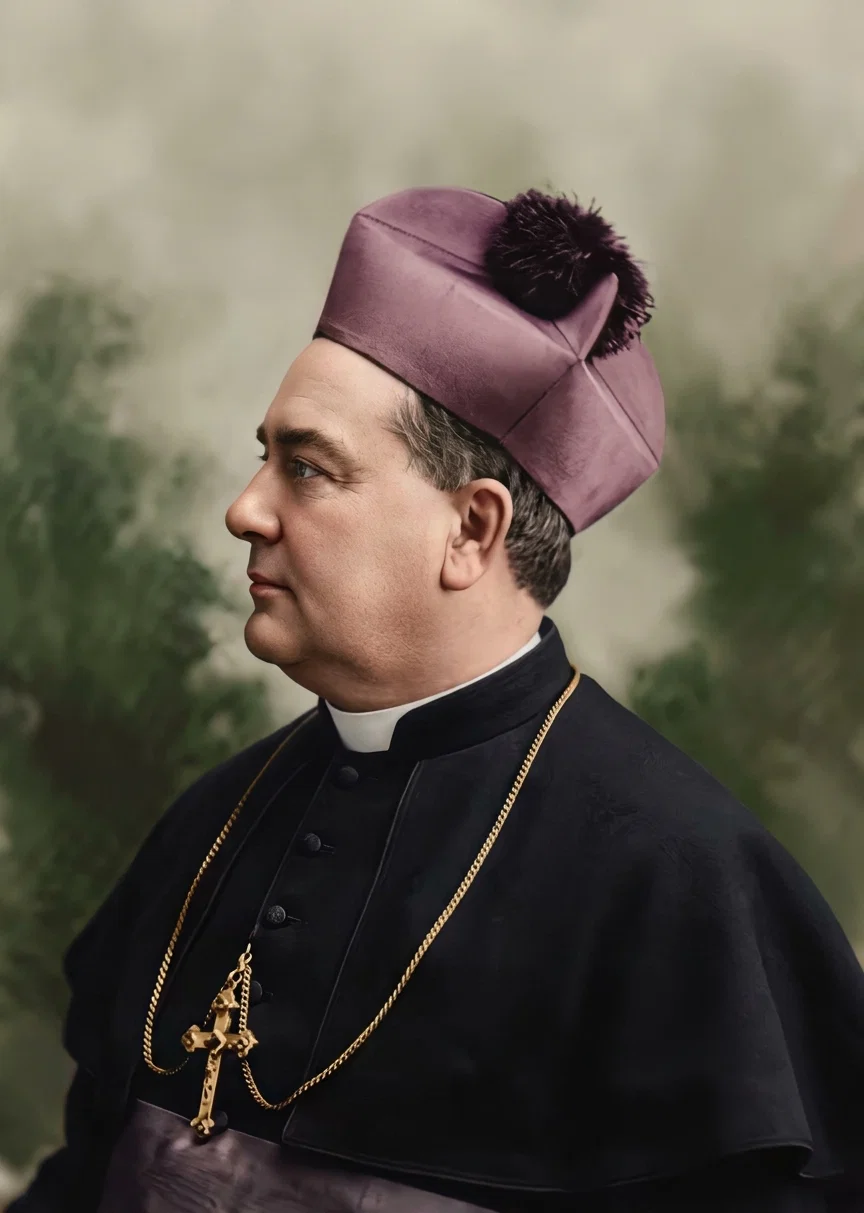
Bishop James McFaul, of Trenton, New Jersey
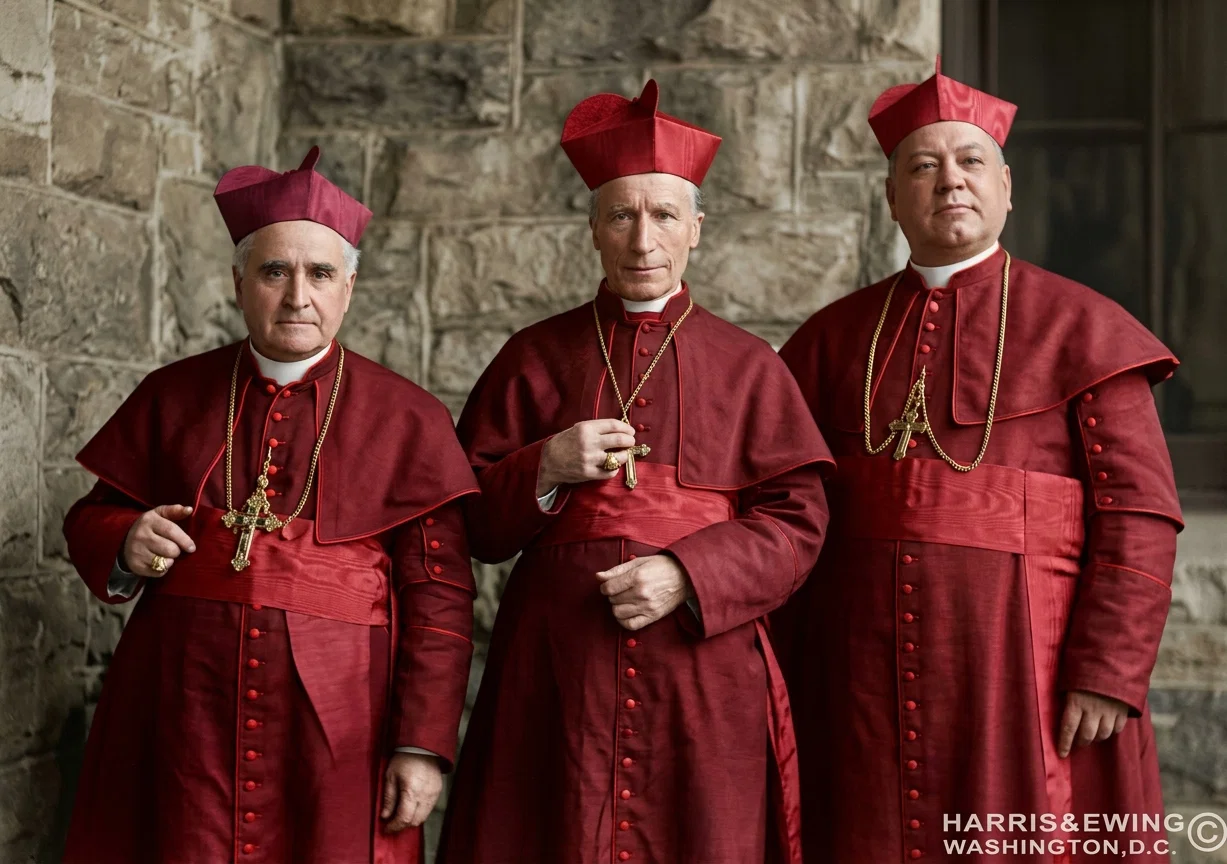
THE THREE AMERICAN CARDINALS From left to right: Cardinals Farley, Gibbons, and O'Connell
THE eleventh annual convention of the American Federation of Catholic Societies, held at Louisville, Kentucky, August 18-21, was ushered in by the greatest and most spectacular parade ever witnessed in this city. There were in the parade about 26,000 men, women, and children. There were seventy-four expensive floats in the procession, representing various epochs in the history of the Catholic Church in America. The state of Kentucky was called on liberally to help make the event one long to be remembered, and the state responded with its soldiers, its artillery, and its governor and lieutenant-governor. Every public edifice in the city bore the trade-mark of Rome, the yellow and white bunting emblematic of the pope's temporal dominion; and the great business houses owned by non-Catholic concerns were careful to make a generous display of the papal colors in the interest of business. They have learned by past experience that a lack of generosity in this particular may mean a deficit at the end of the year.
The convention was welcomed to the state and to the city by the governor and the mayor, with words of commendation for "the great work which the Catholic Church has accomplished for humanity." These dignitaries of the civil realm sat with the dignitaries of the ecclesiastical realm to review the mammoth parade at the reviewing station in the front of the Catholic cathedral. While it was purely a religious function, arranged expressly and solely for the glorification of the church and the advancement of her interests, these civil functionaries deem it a matter of political expediency to assist her in her objects, that she may not turn her great power and influence against them. Not only at the reviewing stand, but at her opening meeting, she ex-acts the influence of their presence, with their accompanying words of adulation for her, which are then heralded to the people through the public prints. Such things add to her standing in the eyes of the general public, and make her propositions seem less obnoxious to them.
That she has abandoned no whit of her pretensions, and that her ambitions for the control of America grow stronger with each year, was abundantly manifest in the propositions which the federation has set before its members, and in the reports of the things which the federation has accomplished.
The Public Schools
The federation now claims a membership of nearly three million, and its demands upon politicians or upon state officials are backed by the threat of political power. The same declarations against the public school were heard in this convention as in former gatherings of this kind. The same demand was put forth for a division of the public school funds, so that parochial schools may be supported by public taxation. We heard the reiteration of the oft repeated demand that America be made Catholic. Said
Bishop McFaul, one of the original founders of the federation:
"Let it be one of the aims of this federation to spread Catholic literature, and become an apostolate of the laity, and to use the press for the propagation of the faith, for the cultivation of virtue, for the destruction of error, and the advancement of truth. Thus shall we confer countless blessings upon Catholics and non-Catholics, and bring about the consummation of our hopes by making America a Catholic country, and the brightest gem in the crown of our holy mother, the church."
The federation has set itself against the establishment of a federal university, declaring that such an institution is wholly unnecessary. This was but to be expected in view of the fact that the university was not to be under Catholic control. To be consistent with itself in opposing the public school, it must oppose such an institution as that mentioned. The federation is still working upon the proposition of accomplishing in some way the exclusion, from the United States mails, of all publications which contain attacks upon the Catholic faith. It has not yet accomplished what it hoped to do in that particular, and has been advised by the postal authorities at Washington that under the Constitution as it is, such legislation as it desires could not be enacted.
Stricter Observance of Sunday
In the report of the federation's national secretary, it was made very plain that the federation is working for a stricter observance of Sunday, and this matter was emphasized by others. Resolutions were passed condemning a failure to observe Sunday. One resolution was passed which, in the light of the church's purposes concerning the control of the nation, has a stronger meaning than appears from a casual reading. It reads:
"We would remind our fellow citizens, and particularly Catholics, that there is but one standard for public and private life; that in exercising their civil functions, they must be guided at all times by the interests of God and country, which must never be supplanted by merely partisan consideration; and that Catholics holding public office are specially bound to live up to their church's standards and be exemplars of the highest citizenship."
The "interests of God and country" are invariably interpreted for the Catholic laity by the priesthood; and this resolution, without doubt, means the control of the official by the clergy. In other words, Catholic office-holders must be subservient to the dictates of the hierarchy. This is in perfect keeping with the oft repeated declarations, on the part of the federation, of its loyalty and obedience to the supreme pontiff, and to his representative, the papal delegate.
Influencing Legislation
During the past year, the federation's officials have been very active in dictating or interfering with legislation, in this country, in the Philippines, and even in Cuba. The Philippine Assembly had passed a bill making legal the granting of divorce on certain grounds. The bishop of Manila besought the aid of the American Federation in preventing this bill from becoming a law. The federation took the matter up with the officials in Washington and with President Taft, and the result was that the bill which passed the Philippine Assembly by a large majority, was held up by the Executive Commission (an appointed body consisting principally of Americans), and the will of the people as expressed by their representatives was frustrated.
In Cuba a proposition was on foot to make divorces on certain grounds legal, and to make marriages by the clergy illegal. A priest in Florida, hearing of the proposition, asked the federation for its assistance to defeat the proposed legislation. The federation took the matter up with Cardinal Gibbons and with President Taft, and reports that an emissary has been sent to Cuba to investigate the matter. Thus the federation, by the powerful influence that it is able to bring to bear upon public officials, puts the President11of the United States in the delicate attitude of seeking to interfere in the legislation of a sister republic.
Regarding Socialism
President Feeney, in his report, dwelt very largely upon the question of Socialism, declaring that if it should achieve its purpose in this country, it would bring in the greatest despotism the world has ever seen. He warned the world against Socialism, and set forth the Catholic Church as the only power in the world that could cope with that evil.
A clerical delegate from the Philippine Islands by the name of Finnegan, lamented the missionary activities of the various Protestant bodies in the Philippines, declaring that the missionary activities of the Protestants in the Philippines would almost certainly result in making the Filipinos indifferent to the tenets of religion, and in many cases materialists or rationalists. But in view of the fact that these are the conditions which exist in France, Italy, Spain, and Portugal, the Protestant missionaries could more justly bring that charge against the Catholic priests than the priests can bring it against the missionaries.
Catholic World Federation
At this convention, great emphasis was laid upon the necessity of forming a great world federation of Catholic societies, so that what the Catholic Church is accomplishing in America through the federation here, she may accomplish in the other countries, and all at the same time, through the combined influence of the American Federation and all the other similar federations. In that way would America lead the world on the backward path toward papal supremacy. The federation officials realize that they have a powerful organization, and they are making very definite plans for using it. Said Bishop McFaul:
"Such a union is desirable for the formation of an instrument which will always be ready to voice Catholic sentiment in the state and the nation. We may seldom need it, but when we do, we need it badly, and it must therefore be in such shape that we can immediately put our hand upon it, knowing that it is powerful enough to produce the required results."-Federation Souvenir, page 162.
The bishop expects through its influence to accomplish "the unification of the Catholic nationalities of the United States and the solution of the school question." By "the solution of the school question" he means the division of the public school fund, and the support of the parochial schools out of the school money raised by general taxation. Archbishop Messmer, of Milwaukee, in speaking of what they expected to accomplish through the instrumentality of the federation, said:
"Federation is the strongest and most powerful organization in the United States to-day."-Secretary's report.
From the same report we quote the words of Cardinal Falconio:
"The American Federation of Catholic Societies is working directly under the protection and guidance of the American hierarchy, and with the full sanction and the blessing of the pope."
The secretary himself makes this statement in reference to the attitude of the federation on the Sunday enforcement question:
"Our societies in many localities are urging for a more rigid Sunday observance, and have encouraged the movement of the post-office closing on Sunday. They are also opposing the holding of political rallies on the Lord's day. The Boston Archdiocesan Federation has recently passed a resolution to introduce in the next Massachusetts legislature a bill requesting the closing of liquor establishments on Good Friday."
Legislatures do not usually make requests;
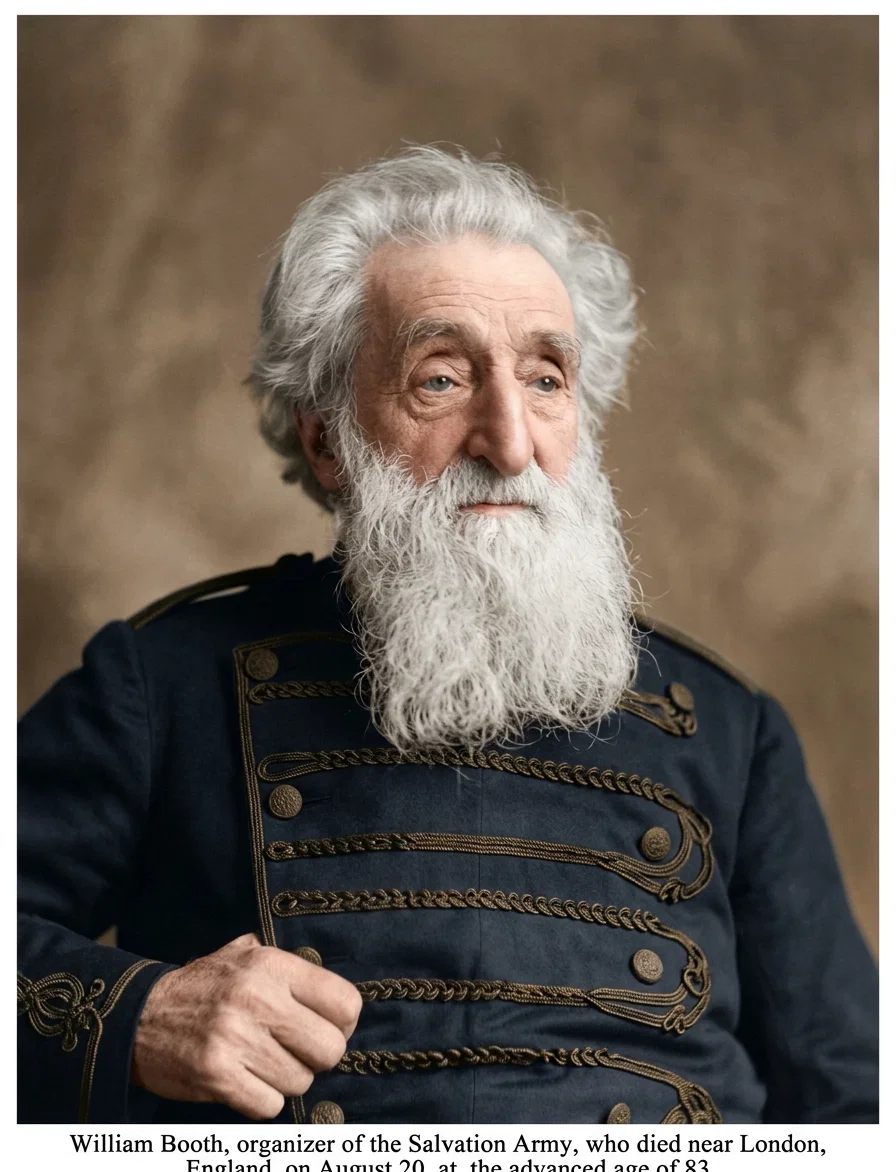
William Booth, organizer of the Salvation Army, who died near London, England, on August 20, at the advanced age of 83
but under the influence of this powerful organization, they might request the people of Massachusetts to stop selling liquor on Good Friday. It would be a new departure in legislation. But this illustrates how one demand follows another when once a state enters upon the work of passing laws which deal with religion. After legislating in regard to Good Friday, the next logical step would be to pass a law requesting all the people to attend mass and go to confessional.
The strength of this great organization, and the purposes that it has set before itself, ought to arouse the people of this country to the danger that is now threatening American institutions and American liberties. Whatever the Roman Church desires done in America, this organization has pledged itself to see accomplished; and it ought to be patent to every American citizen that the constitution of the Roman hierarchy and the Constitution of the United States of America have nothing in common. That being a fact, the dangers that are now threatening American institutions are greater and more far-reaching than any others that have ever yet confronted this nation. The hopelessness of the situation lies in the apathy of professed Protestantism, and in its willingness to be used in many instances to help that church in the accomplishment of her ambition. That Protestants are doing this, was declared many times over during this convention. When America, with her great influence, leads the world towards the Tiber, the consummation of the Christian's hope is not far off.
C. M. SNOW.
The "Vice Trust"
THE "white slave traffic" is a term that has been but very recently coined. A later expression still is the "vice trust." Both expressions refer to degraded and degrading vices that attack the heart of the civilized world.
As every one knows, the "white slave" is a young girl that has been stolen in much the same way that Negroes formerly were stolen from Africa, only there is this difference: The Negro was taken to some plantation or other place of physical servitude, where he had to work under a taskmaster; but the young girl is taken to a city and sold to a mistress who compels her to lead the life of a prostitute. Of all the awful things that men have conceived, it would seem that this one goes to the bottom of the pit of degradation and heartless wickedness, not to speak of cruelty.
But the "vice trust" presents another phase of the modern systems of iniquity. This is the age of trusts. It is the time when men seek for personal gain, to get control of various lines of business and manufacture, so that they may "corner" the profits. And in following the promptings to form "trusts," even the vices and crimes of men have not been overlooked.
When we boast of our great civilization, it should cause the perspiration of shame to stand out on our faces as we call to mind the vice-laden element that has such a foothold in all the great cities of the world; and we should further shudder at the thought that these traffickers in vice have become so entrenched that they are to an alarming extent in league with unprincipled officers of the law. Through this source, the "vice trust" has become so strong and brazen that it assumes to control the operations of wickedness in such a way as to bring the highest possible gain to the few who are in command.
How appalling it is to think that vice has reached such awful depths in this time that it is absolutely unsafe for a young girl, particularly if she be in a large city, to go out without a strong protector! Every day's news tell of the young girls that are stolen, and in many cases they are never heard from again. They are taken to brothels, and after four or five years in a life of enforced shame, they are passed on to unknown graves. Thousands and thousands of the young women of the nations are called for each year by this "vice trust," in order that those in command may thrive on the gains of iniquity.
There is no denying that these conditions exist. The evidence is too abundant and too well known to require any proof. But what do such things signify? What do they tell concerning our civilization that we have held forth with so much pride? Will not the following scripture serve to give us some light upon the subject?
"As it was in the days of Noah, so shall it be also in the days of the Son of Man. . . . Likewise also as it was in the days of Lot; they did eat, they drank, they bought, they sold, they planted, they builded; but the same day that Lot went out of Sodom it rained fire and brimstone from heaven, and destroyed them all. Even thus shall it be in the day when the Son of Man is revealed. . . . I tell you, in that night there shall be two men in one bed; the one shall be taken, and the other shall be left. Two women shall be grinding together; the one shall be taken, and the other left. Two men shall be in the field; the one shall be taken, and the other left." Luke 17:26-36.
This scripture manifestly brings to view judgment scenes when "one shall be taken, and the other left." And in this time when "the Son of Man is revealed," we are told that it will be as it was in the days of Lot. Lot lived in Sodom in the most corrupt time of its history, and barely got out through the urging of the angels, in time to save himself from going down when the city was destroyed for its wickedness by the judgment of Jehovah. "Sodom," the city of Lot's dwelling-place, has come to be a synonym of the worst conditions of vice that can prevail.
Are the conditions of this time to teach us that the whole world is rapidly becoming a modern Sodom, and that it is rapidly getting ready for its plunge into the great lake of fire that is so abundantly described in the sacred Book? The God of righteousness and truth, He who overthrew the ancient Sodom, can not suffer the things that are making the "vice trust" of to-day, to go much farther.
— ★ ★ —
Swimming Across San Francisco Bay
A young woman, Miss Nell Schmidt, living in Alameda, California, on August 12 performed the remarkable feat of swimming across San Francisco Bay, a distance of about eight miles, in three hours and six minutes. She battled against the outgoing tide, and other strong currents that were set up by passing ferries and the like, which shows the remarkable physical endurance of this athletic young woman.
HOME AND FIRESIDE
By Delwin Rees Buckner
The Grandest City Park
By Delwin Rees Buckner
Each pleasure-loving city has her park,
With flowers and grass a growing everywhere
In sun-filled summer hours, but bleak and bare
In days of snow, and dismal after dark,
E'en where lone sentry lamps launch forth a spark
Of light, or fireflies flitting through the air,
Or orbs that glow within the grated lair
Of some bloodthirsty, savage jungle shark.
But all the parks of earth can not compare
With that above, in New Jerusalem,
Where night nor winter ever have been seen,
Whose avenues are paved with gold; and there
Clear waters, sparkling like the brightest gem,
Bathe tree trunks, topped with foliage ever green.