The Youth’s Instructor, Vol. 64, No. 32.

Women Doctors Licensed to Practice in Peking
Earlier text: All Things Common

The United States in Prophecy

1. “Another Beast.” Rev. 13:11. a. “Had two horns like a lamb.” b. “Spake as a dragon.” c. Exercises great power. Verse 12. d. Deceives men. Verse 14, first part. 2. “An Image to the Beast.” Verse 14, last part. a. Receives life and power. Verse 15.
  1. The Mark of the Beast. Verses 16, 17.
  2. Victory. Rev. 14:1-3; 15:2.
NOTE.—The helps given below are from the new “Bible Readings for the Home Circle,” pp. 270-276. Those having this book will find other helpful material there for the preparation of this study. See also “Thoughts on Daniel and the Revelation,” pp. 527-579.

Suggestive Helps

THE DEADLY WOUND.—This wound was inflicted upon the papal head of this beast when the French, in 1798, entered Rome, and took the Pope prisoner, and for a time, it seemed, abolished the Papacy. But in 1800 another Pope was placed upon the papal throne, and the deadly wound began to be healed. Temporal dominion was taken away from the Papacy in 1870, but its power and influence among the nations have been increasing since then nevertheless. “In that year,” says Mr. Guinness in his work “Romanism and the Reformation,” p. 156, “the Papacy assumed the highest exaltation to which it could aspire, that of infallibility.” To such a position of influence over the nations is the Papacy finally to attain that just before her complete overthrow and destruction she will say, “I sit a queen, and am no widow, and shall see no sorrow.” Rev. 18:7. See Isa. 47:7-15; Rev. 17:18.
ANOTHER BEAST.—The previous beast came up out of the “sea,” which indicates its rise among the peoples and nations of the world then in existence (Rev. 17:15); while this one comes up out of the “earth.” This would indicate that the latter beast would arise where there had not before been “peoples, and multitudes, and nations, and tongues.” In 1798, when the papal power received its deadly wound, the government of the United States, located in the Western continent, was the only great and independent nation then coming into prominence in territory not previously occupied by peoples, multitudes, and nations. Only nine years preceding this (1789), the United States adopted its national Constitution.
To what extent the United States has “come up” since its rise as a nation may be seen from the following facts: The conceded domain of the United States, in 1776, at the time of the adoption of the Declaration of Independence, was only half a million square miles; in 1913 its area, including all of its possessions, amounted to 3,742,155 square miles. Its population then was only three million; now it is over one hundred million. Its total wealth is now estimated to be $130,000,000,000, making it the richest nation in the world; its commerce is world-wide; and as a military power it has for years been ranked among the “great powers” of the world.
TWO HORNS LIKE A LAMB.—How appropriately these lamblike features represent this youthful nation, [the first to be] founded on the great Christian principles of civil and religious freedom. The two horns may well symbolize these two fundamental principles of the United States government.
SPEAKS AS A DRAGON.—The voice of the dragon is the voice of intolerance and persecution. This indicates that this nation, which for over a century has stood as a beacon light of liberty to all the world, will repudiate its mild and lamblike professions of civil and religious liberty, and become a persecuting power. This is why, in Rev. 19:20, it is called the “false prophet.” Though, as Bancroft says, “chief heir of the Reformation in its purest form,” it will repudiate Reformation principles.
EXERCISES GREAT POWER.—The “first beast before him” (papal Rome) exercised the power of persecuting and putting to death all who differed from it in religious matters. The only way the earth can be made to worship is by causing work to cease on it through voluntary or enforced rest, or Sabbath keeping. “For as long as she [the land] lay desolate she kept sabbath.” 2 Chron. 36:21. Enforced Sunday observance is evidently implied here.
AN IMAGE TO THE BEAST.—The beast “which had the wound by a sword, and did live,” is the Papacy. That was a church clothed with the civil power. In other words, it was a union of church and state, and enforced its religious dogmas by the civil power, under pain of confiscation of goods, imprisonment, and death. An image to this beast would be another ecclesiastical organization clothed with civil power—another union of church and state—to enforce religious dogmas by law.
Large and influential organizations, such as the National Reform Association, the International Reform Bureau, the Lord’s Day Alliance of the United States, and the Federal Council of the Churches of Christ in America, have been formed, by professed Protestants, and for years have been persistently working to that end. Many Roman Catholic societies recently formed in the United States, such as the Knights of Columbus and the American Federation of Catholic Societies, are looking to a like end—that of making America Catholic.
The movement to close the post offices in the United States on Sunday by law was inaugurated by the Lord’s Day Alliance of the United States, a Protestant organization. A national law closing all first- and second-class post offices on Sunday was secured Aug. 24, 1912.
The following resolution was adopted by the Boston Archdiocesan Federation of Catholic Societies:— “We are unalterably opposed to any relaxation of the Sunday laws. Sunday is a day of rest to be devoted to the praise and service of God. We hold the safest public policy at present is to adhere to the rigid observance of the laws now safeguarding the sanctity of the Lord’s day.”—Boston Pilot, official organ of Cardinal O’Connell, March 16, 1912.

With Our Missionary Volunteers Everywhere

NEW MEXICO has organized a conference Missionary Volunteer Society with sixteen members.
Brother Henriques has organized a Standard of Attainment class in the church at Port of Spain, Trinidad.
Sixty sets of Junior and Senior Reading Course books were sold on the Massachusetts camp ground. On the Colorado camp ground fifty-five sets were sold.
The Oklahoma City Missionary Volunteer Society is planning to use one hundred Signs of the Times every month for distribution and then to follow up that work with regular correspondence. Several of the young people there have decided to sell our magazines this summer to earn a scholarship. One thousand copies of the Present Truth Series are being scattered in the city every month by the society. What our Young People's Missionary Volunteer Societies need is leaders who have a heart to work for the Saviour, and this is what that society has.
Four hundred Morning Watch Calendars were sold on the Wisconsin camp ground. If you haven't a Morning Watch Calendar for 1916, get one. The texts for even one week are worth more than the price. Send five cents to your tract society for a calendar.

The Bible Year

Assignment for August 13 to 19

August 13: Habakkuk. Obadiah.
August 14: Ezekiel 1 to 3.
August 15: Ezekiel 4 to 6.
August 16: Ezekiel 7 to 9.
August 17: Ezekiel 10 to 13.
August 18: Ezekiel 14 to 16.
August 19: Ezekiel 17 to 19.
For helps and suggestions on this assignment, see the Review for August 10.

VIII — Prison Doors Opened

(August 19)
LESSON SCRIPTURE: Acts 5:12-28.
MEMORY VERSE: “The angel of the Lord encampeth round about them that fear him, and delivereth them.” Ps. 34:7.

Questions

  1. What was wrought by the Spirit through the apostles? Where did the believers meet for worship? Acts 5:12.
  2. What did some not dare to do? What is said of the people? Verse 13. 1
  3. How many were added to the Lord? Verse 14.
  4. What was done for those who were sick? Verse 15.
  5. Who were brought to Jerusalem? How many were healed? Verse 16.
  6. How did the work done by the Holy Spirit affect the priests? Verse 17. 2
  7. What was the essential difference in belief between the Sadducees and Pharisees? 3 Why did the Sadducees oppose Jesus? 4
  8. What did these men do to the apostles? Verse 18.
  9. Who visited them during the night? How were they released? Verse 19.
  10. What were the apostles told to do? Verse 20.
  11. What had men commanded them? Acts 4:18. 5
  12. Which did the apostles obey? For whom did the council send when its members assembled? Acts 5:21. 6
  13. What did the officers find at the prison? Verse 22.
  14. What report did they bring back to the council? Verse 23.
  15. How did the priests feel when they heard what had been done? Verse 24.
  16. What message was then brought? Verse 25.
  17. What was done with the apostles? Why were they not treated roughly? Verse 26. 7
  18. What question was asked them? What did the priests say the apostles had done? Of what did they further accuse them? Verse 28. 8

Questions for Diligent Students

  1. Tell how our work is like that of the apostles.
  2. What preparation do we need before we shall be ready for persecution as they were?

Why He Could Give

“A MERCHANT of St. Petersburg at his own cost supported several native missionaries in India, and gave liberally to the cause of Christ at home. On being asked how he could afford to do it, he replied:— ‘Before my conversion, when I served the world and self, I did it on a grand scale and at the most lavish expense. And when God, by his grace, called me out of darkness, I resolved that Christ and his cause should have more than I had ever spent for the world. And as to giving so much, it is God who enables me to do it; for at my conversion I solemnly promised that I would give to his cause a fixed proportion of all that my business brought in to me, and every year since I made that promise it has brought me in about double what it did the year before, so that I easily can, as I do, double my gifts for his service.’ And so good old John Bunyan tells us,—
‘A man there was, some called him mad, The more he gave, the more he had.’
And there are truth and instruction in the inscription on the Italian tombstone, ‘What I gave away I saved, what I spent I used, what I kept I lost.’ ‘Giving to the Lord,’ says another, ‘is but transporting our goods to a higher floor.’ And, says Dr. Barrow, ‘In defiance of all the torture and malice and might of the world, the liberal man will ever be rich, for God’s providence is his estate, God’s wisdom and power his defense, God’s love and favor his reward, and God’s word his security.’”

Moody's Northfield Address: Consecrate and Concentrate

“Moody’s address to the graduates at Northfield once consisted of these two words: ‘Consecrate and Concentrate,’ and he added a motto that he saw in England:—
“‘Do all the good you can, To all the people you can, In all the ways you can, As long as ever you can.’”

Rich Christians and the Christmas Box

It is a shame for a rich Christian to be like a Christmas box, that receives all, and out of which nothing can be got till it is broken in pieces.— John Hall, D. D.

“Make Me Stop Me”

A LITTLE fellow who cried easily over slight injuries and grievances was told that he was getting too big to cry about little things; that he was becoming a regular cry baby. One day after this remonstrance when the boy was working energetically at his usual pastime, he instantly stopped crying. What he had been told about his being too large to cry came to his mind and his tears were dissipated. So pleased was he at the sudden dryness that he rushed to his mother and said, “Mother, I don’t need to cry! I can make me stop me.”
The youthful weeper had discovered the power of self-control, the power of me to stop me. Revelations of such power always inspire and strengthen, while evidences of a lack of self-control cause discouragement and failure.
The power of me to control or stop me is the basis of correct character building. If the me is allowed to do its own bidding without direction, the result is very likely to be wilfulness, degeneracy, and criminality. If the me is directed and controlled by the higher self, strength and beauty of character result.
Human self-control alone produces human beauty; but when humanity submissively appeals to divinity to control and direct the life, a beauty of soul lightened by divinity itself results. The Christian’s effort at self-control is but the soul’s prayer to Heaven, “Establish thou the beauty of the Lord our God upon us;” and its answer always brings a grace and sweetness, a strength and poise of character, that exceed any manifestations of mere human or worldly beauty.
As young people, then, let us cultivate the habit of self-control. Let us find out that we can “make me stop me,” and let us attain to that perfect control possible only through Him who is altogether lovely. Then shall heaven’s beauty be ours.

Too Far East Is West

“A JEST, unduly pushed, becomes no jest. Remember always, too far east is west.”

Steadfast

A CHINESE boy in Singapore had arranged to be baptized just after he was graduated. But he won a scholarship of $500 a year for four years in Hongkong University, and one of the conditions was that the student be a Confucianist. The youth was poor and the temptation was great to say nothing and defer his baptism until he had finished his course. But, finally, he stood at the altar for Christian baptism at the appointed time.
The youth who stood next in rank was a Confucianist, but he was so much impressed by his friend's decision, that he said, “If Christianity is worth so much to my classmate, it can be worth no less to me. I will be a Christian.”
And he also refused the scholarship and was baptized.— Epworth Herald.

On Having and Being Friends

THE president of one of the largest banks of New York City told the writer that after he had served for several years as an office boy in the bank over which he now presides, the then president called him into his office one day and said, “I want you to come into my office and be with me.” The young man replied, “But what do you want me to do?” “Never mind that,” said the president; “you will learn about that soon. I just want you to be in here with me.” “That was the most memorable moment of my life,” said the great banker. “Being with that man made me all that I am today.”
Cyril Bailey, a popular tutor at Oxford, was asked his object as a teacher of English schoolboys. He answered thoughtfully: “I don’t know that I have any object. I just like to be with these students. I get a whole lot from being with them, and I hope that they get something from being with me.”
Did you ever think of what it means simply to be with the right kind of people? No one is useless, according to Robert Louis Stevenson, so long as he has a friend. Try to imagine what the disciples received by being with Jesus. Are we true friends to our friends? Do they come to us in their sorrows, and depend upon us to share their joys? A famous man once wrote to a man in trouble: “I thought you considered me your friend. And you have not asked me to share your sorrow. I could at least come and be near you in your trial.”— The Christian Herald.

Get Them Now

READING COURSE DAY comes during week ending September 2. The society programs for that week refer to the Reading Course books for material. The books should be obtained at once for the society library.
MISSIONARY VOLUNTEER DEPARTMENT.

BURTON CASTLE

Peace

ABOVE the din of cannon's roar A "still small voice" we hear, Proclaiming peace to troubled hearts, In whispered tones, but clear.
Our Lord was calm amid the storm; His comrades were afraid: He said, "Be still," to troubled waves, And promptly they obeyed.
Sometimes we cry, as did those men, "We perish, dost thou care?" And in our agony of soul We're almost in despair.
But quickly Jesus' name we take In every vexing hour, And all our trials smaller grow Before its mighty power.

BURTON CASTLE

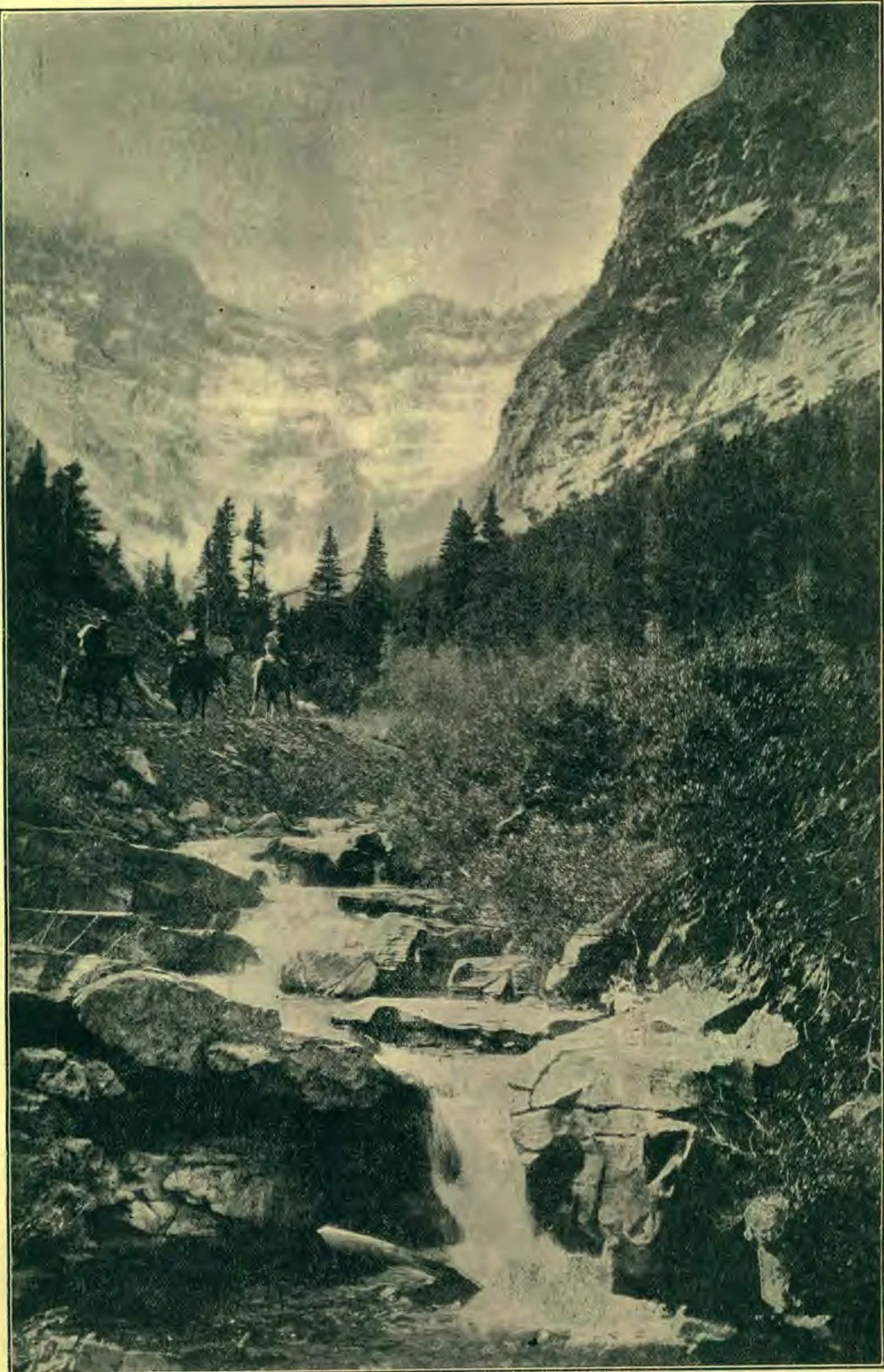
THE RIVER KNOWS THE WAY TO THE SEA.—Emerson.
THE EARLY MORNING OFTEN FOUND JESUS IN SOME SECLUDED PLACE, MEDITATING, SEARCHING THE SCRIPTURES, OR IN PRAYER.

You have reached the end of this edition.

The Youth’s Instructor · Aug 8, 1916