Your ShelfYour Projects

Signs of the Times, Vol. 37, No. 37.

Fundamental Gospel Facts
Earlier text: Fundamental Gospel Facts

Let Aged People Work

By Mrs. Emma Hildreth Adams

ONE day early last spring I called upon a dear friend resident in one of the cities of Southern California, whom I had not seen for many months.
The day was charming, luring one into the balmy air, into the matchless sunlight, into the soft, humming breeze.
Glad flowers talked animatedly of joy, cheer, and life all the distance from the car line to the close shorn lawn in front of the residence I sought.
I had taken a car ride of twenty miles or more expressly for the interview.
As I approached the dwelling I observed my friend seated upon the veranda, unoccupied, and apparently just passing away the time.
To my surprise she did not recognize me as I stepped upon the portico and greeted her in the old-time unceremonious manner, calling her by her loved maiden name.
For an instant she searched the little alcoves of her memory for my name and photograph. Finding them, she sprang upon her feet and welcomed me graciously, as had been her custom through twenty-seven eventful years.
Yet in the entire movement, in the expression of her eyes, in the aspect of her countenance, was written an announcement which surprised me, shocked me, gave me heartache.
Instantly I read therein a grievous story. Its sad meaning could not evade me. Some wily, subtle force was busy pilfering her mental bank-account. Had there come a beginning of the end from which there is never escape?
I could not assent to the painful suggestion. There is only an apparent slipping away of the life forces, I thought, not a real surrender.
True, her eighty-fourth birthday was speeding on, but she is in excellent physical health. Besides, being herself financially independent, she is sheltered, gladly, in the home of devoted and wealthy friends, whose highest desire is to render her passing years care-free and happy.
Wherein, then, lies her distinct loss of self-possession, the checking off, too soon, the total achievement of duty upon the earth, the yielding up, too soon, the priceless treasure of life, the smothering of a sweet, wholesome influence exerted through two thirds of a century?
At a point in our conversation, during the day, when seated alone together, and while speaking of the remarkable activity of a dear friend, at just her stage of life's journey, she remarked, with an air sad and regretful,
"My relatives here will not let me work."
Here, then, was the solution of the enigma. Because of long lack of needful activity — both mental and physical — retrogression had set in with ardor, accomplishing a clear decline in will power, a slow fading out of thought and ideas. There had started a gradual movement of the whole being back to the dust.
It was a saddening and most regrettable situation. Was it unavoidable? In her case, yes.
Judging from other cases carefully observed by the writer, had the woman, through all the years she had been relieved of labor, kept her really fine powers of mind and body in active exercise, in worthy, lawful lines of work — and she would have attempted no other — there might not now loom up threateningly above her horizon this unwelcome dissolution of the life forces, this irksome submission to incapacity, this "dying, thou shalt die."
That was a most gracious and merciful decree which God voiced to Adam immediately after his momentous transgression, Gen. 3:19: "In the sweat of thy face shalt thou eat bread, till thou return unto the ground." It was an edict full of tender pity, and uttered for man's highest good.
With sin launched upon the earth, imagine the condition of human society, during the past 6,000 years, had compulsion to labor, necessity for toil, been excluded. The Creator alone could conceive the black results.
It looks as tho next to redemption from sin — the obligation to labor, the being forced to toil for bread, clothing, and shelter, constitutes the richest blessing possessed by man.
Simple failure rightly to exercise our endowments, our faculties, until we "return to the ground," is to allow them to drift into decay, to merge into emptiness. So doing, we ourselves impoverish our gifts; we rob ourselves of the fine joy which accrues from their steady, loyal employment.
But the subject has another side. Our abilities are not our own. We do not provide them. They are equipments furnished us by God Himself. They are His powers, His forces, given to be employed until He recalls them. If we do not use them, up to the intended and just limit, what ensues? What happened to that servant who hid his one talent — doubtless of fine quality — "in the earth"? Matt. 25: 24-29.
The opinion is too common that, when men and women have attained about sixty years, they have really performed the required stunt, or task, in all the labor lines of life, and that they are entitled to honorable discharge from the fields in which they have wrought.
Very few of such persons would welcome or readily accept Dr. Osler's prescription for their cases. Yet, somehow, there springs in their hearts a feeling that injustice has been inflicted, if there opens to them no door of escape from wearisome toil.
It is quite certain that, in many instances, life might be lengthened by several years, and might be brightened and sweetened and blessed inexpressibly, by pursuing steadfastly some laudable line of endeavor until the divine Master should announce: It is enough. From henceforth a crown of life awaits thee.
History furnishes many an instance in which both men and women have accomplished their greatest tasks, their noblest achievements, their worthiest life-work — especially in mental lines — after the sixty-year limit, and thus have added munificently to the world's betterment.
Right work, suitable labor, in just amounts, is remedial. It often fends off disease, ever watching to invade a system inert, lazy, needing exercise. Helpful work is a loyal sentinel at the door of health and life.
This article does not overlook the sad fact that many aged people, through physical disability, through lack of opportune circumstances, through want of needful training, are compelled to sit with quiet hands, when they would gladly have part in accomplishing the world's vast sum of labor.
—★★—

Our Friend in Affliction

By Delwin Rees Buckner
THE sun appears to have a golden band That binds the whirling earth to his decrees. In summer, shining through the blossomed trees, He draws the singing birds from Egypt's land; But gone, they go again to Nilo's sand. A cloud-boat, floating in the lazy breeze, Puts out the sun; whereon my shadow flees In terror from the terrace where I stand. Flower petals close when night draws on apace. And so do friends sometimes close up their hearts To pity, when they see our sinking sun Of fair prosperity go down. One Face, However, never hides; one Bosom starts With sorrow when our evening has begun.
Esmeraldas, Ecuador.

Earthly Dust and Eternal Glory

OBJECTS close to the eye shut out much larger objects on the horizon; and splendors born only of the earth eclipse the stars. So a man sometimes covers up the entire disk of eternity with a dollar, and quenches transcendent glories with a little shining dust.—E. H. Chapin.

Versions of the Bible

Four hundred years ago, including detached portions as well as complete transcripts, the whole world did not contain more than a few thousand copies of the Word of God; and, altho they were rapidly multiplied by the art of printing, at the beginning of the present century it is supposed that the entire amount fell short of four millions of copies. Since then the increase is amazing. The Bible Society alone has called into existence well-nigh fifty millions of copies, in one hundred and forty-eight languages or dialects, of which one hundred and twenty-one are translations never before printed. Many of these languages were never reduced to rule, had no grammar, no lexicon, had never been seen in print, had never been written down, till Bible translators undertook the arduous task; and altogether it may be presumed that the Gospel story can now be read in the speech of three fourths of our earth's inhabitants.—Dr. J. Hamilton.

"Out of Babylon to Zion"

XXIV. The Closing Work — The True Shepherd

Out of Babylon to Zion. By Prof. Lucas A. Reed
IN the tenth chapter of Zechariah we have words that, while they may have had some bearing in those olden times, refer more particularly to the closing scenes of this world's history. It is the time of the great rain when God's people are to ask for showers of the Spirit. Verse 1. It is a time of false prophets and false teachings. Verse 2. It is a time when God is about to destroy the wicked, when the mighty conquering Christ shall come forth to finish the great controversy between sin and righteousness. Verses 3-5. Then it is that God will gather His people; gathering them in the resurrection from the grave as in a lesser way He had gathered them as captives out of every nation. They pass through a more than Egyptian affliction. Passing down through the scenes of the last days is likened to the Israelites' passing through the great sea of affliction when they came out from Egypt. But the pride of all the nations shall be brought down (verse 11), and God will strengthen His people, and they shall walk up and down in His name, saith the Lord (verse 12).
There were those in Israel who attempted to lead God's people, but who were untrue to their work. These were said to sell and to slay their sheep. In the midst of this prophecy comes one concerning the true Shepherd. It is not only a prophecy of Christ and His work, but also a prophecy that involves the destiny of the Jews.
"And I will feed the flock of slaughter, even you, O poor of the flock. And I took unto me two staves; the one I called Beauty, and the other I called Bands; and I fed the flock. Three shepherds also I cut off in one month; and my soul loathed them, and their soul also abhorred me." Zech. 11: 7, 8.
A month in prophetic time covers thirty years; and from the first miraculous manifestation of Christ to the Jews by His wonderful birth in the manger, announced to the shepherds by the angels and to the wise men by the guiding star — from this first supernatural revelation of Christ until His second miraculous manifestation as Messiah when at the river Jordan He was baptized and by the Holy Spirit anointed, we have thirty years, or one prophetic month. At this time He began at once as a prophet. He became Priest after His ascension to heaven, and He will become King at the second advent. But at the anointing the touch was given that involved all of these, and that eventually cut them all off from Israel.
The last prophet of Israel already had spoken; the last king had disappeared years before; only the priest remained, the last one of the three shepherds. But when Christ was anointed it meant as well the cutting off of this order for the Jews; and so in the life of Christ, within the short period of thirty years, came the events which removed the three human shepherds of the Jews, their prophets, their priests, and their kings.
Just as David was king in reality from the time of his anointing even tho he did not take the throne till later, so Christ was Prophet, Priest, and King when by the river Jordan the Holy Spirit descended upon Him like a dove, and God from heaven acknowledged Him as His Son and as the newly appointed ruler of His people.
If the Jews had accepted the Messiah, they would have had prophets, priests, and kings, just as now Christians have all three of these in Him. Rev. 1: 5, 6. 1 Cor. 12: 28; Eph. 4: 11.
"Then said I, I will not feed you: that that dieth, let it die; and that that is to be cut off, let it be cut off; and let the rest eat every one the flesh of another." Verse 9.
All the terrible calamities prophesied in this ninth verse were fulfilled by the Jews when Titus took the city, and the terrible trouble has been perpetuated through the ages since then. In many nations of Europe the Jews have repeated the fate which they met in A.D. 70, and even yet in far-off Russia they experience still something of the bitterness of their evil fruits.
"And I took my staff, even Beauty, and cut it asunder, that I might break my covenant which I had made with all the people. And it was broken in that day: and so the poor of the flock that waited upon me knew that it was the word of the Lord." Verses 10, 11.
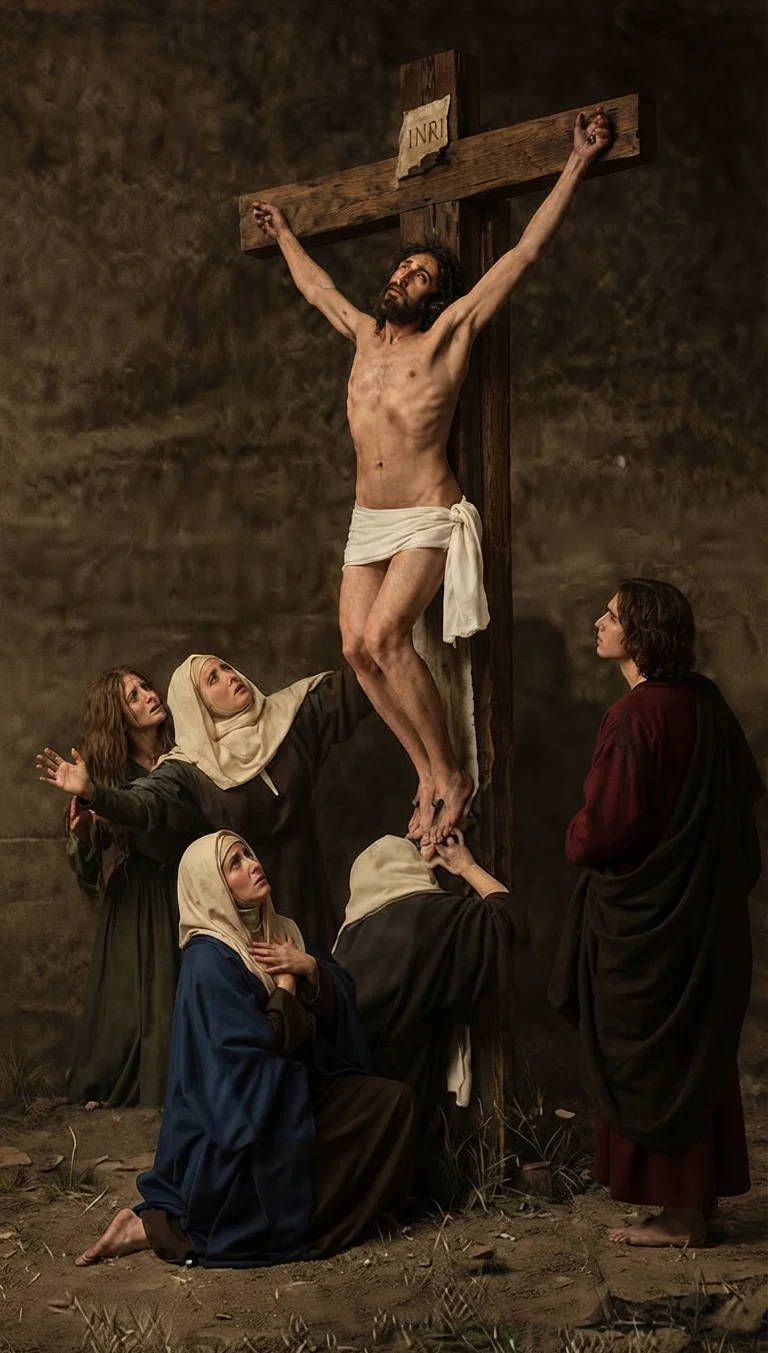
Here we have the crucifixion of Christ foretold. The covenant of God with the children of Israel was now to terminate because of their failure to fulfil its conditions; but there were to be those among the Israelites who would understand the termination of this covenant, and who would understand it to be a fulfilment of the prophetic Word.
These rejoice in a new covenant and find that what terminated with Israel as a nation is continued in grander form in Jesus Christ.
Already we have seen the reference to the expressions "two staves," "Beauty and Bands." In the Bible a staff, when spoken of in connection with nations, has reference to their support or strength. See Jer. 48: 17; Isa. 14: 4, 5. Therefore when the two staves are broken the support hitherto enjoyed by the nation is to be withdrawn. In Ps. 90: 17 the beauty of God upon us establishes the work of our hands; and these should always go together. In fact they do go together. God's favor gives prosperity, just as in Prov. 3: 17 pleasantness and peace are mentioned together. But this path of pleasantness and peace was about to fail them. God's favor was to be withdrawn when they rejected Christ; and the prosperity which had been theirs for ages as a direct result of that favor, was to fail. See how wonderfully the nations had spared the Jews under Nebuchadnezzar, under Cyrus, Darius, Alexander, Antiochus, and Pompey; and when Christ came, had He been received, the favor and the prosperity would have been still greater. So God had promised that Jerusalem would stand forever; it would have become the capital of the world.
Think, too, how marvelously God's favor was manifested to this nation, how wonderfully they were preserved through the years with all their records, their usages, and their institutions, until the Son of David came; but when Christ had come and been rejected, not even Titus could prevent the destruction of the temple. Christ had foretold that one stone should not be left upon another; and the great general of the Romans, when he once had surrounded the city, had given word to his soldiers to spare that wonderful structure, but true to the Word of the Son of God its ruin was complete. One of the staves of Israel was "the beauty of holiness," or the favor of God which rested upon them.

Consequences of Apostasy

"And I said unto them, If ye think good, give me my price; and if not, forbear. So they weighed for my price thirty pieces of silver. And the Lord said unto me, Cast it unto the potter: a goodly price that I was prized at of them. And I took the thirty pieces of silver, and cast them to the potter in the house of the Lord." Verses 12, 13.
It is hardly necessary to utter any comment upon this verse. It was fulfilled by Judas, who sold his Master for the thirty pieces of silver, the price of an ordinary slave. And when he was appalled at his evil deed, and cast the money back to those who had bribed him, they used this money in purchasing a potter's field.
We have already seen that the first band to be destroyed was Beauty. Verse 10. When the Jews once had forfeited the favor of God which was their real source of strength, the other staff also must fail. Verse 14. That band of brotherhood which existed between Judah and Israel, in other words, the Jews as a nation, were to cease to exist. Their national bond was to be severed. Their brotherhood was to be broken, and so the two staves were cut in sunder. But all of this was due to the Israelites themselves. They first of all forfeited the favor of God by rejecting the beauty of holiness; and remember above all things that Christ is that Beauty of Holiness. He is the Lily of the Valley, the one altogether lovely, chiefest among ten thousand; and the only Beauty of Holiness that can rest upon any one is the beautiful character of Christ. This staff of beauty God's people rejected. It was cut in sunder. Then when once Christ, the Beauty of Holiness, has been rejected, the national bond is also forfeited. So the staff "Bands" is also broken in sunder. Then follows in verses 15-17 a prophecy of the apostasy, the papal supremacy, and the judgment under the seven last plagues upon the false shepherds.

Choose Ye This Day

By FLORA E. WARREN
He stood before God's throne of life and light, The highest one; In beauty chief; arrayed in glory bright As morning's radiant sun. To him God gave great pow'r and wisdom true; Gave knowledge of His will, and pow'r to do; Yes, pow'r to choose the joys of endless life,— Love's matchless pow'r,— Or endless death,—to end sin's weary strife. O, great, decisive hour! Love ever pleads in tender tones and plain, Bidding him choose Love's way—shun selfish gain.
The morning stars together shout Love's praise; Heav'n's angel throng Rejoice to do Him homage all their days, And fill His courts with song. Tho many hearts choose Love their Guide for aye, His heart seeks glory for himself each day.
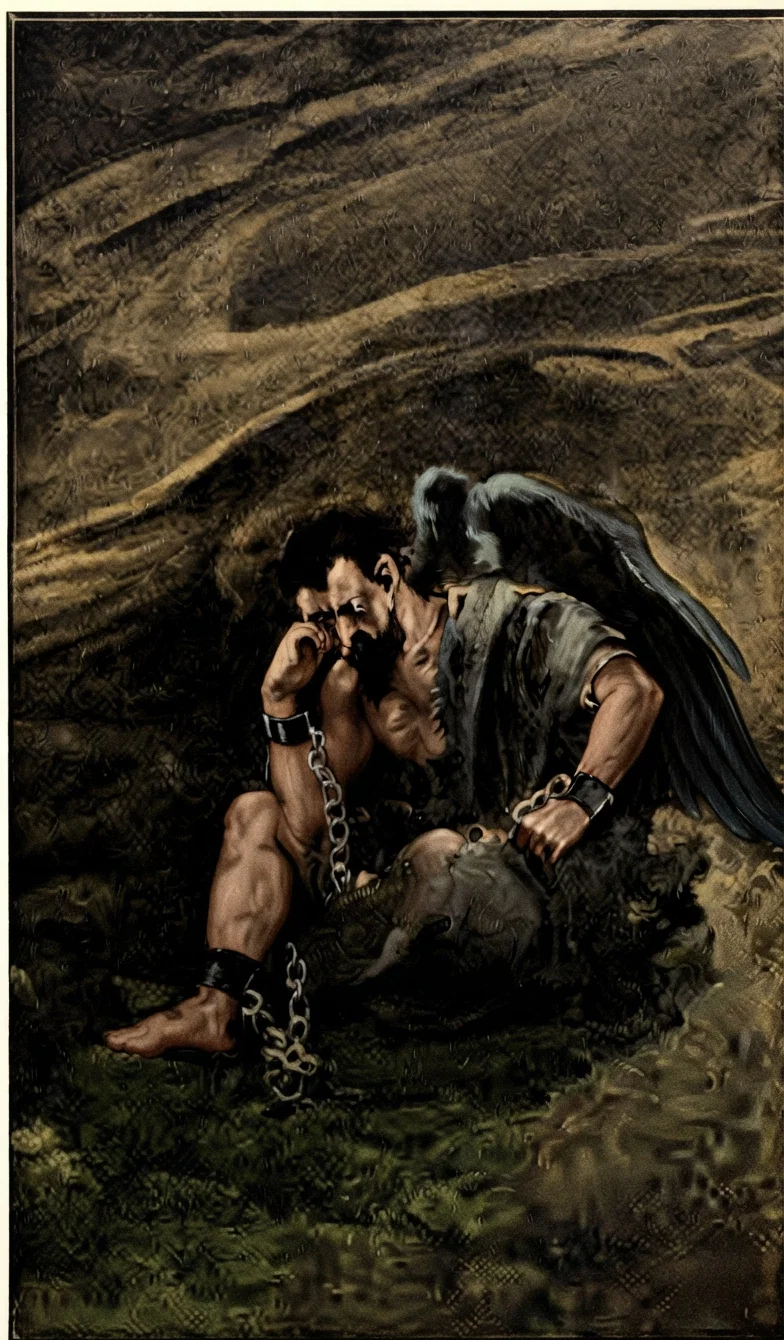
He makes the final choice! O fatal hour! Each year of sin Records the bitterness of selfish power; Self-love is dross and tin. O Lucifer! in vain God gave thee breath: Sin at its close brings only endless death!
E'en God's begotten Son must choose His king. He shares the throne Of Love and Life: before Him angels sing, And claim His will their own. Equal with God; but will He long for more? Jehovah loves His Son. His saints adore.
Will He seek greater glory? selfish gain From sun to sun? Or will He say (tho it bring grief or pain), "Thy will, O God, be done"? All heaven glory in His lasting choice, And praise the name of Love with heart and voice.
He chose Love's service as His chief delight; The Father's Word His law; and truth His shining vesture white. Sweet melodies are heard; Creation's pulse beats high with power rife; Creation's King chose Love—the Source of Life!
He stoops to lift each fallen slave of sin To heights of Love; He dies! that dying souls may choose to win Eternal life above. Herein is Love. Away all sinful strife! Love never ends! 'Tis Life!—eternal Life!
"How art thou fallen from heaven, O Lucifer, son of the morning! . . . Thou hast said in thine heart, . . . I will exalt my throne above the stars of God! . . . I will be like the Most High." Isa. 14:12-14. "Thus saith the Lord God; Thou sealest up the sum, full of wisdom and perfect in beauty. Thou hast been in Eden the Garden of God. Every precious stone was thy covering. . . . Thou wast perfect in thy ways from the day that thou wast created till iniquity was found in thee. . . . I will cast thee to the ground, . . . and never shalt thou be any more." Eze. 28:12-19.
Then come, ye weary ones, who sigh in sin; Christ calls to-day: "If any soul choose endless life to win, I am the Living Way." Make now His choice your own, eternally; Come learn of Him who suffered on the tree.
God seeks not slaves to serve Him every hour, He made men free. He wills that all may know His love and pow'r, That each heart's choice may be Eternal freedom, from sin's bondage free— Free in His Love—the highest liberty.
Choose ye this day, O weary ones, give heed. 'Tis mercy's voice. A little while will Christ for sinners plead. Make now Love's will your choice. To-day is giv'n—to choose the Living Way. Dear soul, where'er you are, choose ye this day.
"Who gave Himself for us, that He might redeem us from all iniquity." Titus 2:14. "Let this mind be in you, which was also in Christ Jesus: who, being in the form of God, thought it not robbery to be equal with God: but made Himself of no reputation, and took upon Him the form of a servant, and was made in the likeness of men: . . . and became obedient unto death, even the death of the cross. Wherefore God also hath highly exalted Him, and given Him a name which is above every name: that at the name of Jesus every knee should bow." Phil. 2:5-9.
Munkacsy
Munkacsy

Studies in Matthew and Luke

Schedule for Week Ending Oct. 1, 1910
Two days are still given to Matthew, closing with the wonderful commission, the promise of our Saviour that He would be with His children always. The last five days of the week are upon Luke, carrying us from the first to the eighth chapter, giving more of a detailed account of the birth of John the Baptist and of our Lord. Very clear Luke is in his particulars. He tells us that he had placed special study upon these things. The expression in the third verse of the first chapter, "from the very first," is rendered by some "from above." That is, he had not only taken particular pains himself, but God had given him special light in regard to these things.
LUKE was better educated in the schools of his time than were the other disciples. He was himself a physician, and medicine had already reached some standing in the world in his day. The fact that he was such is indicated by the Greek that he uses, and the way in which he speaks of diseases is different sometimes from that of the other evangelists. He refers to them as a doctor would.
SOME are troubled between the genealogy of Matthew and the genealogy of Luke. We will have no trouble in understanding the differences between these if we will but consider that the one in Luke gives the genealogy of the family of Mary, tracing our Lord's ancestry back to Adam, showing that His life was given for the race itself. Jesus is called the Son of Joseph, because it is the rule of the Scripture and of the Hebrews to trace ancestry through the male, not through the female. Joseph is called the son of Heli; he is really son-in-law, but as the ancestry came through the male, Heli was his legal father and he was the legal son of Heli. The genealogy in Matthew 1 is traced through Joseph, showing Christ's royal lineage. As He was the reputed Son of Joseph He was heir to the throne; consequently the genealogy does not carry it back farther than the time of Abraham. These genealogies cross at two different points, proving clearly from both sides of Christ's ancestry that Jesus was the Seed of David according to the flesh through Mary, and the successor of David in the royal line, through Joseph.
NOTE the particulars that he gives in the first part of chapter 3, clearly showing that he had no fear whatever regarding his data. He gives the year of the reign of Tiberius C\u00e6sar, tells us who was governor of Judea, who tetrarch of Galilee, who of Iturea and Trachonitis, who of Abilene, and who were high priests. In the latter part of the chapter he gives a genealogy.

Look Out for the Character

It was a worthy reply which the old heathen philosopher made to friends who wished him to investigate and refute certain false charges which had been made against his character. Said he, "I will live so in the future that no one will believe them." The sensible blacksmith believed rightly that he could hammer out a good reputation upon his anvil, before he could restore it by chasing down false reports. It would be much more satisfactory if people would care more to preserve their character than their reputation. Reputation is a very uncertain thing, especially when men try to bolster it up by outward means. But our characters no one can injure but ourselves, and a good reputation is only such a one as is built on a good character.

Tobacco-Using Habit

TOBACCO is an uncleanly, expensive habit. It drains pocketbook and nerves. Most of its users in their sane and serious times heartily hate it, and wish they were forever freed from the weed.
Sometimes there is a feeling on the part of these that it is impossible to break the habit, and there is no question but that it is a hard habit to break. Especially is this true with nervous individuals. There are days sometimes of agony which follow the effort to break away from the habit. Those of a more sluggish, phlegmatic temperament have little trouble if they have the will to break, but we really pity those who are of an intensely nervous temperament and have much to do.
Yet entirely apart from one's will power there is the grace and strength of God. One can receive great help in breaking the habit by taking a course of eliminative treatment at some sanitarium. Hot baths and massage and other means of eliminating the poison from the body will help very materially in overcoming the power of the habit. We know from personal experience with many, many cases, that it is possible to break the habit; and those who have broken from it are very much better because of their victory, and we would plead with our readers who may be enchained by it to break from it. They will live longer, have clearer minds, better, more appreciative appetites, clearer spiritual perception, and what is also another item worthy of consideration, will save much in a financial way. As a matter of pure economy it is worth the struggle. As a matter of mental and spiritual freedom it is really demanded.

Revelation through Christ

THROUGH Christ Jesus came every revelation of truth to the world. Was the truth of God revealed through the seers of ancient times?—It was the Spirit of Christ which was in them that testified. 1 Peter 1:10, 11. He was the Word in the beginning; from the beginning, He is still the Word, because the Word all came through Him. See John 1:1-3; 1 Cor. 8:6.
If Christ had not offered Himself for man, man would have been forever left in the darkness of moral midnight. His sin was revealed in its heinousness, that God's grace might be revealed in its richness and beauty.
God's revelation of His truth to us through Christ, in whatever form or way that truth may come, is a revelation of God's love, and should call forth from our hearts responsive gratitude, love, and faithfulness. Says Jesus, "If ye love Me, keep My commandments," and the result of thus manifesting our love is that He will reveal more light; for He continues, "And I will pray the Father, and He shall give you another Comforter; . . . even the Spirit of truth." John 14:15-17. If we truly believe in Christ, we accept of all His Word.

Voluntary Service

WORK for Christ must be voluntary work; that is, we may compel ourselves, but others can not compel us. Christ "gave Himself for us, that He might redeem us from all iniquity." He says to each one, "My son, give Me thine heart." In other words, "Thou shalt love the Lord thy God with all thy heart, and with all thy soul, and with all thy strength." If we are truly given to God, He will accept us; but the gift implies on our part willing giving for willing service, for willing suffering, for willing sacrifice, for His sake. There may be a struggle with self; it may cost the crucifixion of ease and pleasure. But that love which crucifies is stronger than that which is crucified; so that if our work for Christ is compelled, it will be the love of Christ which constrains us, and that love must first be born within our own hearts. Others, by circumstances, or systems, or through our pride or generosity, may compel us to work, but it will not be work for Christ. Work for Him must be voluntary, or it is not for Him.

Abounding Lawlessness

BEFORE us is a paper which boasts of its optimism; it has now and then some very striking editorials. These editorials many times state the strong, clear, positive truth, which is oftentimes directly contrary to the much more shallow optimistic talks more frequently indulged in. In the last Sunday issue of this daily is a strong editorial regarding the dishonesty that there is in the world, especially in higher and larger finance.
Referring to the sugar trust it speaks of its crimes and of the few little men who are arrested and tried and sent to prison; "all beautifully prompt and businesslike as it should have been," but the great men, the real criminals, were the men who were responsible after all. One class it calls the "little fellows who are employed for the dirty work, the stealing." "They do not want to steal, and they are not particularly well paid for stealing; but they do want to live, and they know if they do not steal, their jobs will not last very long." A little higher than this is another set of men who see that the little thieves steal intelligently; and higher still are the officers and directors of the institution, the real beneficiaries of all the stealings, but masters at the same time of the machinery of dishonesty that is so complicated that it is impossible to convict them.
A law is demanded that shall not only punish the miserable creatures who yield to the blandishments of the greater rogues, but which will punish the men who profit by the stealings. The article says, "Daily we read of corruption in boards of aldermen, in state legislatures, in Congress, and we marvel that men can be so cheap as to sell themselves and their souls for a few paltry dollars;" and then it speaks of the expensive machinery maintained by crooked interests simply for the purpose of manufacturing thieves. These are not isolated facts or local conditions; the matter has become general and wide-spread.

The Great It.

A leading exponent of Spiritism and kindred cults sends out with his portrait the following message, punctuated and capitalized as we find it:
"Behold! Here is Thy Magic Staff: UNDER ALL CIRCUMSTANCES KEEP AN EVEN MIND Take IT Try IT Walk with IT Talk with IT Lean on IT Believe on IT FOREVER."
In other words, it is the worship of self, self-salvation, self-sustenance, self-worship. Self, or self's mind, is the "IT," the capitalized little ego. It is like the "I, I, I, I itself I" of Christian Science. It is the yielding to that far first lie, "Ye shall be as God." Practically, it is lifting oneself by his boot-straps. How much better, "Let this mind be in you, which was also in Christ Jesus."
Continue reading: Affairs in China