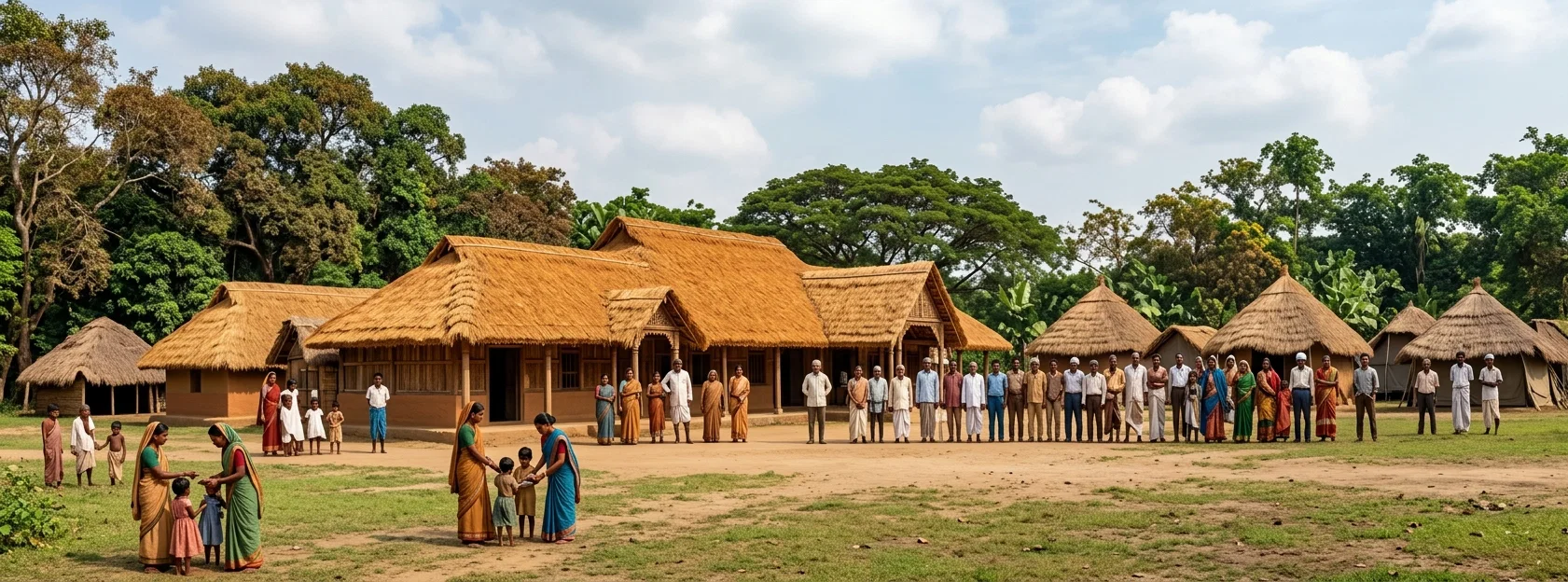
THE dedication day of our new chapel in Singapore brought joy to our hearts. For about three years our work has been hindered, there being no suitable place for our meetings. We could invite the public only to a small room in the mission house, which was not at all suitable in so hot and steamy a climate. From the day of beginning permanent work in this city, over four years ago, the interest has been good. The truth has been gradually finding its way into the hearts of the people of various nationalities, and they have been watching and waiting to see if Seventh-day Adventists really meant to establish their work among them. A mission without a church, and with but few members, has but little weight in convincing an Asiatic of a permanent work.
OUR NEW CHURCH AT SINGAPORE
On Sabbath, August 21, we dedicated the chapel to the Lord. It rejoiced our hearts to see it well filled, and to see several leading people of Singapore present. In the face of the opposition from other missions here, it is a surprise to many to learn that our work has been taking root.
Ever since the opening day, we have continued a series of public meetings every Sabbath afternoon and Sunday night. On Sunday nights the discourses are on the prophecies, while on Sabbath afternoons such subjects as the new birth, righteousness by faith, etc., are given. A synopsis of the Sunday night sermon, with the announcement of the next meeting, is printed and distributed through the city every week. This has had a telling effect already, and we know not where it will end. We almost daily hear encouraging news concerning people who do not come to our meetings, but who read with interest the sermons. We divided to each worker his district, so every week we aim to come in contact with the people and learn their feelings as they read the sermon or come to meetings. Of course it, with our other mission duties, keeps us very busy. “Now, just now, is the time to work in foreign fields.”
Although land and material for building are very high, we trust not a cent too much has been spent in the erection of a church at such an important center as Singapore. The building was planned as economically as possible, and is modest in appearance, yet well built, while the position is excellent. Many have a higher estimation of our purpose here since the church has been built, and it has led them to respect the message we bear to them. The gift of money from our dear people in America and Australia, means more than the buying of land and bricks for a church building: souls are led into the kingdom of God, because a genuine confidence has been begotten in them by our sacrifice of means for the advancement of the peculiar message we bear to them.
Two Sabbaths ago we also had the joy of baptizing eleven dear souls of five different nationalities into “one faith” and “one body,” a work wrought by the “one Spirit” to the praise of God.
Singapore.
Housekeeping
A GIRL can not grow up in a well-ordered home, under the care of a good mother, without unconsciously learning much of the method by which the home is made what it is. A bright girl who is unfortunate enough to be a member of a badly managed household is not utterly out of the way of learning how to do better. The very fact of the discomfort in which she lives often stimulates her to find out the possible improvement of her condition. “How can I ever learn to keep house?” said a young girl, one day, lamenting her peculiar circumstances, which prevented her from gaining any practical knowledge or experience. “Common sense is all you need in housekeeping,” replied the experienced and very successful housekeeper to whom the question was addressed. Common sense, supplemented by the best instruction attainable and by observation, will make housekeeping a pleasure rather than a burden. But all the teaching in the world will not avail without the common sense. In these days of cooking schools and lectures and opportunities of all sorts, it is an easy matter to obtain instruction; yet a few months of actual trial in one's own home teaches far more. Times change, and requirements change with them; people differ in tastes and opinions, and not even the wisest mother can tell what another household than her own will desire.—Good Housekeeping.
Take Life Like a Man
It is a pitiable thing to see a young man whining over his lot in life, and excusing indifference and inaction because of hard luck, or some cruel fate which has put difficulties in his way.
No matter what your environment, or what you may be called upon to go through, face life like a man without whining. Turn your face to the sun, your back to the shadows, and look the world in the face without wincing. Make the most of your situation. See the beauties in it and not the ugly features. This is the way to improve an unfortunate environment.—Success.
The Bengal Division, India
By J. C. Little
J. C. LITTLE
SOMABULA MISSION
I WRITE from the hills, where I am getting a bit of change from the heated plains, and a chance to study. One thing is sure: the time to study the languages of India is immediately upon arrival in the field. We find that our vitality and energy are so much less than when we first arrived that there is a very appreciable difference in our ability to get right down to hard work in language study.
While at Karmatar, in Bengal, I had the privilege of baptizing the first fruits of our efforts there—two from Hinduism, and two from the lower form of heathenism represented by the Santal worship of devils. An encouraging feature is the fact that the candidates were two men and their wives; so this was the baptizing of families, instead of merely the men.
I am glad to give a good report of Brother A. C. Mookerjee's labors in Calcutta. They have been without much public display, consisting mostly of Bible readings with Bengali interested ones, and the preparation of literature. But I believe the time is near when we should permanently organize in Calcutta, getting some regular place of meeting for our Bengali church, and thus affording a hall where we can invite people to hear the truth that we represent. We shall meet, in fact are meeting, the greatest opposition from various churches of Calcutta; and if our work there takes the substantial character it should, it will inspire confidence in the minds of the people that we are not religious nomads, but have a truth that is firmly grounded and will bring permanent results wherever it is established.
There are problems mountain high here. One of the greatest that we shall have to face in the near future is that of education. As our people accept the truth, their children are at once shut out of the mission schools which they have been attending, and they ask us what to do for the education of their young people. I wish we had a young man of some experience in educational work, to put at once into a study of Bengali, with a view to entering school work for us within the next two or three years. It needs a man who is not afraid of difficulties and discouragements; for there would probably be plenty of them.
Out at Gopalgunje, in East Bengal, we have been experimenting during the past year, and it has not been altogether satisfactory from a health standpoint. Therefore, in our board meeting it was voted that Brother A. G. Watson should look about for a more healthful location for the East Bengal headquarters, and in all probability it will mean in the end the erection of a bungalow in the most healthful location that can be found. That whole country is very malarious and sickly, and we must provide a place that will be central and at the same time favorable from other standpoints, such a place, too, that the laborers will be able, with ordinary care, to live free from sickness. The message has been making advancement there, and calls are so many from different places where people have become interested in the truth, that Brother Watson is entirely unable to meet them. His family is now here in Darjeeling for a change, and he is out making a short tour of East Bengal.
About a year ago we had translated and published a pamphlet written by Brother J. L. Shaw on man's creation, fall, and redemption, and we have had our helpers in Bengal out selling this everywhere, and especially in East Bengal. As a result, interests have sprung up everywhere, and people have urged that some one be sent to further instruct them. One of the mission schools near Calcutta has bought a large number of these Bengali pamphlets for use in its primary department; so the truth is going not alone through our own efforts, but also through those of others.
Darjeeling.
WALTER L. FOSTER
By Walter L. Foster
Japan
WALTER L. FOSTER
OUR work in this land during the past years has moved slowly and hard—much of the seed sown seeming to fall on “stony ground.” But now, while some influences are hindering our work in various ways, the people seem more ready to listen and their hearts more susceptible to the simple truths we teach.
God offers every soul an opportunity to be saved. There is a day of opportunity for every individual. Said the Saviour concerning the destruction of Jerusalem and the day of opportunity for the early church: “When ye therefore shall see the abomination of desolation, spoken of by Daniel the prophet, stand in the holy place (whoso readeth, let him understand): then let them which be in Judea flee into the mountains: let him which is on the housetop not come down to take anything out of his house: neither let him which is in the field return back to take his clothes.” The circumstances of the siege and fall of Jerusalem are familiar—how Cestius, with his Roman army, set himself in13array before the walls of the city, evidently intending to begin a siege, but after a few days, for some unknown cause (to the Jews), retired to Scopus, closely followed by the Jews, who harassed his retreat. The next day Cestius, with the Jews in pursuit of him, reached Gibeon. Thence he was compelled to retreat to Beth-horon, where most of his army must have utterly perished. It was not until several years later that Titus suddenly surrounded the city and shut it in on every side.
Like the early church, we are given a little period (we know not how long) in which to give this message,—a little time of prosperity and peace in the land where it was first proclaimed.
During the last General Conference, our hearts were refreshed by the great interest taken in behalf of missions. We anxiously waited to see what would be done for Japan. I am not selfish, brethren; my heart rejoices with yours every time I hear of a worker going out to the Spanish people; I hope the workers in India and China will receive all the help they ask for, and more too; but we are still hoping the much-needed help for Japan will soon come. How long present opportunities will continue we know not. But we know the good Spirit is striving in the hearts of the people. Probably there never was a time in the history of our work in Japan when our literature could be sold so readily—probably never before a time when so many were anxiously inquiring after present truth.
Several large islands, as yet practically unentered, are needing help. Three of these contain a population of no less than twelve million souls. There is also a very interesting little group of small islands—about thirty-six in number—with a population of more than four hundred thousand Loo Chooans; these people are very susceptible to the teachings of Christianity. They have but few missionaries, and no representatives of our work.
It seems to be the general opinion among our believers in the States that Japan is an old field, and has about all the help it needs; but, brethren, such is not the case. Remember this, friends, your service, money, or both, invested in God’s work will give you more joy, and will pay a higher rate of interest, than any farm or bank in this world. “Yes, that is true,” we sometimes say, but quite often we do not act as if we believed it. It seems unreasonable to suppose a single one in the “time of Jacob’s trouble” who has gladly given up all for Christ’s sake and lived upright in his sight will at that time regret a single dollar or a single day of service spent for him. Serious are the times that await us, and how little the time we spend considering whether or not we be “in the faith” and whether our feet during the next few months or years will actually stand on the sea of glass, and our names be numbered with the one hundred forty-four thousand having their Father’s name. Of these, the prophet says: “In their mouth was found no guile: for they are without fault before the throne of God.”
Korea.
On the Way to Bolivia
By OTTO H. SHULZ
OTTO H. SHULZ
At the last General Conference I received an appointment to Bolivia. A few days after the close of the General Conference, I left Washington, where I had been attending the Foreign Mission Seminary, to sail from New York.
On boarding the steamer “Voltaire,” I prayed to God to help me in presenting the truth to the passengers. The greater number were Spaniards, Germans, and Russians. As the ocean was quiet, with the exception of a few days of high seas, I had many opportunities for short talks and Bible readings. Several promised me to start a better life, to give up their bad habits, and to accept Christ. Indeed, the old, old story of the love of Jesus never grows old. One young man, about twenty-four years of age, a preacher of the Baptist denomination, listened very attentively to the Sabbath theme. I gave him many texts to show that the Sabbath is the seal of God, and has been kept during all the ages. Several times I spoke on temperance, religious liberty, and the second coming of Christ. God only knows the seed sown, and what the result will be.
After a few days’ journey, we noticed that the days were shortening, and the heat increasing, as we came nearer to the equator. After we passed the northern hemisphere, hot winds came from the north, and cool breezes and storms arose from the south.
On the eighteenth day we sighted Brazil, with its mountainous country. Bahia was our first stopping-place. It has good parks, full of beautiful royal palms and flowers. The streets are irregular, narrow, dirty, steep, and very crooked. Many of the children are naked, playing with the numerous lazy dogs in the streets. Ninety per cent of the population are Negroes and Indians, and the remainder are white. The people are poor. There are many monks, nuns, and priests. The city has three hundred sixty-five churches.
Three days later, we anchored in the wonderful natural harbor of Rio de Janeiro, with its celebrated Sugar Loaf Mountain. This is a pretty city. It was the seat of the emperor of Brazil in the days before the republic. There are many marble buildings, large and lofty, and parks. The streets are clean, broad, and beautiful, with shade trees. All nationalities are represented in the population. War vessels, sailboats, and steamers of all nations were coming and going.
Santos is a nice little city about two days’ sail south of Rio de Janeiro. Several times it has been depopulated by yellow fever. But the German steamship companies have spent millions of dollars in filling up the swamps, and the city is now flourishing.
Coming to Montevideo, the capital of Uruguay, we noticed signs of greater thrift. Here is order. The city is built in modern style. Had it not been for the palms, I might have thought myself in Berlin.
Crossing the La Plata River one day later, we came to Buenos Aires, which has a population of one hundred twenty thousand. We reached that place just four weeks from the day we left New York City. As Brazil, and Uruguay, and Argentina now have a compulsory military law, many soldiers and officers are seen in the streets. After visiting our printing plant at Florida, near Buenos Aires, I took another boat, going up the Parana River to our school at Diamante. Reaching the school on Sabbath, I received a hearty welcome from Prof. Walton John, Brother C. D. Lude, and others. I am studying the Spanish, in order that I may later engage with other workers in spreading the third angel’s message in Bolivia. I ask your prayers for success and faithfulness in my work in this needy field.
Camerero, Diamante.
Practical Preparation for Missionaries
REV. T. T. MATTHEWS, thirty years a missionary in Madagascar, speaking of the attainments of prospective missionaries, truly says: “The man who is not prepared to be anything and everything — a hewer of wood or a drawer of water — or who has not got above regarding this or that kind of work as beneath his ‘abilities,’ ‘culture,’ or ‘dignity’ to take part in or do, ought not to go to the mission field. Nothing which ought to be done should be regarded as merely secular, and least of all where it is to be a means of extending Christianity. Christianity touches everything, or it touches nothing. My experience fully bears out Dr. Livingstone’s statement that ‘if young missionaries for Africa would spend one half the time they have to spend over Latin verbs, in learning how to make a wheelbarrow, or mend a wagon, it would be infinitely more useful to them afterward.’”
Japanese Figures of Speech
REV. R. E. McALPINE writes in the Christian Recorder: “The Japanese talk in figures of speech; metaphors seem to come natural to them. At the Christian lecture meetings which are so commonly held in this land, it is quite usual for the first speaker to apologize for ‘presuming to appear before this assembly and venturing to defile their ears,’ by some such explanation as the statement that he is merely going before the great speakers who shall follow, in order to ‘brush away the dew from their pathway.’”
The True Missionary
“A MISSIONARY is not merely a dumpy man with a Bible under his arm,” as many good people suppose him to be. The true missionary is a many-sided man, who must be prepared, and will be, to be anything or nothing, to help forward his work, without fear of its being beneath his dignity.—Rev. T. T. Matthews.
Harvest Ingathering for Missions
By A. J. S. Bourdeau
“Thy people offer themselves willingly in the day of thy power, in holy array.” Ps. 110:3, A. R. V.
Sister S. C. Clark, of Nile, N. Y., received ten of the Missions number of the REVIEW. She considered their receipt as providential. Although she is almost blind and can not read, she has already sent in three dollars to the Western New York Conference office as a result of her efforts.
The president of the Wisconsin Conference is greatly encouraged over the prospects for a large Harvest Ingathering collection in that conference. He says: “We are trying to push things as fast as we can. If possible, we hope to do more than we did last year; and I am sure it is possible.”
Mrs. Mary Brown, Auburn, N. Y., an elderly lady who is seldom able to leave her room, says that she considered the receipt of the ten copies of the Missions REVIEW as providential. She has mailed them to ten families, and written a communication to each, asking for a contribution to our foreign work.
Elder C. McReynolds, president of the Wisconsin Conference, writes that one of our sisters at Lancaster, Wis.; recently sent $11.54 to the conference office, which amount she had received through the distribution of ten copies of the Missions REVIEW. She thus received on an average $1.15 for each copy. She is still at work.
Sister Mary A. Field, of Texas, now in her eighty-first year, is actively engaged in the campaign. Her letter just received contains a post-office money-order for four dollars. She says: “I wish it was one hundred dollars instead of four dollars. My work every day is my only support. Pray that I may have strength to work until life’s journey is over.”
One dear old sister in Ohio recently acknowledged the receipt of her ten copies of the Missions number of the REVIEW by sending a post-office money-order for $1.80. She writes that, owing to two sudden deaths in the family, she will be obliged to let other younger people finish her work. How many others more happily situated can report even as good results?
Sister N. E. McIntire, of Texas, accompanies her remittance of $6.50 with this encouraging experience: “I received this amount by sending out two copies of the Missions number of the REVIEW. Five dollars came from a doctor, and $1.50 from a brother who is not in the truth. This is my first experience in this work, and I feel greatly blessed. I want to do more for my Master.” This is a splendid beginning in missionary effort!
Brother R. J. Ladlee, of Illinois, was so pleased with the ten copies of the Missions REVIEW he received that he sat right down and carefully wrapped up a five-dollar gold piece and mailed it to this office.
Mrs. S. Hubbard, of Michigan, sixty-two years of age, writes: “I have distributed seventy copies of the Missions number of the REVIEW, and have received $9.20 for the same. I pray that the Lord will bless this to the good of some poor soul. I have had rich experiences in this work, and received much of the blessing of my Master.” That was a faithful effort indeed, and a good collection.
Elder H. W. Carr, president of the Western New York Conference, writes that Sister Mattie Kimble, of Scipioville, was one of those who received the ten extra copies of the Missions REVIEW. Later she received ten more. And to use his words, “She was balancing in her mind whether it was a blunder at the office or a providence from heaven giving her an opportunity to work. She concluded it was the latter. She finally breasted the cold winds of northern New York and disposed of these papers in her neighborhood, and this afternoon we received from her a money-order for $18.25.”
Mrs. F. N. Patten, of Massachusetts, had about given up the idea of engaging in the campaign this year when she received the ten extra copies of the Missions REVIEW. She says: “I did not have much courage to take any papers this year, but when the ten copies came, I was not sorry, for I want to be faithful and do my part. I will try to get something for each paper. Enclosed find two dollars, the amount I received for the first copy, for which I am grateful. I hope that the Ingathering will bring a large return for this blessed cause.” The Lord is truly working upon the hearts of all his people.
A cheering report has just come from Miss Nora A. Hough, educational secretary of the Wyoming Conference. She writes: “We dismissed one room of our Hemingford Intermediate school, and Brother Rockwell, our principal, Sister Wells, four students, and myself canvassed the village of —— and a part of —— with the Missions number of the REVIEW. The paper and the canvass had been carefully studied; then, just before starting out, we knelt down and prayed for wisdom and the Spirit’s power, also that angels might visit the people and bless them with a spirit of generosity. All told, we were out eight hours, distributed two hundred fifty copies, and collected over forty dollars. The Lord certainly blessed our feeble efforts, and we are thankful not only for the donations, but also for the educational and spiritual benefits of our experiences. One student remarked, ‘I enjoyed this work better than anything I ever did.’” We shall be glad to hear of the experiences of some of our other schools, colleges, and academies.
During the ten days ending Tuesday, December 14, orders received for the Missions number of the REVIEW called for 3,277 copies,—an average of 327 a day. These are being received from our workers in foreign fields and from some in this country who have just begun to work.
Brother William Wilson, of Michigan, a veteran of the Civil War, sends a one-dollar contribution to the Harvest Ingathering fund. He says: “I wish my little mite to be applied in behalf of my dear brothers and sisters that are in mission fields. I am seventy-six years old, and served in the United States army from 1861-65.”
Mr. Tobias K. Bremner, of Maryland, returns his “official solicitor’s card” containing the names of eleven donors who gave $1.05 to aid our foreign missions. Among the names of givers are several marked “A Catholic.” Quite a number of donations have been received from communicants of this church, many of whom are devoted Catholics.
Brother M. O. Hubbell, of Arkansas, informs us that he has received three dollars for the ten copies of the Missions number of the REVIEW sent him. He writes: “I have since received one hundred copies of the same number, of which I have sold about forty, my collections averaging twenty-five cents a copy. I have had to make some extensions to my ‘official solicitor’s card.’”
Mrs. D. T. Stucker, of Oregon, acknowledges the receipt of the ten extra copies of the Missions REVIEW by returning her “official solicitor’s card” and a post-office money-order for $3.70. She says: “I send you herewith the donations I collected from the ten copies. We pray the Lord’s blessing upon it.” This amount was given by thirteen persons, an average of thirty-seven cents for each copy distributed.
Brother M. E. Ellis, missionary secretary of the Nebraska Conference, writes that in one day’s mail he received the following interesting reports from six individuals:—
REVIEWS Distributed
Amount Received
Average per Copy
20
$ 6.00
$.30
40
6.10
.13
5
1.00
.20
150
15.35
.10
50
14.60
.29
30
14.00
.46
295
$57.05
$.19
Mrs. Theodore Anderson, of Montana, accompanies her “official solicitor’s card” with a post-office money-order for $6.50. This sum represents the amount donated by eighteen persons visited, an average donation of thirty-six cents for each. She says: “I have been ill and could not get out until lately. I have had to handle all the papers, as Mrs. —— is not here this winter, and there is no one else to whom I could turn them over. May God’s blessing rest on the work.”
A. J. S. BOURDEAU.
India
By J. S. James
NAZARETH P. O., TINNEVELLI DISTRICT.—The first week in August I took my family, except one boy, to our hill station in Mussoorie, for a little rest. We had just passed through a very trying season, during which time we had completed our mission house. The entire responsibility of building had rested on my shoulders, and, in addition, the medical work and all the evangelical interests had fallen to me. The result was that when our building work came to a close in August, I was well-nigh worn out in body and mind.
After six days of very tedious travel, we reached Mussoorie, where we remained just one month. We were not much benefited by our stay. The rains were on, and the weather seemed cold and dismal. We were glad to resume our duties, and the people were as glad to have us back. We feel almost bewildered by the amount of labor before us.
We are now in our new bungalow, but have not got settled yet. October 14 we had the dedicatory exercises, and we moved in the next day. Almost everybody in the neighborhood took a hand in helping to make the occasion a success. We were literally buried in flowers, besmeared with sandalwood paste, and sprinkled with perfumed water. The service consisted of the singing of several Tamil lyrics; the reading of the one hundred fifteenth and one hundred forty-fifth psalms; prayer by the native pastor of the Church Missionary Society; and an address, in which I set forth briefly the fundamentals of our faith, and our policy in mission fields; songs, and benediction. In the evening I gave a magic lantern lecture on the life of Christ, which was attended by fully two thousand people. This was held in the open air. The night was still, and the views could be seen from both sides of the sheet. The magic lantern plays a very important part in a missionary's program in this country.
Last week four native merchants, heathen, representing a heathen village of about sixty families, five miles south of us, called on me, and asked that I come and preach to them the gospel. These people learned of us through our medical efforts; they never felt inclined toward the usual stamp of Christianity represented in these regions. I have arranged to visit this village next Sunday and spend a day with them, to ascertain their real purpose and needs.
From all present indications, another opening for the establishment of the message has come to us about thirty miles north of here, on the main line of the South India Railway. A native pastor who has several churches under his control has professed faith in our doctrines, and is teaching his people the same. He desires to hand over everything to us as soon as we can take it. He knows both English and Tamil, and I have kept him supplied with reading-matter in both languages. In a short time I shall visit his station, and look over his field. If it should turn out that this is a genuine opening of the Lord, and we decide to take it over, we shall need another family immediately to locate there and take charge. I think there are three schools, three churches, one orphanage, and a small dispensary. The Baptists at one time had eight hundred or more converts in this locality, in a flourishing condition; but, because of dishonesty on the part of the European in charge, and a failure of funds, they abandoned the station, and turned everything over to this native pastor, who has been trying to carry on the work by subscriptions, etc., ever since.
We are ready to begin our school here just as soon as we can get a building in which to hold it. This will require some time, but we shall begin in a temporary way before that. When our helper gets here, he will find plenty to keep him from getting homesick. I feel very grateful that the brethren have remembered our needs in sending out this family. We shall do everything in our power to make them feel at home and among friends, and assist them in getting hold of the essentials, in both the language and the customs of the people. We are now preparing to receive them.
The young people of Kansas and Utah have done nobly in raising us money for several enterprises, and I feel a debtor to them to the extent of some special articles for our work.
Remember us in your prayers, that God may give us daily strength and courage to fight a good fight and come off victorious for the truth. Our hearts were never more firmly wedded to India, and our courage was never better.
J. S. JAMES.
Recollections of West Indian Labors
By E. W. Webster
I RECALL the following incidents in connection with my labors in the West Indies, which may be of interest to the readers of the REVIEW:—
A class leader of a certain church began to keep the Sabbath. She was a very intelligent native woman. Her minister soon called on her to convince her of her error. During his visit the following dialogue took place:—
Minister.—“I am sorry to see you led off by this delusion.”
Class Leader.—“Please take the Bible and show me the truth.”
M.—“I want to know if you are going to hear and obey the church?”
C.—“Reverend, please take the ‘Daily Service’ I just bought of you and read the service for to-day.” [As nearly as I can remember the service for that day was Ps. 119:1-40—the immutable nature of God’s law.]
She said she could not get him to read it, but he summoned her to appear before the church on a certain night to tell them what she was going to do. She was there at the set time, with her Bible.
M.—“The charge against you is that you refuse to hear the church. What are you going to do about it?”
C.—“The Lord knows I want to do right. If I am wrong, show me from the Bible. I want to keep the commandments and be saved.”
M.—“You are stubborn. I want to know if you are going to obey the church? Do you hear?”
C.—“I am going to obey the Lord, sir, as nearly as I know how.”
M.—“Very well, that is enough; you are excommunicated.”
Again, another incident: One night we closed a very interesting meeting. Many lingered, as usual, to talk and ask questions. About ten o’clock a brother came back leading a friend by the hand. He said: “Here, elder, is a friend of mine; I want you to make him see the third angel’s message so that he can keep the Sabbath.”
The gentleman spoke up and said, “Yes, I want you to make me see it, if you can.”
“Where do you live? and how did you get here so late?” I asked.
He replied: “I live over the mountains. When the tide is down, we can come on the beach around the mountain: but if the tide is up, we must climb the mountain or wade the tide. I found the tide up, and was afraid that I would be too late if I went over the mountain, so I waded a mile and a half; but I got here too late for the meeting, as you see.”
It was about one o’clock that night, after a good Bible study, that he started back home—a Sabbath-keeper, with plenty of tracts to read and to loan to his neighbors.
E. W. WEBSTER.
G. W. CAVINESS
By G. W. Caviness
From Torreon, Mexico
A NUMBER of years ago, upon learning that there was an interest in Torreon, created by reading our Spanish paper, I set out for that city and spent a few weeks giving Bible readings and holding meetings in private houses. One family had commenced the observance of the Sabbath about a month before I reached the place, from the reading of the paper. A number of others accepted the truth at that time.
By the removal of those who entered the work to other parts, the first family that began to keep the Sabbath from reading was left alone in that city. But the work did not die out, for this family kept reading the paper, and had a family Sabbath-school, inviting in neighbors and friends. As a result the brother wrote me last spring that three families, formerly Catholics, had accepted the truth, and desired to be baptized.
At our meeting in Mexico City, in August, it was voted that I visit the place again. Not being able to go immediately, it was thought best that Brother J. F. Blunt and wife go and labor there for a while. The Mexican family opened their house to Brother Blunt and gave a large room, opening on the street, for meetings. He fitted up this room with benches and a pulpit, and began meetings. The preaching confirmed those that already keeping the Sabbath and interested others.
It was my privilege to spend nearly two weeks there recently, giving further instruction in the truth, and baptizing nine willing candidates. The company was took seventy-five subscriptions for our Spanish paper, and in a very short time they were all placed in the hands of their neighbors, not given away, but purchased or taken by subscription. It gave the16brethren a chance to work among their friends and neighbors, and so brought a double blessing. It was interesting to hear the brethren and sisters tell their experience in canvassing for the paper; they seemed so happy on their return. It is very probable that one or two canvassers will be developed in Torreon. There is a good field in that part of the republic.
Brother Blunt is still there carrying on the work, and from letters received since my return to the City of Mexico we learn that the interest is still good, and a number of new ones are attending the meetings. We hope to see a goodly company of light-bearers raised up to give light to that city and surrounding country.
On my recent trip, which lasted about six weeks, I preached the message to interested congregations in five different cities and villages, baptized thirty-five persons, and took two hundred subscriptions for our paper. In all these places the interest is still good, and quite a number more will doubtless be ready for baptism in a few months. There are still other places where the work is developing, which will be reported for by others. For myself I feel very thankful to see the marked tokens of the power of God manifested in this difficult field and among this needy people.