Signs of the Times, Vol. 32, No. 45.

PROBLEMS OF WORLD-WIDE INTEREST
Earlier text: THE RESULT OF FORGETTING GOD

SUNDAY-LAW AGITATION IN CALIFORNIA.

D. R. BOYD, a Presbyterian clergyman of Fresno, delivered a Sunday-law discourse in that city on the 29th ult. The Federated Trades having started a Sunday-closing movement, he took occasion to invite them to his meeting. After going over the stereotyped plea of man's need of physical rest, he asks, "Now what is the remedy for all this?" And his answer is, "A Sunday law." This old plea that the workingman's rest must be on Sunday in order to be effective is getting rather stale. It is a fact that more physical waste is caused by wasted hours at night, which ought to be employed in natural rest, than is caused by seven days of labor with proper use of the night hours. But this fact goes for naught when a Sunday law is wanted. The theory is that a Sunday rest makes up for all excesses. Nine-tenths of the working men, in whose behalf so much pitiful plea is made by people other than themselves, use the Sunday rest to sleep off the Saturday night's excesses, rather than to recuperate from the week's labors. Many of them who do not work on that day come out Monday morning in worse physical condition than they would have been if they had done an ordinary day's work on Sunday. But Sunday-law argument never is very logical, so the refraining from honorable toil on that day is presented as the great antidote for all fatigue.
Just how men are to be made to rest who usually get very weary on Sunday by other means than through honest labor is not made clear. But it is intimated that a very effectual ingredient of Sunday rest is worship, and it is only a step from declaring what men shall not do on Sunday to prescribing what they shall do in order to make the prohibition effective. Of course, if men prohibited from work on Sunday persist in doing those things which injure them physically more than honest employment would, the state, in order to be consistent with its physical-rest theory, would have to apply the only antidote—prescribe the manner of rest; have the Sunday institution applied in all its beneficial features. This is the true logic of the physical-rest Sunday doctrine. This is not imagination; it is just what did occur in the very beginning of Sunday laws—about sixteen centuries ago—and the principle is the same to-day, just as sure as human nature is the same.
We are not ignorant of the argument that Sunday laws have not gone to that extent in the United States; but it is also true that the leading advocates of Sunday enforcement are not at all satisfied with the character of the Sunday laws of any state. There is a constant purpose to have them more stringent and more effective as soon as public sentiment to that end can be worked up. This Fresno clergyman, whose discourse we have mentioned, openly admits that the question "has its roots in religion." And the eventual purpose has been hindered in the United States by the fact that California has not yet been wrought up to the point of enacting a general Sunday law. This has been a complaint for the last quarter of a century. This is why we have had, time and again, prominent Sunday-law advocates from east of the Rocky Mountains endeavoring to enthuse the people in this state on this subject. It was one of these imported educators who conceived and promulgated the scheme of a physical-rest plea for compulsory Sunday observance. It was thought to beguile the people into accepting this scheme, because on its face it was only a civil, and not a religious, law.
But it was and is only designed as an opening wedge. When it was first proposed, it was said in the inner councils—but occasionally let out—that "half a loaf is better than no bread; we will take what we can get, and ask for more as public sentiment can be made to bear it." It has also been represented on more than one occasion that victory in California would be hailed as a victory and as an impetus for a general stiffening of Sunday legislation all over the land. Especially would it be deemed a veritable boom for national Sunday legislation.
For several years the advocates of Sunday legislation have been counting on the labor-union element to help out in the Sunday-law scheme, but it is the agitators rather than the laboring men who have much enthusiasm on the subject. The matter of compulsory Sunday labor, like every other argument for Sunday legislation, is very much overdrawn. It is comparatively little of skilled labor that is conducted on Sunday, and in most cases where it is deemed urgent, the men are very willing to make the extra money. It is so also with most of the unskilled labor that is done on Sunday.
There is not a tithe of the compulsion about Sunday labor that some enthusiasts represent. But labor unionism is now a political movement, and, like other politicians, its adherents are desirous of making friends for their cause. They, too, are imbibing the idea that the churches as such are coming to be a power in politics; so they are willing to stand for a Sunday law in order to secure the influence of the preachers and other church leaders. They take this stand in some localities, just as some of the unions in San Francisco have lined up with the saloon element in the election of municipal officers. They are becoming quite proficient as politicians, especially in the way of currying favor with any class for the sake of influence. But, bear in mind, it is only the labor unions, and oftentimes only the officers among them, and not the far larger class of laboring men, who are taking any special interest in the Sunday-law agitation; and the unions only take such special interest where they see—or think they see—some other advantage to be gained.
But in Dr. Boyd's plea for a California Sunday law, he says there are being affected "two millions of working men who never have a Sunday—a rest day." Inasmuch as the whole population of California is less than two million, we have here a specimen of the exaggeration usually indulged by Sunday-law agitators. He probably has reference to the country at large; but the other states already have their Sunday laws. He is referring especially to railroad employees. But the representation that railroad employees never have a rest is very much overdrawn. Some have daily runs, but these daily runs are short runs, giving ample time for physical rest. Where runs are long, the men have their periods of lay-off. However, these periods of rest are not always on Sunday; they vary as to days and time of day. Ah! that is the point that the Sunday votary is after; his physical-rest law means laying off on Sunday—"it has its roots in religion." If a man were to lie off half of every day, as some of them do, or two days in a week, as many railway postal clerks do, that would not satisfy the Sunday agitator's idea of physical rest.
That the thing "has its roots in religion" is further demonstrated by every proposed exemption clause for those who rest on the seventh day. Such exemptions are invariably based on the requirement that those who so rest must do so "religiously" and "conscientiously."
Suppose, however, that there are a few—and comparatively they are a very few—who are compelled to work Sunday; why is every one, whether he need such physical rest that day or not, to be compelled to rest because some one else may need it. Why should one man be compelled to eat at a certain time because another man needs to eat. If certain parties are forcibly depriving others of needed rest, let the law cover the offender against individual rights. That is the legitimate province of civil law.
But such a law would not please the Sunday agitator. What he wants is to have the rest given on Sunday. A law might compel the offender to give his employees or his family all the rest they need, or can afford to take, yet it would not satisfy the Sunday agitators unless the rest were on Sunday. What they want, and will not rest until they secure, is enforced Sunday observance. It has been demonstrated elsewhere that even exemptions are only pretexts to ward off opposition for the time, and that these will be repeated as soon as the sentiment can be secured. The republican way, the democratic way, the Christian way, is to keep religious legislation, compulsory observance of any religious dogma, out of our state laws. No man's physical needs require any such perversion of civil and religious rights. G.

THE TIME IS SHORT.

THE time is short! If thou wouldst work for God, it must be now; If thou wouldst win the garland for thy brow, Redeem the time.
Shake off earth's sloth! Go forth with staff in hand while yet 'tis day; Set out with girded loins upon the way. Up! linger not!
Fold not thy hands! What has the pilgrim of the cross and crown To do with luxury or couch of down? On, pilgrim, on!
—Horatius Bonar.

PLEDGED TO SUNDAY LAW.

ALL the candidates for the Legislature from Fresno County, Cal., were pledged during the campaign to support a Sunday law at the next session of the Legislature. So says Dr. Thomas Boyd of the Presbyterian Church of Fresno City. This is one point, and in this connection we have another statement made during the same discourse:
'I was present at Mount Hermon, just above Santa Cruz, this summer at a large and representative conference of laymen and clergymen from all parts of the state, when this matter of a Sunday law or rest-day came up for consideration. After a very lengthy consideration of the subject, a large and influential committee was appointed to bring the question before the churches of the state.'
If this is not in the line of church and state union, where would one expect to find it? This is also an acknowledgment that the Sunday-sabbath institution is dependent on state law for its foundation. It reveals the advocates of the man-made 'sabbath' leaning on the arm of flesh that their institution may be sustained. This they would not feel compelled to do were they not conscious that they have no backing in the Word of God. A religious institution must have some basis, and if not sustained by divine authority, it must press the human pretext all the more. Politicians are not wise in allowing themselves to be thus coerced by the influences of religious intolerance. By such precedents they place themselves at the mercy of this growing political power, and will eventually find themselves in toils that they now deem impossible.
There is another point worthy of their attention. The tendency of those politicians who are involved in politics of a questionable character is to make a cloak of reform, even of religious reform. And the most convenient pretense is an advocacy of Sunday-lawism as an antidote for all kinds of evil. Advocating the Sunday law by men known to be morally and politically corrupt has been conspicuous even in the national halls of legislation. It is coming to that point that the conspicuous advocacy of some such religious measure by a politician of no religious character naturally gives occasion for the query, What species of corruption is he desirous of covering? The more corrupt a candidate, the more he will feel the necessity of doing something that he is assured by the political preachers will secure the support of their flocks.

The Results of the Elections

The elections are over, and we are sure that there are many, very many, who are devoutly thankful that they are in the past. Many of the candidates and their friends have lived a strenuous, intemperate life for weeks. Some of them will never be healthwise what they were before. Drinking and smoking seem to be the concomitants of a great deal of the political life in America. What a blessed thing it would be if men could deliberately plan and take their choice of the best men for the important offices to be filled! At the time this notice is written there are some uncertainties in regard to the election of many candidates, but results may be given in general regarding the leading states. California elected a Republican governor, Hon. J. N. Gillett. In New York Mr. Hearst was defeated by fifty thousand plurality, when it was predicted that he would win by one hundred thousand. Doubtless he deserved it. The present governor-elect is the Hon. C. B. Hughes, well known for his investigation in the insurance scandal. Pennsylvania swung away from reform and back to its old party rings and corruption. We will note the various governors which have been elected in our next issue. The election demonstrated this, that it matters not how good a cause a man represents, if he be outside of the strong, dominant party lines, there is little hope for his election; while, on the other hand, however corrupt a man may be, if he has the backing of the regular dominant party, he is carried to victory with his party. It is such things as these which make politics hopeless of reform, and yet the Christian knows that reform, true reform, never lies in politics; it must reach deeper than politics go. The power for reform must reform men's hearts and morals; and the only reform power there is in this world is Christianity, not the Christianity that is connected with politics and the world, but the Christianity that takes hold of individual hearts, through individual faith.

The Chain Letter Again

The Chain Letter Again.—We note from various exchanges which come to us that the chain-letter scheme is being pretty thoroughly worked in all parts of the country. That letter asks that the recipient offer a certain prayer. This prayer is said to have been written by Bishop Lawrence. The receiver is also asked to copy this prayer and send it to nine other persons. He is told that he who will not do this will be afflicted with some misfortune, that one person who failed to do this met with a horrible accident, while he who does it will find great blessing. We have before said that the thing is a mere superstition on the face of it, and advise all our readers to let the chain break with them whenever they are thus afflicted. We have also stated before that we believed Bishop Lawrence had nothing to do with the matter at all. To confirm this, we wrote to the bishop, enclosing a copy of the letter and prayer, and received the following reply from his secretary:
Office of the Bishop, the Diocesan House, Boston, October 24, 1906.
DEAR SIR: Bishop Lawrence has had nothing to do with the endless prayer chain which is being circulated through the mails. He hopes that those receiving them will destroy them and stop their circulation. Denials to this effect have been published in the Associated Press, in the local press, and in the church papers. You are quite at liberty to publish a denial to this effect if you wish to.
Yours sincerely, REGINALD MOTT HULL, Secretary.
We say again that we hope the readers of the SIGNS OF THE TIMES will pay no regard to requests of this kind.

Thanksgiving and Faith

Thanksgiving is manifested by the Lord's people in proclaiming His goodness and mercy to the world. Even the natural man will take delight in telling of a favor that he greatly appreciates. In fact, this is a special evidence that favor is appreciated. How much more then should the disciple of Christ testify to the goodness of God for His wonderful salvation. "O give thanks unto the Lord, for He is good, for His mercy endureth forever. Let the redeemed of the Lord say so, whom He hath redeemed from the hand of the enemy; and gathered them out of the lands, from the east, and from the west, from the north, and from the south." To the end that we receive the spirit of proclaiming this goodness and mercy, it is essential that we have an abundance of faith ourselves. "As ye have therefore received Christ Jesus the Lord, so walk ye in Him; rooted and built up in Him, and established in the faith, as ye have been taught, abounding therein with thanksgiving."

Overland Limited

Chicago 68 Hours

Electric Lighted Equipment
World's Events Telegraphed, Train Daily
Unexcelled Dining Service
Observation---Parlor---Cafe Cars
Drawing-room---Stateroom Sleepers
Through without Change
Across Great Salt Lake and High Sierras by Daylight
Fastest Time---Most Direct Route
VIA

Southern Pacific

Personally Conducted

Tourist Cars

ON THE # UNION PACIFIC
Operate daily between principal Eastern points and California. The route of the Overland Limited.
S. F. BOOTH, General Agent, San Francisco, Cal.
E. L. LOMAX, G. P. A. Omaha, Neb.

FOR SALE.

Fine fruit ranch; 10 acres in apricots, cherries, prunes, all bearing. Orchard under irrigation. Good seven-roomed house, tank house, good barn. Other general improvements. Located 2½ miles from Mountain View, Cal., on Rural Free Delivery Route. For full particulars address, care of "F.", SIGNS OF THE TIMES, Mountain View, Cal.

THANKSGIVING TO GOD.

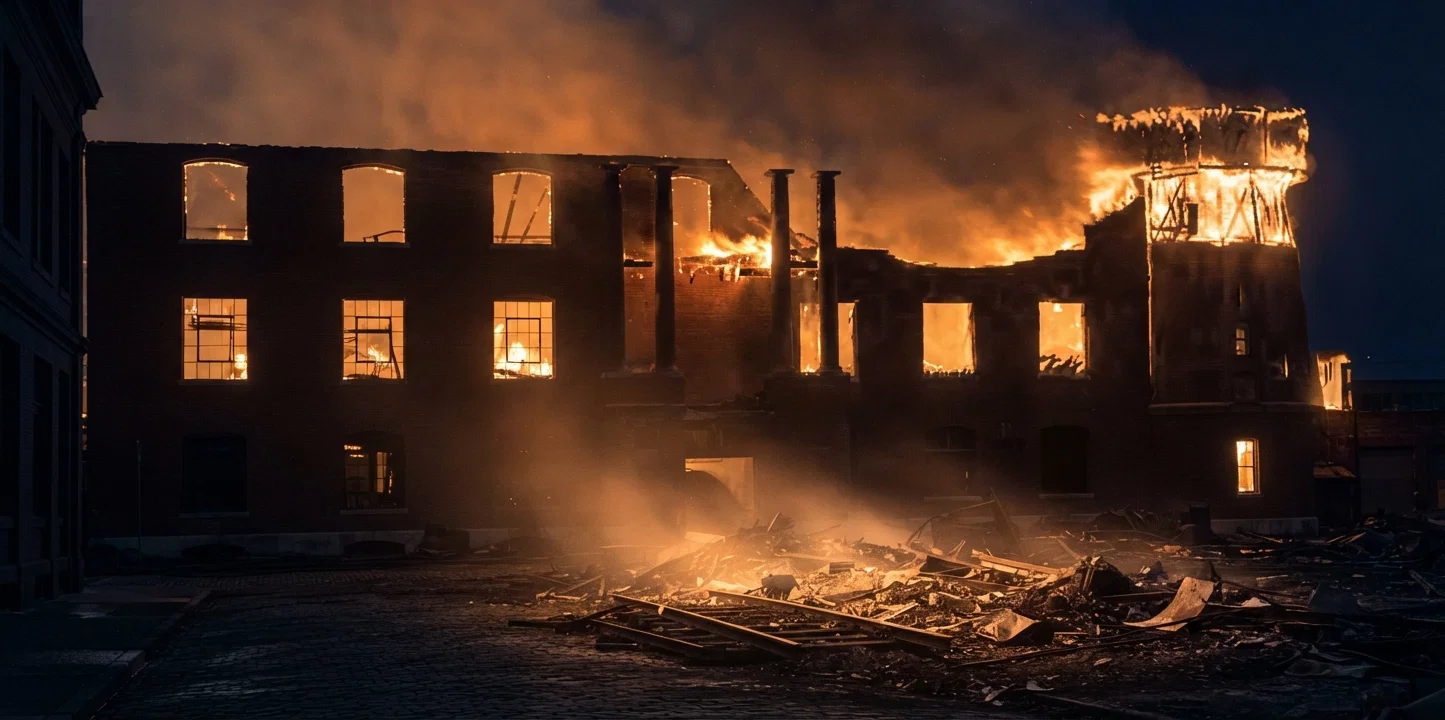
SURELY it was a discouraging outlook that faced the directors and employees of the Pacific Press Publishing Company as they stood around their burning building the night of July 20, with no power to stay the fire or save the contents of the building. The smouldering embers of the next morning were an even worse picture, and yet we were not discouraged. There were many causes of thankfulness on the very face of it.
First of all, we thanked God that there were no lives lost. Not a single soul injured physically.
Secondly, we were thankful that that which the building represented was not destroyed in the building itself. The building itself stood for a message, but that message would go to the world even tho the building were in ashes. Notwithstanding our loss of hundreds of thousands, God's old Book with its message was left. For that we praised Him.
We felt also to praise Him for His sweet Spirit which came to us the very night of the fire when we met to counsel, about two o'clock in the morning, to make what decisions were necessary for our employees, to send telegrams to important centers, to thank God together for His goodness in preserving us, and to seek Him for light that we might know the way out of the difficulty.
View of the Pacific Press Building the Night of July 20, 1906.
We are thankful to God that He is leading us over the new path. Formerly we had been engaged in printing the great Gospel message, with more or less of the world's work with all of its temptations in competition, in strife for good paying jobs, in the constant wrestling and commingling with the intense commercialism of the age. We were using splendid talent, which ought to be consecrated to God's work, in work for the world. From all these the fire separated us, and we have been thankful to God every step of the way since that time that so it did.
We have been and are thankful to God for the expressions of kindness and support and fellowship and hearty good-will which have come to us from our friends in this cause and our friends outside of our organization and work. We esteem these highly because of the help which these expressions have given us. "A word spoken in due season, how good it is!"
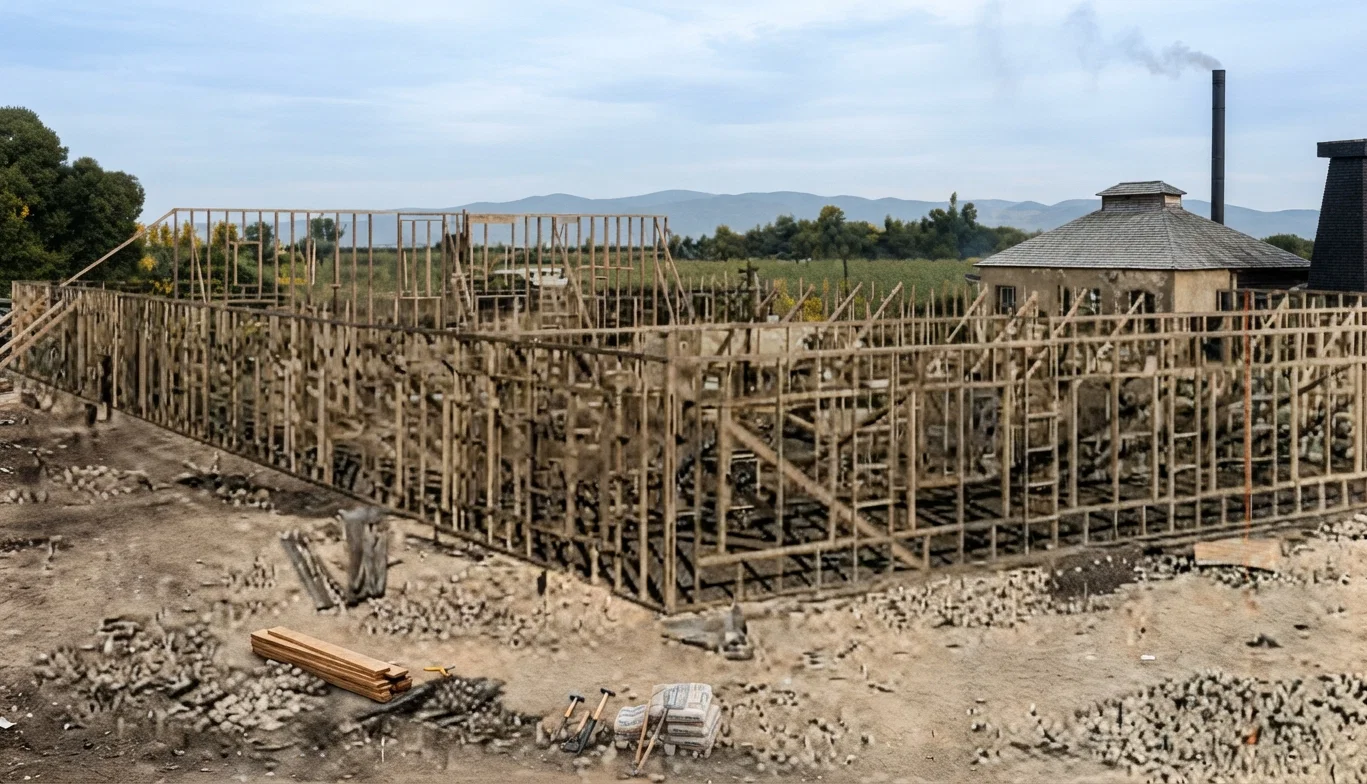
Humanly speaking, it looked at one time as tho we could not build again, but we are grateful to God that in the place of the ashes and ruin is rising another building, more economical in its simplicity, more convenient in its arrangement, and better fitted in every way for the prosecution of our work; and so at this period of the year, when men all over the country are giving thanks from various motives and for various things, we, too, wish to join with them and express also our devout thanksgiving to God for all His mercies and goodness to us, a renewed expression of that which we feel every day; for we would learn even in all these afflictions, and the clearer light which has shone through them, and the greater blessings which have come because of them, to in "everything give thanks, for this is the will of God in Christ Jesus" concerning us.
One of the largest Sunday-law associations in the country is that of New York. A recent meeting was held in Elmira, where special effort has been put forth to make more effective the empire state Sunday law. Our representative was at that meeting. At the same time the International Religious Liberty Association held two mass meetings in the city. These mass meetings were well attended, and the people were given a splendid opportunity to hear both sides. Recently Police Judge Bogart rendered a decision in a Sunday-law case in which the right of trial by jury was denied and the defendant was convicted. Surely every true American citizen ought to see what the denial of jury trial means. The counsel for the defendant in this case was Hon. John B. Stanchfield, one of New York's [[FIGURE]] leading lawyers. Our next issue will contain report of this meeting with illustrations of the prominent men who took part in that convention. That report will discuss the principles involved, and all our readers ought to know what they are. We hope that our friends of religious liberty will give the SIGNS OF THE TIMES, which will keep to the front these great vital questions in both church and state, a large circulation.
God First.—Harriet Beecher Stowe, in speaking of the old-time New England Thanksgiving service, says: "Great as the preparations were for the dinner, everything was so contrived that not a soul in the house should be kept from the morning service of Thanksgiving in the church." It should be so now; God should be first, but O, how changed!
"Life and Health" for November is an excellent number. We wish we had more space to notice it. Get and read it and live it, and you will feel that your investment is not worthy of mention. Send for it for a year. A neat magazine with cover; only fifty cents; five cents a number. Address LIFE AND HEALTH, Takoma Park Station, Washington, D. C.
While the doctors quarrel the appendicitis patient may learn something. Great Paris doctors are divided as to whether grape seeds cause the difficulty. Dr. Metchnikoff, the celebrated bacteriologist, affirms, "I have never in all my experience discovered a grape seed in an appendix."
The Fall of the Ostrogoths.—In our issue of October 17, page 6, first column, third line from the top, the types make the fall of the Ostrogoths to occur in 533. That is a mistake. It should have been 538.
It is only the tried soul which comes into perfect harmony with Jesus Christ. He is the tried stone of God's eternal character-building; those built on Him must also be tried stones.
Framework of the New Pacific Press Building, taken October 21.

The Signs of the Times

The price of this issue is five cents, single copies; 25 to 75 copies, three cents each; 100 copies or more, at two and one-half cents each. Give it a wide circulation.
Space does not permit us to tell our readers of the good and important things which the SIGNS OF THE TIMES has to present in the future. Other papers aim to please and instruct in earthly matters; this journal deals with issues of eternal importance.
The last few days, since our lumber came, and the last cut on this page was made, has shown wonderful progress in our building. The rafters are all up, and before this note is made up into pages, a portion of the galvanized steel roof will be on. Delightful music is the sound of the hammers these days.
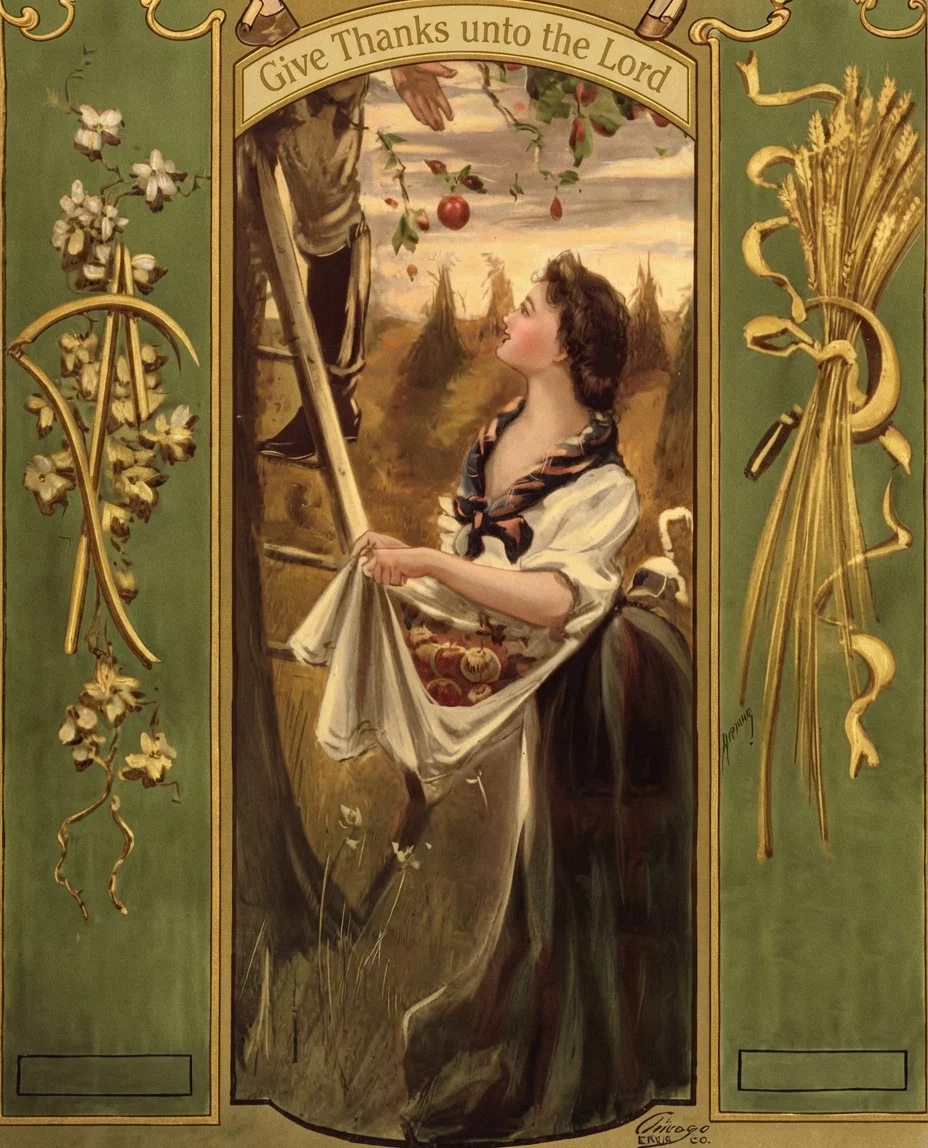
The September Orchard

You have reached the end of this edition.

Signs of the Times · Nov 21, 1906