The terrible conflict in Russia between Atheism in its most atrocious form and the civil authorities, illustrates principles which society everywhere will do well to heed. Among these, the two which are most important are that a religion which is mere superstition and formalism, and a church which relies upon ritualistic observances instead of the truth to benefit men, eating away as they will all faith and sincerity from the national character, undermine at the same time all reverence for law. The other is, that cruel and pitiless repression aggravates the evils it is designed to cure. We cease to wonder that Nihilism increases, when we read that the other day, the right to receive advertisements was withdrawn for a month from the St. Petersburg Golos, because that journal had made public the fact that for twenty-six years an archbishop had been incarcerated in a fortress for the “crime” of non-conformity, and because at the same time it had intimated that this prisoner, together with two other clerical prisoners, had been forgotten by the government officials. The Golos unquestionably was right in the opinion that these poor victims of resentment had been forgotten, had been suffered to remain in confinement long years after their term of sentence had expired. The arbitrary government permits no such opinions, however. In enforcing such measures Russian royalty only helps to make revolutions certain.
How relentlessly the persecuting disposition of the Russian despotism is maintained in the midst of all the agitation that pervades the empire, appears from the following narrative: “In the Russian town of Vesnesensk there are considerable numbers of a sect called ‘Stundistes,’ who deny the efficacy of the ceremonies of the Greek Church, and base their religious views solely on the teachings of the Bible. They hold meetings for the study of the Scriptures and prayer, but have no officiating clergy. They were called upon to sign a declaration of recantation, publicly to conform to the ordinances of the Greek Church, and to express their readiness to receive five hundred blows if they should relapse into Stundistism. Under intimidation the declaration was signed by some, but many stoutly held out. It was then determined that those who refused should be publicly flogged, the next day being fixed for the execution. All222the country people in the neighborhood flocked in to see the performance, and about a thousand spectators were gratified by a spectacle of great suffering. Zenovi and Prascovia Shimenko, man and wife, were particularly distinguished by their firmness under persecution, and consequently, by the severity of the torments inflicted on them. Vladimir Fedoroff and others, holding the woman by the hair, gave her fifty blows with rods. Then Efeem Slinsarenko began beating the unfortunate creature. Fatigued at last, he called upon the half-fainting woman to ask forgiveness of the crowd, to kiss the cross, and to repeat a prayer. With death apparently before her, this frail creature’s courage and confidence deserted her not. She refused to ask forgiveness, she rejected the crucifix, saying that it was not lawful to make a representation of God, and for a prayer she said aloud, ‘God forgive them; for they know not what they do.’ Such desperate constancy was not to go unpunished. Since rods were of no avail, a knout was prepared; and soon her agonies were renewed under a shower of blows, administered by a young peasant. The flogging only ceased when she was too far gone to exhibit any sign of pain. Although medical evidence testified to a very narrow escape from death, Prascovia has recovered; and when called as a witness before the court, she said, ‘I am an Evangelist; I and my co-religionists know no other source of religion than the gospel.’”
No human eye can foresee the end of the present conflict. The agitators demand constitutional government. The Czar replies by appointing Melikoff absolute military dictator. They demand liberty of speech and of opinion. He replies by crowding the mines of Siberia with exiles. They strike madly, wickedly, blindly at the throne and its occupant. He intensifies the severity of his rule. They come to him like the nobles of Israel to Rehoboam, asking for relief from the burdens of government, and he replies, like Rehoboam, “I will add to your yoke.” The breach widens daily, and threatens to prove as hopeless as did the breach between the ten tribes of Israel and the house of David. The only solution of these difficulties lies in constitutional government, for which the nation is not prepared, and in a pure religion, which she does not possess. If the nations of Christendom were as wise and philanthropic as they ought to be, they would flood Russia with Bibles and with a pure Christian literature—the single open door through which the hand of charity can reach in to save an empire of eighty millions from dissolution and anarchy.—Christian Statesman.
THAT EUROPEAN WAR.
By Edward King
A WAIL of trouble comes up from every section of Continental Europe at this moment. Disguise the ugly fact as one may endeavor to do, there is no denying that the nations foresee war not far off, and that it troubles their spirits to make preparation for it. What a name Bismarck would make for himself in history if he could only force a general disarmament! But alas! he cannot! Peace! peace! is the cry; but there is no peace. A significant fact is the perturbation of the little countries which lie near the large ones likely to be affected by the approaching struggle. Switzerland is fortifying certain mountain passes which her brave army may have to hold for the protection of her neutrality, and Holland and Belgium are coquettishly indulging in projects of union. We had a rumor not long ago that Austria was seriously considering a proposed plan of fortifying Vienna. But this has been denied. The Austrians make no secret, however, of the fact that they are fortifying extensively on the frontiers which would be liable to invasion in case of a general war. Poor Austrians! They have no sooner got their alliance than they find themselves pushed forward into a field which is already very smoky, and where there is every probability that they will be compelled to give battle.
Of one thing there seems a dolorous certainty, and that is that the war, when it comes, will be long. Every nation has made up its mind to that. Europe will engage in one grand prolonged struggle before the sword is thrown aside. Some countries and one or two nations will undoubtedly disappear from geography before this great cataclysm is over. Which will they be? Will Germany sink under the weight of her armor? Will Russia surprise Europe with wonderful military talent and success, as Prussia did in 1866 and in 1870-71? Will England be forced into the field? These are questions which are asked in drawing-rooms, in newspapers, and on the street every day. The French have been trying to turn their attention to colonization of late; but as soon as they get engrossed in that profitable subject, a war rumor calls them back to cares and worries, which totally unfit them for pioneering. Perhaps the successive ministries here would have been more fortunate in securing reform and progress toward enlightened free government if they had not been perpetually harassed with the need of forming, equipping, and keeping well in hand a tremendous army.
I do not fancy that any war will be likely to break out just at present; but when it comes it will come like thunder in a clear sky, and will be declared on some trivial, insane pretext. It may come in summer, and it may be set aside until next spring or summer. But unless some grand reform is operated—unless disarmament or arbitration can be forced upon Europe's attention—everything henceforward tends toward a general war, in which almost all the Great Powers will take sides. Meantime, I suppose that we shall continue to sell wheat, leather, clocks, guns and pistols, meat and butter to the fighters. —Edward King, Paris, Feb. 11.
THE AMERICAN SABBATH.
SECRETARY OF THE NAVY, THOMPSON, ADVOCATES THE FORCIBLE MAINTENANCE OF THE AMERICAN DAY OF REST.
The following report of a meeting of the New York Sabbath Committee, from the New York Herald of March 8, 1880, speaks for itself. Bro. J. L. Shockley informs us that it was copied into the Cincinnati Gazette; and the sentiments expressed evidently find extensive favor among the people. It shows how rapidly events are tending toward the great crisis in the near future, according to Rev. 13:11–17.
The New York Sabbath Committee, which is an unsectarian organization, composed of several well-known gentlemen of different denominations, held a meeting last evening at Association Hall, attracting an audience that completely filled the large room. The Chairman of the committee, Mr. Norman White, presided, and interesting speeches were made by Richard W. Thompson, Secretary of the Navy, Rev. Roswell D. Hitchcock, Mr. George H. Andrews, Mr. W. W. Atterbury, the Secretary of the committee, and Mr. White. Secretary Thompson was received with applause. He said that in listening to the eloquent tribute of the preceding speaker to the greatness of our country he could not help asking himself the question, How did it become so? We have seen the other nations of the earth struggling for centuries through difficulties and embarrassments, and yet they have not reached that point in grandeur which we in one century have so gloriously gained. How did all this come about? The answer is plain. Our fathers brought with them across the briny deep the holy word of God. [Applause.] Herein is the mystery, if there be any mystery, about our grandeur and greatness. It is the Bible that has made us great. We are a Christian people, entertaining diverse views, practicing different forms of worship, but tracing all our faith to that great fundamental law given to us amid the thunder and lightning of Sinai—that God made the Sabbath for man, not for himself. He needs no rest; he is a spiritual being—a pure essence. But when he created us of material substance—of bones, muscles, nerves, and fiber—he taught us that we do not possess the power of incessant labor.
A FIRMLY FIXED PRINCIPLE.
I take it there is no principle better fixed in the American mind than the determination to insist upon the conformity by foreigners to our Sunday legislation. We are a Sabbath-keeping people. [Applause.] Men say that we have no power to interfere with the natural right of individuals; that a man may spend Sunday as he pleases. But society has a right to make laws for its own protection. They are not religious laws. The men engaged in this grand work of securing the enforcement of the Sabbath laws do not want to force you into any church, for these gentlemen represent all denominations. They want to make you observe the Sabbath day as a day of rest merely—peaceably if they can, forcibly if they must, only so far as it is necessary to protect society. Destroy the Sabbath, and you go out of light into darkness. A government without the Sabbath as a civil institution could not stand long enough to fall. [Applause.] Why are we so especially interested in Sabbath laws? Because there is no other government that depends so much on the morality of its citizens as ours. Here, where we have a republic with its existence depending upon the mass of the people, it is necessary to have a general observance of the Sabbath. [Applause.] Our national life may depend upon it. We may quarrel to any reasonable extent on anything else—about banks and the tariff—perhaps we could do without both; but the American people will never give up their Sabbath. Mr. Thompson concluded with an eloquent picture of the beneficent effects to the workingman of the Sabbath at home with his wife and family, and closed with a stirring appeal to the assemblage to do everything to preserve what has come to be known in Europe as “the American Sabbath.” He had come to New York, not to make a speech, but because he had been interested in this cause, and had been a worker for it for thirty years, and he earnestly added that he intended to work for it for thirty years to come.
Obituary Notices.
“Blessed are the dead which die in the Lord from henceforth.” Rev. 14:13.
Pike.—Died near Seward, Neb., March 8, 1880, Della L., daughter of Eli and Edna E. Pike, aged 9 years, 8 months, and 27 days. Funeral discourse by the writer, from Isa. 57:1, 2. M. Hackworth.
Logue.—Lemira F. Logue died March 13, 1880, at Muscoda, Wis., aged 78 years. Sister Logue embraced the present truth in 1871, and has since that time tried to live a Christian life. Discourse by the writer, from Isa. 3:10, 11. John Atkinson.
Moore.—Died of membranous croup, in Martinton, Ill., Feb. 23, 1880, Anna T., daughter of Enoch and Mary J. Moore, aged 2 years and 2 months. Funeral sermon by the writer. Subject, “The Christian’s Hope.” Text, 1 Thess. 4:13–18. D. T. Bourdeau.
Bradley.—Arthur, infant son of Sister K. Bradley, died in Denison, Texas, Feb. 29, 1880, aged one year. The parents live in hope of seeing their little one again, when those who sleep in Christ are awakened. Words of comfort were spoken by the writer, from Jer. 31:15. J. F. Bahler.
Swinger.—Died suddenly of obscure bowel disease, Oct. 18, 1879, in Franklin Co., N. Y., Rutherford N., son of H. and H. M. Swinger, aged 3 years and 2 months. Funeral discourse by Rev. Mr. Mathews, Wesleyan Methodist. Text, 2 Sam. 12:23. We mourn, yet not without hope. H. and H. M. Swinger.
Olds.—Martha J. Olds died of consumption, at Gilboa, Putnam Co., Ohio, March 16, 1880, at the age of 51 years and 6 months. Sister Olds embraced the truth about twenty years ago, under the labors of Eld. M. E. Cornell, and she has since lived up to her profession. She left a husband and five children, besides a great many relatives and friends, to mourn her loss. Remarks by Rev. G. B. Cheney, a P. M. minister, from 1 Thess. 4:13. J. S. Fisher.
Hoon.—Died of apoplexy, at the residence of C. W. Nicola, Bull City, Kan., March 5, 1880, our much-esteemed friend, Charles E. Hoon, aged 23 years. Bro. Hoon was baptized by Eld. Smith Sharp, in the winter of 1879, and united with the S. D. Adventist church of this place. While residing here he took an active interest in the Sabbath-school and meetings. His former home was in Kokomo, Ind., where he left a large circle of relatives and friends. His many friends here sympathize with them, and feel that they, too, have sustained a great loss. Funeral services conducted by Eld. J. S. Thorpe. C. W. and E. Nicola.
Stoner.—Died of typhoid pneumonia, near Givin, Iowa, March 3, 1880, Jacob Stoner, aged 57 years and 5 months. Bro. Stoner embraced present truth two years ago, under the labors of Bro. Starr; and since that time he has tried to live for a home in the kingdom of God. His family were all present at the time of his death except his oldest son, who was at school in Battle Creek. At the funeral the Spirit of God was manifested in a remarkable degree. The mother and three of the children who had never professed Christ arose, saying that they would try to live so as to meet the lost one in the morning of the resurrection, and that they wanted the same hope that sustained him to be their hope. May the Lord give them strength to hold out. M. M. Kenny.
Whitehead.—Died near Orleans, Harlan Co., Neb., March 6, 1880, my wife, Polly M. Whitehead, aged 35 years, 4 months, and 23 days. About five weeks before her death, she was thrown from a wagon, receiving injuries which resulted fatally. For thirteen years she had been an earnest Christian, and for two years she, with her husband, had kept the Bible Sabbath. Her husband and five children mourn the loss of a faithful companion and a kind mother. A large company of relatives and friends followed her remains to their final resting-place. The services were conducted by Eld. H. E. Babcock, Seventh-day Baptist. Text, Heb. 10:35. On third-day, March 9, we were again called to the cemetery to lay beside its mother the remains of her little one, only about two weeks old. Sermon from Matt. 19:14: “For of such is the kingdom of Heaven.” C. Whitehead.
Root.—Died in Wright, Mich., March 11, 1880, Eva May Root, only daughter and youngest child of Ephraim H. and Hezzie Root, aged 7 years, 11 months, and 4 days. She was thrown from a loaded wagon, one wheel passing over her body. She recognized her parents, embracing them affectionately, and died in about an hour. Her sudden death has cast a gloom over the entire neighborhood, and in the family circle her loss will be deeply felt. Funeral discourse by the writer, from Jer. 31:15, 16, after which about fifty of the youth and children sang, expressive of the general feeling,—
“Sweet little Eva, dear to each heart,
Tears naught avail us, now we must part;
Death’s hand has plucked thee, pillowed thy head,
Lowly and lifeless, faded and dead.
“But we shall meet thee, on Heaven’s shore,
Where death and partings come nevermore.
There will our Saviour dry every tear;
Sorrowful mourner, be of good cheer.”
Mrs. E. B. Lane.
Notes of News.
—The Empress of Russia is very low.
—A serious rebellion has broken out in Pekin.
—Japan has 300 newspapers, many of them enterprising dailies.
—It is claimed that there is an active volcano in Wyoming Territory.
—A dispatch from Paris says there is in that city a band of 250 Nihilists.
—Ten men were killed by a recent explosion in a flax mill at Frankton, Ind.
—Secretary Sherman announces himself as in the field for Presidential nomination.
—Out of the 1,600 prisoners at Sing-Sing, 1,400 were sent there because of strong drink.
—The United States man-of-war Constellation has been sent with relief stores to Ireland.
—In Amsterdam there are 22,000 Jews engaged in cutting, polishing, and setting diamonds.
—Prince Bismarck has given up beer-drinking, in accordance with the advice of his physician.
—Parties in New York have purchased the celebrated iron mine at Leadville, Col., for $3,000,000.
—The pope does not approve of the expulsion of the Jesuits from France, but he will submit to it.
—Hartmann now denies that he has confessed being concerned in the recent attempt on the life of the Czar.
—3,300 pupils are enrolled in the Chinese mission schools of San Francisco, with an average attendance of 1,100.
—Since the year 1300, England has waged 49 wars; France, 38; Russia, 22; Austria, 12; and Prussia, 8.
—According to an official report, 8,576 noncommissioned officers and men in the British army in India are teetotalers.
—The Figaro, of Paris, is one of the most successful newspapers in the world; its net profit for 1879 was about $400,000.
—There are 500 florists within a radius of 10 miles from the New York City Hall, and the capital invested is not less than $8,000,000.
—In consequence of a resolution adopted by the Deputies disapproving the policy of the government, the Greek Ministry has resigned.
—During the past year, the expense of the English-Afghan war has been over $28,000,000; but this burden is imposed upon British India.
—In Eastern Siberia there is a pressing demand for new prisons, owing to the vast number of political prisoners transported during the year.
—The 2d of December has been selected by the American Bible Society for the celebration of the 500th anniversary of Wycliffe’s translation of the Bible.
—The people of the Sandwich Islands contribute $24,000 annually for missionary purposes outside their territories. One church sustains five missionaries.
—Mr. Wm. H. Vanderbilt is to pay $75,000 for the transportation of the Alexandrian obelisk to New York, on the successful completion of that undertaking.
—The Christian Weekly states that during the severe gales since the last of October, over 300 vessels have been lost; the loss of life and property has not been reported.
—Precautions have been taken to secure the safety of the royal family of Russia, by appointing five officers of the Imperial Guard to each floor of the winter palace.
—The mania for divorce rages in England too. In a little over ten years, one court has dissolved 1,279 marriages, besides granting nearly 300 judicial separations.
—An area of about six acres in the center of Samana, a city of San Domingo, has been burned over. Nearly the entire business part of the town has been destroyed.
—Private letters from Morocco report barbarous persecutions of the Jews by the Mohammedans. One aged Jew was set on fire, after having been drenched with petroleum.
—Russia respects treaty obligations, and does not embark in war upon the Danube; but the Czar presents to the Prince of Bulgaria 40,000 rifles, a war steamer, and a lot of Krupp guns.
—During an entertainment given by the public school of Lincoln, Pa., on the 21st inst., a part of the floor fell, precipitating 125 persons into the room below, and seriously injuring 30.
—The Coreans, supposed to number 15,000,000, have never had any portion of the Bible in their own tongue; but the work of translating the New Testament into that language is now half done.
—It is estimated that there were not more than 3,000,000 copies of the Bible in the world at the beginning of the present century. The American and British Bible Societies have since printed 116,000,000 copies.
—After an unusually rough voyage from Vera Cruz, General Grant and party reached Galveston, Texas, the 23d inst. As usual, the General was enthusiastically received. It is said that he proposes to visit the Sandwich Islands next.
—A Methodist museum is to be established in England, for the collection and preservation of historical documents relating to the early history of Methodism, and also interesting objects connected with the mission work in foreign lands.
—The Queen’s speech proroguing Parliament was read to both houses on the 24th inst. The election for a new Parliament will be an exciting one, and will be closely contested; but it is thought that it will sustain Lord Beaconsfield’s administration.
—Maine has a newly-amended and more stringent liquor law; and according to the Portland Advertiser, several well-known liquor dealers have declared their intention of quitting that place for good, as they cannot afford to pay their shop expenses and fines.
—The 83d birthday of Emperor William of Germany was celebrated with great eclat March 20. He received numerous presents and congratulations from all parts of the world. The Czar held a banquet in honor of the event, and styled the Emperor his “best friend.” Notwithstanding his great age, Emperor William looks hale and well.
—Christ Church, Philadelphia, one of the oldest and most influential churches in that city, is involved in a serious difficulty with a chapel situated within its parish. The rector of Christ Church is a moderate churchman, while the rector of the chapel is a pronounced ritualist. The Bishop declines to interfere, and the chapel congregation have engaged prominent lawyers, and will attempt to secure a charter.
—Captain Eads, who had charge of the construction of the Mississippi jetties, is earnestly advocating a marine railway over the Isthmus of Panama, instead of the ship-canal proposed by M. de Lesseps. He claims that such a railway is entirely practicable, can be constructed at one-fourth the cost of a tide-level canal, can be more easily and cheaply maintained, and can be enlarged if necessary.
—The entire length of the costly railway line of which the St. Gothard Tunnel forms a part, is 151 miles. The main tunnel is about 9¾ miles long; but there are 12 other long tunnels, which aggregate nearly 10 miles in length; 5 tunnels between 420 and 550 yards long, and 25 between 110 and 220 yards long. There are in all no less than 52 of these subsidiary tunnels, having a total length of 16 miles. There are also on the line over 64 bridges and viaducts.
HOME TESTIMONY.
THE recent completion of several branch roads in Minnesota, in the interest of the CHICAGO & NORTH-WESTERN RAILWAY COMPANY, suggests a statement of the total mileage of this giant corporation, and we give elsewhere a complete official table of the different lines which it operates, together with a map showing the entire system as now completed. It will be seen that the total length of lines of the CHICAGO & NORTH-WESTERN RAILWAY is 2,158½. This is the greatest mileage operated by any company in this country. It is made up of six divisions of the CHICAGO & NORTH-WESTERN proper, and eight proprietary lines, and the whole system is subdivided into twenty lines and branches. To control successfully such a vast and complex system of railways evidently requires talent of the highest order; and the splendid condition, financial as well as physical, which the property now exhibits is sufficient testimony to the ability of the management.
The nucleus of this great system, the old Galena & Chicago Union Railway, was opened from Chicago to Elgin, 42 miles, in 1850, only thirty years ago. The CHICAGO AND NORTH-WESTERN RAILWAY COMPANY came into being, as the successor of the Beloit & Madison, Rock River Valley Union, and Chicago, St. Paul & Fond du Lac companies, in 1859. In 1865 the Galena & Chicago Union was consolidated with it, and in the few short years that have followed, the young corporation has gone forward with astonishingly rapid strides, to its present proud position. What its future enlargement may be is left to imagination. A study of the map, which shows the system already reaches into five States and a Territory, may prove suggestive of possibilities yet ahead.—R. R. Age.
DISTRICT QUARTERLY MEETINGS
Appointments.
“And as ye go, preach, saying, The kingdom of Heaven is at hand.” Matt. 10:7.
DISTRICT QUARTERLY MEETINGS
To be held April 10 and 11.
Let all librarians and district secretaries bring their books and reports, and be prompt in attendance.
Dist. No. 7, Iowa, at Adel. A. J. Stiffler, Director.
Dist. No. 1, Wis., at Hebron. G. C. Tenney.
Dist. No. 8, Wis., at Mackford. C. W. Olds.
Dist. No. 2, Iowa, at Lisbon. J. T. Mitchell, Director.
Dist. No. 4, Penn., at Randolph. O. F. Bowen, Director.
Dist. No. 9, Wis., Lyons, near Baraboo. Wm. H. Canfield, Sec.
Dist. No. 10, Iowa, at State Center. S. M. Holly, Director.
Dist. No. 2, Ind., at Wolf Lake, April 11. J. S. Shrock, Director.
Spring district, at Springfield, Clark Co., Ohio. E. H. Gates.
Dist. No. 1, Iowa, at Waukon. A full attendance is desired. F. H. Chapman, Director.
Dist. No. 3, Ill., with the Gridley church. Eld. Ballenger is expected. C. Turnipseed, Director.
Dist. No. 2, N. Y., at Roosevelt. Hope Eld. M. H. Brown will be present. Wm. Treadwell, Director.
Dist. No. 2, Mich., at Bunker Hill. We desire a good attendance. James Roberts, Director.
Dist. No. 3, Ohio, at North Bloomfield. We want to see a general turnout. R. A. Underwood.
Dist. No. 3, Mich., at Convis. Meetings will commence Sabbath morning at 10:30. M. B. Miller, Director.
Dist. No. 4, Me., at West Sumner, April 11, at 11 o’clock A. M. We desire a general attendance, also a full report. Geo. W. Washburn, Director.
Dist. No. 7, N. Y., at West Winfield. We hope all the members will be present as far as possible. Expect Bro. Foy will be there. N. C. Wheeler.
Dist. No. 2, Ohio, at Waterford. All who are interested in the cause of present truth are invited. Let no member of the T. and M. society fail to report. A. M. Mann.
Dist. No. 8, Mich., with the Freeland church. Librarians will please report in season to J. McGregor, District Secretary. A general attendance is earnestly desired. E. S. Griggs, Director.
Dist. No. 5, Neb., at the house of Bro. Vest, six miles west of Halifax, Greeley Co., on the 3d Sunday in April, at 1 o’clock P. M. C. P. Bollman, Director. Albion, Neb.
Dist. No. 4, Iowa, at Mt. Pleasant, Henry Co. Hope to see a fair representation from each church in the district. We very much desire Eld. Washburn or Hankins to meet with us. W. W. Conklin.
Dist. No. 3, N. Y., at Adams Center, April 17, 18. The meeting is one week later than usual to secure help. The Sabbath-school and health and temperance work will both receive attention. W. H. Brown, Director.
Dist. No. 1, Nebraska, at the Wentworth school-house, near Admah, Washington Co. Will the brethren of the Decatur and Fremont churches attend? Brn. A. J. Cudney and Geo. Dawson will be there. Come one and all. H. A. Whittaker, Director.
Dist. No. 9, Mich., at Vassar. In connection with this meeting we will hold a T. and M. Institute. Eld. E. B. Jones, Bro. Minor, and others are expected to assist as instructors. Hope to see a general gathering of our people at this time. Wm. Ostrander.
Dist. No. 13, Mich., at Memphis. Eld. Lamson is expected to be present. A general attendance is requested. Let every librarian come, and bring his or her books, as there will be a drill in book-keeping and T. and M. work generally. Geo. O. States, Director.
AVON, Wis., April 10, 11. H. W. Decker.
We will meet with the church at Partello, Mich., April 3, 4. Will all the members be present? M. B. Miller.
The next general quarterly meeting for the Maine T. and M. Society will be held with the church at South Norridgewock April 17, 18. J. B. Goodrich.
The general quarterly meeting for Dakota will be held at Swan Lake, April 17, 18. We hope to see a full attendance, as there is important business to attend to. S. B. Whitney.
Nothing preventing, I will meet with the brethren at Potterville, Mich., in their district quarterly meeting, April 10, 11, Mrs. Lane filling the Orleans appointment, as per last REVIEW. E. B. Lane.
We expect to attend the quarterly meeting at Bloomington, Ill., April 3, 4. Hope to see the brethren from Mackinaw, Gridley, and Leroy. Come prepared to care for yourselves as far as you can. Arrange to stay over Sunday, as we have important business to attend to. E. O. Hammond. J. F. Ballenger.
The S. D. A. meeting-house at West Salem, Ill., will be dedicated Sunday, April 25. We extend a cordial invitation to all the brethren in this section, expecting this to be the largest and most important meeting ever held in this part of the State. Eld. R. F. Andrews is expected, and requests a general attendance. G. F. Shonk.
The new S. D. Adventist meeting-house in Niantic, R. I., will by divine permission, be dedicated to the service of God on Sunday, April 4, at eleven o’clock A. M. Sermon by Eld. I. Sanborn. Our brethren and sisters in Rhode Island are cordially invited to attend, and we should be pleased to see any from other States. The dedication will probably be followed by a series of meetings. Geo. D. Chester.
In connection with the district quarterly meeting at Buck’s Bridge, N. Y., April 10, 11, we desire to have an interesting and instructive Sabbath-school exercise. Let the schools at Silver Hill, South Pierrepont, West Pierrepont, Chase’s Mills, and Norfolk be well represented, and let all come well prepared with the lessons for the second Sabbath in April. Learn the pieces on pages 14, 21, 30, and 101 in Song Anchor. Bring your Lesson Sheets, Instructors, and Song Anchors. Chas. C. Lewis.
State quarterly T. and M. meeting for Division 3, Michigan, at Wright, Ottawa Co., April 17, 18. The district secretaries and librarians should be in attendance with their books. Eld. A. O. Burrill, and perhaps others that can give instruction in book keeping, will be at this meeting. Let there be a general attendance of officers and missionary workers. Eld. Miller is requested to appoint the State meeting for Division 1, and Eld. Jones for Division 2. J. Fargo.
No providence preventing, I will meet with the churches in Indiana as follows:—At Frankton, April 2–7. Patricksburg, April 9–12. Bloomington, where Bro. Butcher may appoint, April 15–19. Noblesville, April 20, 21. Alto, at T. and M. State quarterly meeting, April 23–26. Hope to see a general turnout at all these meetings. S. H. Lane.
I will hold meetings in Wisconsin as follows:—Quarterly meeting for Dist. No. 3, at Waterloo, April 10, 11. Meeting will commence Tuesday evening, the 6th. Will hold a general meeting and S. S. convention at Sand Prairie April 17, 18. The lessons assigned for Bible-class, youth and children, are the lessons for the third Sabbath in March. For the infant classes, Lesson 8 in Bible Lessons for Little Ones. Eld. Tenney is expected to be present, and we request a general rally from neighboring churches, and of scattered Sabbath-keepers. A. D. Olsen.
The State quarterly meeting of the Indiana T. and M. Society will be held at Alto, Howard Co., Ind., April 23–25. Let each district report to the State Secretary, S. S. Shrock, Ligonier, Noble Co., Ind., so that he will have a full report to present at the State meeting. Let each church society that is in debt make an effort to raise means to meet its indebtedness, as we desire to free the society from debt. Also let each church S. B. treasurer send to Dr. Wm. Hill, Rochester, Ind., all S. B., that he may be able to report amount on hand at the State meeting. We appeal to all to make out all reports promptly and correctly, that we may know how the cause stands in the State. S. H. Lane.
Cleburne, Texas, April 3, 4.
Dallas, “ ” 10, 11.
Plano, “ ” 17, 18.
Turner’s Point, Texas, “ ” 24, 25.
Savoy, “ ” May 1, 2.
Denison, “ ” 8, 9.
Sherman, “ ” 15, 16.
We confidently hope that all will be prepared to attend every meeting in their respective localities. Let those at a distance come prepared to remain till the meeting closes. We hope the friends at Fairview will attend the Sherman meeting. All come to seek God and learn all you can. Time is short. R. M. Kilgore.
BATTLE CREEK COLLEGE.
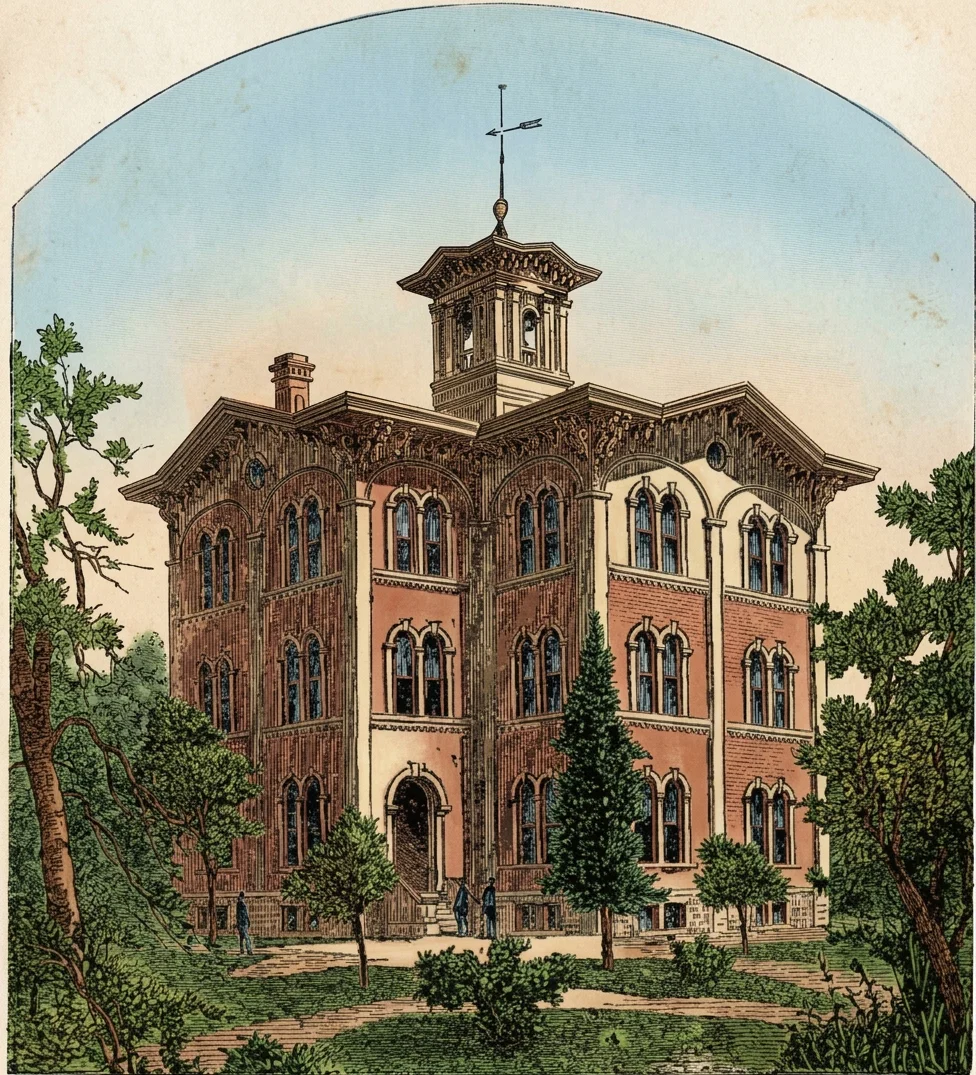
This institution, since its establishment in 1874, has gained an enviable reputation, and in many respects its success has been unparalleled in the history of colleges during the first years of their existence.
NEARLY FIVE HUNDRED STUDENTS ENROLLED EACH YEAR.
It is Thoroughly Practical in its Methods of Instruction and Discipline.
In the various departments young men and women are receiving just what they need as a preparation for the positions in life which they intend to occupy.
THE COLLEGE BUILDING IS NEW, SPACIOUS, AND BEAUTIFUL.
Five Departments of Instruction are open to receive students:— 1. Department of the Arts and Sciences. 2. Normal Department, with its Model School, and Course of Four Years. This includes all the COMMON BRANCHES. 3. Biblical Department. 4. Commercial Department. 5. Department of Hygiene, with a Course of One Year.
For full Descriptive Catalogue, address.
BATTLE CREEK COLLEGE, Battle Creek, Mich.
MEDICAL AND SURGICAL SANITARIUM,
By John Harvey Kellogg
Battle Creek, Michigan.
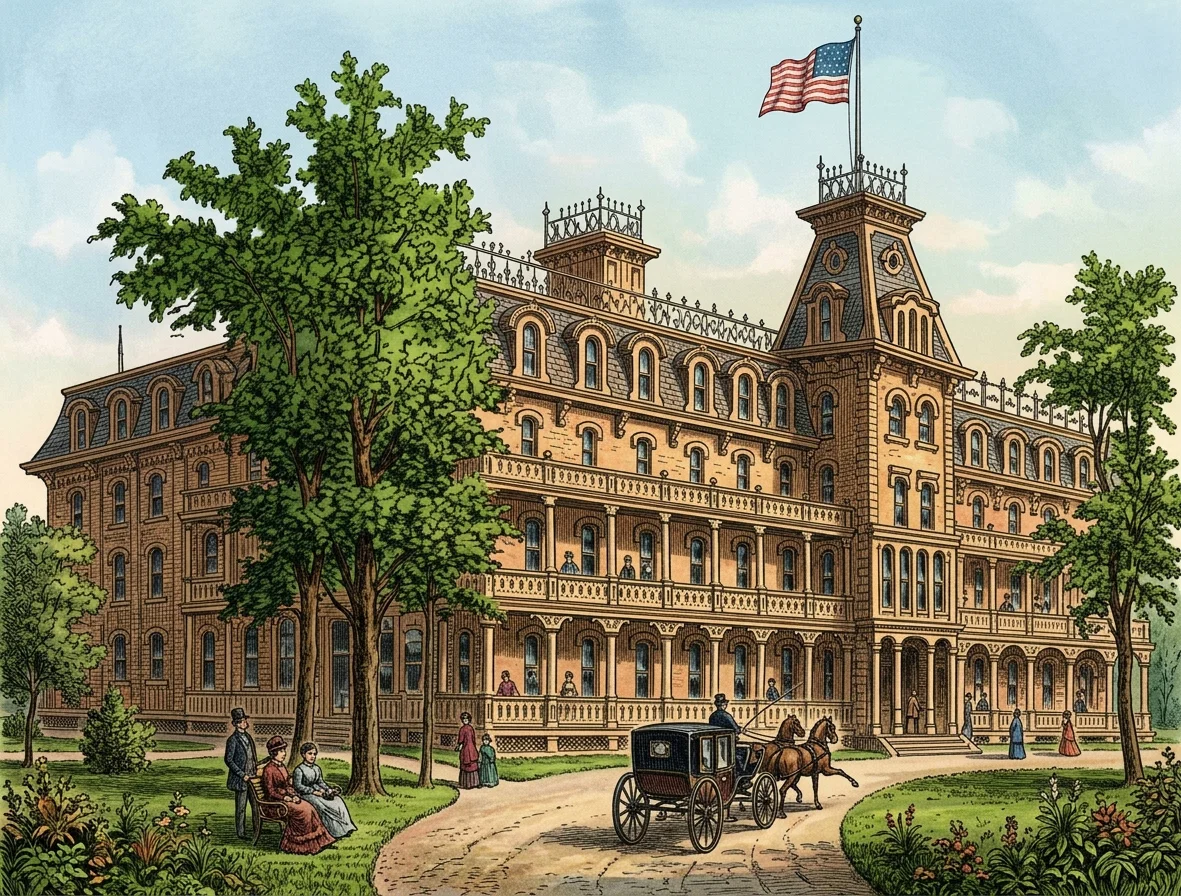
This institution, beautifully located in one of the most healthful cities of Michigan, is everywhere recognized as the
GREAT SANITARIUM OF THE WEST.
More than 4,000 patients successfully treated. The erection of new buildings and the addition of all the most approved remedial appliances known to the profession, have made it The Most Complete Institution of the Kind in America. All modern hotel conveniences furnished. Terms very reasonable.
J. H. KELLOGG, M. D., Medical Superintendent,
Address,_SANITARIUM, Battle Creek, Mich._
THE SIGNS OF THE TIMES.
A RELIGIOUS PROPHETIC JOURNAL.
This is the pioneer sheet of eight pages (the size of the REVIEW page), circulated everywhere by our Tract and Missionary workers, at the low price of one dollar a year to the T. and M. societies only.
The conductors of the SIGNS have laid their plans to make this pioneer sheet for 1880 a power in the land. Live writers are engaged for the work. Elder Smith will give a series of articles under the significant heading, Synopsis of Present Truth. Elder White will occupy several pages of each number with sermons on Redemption through Christ, and other subjects of like importance. And besides her regular articles on Old Testament history, Mrs. White will furnish other matter in her usual forcible style.
There will be a special edition of the SIGNS of twelve pages, for old subscribers, who are generally members of our churches on the Pacific coast. This will contain the eight pages of the pioneer sheet with four pages of church matters, reports and appointments inserted, making twelve pages, which will contain nearly three hundred square inches more than the old size of eight pages. Price, invariably, $2.00 a year.