The American Sentinel, Vol. 9, No. 47.

The “Modern Inquisition.”
Earlier text: The “Modern Inquisition.”

Can the True Church Become Corrupt?

ROME claims that the true Church cannot fall; and with this claim she silences many of her members who see in her evidences of corruption; she quotes the words of the Saviour who said, “Upon this rock I will build my Church, and the gates of hell shall not prevail against it.”
It is true that Christ will always have a church, but his real Church, which is declared to be “his body,” (Col. 1: 24), does not consist in organization, but of individuals who have given themselves to him, thus becoming “members of his body, of his flesh, and of his bones.” Eph. 5: 30. The visible organization is not, properly speaking, the Church, the body of Christ, but is rather the machinery or agent by which the work of God is carried forward in the earth, and it by no means follows that an organization that he once recognized and used may not be seized and controlled by wicked men who succeed in becoming its leaders until it becomes necessary for him to call his people out of that corrupt organization.
When God calls his people out of an apostate organization, even though his people are few, they are the Church. They may be called by another name, and those who remain in the corrupt organization may look upon them as a very small people that have turned out of the way, when in fact the large body has forsaken the right way, and the small body is separated from the large body by remaining in the right way. God’s Church does not become extinct, the gates of hell do not prevail against it. Although apostasy and consequent calling out may take place several times in the history of God’s people, apostasy does not prevail; the true Church, the body of Christ, still lives.
Rome cannot deny this. Rome knows that it was an apostate organization that delivered the Saviour to the civil power to be crucified, and Rome knows that the little remnant of believing Jews who were called out of that corrupt organization were the true Church. Rome also knows that, to that organization which had become corrupt by being led astray by wicked rulers, had once been “committed the oracles of God,” and that after it had delivered the Saviour to be crucified, and the Lord had left it to itself, it was no longer God’s organized agency for the salvation of men.
Rome cannot evade this conclusion by claiming that the true Church did not exist until the Saviour came and built the church upon the rock, for Rome herself claims that the true Church is older than the Scriptures, which claim is true. Jesus quoted the Scriptures that were written hundreds of years before he came, and, as Rome truly claims, the true Church existed before those scriptures were written.
There was no scripture written before the flood, but the Church existed then. This is why some of the people were called “sons of God,” Gen. 6: 2, to distinguish them from others. Even then, the same verse shows us that many of the sons of God had become corrupt. When God called his true people out from among them, he called them into the ark. There were only eight of them all told, but they were the true Church; a little handful compared with the multitude who had forsaken the right way.
In the lifetime of Moses, who wrote the first scriptures, while the people of God were in the wilderness, they are called by the Word of God “The Church in the Wilderness.” Acts 7: 38. This was many hundreds of years before Peter was born, and before Jesus said to him, “Upon this rock I will build my Church.” The Church was built upon the Son of God long before he came into the world to be crucified. It was true that the Son of God had builded, and that he would continue to build, on the same rock.
Peter himself was built upon this rock. All the other apostles, except Judas, were built upon it. Not only they, but all the holy prophets who lived long before, were built upon the same foundation. We read, “Now therefore ye are no more strangers and foreigners, but fellow-citizens with the saints, and of the household of God; and are built upon the foundation of the apostles and prophets, Jesus Christ himself being the chief corner stone.” Eph. 2: 19, 20.
This text not only proves that the apostles and the prophets before them were built on the rock, Christ Jesus, but it proves that every Christian is built on him when he becomes a Christian. Jesus is still building, and he was building in King David’s time, long centuries before Peter was born. When David had sinned so grievously that he gave great occasion to the enemies of the Lord to blaspheme, even he, miserable sinner that he was, found forgiveness in Christ, and was built upon the true rock.
Those who have believed that Peter was the rock on which the Church was built have made a mistake similar to the one made by the unbelieving Jews, when Jesus said, “Destroy this temple, and in three days I will raise it up.” When Jesus said, “this temple,” he meant his own body; but they supposed that he meant the temple at Jerusalem. He had just been talking about that building, and those corrupt members of an apostate church who were willing to misunderstand him, had ample opportunity to do so. The record of this is found in John 2: 18–21. When Jesus called himself “this rock,” he had just called Peter by his name, which means a stone, and this gives all who wish to understand him as teaching that Peter was the rock a similar appearance of an excuse.
Not Peter only, but every person who becomes a Christian is called a stone, and is built upon Christ. Peter himself says, “If so be ye have tasted that the Lord is gracious. To whom coming, as unto a living stone, disallowed indeed of men, but chosen of God, and precious. Ye also, as lively stones, are built up a spiritual house, a holy priesthood, to offer up spiritual sacrifices, acceptable to God by Jesus Christ. Wherefore also it is contained in the Scripture, Behold, I lay in Sion a chief corner stone, elect, precious: and he that believeth on him shall not be confounded.” 1 Peter 2: 3–6.
God says, “Other foundation can no man lay than that is laid, which is Jesus Christ.” 1 Cor. 3: 11. No church can fall that remains on this foundation. Aside from Jesus, the best man that ever lived is not good enough for a foundation for the “Church of the living God.” Those who crucified the Saviour were at the same time trying to build on Abraham, who had become a good man, yet they fell. Can a church forsake Christ for a foundation, and try to build on Peter, who also became a good man, and not fall too?
Rome does not dare to encourage the people to read the Bible for themselves lest they should learn that the very foundation of all her claims is a fraud. It was only to the true Church that God gave the keys of the kingdom of heaven, but Rome is not the true Church. “There is one lawgiver.” James 4: 12. Even the true Church is not the lawgiver. The Church is not Christ’s lawgiver, but it is the agent of Christ, and its ministers are his embassadors. “Now, then, we are embassadors for Christ, as though God did beseech you by us: we pray you in Christ’s stead, be ye reconciled to God.” 2 Cor. 5: 20. When the true Church, which is God’s true agency, “the pillar and ground of truth,” binds or looses on earth just what God in heaven authorizes it to bind or loose and no more; what it binds or looses on earth is bound or loosed in heaven, because it binds or looses only what God in heaven authorizes it to bind or loose. The Church that is built on the rock, Christ Jesus, is to this extent infallible.
Churches, or ministers, or priests, have no more right to speak their own words instead of Christ’s words to draw away disciples after them than they have to build on a foundation other than the Son of God. Those pastors whom the Apostle Paul knew would do this, he calls “grievous wolves.” He says, “I know this, that after my departing shall grievous wolves enter in among you, not sparing the flock. Also of your own selves shall men arise, speaking perverse things, to draw away disciples after them.” Acts 20: 29, 30.
Rome says the true Church cannot fall, but God’s word says, “That day shall not come, except there come a falling away first, and that man of sin be revealed, the son of perdition; who opposeth and exalteth himself above all that is called God.” 2 Thess. 2: 3, 4. In Rev. 17, the church that has forsaken the Saviour is represented as a woman who has forsaken her husband. As the Church no longer looks to the Saviour but to the nations of the earth for her support, she is represented as having “fallen,” and “is become” what she now is.
That this fallen church is Rome, that great city that ruled and will rule the kingdoms of the world, is clearly proved by verse 18, which says, “And the woman which thou sawest is that great city which reigneth over the kings of the earth.”
T. S. PARMELEE.

Alexander Campbell Against Sunday Laws.

[In 1820 there was organized in West Middletown, Washington Co., Pa., a society, called the West Middletown Moral Society. The principal object of the society was to enforce the Pennsylvania Sunday law of 1794, which is still on the statute books of the State. This Moral Society was organized by the United Presbyterians, the same people who, later in 1863, organized the National Reform Association. Alexander Campbell, the founder of the Christian or Disciple Church, ably opposed the society in a series of articles published in the Reporter, of Washington, county seat of Washington County. His articles were signed “Candidus.” A United Presbyterian minister, by the name of Wylie, attempted to defend the society, and signed himself “Timothy.” The discussion continued from April 17, 1820, the date of Mr. Campbell’s first article, to February 22, 1822, during which time almost every phase of the compulsory Sunday law question was treated. As a result the Moral Society perished, not to appear again until 1863 when it was revived by the same denomination under the name, National Reform Association. Every word of Mr. Campbell’s invincible logic and withering denunciation is applicable to the association, resuscitated under the name, National Reform Association, and kindred organizations, such as the American Sabbath Union, the Pennsylvania Sabbath Association, etc.]
WITHOUT introduction or apology, I proceed to examine Mr. Timothy’s remarks upon my fifth objection to Judge Rush’s address. The objection, as quoted by Mr. T., is as follows, viz.: “While the law prohibits many from industry allowable on other days, it allows them to spend the day reading newspapers, writing letters of business or amusement, talking politics, or speculating upon any carnal or temporal topic.” Mr. T. commences his observation on the above objection, in the following words, which he amplifies by illustration, viz.:—
It was before intimated that there are many degrees of the same crime, and that it would be absolutely impossible to make laws which would reach all crimes in all their degrees.
He adds:—
The crime of Sabbath-breaking in all its branches and degrees cannot be punished by human laws.
This he illustrates by the laws concerning murder. In the above, as indeed in all his previous remarks, the main question is begged, which ought to have been proven, viz.: That men have a right to make laws concerning the institutes of religion. A second mistake in the above is, that he places the laws respecting murder—and the laws respecting religion and divine worship under the same head. But a third and more glaring aberration from propriety in the above, is the principle he has assumed, to oppose my fifth objection, viz.: That there are certain degrees of the crime of Sabbath-breaking to be punished by civil law, and some degrees which are not, because he presumes they cannot. Think not, sir, that I am forcing a meaning on his words which is not in them; for he endeavors to make me appear ridiculous for not admitting the above principle, in the following retort: “Because the law cannot prohibit Sabbath-breaking in every degree, therefore it should not prohibit it in any!”
The civil law has made three degrees of murder; how many, then, has it made of Sabbath-breaking? Mr. T. has left us in the dark as to this, which he ought not to have done, seeing he is the author of this new theory. But he has been forced into this new theory, in order to oppose my fifth objection. He was obliged to place, talking politics, writing letters of business, carnal conversation, under the second, or for anything I know, under the sixth degree of the crime of Sabbath-breaking. One thing we learn, however, that driving a wagon is to be placed under the first degree of this crime, for it comes under those degrees which the civil “law can reach.”
’Tis true he has said something below, which, perhaps, he designed should help us out, viz.: That “overt acts,” “acts susceptible of truth,” in ordinary cases are to be “punished by law.” But unfortunately, this makes the theory worse, for then, either talking politics, carnal conversation, etc., are not overt acts of Sabbath-breaking; they are not susceptible of proof in ordinary cases, or they should, on his own new principle, be punished by civil law. O error, into what perplexing mazes, into what winding labyrinths, into what self-contradiction, dost thou lead thy silly captives, thy forlorn votaries!! But, perhaps, I have gone too far; let us take another look at it. Overt acts include every act that is not purely mental. To speak a mischievous word, to do a mischievous action, are equally overt acts and equally cognizable by civil laws in certain circumstances. Defamation, slander, and lying, are overt acts, and susceptible of proof in many instances, in “ordinary occasions,” but not more so, than talking politics, or carnal conversation of any kind, in “ordinary cases.” So then, view this new theory as we may, it helps its inventor nothing, for in spite of all efforts, it defeats his plan, and subjects the law to my fifth objection.
Again, it is a most pernicious theory to morals on Mr. T.’s own principle. For in placing all other acts of Sabbath profanation in “some degree” inferior to those fined by the law of ’94, it tacitly, yea, it manifestly, holds forth the idea, it teaches that talking politics, reading newspapers, writing letters of business, etc., are subordinate degrees of this crime, and are not “overt acts” of Sabbath profanation. Is this the result of the principle [with which] T. assumes to refute me? Yes, inevitably it is. It obliges him to draw distinctions at the utmost variance with the Bible, and with right reason, to make those sins committed by the tongue less overt acts of crime than those committed by the hands or feet.
Now I cheerfully admit that civil laws can not reach the thought, and who says that they can? But I say that if civil law is to take cognizance of the transgression of the fourth commandment, it must, it should, take cognizance of all violations of it in word or deed; and that talking on anything carnal, or by speaking our own words, the commandment is transgressed equally as overtly, as actually, as in doing our own deeds. Upon the whole, then, I conclude that Mr. T.’s efforts to exclude the force of my fifth objection, neither does honor to him as a moralist, a teacher, or a divine.
I proceed to notice one of those ebullitions of genius and wit which Timothy next exhibits, which would do honor to a punster or an epilogue or prologue writer of Drury-lane, or to some of the Don Quixotes of the last century. When he had failed in his own conscience, in refuting anything that I had said, he bethought himself of making a Candidus of his own, which he constructs upon such a scale, as he thought he could not fail to knock down; and when he has done, when he has got his foot upon his neck, he cries out, O, do you see what a hero I am? Only look what I have done! I allude to the passage in which he exclaims, “Ye Rushes, ye Lockes, ye Grotiuses, hide, hide your diminished heads.” Demolish your prisons, your penitentiaries as worse than so many Bastiles. Away with statute books, courts of justice, judges, and legislators! This is eloquence. This is rhetoric. O ye Demosthenes, ye Ciceroes, ye ancients, ye modern orators, hide, hide your diminished heads! because the real Candidus advocated the office of the civil magistrate, because he maintains that in all things . . . civil, affecting the life, liberty, reputation, and property, of the members of the community, laws should exist, and be justly administered. It would not suit to impeach him as an advocate for anarchy; therefore the genius of T. raises a new Candidus, one that just suits his purpose, one that is an enemy to all coercion in enforcing the civil and relative duties of citizen to citizen; one that would coerce men to all the acts of devotion!! To offer any other remark on this truly astonishing paragraph, would be an insult on every reader that can understand the import of one proposition, that knows that all true religion commences in, and proceeds from, the heart.
O ye Pauls, and ye Peters, and ye Johns, who taught your followers to instruct opposers of your holy religion in meekness; to walk wisely toward them that are without; to let your light shine before men, for their conviction and reformation; how sadly were you mistaken. Had you been under the tuition of this eminent moralist, had you studied in his college, you would have known better, you would have seen that fines, imprisonments, and penal statutes, were the true means of conviction and reformation in things religious!—Candidus (Alexander Campbell), in Washington (Pa.) Reporter, April 30, 1821.

Significant Paragraphs.

[We publish under this heading paragraphs more or less significant, without either approval or dissent, and without comment. The careful observer of the signs of the times will readily discern the pertinent facts and opinions, and will know how to turn them to account in the great controversy between truth and error.]

In Jail for Chopping Wood.

WASHINGTON, Nov. 16.—An interesting feature of the Seventh-day Adventists in convention here was a recital in the report of Secretary S. B. Horton, which was read to-day, of the persecution to which the denomination is subject in certain localities. It was reported that two members are in jail at Centreville, Md., for chopping wood on Sunday.
In some places it has been impossible to induce insurance companies to insure churches on account of the threats of incendiarism, and the secretary said that he had often been served with “whitecap” notices when trying to conduct meetings.—The World, Nov. 17.
THE appeal of the pope to all believers in Christ outside the church to come back into the unity of the one fold, is not to be a cry in the night of schism and heresy, followed by no action. Already a conference of Eastern Patriarchs is in session in Rome devising means to facilitate the return, to communion with the apostolic see, of the churches in the Orient and a movement has begun to make easy the homecoming of a number of clergymen in England belonging to the Anglican Establishment. Even in this country the good leaven is at work. Referring to it, the cardinal archbishop of Baltimore declared in his Sunday sermon that he would lay down his life gladly to bring about the reunion of Christendom. Concessions in discipline, he said, could be made, and every obstacle in the way of a return to the faith of our fathers, that could be taken away, should be moved. Surely there would be joy in Heaven if all Christians would put aside their differences in doctrine and realize the prayer of Christ that his disciples should be one, even as he and the Father were one!—Catholic Review, Nov. 17.

Sunday Enforcement.

THE International Sunday Observance League, though only incorporated eight months ago, is making rapid strides toward giving us a peaceful Sabbath. Its object is to promote a more general and thorough observance of the law of God, as laid down in the fourth commandment; to the end that the desecration of the Christian Sabbath day, by unnecessary labor and amusements, may be suppressed; that man may rest and be refreshed in body, mind, and soul; to maintain good morals and the peace and good order of society, and with this end in view, to establish State, provincial, and local organizations, whose object and purpose shall be to coöperate in the enactment and enforcement of laws for the suppression of all violations of the Sabbath day and to promote the highest and truest patriotism. The work of the league is intended to embrace all objects pertaining to good government, including among other things the election of persons of good moral character to public office. The league has adopted a constitution, so framed that all persons, irrespective of creed, desirous of promoting an improvement in public morality, may become members, including men or women, boys and girls, old and young. The league has commenced by injunction, the prosecution of the Chicago League Baseball Club and other kindred clubs, to restrain them from playing Sunday games, and purposes to carry the case to a successful termination. It is also engaged upon other plans of reform which cannot yet be made public because not fully matured. The membership is constantly increasing, and it is the desire that this fall it may reach 50,000.—Interior, Chicago, Nov. 1.

Torquemada Not Christ.

THE Christian(?) spirit that actuates the Sunday-law party is illustrated by the following period occurring in the columns of one of its foremost organs: “John Joy, convicted, in San Francisco, for robbing a man of five dollars, was sentenced, under the habitual criminal act, to life imprisonment. What short work a law like this would make of the Sunday paper in Pennsylvania.” The contemplation of a law imposing the penalty of life imprisonment for Sunday work causes these misguided zealots to smack their lips with desire. Is this the spirit of Christ or of Torquemada? Such sentiments, expressed in these days, cause good men to shudder.—Advent Review and Sabbath Herald (Mich.), Nov. 12.
HERE is richness expressed from the Western Watchman (Roman Catholic):—
The Bureau of Indian Affairs is maturing a scheme to establish public schools in all the reservations and to abolish the contract schools. This would be the death of many flourishing Indian schools, and would be a long step backward in the way of civilizing the Indians. Indians do not want a knowledge of the three R’s. They do not need to read, because they have no books and no newspapers. They do not need to write, because they never leave each other far enough and long enough for correspondence. They do not need to cipher, because they have no accounts to keep that they cannot carry on their ten fingers. But they do need religion, and they will study to read and write in order to acquire a knowledge of the faith. Indian schools are a farce unless they are religious schools.
Are we to understand that this is the theory of instruction in the Catholic contract schools, which, it tells us, will be abolished by a public school system? No reading, no writing needed; no ciphering, nothing but religion? That is worse than we imagined. We hope it is one of Father Phelan’s editorial jokes.—The Independent, Nov. 1, 1894.
THE St. Paul Dispatch speaks of a “Queer Case” in which a Seventh-day Adventist justice of the peace fined a man for misbehavior, but allowed him time to raise the money. He presented it on the Sabbath; but the justice could not conscientiously receive it, and now the culprit refuses to tender it again. The question is whether he can be compelled to do so, or whether the officer was justified in refusing it when proffered. In our opinion he would have been justified in keeping out of the office.—Advent Review and Sabbath Herald.

“Before He Is Twenty,” —OR— “Five Perplexing Phases of the Boy Question.”
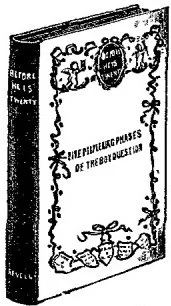
IS A VERY HELPFUL BOOK FOR PARENTS.
It is divided into five chapters, by as many different writers, each treating of a particular phase of a boy’s life.
The first chapter, “THE BOY AND HIS FATHER,” by Robert J. Burdette, is alone worth many times the price of the book to any father of a young boy.
The other chapters, “WHEN HE DECIDES,” “THE BOY IN THE OFFICE,” “HIS EVENINGS AND AMUSEMENTS,” and “LOOKING TOWARD A WIFE,” are all important and helpful.
104 pages, bound in cloth, embossed in jet and gold, price, . . . . . . . . . . . . . . . . . . . . . . . 75 cents.
PACIFIC PRESS, 43 BOND STREET, New York City.

THE SIGNS OF THE TIMES,

A SIXTEEN-PAGE Weekly Religious Journal. Doctrinal, Practical, Earnest, Protestant, Scriptural, Christian.
This really two dollar paper will be furnished at the following
Prices of Subscription:
Single Copy, One Year, Post-paid, $1.50
Single Copy, Six Months, Post-paid, .75
In Clubs of Ten or More to One Address, Post-paid, 1.25
To Foreign Countries in Postal Union, Post-paid, ($2) 8s.
Address, Signs of the Times,
12TH AND CASTRO STREETS. OAKLAND, CAL., U. S. A.

The Graphic Atlas AND Gazetteer of the World.

With over 220 Maps, Charts, Plans of Cities, etc.,
All revised to the present date.
—ALSO—
_GAZETTEER with nearly 55,000 PLACES and RESULTS of NEW CENSUS._
BY J. C. BARTHOLOMEW, F.R.C.S., F.R.S.E.
Quarto (size, 10⅜ x 8½ inches), half morocco, gilt top.
Publisher’s Price, $7.50
OUR PRICE, Post-paid, $3.75
Throughout the Atlas the countries of the world have been treated with fullness in proportion to their commercial importance and interest.
In the United States section a separate Map is given of each of the States and Territories.
The Canadian Provinces are treated in similar detail.
These Maps have been specially compiled from the latest and best Government Survey Maps, and have undergone local revision for the verification of New Counties, Townships and Railways.
Among the special features are Maps of the Hudson and Rhine Rivers, the Yosemite Valley, United States Railways, British Isles Railways, mean Annual Temperature, mean Annual Rainfall; also Maps showing environs of New York, Chicago, Philadelphia, Boston, San Francisco, New Orleans, Montreal, Quebec, Toronto, Ottawa, Rio Janeiro, London, Liverpool, Manchester, Moyville, Paris, Vienna, Rome, Constantinople, Cape Town, Jerusalem, etc., etc.
The GAZETTEER of the WORLD is a valuable feature for such a book of reference. It contains entries for about 55,000 places, is compiled from the latest authorities, and is specially complete in American names.
The results of the New Census have been incorporated.
For compactness and portability this volume is, in proportion to its ample contents, quite unique among Atlases.

—ADDRESS—

PACIFIC PRESS, 43 Bond Street, New York City.

Abiding Sabbath And Lord’s Day.

BY ALONZO T. JONES.
A pointed review of the $500 and $1,000 prize essays in support of the Christian Sabbath, so called. Those desiring some $1,000 reasons for keeping the first day of the week, will find them here. 173 pages, 20 cents. Pacific Press, 43 Bond St., New York City.

OUR PRISON LIGHT

Edited by one sending the Third Angel's Message to the perishing in prisons all over the land. Agents wanted. 50 per cent. commission. Trial year 20 cents. Terms and sample copy 2 cent stamp. Indorsed by the SENTINEL.
PRISON LIGHT. 40 Green Street, Brattleboro, Vt.

EVERY LADY WANTS OUR STOVE-POLISHING MITTEN.

SOCIAL VISITOR
SOCIAL VISITOR
Will polish a stove better than anything on earth, and keep your hands clean at the same time. Ladies buy it at sight. They all want it. Big Profits to Agents. Sample Mitten and Dauber by mail, 30 cts. We also send a Ladies' Magazine Free 3 months with each order. SOCIAL VISITOR CO. - Box 3139, Boston, Mass.

News Notes: Sunday Persecution, Armenian Massacre, Papal Methods

MASSACHUSETTS has seceded to the group of States now persecuting Seventh-day Adventists for following their usual vocations on Sunday. We will furnish definite information regarding the case in our next issue.
DISPATCHES from the East announce the massacre of several thousand Armenian Christians by Turkish Mohammedans. This is a revival of the old conflict between the crescent and the cross. The European powers have demanded an investigation and unless satisfactory explanations and reparations are forthcoming, this brutal act may prove to be the death of the “sick man of the East.”
THE SENTINEL has digressed this week from its usual quiet and conventional custom and has inserted a cartoon on the first page. Our object for doing so is explained in the article, “The ‘Modern Inquisition.’” Even the SENTINEL, which has long expected the developments there recorded, is, if possible, startled at the rapid apostasy of American “Protestants” to papal methods.
ALICE MORSE EARLE has added another book to the literature on New England. In it she tells of the diary of “little Anna Green Winslow, a Boston school girl of 1771,” in which “it crops out that certain Puritan reverends wouldn’t baptize children born on the ‘Lord’s day’! Labor on the Sabbath strictly prohibited!” As none of the editors of the SENTINEL lived at that time, of course we cannot vouch for the truth of this statement, but in the light of events more modern, it does not seem improbable.
THE Mail and Express, commenting on the recent outrages committed by the Turks upon Christian Armenians, says:
Mohammedanism is bent on the extermination of Christianity in Armenia. We have been felicitating ourselves on the fact that the age of religious persecutions has passed away.
Mohammedanism has always made use of the sword in propagating itself, and in this instance is but true to its animating spirit. We ought not to be surprised therefore to hear that the Mohammedan is conducting himself naturally. It is when professed Protestant Christians in the United States, and other enlightened countries, contrary to the animating spirit of true Protestant Christianity, begin such a war of extermination on their dissenting brethren, as is now in progress in Maryland, Tennessee, Massachusetts, Pennsylvania, Manitoba, Switzerland, New South Wales and elsewhere, that men are surprised. And the Mail and Express is now, and has been for several years, by giving aid and comfort to the American Sabbath Union, fostering this modern crusade in America, while denouncing Mohammedan persecutions in semi-barbarous Turkey.
In the New York Sun of the 13th inst. is a communication from a Russian, in which he undertakes to defend the persecution of Jews and Roman Catholics in Russia. Of the treatment accorded the Jews the writer says:—
The Jews were only three and a half millions of people against the hundred millions of Russians, but the three and a half millions of Jews oppressed the hundred millions of Russians to such an extent that the struggle for a living became hard.
This is absurd on its face. Less than three and a half per cent. of the people, having no part in the government, and enjoying only such rights as the majority see fit to accord them, could not possibly oppress the other ninety-seven per cent.
For the persecution of Roman Catholics the Sun’s correspondent offers this excuse:—
The persistent efforts of the Roman Catholic Church to convert the Russians from their own church must be stopped, and rightly so. Russia is ‘Greek Catholic,’ and must be so and remain so.
A parallel to this “argument” is found in an utterance by Secretary Leiper, of the Pennsylvania Sabbath Association. At the recent meeting at Williamsport, held in honor of the one hundredth anniversary of the Pennsylvania Sunday law, a Seventh-day Adventist minister approached Mr. Leiper, and said to him: “Your movement, if successful, will surely result in the persecution of Seventh-day Adventists.” Mr. Leiper’s reply was, in substance: “We can’t permit you people to desecrate the Sabbath [Sunday] and set a bad example before our children. We are in the majority and the minority must submit.” In other words, Seventh-day Adventists cannot be permitted to carry on their propaganda for the conversion of the people to the seventh day, to teach by their example, that Sunday is not a sacred day, and that the seventh day is the Sabbath. Pennsylvania is committed to Sunday-keeping and must remain so. The parallel is perfect; and the logic is as good in America as in Russia, but no better. It is the logic of religious bigotry and intolerance, whether in Russia or in America.
WE have received from the International Religious Liberty Association, two new issues of the Religious Liberty Library. They are numbers 25 and 26. The first is entitled, “The Immaculate Conception of the Blessed Virgin Mary,” and is a clear Biblical refutation of that gospel-perverting Roman Catholic dogma bearing that name. Let every soul who wishes to contend successfully for the faith once delivered to the saints against the rising power of Rome, read this tract; 16 pp., price 2 cents. No. 26 is entitled, “The Puritan Sabbath for ‘Physical Rest.’” We manifest our appreciation of the tract by printing it entire in this issue. Read it, and then send for a number to use in missionary work; 12 pp., price 1½ cent. Both numbers can be obtained at this office; and when ordered in quantities, at the usual discount.

A Letter From Brethren In Bonds.

“Centreville Jail, Centreville, Md.,
“November 11th, 1894.
“TO THE EDITOR OF THE SENTINEL— Dear Sir: It isn’t news to-day to readers of the SENTINEL that in Maryland Christians(?) are persecuting Sabbath-keepers because in keeping the law of God they break the civil law, which to-day is honored above God’s law. The vast majority seem determined that the first day of the week shall be observed as a Sabbath, notwithstanding the divine command requires men to remember and honor the seventh day because God honored it by resting on that day ‘from all his works which he created and made.’
“There are two of us in this jail for working on the first day of the week—W. J. Curlett and myself. There are two convictions against my companion, and three against me.
“I was arrested two different times. The first time I was charged with hoeing in my garden. The second time I was arrested on two charges, both of chopping wood on my wood-pile. On one of the Sundays when I worked, and for which work I was imprisoned, there was a person just a little way from my house, who was doing the same work that I was doing. I have cut wood in the town where I live, half of Sunday many a time, and without protest, before I began to keep God’s commandments.
“The jailer and his family are very kind and generous to us; and we feel to praise God for his promise never to leave nor forsake us, because we know it is true.
“I pray that God may help us to be faithful. R. R. WHALEY.”

You have reached the end of this edition.

The American Sentinel · Nov 29, 1894