The Youth’s Instructor, Vol. 34, No. 13.

THE LAPLANDER AND HIS COUNTRY

The Youth’s Instructor

Mar 31, 1886

S. D. A. Publishing Association · Battle Creek, Mich. · Mar 31, 1886

THE LAPLANDER AND HIS COUNTRY.
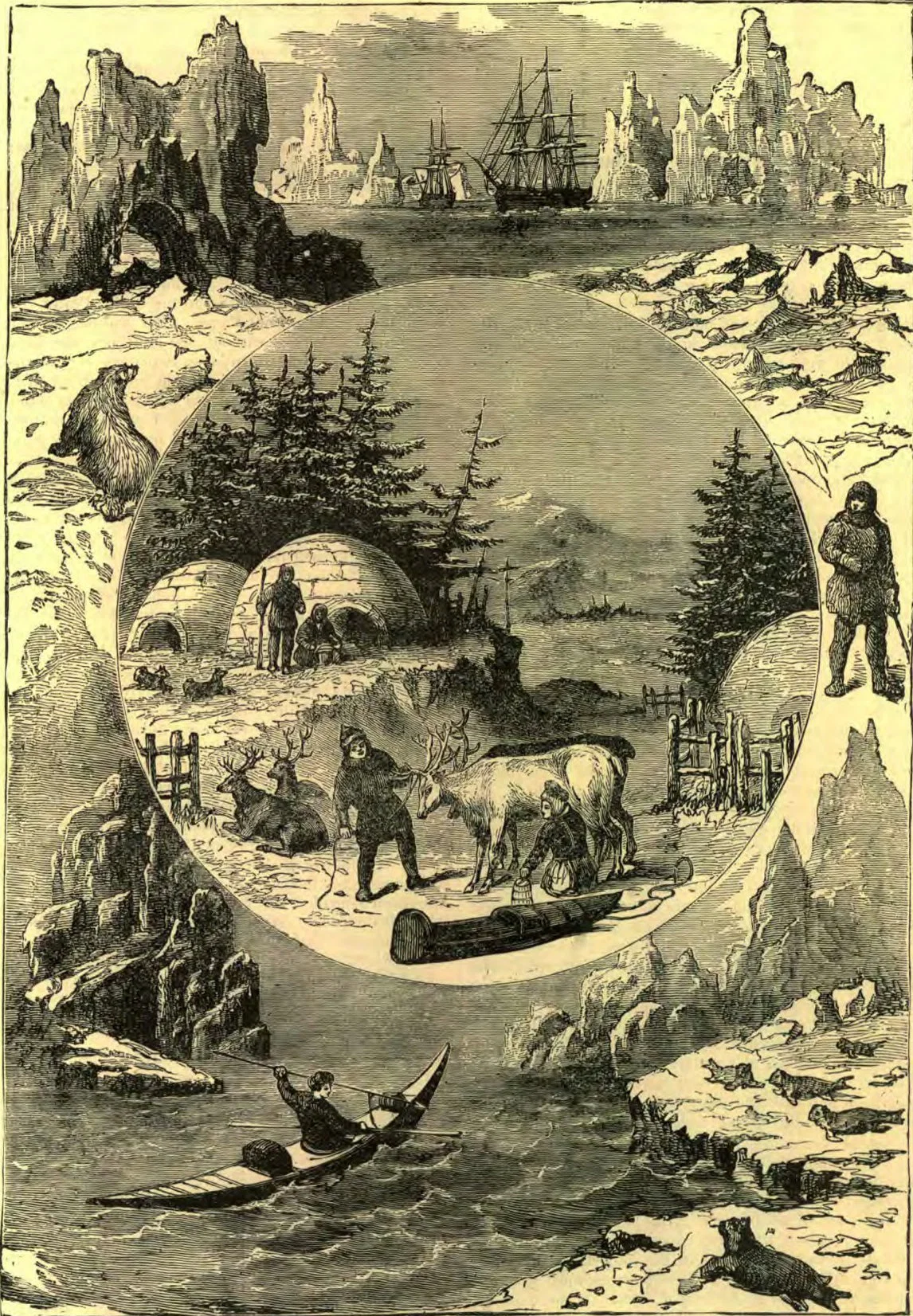
In the extreme northern part of Europe is a large tract of dreary country, about the size of France, called Lapland. It is inhabited by a stunted race of hardy little people called Lapps, or Laplanders, who number some twenty thousand, all told. This cheerless country is washed by Arctic waters on the west, north, and east, and on the south it is bounded by Norway, Sweden, and Finland. But there is really no true dividing line. This territory is often spoken of by geographers and travelers as Norwegian, Swedish, and Russian Lapland. If the size of the country were stated in figures, it would be some 500 miles in width by about 700 miles in length.
The Laplanders as a people are ranged into different classes, as the Fisher, the Mountain, and the Forest Lapps. These little folks call themselves Sami or Sabmelads. The word Lapp is a nickname given to these diminutive Northerners, and is said to be of Finnish origin, meaning “land’s-end folks.” In fact, it is held by some that the Lapps themselves are but an offshoot of the Finns.
In appearance, the Laplanders are short, being on an average a trifle over four and a half feet in height, with straight, black hair, small eyes, low foreheads, pointed chins, high cheek bones, scanty beard, and short necks. They are quick and active, but soon exhausted by hard labor. Being by nature mild and gentle, they do not seem to have many vices, only as they learn them by contact with their immediate neighbors. They have little excitability, but love their country, which they imagine is the pleasantest in the world. Their dress consists of caps, coats, trousers, and boots, made of fur and leather and stout, coarse cloth. The dress of the women is mainly distinguished from that of the men by a variety of ornaments.
The Lappish ladies are very skillful in cutting and making the garments worn by both sexes, and in sewing them together with the sinews of reindeer. The men are no less ingenious in making canoes and sledges, and bows and arrows, which many of them still use in place of guns.
As a people, the Lapps are somewhat shy, and it is said by those who understand their habits and ways, that they never look strangers square in the face. Their manner of life is rather patriarchal, the father of the household having complete authority over all the affairs; and at death this right passes to the eldest son.
The sea and river Lapps, who live by fishing and hunting, do not move much from place to place; but the mountain and forest Laplanders are a nomadic, or wandering people, and are continually moving about from one part of the country to another. The dwellings of the mountain Lapps are small tents, consisting of a skeleton of bent sticks, covered with coarse cloth, or skins. In the top is a hole which serves as a chimney, or flue, for the fire underneath. The sea Lapps have better habitations, usually consisting of wooden huts with several apartments. The latter generally live on fish, flesh, and fowl, and those near the White Sea obtain a limited supply of bread from the Russians, which is esteemed as a great delicacy.
We must not imagine, however, that nothing can be raised in the country of the Lapps. Rye and barley are grown as far north as the 70th degree of latitude, and there is also an abundance of edible berries. The streams and lakes abound with salmon and pike, trout and other fishes, while myriads of water fowl, partridges, and ptarmigan are found in various parts. In the fjords, or bays, of the Arctic Ocean and White Sea, the former of which do not freeze over on account of the warm water of the Gulf Stream, there is an abundance of cod and herring, halibut and seal, which give employment to thousands of fishermen.
In the interior, also, there is much that is serviceable to man, although agriculture cannot be carried on to any great extent by the land-tilling Lapps, on account of the extreme cold, which lasts for about nine months of the year. There are mines of iron, copper, and coal, and vast forests of birch, spruce, and fir, with a remarkable growth of lichens and moss, furnishing an inexhaustible supply of food and pasturage for the reindeer, which constitutes the great source of the Laplander’s wealth.
To the Laplander, the domestic reindeer is invaluable, being in fact his ox, his sheep, and his horse, in one animal. With the milk of the herd he makes cheese; the flesh is as good for food as that of the sheep or ox; and as an animal of draught, the reindeer is more fleet than the horse, being able to draw a load of 240 to 300 pounds over the snow at the rate of fifteen to twenty miles per hour for hours in succession. It frequently travels one hundred and fifty miles in less than twenty hours. There are said to be between three and four hundred thousand reindeer in Lapland, the more wealthy sometimes owning one or two thousand apiece.
The Laplander does not have any government of his own, and the entire Lappish territory is included in the dominions of Norway, Sweden, and Russia. Formerly this singular people were all pagans, but latterly they have nominally embraced Christianity, and at the present time those belonging to Norway and Sweden have been baptized into the Lutheran faith, while those living under the protection of Russia belong to the Greek Church. Through the efforts of missionaries, the Lapps have a translation of a part of the Scriptures into their dialect, called the Lapponese Version.
While the Lapps do not have any literature of their own, there are certain schools where their dialects are taught; and it is said that the Lappish youth have shown considerable ability in acquiring the knowledge imparted.
May we not hope that in that great day when all the inhabitants of this fallen world shall stand before the great white throne, there will be many Laplanders there who have been washed in the blood of the Lamb, and who will praise God eternally for that salvation which was so freely offered to every nation, and kindred, and people, and tongue? G. W. A.

“THE MISSIONARY TO HORSES.”

Boys are always fond of reading about heroes—men who have done great and noble deeds, and who have left the world better off for their having lived in it. The hero I want to tell you about here has done all his work for the good of suffering animals—the “missionary to horses,” he has been called by one author who has written lovingly about him.
Edward F. Flower was born in England in 1805. His father was a man of wealth, and at the age of five his son received the welcome gift of a pony. “Little Moses” was the pony’s name, and almost with the gift came the boy’s first lesson as to the way in which he should treat dumb animals. Edward was displeased with something the pony did, and whipped him, whereupon Mr. Flower the elder promptly whipped Master Edward, asking him how he liked the operation. “Not at all,” was the boy’s reply. His father then explained that an animal should never be punished except for grave misconduct any more than a boy. Edward learned the lesson well, and from that time he never failed to treat with kindness any animal that he had to do with.
Mr. Flower’s boyhood was spent in the western part of our own country, where his father established a large stock farm. Here his time was mostly spent among animals, which became his friends and playmates. At the age of twenty he returned to England. On going from the free life of our Western plains to the crowded streets of English cities, one of the first things Mr. Flower noticed was the cruelty shown in the treatment of animals. Every overdriven cab horse, every unhappy looking dog, every mule or goat compelled to work hard and suffer blows from unfeeling men and boys, appealed to his heart. He resolved to do everything he could to help the poor creatures who could not speak to tell their own wrongs.
The way in which carriage-horses are harnessed, and especially what is called the “bearing-rein,” aroused Mr. Flower’s fiercest indignation. He issued a pamphlet entitled “Horses and Harness,” in which he says, “A tight bearing rein is used to pull the horses’ heads up, a fixed martingal to pull them down, and close blinkers to prevent them from seeing their way.” He maintained that no horse could have his head so strapped up without suffering the greatest misery. Yet it is done by people who claim to be thoughtful and considerate. He even tells about going to a meeting of the Society for the Prevention of Cruelty to Animals, and finding a dozen carriages at the door with the horses suffering in this way. He tried to call the attention of the meeting to the subject, and they ordered him to be put out of the room.
But the more difficulties Mr. Flower met with, the harder he worked. Everywhere he went, particularly in Southern countries, like France, Italy, and Egypt, he saw animals overworked and overladen. He did all he could in the way of talking and writing and interesting influential people in the cause. In conjunction with Sir Arthur Helps, he issued a book on the subject, entitled, “Animals and their Masters.” When he was seventy-five years old, he prepared, with the help of his wife, a volume called the “Stones of London.” This was to call attention to the various methods of paving city streets. Bitterly he denounces the terrible cobble-stones over which the poor cart-horses are compelled to drag their heavy loads. Their disappearance from the main thoroughfares of nearly all our great cities is the direct result of his efforts.
Few men have worked more faithfully in a good cause than Mr. Flower. The story of his life in the West, and the incidents of his long and faithful struggle to lighten the troubles of animals, read like a romance. No man was ever more interested or enthusiastic in any work he had undertaken. Of the terrible “bearing-rein” which troubles the horses so much, he has been heard to say, “Though I am old, I do not despair of living long enough to have it engraved upon my tombstone, ‘He was one of those men who caused the bearing-rein to be abolished.’”—Harper’s Young People.

TELL THE TRUTH.

WHAT a treasure a really truthful child is! and what a nuisance and source of trial is a child who will deceive and tell lies! Whatever good traits such a child may possess, none call him good. Certainly there must be something particularly bad about lying. Let us see if we can find out by these little incidents that I shall tell you, wherein the evil lies.
Mr. Brown and Mr. Porter were to meet in a certain city to do some important business. Mr. Brown was to write to his friend telling him what day to meet him there. After sealing his letter, he called his little boy Willie to him, and said: “Here is an important letter which I wish you to take to the office. Be very careful not to lose it.”
“Yes, sir,” said Willie, as he started with the letter. But on the way he met some boys playing ball. As he stopped a moment, the ball went by him, and he ran to fetch it.
Before he was aware, he had played there half an hour. Then he started on his errand; but where was his letter? Lost! He went back and hunted a long time for it, but could not find it. Now he was frightened; for his father had told him it was a valuable letter, and charged him to be careful. His conscience said, “Go right home and tell your father all about it. Maybe he can write another one.” But Satan said, “Then you will be punished, and be called a bad boy. Say nothing about it. Nobody will ever know it.”
After waiting as long as he dared to, Willie went home. His father said, “You put the letter in the office all right, did you, Willie?”
For a moment there was a struggle between right and wrong, then Willie said, “Yes, sir.”
His father believed him. At the appointed time he went some two hundred miles to meet Mr. Porter. Of course his friend was not there. After waiting a whole day, he had to return without accomplishing anything. Willie’s lie cost Mr. Brown over two days of valuable time and $12 in money. Had he told the truth when he came home, his father could have written another letter, and saved all this expense. You see how much trouble a lying child will make for those who have anything to do with him.
Here is another case: George and his father were at work on the farm in a back field. His father had to go home first, and he charged George to be sure to put up the bars when he came home. George said he would; but he forgot it till he had reached the house, and put out the team. What should he do? It was now dark, and the bars were a long way off. Surely no harm would come if he should wait till morning, and then run down and shut the bars. Father would never know it. Just as George was going to bed, his father said, “Did you shut the bars, George?”
“Yes,” said George, and hurried on. But he could not sleep well; he kept thinking about those bars and his lie. Early in the morning he ran down to the lot. But, alas! the cattle had gone in during the night, and had destroyed a large amount of grain. Had he told the truth to his father, all this would have been saved. He felt bad, but that did not remedy the damage done. Now he had to be blamed and punished, besides being found out to be a liar.
Now you can see why it is such a bad thing to tell falsehoods. Willie lost the letter by carelessness. That was bad enough; but if he had told the truth about it, this could have been remedied. It was bad to forget the bars; but with a little trouble this could have been corrected. Some fault is generally committed, and then a lie is told to cover up the wrong, which only makes the wrong greater.
God in his holy law has forbidden us to lie. And again the Lord says, “Lie not one to another.” That means that you must always tell a thing just as it is when you tell it at all. Again the Bible says, “Cursed be the deceiver.” A person may think that he can deceive, and not be found out. But listen to the word of God again: “Be sure your sin will find you out.” Cain killed his brother; and when God asked him, “Where is Abel thy brother?” he said, “I know not.” But Cain could not hide his crime by his deception. Joseph’s brethren sold him, and then deceived their father about it. But their sin found them out, though it was a long time afterwards. So every lie will be found out sometime, if it is not till the Judgment.
We remember how Jacob deceived his father. He said that he was Esau. His sin was soon found out, and then he had to leave his home, and he never saw his mother again. He suffered long years for telling that lie. Sometimes, as in the case of Ananias and his wife, God punishes people immediately and terribly for lying.
When the Lord tells who shall dwell with him in heaven, he includes him that “speaketh the truth in his heart.” Ps. 15: 2. Those who speak lies shall go into the lake of fire, while those who speak the truth will dwell with God. This shows very plainly how God loves those who speak truthfully, and how he hates lying. Hence we have this solemn warning: “Deceive not with thy lips.” When a boy loses some tool, and then tells his father that he has not had it; when a girl breaks a dish, and tells her mother that she does not know anything about it, that is deceiving with the lips. But do you know that it is Satan who tempts children to deceive? Jesus says that Satan “is a liar and the father of it.” The devil was the first liar, and he is the one who has led others to lie. Thus Peter said to Ananias: “Why hath Satan filled thine heart to lie?” Probably Ananias never thought that Satan put it into his heart to tell that falsehood. Just so, when a child does something which is not right, Satan is watching and tells the child to hide the fault, to say that he did not do it, to say that he knows nothing about it.
Now, children, the best way is to be brave and true, and tell the real truth about everything. Tell your father the truth; tell your mother the truth; tell your teacher the truth; tell the truth every time and always. You will feel much better yourself, and all will esteem you more highly, while you will save yourself and others much trouble.
D. M. CANRIGHT.

WRITTEN IN MARCH.

The cock is crowing, The stream is flowing, The small birds twitter, The lake doth glitter, The green field sleeps in the sun; The oldest and youngest Are at work with the strongest: The cattle are grazing, Their heads never raising; There are forty feeding like one!
Like an army defeated, The snow hath retreated, And now doth fare ill On the top of the bare hill; The plough-boy is whooping anon, anon. There's joy in the mountains, There's life in the fountains! Small clouds are sailing, Blue sky prevailing; The rain is over and gone.
—Wordsworth.

DO YOU THINK?

THERE are many people who never really think. They sometimes plan, contrive, and anticipate; but from one week's end to another they never spend an hour in earnest, careful thought. Many a man does his first honest, square thinking in the cell of a prison. He has rushed on, heedless and thoughtless, until at length he is stopped.
This thoughtlessness is one of the special evils of the age. Men live in haste. They rush and drive, and wreck their dearest interests for lack of thought. The Sunday Hour tells of a dying father who said to his son,—
“Promise me one thing. It is my dying request. Will you grant it?”
The son, sobbing, gave his assent.
“I want you for six months after my death to go quietly and alone to my room for half an hour every day, and think.”
“On what subject?” inquired the boy.
“That,” replied his father, “I leave altogether to yourself—only think!”
He had been a disobedient son, but he felt he would try and make some amends by keeping his promise; and when his father died, he did try to fulfill that last request.
At first his thoughts wandered to all sorts of subjects, till at length conscience began to work, and he was awakened to a sense of his wickedness and evil doings, and he set himself to amend his life and ways.
There is many a disobedient son who, if he would only think, would change his life. But alas! how much it takes to set some people to thinking. When health and life are wasted, then they begin to think.—The Little Christian.

LET YOUR LIGHT SO SHINE.

“During a voyage to India, said an earnest minister, I sat one dark evening in my cabin, feeling thoroughly unwell, as the sea was rising fast and I was a poor sailor. Suddenly the cry of ‘man overboard!’ made me spring to my feet.
“I heard a tramping overhead, but resolved not to go on deck, lest I should interfere with the crew in their efforts to save the poor man.
“What can I do? I asked myself, and instantly unhooked my lamp. I held it near the top of my cabin, and close to my bull’s eye window, that its light might shine on the sea, and as near the ship as possible. In half a minute’s time I heard the joyful cry, ‘It’s all right; he’s safe,’ upon which I put my lamp in its place.
“The next day, however, I was told that my little lamp was the sole means of saving the man’s life; it was only by the timely light which shone upon him, that the knotted rope could be thrown so as to reach him.
“Christian workers, never despond or think there is nothing for you to do, even in dark and weary days. ‘Looking unto Jesus,’ lift up your light; let it ‘so shine’ ‘that men may see,’ and in the bright resurrection morning what joy to hear the ‘Well done!’ and to know that you have, unawares, ‘saved some soul from death!’”

YESTERDAY

Yesterday is gone. While we were sleeping last night, it slipped away, never, never to return.
Where is it gone that we may not see its face again? It is with God. And all that it saw in us of good or bad is with him too!
Perhaps we were thoughtless, unloving, unjust, yesterday.
Perhaps our unkind word or act made a deep hurt in some tender heart yesterday. We are sorry, but that does not take away the sting!
Soon, oh, how soon! to-day will be yesterday. We may not call yesterday back and live it over again, but we may live so to-day that when it is past we shall not have to grieve over it.
Do you ask how? Take the minutes from God’s hand. Say to him, “Father, these are thine; what shall I do with them?” and really listen to hear him tell you what to do, how to speak, how to act!

Souls Who Bring Joy Wherever They Go

THERE are souls in the world who have the gift of finding joy everywhere, and of leaving it behind them when they go. Joy gushes from under their fingers like jets of light. Their influence is an inevitable gladdening of the heart. It seems as if a shadow of God’s own gift had passed upon them. They give light without meaning to shine. These bright hearts have a great work to do for God.—Presbyterian Observer.

SAYINGS AND DOINGS.

WE do not pluck our grapes from thorns, Nor figs of thistles gather; The evil tree bears evil fruit; The evil deeds bring ill repute; Good trees bring good fruit ever.
So evil teaching, word or deed, Doth evil fruit engender; And our example, good or ill, Must blight or bless—its end fulfill: Good follows good forever.

FIRM FOUNDATIONS.

Frank R. Stockton, in his paper entitled “Great Rome Again,” which appeared in the November St. Nicholas, furnishes some wonderful things about the foundations of the present city of Rome. He says:—
“There is a church in Rome, called San Clemente, which is, in some respects, an exceedingly curious edifice. Here we find four buildings, one on top of another. The uppermost is the present church, built in the year 1108, and we shall see some interesting decorations of old-fashioned mosaic work on its walls and ceilings. But we shall not spend much time here, for there is another church below this, and under the surface of the ground, which we very much wish to see. This is a church of the early Christians, which was first mentioned in the year 392. During one of the wars of the Middle Ages, the upper part of this building was entirely destroyed and the rest much damaged; and about twenty-four years afterward, the present church was built over it, and partly on its walls. A stair-way now leads down into this old church, and we can wander about the nave and aisles in which the early Christians used to worship. On the walls are a number of fresco paintings, representing Bible scenes and instances in the life of St. Clement, for whom the church was named. There are also other subjects, and some of these paintings are still in a very good condition, so that it is quite easy to see what they represent. In order that there shall be no mistake, the names of some of the persons are painted beneath them. Of course all the windows are blocked up now, and the man who takes us down carries a light; but on certain days this ancient church is illuminated with many candles, and then it is crowded with visitors. Below this church are the remains of Roman buildings of the time of the emperors, on the foundations of which the old Christian edifice was built. Three rooms have been excavated here, and a stair-way leads down to them, but they are very wet and unpleasant. Still below these are great walls belonging to a building of the time of the Roman republic. This edifice was of massive stone, and on its walls were erected the later Roman buildings, which are of brick. When that lower edifice, now like the ground-floor of a three-story cellar, was in use, it was, of course, on the surface of the ground.”
“There are, no doubt, many persons now living in Rome who have beneath them the residence of some gentleman of the Middle Ages, under which, perhaps, is the home of a Roman family of the time of the Cæsars; and this may have been built upon the foundations of another Roman house, which was considered a good place to live in some five or six hundred years before. It must be a very satisfactory thing, when one is going to build a house, to find beneath the ground some good substantial walls which will make excellent foundations. It very often happens that these remains of ancient buildings are built of larger stones, and are firmer and more solid, than the houses which are erected upon them. There is another side, however, to this matter, and the remains of old buildings are frequently very much in the way of those who wish to erect new houses, for it does not always occur that the ancient walls are in the right places, or of a suitable kind, to serve as foundations for the modern building. Then they have to be dug up and taken out, which is a great labor as well as expense.”

IMPORTANT BIBLE SUBJECTS.

LESSON 15.—THE 2300 DAYS AND THE JUDGMENT.

(Review.)
1. What vision had Daniel in the third year of Belshazzar’s reign? Read Dan. 8:1–14.
2. In connection with this vision, what part had Gabriel to act? Verses 15–27.
3. What hindered the completion of his work? Verse 27.
4. What part of the vision was left unexplained?
5. When did he return to complete this task? Dan. 9:1, 2, 20–22.
6. What assurance did the angel give Daniel, and what did he request him to do? Verse 23.
7. How did Gabriel then take up the unexplained portion of the former vision? Verse 24.
8. How did he give Daniel a starting point for the 2300 days? Verse 25.
9. Explain the triple nature of this commandment. Read Ezra 1; 4; 5; 6; 7.
10. How may we know that the Lord regarded the commandment as threefold in its nature? Ezra 6:14.
11. When was the decree issued that made this commandment complete? Ezra 7, margin.
12. How may we know that the date of the seventy weeks is also the date of the 2300 days? See definition of the word rendered determined.
13. Since the prophetic period of 2300 days began B. C. 457, when would it end?
14. What was to take place at that time? Dan. 8:14.
15. Show that the cleansing of the sanctuary must include an examination of the records, and a decision of every man’s case. Dan. 7:9, 10; Rev. 20:12; Luke 20:35; 21:36.
16. Who presides at this awful tribunal? Dan. 7:9.
17. Who appears as an advocate for all faithful believers? 1 John 2:1; Heb. 9:24.
18. How, then, can it be said that “The Father judgeth no man, but hath committed all judgment unto the Son”?—This has reference to the Executive Judgment. See John 5:22, 26, 27.
19. When will this Executive Judgment take place? Verses 28, 29; Rev. 20:5; 1 Thess. 4:16; 2 Thess. 1:7–10; 2:8; Jude 14, 15.
20. Who will assist Christ in the work of judging wicked men and angels? 1 Cor. 6:2, 3.
21. When will this work of judgment be carried on? Rev. 20:4.
22. What will take place when the thousand years are finished? Verses 7, 8.
23. What will be the fate of Satan and his followers? Verses 9, 10.
24. Why was it to be expected that mankind would be warned of the approach of the judgment? Lev. 23:24; Joel 2:1; Rev. 14:6, 7.
25. How was this expectation fulfilled?
26. Is it the purpose of God that this warning voice should continue after the cleansing of the sanctuary begins? Rev. 14:8, 9, 10.
27. How long will this warning be proclaimed?—Till the work is finished in the most holy place of the heavenly sanctuary.
28. When asked, “What shall be the sign of thy coming, and of the end of the world,” what signs did our Saviour give? Matt. 24:29–33.
29. How and when have these predictions been fulfilled?

SABBATH-SCHOOLS, ATTENTION!

Let our schools bear in mind the recommendation passed at the late session of the General Sabbath-school Association, as published in the S. S. Worker, and donate liberally of this past quarter’s funds to the Scandinavian Mission. In accordance with the plan, they may “donate a certain proportion, as one half, or one third; or they may donate all above the running expenses.” “Every one, according as he purposeth in his heart, so let him give; not grudgingly, nor of necessity; for the Lord loveth a cheerful giver.” Send your donations to the General S. S. Association, Battle Creek, Mich., where an account will be kept of them, and the amount handed in to the mission for which it was intended.

The Note-Book and Lead-Pencil in Sabbath-School Work

The note-book and the lead-pencil are important implements of Sabbath-school preparation. The model Sabbath-school worker, whether teacher or superintendent, is careful always to have these two implements at hand. Does a bright thought or an apt illustration for next Sabbath’s lesson flash into his mind during the busy hours of the week, does he glean some new principle from observation of the work of others, out comes the note-book, and down goes the timely suggestion in black and white. The model Sabbath-school worker knows that memory is a treacherous custodian for happy thoughts, and he prefers to entrust them to the safe guardianship of his trusty note-book, which never forgets.

WHERE OUR FORESTS ARE GOING.

The rapid disappearance of our forests has materially advanced the price of wood, and necessitates a more extensive use of coal than formerly, which makes it a matter of interest to know how our forest trees are being appropriated. In the following paragraph may be found the Fishkill Standard's disposition of them:—
“To make shoe pegs enough for American use, consumes annually one hundred thousand cords of timber; and to make our lucifer matches, three hundred thousand cubic feet of the best pine are required. Lasts and boot trees take five hundred thousand cords of birch, beech, and maple, and the handles of tools five hundred thousand more. The baking of our bricks consumes two million cords of wood, or what would cover with forests about fifty thousand acres of land. Telegraph poles already up represent eight hundred thousand trees, and their annual repair consumes about three hundred thousand more. The ties of our railroads consume annually thirty years' growth of seventy-five thousand acres; and to fence all our railroads would require forty-five million dollars, with a yearly expenditure of fifteen millions for repairs. Our packing-boxes cost, in 1874, twelve million dollars, and the timber used each year in wagons and agricultural implements costs more than one hundred million dollars.”

A FORCIBLE LESSON FROM A BIRD.

ONE'S outward acts are the best index to the heart. If kindness is a marked trait of his character, it will shine in his intercourse with others. However, it is not a sure criterion when one is kind to his kin or those most agreeable to him; for the truly kind, like the great Teacher, are equally attentive to the unfortunate in any station. Beautiful and most impressive lessons are often taught by the mute creation, an instance of which is furnished by the Presbyterian Observer. It is in the character of a little bird, which assists one of another tribe as gracefully and attentively as if it belonged to her own little brood. The story is told thus:—
“Last spring, one of the birds in Dr. Prime’s collection—a gray sparrow—became blind. Straightway, a little dark brown and white bird, known as a Japanese nun, and named Dick, became the sparrow’s friend. The sparrow’s home had a round hole as a door-way. Little Dick would sit down on a perch opposite the hole and chirp. The blind bird would come out, and guided by Dick’s chirps, would leap to the perch, and so on to the seed cup and water bottle. But the most curious part of the performance was when the blind sparrow would try to get back into the house. Dick would place the sparrow exactly opposite the hole by shoving him along the perch. When opposite, Dick would chirp, and the blind bird would leap in, never failing.”

BUILDING A MOUNTAIN ROAD.

It is really wonderful what cool-headed, venturesome persons have accomplished by way of forcing thoroughfares through seemingly impassable tracts of country. Probably a great share of the traveling public never realize how much they are indebted to these brave men for their rapid transit from place to place. A few paragraphs from the Youth’s Companion describe what some daring men have had to forego in the performance of their work. We quote as follows:—
“The traveler in that portion of the Himalayas under British protection journeys securely along roads which at dizzy heights wind around perpendicular precipices. As he looks at the cliffs, destitute of natural ledges, and then at the torrent several thousand feet below, he wonders at the cool head, the steady hand and foot, the power of endurance, and the persistent defiance of danger and obstacles, of those who first built these roads. Not less remarkable, however, were the qualities of those who built some of the railroads in our Western territories.
“The English engineers found themselves face to face with grander obstacles than any they had ever attacked. Cliffs rising several thousand feet from the river, almost as smooth as a brick wall, had to be passed.
“The services of the best cragsmen in the mountains were secured. The boldest of them, who could creep where a goat would scarcely venture, bored holes at intervals of fifteen feet, in which he fixed strong iron bars. On these he hung ropes and planks from which his fellows could begin their work, while suspended thousands of feet above the river.
“When the bold cragsman came to a part of the cliff so smooth that even he could find no footing, he would scale the precipice by going back and ascending it at some point which afforded footing. Fixing an iron bar in the rock as low down from the top as he could, he would be let down by a rope until he hung at the level of the proposed road. Then boring the rock, he would fix therein an iron bar, and connect it by a rope-bridge with the last point gained.
“The active hill-men, careless of dizzy heights, would crawl on the bridge, bore the cliff, and let in bars at the intermediate points. On these bars, planks were laid, on which the coolies worked, who built the viaducts.”

A PLEASING STORY.

A LITTLE girl who lives on South Fifth Street, in Philadelphia, found a butterfly in the yard one cold morning last October; and seeing that it was almost dead, she took it into the house for pity’s sake. She found a glass jar, with a lid, through which air could pass, and into the jar she dropped the beautiful little insect. Not only did the butterfly come back to life, but it soon got to be quite frisky, fluttering round and round its new home. Since then, the butterfly has been the pet of the little girl. “Brownie” is the butterfly’s name, which is appropriate enough, since brown is a marked color in its coat. “Brownie” has grown fat on sugar and celery, with which it is served for breakfast, dinner, and supper. It knows its little mistress very well. Says one who visited “Brownie:” “When the lid was removed from the jar, the butterfly flew out and lit on the owner’s arm, spread its wings, and took a good stretch. It then walked up her arm to her shoulder, took a look around the room two or three times, and returning, alighted on the little girl’s head. It could be easily seen that the insect recognized its owner, for though several times, while it was on its flight, she changed her position, the butterfly flew to her.” It may be remarked, in conclusion, that though “Brownie” lives in a glass house, it does not throw stones.—Golden Days.

WEIGHING A HAIR.

“To number the hairs of your head is not a very difficult task,” the refiner of the assay office said. “A very close approximation can be made by weighing the entire amount of hair on a man’s head and then weighing a single hair. The weight of the former divided by that of the latter will, of course, give the desired number. If you pluck out a hair from your beard, I can show you.”
A long and straggling one was accordingly detached, the refiner putting it on a scale, which was enclosed in a glass case, and graduated with extreme accuracy. With little weights of aluminium he piled up one arm until an equipoise was reached. The hair weighed three milligrammes. “If you reduce this to figures,” he said, “it would require 8,000 hairs to weigh an ounce, and suppose you have six ounces, you have 48,000.”—New York Sun.

THE CARIOLE.

The cariole is the national carriage of Norway, and is described in a late exchange as being “like a spoon on wheels, drawn by one small, and always very sober horse. You sit in the bowl, and it is a tight fit. Your legs stretch straight along the handle, as though you were sitting on the bottom of a canoe. The end of the handle is turned up to brace your feet, and there you are, filling the inside full. You either may drive yourself, or be driven by a small child perched somehow on the outside. The harness is made up largely of rope, and the cariole looks as if it were made of fragments saved from Noah’s ark or picked out of the wreck of Pharaoh’s chariots. But the whole affair is strong, and takes you safely to your destination.”

Elevation of the Himalaya Mountains

The highest range of mountains is the Himalayas, the mean elevation being estimated at from 16,000 to 18,000 feet.

A LAUGHING CHORUS.

Oh, such a commotion under the ground When March called, “Ho, there! ho!” Such spreading of rootlets far and wide, Such whispering to and fro! And “Are you ready?” the Snow-drop asked; “’Tis time to start, you know.” “Almost, my dear,” the Scilla replied; “I’ll follow as soon as you go.” Then, “Ha! ha! ha!” a chorus came Of laughter soft and low From the millions of flowers under the ground— Yes, millions, beginning to grow.
“I’ll promise my blossoms,” the Crocus said, “When I hear the bluebirds sing.” “And straight thereafter,” Narcissus cried, “My silver and gold I’ll bring.” “And ere they are dulled,” another spoke, “The Hyacinth bells shall ring.” And the Violet only murmured, “I’m here,” And sweet grew the air of spring. Then, “Ha! ha! ha!” a chorus came Of laughter soft and low From the millions of flowers under the ground— Yes, millions, beginning to grow.
Oh, the pretty, brave things! through the coldest days, Imprisoned in walls of brown, They never lost heart, though the blast shrieked loud, And the sleet and the hail came down; But patiently each wrought her beautiful dress Or fashioned her beautiful crown. And now they are coming to brighten the world, Still shadowed by winter’s frown; And well may they cheerily laugh, “Ha! ha!” In a chorus soft and low, The millions of flowers hid under the ground— Yes, millions, beginning to grow.
—Harper’s Young People.
Continue reading: The Bird of Piety