Signs of the Times, Vol. 43, No. 38.

Sixty Miles of Sin

Earlier text: A VISIT TO THE

A UNIQUE HEALTH ENTERPRISE

Training Students to Establish Rural Health Homes—The Growing Demand for Such Workers
By E. A. Sutherland, M. D.
THE Rural Sanitarium, located at Madison, Tennessee, near Nashville, was established eight years ago. To open a sanitarium on a farm, nine miles from the city, with none of the special attractions found at frequented watering places or mountain resorts, and with only meager facilities for transportation, required considerable faith.
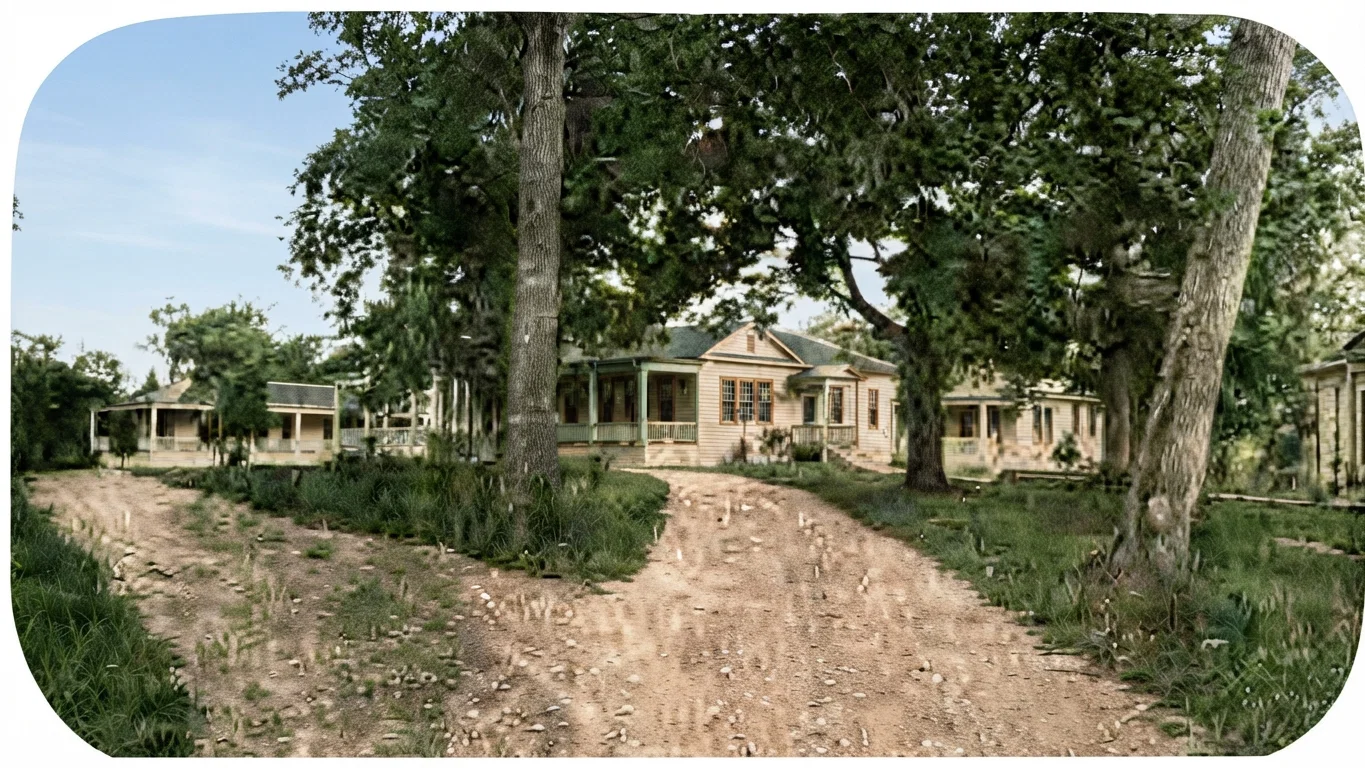
It was decided to work out the idea of a combination school and sanitarium under one and the same management, and also to build in such a way that students might be encouraged to duplicate the work of this sanitarium on a smaller scale in many of their rural schools. With this thought in mind, three plain, one-story buildings were erected not far from the institute's school building. One contains guest rooms for patients; another, two treatment rooms and a medical office; and in the third are the dining room, the kitchen, and the parlor.

Advantages of the Cottage System

ONE reason patients give in favor of the "cottage system" of the Rural Sanitarium is that the institutional spirit is minimized. Guests live in cottages. There are no elevators; there is no stair climbing; and the out-of-doors is at first hand, for the patients practically live, a large portion of the year, on the large porches and covered ways about the cottages. In the beginning, this "cottage system" was an experiment seriously questioned by many. It is now recognized by the medical fraternity as having peculiar advantages.
The cottage plan lessens the danger from fire, and limits the spread of infectious diseases. It eliminates an elaborate and expensive heating system, and greatly reduces operating expenses. It makes possible a small, inexpensive, yet complete building with which to begin operations, and this may form a nucleus for additions from time to time as there is a demand for larger quarters. This is no mean advantage where capital is limited, where debt is to be avoided, and where it is desirable to demonstrate to students what can be done with small expenditure and with simple equipment.
Thoughtful attention to hygienic diet, hydrotherapy treatments, careful nursing, kind attention on the part of the helpers, a wholesome Christian atmosphere, an abundance of sunshine and pure air, and moderate exercise, have, with God's blessing, helped many to regain their health.

From Emptiness to a Waiting List

AT first, it was a serious question how to secure patients. A modest announcement was sent out, stating when the institution would open its doors. Two patients presented themselves. They received as careful attention as though there had been a score. They regained physical health, and went home full of kind words for the institution. Others came, and the policy of advertising through pleased patients has been strictly maintained. To-day there is a constant waiting list.
Practically all the earlier patients came from Nashville, but gradually the influence of the institution was widened. It is interesting to watch the results upon a town when a pleased patient returns home. Some three years ago, a lady living in a city two hundred miles from Madison heard of the Rural Sanitarium. She spent several weeks here. On her return, another patient from the same town came on her recommendation.
Ten patients have come from that town as the result of that one first patient who went home pleased with conditions and treatments.
From another community, the sanitarium has had twenty-five patients during the last two years, as the result of one satisfied patient. There is a strong sentiment, on the part of reputable doctors, against the spending of much money on printer's ink, by medical institutions. These cases illustrate an inoffensive way of advertising a medical missionary work.
The original sanitarium idea is a quiet, retired place, away from the contaminated atmosphere of the city, with an abundance of grass and shade, and other natural things which soothe the tired and overstrained nerves.

A Great Friend-Maker

PATIENTS appreciate contact with the student body. They are interested in the school and its operations. They freely visit all the departments of the farm, the dairy, and the gardens. When able to do light work, they frequently handle the hoe alongside some young man in the school. Or they pick grapes or berries with the students.
The teacher of pedagogy in one of the South's most popular normals brought his class of fifty on a tour of inspection to what he calls his "demonstration station," the Nashville Agricultural and Normal Institute; and the whole company took dinner with the school family, eating food prepared by student cooks and served by student waiters.
The two parts of the family—the sanitarium guests, and the teachers and the students—are associated professionally, and they mingle together fraternally, each profiting by the association. There is no question but that the sanitarium has made more friends for Christian education, throughout the South, than any other department of the training school.
Vegetables with the dew still on them in the hands of the cook; fruits fresh from the trees and the vines; milk and cream direct from the sanitarium dairy,—these are some of the things patients appreciate and do not hesitate to compliment. The training school, with its farm, dairy, and gardens, solves the problem. These industries carried on by the student body dignify labor, in the eyes of many unaccustomed to such sights. And the beauty of it is that some of this interested group of spectators form new habits at the sanitarium, and return home to engage in some kind of useful labor, perhaps not for mercenary reasons, but for the better health that such a life brings.
Students in training to establish rural health homes are taught to coöperate with local physicians. We do not administer poisonous drugs. For results, we depend largely upon scientific hydrotherapy and kindred methods of treatment, upon proper diet, fresh air, and sunshine. We teach the harmfulness of intoxicating drinks, tobacco, tea and coffee, flesh foods, condiments, and unhealthful dress. Many physicians are in sympathy with these methods, although they may not be in a position to put them into practice with their patients; and they are anxious to have their patients enjoy the benefits of rational remedies.
That such workers are in demand may be seen from the following extract. A company of teachers visited the Madison Sanitarium to study its methods. One of them, after his return, wrote for help as follows:
"I am working in a settlement school at Gatlinburg, Tennessee, which was established by a college sorority, Pi Beta Phi. We have a seven-room school building, a teachers' home, and some other buildings which are to be used for industrial work. Then we have the county school building, which they gave us for a hospital. . . . Can't you send us two of your workers to settle and live with us for a while? We would like a man and his wife. There is a house for them. We have thirty-seven acres of land to farm, and we want them to start the hospital. The man should be able to teach manual training and agriculture. I understand that your rural teachers hold their annual conference soon; and I hope that at that time, you will be able to secure workers for us. This place is an ideal one for workers like yours."
Seventh-day Adventists, more than any other people, have a prior claim on the sanitarium idea. Their doctrines and practices concerning hygienic dress and diet, the disuse of intoxicating drinks, tobacco, poisonous drugs; the discouragement of anger and profane language; their belief that they should minister to rather than be ministered to, preeminently fit them for this work.

These Ideas Taking Root

MADISON holds before its students the idea that originally God intended that every Christian family should accept the entire gospel, of which the practice of medical missionary work is a part. A few families, uniting, can care for the sick on this simple plan. They should also make provision for the education of those who desire Christian training. Already these ideas are taking root. Three health homes have been established in rural schools by Madison-trained workers. Others are preparing to do a similar work.

The Stranger at Our Gates

Panama, Peru, Bolivia, Chile, Argentine, Uruguay, and Paraguay Combined Spend Less for Education than Does the State of Kansas.
By B. B. BOLTON, M. D.
ONE noticeable effect of the war in Europe has been to bring the peoples of the two Americas to realize, in a new sense, their nearness to each other; and many business men and organizations are working to promote closer relations. Following a number of Pan-American conferences, there was held at Panama, in February, a ten days' congress on Christian work in Latin America. Here, representing more than fifty denominational organizations and twenty-one nations, the 481 delegates met, and laid plans for the social betterment and religious conquest of Latin America. Never before has such a comprehensive view of the field been taken, nor greater, broader plans for coöperative work laid down.
This move is indeed a timely one. These Latin peoples, cut off from Europe by the great war, look to the United States for help in solving financial, educational, social, and religious problems. The Edinburgh Missionary Conference made no provision for this territory. Just at this time, there is an open revolt, throughout the South American field, against the Christian religion as they know it. In lands once intensely religious, over seventy per cent of the men have left the church, and this number is rapidly increasing. Mexico presents a similar condition.

45,000 Victims of Typhus

Now the Christian people of the Americas, and especially of the United States, where we are stronger, must respond to this emergency call. Could we but realize the situation, we would not use the word "duty"—it is our opportunity, our privilege, to do this. Some of the conditions brought to our attention by the congress are:
In one city in Oaxaca, Mexico, one third of the 45,000 inhabitants died, during the last few months, of typhus fever, which is an entirely preventable disease. Cause: Unwashed clothes and bedding, and ignorance of simple principles of hygiene.
Of every hundred children born over a large portion of the Latin field, only eighteen live to reach the age of six years. Why?—Unsanitary homes, unwashed clothes and bodies, improper and insufficient food, and ignorance on the part of the parents.
In one city of 100,000 people, over sixty-two per cent of the children are illegitimate. Cause: Illiteracy, idleness, ignorance; not immoral, but unmoral. This city has but one Protestant church, and the seating capacity of that one is less than a hundred.
Panama, Peru, Bolivia, Chile, Argentina, Uruguay, and Paraguay have an average of seventy-one per cent illiterates. Kansas, by spending $300,000 more for education than do all these countries combined, has cut down her illiteracy to two and one fourth per cent.
The territory occupied by these 80,000,000 people would support in perfect comfort over twenty times as many. It is not overpopulated territory. Why, then, do pestilence, infant mortality, poverty, starvation, immorality, and illiteracy exist in these lands?—Ignorance is the underlying cause. Nature has given them abundant resources, but they are trampling them under their feet while they starve and fight for what they do not know how to provide for themselves.
Food, clothing, or money given to such people, except when absolutely necessary as a matter of detail in conducting educational work among them, will oftentimes injure instead of helping. What they need most is to be helped to the place where they can help themselves.

Who Is to Blame?

THESE people are not to blame for their condition; but we, the enlightened, educated Christian people of the United States, are to blame if we do not help to relieve the situation. They are our nearest neighbors. Yet, for each million population, we have sent three times as many workers to India, four times as many to Japan, and six times as many to Korea, as we have to these Latin fields.
Education is the remedy for these intolerable conditions, and the opportunity to apply the remedy lies at our doors—within our very gates. In Los Angeles County, California, alone, there are 75,000 Spanish-speaking people, eighty-five per cent of whom are representative of the lands from which they have but recently come. In the other southern counties of the same state, they number about the same. These refugees surely have as much claim upon us as have those we are so freely helping in far-away northern Europe.

Must Go Hand in Hand

A BEGINNING has been made in helping these Spanish-speaking people within our borders. That which seems most urgent is taught them in special day schools, night schools, and in connection with dispensary work, as well as by settlement workers who visit the homes. With the resources at their disposal, these workers realize that only constructive work can be undertaken, and that while the two must go hand in hand, education is far more important than relief. This demands trained workers with a knowledge of the customs and language of the people.
Most of this is volunteer work; and the workers are so few that, urged by the great need, and encouraged by the gratitude and improved conditions resulting from their work, these unpaid workers are toiling far beyond their strength. Two settlement workers, after three months' work, have been obliged to stop because of failing health, and no one can be found to take their places.
Another volunteer worker, who needed a vacation, asked for an assistant, but received additional unoccupied territory instead. We wish we had room here to tell of the many interesting experiences which inspire these workers.

Wanted—100 Hand-Picked Workers

WHERE there is one worker now, there should be one hundred; but these cannot be found. Workers must be carefully selected, hand-picked, and must have a special training before they can do constructive work here in the home field or in other lands. This takes time and money, but experience has shown it to be absolutely necessary.
Will it pay?—It is paying where tried, and it is giving immediate and permanent results very gratifying to those interested in Christian missions and social uplift. It is making of these people self-sustaining producers where before they were a burden to the taxpayer and a menace to his property and home life. When we help them in this way, we are helping ourselves; and it thus becomes a business proposition which we cannot neglect without loss.
Can you realize the magnitude of this situation, the urgency of this great educational movement, and, while enjoying the social, educational, and religious advantages that have been given you, refuse to lend a hand to help these 80,000,000 Latin brothers at your very doors, and then ask, "Am I my brother's keeper?"

Do It Now

THIS is your opportunity. Workers must be supported. More workers must be educated. There are plenty of young people, many of them already possessed of a knowledge of the language, home life, and customs of these peoples, who are eager to enter this work as soon as you will help them to obtain the necessary training. Will you assist? Do it now.
"PURE air, sunlight, abstemiousness, rest, exercise, proper diet, the use of water, trust in divine power,—these are the true remedies. Every person should have a knowledge of nature's remedial agencies and how to apply them. It is essential both to understand the principles involved in the treatment of the sick, and to have a practical training that will enable one rightly to use this knowledge.
"The use of natural remedies requires an amount of care and effort that many are not willing to give. Nature's process of healing and upbuilding is gradual, and to the impatient it seems slow. The surrender of hurtful indulgences requires sacrifice. But in the end, it will be found that nature, untrammeled, does her work wisely and well. Those who persevere in obedience to her laws will reap the reward in health of body and health of mind."
"IT is wrong to waste our time, wrong to waste our thoughts. We lose every moment that we devote to self-seeking. If every moment were valued and rightly employed, we should have time for everything that we need to do for ourselves or for the world. In the expenditure of money, in the use of time, strength, opportunities, let every Christian look to God for guidance. 'If any of you lack wisdom, let him ask of God, that giveth to all men liberally, and upbraideth not; and it shall be given him.'"

Overflowing the Moral Dikes

Breaking Down the Barriers

Indissolubly Linked with Alarming Insanity Increases
By O. S. PARRETT, M. D.
INCONTINENCE and lack of natural affection were among the characteristics that were to mark the time designated by the apostle as "the last days." See 2 Tim. 3: 1-3.
Certain phases of these existing evils are of such a nature that the attention of the general public is called to them from time to time. Among these is the "divorce evil," which is making such inroads upon that most sacred of all social relationships, the family. Many prominent individuals and organizations, both civic and religious, have viewed this with alarm, and have sounded notes of warning as carefully gathered statistics have shown a rapidly decreasing difference between the number of marriages and the number of divorces. In some American cities, the per cent of divorces in relation to the marriage rate is alarmingly high, and the former steadily increasing toward the latter.
But there are other conditions which, while perhaps just as fraught with significance, do not come so prominently before the general public. There is something about the present time that seems to be tearing people away from customs and practices and even the ways of thinking of a generation ago. Things old are viewed with suspicion, while things new are entertained too often without due consideration.

The Scarlet Life Increasing

IN the religious world, we have organizations whose very names are given in this spirit, such as "New Thought" and "Higher Criticism." University professors are discussing the antiquity and defects of the marriage relation, and daily are suggesting revisions of the Ten Commandments, which contain all the moral regulations required to keep man upright.
What are these things leading to? — They are sowing the seed for a harvest, the ripening of which may already be seen. Only recently the writer, attending a lecture given by a prominent worker of a national society organized to combat the social evils, heard the speaker say that "the most carefully gathered information shows that an alarmingly high per cent of the young men of America are leading the scarlet life."
This same speaker expressed himself as being optimistic over the future, in the hope that this state of affairs could be remedied. We might well hope that such efforts as the speaker was making should help to stem this tide of evil that is flooding the country as a result of the breaking of the dikes of morality.

80% Are Innocent Victims

A BODY of physicians appointed by the New York County Medical Society, after investigating carefully, made the appalling statement that 200,000 people infected with one of the so-called social diseases are walking the streets of New York City. The health statistics compiled by the board of health of one of our leading states estimate, that in that state, one out of five is infected with disease of the same nature.
A sad feature of these conditions is the extent to which the guilty cause the innocent to suffer. The following statement is made by the American Medical Association — the highest authority in America: "Of all women who die of diseases peculiar to their sex, eighty per cent are innocently the victims of a single social disease."
Another disease belonging to this same class brings one of every five cases to our insane asylum, afflicted with a form of insanity that is of the most hopeless and helpless character. This is no small factor in the great increase in the number of insane. This increase is so much more rapid than the [[FIGURE]] rate of increase in population that if it were to continue at its present rate, less than two centuries would see it include the entire population of our country.
Perhaps no subject of like importance has been treated with such indifference as the one under discussion. It is such a momentous evil, and so deeply rooted in society of all castes, that it seems to resist all efforts that have been made to check its invasions. Such efforts seem only to be cutting off some of the small branches, while the tree is nourished by all those who would by precept and example take away the force of God’s moral law.

Responsible for the Flood of Evil

CHRIST Himself said He came to magnify His Father’s law, and He pronounced the lustful or evil thought a sin as verily as the act in violation of this law. Let those who would change the Decalogue, or try to lessen its binding claims in any particular, shrink from such presumption, lest they make themselves responsible for the flood of evil that is resulting from such indifference to the requirements of God’s law.
Christ, the divine Son of God, came to this world, and spent His life of thirty-three years, living in every detail in harmony with His Father’s law, not to give us license to break that law, but to give us power to keep it.
Let us, then, not join influence with that class who teach that its righteous precepts are no longer binding. Rather let us gather with Christ, and lead men to recognize all the precepts of the law and all the injunctions of the Word as righteous, and for our eternal good. In this way alone may we expect to accomplish much in reforming the lives of men and women.

Governments Cannot Compel Righteousness

"GOVERNMENTS cannot compel righteousness. They would need first to compel men to love righteousness, and thereby learn to practice it; but love cannot be forced. Men will not do from choice what they do not love to do; and only the power that is in the gospel can cause men to love to do right, and to hate to do wrong."

What Next?

JOY riding of mixed crowds, clad only in pajamas, and at 2:30 o'clock in the morning, is the latest society diversion for hot weather in one of the large cities of the Central States. In other communities, different fads — some better, some worse — are in vogue. The regularity with which such innovations appear before the public eye is a constant testimony to the undeniable passing of moral standards. A certain daring freedom from moral restraint seems to permeate every avenue of life. The mind appears to have lost the sense of surprise at fresh exhibitions of immodesty.
The wild orgies continuously exposed by the public press, and the bold encroachments upon the acknowledged standards of decency, seen on every hand, declare, in words too plain to be misapprehended, that we have reached the days preceding the return of Christ.
Of these, the record says that "iniquity shall abound" (Matt. 24: 12-14); moral conditions "shall wax worse and worse" (2 Tim. 3: 13); and the brazen night life of the antediluvians and the Sodomites will be repeated (Luke 17: 26-30). Though covered with garments of choicest ermine, and bedecked with gems of most brilliant hue, sin will some day, and that soon, be exposed in all its hideous loathomeness. The Judgment will reveal the leprous spots of iniquity.
Let Christians beware lest, in these careless days, sin lose to them its exceeding sinfulness. L. E. F.

A Great Opportunity

SEVERAL articles in this issue make mention of the Loma Linda College of Medical Evangelists. The institution is not so well known as it should be. And were it more widely known, it would be much more highly prized; for all who know the true character of the institution — its high aims and splendid achievements — are glad to render it every assistance within their power.
The men and women who are at the head of this College of Medical Evangelists have before them the high aim of giving to young men and women such a training in the medical profession as will fit them to go as physicians and nurses to the various foreign fields where such workers can do the highest service for God and humanity. The Christian doctor, accompanied by the Christian nurse, can enter such fields as India, China, many portions of Africa, and other similar countries, and do a work that no other gospel laborer can perform.
The great need of these backward peoples strongly appeals to true-hearted Christians whenever they know the facts; and it is to meet the needs of these great fields, that the medical school has been established at Loma Linda. It is being equipped to give the highest training in the scientific studies that are needed by the up-to-date physician. But the atmosphere of the institution, while charged with this spirit of scientific achievement, is also permeated with the spirit of missionary zeal that would lead young men and women to do earnest service for Christ in these needy lands.
While the institution has a hospital at Loma Linda that is sufficient for all of the local needs there, yet to meet the government's regulations governing medical schools, a hospital is required in a large city like Los Angeles, where access can be had to all classes of patients, especially among the poor and needy, to show the students how, in actual practice, to treat the different forms of disease.
A block of ground has been purchased and paid for in the city of Los Angeles; but a large sum of money must be raised to erect a suitable hospital on this ground, so that the college at Loma Linda may have the hospital facilities required for giving the necessary training to its students.
Some benevolent and progressive persons a few months ago suggested the idea of building such a hospital as a memorial to the late Mrs. Ellen G. White; and Sabbath, October 14, has been designated as "Memorial Hospital Day." The plan is that this day shall be especially set apart by the friends of the institution to donate funds for the erection of this hospital, and not only that they will make these donations themselves, but that they will use their best endeavors to get as many persons as possible interested in a substantial way in this worthy enterprise.
There is no benevolent institution anywhere that offers better prospects for investment with the assurance that there will be good returns in the way of service rendered to needy humanity throughout the world. There are many medical institutions of various classes; but the institution at Loma Linda is the one institution devoted exclusively to training doctors to the highest point of scientific attainment, with the thought also that they shall be evangelists who will labor in the great needy heathen world. Some of the physicians trained in this school, to be sure, will be needed in countries outside of heathendom; but the great thought is that men may be trained to carry to the heathen the enlightenment of Christendom.
Those who have means that they can invest in benevolent enterprises should give the institution at Loma Linda their most careful consideration.
Continue reading: Federating for Power