The Youth’s Instructor, Vol. 54, No. 47.

Denying Self, Not Denying Things to Self

The Youth’s Instructor

Nov 20, 1906

Review and Herald Publishing Assn. · Takoma Park Station, Washington, D. C. · Nov 20, 1906

Denying Self, Not Denying Things to Self
To deny one’s self is a fundamental Christian duty. To deny anything to one’s self may be a duty, or it may not be; it may be right, and it may be wrong; all depends on the circumstances and nature of such denial, and the object of its exercise. Yet both denying self and denying to self are popularly spoken of as “self-denial;” and under this term both the Biblical and the unbiblical ideas of denying self are generally included. An all-essential duty in Christian discipleship is thus commonly confounded with a matter of conditional expediency.
“If any man would come after me,” said Jesus, “let him deny himself, and take up his cross, and follow me.” Matt. 16:24; Mark 8:35; Luke 9:23. Here Jesus makes the duty of denying self an essential requisite of Christian discipleship. A man can not be a follower of Jesus unless he denies himself, or, as the Greek term indicates, denies himself utterly. The requirement is not the denial of anything, either little or much, to self, but the utter denial of self,—a very important and too often unrecognized difference.
As the term stands in the Greek, the injunction of our Lord to his every disciple, to “deny himself,” includes the idea of turning one’s self away from one’s self, of rejecting self as the desire of self. It suggests the thought of two centers,—self and Christ,—the one to be denied, and the other to be accepted, as an object of attraction and devotedness. Its use in the original seems to say: “If you would turn toward me, you must turn away from yourself. If you would accept me as the chief object of desire, you must renounce yourself as such an object. If you would henceforward live in my service, you must at once cease to live for your own pleasure and interest.”
It does not directly enjoin the suppression of self, or the overcoming of self, or the constant battling with self, but it calls to the turning away from self, the ceasing to live for self, the practical ignoring or forgetting of self as a center of interest and as an object of desire. That is the injunction, in its meaning and in its application. Self-denial is self-ignoring in hearty self-surrender.
It is a very common mistake concerning the nature of self-denial, to suppose that it involves a constant thought of self, in order to the entire subjection of self. As a matter of fact, he who lives the truest life of self-denial has very little trouble with himself; being absorbed in an object of interest outside of himself, he forgets himself; living for something worthier of his devotion, he does not give any worrying thought to that self from which he has turned away in his enthusiastic pursuit of a nobler aim. A soldier is worth little as a soldier until he forgets himself in his interest in his soldier duties. If he even thinks of prolonging or protecting his life, he is more likely to lose his life than if he is absorbed in the effort to do his work manfully as a soldier. An unselfish interest in our fellows causes us to forget ourselves in our loving thought of others. An unselfish interest in our Friend of friends takes us away from ourselves, and fills our mind with a simple purpose of pleasing and serving him. A life of self-denial is not a life of conflict with self; it is rather a life turned away from self in utter self-forgetfulness.
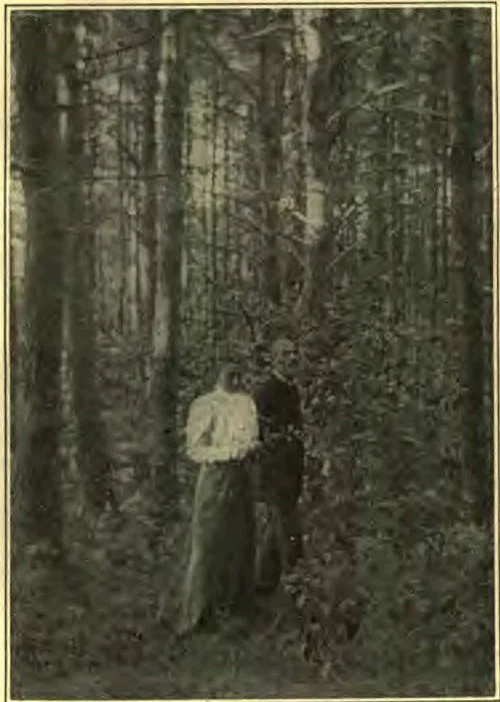
“Who shares in the peace of nature,
Wins glimpses of heaven below.”
“Who shares in the peace of nature, Wins glimpses of heaven below.”
Self-mortification and self-flagellations and self-inflictions or self-deprivations are often mistakenly supposed to be elements of self-denial, when in truth they are only modes of self-nursing or self-seeking. A man who desires to win a prize in an athletic contest will gladly put himself in training in order to be in the best physical condition for that struggle. He will deny to himself anything in the line of food and drink and luxurious indulgences that might lessen his prospects of personal victory. But in all this there is no true self-denial; on the contrary, it is confessedly a method of persistent self-advancement. A prize-fighting bully who lives abstemiously while in training for his contest can hardly be called a man who denies self, and who lives for a nobler object than self-aggrandizement. Professional bank robbers and burglars are known to be carefully abstemious in their personal habits, and to deny themselves the use of liquor or tobacco while in the active practise of their “profession;” but who would think of claiming that such men were living lives of true self-denial, in denying to themselves those indulgences which would hinder them in their selfish pursuings?
He who lives for the acquisition of wealth, or for the attainment of knowledge, or for the securing of honor and fame, is ready to deny to himself food, or sleep, or personal ease, if thereby he can promote the chief object of his life struggle. But whatever else he denies to himself, a worker of this sort does not deny himself to himself. Self is the final center of his living and being.
If, indeed, a man strives always for the promotion of his highest spiritual welfare, and for the completest subjection of himself, his self-deprivations and his self-mortifications may be nothing more than carefully chosen modes of self-improvement, having in them none of the qualities or merits of true self-denial. He may fast and pray and live a life of retirement and deprivation in order to save his spirit or self. There is no denial of self in that. It is all selfish living. Such a man is living for self. He is seeking to save himself. He lacks the first requisite of a Christian disciple. He who turneth not away from self, refusing even to make the eternal saving of himself the chief object of living, can not be a disciple of Jesus.
A life of true self-denial, or of denial of self, may be a life of comparative ease and fulness, while a life of endurance and privation may be wholly a life of self-seeking. He whose nature and tastes would prompt him to a life of activity and adventure, may find himself called of God to settle down quietly in loving ministry to one of Christ’s dear ones in need of tender care, but whose surroundings are those of relative luxury. Only by the denial of self can such a man find pleasure in the acceptance of a lot exempt from toil and hardship. On the other hand, a man of social instincts may travel to the end of the earth in loneliness, and may pinch himself sorely as he travels, because for some reason he wants to hide himself from all who know him, or because he is seeking reputation or reward in a discovery which he hopes to make. There is no denial of self in his deprivations and endurances, as there is in the other man’s settling down in a home of luxury at the call of God, contrary to his personal inclinations. Not what a man has, not what he yields, but the aim of his life,—toward self or away from self,—settles the question whether he exercises true self-denial as the Bible teaches that duty.
He who would deny himself at the call of Christ must turn away from himself in hasty rejection and utter forgetfulness of himself as an object of life. Not what seems to be for his own interest or pleasure, but what his Master directs for him, must occupy his thoughts and claim his best endeavors at all times. It may be that his Lord will call him to labors abundant, and to prisons more abundant, to stripes and stonings, to journeyings often, to perils of rivers, to perils of robbers, to perils in the city, to perils in the wilderness, to perils in the sea, to perils among false brethren, to travails and watchings, to hunger and thirst and fastings, to cold and nakedness. It may be that that same Lord will call him to dwell in his own hired house in the world’s chiefest city, with friends at hand in Caesar’s palace.
If, indeed, his self-denial be complete, it will matter little to him whether he be in the one state or in the other, provided only he be where He for whom he lives would have him. With all his heart he can say, in either case: “I have learned, in whatsoever state I am, therein to be content. I know how to be abased, and I know also how to abound: in everything and in all things have I learned the secret both to be filled and to be hungry, both to abound and to be in want. I can do all things in him that strengtheneth me.” Phil. 4:11.
True self-denial is the denial of self as an object of service or of interest, through a surrender of self to One who alone is worthy of supreme interest and devoted service. It does not depend on, or consist of, either fulness or lack, but it accepts the one or the other of these conditions gladly, according as the Master for whom self has been renounced may ordain and indicate.—Editor Sunday School Times.

Word from Africa

I have just returned from a trip eighty miles up the country, and have seen heathenism and the mark of the curse everywhere. I met with several different tribes, and while they spoke with different tongues and had different customs, they all meant the same thing—destruction.
I talked with the people and told them of Christ, the living and better way. They expressed a desire to learn, if only some one could be sent to teach them.
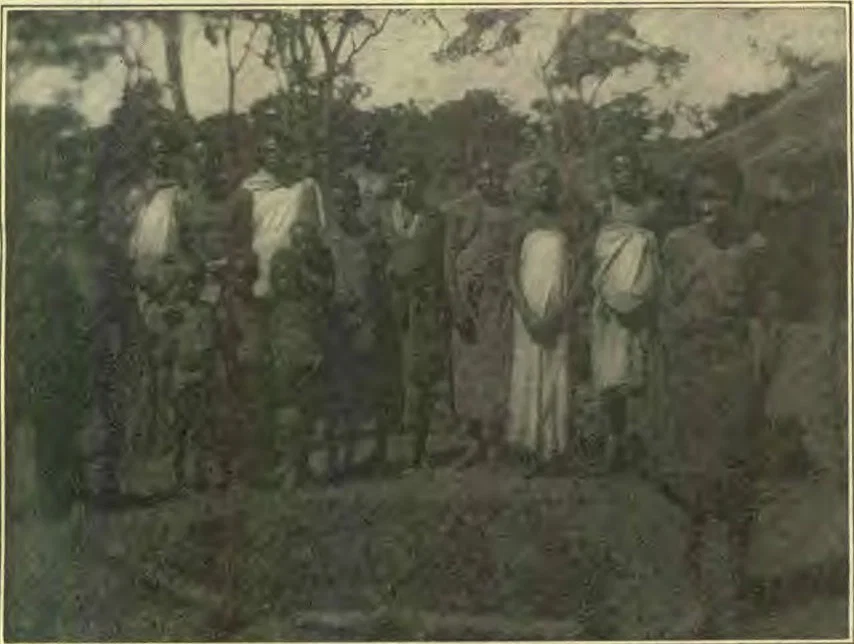
THE QUEEN IN THE FOREFRONT IS MARKED 1
To reach a certain village, and to avoid being out in the hot sun, I walked all one night, meeting with many tenga men (native carriers), who asked many questions about the Sabbath, and about the plurality of wives, which is one of the great evils of the country. I told them that this evil was a great sin to themselves and to God. The old men said to me, “But you are only a boy; how can you know such big things?” “Yes, I am only a boy, but Jesus said, ‘If any of you lack wisdom, let him ask of God, . . . and it shall be given him.’” Then they said, “Will he teach these same things to us, men of ignorance?” I told them, Yes.
I saw many women and their children hoeing in their gardens, happily singing a native song. These came near to the road, and we talked with them, and they asked, “Does Jesus whom you tell us about care for us?” “Yes, so much so that he died that you might live.” This seemed very sad news to them, that he should die to save them from death, and they never knew it before.
You who are preparing to be missionaries, haste, for the needs of this great heathen field are many. The people are subject to many different kinds of sicknesses, and practise numerous evils in their blindness. If one in a village dies, they do not think it is the result of sickness, but that some one or ones in that village are witches. While the dead are still unburied, a great wailing is made, all are called, a council is held among the chiefs and their head men, lots are cast, and the one on whom the lot falls is given poison to drink. In this way many people are killed. At the same time a big dance and beer drinking is carried on for days, and when all are tired out, they prepare to bury the dead one. Then they find that parts of the corpse have been stolen and eaten by some of those present at the dance; then follows more poison drinking; this sort of thing lasts for weeks.
The people believe that beer is their food, and they say that it is impossible for them to live without it. “Woe unto them that rise up early in the morning, that they may follow strong drink; that continue until night, till wine inflame them.” Isa. 5:11.
Yours in the service of love,
PAUL BRANCH.
Plainfield Mission.

Preparation for Earthquakes

ALL our people ought to learn to pray with confidence. There are trying times before us, when our confidence in God will be tried to the utmost. In such great disasters as overtook Valparaiso, there is little time to learn. Only five minutes of trembling and many lives perished, and the city was left in ruins.
Those who had been accustomed to pray in faith said they had no fears, but trusted in God. Others who had no faith knew not what to do. So many despairing cries were heard that one’s ears were almost deafened.
At the time of the earthquake that occurred about the year 1864, there was a robust young man from the south of Chile visiting some of the northern provinces. He was an infidel, and had boasted very much of his infidelity, so that he became widely known.
The earthquake was so severe that it threw the people to the ground and rolled them from one side to the other and shook them up terribly. The young man came suddenly to his senses, and in a moment knew that God, the Creator of the heavens and the earth, lives and rules. He knew not how to pray, but in his anguish thought that the chastisement might be intended only for the people of the northern cities, and so, it is said, cried out, as he was thrown from one side to the other, “Lord, I do not belong to this place; I came from the south, and I just arrived a few days ago!”
Now while the earth is trembling, and the world is being visited by tempests, fire, floods, tidal waves, war, revolutions, famine, and pestilences, we are to know by actual experience that God lives and rules. Our treasures should be transferred from earth to heaven, and our peace be made with God, so that under all circumstances we can say that our citizenship is in heaven, and we are but sojourners in this world, pilgrims and strangers waiting for the heavenly country. What difference does it make with us even if this old earth be carried away? We have a city whose builder and maker is God. It is founded on eternal foundations, and can not be destroyed by fire, flood, tempest, or earthquake.
Our great burden should now be that others might break away from their sandy foundations and build on the eternal Rock.
During the recent earthquake many cried to the Virgin Mary and other saints who could not hear their prayers, neither could they save, for they are sleeping in the dust, and will remain there until Jesus comes. Few had confidence in God as did Daniel of old. F. H. WESTPHAL.
Valparaiso, Chile.

John Wesley and His Mission

HAD not that boy of six been plucked literally as a brand from the burning of his father's rectory, in 1709, the world would have lost one of its foremost spiritual forces, a great movement would have lacked a sagacious leader, and a noble denomination its unconscious founder.
If battles, like Waterloo, have changed the map of the world, no less have the lives of a few marked men changed the moral and spiritual aspect of the age they lived in, and, under God, molded the history of the race.
A few years ago the bicentenary of the birth of John Wesley was celebrated by millions of his admirers throughout the world.
Wesley died in 1791, and this eventful life of eighty-eight years had really no idle or useless period. He worked almost to the very last with scarcely diminished vigor, doing, as an old man, an amount of work which would exhaust many a man of forty.
He reached mental maturity early, but he contradicted the adage that what ripens early decays early. At the age of twenty-three he was a fellow of Lincoln College, Oxford, and three years later, after acting as his father's curate, settled in that old college center and began to take pupils.
In November, 1729, he found his brother Charles and a few other students in weekly communion, the germ of that “Holy Club” afterward derisively known as “Methodists,” from their rigid adherence to a set program of life. The main bond of this new brotherhood, which he joined and energized, was the Bible,—the stated and systematic study of the Greek Testament.
Fasting and prayer, with regular hours of work, visiting the poor, and instructing neglected children, were the other features of this spiritual alliance. The membership was small, and in fact, never grew large. With the two Wesleys were joined John Clayton; Benjamin Ingham, known later as the Yorkshire evangelist; Gambold, who was poet and preacher and afterward Moravian bishop; James Hervey, and George Whitefield,—the last almost as great a name as Wesley.
It is interesting to note that out of the Bible study and prayer of that Holy Club, God developed the mighty moral and spiritual forces that so upheaved Britain and America in the eighteenth century. It was a time of deism in the pulpit, and sensualism in the pew,—a dead formalism in worship, and apathy and lethargy in work. If Samuel Blair and Isaac Taylor and Blackstone, the lawyer, are to be trusted, “religion lay a-dying” on both sides of the sea, and as for Christian missions, even the form of missionary evangelism scarcely survived. God raised up John Wesley to be the reformer of the church life, Charles Wesley to give over four thousand hymns to be the vehicle of its new aspirations, and Whitefield to be the greatest evangelist since Paul.
John Wesley in his sphere has few, if any, competitors. In one view he reminds us of Thomas Aquinas or Thomas à Kempis; from another point he suggests Zinzendorf. He was more a controversialist than a theologian, more an organizer than either a preacher or a teacher, more a leader and administrator than an originator. As in many other cases, he moved unconsciously, obedient to a higher will and wisdom, and many of the most important measures became necessary from the pressure of circumstances which God controlled, and by which he forced him to move in one direction, because that was the only one providentially left open. At the outset he had no more idea of separation from the Anglican Church than Luther had of renouncing the papal. Open-air, or field, preaching he followed only when pulpits and churches were closed against him, and he had to choose nature's free cathedral. God had a work to be done, and he had his man ready and the training that fitted him for his exact work. No man needs a grander study of divine providence and sovereignty than Wesley's career affords.
John Wesley, after being ordained to the ministry, was sent on a mission to America. Upon arriving in Savannah, Wesley for a short time abode with the Moravians, and was deeply impressed with their Christian deportment. Of one of their religious services, he wrote: “The great simplicity as well as solemnity of the whole almost made me forget the seventeen hundred years between, and imagine myself in one of those assemblies where form and state were not; but Paul, the tentmaker, or Peter, the fisherman, were presiding, yet with the demonstration of the Spirit and of power.”
In 1738 he returned to England, and under the instruction of Peter Bohler arrived at a clearer understanding of Bible faith. He was convinced that he must renounce all dependence upon his own works for salvation, and must trust wholly to the “Lamb of God, that taketh away the sin of the world.”
At a meeting in London, a statement was read from Luther, describing the change which the Spirit of God makes in the heart of the believer. As Wesley listened, faith was kindled in his soul. He says: “I felt I did trust in Christ, Christ alone, for salvation; and an assurance was given me that he had taken away my sins, even mine, and saved me from the law of sin and death.”
From this time the basis was laid for Wesley the evangelist; he had a new experience. He was on fire, now, to tell men that working and weeping, and even prayer and believing, will not save them. There must be Christ in the heart,—a new birth and a new baptism,—regeneration and sanctification; and for more than fifty years he continued his strict self-denying life, not now as the ground, but as the result of faith; not the root, but the fruit of holiness.
The grace of God in Christ is the foundation of the Christian's hope, and that grace will be manifested in obedience. Wesley's life was devoted to the preaching of the great truths which he had received,—justification through faith in the atoning blood of Christ, and the renewing power of the Holy Spirit upon the heart, bringing forth fruit in a life conformed to the example of Christ.
Wesley endured ridicule and persecution; he was struck many times with such force that the blood gushed out immediately. Again and again did he escape death by a miracle of God's mercy. When the rage of the mob was excited against him, and there seemed no way of escape, an angel in human form came to his side, and the mob fell back.
Wesley was not conspicuous as an orator; but he was an effective gospel preacher, simple with strong common sense, calm but earnest, and with deep conviction behind all his utterances.
He averaged eight hundred sermons a year during the greater part of his ministry. His buoyancy of spirit was a great secret of health and long life, and the secret of his spiritual success. First of all to him was prayer, without which no great religious revolution in personal life or church life was ever wrought, and he did not forget to link with this his devout study of the Bible in the original Greek. On this foundation was laid the structure of a true life.
Wesley emphasized the privilege and duty of holy living and service. He, like his Master, sought to “magnify the law, and make it honorable.” Faithfully did he accomplish the work given him of God, and glorious were the results which he was permitted to behold; his adherents numbered more than half a million souls.
But the multitude that through his labors have been lifted from the ruin and degradation of sin to a higher and purer life, and the number that by his teaching have attained to a deeper and richer experience, will never be known till the whole family of the redeemed shall be gathered into the kingdom of God. His life presents a lesson of priceless worth to every Christian.
Would that the faith and humility, the untiring zeal and devotion of this servant of Christ, might be reflected in the churches of to-day.
NATHAN J. ALBORG.

Curious Facts About the Toad

The toad lives from ten to forty years, and can lay over one thousand eggs a year. It has lived two years without food, but can not live long under water. It never takes dead or motionless food. It takes its food by means of its tongue alone, and it operates this so rapidly that the eye can not follow its motions. It captures and devours bees, wasps, yellow jackets, ants, beetles, worms, spiders, snails, bugs, grasshoppers, crickets, weevils, caterpillars, moths, etc. The stomach that does not flinch at yellow jackets, wasps, blister-beetles, and click-beetles or pinch-bugs, would seem to be prepared for anything in the insect line, and it doubtless is. In twenty-four hours the toad consumes enough food to fill its stomach four times. A single toad will in three months devour over ten thousand insects. If every one of these would have done one cent’s damage, the toad would have saved one hundred dollars. Evidently the toad is a valuable friend to the farmer, gardener, and fruit grower, and can be made especially useful in the greenhouse, garden, and berry patch.—Selected.

The Wonderful Beaver

The beaver is a most intelligent and interesting little animal, and some of the feats he performs are really wonderful. A writer in Outdoor Life says that he has frequently seen cuttings of cottonwood large enough for fence posts which had been moved by a colony of beavers to water several hundred feet away. Beavers are very skilful woodchoppers and seldom fail to fell a tree in the right direction; that is, with the butts all pointing toward the trail to the stream, and never felling the top of one tree into the top of another. After getting down the larger trees, the branches are all cut off, made into lengths suitable for transporting, and taken to the water, after which the trunk is cut up, and as much of it removed as possible.
The bark of these pieces, which with the twigs forms the principal item of food, is all gnawed off in the water or at the houses. The barked sticks are then used in repairing or strengthening the dams, or stacked on top of the house.
Beavers generally work on moonlight nights only, and scarcely ever in the daytime, though they may sometimes be seen making repairs on a broken dam.—Christian Advocate.

The Island of the Penguins

WEB-FOOTED, heavy-winged, screaming penguins are the only inhabitants of Possession Island, a barren basaltic rock perpetually encircled by the ice-packs of the South Polar Seas. So difficult is it of access that though it has been known and coveted for scores of years, once only has it been visited by an explorer. He left its shores reluctantly, sighing that if he could but convey its treasure away, he would be rich beyond the dreams of avarice. The product that he coveted was the fertilizer known as guano, or bird droppings, which overlays the island to the depth of many yards.
HOME OF THE PENGUINS
Scientists have recently made a discovery in connection with the new substance called radium, which has turned many minds again to the bird-haunted island. Radium is worth some seventy thousand dollars an ounce. It is made from uranite or pitch blend, which in turn is taken from a basaltic rock similar to that of which the island is formed. The great question at present is to invent and maintain some method of communication with the island, but as yet, despite the ingenuity of man, it remains in the possession of its penguin inhabitants.—Mrs. C. F. Frazer.

Beautiful Muskoka

VERY little was known by the world at large of the beautiful Muskoka Lake region of Canada until recent years. The happy discoverers did not hide their light under a bushel, and as a natural consequence many people from “the States” are sharing the unexcelled scenery and unequaled climate. These find their summer homes, some in tents, others in cottages, and not a few in palatial residences, some of which cost thirty thousand dollars.
One of our neighbors owns a gasoline launch, and usually takes his own family and his brother’s for a day’s outing, spring and fall. They have several times kindly invited us to share these excursions, which have been thoroughly enjoyed and appreciated, but must be experienced to be fully understood.
One beautiful day last June we crossed the lake in this way ten miles. Leaving the boat in a natural harbor where a dashing brook emerges from the woodland and enters the little bay, we climbed a hill to an old deserted farmstead. Here were broad, level, sun-kissed acres lying between beautiful steep hills. The man of the party went on a business trip, as usual, to a not distant village. The children frolicked while the women visited, knit, read, took naps on the soft, green grass, as inclination prompted. An old apple-tree and a cluster of lilac bushes, with some runaway daffodils, seemed vying with one another in dispensing fragrance to the birds, among which was one pair of robins that occupied a nest near by in the abundant creepers that clambered above the low doorway.
Dinner was served à la nature. No life had been sacrificed to add to the gastronomic zest of this thoroughly enjoyable meal, and nothing of the kind was needed.
The lakes abound with islands varying in size from simply a large flat rock, to hundreds of acres. Many of these are well wooded, and some who have visited the Thousand Isles of the St. Lawrence consider the Muskoka scenery more beautiful.
On the way home we passed a small tree, shrub, and rock-crowned piece of land correctly named Gull Island. From afar we could see many gulls circling around it; as we came nearer, they manifested alarm, being evidently unused to visitors, and fearing they might be molested. We did not wish to distress the innocent birds unnecessarily, but we did wish to see if we could find a nest, and perchance, eggs. On landing I peered under shrubs and overhanging rocks, where I supposed the birds would naturally build their homes. Not one did we find built with any attempt at seclusion. Our party discovered ten nests, all on the bare rocks under the open sky. They were constructed of twigs, grasses, and moss. The first we found was empty. Each of the others, except the last, contained three eggs. They were slightly larger than a turkey’s egg, pale greenish-gray groundwork, with purplish-brown spots in varying sizes. The last nest contained three baby gulls, apparently a day old, so nearly the color of the eggs that one would scarcely detect the difference at a short distance.
Our trip was a pleasure not to be forgotten. While the shadows were still lengthening, and the beautiful June day was drawing to a close, we reached our nest, with hearts filled with gratitude to Him who has given us kind friends, and so much to enjoy in his great beautiful world.
MARY MARTIN MORSE.
Cedarcroft Nest, Walker’s Pt., Ontario.

Englewood Ingathering Service

FIRST I must tell you about our trip to the woods for our decorations for the Harvest Ingathering service. We had some boys in our Sabbath-school who had become disinterested and dropped off; these were the first ones whom we asked to go to help us, which they did. One boy furnished the horse and wagon, and we had a delightful time before we reached the grove. There were sixteen of us, all expectant and full of joy, and we gathered the most beautiful specimens that autumn can produce. We found milkweed pods, Osage oranges, and one little fellow picked up a box of acorns, for which we paid him five cents. This he used for his offering. One boy brought from the farm a squash that weighed eighty-seven pounds. He also furnished immense corn stalks, and pumpkins, tomatoes, and turnips. On the way home we bought large squashes for five cents each. Our decorations consisted of fern asparagus with little red berries on it, hawthornes, mangoes, or red and green peppers, miniature red tomatoes, bananas, California grapes (one bunch of which weighed one and one-quarter pounds) red grapes, carnations and ferns. Our dear little missionary who lives in California sent us pepper nuts, brides’ roses, ferns, smilax, Chinese nuts, and nuts from the gum tree. One boy in Alabama who was in our mission in Joliet a year sent us rice heads and cotton bolls. Thus you see our decorations were beautiful and numerous.
Our program was fine, nearly as the INSTRUCTOR suggested, only we have six young girls, three sopranos and three altos, who sang several selections. While we were giving the talk on Madagascar, one of our boys, twelve years old, drew the island on the board so all could see it. Then he gave us the area of Pennsylvania, and multiplied it by five just as we were told. All were much interested in it, and all did their parts well.
The kindergarten children had their offering in a little envelope tied around a sheaf of wheat, and as they sang “Bringing in the sheaves,” they marched in and each laid his sheaf on the pile.
Our school is quite small, but all are active, energetic members. IDA BOWEN BROWN.

Weekly Study

Program

OPENING EXERCISES:—
Song.
Scripture Reading.
Song.
BIBLE TOPIC: Our Example.
BIBLE READING:—
Who is our example? 1 Peter 2: 21.
How should his children walk? 1 John 2: 6.
What position did he have when on earth? Luke 22: 27.
In whose work was he engaged? Luke 2: 48, 49.
How interested was he in his Father’s work? John 4: 31-36.
What did he bear when on earth? Matt. 8: 16, 17.
BOOK STUDY: “Ministry of Healing,” pages 27-28.

Topics and Questions

1. OUR EXAMPLE:—

What was the mission of our Saviour to this world? Page 17, first paragraph.
How unlimited was his work? Third paragraph.
What was his life? Page 19, second paragraph.
What attention was paid the sick and suffering? Last paragraph.
How did his teaching differ from that of the teachers of those days? Page 21, first paragraph.
Where did he seek access to the people? Page 23, first paragraph.
How busy was his life? Page 24, first paragraph.

2. BROTHERLY LOVE:—

Was Jesus any respecter of persons? Page 25, third and fourth paragraphs.
Whom did he especially encourage? Page 26, first paragraph.

3. PERSONAL MINISTRY:—

What is said about Jesus’ improving opportunities to do missionary work? Page 27, first paragraph.
How much interest did he manifest in one person? Page 28, first paragraph.
Who is he still willing to instruct? Last paragraph.

Notes

These lessons combine Bible study, health and practical themes, and world-wide missions; the message and the field are both emphasized. It would seem that no more profitable study could be found for our Young People’s Societies than these topics. If faithfully studied, they will result in much profit to all.
It is expected that all our young people will arrange to have access to a copy of the book “Ministry of Healing.” This is thought by some to be the best book that has ever come from Sister White’s pen. If a copy of the book is not in your home, bring the matter to the attention of your parents, and urge them to secure a copy for your study. In some cases perhaps the church will be glad to encourage the Young People’s Society by purchasing a few copies to be studied.
In this first lesson we suggest that some one who is a good reader be selected to read the preface to the book.
As a rule one chapter will be covered from “Ministry of Healing” in each lesson. There are forty-two chapters in the book, and each chapter is divided under several subheads. Questions will be asked under the various headings, and the page and paragraph indicated where the answer will be found. Care should be taken to arrange the exercises so that all will have a part in answering the questions. A little study on the part of the leader will enable him to prepare a very interesting and profitable recitation.
The Bible studies given will be short. It is not the number of texts read which make a study of the Bible profitable, but the number that are really studied and understood. G. B. T.
Continue reading: Youthful Missionaries