The Youth’s Instructor, Vol. 34, No. 29.

THE STORY OF HAMAN AND MORDECAI

The Youth’s Instructor

Jul 21, 1886

S. D. A. Publishing Association · Battle Creek, Mich. · Jul 21, 1886

THE STORY OF HAMAN AND MORDECAI.
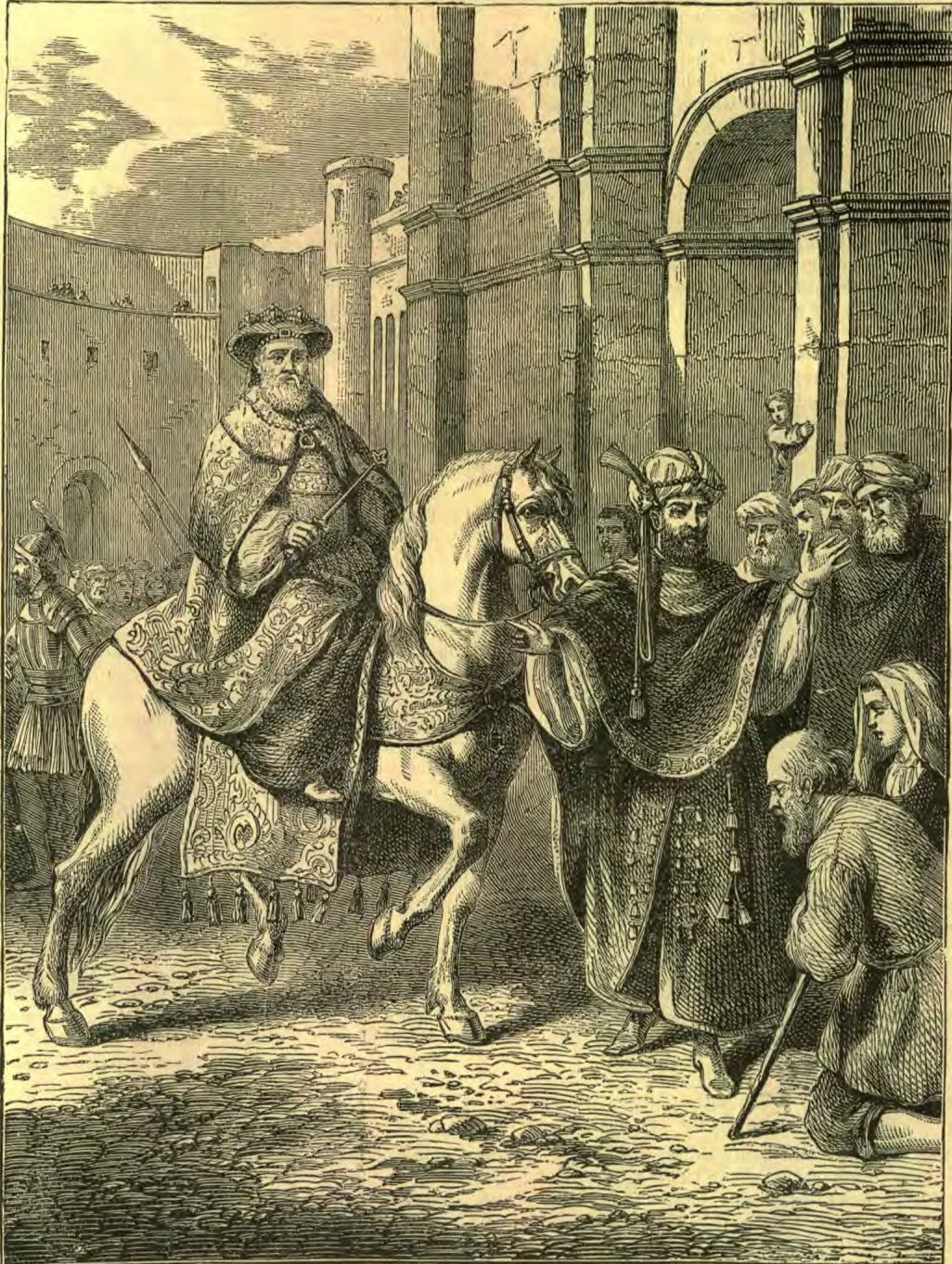
ONE night, over five hundred years before Christ, the richest and grandest of Persian kings could not sleep. His mind was troubled; so he called for the book in which were recorded the principal events concerning his kingdom. The book was not written in a dry and uninteresting style, but the best poets which the realm could afford were often engaged to write these chronicles. Hence, they often proved to be among the finest productions of the time; and, in connection with this, the nature of its contents made it a very suitable book for the occasion.
In reading, it was found that Mordecai, a Jew who sat in the king's gate,—a custom very common at that time,—had informed the Persian king, Ahasuerus, that two of his chamberlains had formed a conspiracy against him. This interested the king, and he wished to know what reward this man had received for being instrumental in saving his life. So he asked: “What honor and dignity hath been done to Mordecai for this?”
“There is nothing done for him,” the reader replied.
When morning dawned, Haman, one of the leading princes of Persia, came early to see the king and to receive permission to have Mordecai hung. Now Mordecai was a good man; but Haman hated him because this servant of God would not follow the example of others in giving him the reverence which belongs alone to the Creator. Previous to this, Haman had sent out a decree “by posts into all the king's provinces, to destroy, to kill, and to cause to perish, all Jews, both young and old, little children and women, in one day, even upon the thirteenth day of the twelfth month, which is the month Adar [about the first, week in March], and to take the spoil of them for prey;” and at that time Ahasuerus, or Xerxes, ruled over the whole civilized world.
After the king had received an answer to his question, he said to one of his attendants: “Who is in the court?”
“Behold, Haman standeth in the court,” was the reply.
“Let him come in,” said the king.
Then Haman came in and stood before the king, who immediately asked: “What shall be done unto the man whom the king delighteth to honor.”
“Now is my chance,” thought Haman, “for to whom would the king delight to do honor more than to myself.” So, with his expectations high, he thought of a truly grand plan, and answered:—
“For the man whom the king delighteth to honor, let the royal apparel be brought which the king useth to wear, and the horse that the king rideth upon, and the crown royal which is set upon his head; and let this apparel and horse be delivered to the hand of one of the king's most noble princes, that they may array the man withal whom the king delighteth to honor, and bring him on horseback through the street of the city, and proclaim before him, Thus shall it be done to the man whom the king delighteth to honor!”
“How majestic! I will look! How the people will admire and honor me as I sit in state! To what high positions I can yet attain!” are thoughts that quickly passed through Haman's mind. But alas, for human expectations! Little did Haman then know of the mortifying ordeal through which he was soon to pass; for, in answer the king said:— “Make haste, and take the apparel and the horse, as thou hast said, and do even so to Mordecai the Jew, that sitteth at the king's gate; let nothing fail of all that thou hast spoken.”
Then Haman did as he was commanded; for to disobey was death. Mordecai was led in state through the city, and Haman went before that man whom of all men he hated, proclaiming: “Thus shall it be done to the man whom the king delighteth to honor!”
Haman had been caught in his own trap. He hastened home with shame, and covered his face. How had he fallen! But worse things followed. He was hung on the very gallows which he had prepared for Mordecai, “fifty cubits [over 87 feet] high,” and “Esther set Mordecai over the house of Haman.” And “Mordecai the Jew was next unto king Ahasuerus, and great among the Jews, and accepted of the multitude of his brethren, seeking the wealth of his people, and speaking peace to all his seed.”
“Let the wicked fall into their own nets,” but “we know that all things work together for good to them that love God.” W. A. BLAKELY.

THE LITTLE MAID'S “AMEN.”

A rustle of robes as the anthem Soared gently away on the air— The Sabbath morn's service was over, And briskly I stepped down the stair; When close, in a half-lighted corner, Where the tall pulpit stairway came down, Asleep crouched a tender, wee maiden, With hair like a shadowy crown.
Quite puzzled was I by the vision, But gently to wake her I spoke, When, at the first word, the small damsel With one little gasp straight awoke. “What brought you here, fair little angel?” She answered with voice like a bell: “I tum, tos I've dot a sick mamma, And want 'oo to please pray her well.”
“Who told you?” began I; she stopped me; “Don't nobody told me at all; And papa can't see tos he's cryin', And 'sides, sir, I isn't so small; I's been here before with my mamma, We tummed when you ringed the big bell; And ev'ry time I's heard you prayin' For lots o'sick folks to dit well.”
Together we knelt on the stairway, As humbly I asked the Great Power To give back her health to the mother, And banish bereavement's dark hour. I finished the simple petition, And paused for a moment—and then, A sweet little voice at my elbow Lisped softly a gentle “Amen!”
Hand in hand we turned our steps homeward, The little maid's tongue knew no rest; She prattled, and mimicked, and carolled— The shadow was gone from her breast; And lo! when we reached the fair dwelling— The nest of my golden-haired waif— We found that the dearly loved mother Was past the dread crisis—and safe.
They listened, amazed at my story, And wept o'er their darling's strange quest, While the arms of the pale, loving mother Drew the brave little head to her breast; With eyes that were brimming and grateful They thanked me again and again— Yet I know in my heart that the blessing Was won by that gentle “Amen!”
—Gospel Expositor.

A LESSON FROM THE LEAVES.

In this life there are many things to show us that the curse of God rests on the earth; but there is nothing that so forcibly brings to our minds the fact that sin and death reign here, as do the leaves: they so soon fall and decay. If you stand among the trees on some raw autumn morning, and hear the bleak wind whistling among the branches, you will find it very sad and mournful; and as you see the crisp, brown leaves come rustling down, a weird, forsaken feeling will come over you in spite of yourself. Isaiah once stood under the olive trees near Jerusalem, and as he watched the wind scattering the withered leaves far and near, his soul must have grown very sad; for he wrote: “We do all fade as a leaf, and our iniquities, like the wind, have taken us away.” Yes, we are like leaves, we are so prone to fade and grow lifeless; and the bitter gust of iniquity comes and catches us, and oh, how it cuts and tears, and tries to drag us downward! But we need not fade. We have a blessed privilege; for we can draw sap and nourishment from the Living Vine, which will keep us ever green and flourishing. And the godly man has the promise that “his leaf shall not wither; and whatsoever he doeth shall prosper.”
And as you stand under the falling leaves, how forcibly you ought to realize that “all flesh is as the grass, and all the glory of man is as the flower of the field. The grass withereth, and the flower fadeth away.”
But though the leaves are so transitory, they are not useless; neither are they for show. They have their duty to perform. They protect the tree from the scorching sun; they shelter the young and tender bud from the cutting wind; they also nourish the tree by taking properties from the air; and if they are faithful in doing this, they have done their part; and having bravely run their course, they fall. We, too, have our duty to perform, and like the leaves, have our tree to protect. We have been “grafted into the olive tree,” and partake of her fatness. Even if we do fall to the ground and die, shall we not bring forth much fruit?
How often are the leaves trodden under foot by those who pluck the flowers. Yet God cares for them and gives them a place in his kingdom. We find that they are then exalted, for we read that “the leaves of the tree were for the healing of the nations.” Ah! priceless leaves that never fade! No more yellow leaf, or canker worm; but clad in immortality, and always nodding and laughing in the warm sunlight of the Sun of Righteousness. We are more than leaves in God’s sight. “If then God so clothe the grass of the field, which to-day is, and to-morrow is cast into the oven, shall he not much more clothe you, O ye of little faith?”
FRANK HOPE.

HOW CHILDREN CAN LEARN.

CHILDREN should be anxious to learn all they can about every thing honest, useful, or good around them. They will be more happy themselves, and more useful in the world, if they will. The Bible everywhere encourages people to learn. It says: “Fools despise wisdom and instruction” (Prov. 1:7); “Happy is the man that findeth wisdom, and the man that getteth understanding” (Prov. 3:13); “Get wisdom, get understanding” (Prov. 4:5); and once more: “How much better is it to get wisdom than gold! and to get understanding rather to be chosen than silver!” Prov. 16:16. The Lord, then, is pleased to have us gain knowledge; he is wise, and wishes us to be wise.
But many children are poor; they are not able to go to school very much, and never can go away to college. They may not have many books; how shall they learn? Well, the most that we know, we do not obtain from going to school, but from what we see, hear, and observe, of things around us. This is the most important knowledge, too; hence, children should learn early to observe every thing and inquire about it. Wise parents will encourage them to do this, instead of scolding them for it.
Some people go through the world without observing any thing; but wise people are always inquiring to find out the name, the nature, the reasons of things, etc. For instance: You visit a lady tending her flowers. Now, you can learn a good, pleasant, and valuable lesson by a little inquiry; and you can learn it much more rapidly than from a book, and you will remember it much better too. Ask her the names of her flowers, and as many other things as she will tell you about them. She will be pleased to do it. But how many children see flowers day after day, and year after year, without even knowing their names.
As you ride or walk along the road with an older person, observe all the trees, and learn their names. How many, though, never think of doing such a thing! They see trees a hundred times, without stopping to learn a thing about them. I wonder how many kinds of trees my little readers could stop now, and name. Suppose you try it. When you see a tree that you do not know, ask some one about it. How many kinds of birds do you know? You see many of them often; do you ever inquire about them? What a pleasant study that would be, to find out all you can about birds, the different kinds, where they live in winter, what they live upon, how they build their nests. When you see a bird, try to learn all you can about it. Do you go fishing? Do you go to the market? Notice the different kinds of fish, small and large. What are their names? How do they differ? How are they caught? What do they live upon?
If you have no books handy, ask older people who know. Children, that is the way to learn. Dull people go stumbling along, asking nothing, learning nothing; but bright children always have their eyes open, and are full of questions. In that way they learn much. When you go out into the garden to help your father gather the potatoes, how many things you can learn there! Where did potatoes come from? Who first used them? In what countries do they grow the best? How many kinds of potatoes are there? How do you obtain new varieties of potatoes? What are two or three of the best varieties now raised? When do you plant potatoes? What insects injure them? How much are they worth, generally? And then, how are they cooked? In how many different ways? What is their value as food? And to how many uses can they be put? Here is study enough. Most of you can be learning from either your father or mother, or some intelligent friend, and it would be an excellent plan to go to your dictionary or encyclopedia, if you have one, and look up these things. By taking this course you will be gaining some information every day of your life, whether you can go to school or not. In this way some of the great men of the world have obtained their knowledge.
It is related that Sir Isaac Newton, while sitting under a tree, was struck on the head by a falling acorn. He began to inquire why that acorn should have come down, and with so much force. This led to his discovery of the great law of gravitation. And so Mr. Franklin, Mr. Edison, and all philosophers and inventors are constantly inquiring why this thing is so, and why that thing is so. They want to know all about every thing they see. That is the way they learn. So, children, we urge you to keep your eyes open, learn all you can of everybody, about the things you see, and do not be satisfied till you have learned it. If you read about a certain country, find out where it is, and all you can about it. Follow up this plan daily, and you will soon become intelligent on all the common things of life.
D. M. CANRIGHT.

EYES OPEN.

Rachel went off to school wondering if Aunt Amy could be right.
“I will keep my eyes open,” she said to herself.
She stopped a moment to watch old Mrs. Bert, who sat inside her door binding shoes. She was just now trying to thread a needle, but it was hard work for her dim eyes.
“Why, if here isn’t work for me!” exclaimed Rachel. “I never should have thought of it if it hadn’t been for Aunt Amy. Stop, Mrs. Bert, let me do that for you.”
“Thank you, my little lassie. My poor old eyes are worn out, you see. I can get along with the coarse work yet, but sometimes it takes me five minutes to thread my needle. And the day will come when I can’t work, and then what will become of a poor old woman?”
“Mamma would say the Lord would take care of you,” said Rachel, very softly, for she felt that she was too young to be saying such things to an old woman.
“And you can say it, too, dearie. Go on to school now. You’ve given me your bit of help and your comfort, too.”
But Rachel had got hold of the needle-book, and was bending over it with busy fingers.
“See,” she presently said, “I’ve threaded six needles for you to go on with. And when I come back, I’ll thread some more.”
“May the sunlight be bright to your eyes, little one,” said the old woman as Rachel skipped away.
“Come and play, Rachel,” cried many voices, as she drew near the playground. “Which side will you be on?”
But there was a little girl, with a very downcast face, sitting in the porch.
“What is the matter, Jennie?” said Rachel, going to her.
“I can’t make these add up,” said Jennie in a discouraged tone, pointing to a few figures on her slate.
“Let me see—I did that example at home last night. Oh, you forgot to carry ten—see?”
“So I did.” The example was finished, and Jennie was soon at play, with the others.
Rachel kept her eyes open all day, and was surprised to find how many ways there were of doing kindnesses, which went far towards making the day happier. Try it, little girls and boys, and you will see for yourselves.
“Will you look here, Miss Rachel?”
Bridget was sitting in the back porch, looking dolefully at a bit of paper which lay on the kitchen table she had carried out there.
“It’s a letter I’m afther writin’ to me mother, an’ it’s fearin’ I am she’ll niver be able to rade it, because I can’t rade it meself. Can you rade it at all, Miss Rachel? It’s all the afternoon I’ve been at it.”
Rachel tried with all her might to read poor Bridget’s queer scrawl, but was obliged to give it up.
“I’ll write one for you some day, Bridget,” she said. “I’m going over to Jennie’s to play ‘I spy’ now.”
The fresh air and the bird songs and the soft wind made it very pleasant to be outdoors after being in school all day. And her limbs fairly ached for a good run. But she turned at the gate for another look at Bridget’s woe-begone face.
“I’ll do it for you now, Bridget,” she said, going back. It was not an easy task, for writing was slow work with her; but she formed each letter with painstaking little fingers, and when she had finished, felt well repaid by Bridget’s warm thanks and the satisfied feeling of duty well done.
“Our Master has taken his journey To a country that’s far away.”
Aunt Amy heard the cheery notes floating up the stairs, telling of the approach of the little worker.
“I’ve been keeping my eyes open, Aunt Amy, and there’s plenty and plenty to do.”—American.

FLOWERS

FLOWERS are the sylvan syllables, In colors like the bow, And wise is he who wisely spells The blossomed words where beauty dwells, In purple, gold, and snow.
Oh, sacred is the use of these Sweet gifts to mortals given; Their colors charm, their beauties please, And every better sense they seize, And bear our thoughts to heaven.

THE SECRET OF SUCCESS.

WEBSTER used to tell, with great zest, an incident of his professional life to illustrate how past studies may prove of great service in an emergency. While practicing in New Hampshire, a blacksmith employed him to defend a contested will. The case was such a complicated one that he was obliged to order books from Boston, at an expense of fifty dollars, in order to acquaint himself with the legal principles involved and to settle them. He won the case, and as the amount involved was small, charged fifteen dollars for services, and was, therefore, largely out of pocket. Many years after, when passing through New York, he was consulted by Aaron Burr. “I have a very perplexing case,” said Burr, “which I cannot disentangle. I know I’m right, but see no way of proving it in court.” Webster listened, and found the principles identical with his early case. He stated them in such a luminous way that Burr said excitedly, “Have you been consulted before, Mr. Webster?” “No, sir; I never heard of the case till you mentioned it.” “How is it possible that you could unravel such a case at sight, when I had given many hours of anxious study to it in vain?” Webster enjoyed his perplexity, but finally relieved him by a statement of the facts. A great sum was at stake, and Webster received a fee of one thousand dollars to balance his former loss. The moral of this incident is, that whatever is worth doing is worth doing well. Webster, when a young lawyer, acted on this maxim; and this laid the foundation of his greatness.

SAVING THE SAWDUST.

MAHOGANY tables are not made of solid mahogany, nor are rosewood bureaus made of solid rosewood; they are veneered—that is, thin slices of rosewood or mahogany are glued on common wood. A few years ago they sawed a stick of rosewood or mahogany into strips for veneering. Of course, a great deal of the valuable wood was lost in sawdust; as much as half of it was wasted. But a machine has been invented which does away with the saw in this work; it shaves instead of saws, and by shaving off the slices nothing is lost, and the saving on a log of rosewood is said to amount to not less, in some cases, than five hundred dollars.
Perhaps you would have said, “What is the use of caring about a little sawdust? The waste is not much.” Waste counts up. Here were five hundred dollars, wasted or saved. Yes, boys, waste counts up. Waste minutes, waste opportunities, waste words, waste pennies,—they count up. A person is a great loser by them; and it makes all the difference in the world as to what his character is worth, whether he has wasted or saved the sawdust of his life—fritted it away or used it in little advantages and smaller means.—Selected.

EXPERIENCE

LIFE is full of holy uses, If but rightly understood, And its evils and abuses May be stepping-stones to good.

WITH HAT IN HAND.

THE German language has many curious and happy ways of putting thoughts, and in this point has few equals among its sister tongues. Notwithstanding the rough and masculine nature of the German race, its people pay great attention to their relation with each other and with strangers. A pretty sentiment is expressed in that German proverb, a free translation of which would be as follows:—
“With hat in the hand One goes freely and safely from land to land.”
Although the English version is clumsy, and lacks the beauty and terseness of the original German, the person who observes will see that the thought contained in the couplet given is a very beautiful one. It means that by due exercise of politeness, by being kind to others, taking your proper place and keeping it, you can win your way wherever you may wish to go. Politeness will open many a door which would withstand the greatest display or force.—Selected.

THE TEST OF SUCCESS IN TEACHING.

Is apparent success the true test of a teacher's work? “Of course. What other test can one apply? An unsuccessful teacher ought to resign, and allow his place to be filled by one who has more skill, or tact, or piety.”
This reply would naturally be made to the question I have asked. It is the line of thought adopted by the average speaker at Sunday-school institutes and conventions and assemblies. More than once has the writer heard an enthusiastic Sabbath-school worker, in his earnest manner, say to a large audience of teachers: “If you cannot keep up the attendance of your scholars, if you cannot enlist their interest in the lessons, and more than all, if you cannot win their souls to Christ, you ought to consider you have mistaken your calling. You are standing in the place that some one else ought to occupy. It is manifestly your duty to resign, and let some more efficient teacher take your place.” This advice is good to a large extent, but are there not two sides to this question? Many an earnest, devoted, hard-working, but apparently unsuccessful, teacher has been discouraged by hearing it given with the authority of a self-evident truth, and has been induced to step aside from a work in which, had he persisted, he might, “after many days,” have become eminently successful.
Two facts should be borne in mind by the teacher who is laboring prayerfully and in the love of the Master and the love of souls. One is that we are not responsible for results. Our Lord has kindly taken that responsibility out of our hands. It is cheering to see the good seed of the Word that has been sown by us in faith and prayer, and watered with our tears, springing up and bearing fruit—it may be thirty or sixty or a hundred fold. It helps us wonderfully in our work when we can see the fields white for the harvest, and can garner in the golden grain with singing and rejoicing.
The second fact that it is well to remember is, that it is not always given to the sower to bring in the sheaves. Sometimes the results of his work are not apparent for years. “One soweth and another reapeth,”—we have the Master's authority for that. The faithful teacher may have seen no result from all his labor. After years of weary and apparently fruitless effort, the Lord of the harvest may have said to his servant, Come and rest. Then, when he has gone, lo! all at once the seed sown springs up, and the erstwhile barren field becomes fruitful, and many sheaves are gathered, in God's good time, into heavenly garners.
The Master himself told his disciples how some of the seed would fall by the wayside, and some on stony ground, and some among thorns and briers. The good seed of the kingdom fares the same to-day. Preachers and teachers find it so, to their great discouragement. But let us not be in too much haste to decide that their work is useless, or that they are inefficient laborers because results are not at once manifest. By that test even our Lord's earthly work—we speak it reverently—was not a success. It was not until after that wondrous ascension from Mount Olivet, when a cloud received him out of his disciples' sight, that the Holy Spirit came. “Sown in weakness or sown in might, Sown in the darkness or sown in the light,” it does not signify. The seed is not lost. The sowing is not in vain. By and by, when the great harvest shall come, it will be seen that no good work done for Him has been useless; and the weary, discouraged, and apparently unsuccessful teacher or minister may go up into the presence of the Lord of the harvest with his arms laden with the most abundant sheaves.—S. S. Times.

THE PORCELAIN TOWER.

The celebrated Porcelain Tower, near Nankin, China, is described by a traveler, who says:—
“In the quiet evening, we made our way out of the city by the south gate, through a well-constructed tunnel, and shortly stood upon an eminence whose surface was a mass of debris, consisting of broken bricks, tile, and plaster, three feet thick. This was all—all that was left of that which, for its historic beauty, the ingenuity of its construction, and its great cost, took rank with the wonders of the world,—the famous Porcelain Tower. It must have been very beautiful in its perfection, if we accept the statements of its various historians, who differ so little in their accounts that one description does for all. From them we learn that its form was octagonal, nine stories high, tapering as it rose to the height of 261 feet from the ground, the circumference of the lower story being 120 feet. The body of the pagoda was of brick, but its face was composed of porcelain tiles of many colors. Each story formed a kind of saloon, through which ran the spiral staircase leading to the summit, and whose walls were covered with small gilded idols, resting in niches, the entire apartment richly painted and gilded. Each story was defined by a projecting cornice of green tiles, from whose point gilded bells were hung.
“The roof was overlaid with copper, and above it rose a mast thirty feet high, capped by a golden ball, and coiled about by an immense band of iron, appearing like rings from below. The base of this shaft was an iron ball formed of two halves, the outer surface of which is magnificently embossed. I say, for one half rests where it fell, the only tangible thing in the mass of ruin. The other half, weighing twelve tons, was recast into a temple bell. Standing before the half that is left, one naturally inquires, Who were they who fashioned this beautiful casting, worthy of the hand of a master? Whose writing and inscription embellish its face unlike any Chinese workmanship? Whose skill was enough in A. C. 1430 to place a ball of iron thirty-six feet in circumference, weighing twenty-four tons, upon a pedestal two hundred and sixty-one feet, high? The ball was the receptacle of various treasures calculated to ward off all evil influences, among which were ‘bright, shining jewels,’ pearls, books, gold, silver, thousands of strings of cash, satins, silks and priceless medicine. The number of bells on the structure is 152, and the interior was illuminated by several hundreds of lamps, while the exterior required 128 to light it. It took nineteen years to build it, and cost $3,515,078. Of all this, not one story rests upon the other. Lightning, fire, and war have laid their hands upon it, and it fell, its final destroyers being the Taeping rebels, about twenty-five years ago. It stood in the grounds of a Buddhist monastery, which fell at the same time, a prey to the fascination and rapacity of the invaders. One work of art within the grounds escaped destruction, a pure white marble tortoise, bearing upon his back a perpendicular tablet with an inscription. This, with one solitary priest, keeps watch and ward over the ruins of by-gone glory.”

IMPORTANT BIBLE SUBJECTS.

LESSON 16.—THE SABBATH.

1. Quote a testimony from the Psalms concerning the perpetuity of the law of God. Ps. 119: 152.
2. Is there any exception to this fact? Ps. 119: 160.
3. What did Jesus say on this subject? Matt. 5: 18; Luke 16: 17.
4. What did he say of those who should break one of them and should teach others to do so? Matt. 5: 19.
5. Repeat the fourth commandment. Ex. 20: 8–11.
6. According to the words of Inspiration, how long must this commandment endure? See texts quoted above.
7. How much of it may be changed?
8. Might not God or Christ change it? Compare Matt. 5: 18 with 2 Tim. 2: 13.
9. What reason is given in the fourth commandment for the sanctification of the Sabbath? Ex. 20: 11.
10. In how many days did the Lord create the heaven and the earth?
11. Where do we find the record of creation? Genesis 1.
12. What is said of each of these six days of creation? Gen. 1: 5, 8, 13, 19, 23, 31.
13. What did God make to rule over these days? Gen. 1: 16.
14. Then what kind of days are referred to in the first chapter of Genesis?—Days consisting of a dark and a light part, regulated by the sun.
15. What is the length of such days?—24 hours.
16. At the end of the first six days, what had been done? Gen. 2: 1.
17. What is said of the seventh day? Gen. 2: 2.
18. Did God do any work on the seventh day? Gen. 2: 2; Ex. 20: 11.
19. After God had rested on the seventh day, what action did he take concerning it? Gen. 2: 3.

FIRMNESS

Be firm! one constant element in luck Is genuine, solid, old Teutonic pluck; See yon tall shaft; it felt the earthquake's thrill, Clung to its base, and greets the sunrise still. —O. W. Holmes.

HOW THEY WERE FORMED.

EVERY school student is familiar with the pictures of Fingal's Cave and the Giant's Causeway as they are represented in his text book of geography, and so has an interest in any thing that good writers say of them. The following quotation is an extract from an article published in Harper's Young People for July 6, in which the writer says of these natural formations:—
“The sea along the western coast of Scotland is filled with numberless islands, which look on the map as if they might have been broken from the solid land. One of these is a tiny island lying close in the embrace of a larger one. Though it shows as a mere speck on the map, this little island of Staffa is known the world over for its wonderful natural formations. On the edge of the sea, rising direct from the water, is the well-known Fingal's Cave. The regularity of its formation is so remarkable that it is hard to believe it to be a work of nature. Lofty columns of regular shape stand up out of the sea, built up, it would seem, of block upon block of solid stone carefully chiseled and as carefully laid upon each other.
“On the northern coast of Ireland, at the point which is nearest the Scottish coast, is another wonderful assemblage of these columns, roofless, and running out into the sea, called the Giant's Causeway.
“An old story makes these two wonders the ruins of castles built and inhabited by two unfriendly giants. The cave has received the name of the Scotch giant Fingal. There are many old poems, sung among the Highlanders in the far past, of which Fingal is the hero, but we now know that no man's or giant's hand helped to lift these great blocks of stone one upon the other. They were built up by the fires under the earth. The melted stone poured out of the volcanoes above and spread over the land, and there, as it hardened and cooled, split up into great crystals or columns. The water dashing for hundreds and hundreds of years against them washed away the earth around and the broken fragments, but was dashed back again by a few of the hard, unbroken columns, and so were left Fingal's Cave, the Giant's Causeway, and other formations like these.
“Geologists claim that in the long ago there was a great bridge of these columns reaching from Scotland to Ireland,—the Giant's Causeway was one abutment, and Fingal's Cave another; and that in the many hundreds of years that have passed since, the rest of the bridge has been swept away and destroyed, leaving only here and there an island of columns between to tell the tale.
“These hardened volcanic rocks are called basalt. They are not the only things which in drying contract and split into crystals. Take some common starch, dissolve it in water, and let it gradually dry; you will find that it is not a plain flat sheet, but that it, too, has split up into crystals. Nothing, however, splits up as regularly as basalt does.
“Sometimes, where there has been a wide crack in the older rocks, the melted basalt has run into and filled the crack. In that case the stone, as it hardened, split up the other way, and instead of columns, it looks like piles of logs. On the coast of Lake Superior there is a remarkable instance of this; the surrounding rock has worn away, leaving the hard basalt lying like a carefully arranged pile of cord-wood.”

A CURIOUS BOOK.

MRS. V. C. PHEBUS, in the S. S. Classmate for July 17, gives an interesting description of a book which is remarkable in every particular, and the like of which has probably never before been manufactured. It is as follows:—
“The book looks like a very old one which has been carefully kept. It contains six hundred and twenty pages, but it is very thin, not so thick as that number of leaves usually is; the paper of the leaves seems to be worn soft, thin, and clingy, as if many persons had perused it. Try to tear them, they do not readily pull apart; but a strong pull stretches them till the printed letters are drawn awry and misshapen, though they resume their proper shape when they are let go. The covers resemble highly polished ebony. Covers and leaves are made of India rubber, though one would scarcely suspect it, were he not to read a statement of the fact in the preface.
“This is a little piece of luxury indulged in by Goodyear, after India rubber had been successfully manipulated by him. Only a few copies were printed for circulation among his private friends. The subject of the work is ‘Gum-elastic and its Varieties.’ In it he tells of the qualities of the old-fashioned India rubber, pure and unadulterated, and of the various steps which led to the manufacture of it in its present state. The hard, stiff covers show that it can be made firm and unyielding as a piece of iron, and in that state it is a suitable material for buttons, combs, thimbles, drinking-cups, etc. Its old tendency to be affected by the weather is removed, as may be shown by the condition of this book at all times of the year; in a cold day in January the leaves are flexible as paper; in a warm day in July they are no softer.
“We are assured as we read the book that, after soaking six months in a pail of water, it will exhibit no sign of injury; that ‘it can be boiled’; it can be baked in an oven hot enough to cook a turkey; it can be soaked in brine, lye, camphene, turpentine, and oil, or even dipped into oil of vitriol, without injury.
“No vermin, we are told, will molest it; so far as known, neither ‘rat, mouse, worm, nor moth’ have shown any inclination to gnaw at it. If subjected to the damp corner of a damp cellar, no mold will gather upon its peculiar combination, and in the hottest garret it will never warp nor crack.
“So much for the material of which this book is composed. Has it an interesting message to deliver? Does it tell of wonderful deeds achieved? This ‘India rubber book upon India rubber’ tells how an obscure and indigent man perceived that the substance might be a help to the nations of the world, and how the ‘great Creator’ impressed him with the belief that the time was fully come when the world needed and would be benefited by such a material, and of his labors, difficulties, disappointments, and tantalizing hopes of success, through all of which he was stimulated by the hope of finally attaining his object. This curious book is one evidence of his ultimate success.”

THE UNITED STATES SILVER DOLLAR.

Our young readers who are interested in curious coins may like some facts in the history of the United States silver dollar. In a recent copy of Golden Days, a writer says:—
“The first United States silver dollar was issued from the mint in the latter part of the year 1794. The bust on this and all others of the old dollars looks toward the observer’s right. The hair is flowing, date beneath and the word ‘Liberty’ above the bust, which is naked. There are seven stars facing and six behind; on the reverse an eagle stands upon a support, with raised wings; he is surrounded with two half-wreaths, joined below by a ribbon; legend, ‘United States of America;’ the edge is lettered ‘Hundred Cents One Dollar or Unit,’ the words being separated by stars and sunken square marks.”
“In 1795, many of the dollars were precisely like the above, with change of date; but toward the latter part of the year, a great change was made. The hair is quite curly, and the ends of a fillet are seen tied behind; the bust is draped, and but six stars are found facing and seven behind; on the reverse the eagle rests upon a cloud.”
“No further important change was made until 1798, in which year both fifteen and thirteen stars are seen, and in the largest issue the eagle is represented with a bundle of arrows clasped in the right talon and an olive branch in the left; the breast is covered with a shield; the beak holds a scroll inscribed ‘E Pluribus Unum.’”
“In 1799, one variety has five instead of six stars facing; otherwise the dollars after 1798 show the design described, until 1836, when the Goddess of Liberty is represented as seated, looking backward, and on the reverse side a flying eagle surrounded by twenty-six stars; in 1838, there were thirteen stars placed around the goddess, and none on the reverse. The goddess with the stars was continued until 1873, when the trade-dollar was issued, but the reverse was changed in 1840, the eagle resembling those of 1798 (the shield being smaller), with three arrows in the left talon, and in the right an olive branch. This style was used until 1865. The following year a scroll, ‘In God we Trust,’ was added above the eagle. Later issues of this denomination are too familiar to need a description.”
Continue reading: STORM-SIGNALS