The Youth’s Instructor, Vol. 33, No. 43.

A RAILWAY LESSON

The Youth’s Instructor

Nov 11, 1885

S. D. A. Publishing Association · Battle Creek, Mich. · Nov 11, 1885

A RAILWAY LESSON.
It was a hot, dusty day, when two or three passengers entered the train at Bridgewater. Among them was a stylishly dressed young man, who wore a stiff white hat, patent-leather shoes, the neatest of cuffs, the shiniest of stand-up collars. He carefully brushed the dust from the seat in front of me before he sat down.
Just across the aisle, opposite him, sat a tired woman holding a sick baby. I never saw on any face a more discouraged, worn-out, despairing look than that on the mother's face. The baby was too sick even to cry. It lay moaning and gasping in its mother's lap, while the dust and cinders flew in at the open door and windows. The heat and the dust made traveling, even for strong men, almost unbearable.
I had put down the stylish young man in front of me as a specimen of the dude family, and was making a mental calculation on the probable existence of brains under the new hat, when, to my astonishment, he leaned over the aisle and said to the woman:—
“Madam, can I be of any assistance to you? Just let me hold your baby awhile. You look very tired.”
The woman seemed much surprised; the request was made in the politest and most delicate manner.
“Oh, thank you, sir!” said she, tremulously. “I am tired.” And her lips quivered.
“I think the baby will come to me,” said the young man, with a smile. “Poor thing! It’s too sick to make any objection. I will hold it carefully, madam, while you lie down and rest awhile. Have you come far?”
“From the Black Hills.”
“What! By stage?”
“Yes; but the baby was well when I started. I was on my way home to the East. My husband—my husband—”
“Ah, yes, I see, I see!” continued the young man, in a sympathetic tone, as he glanced at the bit of crape on the little traveling-hat. By this time he had taken the baby, and was holding it in his arms.
“Now you can lie down and rest a little. Have you far to go?”
“To Connecticut,” replied the woman, almost with a sob, as she wearily arranged a shawl over a valise, and prepared to lie down in the seat.
“Ah, yes, I see! And you haven’t money enough to go in a sleeping-car, have you, madam?”
The poor woman blushed faintly, and put one hand over her face, while the tears dropped between her worn fingers.
I looked out of the window, and a mist came over my eyes, while I changed my calculation of the young man’s mental ability. He looked thoughtfully down at the baby, and in a short time the mother was fast asleep.
A woman sitting across the aisle from me, who had heard as much of the conversation as I had, came and offered to relieve the young man of his charge. “I am ashamed of myself for not offering to take the baby from the mother before. Poor little thing! It’s asleep.”
“So it is. I’ll surrender it to you now,” he said, with a cheerful smile.
At this point the train stopped at a station, and the young man rose in his seat, took off his hat, and said, in a clear, earnest voice:—
“Ladies and gentlemen, here is an opportunity for each one of us to show that we have been brought up in a Christian land, and have had Christian fathers and mothers. This poor woman” (pointing to the sleeping mother) “has come all the way from the Black Hills, and is on her way to Connecticut. Her husband is dead, her baby is ill. She hasn’t money enough to travel in a sleeping-car, and is all tired out and discouraged. What will you do about it?”
“Do!” cried a big man down near the water-cooler, rising excitedly. “Do! Take up a collection” (the American citizen’s last resort in distress.) “I’ll give five dollars.”
The effect was electrical. The hat went around, and the way the silver dollars and the quarters and the ten-cent pieces rattled in it would have done any true heart good.
I wish I could describe the look on the woman’s face when she awoke and the money was given to her. She tried to thank us all, and failed; she broke down completely. But we didn’t need any thanks.
There was a sleeping-car on the train, and the young man saw the mother and child transferred to it at once. I did not hear what she said to him when he left her, but it must have been a hearty “God bless you!”
More than one of us in that car took that little lesson to himself; and I learned that even stylish as well as poor clothes may cover a noble heart.—C. H. Sheldon, in Companion.

TROAS

“The cloak that I left at Troas with Carpus, when thou comest, bring with thee,” so runs the olden letter that the great apostle wrote to his beloved Timothy. As he wrote the word “Troas,” how many memories must have thronged his mind! No doubt he thought of a night during his stay in that city when there appeared to him in a vision a “man of Macedonia,” and he heard the cry of them who sat in darkness, of the sick who needed the great Physician,—“Come over into Macedonia, and help us.” So the apostle, without waiting to finish the work he had begun in Troas, “endeavored to go into Macedonia, assuredly gathering that the Lord had called us to preach the gospel unto them.”
And he thought of another night—the last night of his stay in Troas. In an upper room the disciples had assembled themselves, to listen to the parting words of their beloved teacher; for on the morrow he would depart on his journey toward Jerusalem to attend the feast of the Passover. There were many lights in the upper chamber, and no doubt the room was warm and crowded. The apostle, feeling a deep anxiety for the souls before him, continued his discourse till midnight. Suddenly a form disappeared from the open window. Eutychus, overcome with sleep, had fallen to the ground, and was taken up dead.
Mourning and anguish filled the hearts of the converts; but Paul, strong in faith and the power of God, comforted them. “Trouble not yourselves,” said he, “for his life is in him.” Then Paul embraced him, and the dead came back to life.
It was with humble and thankful hearts that the reunited company sat down to break bread. Then Paul continued his talk until the gray light of dawn, stealing through the latticed windows, warned him to depart.
It must have been a pleasant sight that greeted the apostle’s gaze as he set forth on foot to Assos that morning. The rays of the rising sun shone upon the waters of the harbor, from which Paul’s ship had already sailed to Assos, there to take in the apostle. His route could not have been very different from that which the traveler now journeys in going from Troas to Assos, through green oak woods, and beside wild watercourses.
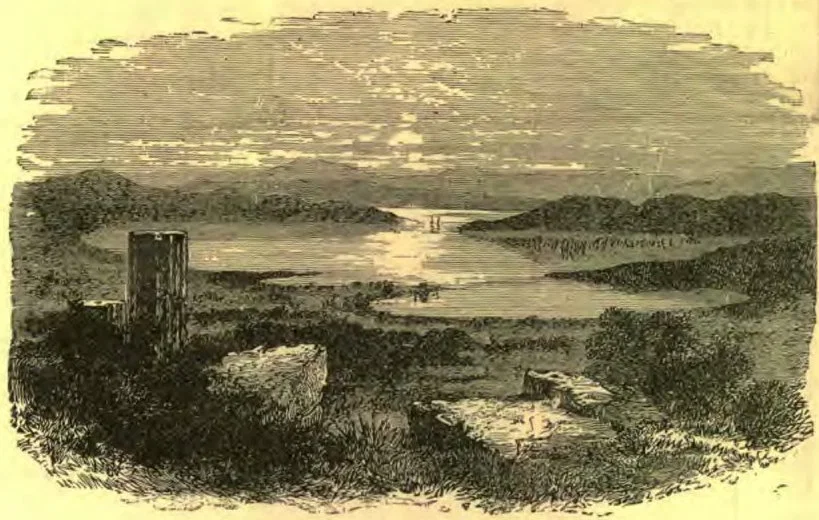
This city was a favorite colony of the Macedonian princes and of the Romans; and it is said that Constantine once thought of making Troas the seat of his empire. This once flourishing city is now a mass of ruins, and has been used for ages as a quarry for Christian and Mohammedan buildings. Oak trees fill the inclosure of the walls. In the harbor and on the hills lie huge fragments and broken columns of granite; and a ruined theater, commanding a fine view of the sea, shows where the citizens met to witness their favorite sports. Although it has gone to decay, the site, including the ancient harbor and the mountains beyond it, is not without a desolate kind of beauty well befitting a once flourishing city of the old Roman Empire.
W. E. L.

J. O. CORLISS

FROM AUCKLAND TO SYDNEY.

THERE are more than a thousand miles of trackless ocean between New Zealand and Australia; and in crossing it there, one is quite likely, especially in the winter season, to encounter storms. But as our company was better prepared for rough weather than when we left America, none were much affected by the unusual motion of the ship as she climbed the tall waves on this part of the voyage. To some it was a grand sight to watch the foaming heaps of water, as they rolled directly toward us with threatening aspect, and see how nobly our ship met them and rode triumphantly over their heads; then again, as she passed down the opposite side, to see her plunge into some irregular swell that happened to be in the path, cutting it in twain, and scattering the spray in every direction, was, notwithstanding the possible misgivings of the more timid, an inspiring sight. An experience of this kind cannot fail to give one an appreciation of the words of the Psalmist: “They that go down to the sea in ships, that do business in great waters; these see the works of the Lord, and his wonders in the deep. For he commandeth, and raiseth the stormy wind, which lifteth up the waves thereof. They mount up to the heaven, they go down again to the depths.” Ps. 107:23-26.
But for the first day after leaving Auckland, and while sailing northward along the eastern shore of the North Island, the weather was very pleasant; and as our vessel kept near shore, a fine opportunity was afforded to view the country. To the eye of the voyager the outline of this part of the coast is bold, rugged, and brown. Inland the country is hilly, and covered with either forest trees, tall ferns, or tussock grass. The clay hills are intersected by deep gullies, that give the appearance of general barrenness. In scanning the country with our glasses, we saw very few houses—not more than four or five—during the entire day. We afterward learned that this part of the island is not so well adapted to farming as more southern localities, on account of its volcanic tendencies.
But before night we had rounded North Cape, and left far behind the Three Kings (a group of islands a few miles north of New Zealand), the last land we were destined to see till the shores of Australia should greet our sight. The third day out from Auckland, I was seated on the promenade deck busily engaged in reading, when a young man near me suddenly sprang to his feet, and pointing with his finger over the ship’s side, cried out, “See there!” Looking in the direction indicated, and but a short distance away, the cause of his enthusiasm was plainly visible. A monster whale, which could not have been less than forty feet in length, had just separated the water, and lay full length upon the surface. A moment more, and as he turned to dive beneath the wave, his huge tail rose high in the air, and then lashed the water into foam as he disappeared. Again and again he thus exhibited himself before the passengers, who seemed delighted with his playful antics, until he was left far in the rear, where even then colossal jets of spray could be seen spouting upward like “smoke as out of a seething pot or caldron,” whenever the monster came to the surface.
Before daylight on the sixth day, we arrived in Port Jackson, where our vessel lay at anchor until nine in the morning. As the sun rose clear and bright, and its warm rays fell aslant the bay, giving it a glassy appearance, the sight was to us beautiful indeed. But the attractiveness of the scene was increased, when, in a short time, numerous little steamers of singular form appeared, splashing the water in the sunlight with their revolving wheels. The most of these were ferry-boats, which, as they crossed the bay in different directions with their loads of living freight, now and then almost colliding as they passed each other, or suddenly stopping to avoid another that was crossing the track just ahead, imparted an animation to the scene that is hard to describe. The shrill warning toot of their whistles added to the general liveliness.
The city of Sydney is situated on the southern shore of the harbor, and extends nearly half way round it, covering about nine square miles. Most of its buildings are made of a species of freestone that looks light and cheerful at a distance; but its streets are narrow and crooked, and in the wet season, extremely muddy. The suburban residences are on the many little promontories that project into the bay, formed by the almost numberless little inlets which extend inland from the bay. To get to and from the business part of the city, one must cross the bay on a ferry, or travel many miles by a circuitous route on the land. As a general rule, the buildings are small and old-fashioned. There are, however, some fine exceptions. The Sydney University has a frontage of nearly four hundred feet, and is said to be one of the finest buildings in the colonies. A number of other colleges have also a commanding appearance, and a few fine parks adorn the city, some of which contain statues of prominent Englishmen.

J. O. CORLISS

STITCHES

PATIENTLY sewing as days go by, Come rain and gloom, or a cloudless sky; Patiently setting the stitches aright, From dawn of day till the shades of night Bring rest awhile to the hands and heart, And a chance for the long-pent tears to start—
Tears, perchance, of trouble and woe, Which every heart for itself must know,— Tears of weariness, tears of pain For the cares which rise with the dawn again, And tears of failure in hopes long past, All free to flow while the night shall last.
But when the morning again is here, Back to the toil, however drear, Back to the stitches, one by one, Set side by side till the task is done, And another waits, and another still, All ready the day's long hours to fill.
Well, do not each of us in our way The stitches of character set each day, One by one and side by side, Till our task is finished, or small or wide? One by one in the morn of youth Sewing the stitches of love and truth,
Or those which bind us, alas, too well, To the tempter's bright, alluring spell; Setting the stitches as we go Either for happiness or for woe? Careless or careful, which are we, As we sew our stitches so constantly?
Setting the stitches, one by one, As life goes on toward the setting sun; Whether for wrong or whether for right, The task will be finished when comes the night. God grant we work to his blessed name, Since Christ, the Master, our work must claim! —M. D. Brine, in Christian Weekly.

TRUE OBEDIENCE.

“Rob,” said John to his friend and playmate, one bright September morning, “let us go and have a good swim. The water is just right, I’m sure.”
“Yes, I’ll go, if father is willing,” said Rob. “We can go by the office on the way to the creek, and I will ask him.”
“Oh, that’s out of the way. Your father lets you swim. What’s the use of bothering to ask him?”
“Why, he was saying this morning that he thought the water must be getting cold, and he did not know how much longer it would be safe to bathe.”
“But he did not say you must not go in any more,” persisted John.
“No, but I must ask him, because I don’t want to go if he does not think it best,” said Rob.
“Well, my father has not said that I must not go in swimming any more. So I am going this morning,” and John started for the street.
“I want to go, too,” said Rob, “and if you will only come around by the office, I will find out in a minute. Come, John,” and he took his friend’s arm; and they started for Mr. Brown’s office, John yielding a reluctant assent.
But when the office was reached, Mr. Brown was not there. He had gone away on a matter of business, and would not return till afternoon.
“Now what are you going to do, Rob?” asked John somewhat provoked that he had been made “to take all this trouble for nothing,” as he expressed it.
“I’m sorry, John, that father is not in,” was Rob’s answer, “but I will go down to the creek with you and watch you swim, if that will do.”
“Oh, pshaw, what a ninny you are! Your father won’t care whether you swim or not,” said John impatiently; but he had a feeling of real respect for his friend, who was so desirous of obeying his father’s wishes and not simply his commands.
The two boys went to the creek, and John swam around and seemed to enjoy it, while Rob watched him from the bank. When John had had enough, he came on shore and dressed, and they went home. When Rob told his father about the matter, Mr. Brown said, “I think, Rob, I would have given you permission if you had found me this morning. But you did just right in keeping out of the water, after what I had said, unless you had special leave. I am very, very glad that you want to do the things that I wish as well as the things that I command. I can trust you.”
The loving words and tone more than repaid Rob for any self-denial he had made in giving up the swimming lest his father might not think it best.
These two boys illustrate two kinds of obedience. John would never have thought of disobeying an expressed command of his parents. Rob went farther. He consulted their wishes even when those had not been expressed. So his obedience was of a better kind than John’s. He was a boy who could be trusted fully. His parents knew that he would try to act at all times and everywhere as he felt they would wish him to act.
This is the kind of obedience which we ought to show to our Father in heaven. We are not simply to look at the positive commands in the Bible, but we are to learn from it God’s wishes, and then seek to do them. We are to have the spirit of obedience. Obedient to wish as well as to word ought to be our motto.—Child’s Paper.

AUTUMN

The autumn skies are flushed with gold, And fair and bright the rivers run; These are but streams of winter cold, And painted mists that quench the sun.
In secret boughs no sweet birds sing, In secret boughs no bird can shroud; These are but leaves that take to wing, And wintry winds that pipe so loud.
'Tis not trees' shade, but cloudy glooms That on the cheerless valleys fall; The flowers are in their grassy tombs, And tears of dew are on them all.
—Thomas Hood.

ENTERTAINING STRANGERS.

A little over fifty years ago, there was among the Methodists a very eccentric preacher by the name of Lorenzo Dow. For forty years he traveled from place to place, every day riding many miles, and often stopping to preach four or five times. His preaching was fervent and powerful, though somewhat illiterate, and often had a wonderful effect upon his congregations. His eccentricities of dress and manner excited much prejudice against him, and in many places he was familiarly known as “crazy Dow.” Many anecdotes are related of his varied experiences.
At one time, he was invited by a rich Southern lady who had heard of him to visit her, and preach at her house. He accepted the invitation, and promised to be there on a certain day.
The preacher was a very plain man. Toward night on the day before the appointment, he approached the house on foot, covered with dust from a long walk. A servant answered his knock, and Dow inquired for the lady of the house.
When she appeared, he asked her if she could accommodate him with supper, and a bed for the night. She refused, saying that the next day she expected a great preacher and many visitors. Dow told her that any place on the floor would do, for he was very tired. But it made no difference; she did not want the house disturbed.
A little way from the house stood a row of whitewashed cabins occupied by the slaves, and to the last of these Dow turned. Of the elderly colored woman that met him at the door, he asked lodging for the night, and was made welcome. That night and the next morning he read and prayed with the old couple; and after breakfast went out and sat down in front of the cabin, facing the great house.
At the appointed time, the grand carriages rolled up, and deposited their occupants at the door, but no preacher came. The people were about to go away in disappointment, when the old servant told her mistress that a man “mighty powerful” in prayer was at her house, and that it might be well to ask him to pray before the company broke up.
Finally they consented, and the preacher came. After a powerful prayer, Dow took for a text, “Be not forgetful to entertain strangers, for thereby some have entertained angels unawares,” and preached such a sermon as they had never listened to before.
The rich lady was thoroughly converted, and ever after was noted for her liberality and hospitality.
J. R. CALKINS.

Prayer Measured by the Heart, Not Form

REMEMBER, God respecteth not the arithmetic of our prayers, how many they be; nor the rhetoric of our prayers, how long they be; nor the music of our prayers, how methodical they be; but the divinity of our prayers, how heart-sprung they are—not gifts, but graces prevail in prayer.—Trapp.

ROBERT MORRISON.

In the early part of the present century, a young man was observed in the library of the British Museum, in London, day after day for months, poring over a book whose curious language and characters were totally unlike those used by Europeans.
One day an eminent philanthropist approached him, and inquired, “What is the language that engages so much of your attention?”
“The Chinese,” he modestly replied.
“And do you understand the language?”
“I am trying to understand it, but the mastery of it is attended with singular difficulty.”
“What may be your object in studying a language so proverbially difficult of attainment, and considered even insurmountable to European talent and industry?”
“I can scarcely define my motives,” he remarked. “All that I know is that my mind is powerfully wrought upon by some strong and indescribable impulse; and if the language is capable of being understood by human zeal and perseverance, I mean to make the experiment.”
This young man was Robert Morrison, a name that need only be mentioned to those acquainted with missionary undertakings, to recall all the splendid achievements he was enabled to make through his persistent study of the Chinese language; for it was he who gained the first foothold for Protestantism in the great Chinese Empire. Sent by the London Missionary Society, in 1807, to China, he at once began the translation of the New Testament into a language that could be read by one third of the human race. This he accomplished after seven years’ incessant study. Part of the work he was compelled to do in a cellar by the light of an earthen-ware lamp, to avoid the notice of those that he had good reason to fear would stop his labors.
The first Chinese convert was the man who helped Morrison to print his New Testament. While preparing the light for his countrymen, he realized its divine origin by the illumination of his own soul with its heavenly radiance. The Holy Spirit printed the word upon his heart.
It has been well said that Morrison was not content to be wise for himself alone. In conquering the language for his own use, he determined to leave the gate open for his followers. In four years he completed his Chinese grammar.
The great work of his life, the gigantic monument of his scholarship and his indefatigable industry, was his Chinese and English Dictionary. It contained forty thousand characters. Its publication was begun in 1818, and was not finished until 1821. It consumed ten years of study, and comprised six great quartos. The expense of publishing it was seventy-five thousand dollars, defrayed by the East India Company.
But the grand undertaking to which Morrison had consecrated his life was the translation of the whole Bible into Chinese. He regarded the preparation of his grammar and dictionary secondary and auxiliary to this. It occupied him twelve years. He brought to this herculean task persistent determination of will, unwearied application, and almost unequaled powers of endurance. He allowed no waste of time, and no abstraction from his devoted pursuit. He even told his family not to send him the papers, as he had no time to read them.
Morrison died in 1834, at Canton, amid a few prayerful converts, who were given him for his reward during twenty-seven years of patient toil. It is said he died panting for the salvation of China.—S. S. Classmate.

REBUKING A KING.

The timidity which hesitates to rebuke profanity was once shamed by a king. Riding along the highway in disguise, and seeing a soldier at an inn, he stopped and asked him to drink ale with him. On an oath which the king uttered while they were drinking, the soldier remarked:— “I’ll pay part of the ale, if you please, and go; for I so hate swearing that, if you were the king himself, I should tell you of it.”
“Should you, indeed?” asked the king.
“I should,” was the emphatic reply of his subject.
Not long after, the king gave him an opportunity to be “as good as his word.” Having invited some lords to dine with him, he sent for the soldier, and bade him stand near him in order to serve him if he was needed. Presently the king, not now in disguise, uttered an oath. And deferentially the soldier immediately said: “Should not my lord and king fear an oath?”
Looking at the heroic soldier and then at his company of obsequious noblemen, the king severely remarked: “There, my lords, is an honest man. He can respectfully remind me of the great sin of swearing; but you can sit here and let me stain my soul by swearing, and not so much as tell me of it!”—Exchange.

GETTING SQUARE.

THERE are many people who, when injured or wronged by others, propose to “get square with them” by some method of retaliation. The wisdom of this course does not seem apparent. I may get square with a mean man by making myself as mean as he is. I may get square with a dishonest man, by myself becoming dishonest. By this method we have two wrongs instead of one; and two wrongs neither of which is likely to make a right. It does not profit us to get square with those who have abused us or misused us. Why need we descend to their level? “Be not overcome of evil, but overcome evil with good.”

IMPORTANT BIBLE SUBJECTS.

LESSON 10.—THE FOURTH KINGDOM. (CONTINUED.)

[NOTE TO THE STUDENT.—Do not consider the lesson learned until you can give at least the substance of every text, with the correct reference for each. The references in black letters indicate those texts that should be committed to memory. A little diligent application each day will enable you to learn them, although this need not be considered a test of scholarship.]
1. How did the Roman Empire exactly fulfill the prophecy found in Dan. 2:40? (See note.)
2. What does Gibbon say of the universal nature of this empire? (See note.)
3. From which of the Grecian horns was Rome seen coming by the prophet? Dan. 8:8, 9. (See note.)
4. Did Rome originate in Macedon? Ibid.
5. Then please explain verse 9, chapter 8. Ibid.
6. In what direction did it push its conquests? Dan. 8:9.
7. What conquests are here represented? (See note.)
8. How is the fourth kingdom to be overthrown? Dan. 2:34.
9. How is the little horn of Daniel 8 to be destroyed? Dan. 8:25.
10. How had the other universal empires been overthrown? (See note.)
11. Then what difference appears in the manner of their overthrow?
12. What kingdom is to follow the fourth one? Dan. 2:44.
13. How long a period is covered by this fourth kingdom? (See note.)
14. Was it always to remain united? Dan. 2:41.
15. How is this division symbolized in Dan. 7? Verse 7, last clause.
16. What do the ten horns signify? Dan. 7:24.
17. Do these ten horns represent ten successive kings of the Roman Empire? (See note.)
18. What do they denote? (See note.)
19. When did this division take place? (See note.)
20. Name these ten kingdoms.
21. Will any of these be in existence when the God of heaven shall set up his kingdom? Dan. 2:44, last part.

NOTES.

Subdueth all things.—The arms of the Republic, sometimes vanquished in battle, always victorious in war, advanced with rapid steps to the Danube, the Rhine, and the ocean; and the images of gold, or silver, or brass, that might serve to represent the nations or their kings, were successively broken by the iron monarchy of Rome.—Gibbon.
Of the universal nature of this empire this historian further adds:—“The empire of the Romans filled the world. And when that empire fell into the hand of a single person, the world became a safe and dreary prison for his enemies. To resist was fatal; and it was impossible to fly.”
Out of one of them came forth a little horn.—It comes forth from one of the horns of the goat. How, it may be asked, can this be true of Rome? It is unnecessary to remind the reader that earthly governments are not introduced into prophecy till they become in some way connected with the people of God. Rome became connected with the Jews, the people of God at that time, by the famous Jewish League, B. C. 161. 1 Maccabees, 8; Josephus’ Antiq., b. 12, chap. 10, sec. 6; Prideaux, vol. 2, page 166. But seven years before this, that is, in B. C. 168, Rome had conquered Macedon, and made it a part of itself. It is therefore introduced into prophecy just as, from the conquered Macedonian horn of the goat, it is preparing to go forth to new conquests in other directions. It therefore appeared to the prophet, or may be properly spoken of in this prophecy, as coming forth from one of the horns of the goat.—Thoughts on Daniel and the Revelation.
The introduction of Rome in this chapter was not at the beginning of the kingdom, but was at that point of time when it came into view as a ruling empire, having conquered a portion of the goat kingdom. The seat of empire was at Rome, in Italy, and dates from 753 B. C.
It waxed great toward the south.—Egypt was made a province of the Roman Empire, B. C. 30, and continued such for some centuries. Toward the east.—Rome conquered Syria, B. C. 65, and made it a province. Toward the pleasant land.—Judea is so called in many scriptures. [See Ps. 106:24; Zech. 7:14.] The Romans finally made this a province, B. C. 63, and eventually destroyed the city and the temple, and scattered the Jews over the face of the whole earth.—Thoughts on Daniel and the Revelation.
Babylon was overthrown by the armies of the Medes and Persians, who were in turn overthrown by the Grecians; and Grecia, as we have seen in this lesson, was conquered by Rome. But the fourth, or Roman Empire was to continue, although in a broken state, from the time it conquered Grecia until the God of heaven should overthrow all earthly governments, and set up his everlasting kingdom. This destruction is represented in Dan. 2:34 by the smiting of the image with a stone cut out without hands; and in chapter 8, verse 25, by the breaking of the power without hands.
Ten kings that shall arise.—These ten horns cannot denote ten successive rulers of the empire; for in Dan. 7:8 we find that another horn, or power, plucked up three of the horns; hence these symbols must represent divisions of the empire that existed somewhat contemporaneously, as did the divisions of the Grecian Empire, represented by the four horns of the goat.
The division of the Roman Empire into ten parts occurred between the years A. D. 356 and A. D. 483. These divisions were established, respectively, by the Huns, A. D. 356; Ostrogoths, 377; Visigoths, 378; Franks, 407; Vandals, 407; Suevi, 407; Burgundians, 407; Heruli, 470; Anglo-Saxons, 476; and Lombards, 483. This enumeration of the ten kingdoms is that given by Machiavel, in his History of Florence, lib. 1, who is, says Dr. Hales, “the best, because the most unprejudiced authority.” The dates are furnished by Bishop Lloyd; and the whole is approved by Bishop Newton, Faber, and Dr. Hales.—Thoughts on Daniel and the Revelation.

PEARL FISHERIES.

The beautiful pearls so much admired and so highly prized are found inside the shell of the pearl-oyster, which is fished out of the sea at great peril to the fishermen. Over-fishing for pearls the last few years, to supply the demand which fashion has made for them, has greatly reduced the stock, thus materially increasing their value. Ten or twelve years ago they were bought for one-third what they now cost. Mother-of-pearl, too (the inner, silvery lining of several kinds of shells, particularly the oyster), sells for nearly four times what it did a dozen years ago. There are a number of fisheries, although there is a scarcity of pearls. Besides the old fisheries in the Bay of Bengal and the Red Sea, pearls are also procured from the Sunda Isles of the Malay Archipelago, the seas of China and Japan; from Panama, Tahiti, the Gambier Islands, and Australia; and “the market is in the hands of the Amsterdam, Hamburg, London, and New York dealers, who buy up all this harvest of the sea.” Some of the particulars of this industry and the perils which attend it are given in the following paragraphs from the St. James’s Gazette:—
“There are numerous bivalves which give pearls, bad, indifferent, or better; but the true pearl-oyster—if oyster it can be called, for it is exactly like a very large cockle—is the Mytilus Margaritifera, or Pintadaimæa, which measures from four to six inches in diameter, and an inch and a half in thickness. The oceanic variety differs from the East Indian, and gives a finer gem.
“The Tuamotu Archipelago, to the east of the Society Islands, is perhaps the greatest pearl-fishery in the world. Of its eighty islands there are only some half dozen whose waters do not produce the pearl-oyster. The natives of this group know no industry but fishing. Men, women, and children all dive like sea-fowl, and the women are the most expert. Two women especially of Faiti, and one of Anaa or Chain Island, are well known in this trade—more dreadful far than sapphire gathering—for plunging into twenty-five fathoms of water, in the teeth of the sharks, and remaining as long as three whole minutes under water.
“A famous diver of Anaa escaped not long ago from a shark with the loss of a breast and an arm; and many of them go down never to come up again. If they make too many plunges in their day’s work at the beginning of the season, which comprises the summer months, from November to February, they bring on hemorrhage or congestion; and after some years passed in the occupation, paralysis is certain.
“Few of these divers work for themselves; but they can earn four English shillings a day from the pearl-traders. With a wooden tube some sixteen inches long, ten inches square, and glazed at one end, they prospect from their boats the bottom of these clear seas; the glass end, which is put into the water, serving the purpose of suppressing the surface-ripple which is so puzzling to the eye.
“The diver of the Persian Gulf or of Ceylon attaches a weight of some twenty pounds to his feet to aid in his descent, and carries seven or eight pounds more of ballast in his belt. He protects both eyes and ears with oiled cotton, bandages his mouth, and goes down forty feet with a rope. He remains down from fifty-three to eighty seconds, and helps himself up again by the rope. But the Pacific diver practices the conjurer’s boast of ‘no preparation.’ Just before the plunge, the diver draws a full breath rapidly three or four times running, and finally, with the lungs full of air, drops feet first to the bottom, not forty feet, but twenty-five or thirty fathoms (150 to 180 feet) and comes to the surface again with extraordinary swiftness, unaided in any way. Each dive generally lasts from sixty to ninety seconds; and only very occasionally the astonishing maximum of three minutes.
“The divers hardly ever bring up more than one oyster at a time; but this is chosen as likely to contain pearls by some fancied rule of thumb of their own, grounded on age, form, and color; and they hold the shells tightly together when they mount, lest the envious oyster should shed the pearl, which the divers themselves are very quick to conceal by swallowing if the employer’s eye is not fixed on them. Diving-bells have been introduced by some houses in the trade; but the natives will no longer work in them, saying they bring on early paralysis of the legs.”

OPPORTUNITY

The trivial round, the common task, Will furnish all we ought to ask; Room to deny ourselves; a road To bring us daily nearer God.

SPANISH ETIQUETTE.

ETIQUETTE is necessary for keeping order at court; but in Spain it was formerly carried to such great lengths as to make martyrs of their kings. An instance is given which is ludicrous in spite of the grave consequences occasioned by it:—
“Once when Phillip III. was gravely seated by the fireside, the firemaker of the court had kindled so great a quantity of wood that the monarch was nearly suffocated with heat, and his grandeur would not suffer him to rise from the chair. The domestics could not presume to enter the apartment, as it was against etiquette. At length the Marquis de Pota appeared, and the king ordered him to damp the fire; but he excused himself, alleging that he was forbidden by etiquette to perform such a function, for which the Duke d’Assada ought to be called upon, as it was his business. The duke was gone out. The fire burned fiercer, and the king endured it rather than derogate from his dignity. But his blood was heated to such a degree that an erysipelas of the head appeared the next day, which, succeeded by a violent fever, carried him off, in 1621, in the twenty-fourth year of his reign.”
“At another time the palace was on fire. A soldier who knew that the king’s sister was in her apartment, and must inevitably be consumed in a few moments by the flames, at the risk of his life rushed in and brought her highness out safe in his arms; but the Spanish etiquette was here wofully broken into! The royal soldier was brought to trial, and, as it was impossible to deny that he had entered her apartment, the judges condemned him to die.”
“The Spanish princess, however, condescended, in consideration of the circumstances, to pardon the soldier, and very benevolently saved his life.”—Exchange.

OLD-FASHIONED TRAVEL.

THIRTY-FIVE years ago the most aristocratic means of travel was by canal boat. “Packets” they called those boats that were fitted up for the accommodation of travelers. People were content then with the slow pace of a tandem team of mules, and with ducking below or lying down at the warning of “low bridge,” and with going a hundred miles a week.
Afterward, all journeys across the continent were made by stages. A terrible journey by day and night, that was, but it was considered fast. Now the longest line of stages in America is less than four hundred miles.
Continue reading: SHOWERS OF DEAD BIRDS