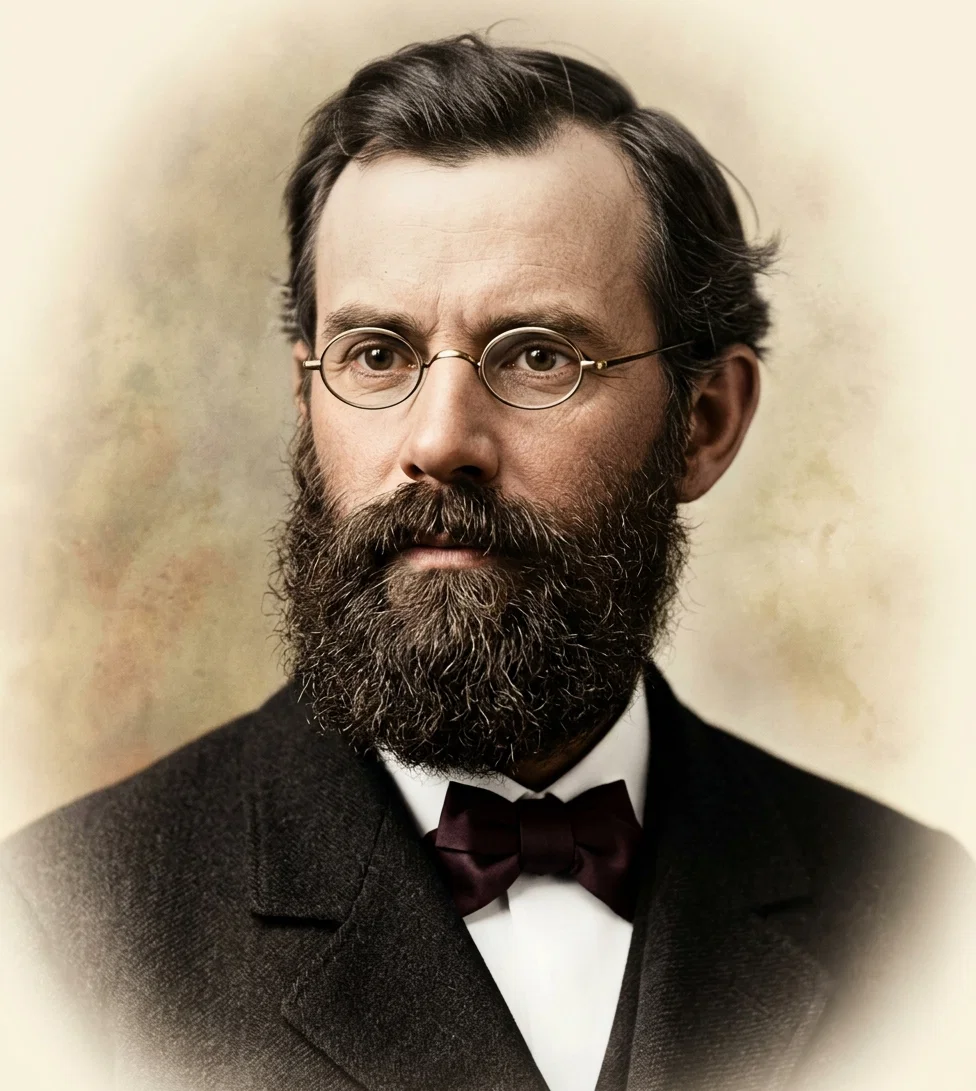
Livingstone’s mind was one of that broad character which at the outset grasps the whole of a problem, and to those who have followed his later course it is clear why he saw no duty in settling down on one fixed spot to teach and preach in a slavery-harrowed land. He knew that, first, there must be a mighty clearing out of this evil. As for his own intent, he said, “Cannot the love of Christ carry the missionary where the slave trade carries the trader?” And so, right through to the west coast he marched, carrying and diffusing everywhere a knowledge of the redeeming Christ, and illustrating by his own kindly life and words the mercies of God.
The physician and the scientist, the minister and the reformer, were all combined in this one purposeful man. The people believed him to be a wizard, and even credited him with power to raise the dead. Heathen, sick and curious, crowded about his wagon, but not an article was stolen. One day the chief of a savage tribe said: “I wish you would change my heart. Give me medicine to change it; for it is proud, proud and angry, angry always.”
Livingstone left on record in his journals invaluable data of rivers, lakes, and streams, treacherous bogs and boiling fountains, plants, animals, seasons, products, and tribes, together with the most accurate maps.
Near the mighty but then unknown Zambesi, Livingstone found the Makololo people, a tribe from which came his most devoted native helpers. When he left them to journey toward the west coast, as many men as he needed willingly agreed to accompany him. After a terrible journey of seven months, involving imminent starvation and endless exposure, the party at last reached their destination, St. Paul de Loanda, a Portuguese settlement.
Full as this journey was of incident, one of the most impressive things about it all was the horrors of the slave trade, which came home to the missionary with heart-rending directness. “Every day he saw families torn asunder, dead bodies along the way, gangs chained and yoked, skeletons grinning against the trees by the roadside. As he rowed along the beautiful river Shire, the paddles of his boat were clogged in the morning with12the bodies of women and children who had died during the night, and were thus disposed of by their masters.” And when he was sure that the wretched system was entrenched from the center of the continent to the coast, is it any wonder that he determined to make the exposure of this gigantic iniquity his principal work until “the open sore of the world” should be healed?
The slave raiders were Livingstone’s bitter enemies, and did everything possible to hinder his work; but the poor heathen learned to know and love the missionary as their friend, and oftentimes as their deliverer. He never once betrayed their confidence. Almost immediately after reaching the Portuguese settlement on the coast he was prostrated with a very severe illness. An English ship in the harbor was about to sail. In his great weakness, Livingstone longed for the bracing air of the Scottish Highlands, and a sight of his beloved wife and children in the homeland. But he prepared his reports, charts, and observations, put them aboard the ship, and, after watching it set sail, made ready to march back into the interior. Why did he not go home? There was just one reason. He had promised his native helpers that if they would journey with him to the coast, he would see them back safely to their homes, and “his word to the black men of Africa was just as sacred as it would have been if pledged to the queen. He kept it faithfully as an oath made to Almighty God. It involved a journey of nearly two years in length, a line of march two thousand miles long, through jungles, swamps, and desert, through scenes of surpassing beauty.” But the result was worth the cost; for two years later, when he came out on the east coast at Quillimane, “he was the best-known, best-loved, and most perfectly trusted man in Africa.”
Many times through all these wanderings he was in danger. Once during his early explorations, he had an adventure with a lion which nearly cost his life. He says of it in a letter: “The beast rushed from the bushes and bit me on the arm, breaking the bone. I hope I shall never forget God’s mercy. It will be well before this reaches you. Do not mention it to any one. I do not like to be talked about.” He never voluntarily referred to it; but “for thirty years thereafter, all adventures and exposures and hardships were undertaken with an arm so maimed that it was painful to raise a fowling piece to his shoulder.” After his death the body was identified by that scar and the compound fracture made by the lion’s teeth.
Livingstone’s visits to the homeland were brief, and each day was filled to the brim with interviews, lectures, and literary work. He returned to Africa for the third and last time in 1866, ascended the Rovuma, and for three years was lost to the outside world. During this time he visited Lakes Moero and Tanganyika, preaching the gospel to thousands and tens of thousands waiting in heathen darkness.
In 1871 his strength utterly gave way, and on October 23, reduced to a living skeleton, he reached Ujiji, after a perilous journey of six hundred miles taken expressly to secure supplies. He was bitterly disappointed to find that the one to whom the delivery of the goods had been charged had disposed of the whole lot. For eighty days he was obliged to keep his bed, and during this time he read his Bible through four times. On the flyleaf he wrote: “No letters for three years. I have a sore longing to finish and go home, if God wills.” Relief, letters, and supplies had all been sent him, but he never received them. Many of the letters which he wrote never even reached the coast, as the Portuguese destroyed them whenever possible.
During all this time England—and, in fact, the world—waited with intense anxiety for news of the hero. A report came that he was dead. Then a relief expedition brought back word that he was alive, and in Africa, but that they had not been able to find him.
Just at this crucial moment Henry M. Stanley was sent out by James Gordon Bennett, of the New York Herald, with the order: “Take what money you want, but find Livingstone. You can act according to your own plans in your search, but whatever you do, find Livingstone—dead or alive.” Stanley went. For eleven months he endured incredible hardships, but his expedition pressed forward into the interior. One day a caravan passed and reported that a white man had just reached Ujiji. “Was he young or old?” questioned Stanley anxiously. “He is old; he has white hair on his face; he is sick,” replied the natives. As the searching party neared the village, flags were unfurled, and a salute fired from the guns. They were answered by shouts from hundreds of Africans. Stanley was greeted by Susi, Livingstone’s servant, and soon stood face to face with the great missionary explorer. He had found Livingstone.
The brief visit which they enjoyed meant much to both men. In vain did Stanley plead with the doctor to go home with him. The old explorer’s heart was resolute, and he set his face as a flint. He felt that his work was not done. At length the newspaper man and his company started eastward. Livingstone went some distance with them, and then, a broken old man, “clad in faded gray clothes,” with bowed head and slow step, returned to his chosen solitude. Five months later the relief party reached Zanzibar, and news of Livingstone’s safety and whereabouts was flashed to all parts of the world.
As the explorer again took up his weary way, physically weak and in constant pain, the buoyant spirit rose above hardship, and Scotch pluck smiled at impossibilities. He wrote in his diary: “Nothing earthly will make me give up my work in despair. I encourage myself in the Lord my God, and go forward.” Weary months followed, filled with travel, toil, and physical suffering. The last of April, 1873, a year after Stanley left him, he reached the village of Ilala, at the southern end of Lake Bangweolo. He was so ill that his attendants were obliged to carry him as they journeyed, but the heroic spirit was still struggling to finish a work which would make possible the evangelization of the Dark Continent.
While the spirit was willing, the flesh was weak indeed, and on the morning of the first of May, his faithful servants found him kneeling at his bedside, with his head buried in his hands upon the pillow. “He had passed away without a single attendant, on the farthest of all his journeys. But he had died in the act of prayer,—prayer offered in that reverential attitude about which he was always so particular; commending his own spirit, with all his dear ones, as was his wont, into the hands of his Saviour; and commending Africa, his own dear Africa, with all her woes and sins and wrongs, to the Avenger of the oppressed and the Redeemer of the lost.”
Kolo Mission, Basutoland, South Africa
SISTER FANNY C. BOURNE, reporting the work at the Kolo Mission, in the upland of Basutoland, tells how the good hand of the Lord is over the work there. She writes:—
“We are just a small company, but week by week we prove the promise found in Matt. 18:20, at our Friday evening meetings.
“Brother and Sister Silsbee are both doing all they can among the sick. This week they have visited and given treatment to three persons who were seriously ill. Brother Silsbee has various experiences, as I suppose is common to all missionaries. A few weeks ago he was called from work in the garden to make a coffin for a little child that had just died; the relatives were so pleased that they asked him to ‘preach a sermon at the grave.’ This gave him an opportunity to tell of the state of the dead and the resurrection, to about one hundred persons, including the chiefs of several villages.
“Last week a minister of the Jerusalem Church came representing his people and asking that they be admitted to our church. He has nine ministers under him, with five hundred members, and he says they are in harmony with the Sabbath truth. Brother Silsbee told him they would need more instruction first, and he is planning to visit them. This is the second visit from this man, with the same request.
“Brother Lazarus and Brother Peter are having good times in the school and the canvassing work. At our last Friday evening meeting Lazarus told of one man who was very anxious to have a Sesuto copy of ‘Daniel and the Revelation.’ This man said if even one copy could be translated for him, he would give three pounds for it. Several near here are interested, and we pray they may be led to accept the whole truth.”
After Forty Years
By H. E. Rogers
Report of Foreign Missions for 1913
H. E. ROGERS
Statistical Secretary
SEVENTH-DAY ADVENTISTS believe that the Saviour's command, “Go ye into all the world, and preach the gospel to every creature,” is of binding force, and is to-day obligatory upon them; and so in obedience to that command, they have gone into nearly all parts of the world to proclaim the tidings of a soon-coming Saviour. Representatives of this people are now carrying forward work in nearly every important country.
ELDER J. N. ANDREWS
(First missionary sent out by Seventh-day Adventists)
This phase of work was considered quite early in the history of this movement, but it was eleven years after the organization of the General Conference until the first representative was sent outside this country in behalf of this special message. It was on the fifteenth of September, 1874, forty years ago, that Elder J. N. Andrews, the first missionary sent by the denomination outside the United States, left Boston on this new undertaking. Some time elapsed before additional missionaries were sent outside this country. In 1886 laborers were sent to Russia, and from time to time other laborers have gone out to other lands, and missions have been established in various places.
In 1894 work was begun in what may be denominated a heathen country, when representatives of this people entered Matabeleland (now Rhodesia), South Africa, selected a mission site, and began their work. Other heathen and non-Protestant countries were soon entered, and one country after another has been added to the list, until there is now quite a large force of laborers engaged in service in sixty-seven different heathen and non-Protestant countries, and including Christian lands, the list of countries numbers eighty-five.
A report of this work for the year 1913 accompanies this article. The report is arranged on a little different basis than our regular annual statistical reports, but follows the plan of reporting adopted by various missionary boards and organizations. The figures in the table speak for themselves, but reference is here made to certain items.
The income from mission territory, or what may be called native contributions, for 1913 amounted to $200,411.44. The income from the home base was as follows: North America, $499,713.65; northern Europe, $168,720.44; Australasia, $38,330.76; South Africa, $4,592.56; total, $711,357.41. Including the amount raised as native contributions, the grand total expenditure in mission territory for 1913 was $911,768.85.
The total force of foreign missionaries now stands at 648, and of native laborers 958, a total of 1,606 laborers in mission fields; total church members in mission fields, 19,335, of whom 3,289 were baptized during 1913. The total contributions for mission work outside the United States raised by the entire denomination from 1869 to 1913 aggregates $5,340,289.68. Nearly one half of this amount has been raised during the past five years, the exact figures being $2,580,802.82; that is, the total contributions for the past five years have been nearly as much as for the preceding forty years.
The contributions for mission work outside the United States by decades have been as follows:—
1869-79 .................... $ 40,560.90
1880-89 .................... 238,467.11
1890-99 .................... 837,280.85
1900-09 .................... 2,026,262.93
1910-13 (4 years) .......... 2,197,717.89
Total ...................... $5,340,289.68
Without attempting to draw an invidious comparison, or make any improper showing, but simply to show how our work stands as related to other missionary organizations at work in the field, attention may be called briefly to the reports of other missionary organizations engaged in foreign missions. The following facts are based upon the report issued during 1914 by the Foreign Missions Conference of North America for the year 1913, and represents the work of 179 Protestant organizations in the United States and Canada, all or a portion of whose revenue is devoted to work in other lands.
Considering our work as a unit, what is attempted in Europe and other Christianized portions being included to make up one complete statement, our total force of foreign men missionaries of all classes stands third in point of numbers engaged in service by the 179 Protestant missionary organizations in the United States and Canada. In the number of women missionaries of all classes, this denomination stands sixth, in total foreign missionaries fifth, and in native workers ninth; as to total force engaged in service, this body stands eighth. In the number of mission stations, it stands second, and in outstations sixteenth; in organized churches sixth, and in membership thirteenth. In contributions from the home base it stands eleventh as to total amount, and of native contributions sixth.
The total contributions from all Protestant missionary organizations in the United States and Canada for 1913 for the support of Protestant Christian missions outside those two countries were $16,458,069.67, and the native contributions by communicants in mission fields were $3,855,286.32.
The per capita amount for foreign missions from members of the Protestant bodies in the United States and Canada for the support of Christian missions during 1913 approximated sixty-eight cents; contributed by Seventh-day Adventists in the same territory for the14same purpose, was a per capita of $6.95.
The per capita amount of native contributions raised by the 1,366,551 native communicants of all denominations in mission territory during 1913 was $2.82; native contributions by Seventh-day Adventists in mission territory during the same time constituted a per capita of $10.36.
The term “foreign missions” is elastic; it may mean one thing or another. This fact has become well recognized in the compilation of missionary statistics; and so the committee issuing the report already referred to states that the report tabulates “the results of work done by the Christian people of the United States and Canada for people outside the natural borders of these two countries.” The report of this denomination is restricted to the territory named in the table. And it is quite possible that in the majority of cases the reports of other bodies cover practically the same territory.
While this denomination is today operating in sixty-seven different mission countries, so far as reports indicate no other religious body is carrying on work in more than half this number.
In mission territory we have 14 printing plants, 18 hospitals or dispensaries, and 9 mission boats. Languages in oral use number 100, with publications issued in 73. Including languages used in Christianized portions, the denomination now issues literature in 80 languages, and in oral use there are 107 languages. Surely this represents a vast amount of effort. In one case, our workers were the first to reduce the language of the natives to written form, issuing literature, including one of the Gospels. Another feature of promise is the fact that in mission territory we have 15 training schools, 59 head schools, and 132 outschools, taught by 91 foreign teachers and 269 native teachers, and having a total enrollment of 9,610.
But while something has been accomplished, much yet remains to be done.
Glance at the summary, and note that each laborer we have in Asia has for a parish nearly a million and a half of souls, while in the United States the population for each laborer is 41,879. The percentage of population outside Christianized portions is 84.91, and of denominational laborers 28.11; while the population in Christian portions of the world constitutes 15.09 per cent, and the laborers we have engaged in such parts are 71.89 per cent. These figures indicate that a greater equalization of conditions should be brought about.
Report of Work in Non-Christian and Non-Protestant Countries—for 1913
Country
Income from the Field
Ordained Ministers
Licensed Ministers
Physicians—Men
Physicians—Women
Laymen (Miss. Licen.)
Wives of Missionaries
Unmarried Women
Total Foreign Missionaries (1)
Ordained Natives
Other Native Helpers
Total Native Helpers
Total Force in the Field (2)
Main Stations
Sub-stations
Organized Churches
Baptized Members
Baptized during Year
Total Adherents
Sabbath Schools
Pupils in Same
Training Schools
Pupils in Same
Head Schools
Out-Schools
Pupils in Same
Foreign Teachers
Native Teachers
AFRICA
1 Algeria
$517.93
2
1
..
..
2
3
..
8
..
..
..
8
2
3
3
43
14
43
5
43
..
..
..
..
..
..
2 Basutoland
3,240.37
1
1
..
..
2
3
..
7
..
9
9
16
2
2
1
92
35
98
3
125
..
..
3
2
142
2
6
3 British East Africa
400.40
3
..
..
..
6
3
..
12
..
2
2
14
2
5
2
72
4
72
3
72
..
..
4
9
500
9
2
4 British South Africa
5,568.29
4
3
..
..
4
8
..
19
..
36
36
55
5
4
2
227
26
237
10
339
1
22
3
19
535
13
33
5 British West Africa
........
3
1
..
..
..
4
..
8
1
13
14
22
2
3
6
165
36
165
6
163
1
30
1
2
150
1
2
6 Canary Islands
........
..
..
..
..
1
1
..
2
..
..
..
2
1
..
1
2
...
2
1
2
..
..
..
..
..
..
..
7 Egypt
285.33
1
..
..
..
1
1
1
3
..
2
2
5
2
3
3
40
25
40
5
40
..
..
..
..
..
..
..
8 Eritrea
181.71
1
1
..
..
1
2
..
5
..
..
..
5
1
..
1
5
...
5
1
5
1
15
..
..
..
2
..
9 German East Africa
1,713.69
7
9
..
..
5
10
..
31
..
55
55
86
12
27
7
303
174
303
7
303
..
..
17
27
4,206
20
55
10 Nyasaland
471.60
..
3
..
..
2
2
1
6
..
63
63
69
1
1
2
176
16
675
37
1,610
1
97
1
38
1,334
6
63
Totals (10)
12,469.32
22
19
..
..
21
37
2
101
1
180
181
282
30
48
28
1,125
330
1,640
78
2,702
4
164
29
97
6,867
53
161
ASIA
11 China
4,677.26
15
11
2
1
1
28
2
60
4
151
155
215
9
30
29
1,194
265
1,324
77
2,120
2
96
12
13
600
8
32
12 India
8,000.00
12
9
2
1
18
37
11
90
4
85
85
175
15
5
10
450
100
450
21
768
1
25
10
12
900
6
40
13 Japan
1,883.72
4
2
..
..
3
8
..
17
2
34
36
53
2
3
7
234
41
293
15
261
1
21
..
..
..
1
2
14 Korea
2,008.65
2
3
1
..
1
6
2
15
..
62
62
77
4
..
9
452
110
452
32
861
1
70
2
6
200
2
13
15 Persia
116.29
1
1
..
..
1
2
..
4
..
..
..
4
2
3
3
42
..
42
5
42
..
..
..
..
..
..
..
16 Siberia
5,971.53
..
..
..
..
..
..
..
..
7
11
18
18
7
11
66
1,138
171
1,138
66
1,395
..
..
..
..
..
..
..
17 Syria
406.17
2
2
..
..
..
4
1
9
..
1
1
10
2
2
2
31
2
31
2
31
..
..
..
..
..
..
..
18 Turkestan
835.30
2
..
..
..
2
3
..
7
..
..
..
7
2
2
6
108
1
108
6
103
..
..
..
..
..
..
..
Totals (8)
23,898.92
38
28
5
2
25
88
16
202
13
344
357
559
43
56
132
3,049
602
3,838
224
5,671
5
212
24
31
1,700
17
87
AUSTRALASIA
19 Australia (aboriginal)
........
..
2
..
..
1
3
..
6
..
..
..
6
1
..
..
6
...
6
1
30
..
..
1
..
30
1
..
20 New Zealand (Maori)
........
..
1
..
..
..
..
..
1
..
..
..
1
..
..
..
4
...
4
1
8
..
..
..
..
..
..
..
Totals (2)
........
..
3
..
..
1
3
..
7
..
..
..
7
1
..
..
10
...
10
2
38
..
..
1
..
30
1
..
EUROPE (Southern)
21 Austria-Hungary
28,633.67
10
10
..
..
5
13
4
48
3
50
53
101
19
50
120
2,418
555
2,418
128
2,418
..
..
..
..
..
..
..
22 Balkan States
6,512.80
2
1
..
..
1
3
..
7
3
7
10
17
5
9
18
499
138
499
18
400
..
..
..
..
..
..
..
23 Belgium
3,482.25
4
3
..
..
..
4
..
11
..
..
..
11
1
5
6
146
28
146
18
160
..
..
..
..
..
..
24 France
1,755.69
..
..
..
..
..
4
..
4
15
19
19
19
4
15
20
346
2
346
23
290
..
..
..
..
..
..
25 Greece
78.61
1
1
..
..
..
2
..
4
..
1
1
5
1
1
2
11
...
11
2
8
..
..
..
..
..
..
26 Ireland
781.30
..
1
..
..
1
1
..
3
..
2
3
6
2
4
6
130
4
130
10
95
..
..
..
..
..
..
27 Italy
505.31
..
1
..
..
..
1
2
4
1
2
3
7
2
4
6
99
15
99
7
70
..
..
..
..
..
..
28 Portugal
390.20
2
..
..
..
..
2
..
4
..
..
..
4
2
..
2
65
19
65
2
66
..
..
..
..
..
..
29 Russia
39,445.14
2
..
..
..
1
2
1
6
26
67
93
99
28
60
168
4,569
667
4,569
168
4,902
..
..
..
..
..
..
30 Spain
........
2
..
..
..
..
2
..
4
..
5
5
9
2
3
6
127
15
127
9
81
..
..
..
..
..
..
31 Turkey (not inc. Syria)
1,509.44
1
1
..
..
..
1
1
4
3
13
16
20
3
8
28
332
34
332
25
313
..
..
..
..
..
..
Totals (11)
83,094.41
30
18
..
..
8
31
8
95
41
162
203
298
69
159
382
8,742
1,477
8,742
398
8,803
..
..
..
..
..
..
PACIFIC ISLANDS
32 British North Borneo
45.93
1
..
..
..
..
1
..
2
..
1
1
3
1
..
1
11
6
11
2
35
..
..
..
..
..
..
33 British New Guinea
400.00
1
..
..
..
..
1
..
2
..
4
4
6
1
..
1
8
...
8
1
8
..
..
..
..
14
1
..
34 Cook Islands
100.00
1
1
..
..
..
2
..
4
..
2
2
6
2
1
1
18
13
28
2
40
..
..
..
..
..
..
35 Fiji Islands
974.00
1
..
..
..
2
3
2
8
1
11
12
20
2
6
10
252
12
252
20
330
2
60
..
..
..
5
2
36 Friendly Islands
513.50
1
1
..
..
..
2
..
4
..
1
1
5
2
1
1
18
..
24
3
35
..
..
..
..
..
..
37 Hawaiian Islands
1,481.82
1
..
..
..
3
3
4
11
..
1
1
12
1
..
1
40
4
40
1
54
..
..
..
..
..
..
38 Java
1,714.40
1
3
..
..
..
2
1
7
..
3
3
10
2
..
2
40
11
54
6
85
..
..
..
..
..
..
39 New Hebrides
258.72
1
1
..
..
..
2
..
4
..
..
..
4
1
..
1
4
...
4
1
4
..
..
..
..
..
..
40 Norfolk Island
262.42
..
1
..
..
1
2
..
4
..
..
..
4
1
..
1
43
3
49
1
46
..
..
..
..
..
..
41 Philippine Islands
736.38
3
..
..
..
3
6
..
12
..
4
4
16
2
1
4
181
40
210
6
165
..
..
..
..
..
..
42 Pitcairn Island
........
..
1
..
..
..
1
..
2
..
4
4
6
2
..
1
74
13
74
1
139
..
..
1
..
64
1
1
43 Samoa
........
..
1
..
..
..
1
1
3
..
..
..
3
1
..
1
10
4
10
1
15
..
..
..
..
..
..
44 Singapore
847.49
1
2
..
..
..
2
..
5
..
4
4
9
1
1
1
87
18
87
2
136
..
..
..
..
..
..
45 Society Islands
876.00
1
1
..
..
..
2
..
4
..
1
1
5
1
3
2
30
2
35
2
66
..
..
..
..
..
..
46 Sumatra
1,095.29
..
1
..
..
1
1
..
3
..
2
2
5
1
..
1
14
7
27
1
31
..
..
1
..
57
1
1
Totals (15)
9,305.95
13
13
..
..
10
31
8
75
1
34
35
110
20
13
29
839
133
913
50
1,198
2
60
2
1
135
8
..
SOUTH AMERICA
47 Argentina
16,347.80
4
..
2
..
10
13
3
32
2
45
47
79
2
4
17
840
80
840
32
924
1
120
..
..
..
3
3
48 Bolivia
282.87
1
1
..
..
3
2
..
7
..
..
..
7
1
..
1
9
..
9
2
12
..
..
..
..
..
..
49 Brazil
22,463.00
9
13
..
..
5
3
2
32
2
45
47
79
7
..
35
1,625
..
1,625
85
2,517
..
..
..
..
..
..
50 Chile
4,969.74
2
..
..
..
..
2
..
4
2
16
18
22
2
1
17
500
270
500
40
469
1
49
..
..
..
2
3
51 Ecuador
564.25
1
..
..
..
1
1
..
3
..
1
1
4
1
..
1
17
5
18
3
25
..
..
..
..
..
..
52 Paraguay
2,917.16
1
..
..
..
..
1
..
2
1
6
7
9
1
..
7
214
28
214
13
218
..
..
..
..
..
..
53 Peru
1,878.13
2
1
..
..
1
4
1
9
..
6
6
15
1
1
4
258
...
400
22
417
..
..
..
..
..
..
54 Uruguay
4,977.45
1
..
..
..
2
3
3
9
..
2
2
11
1
..
4
91
6
97
5
121
..
..
..
..
..
..
55 Venezuela
........
1
..
..
..
..
1
1
2
..
..
..
2
..
..
..
12
..
..
..
..
..
..
..
..
..
..
Totals (9)
54,400.40
22
15
2
..
22
30
9
100
7
121
128
228
16
6
86
3,554
389
3,703
201
4,697
2
169
..
..
..
5
6
W. I., MEX., C. AMER.
56 British Honduras
........
..
..
..
..
..
..
..
..
..
1
1
1
1
..
1
13
...
13
1
17
..
..
..
..
..
..
57 Costa Rica
200.00
1
1
..
..
..
..
..
2
..
..
..
2
1
..
1
25
...
25
1
30
..
..
..
..
..
..
58 Cuba
2,000.00
3
..
..
..
5
4
3
15
..
8
8
23
4
6
4
107
15
117
14
165
..
..
2
3
90
3
3
59 Guadaloupe
........
..
..
..
..
..
..
..
..
1
..
1
1
..
..
..
..
..
..
..
..
..
..
..
..
..
..
..
60 Guatemala
577.32
1
..
..
..
3
3
..
7
..
5
5
12
1
1
1
12
1
15
1
11
1
126
..
..
..
5
5
61 Haiti
1,298.02
1
..
..
..
..
1
..
2
..
12
12
14
1
1
8
275
110
295
14
302
..
..
1
..
33
..
2
62 Mexico
2,372.91
1
..
2
1
7
4
2
17
..
18
18
35
2
10
4
285
36
285
11
227
..
..
..
..
..
..
63 Nicaragua
........
..
..
..
..
..
..
..
..
1
1
2
2
..
1
1
13
6
21
1
30
..
..
..
..
..
..
64 Panama
6,963.57
2
..
..
..
4
3
..
10
..
2
2
12
1
..
12
517
85
560
25
714
..
..
..
..
..
..
65 Porto Rico
1,466.99
1
1
2
2
2
2
..
10
..
2
2
12
1
1
1
33
6
37
2
37
..
..
..
..
..
..
66 Santo Domingo
........
..
..
..
..
1
..
..
1
..
1
1
2
..
..
1
10
...
10
1
10
..
..
..
..
..
..
67 Spanish Honduras
2,363.63
1
..
1
1
..
1
..
4
..
2
2
6
1
..
5
126
8
131
7
198
1
24
..
..
..
1
..
Totals (12)
17,242.44
11
2
6
4
22
18
5
68
2
52
54
122
13
20
39
1,410
208
1,509
78
1,741
2
150
3
3
123
9
11
Grand Totals, 1913
$200,411.44
136
98
13
6
109
238
48
648
65
893
958
1,606
192
302
696
19,335
3,289
20,355
1,031
24,850
15
755
59
132
8,855
93
269
Totals for 1912
181,650.38
108
79
16
5
120
202
69
559
55
827
882
1,481
170
199
507
16,585
...
18,287
794
19,854
16
706
63
135
7,924
68
261
Our Work at Port de Paix, Haiti
By Michel Nord Isaac
MICHEL NORD ISAAC
It is a good thing to make known the wonderful works of the Lord.
While the revolutionary movement in the northern part of Haiti was being conducted, our church members here were praying unceasingly for the maintenance of peace at Port de Paix. Our Heavenly Father answered our prayers in a marked way. Many times we saw the approach of awful scenes, but holy angels were holding the winds. I opened a series of lectures on the prophecies relative to the last days. Determined efforts were made to arouse the people. The church members, who manifest a real hungering and thirsting after righteousness, went out with the love of God in their hearts to invite the people to the meetings. During many weeks the meetings were well attended. Night after night I proclaimed the third angel’s message. Each night a large number crowded into the house, which was too small to accommodate the hearers. Many stood outside to hear the word of God.
I directed their attention to the rapid and marked fulfillment of the prophecies concerning the last days, dwelling especially on the nearness of the end as prophesied long ago by the prophet Joel. I told them that in spite of the cry of peace and safety in the world, there was danger of universal war on account of the immense armaments of the nations.
I explained Matt. 24:6, 7, and Rev. 16:14-17. After they heard of the declarations of war between the great European nations, I met many in the streets who said: “The Seventh-day Adventists are right; we see today the fulfillment of the prophecies they were talking about.” Some who were opposed to our message gave assent to its Scriptural foundation.
Among those who have signified their acceptance of the Sabbath and other points of our faith, there are a prominent Baptist woman and a cultured gentleman, both of whom are well liked by the people. The latter comes from the Catholic Church, and is being tried by cruel mockings. In spite of his trials, he is rejoicing in the message.
I am thankful that Elder Prieger sent me this year a Bible worker, Brother Jules Jean Baptiste, who is a great help to me. I am enjoying the work in Port de Paix. Nine persons are under instruction for baptism. Some of them are living in a place three miles distant from this town. Every Friday, Brother Jules Jean Baptiste spends the Sabbath with them.
I thank the Lord for the privilege of helping to extend the work here. “I must work the works of him that sent me, while it is day: the night cometh, when no man can work.”
Area, Population, Laborers, and Percentages, by Divisions. — 1913
Division
Countries
Area
Population
Laborers
Population for Each Laborer
Percentage of Total Population
Percentage of Total Laborers
NON-CHRISTIAN AND NON-PROTESTANT
Africa
10
1,881,381
33,935,923
232
120,237
2.19
4.9
Asia
8
12,090,606
826,052,149
559
1,477,732
53.27
9.79
Europe (Southern)
11
5,603,690
341,516,798
298
1,146,029
22.02
5.22
Pacific Islands 3
17
486,284
46,122,752
117
394,211
2.98
2.05
South America
9
6,513,794
44,383,425
228
194,664
2.86
4.00
West Indies and Mexico
12
1,047,868
24,822,661
122
203,464
1.59
2.14
Totals
67
27,623,623
1,316,804,708
1,606
819,866
84.91
28.11
CHRISTIAN
Australia and South Africa 4
..
3,559,822
10,304,312
346
29,781
.67
6.06
North America
..
7,888,207
99,002,503
2,364
41,879
6.38
41.39
Northern Europe
..
711,149
124,782,679
1,396
89,386
8.04
24.44
Totals
18
12,159,178
234,089,494
4,106
57,011
15.09
71.89
Grand Totals
85
39,782,801
1,550,894,202
5,712
271,515
100.00
100.00
Never Overcrowded
OUR circumstances never determine our condition; but what we do with them does. Said a business man of the heavy pressure of a certain day's work, as he explained why he knew he was not quite up to par in the handling of it, “I don't mind being crowded, but I don't like to feel crowded.”
We can stand all the crowding that can be piled onto us if we let our Burden Bearer take all the pressure upon himself. Then we shall have none of the feeling of overpressure that always blocks one's highest usefulness. Our Master never feels crowded as he takes upon his own shoulders the heavy end of the yoke of the whole world. To be fairly overwhelmed with crushing circumstances while we are Christ's yoke-fellows is to find the heaviest and hardest things that can ever come to us only a part of the light burden that he guarantees.—Sunday School Times.
What Makes Your Heaven
“It is not so much where you are as what you are that makes your heaven. The bright, cheery soul who lives the life of trust, sees only the sunny side of everything, and has learned to endure cheerfully and with a bright face where everything looks dark.”
Leaving Things Behind
You cannot follow one thing without coming away from something else. . . . If you are moving onward, some things must be left behind. What are “the things which are behind” in your life? —Frances Ridley Havergal.
Worthwhile Religion
THE kind of religion that one loses is seldom worth hunting for.