BY MRS. L. D. AVERY-STUTTLE.
(Battle Creek, Mich.)
The night was drear and dark;
No gleam of friendly light shone from afar,
No kindly, blessed ray from moon or star.
The sea of life with angry storm was lashed;
And there, where mountain billows formed and dashed,
I saw a single bark.
Dark waves rolled mountain high,
And black and blacker grew the angry wave;
There seemed no help, there seemed no power to save;
And only darkness reigned on sea and land,
When, from the drifting bark, a human hand
Stretched upward toward the sky.
And lo! a human form
With naught beneath the sinking soul afloat
On the dark billows, save the tiny boat!
And while the bark was tossing to and fro,
I heard a voice, wild with despair and woe,
Ring out above the storm:—
“O God! that I might rest!
My soul is like the tossing, restless sea;
Like captive bird, it struggles to be free.
I feel the blight of sin, its woe and smart,
And passion’s tempests rage within my heart
And in my throbbing breast.
“The sea of life seems calm;
The day seems fair ’round other barks than mine,
In other souls the sun doth beam and shine;
While oft I beat upon my restless breast,
And wonder why it is I cannot rest,
And yearn for healing balm.”
Again I looked, and lo!
A pierced hand reached from the inky sky,
And grasped the human hand, and help was nigh.
I heard a voice, so calm, so sweet, so mild:
“Look unto me, O faithless, restless child,
Whom storms toss to and fro.
“Thou, even thou, shalt rest,
And thy sweet peace e’en like a river flow,
And help and hope and comfort thou shalt know,
Thy righteousness be like a peaceful sea,
If thou wilt give thy restless heart to me,
And lean upon my breast.”
“O God! I come, I come!
Take thou my heart, and cleanse me from my sin;
O let me feel thy blessed peace within!
And when life’s dreary sky is black and dark,
Take thou the helm, uphold my sinking bark,
And guide me safely home.”
Naimbanna's Simple Argument for Trusting the Bible
“When Naimbanna, an African prince, arrived in England from the neighborhood of Sierra Leone in 1791, the gentleman to whose care he was entrusted took great pains to convince him that the Bible was the word of God, and he received it as such, with great reverence and simplicity, and this was the way he stated the grounds of his faith in the Scriptures: “When I found all good men minding the Bible, and calling it the word of God, and all bad men disregarding it, I then was sure that the Bible must be what good men called it—the word of God.” Could there be a more simple, logical, and conclusive argument than this? If the Bible is a bad book, why do wicked men hate it?”
THE DIAMOND JUBILEE.
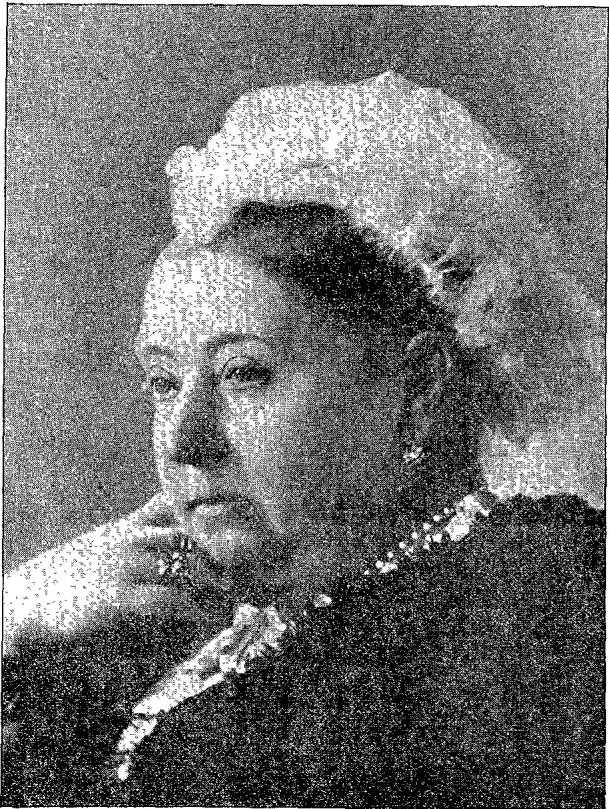
Next week there will be celebrated in London and throughout the British Empire a notable event, the termination of sixty years’ reign of Queen Victoria. Since the Norman Conquest, in a period covering nearly one half of the Christian era, there has been in the history of that nation but one reign that has approached the length to which the present one has been extended. George III was crowned in 1760, and his reign continued, at least nominally, until 1820, making a period of sixty years, just equal to that attained by Victoria. But in 1810 a mental malady, to which the king was subject, having developed into insanity, his son, George IV, was appointed regent, and held that position until the death of his father, so that the rule of George III really extended over only fifty years, thus constituting that of Victoria the longest in English history.
Victoria.— Victoria Alexandrina was born May 24, 1819. She was the only child of Edward, Duke of Kent (son of George III), and Maria Louisa Victoria, of Saxe-Coburg, sister of the king of Belgium. She came to the throne on the death of her uncle, William IV, the successor of George IV, June 20, 1837, and was crowned the following year.
In 1840 Victoria was married to Albert Francis Augustus Charles Emanuel, Prince of Saxe-Coburg, who was born in the same year as his illustrious wife. They were parents to nine children. Prince Albert always maintained a wise reserve as to political matters, but took a deep interest in the welfare of his adopted people, and became a great help in the affairs of the kingdom, and was beloved by the people. The attachment between the queen and her consort was true and sincere. Since his death in 1861 his memory has been most sacredly cherished by the ever-sorrowing widow, and the nation at large have looked upon his loss as irreparable.
The Reign.— The reign of Queen Victoria has been an unbroken succession of progress. The prodigacy and folly of preceding kings had brought burdens and discouragement upon the English people. In her opposition to the demands of Sir Robert Peel at the outset, the young queen showed that she was possessed of a mind of her own, and she has preserved that impression up to the present time. Among the important events that have marked her rule, we have three attempts at assassination between 1840 and 1843; in 1841 the Prince of Wales was born, and he still waits in vain for the opportunity to sway the British scepter; in 1846 the famous corn laws were repealed; in 1854 began the Crimean war; the sepoys of India mutinied in 1857; the death of Prince Albert took place in 1861; and in 1877 Victoria was proclaimed Empress of India. Many other details might be mentioned, but those of more recent years will suggest themselves to the mind of the readers. During the past sixty years the British Empire has become the grandest and most extensive nation the world has ever seen. British rule now extends over 9,094,301 square miles, to which another two and one-half million of protectorates might be added. Queen Victoria’s rule is recognized by 344,816,000 subjects, and her protectorate covers 36,000,000 million more. One fourth of the world acknowledges Victoria as its gracious queen.
While it is true that the sovereign lady has had the advantage of a high tide of universal progress on which to sail a prosperous voyage, yet it is true that in these bright and resplendent days she has shone among her brilliant associates with no secondary light. As a woman she has not assumed a masculine rôle, nor sought to act a manly part. As a counselor in national affairs her judgment and authority have commanded and retained respect. She has had the aid of eminent statesmen, whose skill and devotion have largely made her queenly career what it has been. But as a woman, as a daughter, wife, and mother, the life and character of the queen have been a model to her people. In this way she has been able to accomplish a work of such a magnitude and of such a salutary character that only the infinite Judge can ever tell its measure.
A Long Reign.— Sixty years of earthly glory and power is a long allowance. But it does not satisfy the longing of the heart. Although but few earthly potentates have enjoyed so liberal a portion of power, even this term of office is brief and unsatisfying. Christians have not the least occasion to look with envy or wistfulness at such a portion; for the poorest and most obscure child of King Jesus has a sure prospect before him of a reign and a glory before which the luster of an earthly kingship fades into nothingness. “To him that overcometh will I grant to sit with me in my throne.” “And they shall reign forever and ever.” That kingdom draws near. Our gracious King now seeks to rule in the hearts of men, that he may perfect them for that glorious state.
The Celebration.— The preparations for the celebration have been made on a magnificent scale. The representatives of all nations have gathered to pay the respects of the world to the aged sovereign. An elaborate program has been devised. But beyond receiving the representatives of other nations, and a few other functions, the aged queen will reserve her strength, and let others carry on the jollification, which will consist of every kind of display on a magnificent scale.
LAWLESSNESS
By M. E. K.
CONTEMPT of law always leads to deeds of violence. The true statistics of the crimes committed in this country alone in one year would make an appalling record. Not only do those who are generally considered to be criminals break the law, but those who are fain to call themselves good citizens do the same. A most shocking instance of crime succeeding crime lately occurred at Urbana, Ohio. A colored man committed an assault on a white woman. He was promptly arrested, proved guilty, and sentenced to the highest penalty of the law for such offenses—twenty years' imprisonment. But many people of that town were not satisfied. They wanted to kill the prisoner, and they wanted to do it themselves. A mob gathered. To maintain the law and the honor of the State, a company of the State militia was sent to defend the jail. The mob attacked the jail, and after being warned away, were fired upon, four persons being killed, and ten wounded. This set the whole town afire. The officers and soldiers, who had only discharged their sworn duty, were looked upon as criminals second only to the Negro ravisher. The mob increased until five thousand people were present, all determined to violate the law by murdering the prisoner, and even the sheriff and soldiers. Finally the mob prevailed. One by one the sheriff and soldiers, in disguise, slunk away, and left the field. The mob took the prisoner, dragged him through the streets, struck at him with hammers, hacked at him with knives, and hanged him to a tree. Then he was thrown into a rough box, and left exposed, in all his hideous mutilation, for a day for the delectation of men, women, and children! This was not in Africa, but in the State of Garfield, Hayes, Sherman, and McKinley!
Granted that the Negro committed a terrible crime; he had received a quick and severe sentence. If it was not severe enough, the sheriff and the soldiers were not to blame, and it might have been remedied by the next legislature. But human passion has no reason. The mob of good (?) citizens showed no more respect for law than did the Negro. The passion of the one cared as little for law or right as did the passion of the other.
What an example to set before the children in that town! and what a cruel bent of mind will it give to unborn children! There was enough in that one day's experience to sow the seeds of a hundred crimes as great as that which stirred the mob. Why have a state? why a law? Why not repeal all statutes, disband the militia, throw open the jails, and allow any and every man to wreak his own vengeance on whom he pleases, without let or hindrance? The Scriptures tell us that before the flood, the “earth was filled with violence.” And Christ testified that as the days of Noah were, so also should be the days preceding his second coming. So it is to-day,—violent crimes are committed; then the law is set aside, and blind passion is invoked to punish, making violence succeed to violence, crime to crime, and blood to blood. M. E. K.
The Pope's Frugality.—
By T.
Leo XIII's poem on frugality in diet is attracting considerable attention, and there are not a few who heartily approve of the sentiment. A prominent chef in New York, who speaks very highly in praise of the pope's good sense, has prepared a menu which is his interpretation of a frugal dinner. It runs as follows:—
MENU.
Small Clams,
Soup,
Cream of Artichoke, Madeleine,
Relishes,
Radishes, Almonds, Olives,
Petites Duchesses,
Fish,
Boiled Brook Trout, Sauce Grenadine,
Potatoes Mousseline,
Entrées,
Beef Tenderloin Larded, Mercedes,
Breast of Chicken, Beaumanoix,
New Peas saute in Butter,
Sorbets Princesses,
New Corn Fritters,
Game,
Roast Plover on Canapes,
Mixed Salad,
Dessert,
Mousse of Strawberry, Imperial,
Fancy Cakes, Fruits,
Coffee,
Such ideas of frugality cause one to wonder what the prevailing conception of a “good square meal” would be. The only things we miss in the above are something fit to eat. T.
Studies in Child Culture: Training Children to Help at Home
By Sarah M. I. Henry
STUDIES IN CHILD CULTURE.—NO. 3.
BY MRS. S. M. I. HENRY.
(Sanitarium.)
You have little idea how soon the children will become practically helpful, instead of bothers, if you give them a chance. You may just as well have the benefit of the ceaseless activity of the little hand and foot power as to let it run to waste. It simply needs direction to become serviceable. So much of the work of the ordinary housekeeping is within the strength of even small children, that they will be all the better physically, mentally, and spiritually for doing their little part.
Let each child have his own bag for soiled clothing, put the pieces in himself, when taken off, and on this wash-day morning on which we have begun, let each bring his own, and sort them into the tubs, as previously instructed. Must you carry the water? Let each have his own little pail, and carry his portion, and assist in the whole process until the wash is on the line.
In clearing the table after the meal, let one gather the pieces of bread, and put them in place; another, the knives, forks, and spoons; another, the plates, etc., each his own little work, changing about to give variety in service and training as well as to mark degrees of skill and carefulness by a species of promotion. Do not give the children a stint, and keep them filling the tub with water by themselves, or clearing the table, while you are off busy with something else. That will soon bring you all into trouble. Let them work with you at the same thing, going with you from room to room, from task to task, resting when you rest. It will do you good to join with them in their play- and study-hours; and you will be surprised to find how helpful they will be, and how happy they will make you. Nothing rests the heart of a tired mother like the hands of little children if they are full of sympathy, as they always are until it has been rudely wrested from them; and if the heart does not get tired, the feet will carry you a long way. How many steps the children will save you, and how much time you will have, even on the busy days, for rest and for reading, besides a good play-spell, you have yet to learn if you have never tried this method.
If you should endeavor to load the day down with more and more work as the childish hands become useful and stronger, so that there is nothing but work, work, and rush, rush, and worry, worry, all day, then you must suffer the consequences of demoralization everywhere. No cause can be more easily lost than the cause of the children in the home by indulging a spirit of greed. Plan the work for yourself,—a not very strong mother, probably, with perhaps two, three, or more little children; then while teaching them, use them to the best possible advantage. Give them yourself as a playfellow for a half-hour; as a companion at books for an hour; lie down together at midday; talk, sing, and pray together at the early bedtime; and you will know that they have learned only what you have taught them, and that, such as will be practical and valuable to your home interests as time goes on.
Teach the boys and the girls the same things; lead them through the same routine. Never let them get the idea of sex in occupation, habit, and deportment. If some injudicious people with whom they come in contact begin to talk about “girls’ work” as distinct from “boys’ work,” or what is “nice for a girl” as though it were not “nice for a boy,” or what is “proper for a boy” as though it were not “proper for a girl,” be sure you have a store of ready-made “confidence in mother” laid up in the minds of your children, by which you may counteract this and any other pernicious sentiment which may be uttered in their hearing. Make them understand that whatever is nice or pure or true or right for one, is for the other; and whatever is not right and pure and true for one, is not for the other.
Let the work be so arranged that each day shall have its share of active and quiet occupations. The morning spent on foot should be followed by a portion of the afternoon with the sewing-basket; and every child should have his own part in sewing on buttons, darning, cutting, and making. One day each week should be “social” day, when each child should take his turn as the head of the house, as host or hostess, while the rest of the family should be as guests,—not for an hour simply at play-time, but for the entire day and night, at table and in everything which transpires. This will teach them both how to entertain and to be entertained, besides cultivating a kindly spirit of courtesy which will be an aid during every-day life in the development of that sort of gentleness which is the foundation of real greatness.
THE DOCTOR AND HIS PATIENTS.
By John Harvey Kellogg
FROM SANITARIUM PARLOR TALKS BY
J. H. KELLOGG, M. D.
WHAT is the best diet for a weak stomach?
The best diet for a weak stomach is the diet that that stomach can digest. One stomach cannot absorb fluids, so it should have dry food; another stomach is irritated and sensitive, and cannot accept dry food, so it should have that which is soft and bland. Give it such foods as gruel. The term “weak stomach” means almost everything with different people. A stomach may be weak in the sense that it will not retain any food, or it may be that only one specific article of food can be taken, such as iced milk, egg-nog, or some digested food like bromose. We must find out the particular thing that the stomach will tolerate, and supply it with that.
What instruction would you give for physical exercise to a person engaged in literary work?
It is not necessary to give much instruction for exercise to such a person, provided he has no ailments. He needs simply to do enough hard work every day to put him out of breath and to make him sweat. A gentleman said to me, five minutes ago, “Doctor, you are working too hard; you will work yourself out, and get gray-headed.” This man has a gray head, and he totters a little as he steps,—he has to “broaden his base,” as the doctors say. He says that he believes the principal thing in life is to have a good time. Said I, “How old are you?” “I am forty-five years old,” he replied. Then I told him that that was just my age. I suppose he thought I was going to tell him I was about twenty-five. It is not work that hurts people. This gentleman has worn out in his office, but not by hard work. He is resting out, he isn’t working himself too hard. He sits in his musty office, breathing the same air over and over again, and forgets to breathe pure air; and the consequence is that his body is impregnated with impurities and organic dirt. He is getting dirty, but with dirt that is more than skin deep; his brain is getting dirty and dingy, and thus he is wearing out, and he thinks it is because he is working too hard, but it is because he is not working hard enough. The literary man needs all-round exercise; he needs to work in the meadow, saw wood, etc. One doctor says, “It is better to climb a bitterwood-tree than to drink a decoction of its leaves.” The sedentary man needs some kind of physical work, such as splitting wood, sawing trees, or working in the garden. If he can’t find any work of that kind, he should get some Indian clubs or dumb-bells, and use the swimming-bath in the gymnasium. If there is no gymnasium, and he has nothing else to do, he can hop up and down in the corner, and thus get all the exercise he needs. A space a foot square in some corner will give a man all the gymnasium area that he really requires. The Lord told Adam that he must earn his bread by the sweat of his brow, and if a man dodges the sweating, he does it at his peril. Such a man violates the divine command, and the penalty is that he will be exterminated; his race will run out; you cannot find a long-lived sedentary people anywhere. It is said that in London at the present day there is not a noble family whose blood has not been re-enforced by blood from the country within three generations. That means, simply, that after three generations, city blood runs out. The blood of sedentary people runs out; they get so weak, debilitated, and feeble that they are not worth raising; and the great reason of this is that they don’t sweat. One cannot afford to live a day without sweating. When a person takes warm baths, etc., it is only the skin that sweats, but when one sweats from muscular exercise or work, his whole body sweats, and then there is a general turning over and cleaning out of the whole body to its innermost corners. The exercise brings the waste matter to the surface, and the sweating of the skin takes it out.
JAPANESE WOMEN.
By Sophia B. Brunson
BY MRS. SOPHIA B. BRUNSON.
(College View, Neb.)
(Continued.)
At certain seasons of the year in Japan, various festivals are held. The female portion of the population look forward to these occasions with real pleasure, as affording some diversion in their rather monotonous lives. From the 13th to the 15th of July, the “festival of the dead,” or bon no matsuri, is celebrated. The English call it the “feast of lanterns.”
Our house in Kobé was quite near the temple of the ancestors, where funeral rites were performed, and the ashes of the dead were interred after the body had been cremated. Here I had the privilege of witnessing the bon no matsuri. The cemetery was decorated with lanterns, and the avenues leading up to it were crowded with booths where all sorts of goods that would be used in doing honor to the dead were sold. At twilight the burying-ground was ablaze with light from the gaily colored lanterns. The people came in crowds. Many of them were laughing and talking with one another; buying and chaffering with the venders. Others were busy placing food upon the graves, or kneeling beside them, engaged in earnest prayer to the departed. This is the season when spirits are supposed to return to their old haunts, and the living do them honor by feasting them with food and drink. Upon the last night of the fête, little boats are375freighted with tempting delicacies, and launched upon rivers, lakes, or sea, each with a miniature lantern to light the spirit visitors on their way as they return to their abiding places.
To the women it is a labor of love to make the necessary preparations for this occasion, and as they prepare the food, it brings faint glimmerings of joy to their hearts to think that their loved ones will visit them in spirit, and be pleased to have them do them honor. What a glorious revelation will the story of the resurrection be to some of these deluded creatures! They will then have something that will satisfy the longings of their souls, and will no longer be mocked by mental visions of phantoms’ partaking of refreshments, unmissed by them, but in some mysterious way supposed to satisfy the wants of the shadowy visitors.
There is a great deal of superstition in Japan, especially among the lower ranks. A class of women calling themselves “fortune-tellers” are consulted about all sorts of matters, both trivial and important. They are supposed to be able to give advice about nearly everything,— from the loss of an article to the selection of a partner for life. The people will put themselves to great trouble and inconvenience in order to carry out the instructions of these pretenders.
Japanese women, though free from many of the follies of fashion that are doing so much to wreck American womanhood physically and mentally, are not altogether exempt from servitude to that merciless mistress. Their method of dressing the hair is a conspicuous example of this. Their coiffures are so elaborate that the services of hair-dressers have to be sought twice a week. Great care is taken to prevent the hair from mussing. The Japanese women never know what it is to lay their weary heads upon pillows at night; they simply rest their necks upon blocks of wood, letting their heads “hang over.” All this discomfort for the sake of fashion! This would be positively painful to us, but is rendered endurable to them by long practise. So the pernicious habit of corset-wearing would not be tolerated by them, yet Western women squeeze themselves into the shape of certain insects because it is fashionable, and then pity the poor Japanese women for being so foolish as to suspend their heads over blocks of wood for the sake of appearances.
(Concluded next week.)
A FRIENDLY HAND.
WHEN a man ain't got a cent, and he's feelin' kind of blue,
An' the clouds hang dark an' heavy, an' won't let the sunshine through,
It's a great thing, O my brethren, for a fellow just to lay
His hand upon your shoulder in a friendly sort o' way.
It makes a man feel curious; it makes the tear-drops start,
And you sort o' feel a flutter in the region of the heart.
You can't look up an' meet his eyes; you don't know what to say
When his hand is on your shoulder in a friendly sort o' way.
O, the world's a curious compound, with its honey and its gall,
With its cares and bitter crosses! 'Tis a strange world, after all,
But a good God must have made it—leastways, that is what I say
When a hand rests on my shoulder in a friendly sort o' way.
— Selected.
(Tahiti, Society Islands.)
By B. J. Cady
THE SOCIETY ISLANDS.—NO. 4.
BY MRS. B. J. CADY.
(Tahiti, Society Islands.)
Our ship “Pitcairn” visited three of these islands during her first cruise, and a goodly number of our books were sold at that time to the white people. Brother Paul Deane, of Arue, Tahiti, who was pastor of the native church in his district, then learned of the truth upon the Sabbath question, and after a few months commenced the observance of the Sabbath. A large number of his congregation went with him, and as he was discharged from his position as pastor, he commenced to hold regular Sabbath meetings at his own house. It seems that some of those who followed Brother Deane did so more because of sympathy for him than for the truth’s sake; for as they found that it was not popular or pleasant to the natural man to keep all the commandments of God, they gradually lost their interest in the matter. The brother of Paul Deane, at Raiatea, also learned of the truth through the visit of the “Pitcairn,” and commenced the observance of the Sabbath. His own family and that of a neighbor followed his example in this.
As the “Pitcairn” was returning home from this voyage, Brother and Sister A. J. Read were left at Tahiti to carry on the work which had been begun. An English family in Papeete had also taken a stand with our people. Upon the second trip of the “Pitcairn,” two missionaries were left at Tahiti to assist in the work; two were also left at Raiatea. A printing-press was soon sent down, and the work of translating and printing some of our literature was begun. We now have “Steps to Christ,” quite a list of Bible readings, and a hymn-book with one hundred and thirty-one hymns. Altogether we have had five hundred and fourteen pages printed upon various subjects, and have commenced this year the publication of a small monthly periodical in the Tahitian language.
Some of our workers have returned to the States, and others have entered this field, so that now our small force of workers is composed of B. J. Cady and J. C. Green, with their wives, and two half-caste brethren, E. Bambridge and P. J. Deane. These are all situated in Tahiti at present, and we sincerely hope that when the “Pitcairn” comes again, it will bring help for Raiatea. We have a small company there; they keep up regular Sabbath meetings, and want a missionary very much for their island. They need help, too. The native people do not learn as readily as do those who are more enlightened, but move very slowly. A minister cannot enter a field here, and accomplish in six months what he might accomplish in that time in the States; it takes years here to do what would require only months there.
A church building was erected in Arue three years ago, and now our church company in the district of Paea is endeavoring to get means together for a house of worship there. The Lord has surely blessed the efforts which have been put forth for the advancement of his cause. We feel especially grateful for our good literature; it has been a great help in our work here. By means of our English and French reading-matter, several have learned of and accepted the truth.
We have not put forth much effort in Papeete so far, but we consider it an important place, as it is the shipping-point for all the other islands in this part of the ocean. Ships come here from all the surrounding islands, and from America, New Zealand, and Europe. But we can do little in Papeete until we can have a church building here, and so we are very desirous of building a church, and feel that we should have one as soon as possible. Our people here are not of those who have an abundance of this world’s goods, but we hope for help from our brethren in America, and at the same time we shall do all that we can ourselves.
We have come to the conclusion that the most effectual and satisfactory work we can do for the natives is to educate their children. This we cannot do properly, and leave them in their own homes; but we must take them away from their parents, and place them under good influences. For this reason we need a home for the children in connection with our school, and we trust that if it is the Lord’s will, we may have one started in the near future. The Lord is opening the way before us, and he is able to carry the work through.
It is only the lack of a proper education which makes the natives inferior in wisdom and morals, and now is our time to begin educating some of the youth, so that they may become consecrated and efficient workers for their own people. Time is rapidly passing away, and we are drawing near the day when no more work can be done. Now is the time that means is needed to carry forward the Lord’s work. May we all lay up our treasures where we may enjoy them in God’s kingdom.
PUMPKIN PIE AND BAKED SQUASH.
By Evora Buckman
BY EVORA BUCKMAN.
(Detroit, Mich.)
“We bear positive testimony against tobacco, spirituous liquors, snuff, tea, coffee, flesh meats, butter, spices, rich cakes, mince pies, a large amount of salt, and all exciting substances used as articles of food.”—“Testimonies for the Church,” Vol. III, page 21.
Ever since reading the above, which our Father in his love has spoken to us, that we might have a knowledge of the things which are harmful, I have been experimenting on pumpkin pies, to make them taste like “my mother’s,” without the ginger and cinnamon which she used to put into them. At last I have succeeded so well that those who try them say they can taste all the bad things they ever used in pumpkin pies. As it is the time of year when fresh fruits and vegetables are scarce, I will give my sisters who have to cater to depraved tastes the benefit of my experience.
Pumpkin Pie.—Two cups canned pumpkin, four rounded tablespoonfuls of peanut meal, prepared by the Sanitas Food Company, two rounded tablespoonfuls of flour, which has been browned to a dark-cream or a light-brown color, one level tablespoonful of white flour, four or five tablespoonfuls of molasses, or three or four of brown sugar, one teaspoonful of salt, one egg, and one and one-half cups of water. This will make two small pies. Those who are still using milk can substitute one and one-half cups of milk for the nut meal and water, and use only a teaspoonful of white flour. When pumpkin that is stewed down dry is used, a smaller quantity will be required. Do not try to substitute peanut butter for the meal.
The canned squash, put up by our Sanitarium Food Company, makes richer pies than does pumpkin. That is also very nice prepared as follows, and makes quite a treat at this time of year:—
Baked Squash.—Two cups of squash, one and one-half tablespoonfuls of almond cream or cow’s cream (the cream may be omitted entirely, but do not use peanut cream; a very little of that is excellent in nearly all vegetables but squash), three-fourths to one teaspoonful of salt, one teaspoonful of sugar, and one egg. Bake in a pudding-dish, in a moderate oven, about twenty minutes. The top may be sprinkled with breadcrumbs if desired.
It is a good plan always to keep browned flour on hand, some light and some dark-cream color. It makes nice flavorings for soups and gravies, and I have sometimes mixed it with the sugar in an apple pie. If any of the readers of the REVIEW would like a set of the recipes I have printed for the use of nut preparations, I shall be glad to mail them to them on the receipt of a two-cent stamp and their address.
CULTIVATING THE APPETITE.
ALTOGETHER too much time and talk are expended on what we shall eat and what we shall drink. Dainty dishes are all very well in their way, but in many families their preparation seems to be the chief end and aim of existence. No sooner is one meal cleared away than plans are laid for something new and appetizing for another. What to eat forms the subject of conversation in little gatherings of all sorts. Of course, cooking-schools and the general interest in culinary matters have something to do with this; but the subject, like all others, is in very great danger of being overdone. Especially is this the case where there are young and growing children. They gather from all that is going on about them that eating seems to be the principal interest of the family and friends, and it is not difficult to see to what this will lead. Their minds are filled with fastidious notions about dishes and the way to serve them.
Too much importance cannot be attached to good, plain cooking and the proper preparation of food, but eating should not at any time form the principal subject of conversation. It is not considered good taste to talk about one's food while at table; there are topics of conversation much more desirable, and some pains should be taken to introduce some agreeable and interesting subject at the outset of the meal. Do something, do anything, to avoid talk about what to eat and how to prepare it.—Selected.