The Youth’s Instructor, Vol. 47, No. 38.

CAPTAIN ALFRED DREYFUS

The Youth’s Instructor

Sep 28, 1899

Review and Herald Publishing Company · Battle Creek, Mich. · Sep 28, 1899

CAPTAIN ALFRED DREYFUS
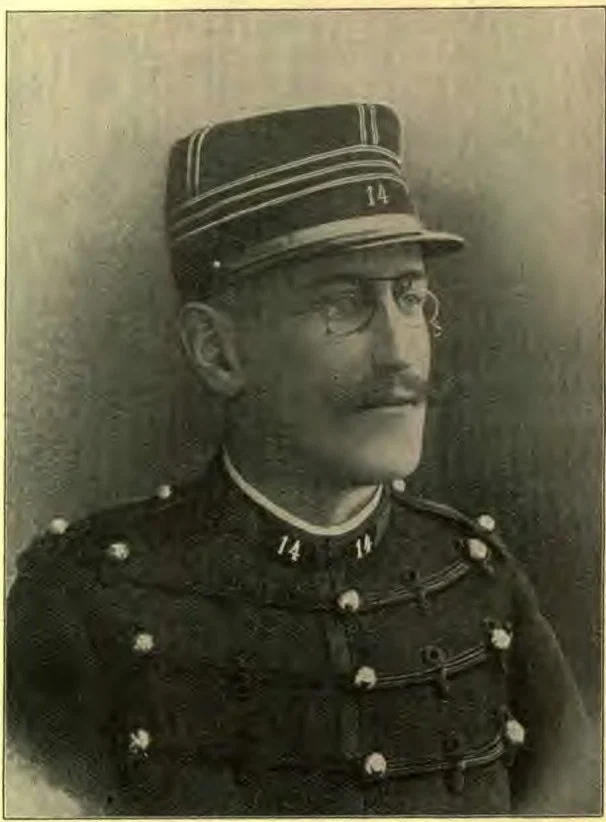
No trial, either civil or military, of modern times has so attracted the united attention of the world, and been weighted with a series of national crises so far-reaching, as has the case of the unfortunate Alsatian artilleryman whose condemnation has just been reaffirmed by the court-martial at Rennes, France. So much has been said and written about the affair, and it has extended over so many years, that many have almost lost sight of the original charge, and have forgotten when the proceedings began. We will therefore review the case from the first.
Early in 1894 it came to the notice of the French government that some army officer was selling or giving secret information to a foreign power concerning the army and its plans. A document, since known as the famous “bordereau,” was found in bits among the waste paper at the German embassy’s apartments. It was pieced together successfully, and a careful reading showed that information of the kind mentioned had been offered in it. This crime is treason, and in military circles is one of the gravest that can be committed. Then it was that the bitter hatred for the Jews, which has been especially rabid over almost all Continental Europe during the last decade, showed itself in France. Dreyfus is a wealthy Jew. This was enough. The Jews are a frugal people, and much of the wealth of Europe is in their hands. Catholic France and Greek Russia hate the Jews on account of their religion; but all nations are envious of them because of their wealth.
So Dreyfus was suggested as the criminal; and Lieutenant du Paty de Clam, under some pretense, had Dreyfus write for him, dictating for this purpose from the bordereau. As he wrote, Paty de Clam exclaimed, “Ah, your hand trembles! you are guilty!” and immediately had the captain imprisoned on suspicion. For some time the innocent man did not know what was charged to him. He was arrested Oct. 15, 1894. Two months later his trial by court-martial began. By means of much forged evidence, and terrible prejudice against him by the court, he was found guilty, and was publicly degraded Jan. 5, 1895. This degradation consisted of cutting from his uniform, as he stood facing his fellow soldiers, all the emblems of his rank, and breaking his sword and casting it to the ground. This treatment might not mean much to some men; but to a sensitive man like Dreyfus, who had been educated to regard the honor of the army and the respect of his fellow officers above all else, the humiliation was almost unbearable.
CAPTAIN ALFRED DREYFUS.
He was then transported to the Ile du Diable, or Devil’s Island, a penal colony off the French Guiana coast, in South America. In his trial one after another of his accusers became involved in deceit and forgery till, in their own interests, it became necessary for them to band themselves together for mutual protection. When Dreyfus was at last degraded and sent away, his enemies hoped the case would end, but the truth would come out. Like those who tell lies to shield themselves, and then have to tell other lies to try to prove the truthfulness of their first statements, these French army officers became more and more involved.
In 1896 postal-card and telegraphic communications were discovered between Colonel von Schwarzkoppen, the German military attaché, and Count Walsin-Esterhazy, a French soldier whose subsequent career, as well as his connection with this case, proves him to be a most unscrupulous villain.
Lieutenant-Colonel Picquart, head of the Intelligence Department, on learning that Dreyfus had been unjustly condemned, made public the relations that he, in his official capacity, had discovered between Esterhazy and the German spy, showing that Esterhazy, and not Dreyfus, was the guilty man. For this act of justice he was removed from the army and imprisoned, but was later released.
In 1897, Oct. 28, Esterhazy’s broker recognized the handwriting of the bordereau as that of his client. So many suspicions had now arisen concerning this man Esterhazy, that he was brought to a court-martial trial, Jan. 2, 1898, but in a very few days he was acquitted. The trial, however, only showed more plainly the underhanded methods employed by the army officers to shield themselves from exposure. At this point in the case M. Zola, the novelist, unable longer to restrain himself, published his letter of accusation against the entire French General Staff, accusing them of a gigantic conspiracy to convict Dreyfus. He was tried, convicted, fined, and sentenced to imprisonment. He appealed, and his sentence was quashed; but he was retired on a sentence in his accusation that barred any reference to the Dreyfus case, and was again condemned. As Dreyfus was not concerned in this second condemnation, he permitted judgment to go by default, and left the country, living in England until recent events permitted his return. The court ordered the sale of his furniture to pay his fines; but his friends united, and ran the bidding so high that the whole amount was raised with the sale of two or three articles.
Aug. 30, 1898, Colonel Henry, who had succeeded Picquart as head of the Intelligence Department, confessed his forgeries of anti-Dreyfus evidence, and was placed in prison. That night he either committed suicide or was murdered to prevent further disclosures. At one time during the first trial of Dreyfus, a revolver was purposely left in his cell, in the hope that he would take his own life; but he, declaring his innocence, said he would not kill himself to relieve the army of its dilemma.
After many attempts on the part of Mme. Dreyfus, the prisoner’s wife, and M. Mattheu Dreyfus, his brother, to obtain a new trial, in March of this year a bill passed the senate, having already passed the house, to refer the case to the Court of Cassation, the highest court of appeals in France. June 3 this court ordered a new trial, and Dreyfus was at once sent for, arriving in France on the last of the month. August 7 the second court-martial began, and continued till September 9. Throughout the trial much prejudice was shown against the prisoner, the presiding officer, Colonel Jouaust, refusing to put leading questions raised by the prisoner’s counsel. The second week of the trial, Maitre Labori, leading counsel for the defense, was shot while on his way to the court, by one who was evidently an anti-Dreyfusard, as he was allowed to escape. Although severely wounded, Labori resumed his position in the trial the following week, an appeal for adjournment on account of his condition being refused. When the verdict was rendered, September 9, a vote of five to two declared Dreyfus guilty of treason; but on account of “extenuating circumstances,” he was condemned to only ten years’ detention. What extenuating circumstances can be made out in connection with treason one can not imagine.
The whole affair is, in the minds of nearly every one outside of France, a terrible miscarriage of justice. As the man has already suffered untold tortures for five years in solitary confinement, it is thought he will now be pardoned, but his friends insist on an acquittal.
We have alluded to the tortures endured by the unfortunate captain while on Devil’s Island. These can never be told so that one who has not undergone them can really appreciate what he endured. We will quote a few paragraphs from a Paris paper, which give some idea of that awful place, which Dreyfus can never forget:—
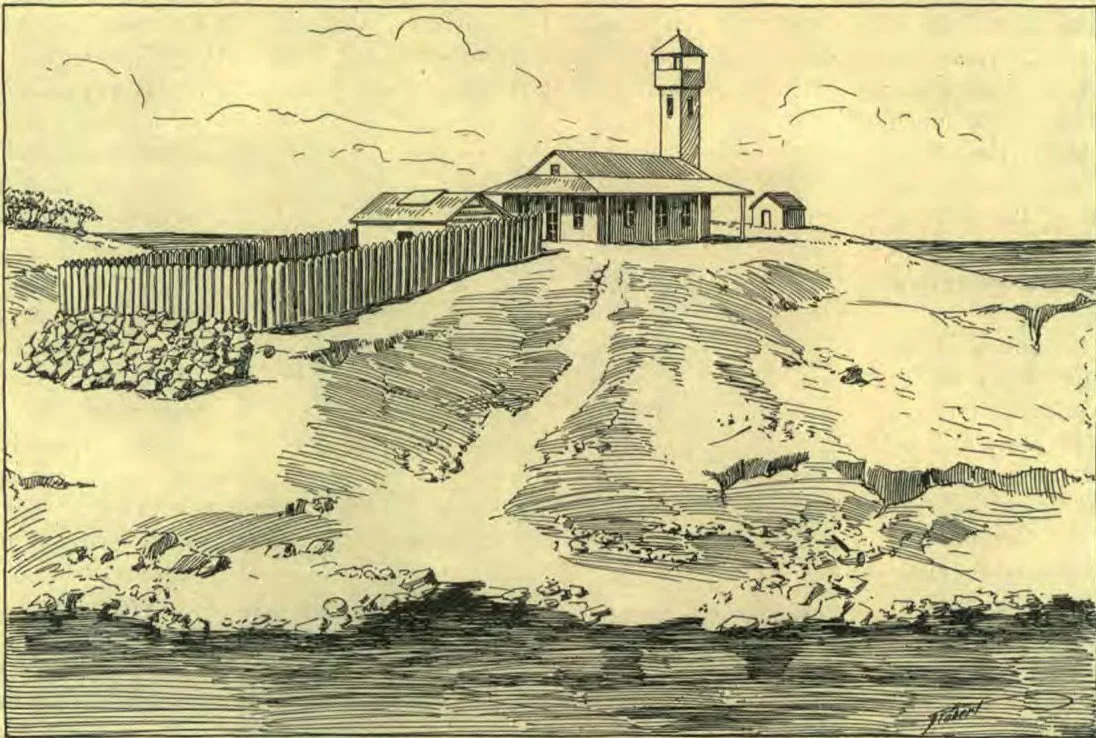
“Life in the climate to which he was sent is in itself damnable. The French officials never stay there more than two years at a time. It was hoped that Dreyfus would die in two or three years at the most. When the atmosphere in his hut became intolerable, he would go into the narrow space between the hut and the stockade. The heat was here still worse, and often he fainted. Then his jailers hoped that he had died. They threw him upon his pallet, ready for the inquest. But he always revived, though his continual fever, the excessive use of quinine, and his many fainting fits caused excessive weakness in an otherwise robust body. To reduce his chances of life, the preserves he ordered from Cayenne were taken from him, and his rations of milk were denied him. Food that he could not eat was given him instead. But he would not die.
DEVIL'S ISLAND, AND THE HUT WHERE DREYFUS WAS IMPRISONED.
“To all this must be added the tortures of the mind. The letters his relatives wrote were never given to him in the original. He was not even permitted to see the handwriting. Copies, mutilated and altered, alone were given to him. At last the entire correspondence was withheld, and he was told that his family had abandoned him. A few books were left to him; but if he wrote down ever so trivial a thought, the paper was torn to shreds before his eyes. At last he copied chapter after chapter as the minimum of brain work necessary to keep him from becoming insane.”
Another Paris paper describes as follows the place where he was confined:—
“Between the box that served as his hut and the stockade, the distance was only forty centimeters [13⅓ feet]. I beg every reader to note this carefully. Fancy yourself walking in a narrow groove, touching the wall on each side, in a climate like that of Guiana. This lasted a year. At last, when the prisoner was too frequently in danger of asphyxiation, the doctor demanded a change. Then only the box was raised a little, to enable the hot, tropical air to reach the prisoner. No wonder that Mme. Dreyfus was not allowed to visit her husband. She would have described these things. Somebody would have been found to ask questions in Parliament.”
The authorities provided a coffin and material for embalming the prisoner, so confident were they that he could not outlive the hardships imposed upon him. His poor wife wrote to him continually, but he was not allowed to see her letters, being told that she had forgotten him. Even while they were making the most strenuous efforts to obtain a revision of his case, he was told that all his friends now believed him guilty. His children remember him, but are not allowed to know why he does not see them. They are told that he will return to them sometime, but they know not when. Let us hope that even if he can not secure the justice that will acquit him, he may at least be pardoned, as is now proposed, on account of the time he has already been imprisoned.
H. E. SIMKIN.

AN ALL-POWERFUL SAVIOUR

II

SHALL we choose darkness rather than light because the light shows us our sins and reproves us? Shall we refuse to come to the light, lest our deeds shall be made manifest? When the truth controls the life, there is purity, freedom from sin. The glory, the fulness, the completeness, of the gospel plan is fulfilled in the life. The light of truth irradiates the soul-temple. The understanding takes hold of Christ. The light is not hated because it reproves and warns, but it is accepted and rejoiced in.
Christ declared, “I, if I be lifted up from the earth, will draw all men unto me.” If man’s will is submitted to the will of God, the man, though a sinner, will be drawn to Christ. He will realize something of the love manifested by God when he gave his Son to die on Calvary’s cross, to bring life and immortality within the reach of men. The acceptance of the Saviour brings perfect peace, perfect love, perfect assurance. The beauty and fragrance of the Christ-life, revealed in the character, testifies that God has indeed sent his Son into the world. No other power could bring about so marked a change in a man’s words, spirit, and actions.
Without Christ the heart of man is cold. But when one feels his need of the Sun of Righteousness; when he comes to Jesus, saying, Lord, I am sinful, unworthy, helpless; save me, or I perish, he is accepted in the Beloved, and his heart is warmed by the rays of divine love. By this sincere coming to Christ, he opens the door to him who has long been saying: “Behold, I stand at the door, and knock. If any man hear my voice, and open the door, I will come in to him, and will sup with him, and he with me.” He is accepted, and he knows what it means to sit together in heavenly places in Christ Jesus. God says, Let there be light; and there is light. The soul possesses an abiding Christ, who is the light of life.
Christ humbles the proud heart by giving it a view of himself, his generosity, his great love. He desires to save us, soul, body, and spirit, by uniting us to himself. He desires us to behold his glory, as the glory of the only begotten of the Father. Then we can say, “Of his fulness have all we received, and grace for grace.” He who shows that he appreciates the grace he receives, by imparting it to others, receives increased grace, in proportion to the grace he imparts. And he is so full of joy that he exclaims, “Thy gentleness hath made me great!”
The one great lesson all must learn—the poor sinner, dead in trespasses and sins, as well as the professed Christian, who has known the truth, but has clung to his unsanctified traits of character—is that God will save to the uttermost all who come to him. “Him that cometh to me,” he says, “I will in no wise cast out.” The poor, the suffering, the sinful, may find in Christ all they need. As soon as they receive Jesus as a personal Saviour, the cries of distress and woe are changed to songs of praise and thanksgiving.
All may share Christ’s grace if they will confess to the great sin-bearer, whose work it is to take away the sins of all who believe. You have the assurance that as you renounce your own righteousness, you will be clothed with his righteousness. Christ invites you, saying, “Let him take hold of my strength, that he may make peace with me; and he shall make peace with me.” The door is opened to all. No one is turned away. God proffers to all a priceless treasure,—his peace,—a peace that the world can neither give nor take away. The everlasting gates of pearl will not open to those who come with the symbols of power, but they will open wide to the trembling touch of the meek and lowly. To be great in the kingdom of God is to be as a little child in simplicity and love. The Lord is able and willing to work in our behalf, and he will work if we come to him as children. He will lead us by the hand, upholding us that our feet shall not slip.
MRS. E. G. WHITE.

Take All Vexations to the Helper

THE little sharp vexations, And the briers that catch and fret— Why not take all to the Helper Who has never failed us yet? Tell him about the heartache, And tell him the longings, too; Tell him the baffled purpose, When we scarce know what to do; Then, leaving all our weakness With the one divinely strong, Forget that we bore the burden, And carry away the song? — Phillips Brooks.

MAN'S INHERITANCE

God scatters beauty as he scatters flowers, O'er the wide earth, and tells us all are ours. — Walter Savage Landor.

The Precious Things Are the Common Things

THE precious things are the common things. The good gifts of God, which are lavished on everybody, are far more precious than the rare gems and treasures that are gathered by millionaires and nobles and kings. The rain upon the just and the unjust; the sunshine on the evil and the good; the ever-flowing water and the all-embracing air,—all these are the precious, the priceless, the indispensable things. An old mill may be more valuable than a costly palace; a blacksmith's shop may be worth more than a towering steeple. And it is so among men. The proudest and greatest, the most famous and most prominent, are often of less real value in this world of ours than the humble toilers, the lowly workers, the despised sufferers.—The Christian.

THE LITTLE BROWN DOG

LITTLE brown dog, with the meek brown eyes, Tell me the boon that most you prize. Would a juicy bone meet your heart’s desire? Or a cozy rug by a blazing fire? Or a sudden race with a truant cat? Or a gentle word, or a friendly pat? Is the worn-out ball you have always near The dearest of all the things held dear? Or is the home you left behind The dream of bliss to your doggish mind? But the little brown dog just shook his head As if, “None of these are best,” he said. A boy’s clear whistle came from the street, There’s a wag of the tail, and a twinkle of feet; And the little brown dog did not even say, “Excuse me, ma’am,” as he scampered away; But I’m sure as can be his greatest joy Is just to trot behind that boy.
— Wide-Awake.
FAITHFUL SERVANTS.
FAITHFUL SERVANTS.

MAN'S PLACE IN NATURE

Man's Relation to the Animals

In our last study we noticed the relation of man to the vegetable kingdom. We found that the Lord created the plants for two purposes; first, as food for the lower animals; second, for man to look upon and enjoy. In our study to-day we will talk of man's relation to the animals. When God spoke to his Son, he said, “Let us make man in our image, after our likeness.” He also spoke of what was to be his position in the great work of creation. These are his words, as found in Gen. 1:26: “And God said, Let us make man in our image, after our likeness: and let them have dominion over the fish of the sea, and over the fowl of the air, and over the cattle, and over all the earth, and over every creeping thing that creepeth upon the earth.” So man was created the head of the animal kingdom, having rule and dominion over all the creatures that God had created on the fifth and sixth days of creation. Everything was made for man, and he was to have a certain relation not only to the animals but also to plants. The intelligent powers of man were so well developed that he was capable of appreciating the things that God had made; and in return for these blessings, he was to render grateful praise to his Creator.
The lower animals sustain a different relationship; for they were not endowed with powers of reason, so that they could think upon God's creation, and express their appreciation in an intelligent way. Man was made responsible to God for the way he improved the opportunities and privileges afforded him; while the animal creation were held responsible only for the service rendered to man, who was made their immediate ruler. David brings out this relation of the lower animals to man in the eighth psalm, where he says: “What is man, that thou art mindful of him? and the son of man, that thou visitest him? For thou hast made him a little lower than the angels, and hast crowned him with glory and honor. Thou madest him to have dominion over the works of thy hands; thou hast put all things under his feet: all sheep and oxen, yea, and the beasts of the field; the fowl of the air, and the fish of the sea, and whatsoever passeth through the paths of the seas.” The relation existing between man and the lower animals is also clearly brought out in the following words: “Man was placed, as God's representative, over the lower orders of beings. They can not understand nor acknowledge the sovereignty of God, yet they were made capable of loving and serving man. . . . Man was to bear God's image, both in outward resemblance and in character. . . . His nature was in harmony with the will of God. His mind was capable of comprehending divine things.”
At the present time we find that this relationship that God designed should exist between man and the animals has been broken, and that many of the animals are estranged from man. Many of them are his enemies instead of his friends. Not only is this antagonism seen between man and the lower animals, but it is also manifested between man and man. In a future lesson we shall learn what brought about this condition of things; but it is easy to see, from the texts already quoted, that God made the lower animals to be servants to man, and to express their love and affection for him in many ways of humble service. In return, man was to treat the animals with the spirit of kindness and love. This spirit of unity and love is also to exist between man and man, to an even higher degree than it exists between man and the animals; and then the highest expression of love and service is to be manifested by man to his Creator, who is to be the object of supreme love and worship.
We have now completed the study of the work done during the first six days of creation. We have seen, step by step, the work carried forward until now we behold nature's machinery in its completeness and perfection, carrying out the mind of the Creator. What did the Lord do on the next day? This question will be answered in our next study.
M. E. CADY.

Working Gratefully and With an Up-Looking Heart

MAN must work. That is certain as the sun. But he may work grudgingly, or he may work gratefully; he may work as a man, or he may work as a machine. He can not always choose his work, but he can do it in a generous temper, and with an up-looking heart. There is no work so rude that he may not exalt it; there is no work so impassive that he may not breathe a soul into it; there is no work so dull that he may not enliven it.—Henry Giles.

Chapter XV

From Sinai to Olivet

Chapter XV

That horrible night in the police station!
The first thing that Shirley became conscious of was the strange, wild tumult that filled the place,—voices of men and women calling and answering from the cells at opposite ends of the long room, in language too blasphemous and terrible to be believed. Ribald song and vile jest, with a strain of some old, sacred melody of the home and church thrown in; an occasional burst of fury, screaming, crying, sobs, groans, all set to an accompaniment of restless feet shuffling on the stone floors, beating time to such agonies of passion as the poor child had never imagined.
The matron, who wore a white ribbon upon her breast, took Shirley to one side of the corridor, and attempted to question her; but the noise was too overpowering, and she too confused to understand, until she found a hand passing over her dress and into her pocket.
“What are you doing?” she cried, clutching it fiercely.
“Only my duty, child,” answered the matron, suffering her hand to be held a moment. “I must see what you have about you. The law requires it. You need not mind me.”
“But I do mind. What am I in this horrid hole for? Keep your hands off; are you a robber? I have n’t any money, not one cent! Oh, what does it mean?”
“We will try to find out what it means, if you will be good,” said the matron, soothingly. “There now, just let me see what this is.” She had felt a little roll in the bottom of the pocket. It might contain any one of several things that could not be safely left in the hands of a prisoner,—a little paper or vial of poison, maybe. She turned the pocket, and after fingering a moment, found a safety-pin, which, being unclasped, released a handkerchief and a five-dollar bill.
“You said you had no money.” The matron’s voice was sad and reproachful, with a whole volume of disappointment in it. “I really felt inclined to trust you, child,” she said. “What makes you do so?”
Shirley looked at the pocket and the money, more and more confused.
“I—I—did n’t know—I can’t—I think you put it there yourself, to find something against me. I don’t know what to think.”
The matron looked pityingly at her, but only said, “If this proves to be your own, you will have it again. I will give you a receipt for it, which you can put in your purse.”
“I don’t want any receipt. It is n’t mine.”
“Well, then, whose is it?”
“I did n’t steal it!” exclaimed Shirley, with spirit. “If that’s what you are after, you may just take it and go away.”
The matron did so, leaving Shirley alone with her strange companions and stranger thoughts. She had but little knowledge that could help her understand her situation. She had read almost nothing outside her schoolbooks. The literature of the day was unknown to her, though she did occasionally take up her father’s daily paper, now and then look into the agricultural and scientific periodicals, and her mother’s copy of Good Health; but for all that she had been destined to encounter in her city adventure she was as unprepared as if she had come from another planet. She had not known enough to be afraid; not enough to give her necessary caution; not enough to help her understand the dangers to which she was exposed, or to make use of any of the means of help that were at hand. When she found herself under ban, all the antagonism and self-will of her nature were aroused. Where another in her position would have been afraid, broken down, wept, and been ready to tell all she knew or had ever done, Shirley only became more proudly silent, working away in the seclusion of her own brain at the problem of which she found herself a part.
Often the kindly disposed matron came to her, trying to become acquainted with her, trying to help her; but Shirley would have none of it, so that after a while she was left to herself until she should soften or “break.” She sat bolt upright on her hard bench in her cell, waiting the next thing that could happen to her, steeling herself even against thoughts of her mother, Aunt Nell, and home, because she must be on the watch; she must not give way to tears—she would never cry in that place.
As morning advanced, the occupants of the adjacent cells became more quiet,—but no sleep came to Shirley.
When breakfast was brought, she glanced at it scornfully, not deigning a look at the motherly woman whose heart yearned over her, and who would have helped her if she could. As for eating, that was out of the question. She was still in the same “intractable” spirit when the time came for the prisoners to be taken to the outer room, where they were to wait the summons of the court.
The matron marshaled and accompanied the women prisoners, and at first it seemed that Shirley would refuse to obey the order to “get ready” and “fall in.” Why should she join that motley company? Why should she move at that woman’s order? But after a moment of proud hesitation, she seemed to understand that the law of necessity was upon her at last, and she must do as she was bid. So she arose, and sullenly walked out with the others, up the narrow stairway, lighted dimly by a solitary gas-jet, into the crowd that pushed and surged between the two court rooms, and into the “pen” set apart for the women prisoners.
She seemed to be still moving amid the undreamed-of changes of some wild nightmare, with senses so benumbed as scarcely to take cognizance of what she was passing through, and it was in this mood that Officer McFarlan found her.
He had been unable to see the judge before the opening of the court. He had talked a moment with the inspector, the patrol sergeant, and the matron concerning his prisoner; but the money found on her person, after she had denied having any, and which she acknowledged was not her own, the fact that she had been “booked,” besides the general appearance of the case, compelled him to the opinion that nothing could be done to save her from the ordeal of the court. He had determined, however, to save her, as far as was in his power, provided he should see in the face of Seth, when she should be brought out into sight, the look of recognition that he expected.
Going up to Shirley, and touching her on the shoulder, he said, cheerily, “Good morning, madam. I think we shall be able to do something for you very soon.”
Shirley looked at him blankly.
“Will you come out with me now?” he continued. “You will be called soon.”
She arose, and followed him as he pushed a way for her through the jam in the narrow hall to the court room door.
“There, in that corner, is a seat quite out of sight,” he said, passing her before him, while he looked anxiously at a white face in the crowd at the further end of the room.
Yes, Seth saw her; he recognized her. “Good!” thought McFarlan, although evidently it was to Seth not an unmixed good. Anguish was written all over his face, and his head went down suddenly out of sight. But Officer McFarlan now saw clearly before him one course that he intended to follow, unless, indeed, that scoundrel of an accuser put in his appearance before he had an opportunity to get his own plan in operation. He could soon settle him anyhow, unless he sprung himself upon him before the judge, in open court; for he knew the man he had to deal with. The officer was not much afraid that the fellow would appear at all, unless by some proxy. He had probably served his mean revenge in what he had already done.
At last the supreme moment came to Seth, and also to McFarlan, if not to Shirley. She did not know who Sally Jones, whose name was called next, was; but she arose at the officer’s “Come now,” and was led before the judge. The charge was read, and she was asked the usual question, “Guilty, or not guilty?”
At these ominous words, she gave a startled look at the judge, then at the officers; and as the truth rushed over her that she was there accused of something,—stealing, maybe (that dreadful five dollars! where did it come from?)—she suddenly lost color, everything turned dark before her, and she began to sink to the floor. The officer threw his arm around her, and said, hurriedly, to the judge: “Your Honor, if the court please, there has been a great mistake made. I have found out that I have made the most unwarrantable arrest. This lady has done nothing. I could not prevent her from appearing here, because she had been ‘booked,’ and I did not know all in time. I was too hasty in making the arrest, and I stand to take upon myself whatever the court may order.”
“Take the prisoner to the matron,” said the judge, sternly, “and then report here.”
Shirley was carried back to the “pen,” from which, after a further hearing from the officer, the judge ordered that she be taken to the apartment for “lost and strays,” where she could have necessary care until she could go out and care for herself, or her friends came for her.
It was evident from McFarlan’s story, that the arrest was unwarranted; for he told nothing at the expense of his prisoner that could help himself in the eyes of the court. When asked if he had nothing to say on his own behalf, as to how he came to do this thing, he said: “Nothing, your Honor, except that if I had known then what I know now, I should not have disturbed the lady, or should have no more than asked her if I could be of service to her; and this hasty arrest was, I suppose, because I have grown hard-hearted and suspicious; have come to think people are doing wrong when they may be attending strictly to their own affairs.”
Officer McFarlan knew just what he was doing to himself in all this, but he could see no other way out for the girl, whom he believed to be innocent. He could do no less; and when the order for his discharge was issued by the indignant court, he knew that while it was technically a merited punishment, he was more nearly just in deserving punishment than he could have been in being praised. Sometimes the processes of the court are slow, but in this case they were so rapid as almost to make the culprit’s head swim; for when Donald McFarlan left the station that day in company with Seth Adams, it was without his uniform, and out of a job.
The police matron at last had Shirley at an advantage, tucked away in a neat white bed in the quiet room reserved for homeless, lost, or astray children, or any one not guilty of crime or misdemeanor, found on the street at night.
Shirley had never fainted before in her life; but never before had she walked from morning until night in the hot streets day after day; never before had she gone without supper, walked nearly all night, sat sleepless in pandemonium, and without breakfast been taken into a stifling court room, and asked to tell whether or not she was guilty. Considering all things, she may be excused for looking about in a dazed way as she came to, not quite sure of herself. Before she had time to question, she felt her head lifted, and a glass of hot milk pressed to her lips, which she began to sip eagerly.
“You do feel better, don’t you, dear?” said the matron. “No wonder you fainted, and it was all a mistake, too, your being brought in here.”
MRS. S. M. I. HENRY.
(To be continued.)

Sin Dropped from the Soul Through God's Mercy

“SIN drops from the soul like a travel-stained cloak the moment it crosses the threshold of God’s mercy and seeks the shelter of God’s love.”
Continue reading: HORSE-CHESTNUTS