Pacific Press Publishing Company · New York · Oct 15, 1896
PAPAL POLICY.
LAST week Bishop Keane was deposed from the rectorship of the Catholic University at Washington. The day following the public announcement of this fact an eminent Roman Catholic layman said to the Washington correspondent of the New York Herald:—
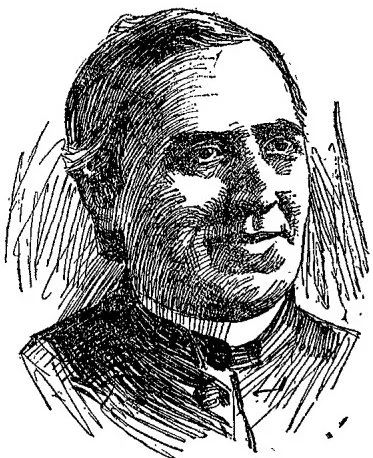
ARCHBISHOP IRELAND.
To us who have closely watched events for the last five years the deposition of Bishop Keane means nothing less than a restoration of the supremacy of the ultramontane or clerical party in the American Church. As such, it must be regarded as the most important event in the history of the church since Archbishop Ireland appealed to Rome to sustain him, as against the “clericals,” and especially the Archbishop of New York, in the famous school question.
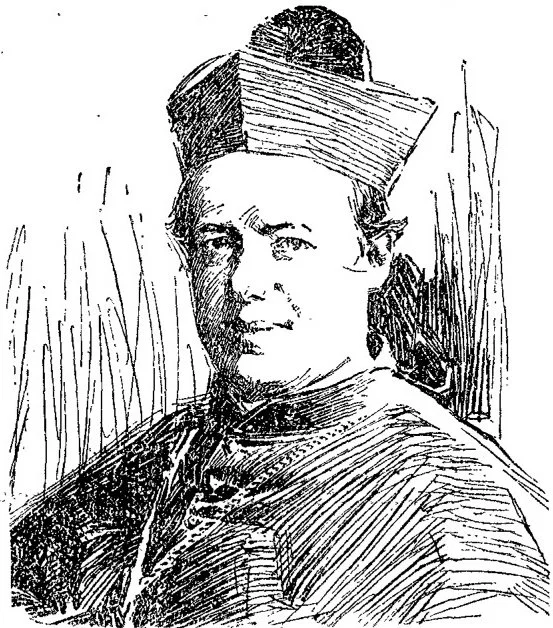
ARCHBISHOP CORRIGAN.
“It will be recalled,” continues the Herald’s informant, “that on that occasion the Archbishop of St. Paul won, or seemed to win, a notable victory. He procured an utterance from Rome, which his friends professed to regard as an indorsement of himself and a rebuke for Archbishop Corrigan. The appointment of Cardinal, then Archbishop Satolli, which followed soon afterward, was known to be agreeable to Archbishop Ireland, and in opposition to the expressed wishes of the ultramontane bishops.
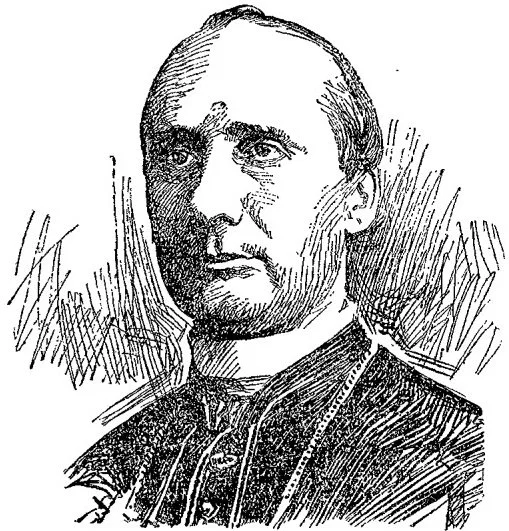
BISHOP KEANE.
“Now it appears Archbishop Corrigan has found at the Vatican a reaction of sentiment in his favor. It would not, perhaps, be too much to say that after five years’ waiting he has his revenge, for if anything is clear it is that the arrival of Mgr. Martinelli, and especially the removal of Bishop Keane, is distasteful to the Ireland party.” “If our surmises are correct,” concludes this eminent Catholic, “ultramontanism in America has again been carried to the front.”
These facts are of great interest, not only to Catholics, but to Protestants as well, for instead of revealing simply a contest between parties in the Roman Catholic Church, the unfolding of events shows the consummate skill of Leo XIII. and the deceptive policy of the system which he represents. Having accomplished his purpose in giving free reign to “the church” in America, the Pope now asserts his authority in a manner and to an extent which leaves nothing to be desired by the most ultra montanist.
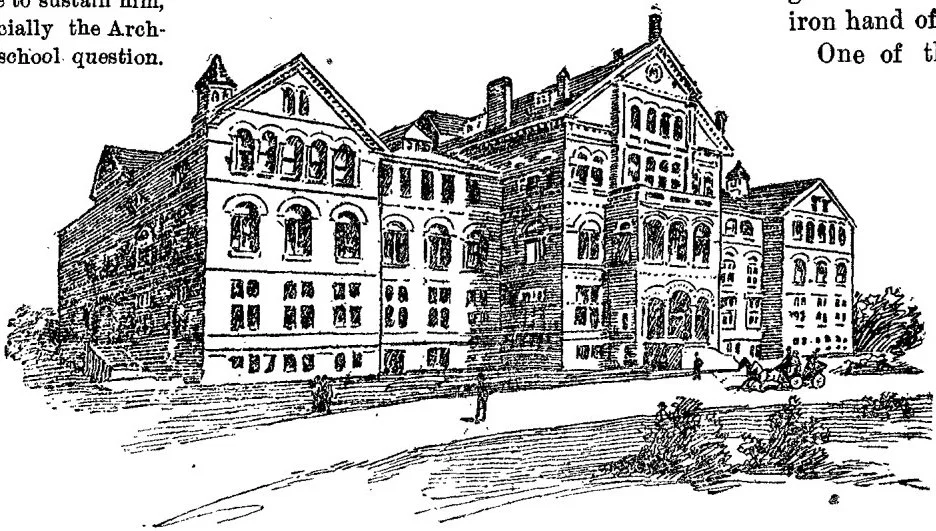
M'MAHON HALL, CATHOLIC UNIVERSITY, WASHINGTON.
For several years past, and until within a few days, “liberal” Roman Catholicism was in the ascendancy in the United States, but a new era has been ushered in. The able and crafty Leo XIII., “the prisoner in the Vatican,” for years pursued a “liberal” policy, not only toward America, but generally, so much so that the world was deceived into believing that Rome was actually changing. But it is now seen that beneath the velvet glove of the “successor of St. Peter” is the iron hand of Rome.
One of the fruits abroad of the general liberal policy of Leo XIII., was a victory for “the church” in Germany. All, and more, than “the church” lost under Bismarck, she has regained through Leo’s craft since the accession to the throne of William II. Lutheranism is still the established religion of Germany, but Rome must not be spoken against, and the322laws restricting her “rights and privileges” have either been repealed or are dead letters upon the statute books.
In the United States “the church” has made marvelous progress, not only in numbers, but in influence; and this latter feature of her growth has been due in large measure to the idea that Romanism in America was essentially different from Romanism in Europe, and that even there the Papacy was becoming more democratic, more liberal, more Christian.
Leo’s professions of friendship for republics generally, and for the United States in particular, were received by thousands of nominal Protestants at par, and many who only a few years before regarded Rome as the “mother of harlots,” of the Scriptures, were ready to hail her as “one branch of the great army of the Redeemer.”
Doubtless this was just as the Pope wanted it to be. The Papacy had much to gain and nothing to lose by a “liberal” policy. Once recognized by Protestantism as one branch of the true church, and that without any acknowledgment on her part of the validity of Protestant faith or polity, Romanism had gained a position of vantage from which she can never be dislodged. That position Rome now occupies in the United States, and she gained and holds it, not by right but by craft; she has come into it by flatteries. And now having by guile secured from American “Protestantism” recognition as one grand division of the true church, that Protestantism is estopped from making warfare upon Roman Catholicism. Friendly rivalry there may indeed still be, but antagonism on the part of Protestants who have admitted the claims of Rome would be only self-stultification; for if Romanism is Christianity then antagonism to Romanism is antagonism to Christianity.
But while unwary “Protestantism” is thus placed at a disadvantage Rome is free; for while “Protestantism,” not only in America, but in England, and to some extent upon the Continent as well, has been seduced into the recognition of the fundamental claims of Rome, the Papacy has conceded nothing. The Pope has simply played the liberal element of the Roman Catholic Church against liberal Protestantism, and, as we have seen, has won.
Apropos to this subject is the following extract from a letter by Mgr. Leon Bouland to Rev. James O’Connor, of this city, under date of September 12, 1896. Mgr. Bouland said:—
As a result of my investigations I am more firmly convinced than ever that it is vain to expect any reform from the Vatican or the Roman priesthood; and therefore I experience a new happiness in separating myself from them. When they extend the hand with professions of a deceptive liberalism, they only seek to ply their arts of seduction more sedulously.
This is exactly what Rome has been doing, not only in the United States but everywhere, notably in England. In that country the High Church party has for years been lured Romeward with the hope of organic union with the papal church upon the basis of the recognition of the Anglican Church and Anglican orders. But recently, after prominent English church leaders had gone so far as to make graceful retreat impossible, the Pope consents to “reopen” the question, examines the whole ground carefully, and blandly, but firmly tells the ritualist of the Anglican Church, and Anglicans generally, that they are entitled to no recognition as belonging to the Church of Christ; that being outside of the Roman Catholic Church they are outside of the Christian Church; and by seeking union with Rome they have virtually admitted it.
Touching this point the Outlook of the 10th inst. says: “The English Catholics in the Established Church must now choose between remaining in what they have practically conceded to be a schismatical position, or going over, as Manning and Newman and many other members of the same party did years ago, to the Roman Catholic body.”
This is only the simple truth. Rome has placed weak-kneed Protestantism in both Europe and America at a decided disadvantage, and can now well afford to renew her claim that she is “the Church of Christ” to the exclusion of all others. The Protestantism that has ceased to protest has no sufficient answer to this claim.
AS TRUE OF PROTESTANT PAPERS.
By Editor
The Catholic Review, in its issue of the 10th inst., administers this fitting rebuke to the Catholic papers which have also become partisan political journals:—
Catholic papers that are also partisan political journals, are a detriment to the church. In the public mind, they identify the religious and the political causes that they advocate; and they offend and scandalize those among their readers who cannot look at public affairs through their spectacles. In questions affecting faith, morals or Catholic rights, they have the right and they may also have the duty to speak out trumpet-voiced. But their influence will be less than proper, if they have prejudiced the people against their fairness by loud partisanship on matters purely political. They injure their cause by wandering beyond their sphere.
These words are just as applicable to Protestant as to Catholic papers. As indicated by the Catholic Review, there are in this discussion of purely political questions by the religious press, and by the pulpit, two great evils: First, it identifies in the public mind religious and political issues; and second, it tends to separate between pastors and people, and destroys largely the influence for spiritual good, which the ministers and religious papers would otherwise have.
The AMERICAN SENTINEL has no desire to influence a single vote in the coming election. All the advice we have to give to any man is, Be honest; if you vote, vote your convictions. There is a moral question for every man, involved not only in this but in every matter, a question which he alone can settle, namely, that of being honest with himself and with his fellowmen.
The man who in the present political contest votes for free silver believing that thereby he can defraud his fellowmen, is a thief at heart; but in this respect he differs not one iota from the man who votes for gold because he believes its triumph will enable him to accumulate, not his own earnings, but the earnings of others.
It follows that before the monetary question can become a moral question to any man he must be satisfied as to the merits of the political question; his mind must be at rest upon the question of where right and justice are to be found. If, then, he violates his conscience, either for immediate or for ultimate gain, he, like Esau, sells his birthright for a mess of pottage.
The pulpit and the religious press should teach sound morals, leaving to statesmen and political economists questions of finance, protective tariffs, etc. The divine commission is, “PREACH THE WORD.”
THE WORLD COMPETING WITH THE CHURCH.
By S.
THE inroads of the bicycle “craze” upon Sunday attendance at church service is a matter which agitates the minds of many clergymen, and draws from them many complaints, if we may believe what is reported. A writer in the Christian Statesman, of September 26, says that the clergy “are sorely perplexed in trying to get something more lively in their sermons than the dazzling, half-flying steed of steel. But flights of rhetoric,” he continues, “are nothing to it, and excursions into scientific objections to Christianity are sleepy beside the thrilling wheel. Not even an almost swearing sermon against the Chicago Democratic platform is now sufficient” for the purpose.
Would it not be well for the clergy to pause and consider whether this effort to compete with the attractions of the world is in the line of the gospel commission which they are supposed to be carrying into execution? May not one great reason for non-attendance at church services be found in the nature of the sermons which are commonly preached? If successful preaching be a matter of competing with the worldly attractions furnished in this age of excitement and invention, then the popular sermonizing of the day is in the right direction; but a serious doubt must be felt respecting the ability of any preacher to achieve success in this line. It must be evident that in the matter of giving spice and variety to the church service, and in devising attractions to win the support of the people for church work, the limit has been about reached. Soon it will be necessary to find some means to corral the people in the churches on Sundays in order to make sure of good-sized congregations.323
But the truth is that the Saviour has not sent forth his representatives to compete with the world in furnishing that which will attract and please the senses. The gospel of God was not made dependent for its success upon any such means. There is a power in that gospel which no worldly device or attraction can possibly have, and by this power the gospel is to appeal to men. It is “the power of God unto salvation to every one that believeth.” Rom. 1:16. It is the power of the word of the Creator. There is a power and an attraction in the word of the living God which the world knows nothing of. Let that word be presented as God has spoken it,—“quick [living] and powerful, and sharper than any two-edged sword,” “sweeter also than honey and the honeycomb,”—and the question of means to maintain church attendance need never demand attention. It is now just as it was in the early centuries after the “falling away” from the truth of which the Apostle Paul spoke, when the church leaders complained that they could not compete with the attractions of the world, and that the circus and theater held larger congregations on Sunday than did the churches. They secured legislation to suppress Sunday shows and force the people into the church; and precisely the same thing is sought by the clergy to-day. They cannot compete with the world’s attractions without the aid of Sunday “laws.”
But neither the compulsion of Sunday statutes, nor the inducements which appeal to the worldly-minded, can bring into the church any others than hypocrites, and the less of this class the church has in her membership, the better it will be for her, and for the country. The testimony of history is clear and emphatic upon this point. S.
STORY ON THE FIRST AMENDMENT.
JUDGE STORY, in his “Exposition of the Constitution,” speaks thus of the object of the First Amendment:—
“The same policy which introduced into the Constitution the prohibition of any religious test, led to this more extended prohibition of the interference of Congress in religious concerns. We are not to attribute this prohibition of a national religious establishment to an indifference to religion in general, and especially to Christianity (which none could hold in more reverence than the framers of the Constitution), but to a dread by the people of the influence of ecclesiastical power in matters of government; a dread which their ancestors brought with them from the parent country, and which, unhappily for human infirmity, their own conduct, after their emigration, had not, in any just degree, tended to diminish. It was also obvious, from the numerous and powerful sects existing in the United States, that there would be perpetual temptations to struggles for ascendancy in the national councils, if any one might thereby hope to found a permanent and exclusive national establishment of its own; and religious persecutions might thus be introduced, to an extent utterly subversive of the true interests and good order of the Republic. The most effectual mode of suppressing the evil in the view of the people, was to strike down the temptations to its introduction.”
THE RIGHT OF FREE SPEECH.
The following item from the New York Observer, of October 1, was doubtless not intended as an attack upon liberty and natural rights, yet it points to a growing sentiment in this country upon which the friends of liberty may well look with apprehension:—
The right of free speech does not mean the right to all kinds of speech. There are certain styles of talk that no government, especially no republic, can safely tolerate. If gag law is not desirable, ungagged lawlessness is no better. Well said Archbishop Ryan the other day: “We justly boast of the great liberty of speech allowed in this free Republic, but we may ask, may not such liberty occasionally degenerate into the most dangerous license? It does so when it is used to poison the intellect and the hearts of men by evidently false principles.”
But who is to decide what are “evidently false principles” in every case? That some principles are evidently false no one will deny; but it can safely be said that certain principles which would be “evidently false” in the view of Archbishop Ryan, of the Roman Catholic Church, would be just and right principles in the view of many who do not occupy a papal standpoint. And what are good principles in the view of one class of Protestants, may be “evidently false” in the view of other Protestants.
The principle that the State cannot rightfully concern itself with religion is fast coming to be an “evidently false” one in the view of many Protestants, as it is in the view of Roman Catholics; and who can say how long it may be before the advocacy of this just and most essential principle in all good government, may be deemed “ungagged lawlessness,” when public sentiment shall have been won to the idea that the State may rightfully legislate to uphold religious dogmas, as for example, the dogma that Sunday is the Christian sabbath? There is certainly great danger to liberty in an attack upon the right of free speech.
PERSECUTION AND HOW TO MEET IT.
CHRIST’S example is the Christian’s rule of life. “He that saith he abideth in Him, ought himself also so to walk, even as He walked.” The Christian must obey this rule, or else cease to be a Christian. He can suffer wrong, but he must not do wrong. Nor is this hard to do when the grace of God reigns in the heart. The apostles, when beaten for their fidelity to Christ, “departed from the presence of the council, rejoicing that they were counted worthy to suffer shame for his name. And daily in the temple, and in every house, they ceased not to preach Jesus Christ,” though expressly forbidden by the magistrates to speak in his name. The same power is in the gospel to-day, and it is still the privilege of the humble follower of Christ to rejoice in tribulations also.
The Saviour warned his followers that they would be called upon to suffer persecution, and said: “Blessed are they which are persecuted for righteousness’ sake: for theirs is the kingdom of heaven. Blessed are ye when men shall revile you, and persecute you, and shall say all manner of evil against you falsely, for my sake. Rejoice, and be exceeding glad: for great is your reward in heaven: for so persecuted they the prophets which were before you.” And the Apostle Paul declared: “Yea, and all that will live godly in Christ Jesus shall suffer persecution;” and why? Because “evil men and seducers shall wax worse and worse, deceiving and being deceived.”
But have we not a right to expect that in this, the nineteenth century, men will be so enlightened that persecution will cease? Let the Scriptures answer: “This know also, that in the last days perilous times shall come. For men shall be lovers of their own selves, covetous, boasters, proud, blasphemers, disobedient to parents, unthankful, unholy, without natural affection, truce-breakers, false accusers, incontinent, fierce, despisers of those that are good, traitors, heady, high-minded, lovers of pleasures more than lovers of God; having a form of godliness, but denying the power thereof; from such turn away.” 2 Tim. 3:1–5.
Enlightenment is no guarantee against persecution. Often the most enlightened are the most wicked and the most cruel. It is the grace of God alone that softens the human heart and takes out of it all desire to coerce others. It is impossible for the true Christian to be a persecutor; but he who has the form of godliness but denies the power of the gospel, must in the very nature of things seek elsewhere for that power he feels he must have but which he cannot find because he denies the source from whence it alone comes.
The Lord promises to be with his people and give them power, but this he does only when they rely solely upon his divine power. Christ can have no concord with Belial. His kingdom is not of this world, neither is the power by which his work is to be carried forward to be derived from this world. The power is in the divine Word itself and in the Spirit that is in that Word and which makes it effective. It is only as men lose sight of this truth that they seek civil power to maintain their doctrines and vindicate their practices.
But how can the friends of Sunday trust in the Lord to maintain the honor of that institution when his Word says nothing about it as a sacred day? The very name by which the day is known is not once found in the Scriptures; and the twenty-four hours which, according to Bible reckoning (from sunset to sunset), most nearly correspond to Sunday, are known in the Word of God by no other name than “first day of the week.” Is it not the most natural thing in the world that in departing from the truth, men should also depart from the Spirit of truth, and seek by human agencies and human inventions to compensate themselves for the loss of power which they necessarily suffer in departing from the true source of spiritual power—the Lord Jesus Christ? It certainly is. It follows that persecution is the logical result of the substitution of Sunday keeping for the observance of the Sabbath of the Lord. The divine Word gives no hint of first-day sacredness, but it tells us explicitly that “the seventh day is the Sabbath of the Lord thy God.”
THE NEED OF THE HOUR.
By S.
THE great need of our country to-day is not more politicians of a certain class, or more adherents to certain political doctrines, as might be inferred from what is said and written touching the issues which are now agitating the public mind. The true interests of this country demand, as most essential to its welfare, not more adherents to any political party platform, but more adherents to sound moral principle,—more adherents to the platform of Christianity.
The Saviour said to his disciples, “Ye are the salt of the earth.” Just as salt preserves certain substances in which it is placed, so the followers of Christ,—those who are such indeed—preserve the earth and every country in it from destruction through the wrath of God against sin. Were there no Christians in the earth, the judgments of God would fall upon it as they fell upon Sodom and Gomorrah after the departure of righteous Lot.
The righteous are as truly the salt of the earth to-day, as when the Saviour walked with his disciples in Judea. Not only do they preserve the earth as ten just persons would have preserved Sodom, could they have been found in it, but in every land they contribute more powerfully than any other class to the country’s welfare. The righteous person must be honest, peaceable, and industrious. He may at times err in judgment, but when he discovers his error, as he will sooner or later, he will at once renounce it and conform to the right.
If all the people in this land, or the great majority of them, were controlled in their actions by the principle of love to God and to one another, there would be no grave peril hanging over the nation’s prosperity, as we are told that there is now. The “great crisis” about which we hear so much to-day, would not exist. In the hands of honest, conscientious, liberty-loving men, this country would be perfectly safe. They might be in the wrong in their political views upon some points, but they would cherish such views in honesty, and not from selfishness; and upon discovering their error, they would be quick to remedy whatever evil was working injury to the people. If it were ignorance alone which threatened the country’s interests to-day, we should have but little to fear.
The righteous are those who have been turned, by the power of God’s grace in the324gospel, from allegiance to self and sin, unto allegiance to the divine law of love. Having been thus converted, they will seek not the interests of self, but the welfare of their fellow-men. The means of their conversion is the gospel, and the gospel is brought to them by those who preach it. And therefore those who occupy the position of ministers of that gospel can best serve the highest interests of their country, as well as those of individuals, by being faithful to their divine commissions, and striving to minister the grace of God to as many persons as possible. And when they leave this work and engage in the preaching of politics, they not only fail to serve those interests but work directly against them. The discord, division, and strife, which such discourses bring into their congregations, are sufficient evidence upon this point.
The great need of the hour in this country, and in every other as well, is the need of more true Christians,—more men and women from whom the life of Christ can flow out in blessing upon the communities in which they move, even as it flowed out from Jesus of Nazareth upon the people of Judea. Let the preachers cease to preach politics, and proclaim the word of the living God, which contains the power of God unto salvation. The prosperity of the country is affected much more by the conversion of a sinner from the error of his ways, than by the gaining of an adherent to a political creed. S.